A Good Bloke…?

Standard

(Bastards)

A Tuesday morning crossing the harbour led to a compelling conversation. I was seated next to an ‘elderly’ man, in a suit. We were both using our gold cards to travel free across the sea. He made the comment ‘It’s not bad being old,’ or something like that. I’m a succour for a chat. Some would say I am an incurable chatterbox and I will admit I am an over-sharer.

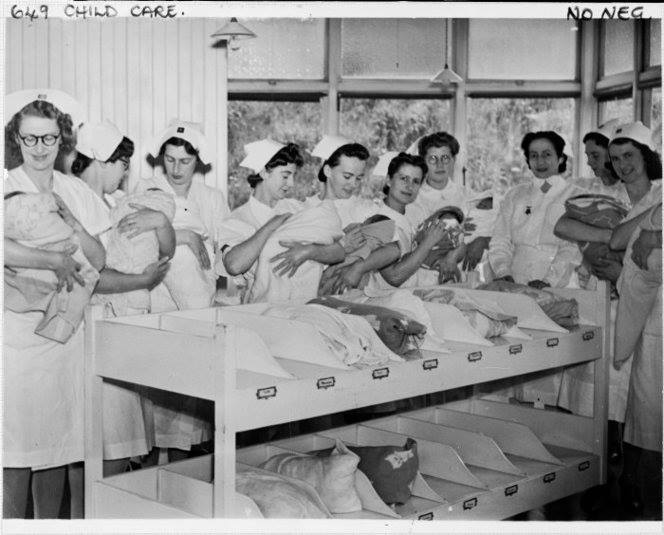
So, it was not long before this elderly chap in a nice suit and I were chatting like old friends. I am good at asking questions. He was crossing the harbour for lunch with some other chaps who like hunting and fishing. I mentioned I was meeting a friend who I had shared 8 years at Arohata with. I like to test the water when I mention my 8 years at Arohata before I finish ‘running a book group’. Somehow from this, we segued to me asking this chap what he used to do for a living. It is called ‘small talk,’ we Kiwis are good at this. He said he had gone to university really young and ended up in a Law Firm where his father worked. His Dad spent 60 years with the firm, and this chap had managed something around forty plus years. Do not ask me how we moved to this next topic, but soon he was telling me that he was a lawyer who dealt with all the pretty young things who were giving up their babies for adoption back in the sixties. I was riveted. Just that morning on Facebook I was reading about Barbara Sumner, herself an adoptee, who is an advocate for adopted children and her planned book Bastards. She is crowd funding. She is passionate and rightly so, angry that New Zealand adoption laws give more rights to the adopting parents than to the adopted child.

I imagined this still quite handsome but now elderly man (I mean everyone with a gold card aged between 65 and 85 starts to look the same, so how old was he … ), as a good looking, privileged (went to Scots College he told me) young lawyer, dealing with distraught pretty young things. He told me he always had a hanky at the ready because they were always weeping. This is not hard to imagine (the weeping). He sounded as if this made him a caring, kind young man and I am guessing it did in his mind, and I am still deciding in my own mind. He said he really admired the Matron of the Alexandra Home for Unwed Mothers at the time. He went on to tell me there was one really pretty young thing for whom he felt really really sorry. And he gestured to show me she had a cute little cleavage (do not judge I say to myself, he is a man of his time). The Matron told him not to feel sorry for this young girl because according to the Matron, below her midriff, under her dress or whatever, she had tattooed Pay as you Enter’.  He seemed to consider this was a mitigating factor and looked at me as if to say, see, they were not all innocents, expecting me to agree.  I responded with polite fury … ‘You don’t think a girl that young chose that life?.’  I spoke about my experience with the young women I met through the years at Arohata and just how often abuse lay at the heart of things. I scrolled feverishly through my phone to find Facebook and show him this upcoming book by Barbara Sumner Bastards insisting he really should read it. He agreed it looked like a book he should read – although whether he meant that or not, who knows.

We carried on chatting amicably until the boat docked. And then, we connected yet again on the return ferry ride. Friends almost, and he had had a couple of wines I suspect over lunch, and I had had a wonderful affirming coffee lunch with a woman I really admire and who admires me back – the sort of fill-up that wine cannot compete with. I was happy to sit and chat again. I’m incorrigible really.

By now, I was most intrigued by this chivalrous chap. How do I know chivalrous? He let me get on the boat first and insisted without words that I disembark first. We were old friends by now and as we went our separate ways, I reached out to shake his hand, as I’d enjoyed the chit chat even if a part of me was judging and disturbed by aspects of our conversation. He leaned forward and pecked my cheek (not quite a kiss) and said self consciously ‘I suppose I can do that.’  Ha, of course he could. And no, I did not mind. I chuckled to myself and guessed that back in the day, those sixties when I first came to Welly, I would have found him quite a catch. Chivalry I hear you. What is it? Well, it is the patriarchy of course, but hey, I’m a child of the 50’s and I want it both ways. I demand equality but I don’t mind getting off the boat first if it makes an old chap feel good. Yep, my book club friends are going to frown at this. Indeed, I’m frowning myself as I type this.

Well, roll forward to book group. I am an inveterate storyteller, and of course I had to regale the group with this compelling encounter. One of the more staunchly feminist (well, we all are really), women, commented ‘Oh, Maggie, I bet you encouraged him. I bet you thought what a nice chap.’  And in my defence, I pointed out how horrified and yet how compelled I was by the conversation. Should I have been rude right away when he mentioned those pretty young things? I felt defensive. Was I encouraging him? I saw him as a man of his time. Am I wrong to make an allowance for this? Should I have ended the conversation immediately to show my reproof? How would I have heard his account if I had not engaged in a convivial conversation, even if the topic were confronting and discomforting? Her next comment was words to the effect ‘I suppose you think/thought he’s a good chap.’  Well, indeed, she had me there. I can see that in his mind, back in that time, he may well have been one of the ‘good’ chaps. He told me he never forced them to sign and always told them not to rush to make up their minds. Did I believe him? Yes, I did, I do. I saw a man of a certain age from a certain background in a certain situation, with this extraordinary power. I can look at it through both lenses. Both now and back then and maybe a better young man would have eschewed such a responsibility. I wondered why more senior staff were not overseeing this legal area. Why did they throw a new graduate in his early twenties into the mix, to deal with distraught pretty young things? Something so powerfully life changing and this young man dealing with it as a routine legal procedure, but caring because he always kept a hanky on hand. Were there no women lawyers?  Perhaps the women, if there had been any, had refused to carry out this work.

I have a dear friend who has written a book ‘Don’t ask her name?’ which her own story of adopting two children from two different birth mothers. It is a heart-warming story about loss and love. Both children reconnected with their birth mothers. It feels like a success story. But there is deep grief from one of the mothers who is not reconciled to her loss. And then there is my deceased friend who had a baby in the late 60’s early 70’s and she was sent away in shame to Napier to give birth. Her family never spoke again about this. Roll forward 32 years, and her baby that she ‘gave away’, found her and my friend was now a grandmother. Sadly, she died one year to the day of her daughter finding her, of a brain tumour. I always remember the anger she felt when her family, suddenly were delighted to embrace this newfound granddaughter. Times had changed. They now had two great grandchildren. But my friend had carried this secret, silently, painfully without any support for thirty-two years. I have always felt her brain tumour was a metaphor or even direct result of the internalised trauma she had carried unacknowledged.

I do not think this elderly chivalrous chap on my morning commute was ever a cruel person. But the fate of those young women giving up their babies for adoption, was cruel. He pointed out, that the pipeline stopped once the DPB came in …

Bum Airborne

Standard

Bikes are charged and waiting on the drive
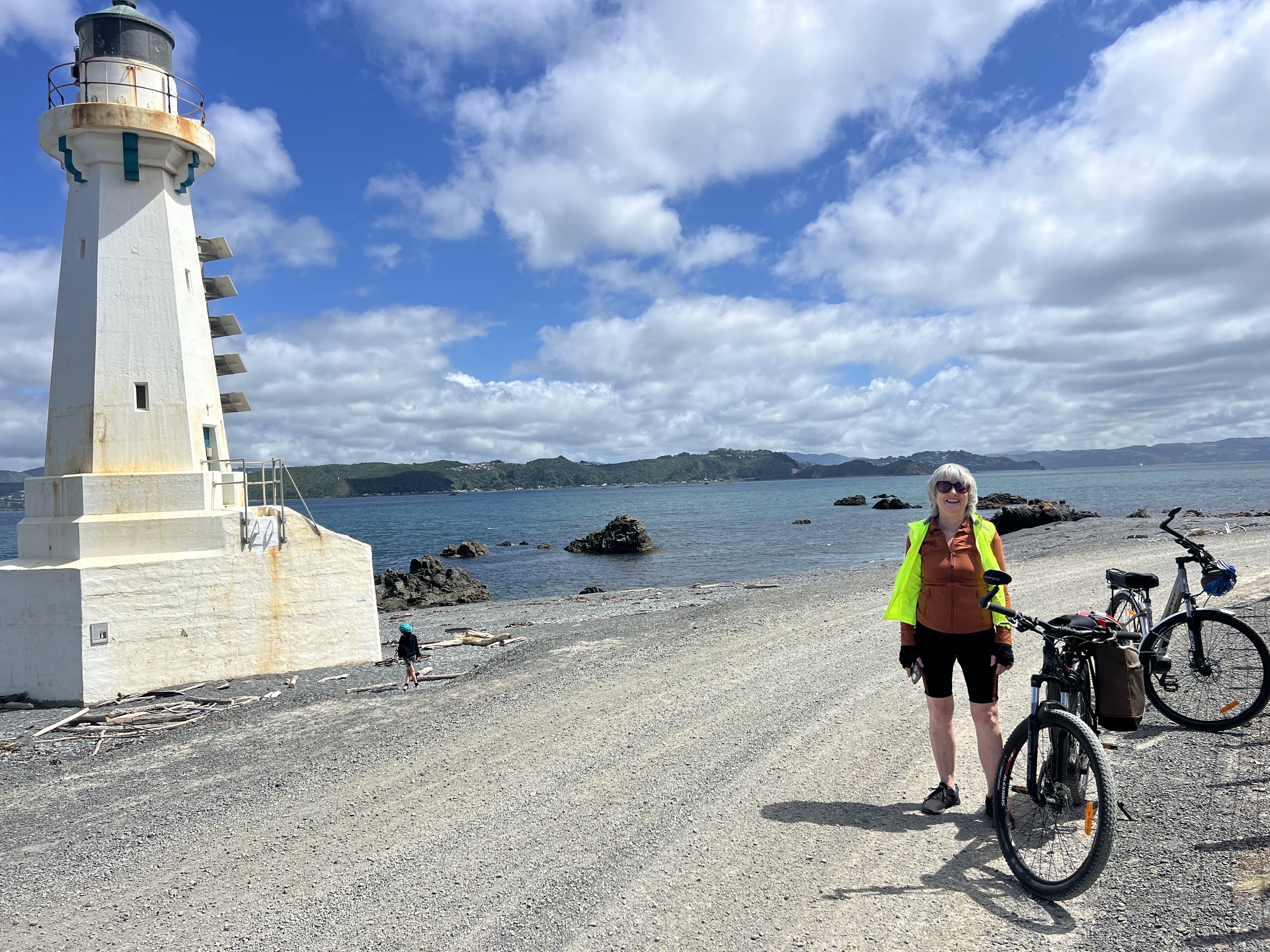
I’m applying my new Korean sunscreen
Soon I’ll don my under groin padded shorts
slip on fingerless gloves with pinhole patterns
that I’ll secure with two neat Velcro straps

It’s a long cry from leaping onto my second-
hand Raleigh (a gift from my maiden aunt)
to cycle to the Appleby River and back or
Rocks Road to fish off the working wharf
or Edens Hole for a swim and sunbathe

Like my mother in her ballgown back in
the day, cycling from Richmond to Stoke
or further, ciggie in hand, anything for
a whirl around the ballroom – and who
knows what shoes she used to cycle

But it’s 2025, and I’m 75 and I have
a battery on my bike and certain
preparations required include a Hi-Viz
vest, bright blue crash proof helmet
my iPhone charged zipped in my pocket

Past the purple ragworth, the fisherman
divers, families with chilli bins, walkers,
smiling at other cyclists, some unpowered
moving faster than me, and scowling at
a family on the beach who’ve lit a fire

On the roadside is a sign that says
Light No Fires and the ashy smell
catches in my nostrils along with
indignation as I imagine sparks
flying from the beach to the bush

I cycle over newly laid aggregate
which covers the injuries made
by Cruise Ship buses as they
hurtle along the Coast sending
up clouds of dust and diesel

Each year a fresh crop of potholes
uneven surfaces, and skid patches
for wary cyclists … the trick is to
pedal fast and sure seated like
you did back in the day, unafraid

Stand on the pedals bum airborne
as you cycle over the cattle stop
arms rigid, controlling the battle
over the bumps and down again
flying briefly, well, almost it seems

Channelling that girl on her Raleigh
no gears and back pedal brakes
riding two abreast up Oxford Street
arms folded, careless, carefree
sans sunscreen or Hi Viz, and
just a white Panama hat thank you

A view of the world

Standard
A view of the world

Elton John’s yellow brick road races across towards our house from Matiu Soames
Mid Winter, the sun dropping in its usual show-offy way, exploding grey clouds
I’m chopping a red onion that ought to be a shallot but I forgot and it will do
the dill is waiting with the cream, the capers, the chopped garlic, zest of lemon

Tomorrow an eye surgeon will scoop out my old useful lens from my right eye
someone described it as akin to a designer scoop for a delicate entrée of
well, who knows, something that small, a small scoop and out comes my lens
my faithful view from my right eye of the world, my perspective, a wee bit cloudy

I’m having a wee slosh of wine as the recipe demands a deglaze and I only have
my favourite Pinot Gris with which to do this, so of course, I’m going to taste it too
in the meantime a friend just emailed to say they had their cataract done yesterday
And it was … challenging and everyone else had assured her it was a doddle

She emails back almost immediately to say she didn’t mean to scare me and that
her eyesight is better already but you know she just wanted to be honest and her advice

You just lie back and let it happen as with so many things in life

I’ve warned the surgeon I sometimes get vertigo but now I’m practising lying flat

I will lie back as my friend suggests and think of England as the saying goes
But there’s so much else to think of, eyesight aside, right now its Gaza and Tehran
And I live at the bottom of the world where I can have a new plastic lens for my
new view of the world safe inside a sheltered harbour nowhere near war


After the wars

Standard

Gladioli staked, tied and tall
orange-throated in friable soil
in front of wide weatherboard
gaudy early summer glory


our uncle back from Korea
snaps photos on his box brownie
to give us little black and white
pictures with crinkle-cut edges


silk tigers stalk our front room
mum’s fake pearls housed in
black lacquered boxes from
Seoul, or maybe from Japan


K Force and J Force, brothers
in both places with albums
full of pictures of post bomb
Hiroshima and geisha girls


home bearing gifts for grandma
my mother and her sisters, we
kids unaware our own father
home from a different war


mowers, the smell of petrol
grass clippings into catchers
a postman’s whistle, the whine
of a blade on concrete


tennis mid road if you like
cows grazing on chamolly
mushrooms in the back
paddock for picking


the peanut butter scent
of the Harlequin Glorybower
the bush between us and
the next door neighbour


their son who fell from the sky
taking photos from a tiny plane
that swooped too low for
the perfect shot in peacetime


our first local tragedy
before the taxi driver who
was murdered and our
brother who killed himself


the gladioli fooled us with
their orange-throated glory
triumphant post war as if


this

was
it


When the machine arrived

Standard

It was the 1960’s. Mother’s cream and green electric washing machine replete with pump, agitator, and safety wringer took pride of place in the wash-house beside the old copper.  The mastermind behind this locally produced electric washing machine was an Estonian migrant Karl Pallo.  The washing machine bore his name.  Mother marvelled at the agitator that would replace her hands to rub and rinse and rid the clothes of grime.  Before the Pallo arrived in our lives, she boiled the bed sheets in the copper. A small fire would be lit beneath to warm the water.  A stick from the woodshed, bleached and boiled over the years, would stir, the way this new modern machine would now do automatically.  If there was no time for a fire, or to boil, Mother would hand wash.  She would hold a bar of bright yellow Sunlight soap and press the fabric of Father’s work shirts or trousers, firmly against the glass washboard, rubbing, scrubbing.  Sometimes this was done before clothes were placed to boil in the copper. Her biceps were legendary. Not just from scrubbing clothes, but hand beating butter and sugar for the light sponges she made and cooked in the Coal Range.  Hauling the coal bucket from the shed, chopping the kindling. She had no need of a gym membership and no time for Yoga.

The copper was legendary for more than just the washing.  It was used to cook the Christmas ham in the early years of my childhood.  Family lore has it, that one year, Father’s stepfather came to stay, and he tipped the boot polish (which was kept on top of the copper), into the copper when the ham was cooking.  It seems the polish formed a film on top of the water, and the ham that year was the best ham ever.  I cannot confirm or deny this as I do not remember the ham, but it obviously did us all no harm, as there were no aftereffects.

Now the machine had arrived, the cream and green Pallo.  Mother was wondering what she would do on a Monday.  But there was still the chore of lifting the clothes from the agitated waters, and hauling the bed sheets, heavy with soap and water, into one of the twin stone tubs to rinse.   Then there was the wringer.  This was attached to the washing machine and meant two rollers would press the water from the washing.  You had to be careful.  Stories abounded of young girls with long hair who had become entangled in the wringer rollers.  No one I knew, knew anyone to whom this had happened, but we heard about it. Whole arms could be dragged through the rollers, bones crushed, perhaps even necks wrung.  And there was still the mammoth task of carrying the heavy bed sheets, still reasonably dense with water, despite the wringer, and throwing them across the rotary clothesline under the plum tree.

Mother would stop for a ciggie, draw in deeply, inhale, and then blow the smoke back out energised by the nicotine, ready for the next stage.  The sheets would hang double over the line and the line would rotate if there was a decent breeze. Usually, the scorching summer sun was enough.  But in winter, a breeze was needed to spin the Rotary clothesline and dry the washing.

Years later, when Mother had died, and Father was living alone and doing his own washing, every Monday, we would visit with our children.  He was a man of singular routine. His day consisted of a walk to the rubbity-dub which opened at eleven o’clock on the dot.  Our two sons would walk with him through the school path, under the bluegum tree, past the Holy Trinity Church, down the road, past what was the old cinema, and he would buy them chewing gum and let them play at the playground, just close to the pub.  We would pick up the children as soon as the pub opened.  He would eat a half roast every day at the pub and return home for a nap and then back to the pub at 3.00 pm for another round.  This was primarily for the company by now.  A table of old war veterans who sat and talked.  Father was the listener.  He would sip his flat tap beer from the jug and nod and occasionally comment, and then head home.  If we were staying on holiday, he would arrive home to a cooked meal and if he were alone, he would open a tin of creamed corn, unheated to eat.

Mondays, Father would continue with Mother’s washing routine.  He would grab a handful of soap powder. A generous handful, never measured, and toss it into the agitating water.  Then he would call out to see if we had any washing we wanted done.  Hubby in those days, when our boys were young, had expensive linen shirts and learned to hide his good laundry and toss his boxer shirts for his father-in-law to wash.  We would discreetly hand wash anything that might not withstand Father’s washing routine.  The soapy water would swish and swash as Father’s sheets swirled.  Our lads would stand, mesmerised by the movement of the agitator which by now (after over 30 years), was held in place by a lump of 4 x 2.  Father had been a builder and he knew what to do with a piece of 4 x 2.   Then the sheets would go through the wringer, and this was even more fascinating to our young lads who would stand on the other side of the wringer, ready to receive the yards of sheeting being fed through.  By this stage, the wringers had bowed, and the sheets were almost as wet after going through the wringer as they had been before. There would be just the once rinse and not two like Mother always did.  Thus, the sheets would hang, stiff as boards, soap encrusted, whiter than white, mostly soap powder, drying in the scorching summer sun.  

It was with a sense of sadness that we sold the house with the washing machine still in the wash-house and the copper still in situ, when Father passed away.  I marvel now at my own built-in laundry (under the staircase), with front loading washing machine and dryer, automatic settings, and barely a bicep required. I go to body tone classes to earn my biceps and stretch my fascia.  Mother had no need of such classes.  Her body was always moving. She beat eggs by hand, chopped firewood, hauled coal, washed, waxed, and polished the linoleum, and rewarded herself on a Saturday with a 2/6d cake of fruit and nut chocolate, one leg under her bum, perched on a chair, eating chocolate, and doing the cryptic crossword.  Better than Yoga really.

For last year’s words belong to last year’s language

Standard

For last year’s words belong to last year’s language
(Four Quartets, Little Gidding, T.S. Eliot).
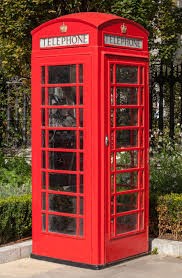
I am standing somewhere in Leicester Square. It is either midnight or close to. I am inside a red phone booth. Maybe it reeks of urine, but I do not remember. In my hand is a black receiver with a mouthpiece into which I am speaking. My head is nestled into an earpiece straining to catch the words coming from 12,000 miles away. I can hear my own words echoing back at me over the voice of my mother, and then my father. Just before the three minutes is up, an operator interrupts our stilted conversation to let me know that if I wish to continue, I need to insert more coins. Three minutes is all I can afford and all it affords me, is a series of frantic hellos and goodbyes echoing into the night. It is 1972, phone calls are expensive.

Christmas that same year, I am in Edinburgh living in a neoclassical (now historic A listed) building in Leith, on the edge of respectability. My flat is dark, bitterly cold and has a bold red street facing front door. A telegram arrives to wish me Merry Christmas Stop and a Happy New Year Stop. Each word costs my parents a small fortune, the two stops included. We are not on Viber, we cannot see each other and my blue aerogrammes take a week or two to cross the dateline homewards. My Dad drinks at the local pub after work every night. He is good friends with the local postman. Sometimes, if an aerogramme has arrived before delivery the next day, the postman will take my letter and deliver it in person to my Dad at the pub.

I grew up in a modest post-war Jerry-built wooden bungalow. Ostensibly we were working-class but New Zealand was more egalitarian back then. In our street including my Dad, a carpenter, were the butcher, a baker, a painter, a chemist, a doctor, three schoolteachers, and eventually, years after I left, a Prime Minister. Most women back then were not in paid work, well not in our street. We had no telephone. If we wanted to call my grandmother we needed to walk to the top of our street, up a small hill, to a phone booth. I was born in a cottage hospital at the top of that hill. My father and I received the news of my grandmother’s death in that phone booth. My mother was with my dying grandmother. Dad and I walked up the hill to the phone booth to call for news. I recall I screamed. A man passing by in his car, heard me scream, stopped and came to rescue me – seeing me in a phone booth with my Dad, and not knowing quite what was going on. This same man, when he learned our sad news, that my grandmother had just died, drove us up to my grandmothers.

When I lived at home, I woke each morning to the sound of the BBC News, as my father washed himself in the bathroom and sang. We had a tin bath but no shower. His ablutions were a ritual of running water and a lot of sloshing. Big Ben would chime before the news over shortwave radio and the news reader had a gravitas that brooked no doubt. No one speaking in such a well-bred, carefully modulated timbre could possibly be telling other than the truth. The Cuban Crisis, Kennedy’s assassination, and his funeral, all came to us from the blue Bakelite radio above the small green fridge. The fridge I might add, was a modern wonder that had replaced but not entirely, the safe above the kitchen sink near the coal range.

My eldest brother left school to join the Merchant Navy and was travelling as a teenager to the Pacific Islands specifically Nauru for phosphate and up to Hong Kong and Japan. He returned from a trip with a portable tape recorder as a gift for me. It had a small microphone for recording and tiny reel to reel tapes. My best friend and I would visit the local shops and record our conversations with the fruiterer or the local bookshop. I would secrete the tape recorder, uncomfortably under my cardigan. I would disguise the microphone which hung around my neck with a daphne cutting from my mother’s garden. We felt like spies and thought ourselves entirely clandestine. I cannot recall any of the recordings, but I smile now to think that we thought we fooled anyone.

Many families back in the 60’s owned stylish stereograms, which appeared to be as much about furniture as about music. Some cabinets that housed the turntable also converted into a drinks cabinet. Our very first musical turntable was a wind-up gramophone and from memory, we had two records. One was Mario Lanza which may well have been quite hi-brow and the other played the Irish song The Stone Outside Dan Murphy’s Door. The gramophone was in a case that sat on the floor in the front room when it was played and then it was put away in the big cupboard in Mum and Dad’s bedroom. Unless you wound the handle sufficiently, the record would slow right down and that is my memory of the final refrain of the song which repeats the title, in a slow motion sound as the gramophone wound down. Many years later, an older sibling purchased a full-size ACME reel to reel tape recorder. We taped from the radio and had everything from Herman’s Hermits, the Beatles, Dusty Springfield, Petula Clark, Simon and Garfunkel, Sandie Shaw, Helen Shapiro, Diana Ross and Cilla Black. When I look back, we were lucky with so many outstanding female singers to listen to back then. Our influences were very much persuaded by the English pop charts early on, rather more than the American.

Then in the early 70’s, travelling by myself, I took my music with me on a small cassette player, listening to Carole King, Cat Stevens, Donovan, Neil Young and Blood Sweat and Tears, mostly American music. Later, in the mid 70’s, travelling with my now husband, we would make recordings of ourselves talking to our families on small cassettes and post these small cassette tapes home. The cassette would then be recorded over by the recipient, my husband’s brother, or my Dad, as by then my mother had died. I still recall our laughter, as we sat in a Norsk hytter surrounded by metres of snow, as my future brother-in-law back in New Zealand with a young family, regaled us with the woes of the newly instigated daylight saving. The entire one-way conversation was meticulous detail of the complications of old time and new time, the impact it was having. It made no sense to us that someone could be so disturbed by a one-hour difference in their lives. We’d just hitch-hiked to Lapland to observe the Midnight Sun. It wasn’t until we had our own family in the late 70’s and very early 80’s, that that one-hour difference when putting a toddler to bed, finally registered with us.

All my photos taken when travelling by myself in the early 70’s, including a solo Greyhound Bus trip around the USA, living in London, Newcastle, Manchester, Edinburgh and Norway, were recorded on slides. When I returned for the first time from overseas, a friend of my dear maiden aunt’s, invited me to her house along with her local friends and neighbours to show my slides. I recall how amateur my slides were, so dark and different from the instantly captured high resolution photos that an iPhone can capture. We were all in her front room, the lights out, a slide projector was whirring as photos of me in a purple midi coat standing by Cleopatras Needle on the Thames finally came into focus upon a white bed-sheet on the wall. The audience were all appreciative and I was the feted returning traveller. London, our Colonial homeland, and I had been there, although both my mother and father were born in New Zealand. Watching Helen Mirren before she was famous, at Stratford on Avon in a Royal Shakespeare production which from memory was performed outdoors by the river. But memory fails me on which particular play.
For a short time during my OE, I was staying in Nazareth Pa, USA having fallen in love with an American Coastguard sailor who had dodged the Vietnam Draft by signing up for seven years on the Icebreakers. We met at the Downtown Club in Wellington in the late 60’s and I ended up staying for some weeks with his family who were bemused by this girl from Downunder. I recall Polaroid photographs were the technology of that time, an instant image rolling out from the camera in technicolour. I kept a couple from that era, but they have faded. Then, more recently, my daughter-in-law purchased a brand-new super-duper Polaroid camera which had a brief moment in our lives, but not for very long. TikTok, Instagram, Facebook, Twitter, Snapchat, the list continues and images of sunsets and sunrises so ubiquitous as to be rendered schmaltzy. Everyone is a photographer, and everyone can communicate almost instantly with almost anyone in the world. We are blinded by sunsets, sunrises, and airbrushed joy.

When I returned from my travels in the mid to late 1970’s, I was employed for a while with the Time Life Magazine Sales Office in Auckland. These were heady days when triple page spreads for Rothmans or some Liquor brand, kept the magazine viable. The Sales Team at Time simply wined and dined the advertising agencies at such places as Antoine’s, Le Brie or Clichy’s ensuring ongoing advertising placements. It was a time of lavish expense accounts and too, the emergence in Auckland of trendy fine dining. Time Magazine had prestige and clout back then. Possibly a time of general naivety without the Twitter trail of fact checking. I recall an issue of Time Magazine dedicated to South East Asia when Muldoon and some sheep were on the front cover. Advertising was easy to sell with a front-page story about New Zealand. Journalists and a famous photographer, Rick Smolan, fresh from his filming of Robyn Davidson trekking across Australia on a camel, came to New Zealand for about three days. Nowadays, Robyn Davidson would be more likely instagramming her own journey on a camel. I recall Rick Smolan travelling light with a camera slung across his shoulder and the straps of the camera festooned with baggage tags. Baggage tags back then were an overt status symbol. Those of us who travelled, left the tags on our suitcases, proof of our international adventures. The photographer and a couple of Time Life journalists travelled to Taupo. They stayed at Huka Lodge and wrote romantically about Zane Grey and fishing in Lake Taupo. I saw the expense account. For the price paid, I envisaged scuba divers in the lake putting trout onto the fishing lines of the journalists… but worse than that, the statistics in the primary piece about New Zealand, specifically about child mortality were somehow grossly over misrepresented. There were other factual errors and my faith in the 4th Estate began to wane.

I recall the heady afternoon, when one of the Time Life Sales Team brought in a fax machine. It was I think 1977 and the fax didn’t really take off for everyday use commercially until the 80’s. We may well have been the very first commercial companies in New Zealand to receive a fax. A small group of us waited in the boardroom with the Sales Team, our eyes glued to a compact machine on the coffee table. A fax came through from the Time Life Sydney office. Prior to that, the communications had been by telex. Back in the sixties, when I joined the Post Office as a shorthand typist, we would use up to six carbon sheets when typing a single memorandum, so that it could be circulated around the branch office. I was also responsible on shifts, for a small switchboard answering incoming phone calls and plugging the phones in manually to the extensions required.

About ten or fifteen years ago, we rented a holiday house in the Marlborough Sounds. The house had its own private beach reached by boat from Picton. We were somewhat surprised to read the instructions left by the owner of the house regarding phone calls. The house was on a party line and we were told not to answer the phone unless it was (for example, as I no longer recall exactly), long short long. Throughout the long weekend, the phone rang and rang incessantly. It was the same number (not ours) over, and over again. Finally, in frustration, my friend answered the phone. The caller was from London and furious that we had answered the phone, thus incurring her the cost of the call. She did, however, stop phoning, thank goodness, as it seemed obvious to all of us that whomever she was calling was not at home that weekend.

I contrast all of this with my solo adventures around the USA in 1972, doing a Greyhound bus trip from Vancouver Canada down the West Coast and up the East Coast including forays to Las Vegas (in those days, merely a strip and a few pokie machines). I even naively and yet safely, hitch-hiked on several occasions. Thankfully, my mother and father back in New Zealand, knew nothing of my adventures, apart from postcards that probably arrived, long after any perilous adventures. Too, there were broken hearts that I healed by myself, without recourse to instant contact with close friends and family back in New Zealand. My adventures were frequently about romance and idealised love, and I am glad in retrospect to have had these challenges to myself, made mistakes that only I know of, and poured my heart out into a diary, from which several pages have been torn and destroyed. The short few weeks when I was certain I was pregnant after unprotected sex. My mother back in New Zealand didn’t need to know and I had no one to tell. When I bled, it was a great relief. I’m glad I wasn’t in daily contact with my mother during these times. Too, when I ended up at the clinic for sexually transmitted diseases after my first sexual experience. This was a solo adventure, the penicillin worked and to be honest I was mortally ashamed. I imagine nowdays, that it might even be Twitter worthy news. That same first experience spawned a successful poem, fifty years later.

I’m on Twitter nowadays and mostly for the political links that I find. I’m fascinated by the banal, trivial and outright nasty comments that people I admire are prepared to post. Most recently Neil Gaman and his partner Amanda Palmer, stranded here in New Zealand during lockdown, enacted the early stages of a relationship breakdown, live on Twitter. My thoughts were for the innocent child in the middle of this so very personal muddle. Oh, I judged them, I did, but I could see that most people responded with empathy and compassion. And as happens on Twitter, many took sides, alas. It all seemed odd to be washing their laundry in public as my mother might have said.

I compare the use of Twitter and contrast this with the gravitas of the BBC News on shortwave radio. At least now I can verify facts, double check with several sources and make informed decisions. So I’m not wishing to go back to a time of censorship. A time when I idolised JFK and Jackie Kennedy and knew nothing really of American Politics. A time when I loved the Royal Family and went eight miles on the suburban bus to the picture theatre to watch the film of Princes Margaret’s wedding. Innocence indeed, and we also stood at the local Picture Theatre for God Save the Queen. A few dissidents in the more expensive seats at the back, often protested by sitting down, but we kids in the cheap front three rows knew nothing of politics. We were in thrall to the Metro Goldwyn Mayer’s and Paramount Pictures. Enchanted by the raising of the rich velvet scallop shaped curtain as it rose from the stage to expose the white screen. Billy Vaughan’s Sail Along Silvery Moon can still transport me to the magic of the Saturday Matinee, a sense of wonder. Yet nowadays I’m more likely to watch foreign films and arthouse movies than blockbuster Hollywood releases.

I started work as a sixteen-year-old at the Post Office, working on an Imperial 66 manual typewriter pounding the keys with up to five or six carbon copies. And today I write this essay from my brain to the screen on a Surface Pro that is so light, I carry it like a clutch bag. My travel in the 70’s was not documented on Instagram or Facebook. I have barely any photographic record of this adventure and instead I must retrieve these memories from my own internal memory bank without Facebook to prompt me, or photos from my phone. I can switch screens to check Facebook, check my phone for updates from Radio New Zealand about Covid-19 cases, use Google to verify the spelling of Rick Smolan the famous photographer I met briefly in 1977 and return with ease to place my thoughts on a screen that allows me to justify, spellcheck, delete and importantly to ‘save’, ready for emailing my entry to the Landfall Essay Competition. No doubt Instagram will remind me of the looming deadline.

Saintly Passions

Standard

Saintly Passions

They say she biked in her ballgown
possibly in a brace, and her with just
one kidney and a ciggie dangling from
the corner of her marvellous mouth

The black sheep of the family, we
thought, a scandal for daring to dance
but then it turned out, her quiet older
sister had a baby out of wedlock

The lock on wed is worth scrutiny in
retrospect, possibly related to the
Death do us part people mentioned
when marrying back then

Another sibling, a younger brother
managed to impregnate a married
woman twice, before she died in
childbirth and he married another

Thank God for adoption everyone
thought back then, and the locals
conspired to contain the secrets
known as the fabric of society

We think of weaving, stitching and
the spinning of yarns, and that’s
just what they did, they hid knots
it was all more warp than weft

And we were left to unpick the
pieces, years later when grown
men arrived in the image of once
unknown fathers to surprise us

Including the girl whose family
won the Golden Kiwi and who
grew to look remarkably like
the Parish Priest who relocated

Where documentation fails, we
have our own imaginations, on-line
DNA matching and curiosity to
rewrite our family histories

Saintly mothers with secrets
that speak of wild passions to
inspire their granddaughters

Lockdown Villanelle

Standard

Lockdown Villanelle
(for Emma Aroha)

In lockdown she learned to wish the moon goodnight
Muddling two languages to make a new word for water
I learned to say pada and she knew it was the sea

Bashing back the Spinifex dodging spikey grasses
Chasing seagulls in circles on freshly wet sand
In lockdown she learned to wish the moon goodnight

Nana is my Kiwi name, in Korea I’m Halmoni
We talked to stars together, marvelled at the moon
I learned to say pada and she knew it was the sea

We inspected dying jellyfish followed scuttling crabs
New words emerged, that neither of us understood
In lockdown she learned to wish the moon goodnight

We ate lunches purchased from the local bakery
I discovered strawberries are also called ttalgi
I learned to say pada and she knew it was the sea

Some days we walked and talked to teddies
In the trees, on windowsills, all unexpectedly
I lifted her to wave to them her new-found friends
In lockdown she learned to wish the moon goodnight
I learned to say pada and she knew it was the sea

Footsteps

Standard

Almost five o’clock, the sun dropping

Late winter sun streaming through trees

Bouncing like a disco light on the choppy sea

And then there’s me, climbing the zig zag

Past my old home, its garden now neglected

And I’m tempted to open the gate, but

I don’t, I move on and up to the top road

Where, as I round the last bend, I catch

What might be birdsong so soft against

The evening, this love-song, this mother

And her baby whispering, and she is

Walking the way I remember walking

Each footstep the most grounded ever

Not fast, not slow, but sure-footed

Pushing her new-born, one week old

She tells me, her face and the baby’s face

Brighter than the dropping sun, one

Week and she is sure-footed, and slow

And the road is but a carpet of love below

Her radiant footsteps, she could be flying

And I am crying now for I remember this

And the old house below holds all

Those heartaches that those footsteps

Belied, those footsteps denied, those

Footsteps… Continue reading

Typewriters

Standard

Typewriters

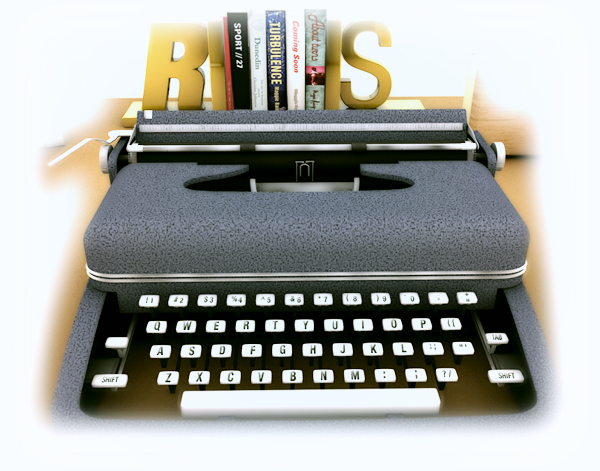
I loved you my Hermes Rocket
Portable in your beautiful case
Those black keys, the clatter
Your smooth black platen
The gentle smack of carriage
Returning… returning…
My unfamiliar fingers practising
For School Cert, in the front
Room on the carpet square
No chair clakkity clakkity clack.

I left you for an Imperial 66
sturdy, upright, dark grey metal
Weighing a ton or more I’m sure
Requiring a new dexterity
Depressing heavy metal keys
Oh what a squeeze it was, each
Internal memo needing six copies
Carbon paper sandwiched in
Between, and how to keep
Each copy clean, clack, clack.

And then you, my flash Corona
With darling cream keys indented
Each finger knew its place upon
Your keyboard both chunky and light
So modern and bright by
Comparison and portable too
I think you were deluxe, but it is
So long ago, I can’t be sure
I know I loved you though
Your softer clakkity-clack.

I learned to type at school
With an apron over the keys
Each finger knew its place
And there was a certain grace
A ballet to the position of the
Fingers, so light and yet so heavy
Too. There was backspace but no
Button for delete. When Twink
Arrived we were surprised, although
Nothing can compete with accuracy

The golf ball electric, was my first
IBM Selectric, and I missed the rise
And fall, the gentle arc of metal
Arms reaching to the platen the
Falling clatter clatten sound and
Now this ceaseless whirring
No ribbons to replace, no keys
To catch each other in a momentary
Embrace, a chance to stop and breathe
With carbon running up my sleeve

It wasn’t long before the typewriter
Got a memory and all my skills of
Pound and pace were lost upon the
pretty face, of lightness and technology