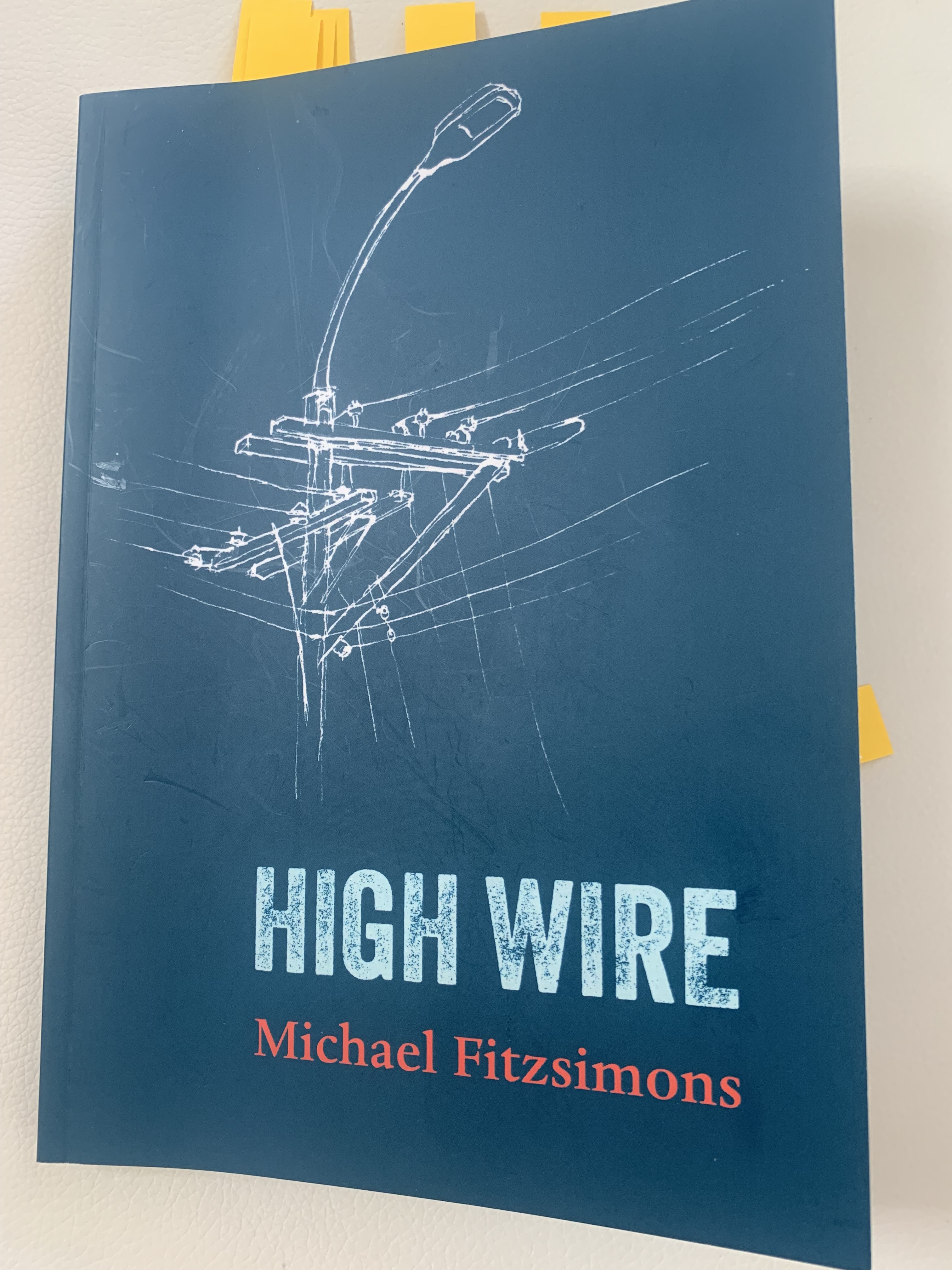
High Wire by Michael Fitzsimons

Standard

High Wire

I went to the launch at the Seatoun Bowling Club. You just gotta love the venues poets choose to launch their books. Mine was launched from the bedroom of the bookseller during lockdown. And more recently, Simon Sweetman’s The Richard Poems were launched in a trendy men’s clothing store/barber shop.

I first met Michael when we were reading poems together in Kapiti at a Retirement Village and indeed we also read to one of our most receptive audiences in the dementia ward of that village. An unforgettable and unexpectedly heart-warming experience for all the poets involved.

Early on in this lovely collection, Michael writes:

My poems seem to appeal
To people who don’t read poetry.


He got me, right there and then. I feel such a connection to these words about my own poetry. I’ve been picking his book up every day to read at random and each poem brings joy. There’s a theme of gratitude throughout. The poems speak of the ordinary with such love and affection and too, the profound. His love of family is palpable and joyful. He speaks lightly of a brush with death (more than a brush, a serious cancer diagnosis which he has written about in an earlier collection) but he manages to be uplifting and grateful in all his observations.

There’s delightful humour and I just love this poem/anecdote – yes, Michael pops poetic anecdotes into this collection, stylishly and inspiring.

A friend buys bulk chicken on special from PAK’Nsave.
He divides the chicken into meal-size portions and freezes them. You have no idea, he says. A few bucks a meal.

He and his wife live on the pension. They eat enough chicken to fly business class to Europe every three years.

Another poem that leapt out at me and I just love, is about his daughter coming home to watch the All Blacks snatch a 16-15 victory in Dunedin … the poem talks of Razor Robertson’s first test …

Surprisingly for an All Black
Coach, he’s a talker

This made me laugh out loud as I said almost exactly that when I listened to Razor’s after match chat.

Then there’s the very beautiful love poem The Fin with dolphins and orcas but at the very heart is love, romantic, domestic and true.

Another that spoke to me On the white carpet – musings about moving into a house with white carpet and spilling coffee. Memories for me of white shagpile carpet in an apartment in Auckland in the late 70’s. Play us a tune Maureen an evocative family poem reeking of all things Irish, family, history and heritage. A gorgeous glimpse into the author’s roots.


There’s so much to love in this collection. It is uplifting and for a poet, it is inspiring. I rushed to write my own poem about an encounter I had at our local Pavilion Café, after reading Michael’s delightful encounter at his local 4Square Four Square Philosophy.


The final poem in this collection Credo is one of my favourites. It’s a perfectly placed poem to end such a loving collection. It feels like a questioning of faith and yet a deeply embedded faith too. The final lines …

So when you step out the front door
by the olive tree,
you have something to take with you,

something sustaining,
like a cut lunch.

How Good is This? … (the title of another poem).
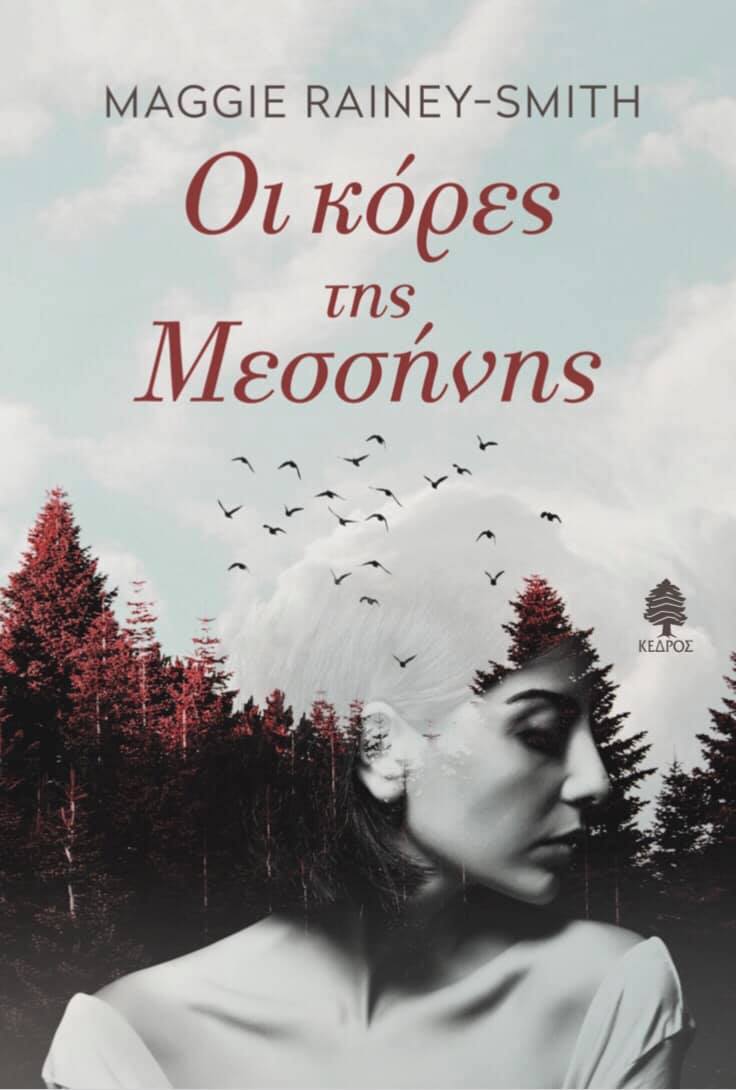
My Greek novel Οι κόρες της Μεσσήνης

Standard

My publisher was recently visiting Hydra and spoke to a bookseller there who has been selling the Greek translation of ‘Daughters of Messene’ Οι κόρες της Μεσσήνης and was planning to order more in. This prompted me to look at any new Greek reviews and I found this wonderful review. I’ve had to use Google translate and I’m just going to post some of the parts of this review that gave me a heart glow.

If you speak and read fluent Greek I will post a link to the full review below. In the meantime:

Όμορφη και στρωτή αφήγηση καθ’ όλη τη διάρκεια του μυθιστορήματος με μια πλοκή τόσο όσο χρειάζεται ώστε να προκαλεί το ενδιαφέρον του αναγνώστη να διαβάσει τη συνέχεια με λαχτάρα.

Beautiful and layered storytelling throughout the novel with just enough of a plot to keep the reader interested and eager to read more.

Με ποιητικό λυρισμό αγγίζει με τη λογοτεχνική της πένα θέματα που έχουν σημαδέψει γενιές ολόκληρες  και καταφέρνει να τους δώσει το ύφος και την αξία  που τους αναλογεί. Χωρίς μελοδραματισμούς, η συγγραφέας μέσα από την πορεία της συγκεκριμένης οικογένειας, μιλάει για τις γυναίκες που έμειναν και υπέμειναν τα πάντα στη διχασμένη Ελλάδα, για τις γυναίκες που μετανάστευσαν στην άλλη άκρη του κόσμου για να ξεχάσουν και να αναζητήσουν ένα καλύτερο αύριο χωρίς όμως να ξεχάσουν τα ήθη, τα έθιμα και τις αντιλήψεις  τους, για τις γυναίκες που πάντα αναζητούν και παλεύουν.

With poetic lyricism, she touches with her literary pen subjects that have marked entire generations and manages to give them the style and value that is attributed to them. Without melodrama, the author, through the path of this particular family, talks about the women who stayed and endured everything in divided Greece, about the women who migrated to the other side of the world to forget and look for a better tomorrow without forgetting their morals, customs and perceptions, about women always seeking and fighting.

Τέλος, θα ήθελα να να τονίσω ότι μέσα από αυτό το υπέροχο, αληθινό και συγκινητικό μυθιστόρημα που μας ταξιδεύει στο χρόνο, παρελθόν-παρόν, δίνοντας μας και την ελπίδα του μέλλοντος, η συγγραφέας δίνει το ιστορικό πλαίσιο της Ελλάδας και αποτυπώνει τη ζωή κάθε Έλληνα των τελευταίων εκατό χρόνων μαζί με τα ήθη, τα έθιμα, τη κουλτούρα, τη καθημερινή μας συμπεριφορά, την ιδιοσυγκρασία μας, τα όμορφα αλλά και τα στραβά μας, αλήθειες που βλέποντας τες αποτυπωμένες στο χαρτί, εμένα προσωπικά με έκαναν να χαμογελάσω, γιατί διέκρινα το χιούμορ της αλλά και την αλήθεια σε όλα αυτά που περιέγραψε και πραγματικά  είμαστε αυτοί οι άνθρωποι

Finally, I would like to emphasize that through this wonderful, true and moving novel that takes us through time, past-present, giving us hope for the future, the author gives the historical context of Greece and captures the life of every Greek of the last hundred years together with the manners, the customs, the culture, our daily behavior, our temperament, the beautiful but also the ugly, truths that, seeing them printed on paper, made me personally smile, because I saw the her humor but also the truth in everything she described and we really are these people.

I almost slept with Don Binney

Standard

So said a woman in Nelson at a talk

by Gregory O’Brien, or so he tells us

At his talk at Featherston Booktown


Almost slept, the words fill the air

in the Anzac Hall. All those military

men gazing down in disapproval


There must be millions of us, who

‘almost’ slept with someone and

that doesn’t even include fucking


I recall a US sailor off an Icebreaker

at my flat in Hataitai… we slept

together but we didn’t, you know


I was saving myself at the time

stocking my glory box with Irish

linen and pearl handled cutlery


So, I’m distracted, as Grego describes

two bold birds mating, the print his

parents gave him for his 8th birthday


two birds (God knows what sort of birds)

mating but it took Greg several years

to know this fact… Steve Braunias in


an altogether different session in

the Kiwi Hall tell us you need at least 70

facts in a piece of non-fiction


(I see writers scribbling this gem or

committing it to memory)


Almost slept could well be a fact but

could be easily misunderstood

I’m still thinking about it


The whole idea that this woman and I’ve

no idea how old she was when she said

this, wanted us to know

I almost slept with Don Binney


Greg is eloquent, passionate, he’s a man

to whom the letter P applies, a poet and

a painter, inspired by Binney’s mating birds


But it’s the woman who almost slept with

Binney, who holds us, riveted, her voice

unheard, fills the Anzac Hall


Welly, Me and Katherine Mansfield

Standard

Oh Welly, you shining star
Today you were my heartbeat
as I walked your streets
to Te Papa to listen to
a conversation about 
a very modern woman
our Katherine Mansfield
100 years since she died
Oh Welly, what would she
think of you today...
Wouldn't she be surprised

The things she might have said
about the dreaded cruise ships
parked on the sea, disgorging
elderly tourists into Lambton Quay
imagine the parody...

Oh Welly, you sure turned it on
today, and I listened in thrall
to talk of our Colonial girl
so ahead of her time

I found you waiting for me
in your dress of words
and I took your hand
for a brief moment
just you and me babe
you and me

until an elderly tourist
offered to take my photo
Oh I know you'd love the
irony.

Saintly Passions

Standard

Saintly Passions

They say she biked in her ballgown
possibly in a brace, and her with just
one kidney and a ciggie dangling from
the corner of her marvellous mouth

The black sheep of the family, we
thought, a scandal for daring to dance
but then it turned out, her quiet older
sister had a baby out of wedlock

The lock on wed is worth scrutiny in
retrospect, possibly related to the
Death do us part people mentioned
when marrying back then

Another sibling, a younger brother
managed to impregnate a married
woman twice, before she died in
childbirth and he married another

Thank God for adoption everyone
thought back then, and the locals
conspired to contain the secrets
known as the fabric of society

We think of weaving, stitching and
the spinning of yarns, and that’s
just what they did, they hid knots
it was all more warp than weft

And we were left to unpick the
pieces, years later when grown
men arrived in the image of once
unknown fathers to surprise us

Including the girl whose family
won the Golden Kiwi and who
grew to look remarkably like
the Parish Priest who relocated

Where documentation fails, we
have our own imaginations, on-line
DNA matching and curiosity to
rewrite our family histories

Saintly mothers with secrets
that speak of wild passions to
inspire their granddaughters

Typewriters

Standard

Typewriters

I loved you my Hermes Rocket
Portable in your beautiful case
Those black keys, the clatter
Your smooth black platen
The gentle smack of carriage
Returning… returning…
My unfamiliar fingers practising
For School Cert, in the front
Room on the carpet square
No chair clakkity clakkity clack.

I left you for an Imperial 66
sturdy, upright, dark grey metal
Weighing a ton or more I’m sure
Requiring a new dexterity
Depressing heavy metal keys
Oh what a squeeze it was, each
Internal memo needing six copies
Carbon paper sandwiched in
Between, and how to keep
Each copy clean, clack, clack.

And then you, my flash Corona
With darling cream keys indented
Each finger knew its place upon
Your keyboard both chunky and light
So modern and bright by
Comparison and portable too
I think you were deluxe, but it is
So long ago, I can’t be sure
I know I loved you though
Your softer clakkity-clack.

I learned to type at school
With an apron over the keys
Each finger knew its place
And there was a certain grace
A ballet to the position of the
Fingers, so light and yet so heavy
Too. There was backspace but no
Button for delete. When Twink
Arrived we were surprised, although
Nothing can compete with accuracy

The golf ball electric, was my first
IBM Selectric, and I missed the rise
And fall, the gentle arc of metal
Arms reaching to the platen the
Falling clatter clatten sound and
Now this ceaseless whirring
No ribbons to replace, no keys
To catch each other in a momentary
Embrace, a chance to stop and breathe
With carbon running up my sleeve

It wasn’t long before the typewriter
Got a memory and all my skills of
Pound and pace were lost upon the
pretty face, of lightness and technology

Daughters of Messene

Standard

Daughters of Messene (now in translation and for sale in Greece)

I’ve talked about this before.  The tricky balance between self-promotion and total modesty. As a writer, total modesty probably no longer does the trick. It’s a shame. It would be amazing if our work stood on its own merit. And indeed, it should. But it also needs a little push/shove along.  The trouble is, if you shout too often, people become averse to your shouting. And if you don’t shout out at all, your writing achievements (however modest in the scheme of things) may not reach all their possible audience.

So, here I am to bask once more in the glow and delight of having my third novel, a story with a strong Greek flavour, that sprang out from a not very well known true story of the migration of young Greek women to New Zealand in the sixties… now translated and on sale in Greece through Kedros Publishers Athens (to whom I am most grateful).

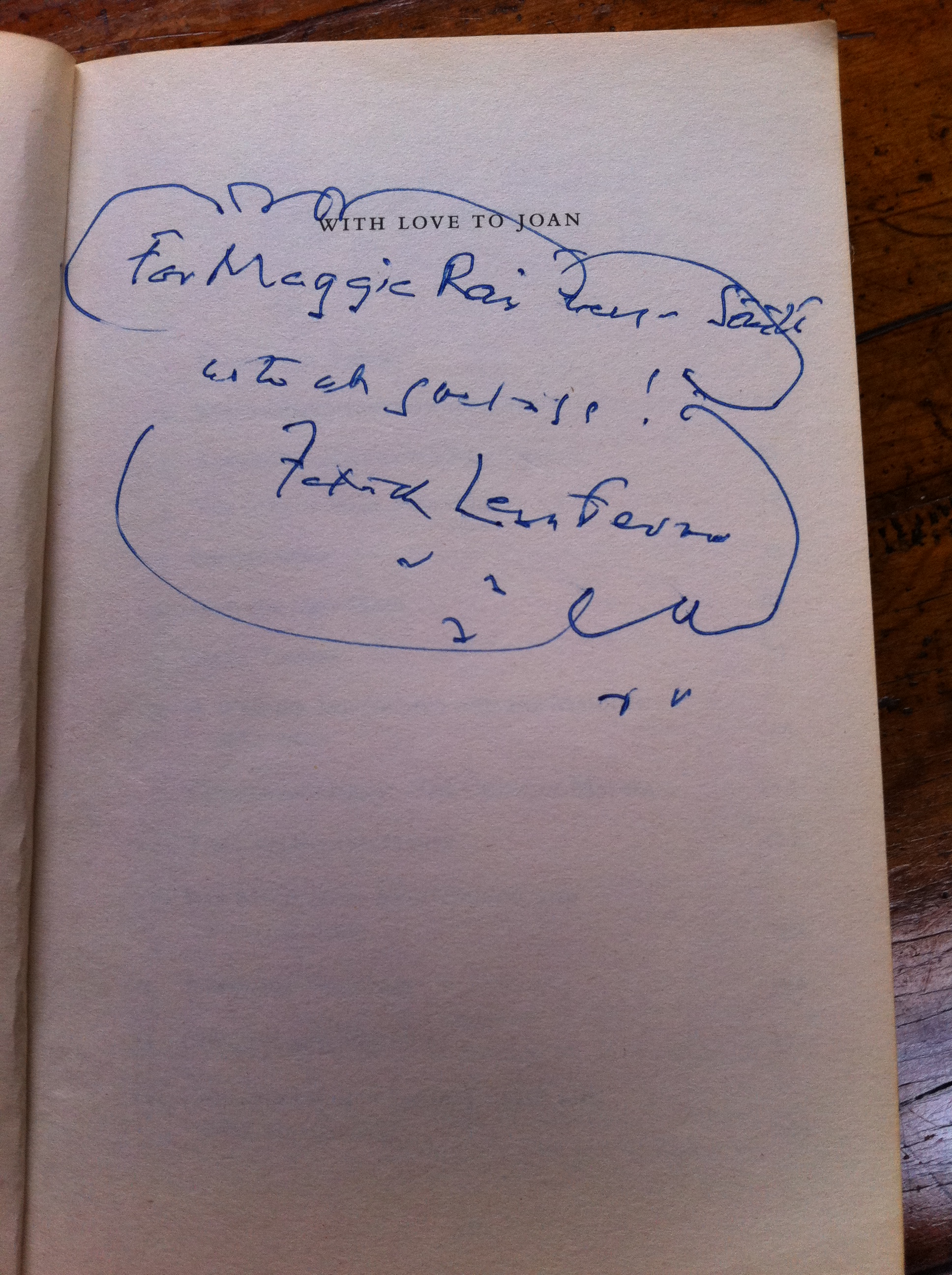
One of the lovely serendipitous moments researching this novel in 2007, I have written about before. It was my lucky encounter with Sir Patrick Leigh Fermor at his splendid home in the Mani on his Name Day. To be there, with the ‘local’s and to share this magical moment, was unforgettable.  On that day, Sir Patrick Leigh Fermor, generously signed my copy of his book Mani: Travels in the Southern Peloponnese. I had found and read the book while in Greece and was bedazzled by his magical flights of language and historical observations, the marvellous segues.  He signed my copy of his book with his usual motif of a small flock of flying birds.

A reader of my blog, Diana Wright, managed to decipher the inscription as I was unable to. It says ‘with all goodness’.

To my great delight, the cover for the Greek translation of ‘Daughters of Messene’ includes a similar flock of birds.  This is pure coincidence and a lovely one at that. Indeed, my novel includes a moment of migrating birds, so these links are quite perfect.

So, here is the very splendid cover for you to admire and hopefully if you speak and read Greek to tempt you to buy the book.  Plus a picture of Sir Patrick Leigh Fermor’s inscription in my copy of his book.

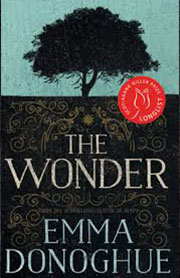
‘The Wonder’ (and growing up Catholic in New Zealand in the sixties)

Standard


My No.1 Book Group chose ‘The Wonder’ by Emma Donoghue for our November read. I hadn’t read ‘Room’ and I was wary of all the hype. But, very quickly, I was immersed in 1860’s Ireland, and astonishingly, recognising so much of my own childhood as a 1960’s Catholic girl. It was confronting. I was wearing my new-age, non-Catholic, 21st century sensibility, but I was also recognising and understanding so much of what was happening. I knew that when book group convened, I would need the one other Catholic in our group to offload to.  Because truly, so much of the crazy cult-like thinking of the times, can only be understood, if you have lived it. What was so shocking for me, was that I understood so clearly what was driving the characters in the story.  I wasn’t surprised by the prayers, by the fatalism, by the unravelling narrative and denouement.  It made perfect sense, in all it’s weird and shocking ramifications and revelations. Most shocking was, that my memories were of 1950’s 1960’s New Zealand and this novel was set in 19th century Ireland.

Emma Donoghue got right under my skin.  She lifted off my skin, and she burrowed right there into my once Catholic soul, the guilt, fear, the superstition. And of course, I thought I’d tossed it all into the bin of yesteryear. But listening to my friends at book group and trying to explain why certain things happened and hearing that they had no understanding, not in the way that these things rang so true for me – I realised that you never truly lose this thinking, this darkly embedded (skewed) world view.  We’ve often said at book group, that you can tell the way an ex Catholic will respond to a narrative.  Indeed, as our book group has been together now for twenty years, we can often guess how all of us will respond to different narratives, our likes and dislikes.  But, ‘The Wonder’ took the lid off my carefully construed and civilised self. I knew how to beat my breast and recite ‘though my fault, through my fault, through my most grievous fault’, recognising how faulty this really is. I knew the prayer to my guardian angel.  How lovely… I once had one.  What a treat.  I believed. She kept me safe. I’d forgotten all about her. I’ve learned to live on my own without her now, but when fatalism is your creed, back then a guardian angel was a lovely prop.

And then, my non-Catholic friends wanted to know what the holy picture cards were all about. I promised next time, to bring some along. I have cards printed for my mother’s death, my brother’s death, three aunts, and a few extras, such as St Theresa the Little Flower, whose name I took at my confirmation, along with Our Lady of Perpetual Succour… the name of the church we attended. Virginal women reigned supreme.

I understood unequivocally, the need to suffer, so Anna’s brother could be released from purgatory. Of course, I knew how crazy it was, but I understood too. Suffering the road to redemption. I remember my confessions and the need to say penance.   Bless me Father for I have sinned.  It’s four weeks (maybe three weeks), since my last confession. Since then I have:  disobeyed my mother and father, sworn and had impure thoughts… I think this was the extent of my sinning, the impure thoughts consistently pervading my growing pains. Guilt was ever present and of course, you had to have sins to confess.  Possibly I admitted envy now and then, for surely that’s the beast of sins, but usually one we outgrow, or age diminishes the sting of. As for the impure thoughts, I grew to like them.

I was from an ordinary working-class family. I didn’t attend a Catholic school because my parents couldn’t afford the uniform and bus fare into the city. The story goes, we got a Papal dispensation. As part of that dispensation, I was shipped on a bus, in the August school holidays to the convent to be indoctrinated in Catholicism.  The nuns at the convent we attended, told us terrifying stories.

The story that has lingered the longest and never left me, goes like this and bears some resemblance to a tale in ‘The Wonder’… I’m guessing there are many more stories of a similar ilk out there.

A young girl dies.  As per the custom of the Church, she is buried in a white coffin, the sign of purity for a child. During her funeral service, there is a knocking sound heard coming from the coffin at the front of the church. The knocking continues. There is nothing else for it, but the priest must open the coffin to see who is knocking. Inside the coffin is the young girl and her tongue is sticking out. Her tongue is black and upon this black tongue lies the host.  As the story goes, this young girl, while still living, had dared to receive Holy Communion while in a state of sin.  The Priest removes the host, the child’s tongue returns to it’s normal colour and the coffin lid is shut again.

Can you imagine how terrifying this story must have been?  Add to this, the dilemma of distinguishing between a venial and mortal sin.  Dying with the stain of a mortal sin on your soul, meant going direct to hell.  I can’t recall, but I’m guessing that receiving Holy Communion while not in a ‘state of grace’ as the saying went, would be borderline mortal… anyway, we never found out if the poor child went to heaven, but the story as you can tell, has never left me.

I read a short bio on Emma Donoghue and almost relieved to know she attended Catholic convent schools in Dublin… for where else would she have gained this incredible insight and understanding of the motivation of her characters, her empathy for them in all their blind faith.

This is not a book review. If anyone is confused about the lack of detail and reference to the plot, the parts that the characters play, I apologise.   I am simply moved, to respond to the impact this novel had upon me.

But also, this novel is more than just the things I have responded to. To quote Justine Jordan of The Guardian “Her new book is based on the many cases of “fasting girls” reported across the world from the 16th to the 20th centuries: women and girls, often prepubescent, who claimed to live without food for months or even years.”

And too the desire by the Church for worldly proof that there is another world leading to fabrication and blind faith in the search for such perceived blessings.

Is it Fiction?

Standard

Is it Fiction?

I was confronted with an extract from my second novel recently. The husband of an old friend who recently died, had just read my novel. He noticed a cameo appearance by his wife. We were out to dinner and he presented me with the extract, photocopied onto a plain piece of paper. Alone it stood, a piece of fiction, and he had a quibble with but one word.  I’d used the word ‘hefty’.  She wasn’t hefty, he said with a touch of regret or perhaps chastisement. He looked across at someone else at the table who knew my friend better than me, almost as well as he. She wasn’t hefty, was she, he asked again? No, she wasn’t hefty, and for a moment I had to interrogate myself as a friend, and then as a writer.

What had I done?  I’d written about a femme fatale, a woman who fitted physically (apart from hefty) the deceased wife. I’d also used her Baltic State ethnic origin, so that if you knew her, which most of my readers would not have, you would have known who it was.  The thing is, I was using my friend to disguise a completely different woman, who once again none of my readers would have known.  Indeed, a woman I barely knew myself, but not wishing to use a ‘real’ person, I’d stolen the character and looks (apart from hefty), of an old friend… not ever thinking I’d be held to account.

And there it was, more than ten years after my novel was published, the paragraph or two (a cameo character only), was placed before me, not accusingly as you might think, but with great delight and recognition.  But I was being held to account.  She wasn’t hefty.

How to clarify that I was using my friend, to disguise a woman I hardly knew, to create a fictional character?  Better still, my cameo character’s name seemed far from the name of either my friend or the woman I hardly knew. But that didn’t matter.  Her bereaved husband, decided, that the name was close to the spelling of his wife’s name backwards.  And I looked, and wondered, and perhaps it was… maybe inadvertently I’d done this, without realising. But my memory tells me that I simply googled the Baltic State country my friend had originated from and looked at possible names… attempting to disassociate the actual from the fictional.

The good news is that I haven’t offended anyone, as my friend’s husband loves this description of his wife. The scenario in which she appears is entirely fictional I say. But I realise this isn’t entirely true. It is an event that I have recreated, fictionalised, and reimagined, giving it more weight and intrigue than there ever was in the actual. But the truth is, his wife wasn’t part of this event.  Why this event stayed in my mind from the 1970’s until the new millennium and emerged as a fictional truth, I’ve no idea. But it has reminded me of my first novel, when a neighbour told another friend after reading my novel ‘well, that never happened’… the thing that never happened, was me the author having an illicit sexual encounter with the neighbour…   It seemed hilarious at the time, that the neighbour assumed my protagonist was indeed, myself, the author and another character was… goodness me… himself.  But too, I know an old school friend wrote to my publisher after my first novel came out to say he knew me and many of the characters (oh goodness me) in my novel.  Err… what to say.

After the publication of my third novel ‘Daughters of Messene’, I was stopped in the street by a neighbour who told me ‘I’ve just read your book.’  It was said in an ambiguous tone that implied ‘can you believe it, both that I’ve read your book and that you’ve written one’.  And then the best part. ‘I couldn’t find you anywhere in the novel… you really are a good writer.’

I’ll take the compliment and be glad that he hadn’t found his wife, or himself…