Diana and the Golden Apples

Standard

 Diana and the Golden Apples

Recently, I wrote a piece of ‘flash fiction’ for National Flash Fiction Competition, inspired by the word limit.    I wasn’t placed, but it was great fun and it also inspired another piece which I sent off to the 4th floor journal.   I’m delighted to say this piece has been accepted for publication.   What I now realise is that neither of my short pieces is fiction.   But it doesn’t matter now because the idea, and the containment required by the word limit, freed me up to write.   My piece for publication in the 4th floor journal is a heart-piece.  It came out in a ‘flash’ and so I’ve lived up to one half of the flash fiction challenge.

I really like shape and form for poetry too.  I’m struggling at the moment with a poem that isn’t working and so I’m going to try out various forms like the villanelle (one of my favourite forms) and perhaps the possibly more difficult sestina (which actually I’ve never done before).   If I succeed, and my poem is accepted, I’ll post a link to it!   The problem with this poem is that I’ve chosen a theme before I’ve begun my poem – not my normal way of writing – and I think therein lies the problem and why the poem isn’t working.   I’m going to try and harness that through the strictness of form and hope that the repetition will drive me to the heart of the poem.

I see that in my last blog about the Literary All Blacks (about which now I feel a sense of regret for having not mentioned so many other talented writers who should be in the team) – that I mention our old blue Bakelite radio – and interestingly, the blue radio pops up again in this very short piece of ‘flash’ non-fiction.    I hasten to add that perhaps flash in this context means written in a flash rather than the presumptuous idea that it glitters somehow.

Golden Apples

 She had the whitest teeth of anyone I knew.   And milk spots, too.  I never knew how white could show on white, but it did.  Her hair was Heidi and Rapunzel all in one, two strong yellow plaits.   She lived near the showground, close by to the blue gums.  I sometimes wanted to be her.  On weekends she rode her horse in those fields far from my house.   I found a photo recently of her, at the local A & P show, riding her horse without a saddle, carrying three apples on a plate.   Four jumps, it says, she must clear, without spilling a single apple.  I imagine her concentration, her plaits flying outwards from under her little black rider’s cap, knees pressing the horses flank.   I hear applause, smell the candy-floss, and taste toffee apple.

I am reminded of the story of ‘Diana and the Golden Apples’ – Sunday mornings beside the blue Bakelite radio.  How my heart raced every time I heard this story.  Even knowing Melanion would win, I still waited each time Diana stooped to scoop the apple, terrified unless she slowed a little.   And too, relief, when at the final drop, the apple cleverly was heavier, and just before she caught him, Melanion crossed the finish line.

I’m much older now and I know that girls with golden plaits and golden apples are the thing of myths.  I know that Melanion still lives in the hearts of many an old woman, but he’s been supplanted too, by real men, along with some rotten apples, and a few that never quite ripened.  I imagine these old women slowed now with weight of all those apples.  I see them smiling, as they watch, Melanion running on ahead,  laughing, knowing he’s really running away from them.

The All Blacks of Literature

Standard

The All Blacks of Literature

I feel qualified to write this post.   I like rugby.   I spent many Saturday afternoons in the sixties glued to the blue Bakelite radio that sat on a ledge above our green fridge, listening to rugby broadcasts.   The announcers back then had to use their voices to generate excitement and they succeeded.   I can still visualise Don Clarke converting the Kel Tremain try with his legendary kick at Athletic Park from behind the 25 yard mark with the goalposts shifting in the wind.  Or can I?   It’s a legend now and it doesn’t matter, it’s as if I saw the whole thing live.

Somehow after all those Saturday afternoons listening to rugby, many of them international test – not to mention the Lions tours in the sixties when I was beginning to notice not just football form – has turned me into a somewhat unreasonable rugby enthusiast.   I have to watch that I don’t become one of those one-sided bores who forget to applaud the opposition for good play.    My nationalistic fervour knows no bounds and I yell at the television demanding tackles and accusing the referee of bias unless he agrees with me (even though I still don’t really know the finer details around the ruck or all the off-side rules).    So, yes, I feel somewhat qualified to make this post.

The New Zealand Post Book Awards short-lists have recently been announced.  You knew that didn’t you….  what, you didn’t know?   How is that?   Well it’s simple really, because there has been almost no fanfare whatsoever.    This has been the case now for some years.     The pinnacle perhaps of a writer’s career and their triumph, a short-listing in the awards, is barely observed.   Unless, like me, you follow the local literary blogs, you might never know.   But you are bound to hear if Dan Carter’s groin is still hurting, or if Piri Wepu is gaining weight, or Ma’a is replacing Sonny Bill.   Yes, there will be blow-by-blow accounts of their injuries and predictions about upcoming matches and match fitness.   Can you imagine if there was a page devoted to author fitness?

I imagine it running something like this.

The team has been announced, and this year we have Fiona Kidman out on the wing, Owen Marshall is the tight-head prop or possibly hooker, and Eleanor Catton is the newbie at fly-half.   Craig Cliff is trying out for full-back, replacing Carl Nixon, but this is a trial period and the selectors are watching their fitness and form closely.    The forward pack of Emily Perkins, Charlotte Grimshaw, Jenny Pattrick, and Vanda Symon are working well with their different strengths, ensuring excitement and potential tries.    Alice Tawhai is the dark-horse who seems to go on the bench in-between rather spectacular games and I think she is overlooked when she ought to be picked.   She’s one of my favourites but shy about publicity which is not always good when the selectors are out their choosing their teams.    Charlotte Randall is another who seems to sit quietly on the bench and then when called upon scores almost immediately.

In the line-out, you can absolutely rely on Owen Marshall throwing in a perfectly straight ball, never missing and always generous, and he’s called on time and time again, and never falters.    Witi Ihimaera is a bit of a show pony who the crowds love and when he’s on form, you have to say, there’s no-one else to watch on the field – a scene stealer for sure… plays many positions.  Barbara Else and Stephanie Johnson have just come off the bench and made an excellent impression.  C.K. Stead and Maurice Gee, sometimes in the stands now, but they are frequently called on for advice to the coaches and can never been truly ruled out… both still on form.    The same goes for Margaret Mahy and Joy Cowley – part of the original winning forward pack and really never quite surpassed but generously letting some of the younger players have a turn and lending a hand at practice.

There are so many upcoming players who could make the team, many of them MA graduates from the university talent pools.   But you can’t always overlook the resilience of the rural sector, the late starters with good club games, who given a chance, can score runaway tries like Sasha De Bazin and Tanya Moir.  

And of course, all our legends who’ve battled and won the international games for us – Knoxy, Jonsey, Gunn, Grace and Hulme, house-hold names, never to be forgotten, surely.

Frankly, there’s just too much talent both on and off the bench and I’m going to stop now, having failed to mention many hugely talented players.    I mean how will I choose, who subs who?           Yes, I’ve decided, after picking some of my literary All Blacks, that it’s just not going to work. I can see the scrum and the line-out becoming far too technical for its own good and I’d worry that the game plan would become more important than the score with absolutely no regard for the spectators and long periods of consideration before passes were even made and then some would have to be re-played, possibly even erased, and there would be endless resorting to video replays for accuracy.   I think we’d have a fall-off in ticket sales and the inability to tackle, sacrificed for admiration for outstanding play by the opposition would hinder the whole point of the game.

Plus our writing athletes would suffer OOS, writers block, gain weight, lose weight, gain weight and nobody would care – they just wouldn’t care.   They might write best sellers and get shortlisted for international prizes, but the public just won’t be interested.   They are not going to make a full-page on the back or the front of the newspaper.

Although in France, they might.  I have heard that Fiona Kidman was recently in Paris where Le Figaro wrote (about her Frank O’Connor short-listed collection ‘The Trouble with Fire’) – “that there seemed to be more to New Zealand than Peter Jackson and the All Blacks, there was Fiona Kidman.    We knew that didn’t we?

Yes, I’d have liked to pick the First XV of Literature, but it would have proved impossible really with so much talent and shifting form – impossible.   Plus  I think the lack of interest from the New Zealand public would mean we’d never get the money for a stadium  – nope, I’ve abandoned the idea already.   I think the Sunday Star Times has the right idea, just forget about books and publish more salacious scandal and scandalous fashion.

Brother of the More Famous Jack

Standard

Brother of the more famous Jack

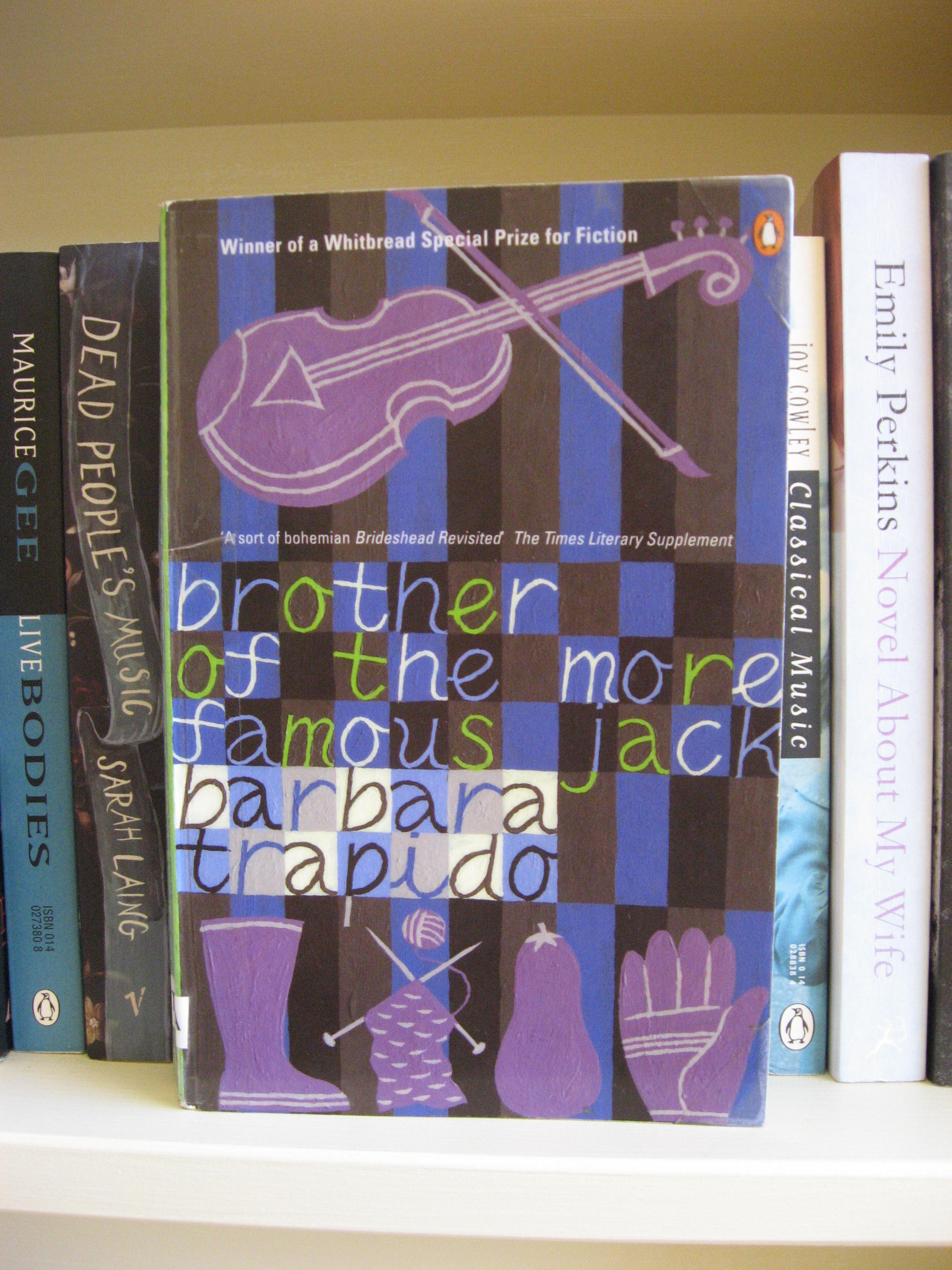
by Barbara Trapido


This book was winner of a Whitbread Special Prize for Fiction way back in the very early 80’s.   I’ve only just read it, and yet the catchy unforgettable title, has been with me since the mid 90’s.  My first book group read ‘The Travelling Hornplayer’ by Barbara Trapido and everyone kept saying, you really should read ‘Brother of the more famous Jack’.   Well, now I have.

It is the story of Katherine who is interviewed by Jacob Goldman ‘a powerful left-wing philosopher up from the east end’ for a place at a London university in his Philosophy course – and how she becomes involved with his family.  Indeed, how Jacob really takes Katherine under his wing so to speak.    My book group agreed, as we talked about this book, that this sort of special relationship between a professor and his student, is probably nowadays less likely (e.g. would face more scrutiny).   And yet, even though you sense Jacob’s infatuation with Katherine, indeed his whole family’s infatuation with her and her with them, it feels very normal.   The idea that another family other than your own can change the course of your life is very appealing.

Katherine and the Goldman family are the stuff of fiction, of course they are.    Does anybody in the antipodes really know a family like the Goldmans and the very fecund Jane, wife to Jonathan, not to mention their precocious off-spring?  Perhaps…   it doesn’t matter.   I loved them.    I’d forgotten how satisfying a novel can be, and how delicious it is to be lost in another family, and to not want a book to end.    Perhaps I’ve been reading to review too frequently recently, and this has spoiled my enjoyment.   Reading ‘Brother of the more Famous Jack’ was for pure pleasure and for the fun of discussion with one of my book groups.  I imagined they would all love it like I did.   And for the most part this was true, but one of my book group friends prefers non-fiction, and she usually gives novels about the first chapter to grab her, or she abandons them.    She is English, she is discerning, and she is well read.  Ah, I imagined, she will love this novel.   Not so, she only got to page 50 and hated all of the characters, especially, as far as she was concerned the unbelievable Katherine, and too, the ghastly Goldmans – she didn’t believe in them and she certainly didn’t like them.

Ah, but I really loved them, even if I didn’t always like them. This is what a good writer does.   She (or he) persuades you to believe in their characters, even if only for the 200 or so pages of their existence.    Somehow, with her first novel Barbara Trapido does this remarkably.   Mostly I found the characters hugely endearing (even when annoying) and the conversations and insights, at times, acutely funny.    You sense that Trapido knows the world she is writing of, extremely well.   The whole shambolic academic snobbery, layers within layers; the English class system.   Trapido, it says, was born and educated in South Africa but now (1982) lives in Oxford.   I sense she is in this regard, both an ‘outsider’ and an ‘insider’ making her observations so acutely funny.

Laugh out loud examples (for me) as Katherine negotiates her new world and new perspectives, aware of the differences between herself and the Goldman’s are:

Katherine is being seduced by an old friend of the Goldman’s, John Millet.    “I had cried into my pillow the night my mother called John Millet queer, but I perceived a world of difference between that and Jacob’s calling his house guest an old faggot.”

Katherine in a relationship with Jacob Goldman’s son, Roger…

“I painted disloyal portraits for him of my mother in her emerald crimplene trouser-suit, reclining in her fringed garden seat with the latest Nevil Shute.  I told him that my uncle collected George Formby records.”

“You wouldn’t know he was Jewish,’ my mother said, ‘would you?’  She said this by way of complimenting me on the quality of male I had at last reassured her by pulling in.

And, when Roger heads to Africa to teach in a country high school, and Katherine’s mother says this:

“I’ve got nothing against Jews,’ she said. “It’s such a pity he has to be in Africa when you could do with his company.  Aren’t there enough blacks for him in England?’

And then too there is the very sad stuff when Katherine leaves the Goldman family to live in Europe and meets the handsome feckless, Italian, Michele – “Michele didn’t drive a Fiat.  He drove an open-topped MG.   This was not because he was an Anglophile – far from it – but because he was an oddball who liked to be different.  It was a piece of understated showing-off which I found most appealing.”     Michele offers her a Mink coat in exchange for an abortion.    Katherine becomes a mother, briefly.

And then she returns to the Goldman family, altered, grown-up, sad, and they too have changed or has just her perspective of them altered?

We find out nearer the end, why Jane the lovely fecund Jane, keeps having babies.    We see Roger in a new light and we see Katherine emerging as a new sort of women, one who wants to work (hand-knitting garments) to help support her novelist husband.      Trapido in this novel explores the role of the modern women; Jane and all her babies (because she can afford it!); Katherine who plans to run her own business, and Rosie, the almost overlooked daughter of Jane who marries right outside the family ‘genre’ so to speak, because she recognises she doesn’t have the brains or intellect which her family (snobbishly) venerate.

And in the end, it’s just such a jolly good read, which is what a good book should be.

Tolstoy and the Chambermaid

Standard

Tolstoy and the Chambermaid

Forty years ago, I was the chambermaid reading War and Peace in the beautiful Haukeli Mountains in Telemark, Norway.  It’s quite a big book really, and the reason I became absorbed was two-fold.   First of all, I couldn’t speak Norwegian very well, and the book became my companion on my work breaks, something to engage in when I couldn’t hold a conversation.    Secondly, I had purchased a number of literary classics on my classic Kiwi “OE “ while living and working in London, Newcastle, Manchester, and Edinburgh –  as part of my literary self-education.  Now here I was in Norge reading Tolstoy surrounded by snow, metres deep on the sides of the road … the perfect setting.   Even you might say, as close to Russia as a Kiwi girl could imagine being at that time in my life.    A couple of years later, I was on a train in Finland that stopped right on the Russian Finnish border and we (my now husband and I) were arrested for taking photographs as we walked towards the Russian border.   And that is still as close as I have been, but I do dream one day of actually getting there.

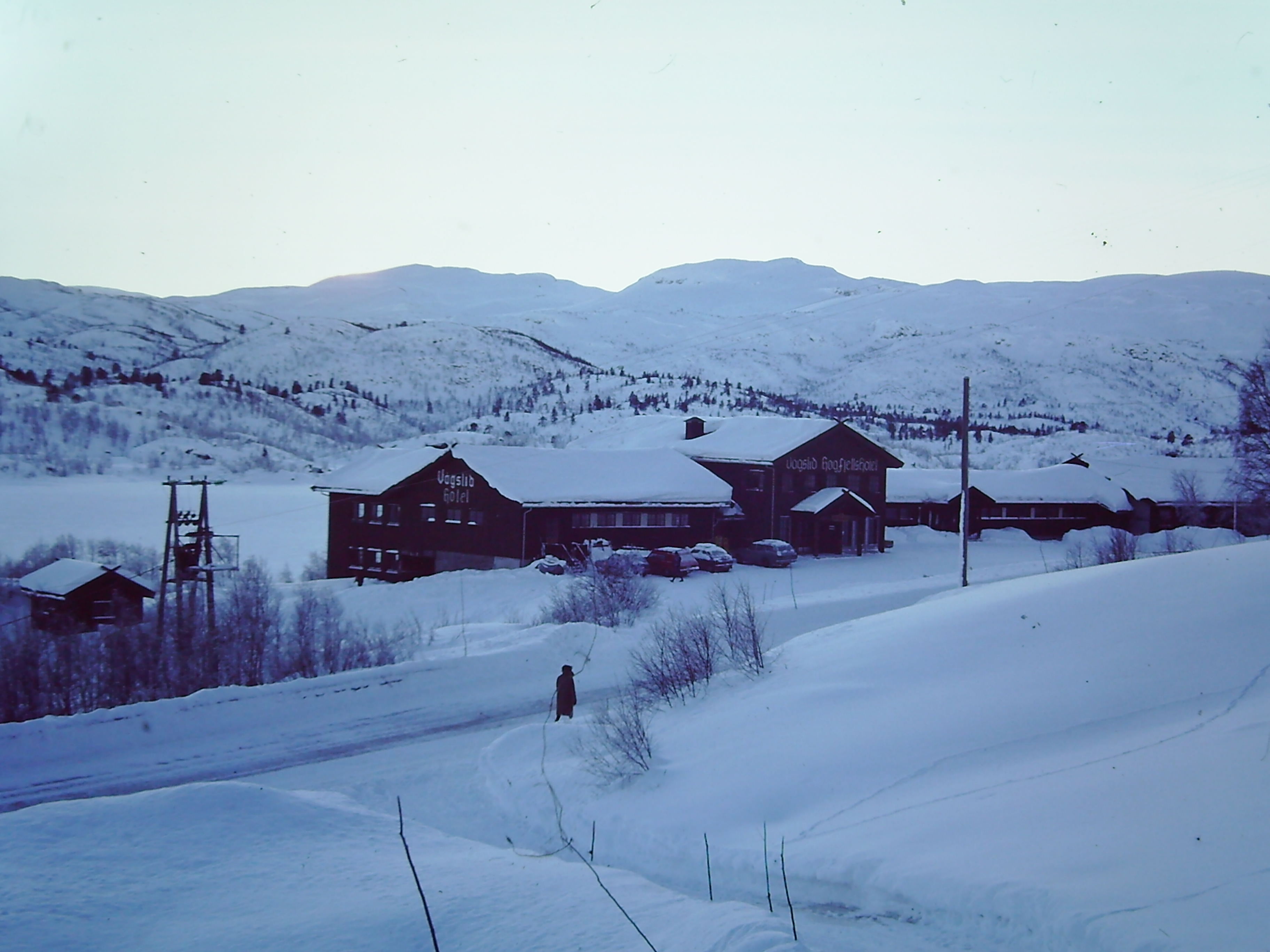
I fell in love with Vagslid, a most enchanting area which includes the Vagslid Vatn (lake) and beautiful mountains.   I learned to ski here, at first unable to even stand on skis on the flat, and then eventually able to set off alone, to traverse the frozen and snow-covered lake, to climb and ski to places with magical names like Fossen, Langasae, Åmlinuten.        I was a chambermaid and a waitress and Norway was newly rich.   I knew very little about waiting tables but I knew how to make hospital corners when making beds.  I’d learned this the previous winter in Edinburgh working at the North British Hotel during the Edinburgh festival.   But I didn’t need to know so much about hospital corners in Norway, as they had duvet (dyne) bedding which back then was quite a novelty for me.   My Norwegian language skills developed in an ad-hoc way with quite a lot of Danish imellem (in-between).   The wife of the manager of the hotel was Danish and many of the young women who worked alongside of me were also Danish – I assumed we were all talking Norwegian! My very first Norwegian phrase that I learned to say off by heart,  was Vil du være så snill å våkne meg i morgen which translates as “Would you be so kind as to wake me in the morning” (travelling as I was sans alarm clock and possibly back then, sans watch).

I plan some day to re-read War and Peace because it is such a long time since the first reading in my very early 20’s.  I’m sure that a re-reading will reward.  My hope is that I am en-route to Russia when I do this so that I can inhabit not only the pages but the real landscape.     I’ve just been reading a book to review which is based in my favourite city, Wellington.   Someone I was talking to recently, said that they love Wellington because you are constantly in touch with and aware of the elements.  The book that I was reading milked all of these elements for atmosphere and to convey somehow the mental collapse of one of the characters.  I liked the weather, perhaps even more than I liked the characters in the book.  But it struck me that as readers we inhabit so many physical landscapes in our imagination and when we encounter a landscape we know, it is doubly exciting, if done well.

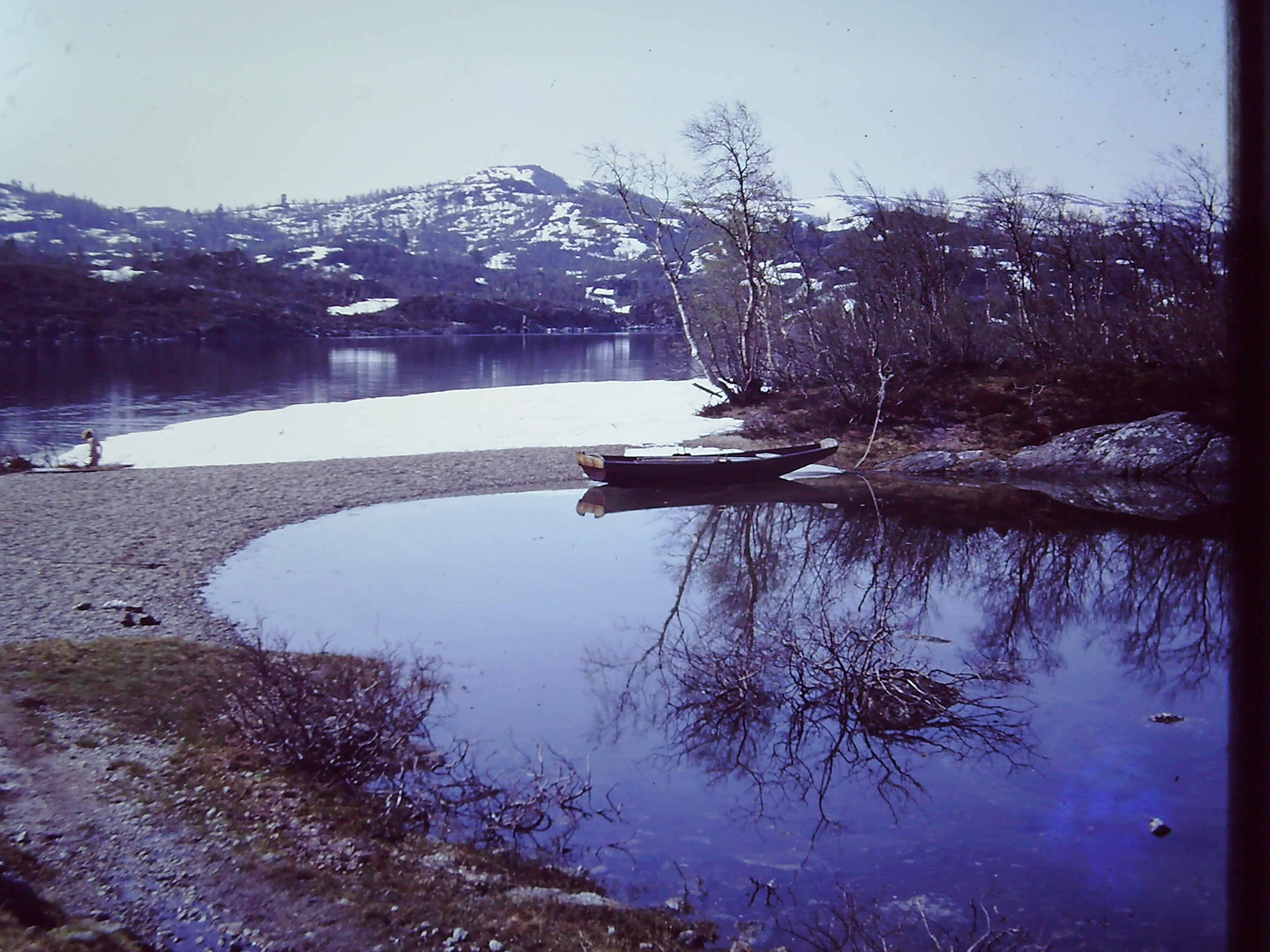
Here is a recent photo of the snow at Vagslid where I spent three winters and one summer, the first winter by myself and the next two winters and one summer with John.   We have some terrific photos of our own, but mostly they are old-fashioned slides which we need to convert.

Together our greatest skiing triumph was the return trip through mostly virgin snow from Vagslid to Saesnuten and back (if I recall correctly approximately a 40 kilometre round trip). Here is a poem I wrote inspired by Vagslid.

Cross Country

From Hogmanay to Hauklisetter
the Telemark Waters once liquid
solidify
I learned to ski, instead
of love
Carol King’s earth moved
Under my feet, the frozen
possibilities
assumed a shape, snow on
ice, ice on water
Boats upturned lay lost
til summer
Fossen was a destination
and destiny
a frozen fragment
I followed reindeer
tracks, when I
might have followed you

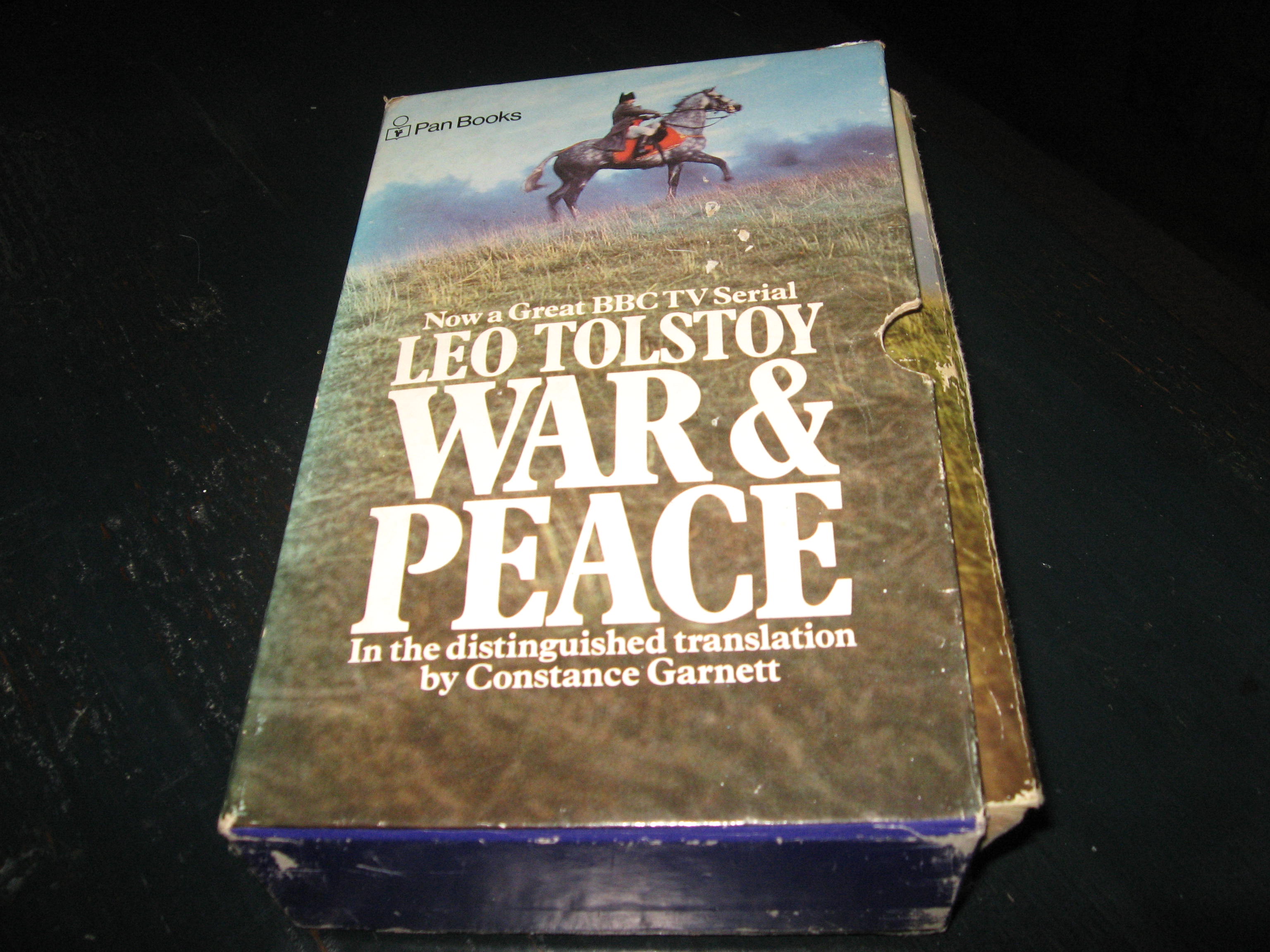
And here is, a photograph of my battered copy of ‘War and Peace’ a Christmas present to myself as you will see from the inscription I have written, in Edinburgh, Christmas, 1972.

This was my very first Christmas without family, and as I seem to recall, without flat-mates either, as I think they’d all escaped back to the Scottish Highlands or Europe for the festive season.

Tolstoy was my consolation and he travelled with me to Norway.   Thinking of War and Peace I was reminded of the amazing spirit of the Norwegian  people recently when they gathered in Youngstorget Square, 40,000 of them, to sing ‘Children of the Rainbow’ to celebrate multiculturalism in defiance of Anders Behring Breivik.

Autumn, Anzac Day and Gerard Manley Hopkins

Standard

Autumn, Anzac Day and Gerard Manley Hopkins

Where we live, in the bush, by the sea, autumn for me is the best time of year.   We moved to our house on the hill in autumn twenty something years ago, and it was the still air, the mellow sunshine, and the leaves dropping in the garden, that captured our hearts.   The harbour is quieter this time of year, calling us to kayak.    The cicadas have ceased their courtships and the wasps are out, lured by the Easter spices.   I’m affected by the light, the warmth, the sense of peace that only autumn seems to bring.

And then, it is Anzac Day and the brass band, the bagpipes and the haunting bugle, bring another layer of nostalgia peculiar to my Kiwi childhood, that lovely in-between season thing where summer has ended, but winter hasn’t yet begun.    I ran behind my granddaughter today on our nature walk, she was wearing a hand-knitted cardigan in strawberry, aqua and bluish hues.  I watched her back running through the bush collecting special sticks so we could block the creek further up the hill.  When she snuggled for a cuddle I could smell shampoo and wool and the damp soft mud beneath our feet.  I bought her a poppy to wear on Wednesday and she loves red.  We looked for the toadstools we’d seen the week before, and mourned their loss, wondering what had happened to them.

I was reminded of this beautiful poem by Gerard Manley Hopkins that I only encountered late in life studying English Literature at Victoria University when I was 50, and indeed, I used a line or two of this poem in my first novel ‘About turns’.

          “Spring and Fall” (1880)   Gerard Manley Hopkins

 To a young child

Margaret, are you grieving
Over Goldengrove unleaving?
Leaves, like the things of man, you
With your fresh thoughts care for, can you?
Ah! as the heart grows older
It will come to such sights colder
By and by, nor spare a sigh
Though worlds of wanwood leafmeal lie;
And yet you will weep know why.
Now no matter, child, the name:
Sorrow’s springs are the same.
Nor mouth had, no nor mind, expressed
What heart heard of, ghost guessed:
It is the blight man was born for,
It is Margaret you mourn for.

My granddaughter and I will meet outside the local school on Anzac morning.   Then we will march alongside the war veterans (there cannot be many left, but perhaps from the Vietnam War), and I will be stirred by the music on two counts.  One because I was a marching girl in the 50’s and 60’s and two because I’ve always followed the Anzac Parade, to see my Dad in his shiny and freshly polished shoes, wearing his war medals that Mum would stitch temporarily on to his suit, so they hung straight.  Now I have his medals and his Crete badge and his small barbed wire pin, remnants of his war efforts.   Perhaps this year I will wear them.   When he was alive, and after I was married with a family, he would sometimes come and stay with us and we would do the Dawn Parade in Wellington and then our own local parade.   We couldn’t get enough of it.   Nowadays, I just do the local parade and adjourn to the RSA for the home-made pikelets, sausage rolls and cups of tea, followed by an obligatory beer with my friends and we toast my Dad.     This will be my first Anzac Parade with my granddaughter.

In 2002, I travelled with my husband to Greece and to Crete to retrace my father’s war journey and to Poland where he spent four years as a prisoner of war.   I wrote about it and the story was published in the New Zealand Listener.  Regrettably, I inadvertently wrote of Stalag VIIB instead of Stalag VIIIB, and neither the Listener nor I picked it up before it went to print.

Here is a link to the story: Looking for Curly

What prompted this post about Anzac Day is one of my favourite blogs Surprised by Time.and on reading this blog I found more information about where my Dad might have been on mainland Greece, before arriving at Suda Bay for the Battle of Crete.     This is part one of a two-part blog that includes excerpts from New Zealand and Australian veterans of the Greek campaign, both on mainland Greece and Crete. It is well worth reading.

Mulling it Over

Standard

A couple of years ago, a friend of mine, Mary McCallum decided she would begin hosting poems on her blog.    It sounded like such a fun thing, and as it was around Easter, I suggested that I had a poem she might like.    Well, Mary is a very talented poet and a perfectionist.   I sent her my run-on Easter poem and we chatted via email over the weekend before it was ‘published’.     There were queries about words and line breaks and eventually, my run-on poem became the shape of an Easter cross.    Yes, I can’t take the credit for this, was the clever eye and editing of Mary.    I like the cross, and too, I liked the run-on of the poem when it wasn’t a cross.   It’s interesting how a poem can change shape and yet the meaning more or less remains.   I’m not big on overt symbolism so I worried that my poem wasn’t strong enough to carry the Easter Cross.

I am going to re-post the poem here on my blog, without the shaping, first because  it’s tricky on a blog to get the poem to stay in shape, so hat’s off to Mary, but also because I thought the poem might work in its more or less original form, as a kind of run-on.

Mulling it over

Cinnamon, cardamom, almonds

and wasps, plump imported raisins,

currants;    Uncle’s aluminium pan.

The sunlight is thinner and Maria

who is Greek is fasting; orange peel

floats in the dark pool of wine.

I add sugar and schnapps, watch

the liquid almost boil and ladle it

into warm mugs.  We breathe in

the alcohol, swat at the wasps

remember last Easter and the one

before.  We marvel at the yeasty buns

suck the sticky glaze from our fingers

and lift the pale crosses to our lips

knowing that Pilate will wash his hands,

Veronica will wash his face, a

soldier will lance his side, and that

he will chat to a couple of thieves

just before he dies.   But, it is

the triumph of the empty tomb

we most admire as we raise our

hot mugs of wine in relief, glad.

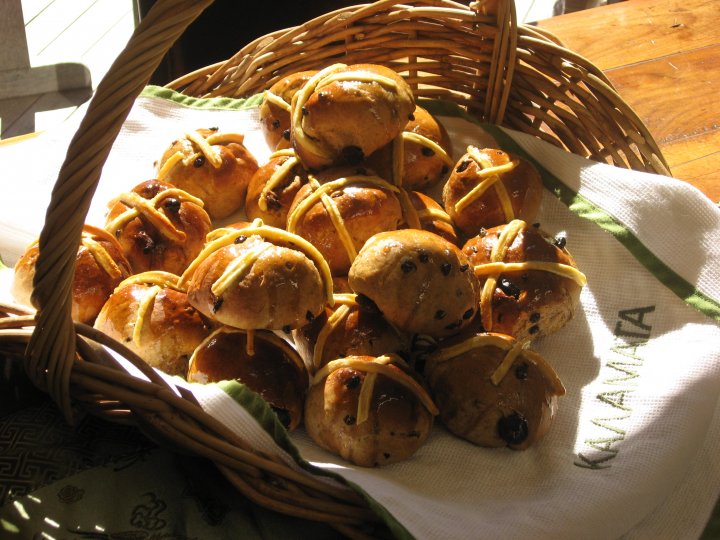
Although, I’m not religious, I love Good Friday and the poem is about the way we celebrate our Good Friday.   We have friends over to eat my home-made hot cross buns and drink our (top-secret) staggeringly alcoholic mulled wine.   It includes aquavit or schnapps, Muscat de Frontignac (when we’re feeling flush), vermouth and red wine, not to mention cinnamon sticks, orange peel, cardamoms, seedless raisins and almonds.   The red wine is usually run of the mill, or even cask red, as once you’ve added sugar and almost boiled the stuff…. well…  but one year, my daughter-in-law’s sister had just celebrated her summer wedding and there were a spare few bottles of rather nice red left over which were generously donated to the mulled wine.   Many of us, sipping that particular brew, rued the fact, we’d cooked it!    The buns have crosses, but my family get their own bun decorated with their initial instead of a cross, and now I have a granddaughter who has the same initial as her father – they are both the ‘S’ bun.   My youngest son is a ‘T’ bun, which is more or less, a cross I guess, but as he lives overseas, there won’t be a‘t’ this year.

When I say I’m not religious, this does rather omit my Catholic (leaning toward Irish) upbringing.   So, I have fond memories of Good Friday, the three-hour pageantry, the stations of the cross, the kneeling the standing, the drama.   We had handsome Irish priests to lust after, and one passionate local priest, Father Bradford who would hurl himself at the floor in true grief at almost every station, building to a heart-rending finale.   I was glad when Simon came along to help carry the cross, I loved it when Veronica wiped the face of Jesus, and we all fell in unison, once, twice three times, when Jesus fell, down on our knees, urged on by the theatrics of  Father Bradford.   But, I must confess, I was sometimes distracted by the gorgeous outfits of the girls from Waimea West by the time they laid him in the tomb.  You see, Easter was a time of religious fervor and fashion.  It was the between seasons moment when you could wear your new winter outfit, and admire everyone else, including their hats.   We were a small parish and at Easter for some reason, we would collect the surrounding countryside parishes into our church – oh, a host of fabulous fashion, girls my age whom I saw perhaps once or twice a year, and we’d all be wearing our very best brand new Easter outfits.  Yes, I loved the Stations of the Cross, Father Bradford leading us in what was I suppose, our own modest Oberammergau – we were part of the passion play, standing, kneeling, in thrall to his grief, perhaps exploring our own, and peeking, as you do, to see what the girls from Waimea West were wearing.

Postscript:

A curious thing; my links are not working unfortunately, on either this or my last few posts.  I have sent a message to WordPress and hopefully I will find a solution.   So, in the meantime, if you wish to see the poem as an Easter Cross as first published, try this http://mary-mccallum.blogspot.co.nz/2010/03/tuesday-poem-mulling-it-over.html.

Also do check out the Tuesday Poem blog which has now taken off and is a big success – so well done to Mary and all the other contributing poets.  http://tuesdaypoem.blogspot.co.nz/

A Broken Heart

Standard

Please Look After Mother

I usually read with my head.    Books that try to claim my heart, frequently meet with my resistance.   I like to second-guess an author if they are trying to make me weep, feel sad, or to tug at my emotions.  The books that seduce me are mostly darkly funny to mask their sadness.   I loved ‘The Forgotten Waltz’ by Anne Enright; I like her writing, the wicked way she carves into your heart through your head.          We bring to our reading so much of ourselves, both our past selves and the now.    My youngest son lives in Seoul, is married to a Korean girl and has through marriage, become part of a Korean family.  I have visited Seoul now three times and I love the city and the people and most especially of course, my son’s wife and her family.    Add to the mix, that I am almost 62, the same age that my mother was when she died.     Then one more ingredient.   I am in Sydney on a short holiday, which is where I was working forty years ago, when my Aunt phoned to say ‘come home’ your mother has had a heart attack.

So, perhaps I am predisposed at this particular time, for this particular book that has just won the Man Asia Literary Prize Please Look After Mother by Kyung Sook Shin translated from Korean by Chi-Young Kim.    I found it heart-breaking.    Almost from the start, my heart was breaking.   It is such a superbly simple, yet deeply affecting novel.    I’m not sure if it is because the book is in translation that the writer is so easily able to transgress, to override, to ignore my self-erected emotional barriers.

I cried easily and without self censure.   It is a beautiful story, made all the more affecting because of the shifting perspectives in each chapter, as the family set out to find their mother, lost at Seoul Railway Station.    Seoul is one of the most modern, populated cities in the world today.   The mother in this novel who has always walked a few steps behind her husband, fails to get on to the train and it’s only after the train has left the station that he realises she is not on it.   We get to hear from her children and from her husband how they see their mother, now that she is missing as they comb the train stations, hand out flyers, and revisit parts of Seoul they lived in years ago, where she might have gone looking for them.

The first voice is her daughter, now a feted and famous author and she recalls spontaneously going to visit her mother one day after one of her novels is translated into Braille and she had read to a group of blind people.    She buys an octopus and visits her mother.  It is the blending of food, train stations, cultural customs, convention, tradition and modernity that makes this book sing.   Yes, I admit, I found even the names of places enchanting, because I recognised them, newly recognised them, and felt a connection.    My son is fortunate to have the loving affection of his wife’s family and because he is vegetarian, when he visits his mother-in-law, she prepares all his favourite foods with delicious meat substitutes, pampers him, mothers him, and as his mother back in New Zealand, I feel deep gratitude for this.    So, yes, I am the perfect candidate for this book, I recognise that.

When my mother died, I was young and travelling; just back from living in London and now in Australia, doing my own thing.  I didn’t want to go home when she had her heart attack.  In fact, after I received the phone call from my aunt, I waited another two days until I received an urgent ‘come now’ and I abandoned my job and flat on the very same day to fly home.  I still recall the mad rush to gather my belongings (modest thankfully) from a flat on the North Shore and the taxi driver in New Zealand when I arrived, eschewing my attempts to tip him as he carried my heavy suitcase for me.   But I was resistant, callow and self-interested, unable to really give my mother my full attention, even when she was dying.   This book explores those very themes through the eyes of the children of the mother lost at Seoul Station.  They explore their memories of their mother, their last encounter with her.

And so, here I was in Sydney again after many years, catching up with a friend with whom I had flatted in London in 1972.  I was in a cheap but modest Pensione on George Street.   Across from Central Station is the strange-shaped Dental Hospital building where it was I worked when I received the phone call about my mother.   I rode the trains reading this novel, and now the doors on the trains close automatically, but back then, I rode the trains in the hot summer and the doors never closed.   My heart was in several places at one time.   I was in Sydney now and back then; I was in London, I was in love, I was all over the place, warmed by the Sydney sun and completely disarmed by this evocative novel.

Kyung-Sook Shin manages to incorporate with subtlety, the extraordinary history of South Korea , from poverty to extreme modernity in sixty years, without being particularly political or weighty posturing.    I recently readBruce Cumings ‘The Korean War’ which is heart-breaking in a different and more factual way, and gives insight into the plight of the North Korean people both during the war and after – ‘the oceans of napalm’ dropped on the North by the United States and read that during the Korean war, four million Koreans were killed, two thirds of them civilians.   So, yes, Korea, both the North and the South have an extraordinary recent and mostly untold history.

I have only one small quibble with the novel and perhaps that is the ending.  But that too may reflect something of my prejudice and predisposition.   I won’t spoil the ending, but I felt it was perhaps too overtly symbolic, but still, a very small quibble.   The translation isn’t always perfect either but somehow for me that lent authenticity to the text, so that I knew it was a translation and I wished that I could read Korean, to see the words in their original context.  I wondered would they be more, or less, sentimental from a native speaking perspective.

Please Look After Mother broke my heart a little and it was lovely to have it broken.   I can see why it is a best-seller.   But too, I can see how this review from the New York Times was written with a more cynical and critical reading – yes, I can see this point of view, but this time, I left my head and followed my heart, and that’s okay, it’s only fiction. It seems the book has also been translated as Please Look After Mom  and that evidently sealed its fate for many, as a piece of sentimental fiction – the whole ‘Mom’ thing.   I guess this also goes to show, how much of ourselves we bring to our reading.

As much as you can

Standard

A friend recently alerted me to the poetry of Cavafy and I have found this one poem that I love (as well, of course, as many other divinely sensual poems)… ‘As much as you can’.

The reason I chose this poem to write about is because of the addiction I have felt recently to social media, Facebook, twitter and following other peoples’ (mainly writers) blogs… and too, the emptiness that this feverish addiction can leave me with.    A kind of literary on-line party that has no ending. And lately, it has begun to feel as if all the words, the poems, the cacophony of literature, are but a clamour, and not as I thought them to be, a balm.

Cavafy exhorts us to not degrade our lives with too much contact with the world, activity and talk, and to stop dragging our life around to parties etc, until our life ‘comes to seem a boring hanger-on’.

Writers have this challenge – the solitary life required to write, and the need to inhabit the real world in order to have something to write about.  I’ve been struggling since my last posting to find a topic, to feel the passion for my topic, to feel the confidence that anyone would care to know my thoughts and this lead me to my favourite quote by Brian Epstein  which I read at the launch of my second novel – because it summed up how I felt – this lunacy, this nuttiness, to imagine that words I might choose should have any significance, or indeed that anyone might care to read them.

Then, this week I followed a link on twitter from the International Institute of Modern Letters  with quotes from writers about the best and worst things about being a writer.   Some are short and pithy and some more belaboured and a wee bit defensive (as per James Brown, who tells us that because he is published by Victoria University Press, some people envy him, perhaps think him too successful).   He’s a talented, witty poet and of course we all envy not just him, but anyone blessed by VUP because they hold sway, have cache, and denote a certain high-water mark – not everyone’s tide goes that high.   I liked what Victoria McHalick said in two short sentences about freedom versus the pay and too, I enjoyed Hinemoana Baker who worries about her mother and father who worry about her finances!  Yes of course, but I bet they’re very proud as well.

And this week, I was talking with other writers about where to send their (my) work – how we choose which press, which publisher, to submit to and where we fit.    We are aware that there are some publications where our style, our genre, our voice doesn’t fit.   That doesn’t mean we don’t have a voice, but if we continue to butt up against this, and not recognise it, we could stop in our tracks, feel permanently rejected.

Self-publishing.   It sounds like a dirty word.   It even feels like swearing.    But I remind myself that every blog post is self-publishing and self-promotion.   And then I remind myself that I own a very precious faded red hard-back book called ‘Supper Waltz Wilson’ written and published (I think) by Owen Marshall himself at Pegasus Press.  I have a signed copy which I was given in 2001, after spending 20 weeks in Timaru at Aoraki doing the Creative Writing Course.    Owen obviously had a wee stash of these beautiful books that he’d been handing out to his students over the years – I treasure my copy – perhaps a slight over-run on the publishing front?   And now, he is one of the top writers in the Random House stable, and arguably one of our best, if not our very best short story writer.

And so as much as I can, I will continue to blog, to write, and to try to find the balance between my solitary self, my social self, my writing life and my perceived ‘real’ life.

Wives to consider

Standard

There are wives

to consider now

with two sons

and a grand

daughter

our lives have

grown, and

the photos

we found

show us

how we thought

we were

back then

but looking

at them now

is different

somehow

new ways

to see the

brothers

their father

and as

for me

well, you

can’t rewrite

history

but you can

reinvent

yourself

© Maggie Rainey-Smith 29/12/2011

Faded Beauty

Standard

Faded Beauty

Last year, my daughter-in-law, a human rights activist in Seoul, visited my garden in Wellington and helped me to plant roses.   We planted the Kate Sheppard rose, named after New Zealand’s most famous suffragette on the forefront of the fight for universal suffrage, who died in 1934. The rose is a soft apricot-pink colour, sturdy, tall and upright and appears to flower once a year.

This week in our local newspaper, a story featured about a woman they called the ‘faded beauty’.   A sad story.   Her husband was on trial for assisting her suicide and the good news is that later in the week, he was found not guilty.   But it wasn’t that aspect of the story that moved me to write this – it was the woman’s story, her great sadness at the passing of her beauty and her inability to live without it.  This ephemeral and much sort after blessing of beauty that for the very beautiful, must eventually, if they live long enough, become a curse.    For without Botox, face-lifts and collagen, it is impossible to maintain the perfection of youth.   And now, with Botox, face-lifts and collagen, we have a growing mass of startled baby-boomers, with smooth brows, widened eyes and impossibly pumped lips.   It’s a frightening generic sort of face, that lacks laughter lines and grief and as so acutely described by Anne Enright in her novel ‘The Forgotten Waltz’ “Indeed, a couple of women in the room had the confused look that Botox gives you, like you might be having an emotion but you couldn’t remember which one.”

This week too, I reviewed two coffee table books for the Good Morning Show  – both featuring attractive, older blonde women on the front covers.   One was ‘Absolutely Joanna’ by Joanna Lumley, in her early sixties, a blonde and fading beauty whom we all love for her role as Patsy in the Ab Fab series, and of course, we recognise that she sustains this fading beauty with the aid of either Botox or collagen or both (and perhaps a lift here and there).   The other book was ‘Pippa Blake – a Journey’ featuring the wife of our yachting hero, Sir Peter Blake, killed so tragically ten years ago.   She too is blonde, in her mid to late 50’s and showing a more natural countenance, the normal lines of life.

Joanna’s book is primarily about her famous life with plenty of photographic images of her absolute beauty as a young woman, her modelling career and her television fame.   It is framed by the story of her British Colonial heritage (born in Kashmir) and ends with her more recently high-profile successful campaign for residency rights for the Nepalese Gurkhas in Britain.     We love her, of course we do, and we don’t mind that she wants to stay beautiful, because it’s part of who she is – we forgive her the slightly startled, slightly scary, almost-parody of beauty.   She is boastful and self-deprecating all in one hilarious breath, and the photographs of her modelling career are a stunning look at fashion for any nostalgic baby boomer.

Of course, we all have preconceptions about famous people and in particular ageing blondes (well, I do) – that’s because I’m an ageing brunette with the aid of my six weekly magic-shampoo.    What is it about being blonde and ageing?   Well, there’s a certain cliché I guess, that is merely a broad brush stroke and wildly inaccurate.   But still, there is an ideal that women strive for and men admire, and other women who aren’t so blonde and attractive may scoff at.

Pippa Blake is no ordinary ageing blonde.   She is the bereaved (ten years) wife of one of our national heroes, she is one of us, an honorary Kiwi, intimately involved with the America’s Cup campaign when we won the silverware for the first time, bringing it home to a raging red sock welcome.   As such she is most probably one of our national treasures, although we know very little about her.

Her book about a journey through grief written to coincide with the ten-year anniversary of Sir Peter Blake’s death is an impressive read.   It dispels all myths about privilege, beauty, the yachting world and any other clichés that might have skipped through your mind as your thumbed the book shelves in your favourite book shop.  You do not have to be the least bit interested in yachting to find this book a most impressive read.   By exploring her very public grief, she rediscovers the artist in herself.  It is this journey that is for me the most fascinating part of her story and by the end of the book there was real emotional eloquence.   When she writes of her life with Sir Peter there is warmth and joy and true love, but there is a distance… when she writes of her journey through grief and her art, she unravels for us real intimacy.

I was moved to write this blog, thinking about the beautiful local woman from Eastern Europe, Eva,  ‘the faded beauty’ who had married well, raised a family (for some of us the greatest reward), but still, this wasn’t enough.  In fact, it seems she was estranged from some of her children.  How sad would that be?    Why is it that we lust after the ephemeral, trying to pin down something about our exterior that we hope reflects our interior, but somehow never quite does.

I’m 61 and now I’m noticing the lines I hadn’t noticed before, in myself, in my friend’s faces, and back again at me reflecting my age through them, their age through me, a mirror to our lives.   I dye my hair but I don’t plan to have a face-lift or use Botox, but some friends I know have begun this already – I wonder how they will negotiate this with frozen smiles, widened staring eyes, and emotions never quite expressed on taut faces.    Don’t you love old faces?    Some of the most beautiful faces that I know are the images by Marti Friedlander in Michael King’s original “Moko” – strong Maori women sporting beautiful moko, striking, handsome, powerful, lasting images.

I mean no disrespect to the bereaved family of the woman who inspired this post.  I feel great sadness for her and wonder if I ever saw her, took a second glance, noticed her beauty, honoured her one day in town with a second glance, out shopping, or catching a bus…    If that is what she craved, I hope that I did.   The tragedy is that now her beautiful life, the one she craved, has become public and like any beauty, when one tries to pin it down, to hold it, to name it, to own it, the beauty becomes elusive, impossible to know, fleeting, unsustainable.   The woman’s son is quoted saying that his father had loved her more than any sensible person would have. “I don’t think anyone could have done more than he did.”

It seems perhaps this woman had an interior beauty that she was unable to embrace.