Katherine Mansfield and a bookmark

Standard

Bookmark2

Last evening, October 14, we celebrated the birthday of Katherine Mansfield. Nicola Saker, Chair of the local KM Society made a short and pithy toast, pointing out that as poor Katherine had so few birthdays and had the misfortune to be married to a man who often forgot her birthday – it behoved us to raise our glasses on this (if she’d lived) her 127th birthday. This celebration was also a special occasion to raise funds for the prestigious Menton Fellowship.

We were in the new Meridian Energy building – glass from floor to ceiling, looking out at the almost calm and very blue harbour. One of the red tug boats made a cameo appearance, but most of the time our eyes were on the objects being auctioned. My heart was set on a painting of KM by Seraphine Pick. Alas, the auction for this, kicked off beyond my bidding price. It was a real joy to see that it reached $4,000 even if I wasn’t the lucky buyer. I am both a friend and fan of Seraphine who is a most joyful down to earth and hugely talented woman. It was the first time, she told me, that she had been in a room when one of her paintings was being auctioned.

It was interesting to observe the room. These were people with deep pockets. We were drinking French champagne and eating dainty canapés. I love French champagne and I scoffed the stylish canapés to keep pace with my bubbles. When I say deep pockets, I mean people with the discretion to bid recklessly and generously to support the Menton Fellowship. It was a very flash version of the local cake stall in the village – a fundraiser. Kiwis are good at this. And in the arts, we are very good at this and we have to be grateful for people with money who want to support the arts. There were a few writers in the room, but not many.. We talked about this. It’s probably because most writers do not earn enough to bid recklessly at auctions, but are very grateful for the support of the residency.

The highlight for me was queuing at a table where three local poets, Bill Manhire, Greg O’Brien and Jenny Bornholdt sat, on demand, and for a donation, creating one-line poem bookmarks. Earlier in the evening Bill made a very warm and witty speech about the personal impact of the Menton residency on his sense of self as a writer. He then read a poem he was commissioned to write for Sir Ed Hilary on the 25th anniversary of the Erebus crash. A most poignant poem and yet such a tricky topic to do well. Manhire paid tribute to his time in Menton giving him the courage to tackle such a poem for such an occasion. As he was reading the poem, spookily, the super-duper air-conditioning unit re-calibrated making the sound similar to a jet’s wings adjusting.

I chose to queue and wait for Greg O’Brien because he was my mentor in the late 90’s when I undertook the Victoria University undergraduate Poetry Course – I think one of the first of the CREW series. It was an amazing time in my life. I was almost 50, my teenagers had left home and I was full of crazy doggerel. Greg managed to find the poetry in my wild scribbles. I’ll always be grateful for this doorway to a writing life.

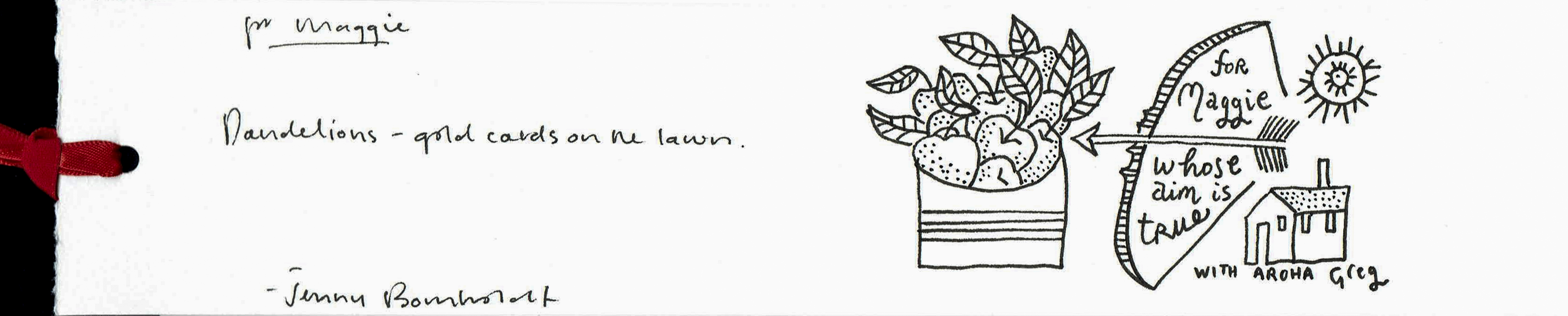
The poets asked that you give them a hint or theme for the bookmark poem. I mentioned my character Artemis from my new novel due out soon to Greg for his drawing and to Jenny, I said that I will be getting my ‘gold card’ in November.

This is the beautiful bookmark that I received. I will treasure it. And don’t you just love that something so special can be created ‘on the spot’ by true poets and artists.

Bookmark2

Clive James and the humblebrag

Standard

I’ve just listened to Clive James talking to Kim Hill. She mentioned the ‘humblebrag’ when he deferentially said ‘I’m a fairly ordinary story’ in response to questions about someone writing his biography. ‘Don’t’ forget, ‘he said, ‘sometimes reputations just melt away overnight.’ With further modesty he claimed that one of his main talents was his ability to concentrate and that he had a knack for a turn of phrase.

All I can do is turn a phrase until it catches the light.

He’s dying and so this conversation was about death and regret and about a poem too, that went viral when published in the New Yorker. It’s called ‘Japanese Maple’ about a tree his daughter gave him that is destined to outlive him – but he’s already survived longer than his poem about himself and the tree predicted.

I was struck by the difference in Clive James in conversation with Kim, and a time when I saw him at the Wellington Writers and Readers festival a few years ago. My first impression was great, because he was interviewed by Kate Camp who was an obvious devotee and she brought out the best in him. They had what I call a ‘love-fest’, where the interviewer as admirer creates what feels like a true and mutual intimacy in conversation. Alas, at the same festival, on a panel, he behaved boorishly and condescendingly and was embarrassing. It was as if he didn’t know how to share the limelight.

And so, I am interested in the humblebrag. It’s a tricky thing to achieve and I think writers in particular are quite adept at it. There’s the gorgeous stuff that only the very young can pull off whereby they claim not to care about fame, but draw attention to themselves all the same with their foxy protestations. Then too, there are blogs about rejection. It can sound like self-pity, or self-promotion. But it can also be superb. I recommend Paula Morris nominated for the prestigious Sunday Times short story competition, and her blog posting ‘Not Real Life‘ about daring to dream she might win.

I recently read somewhere that at age 20, we worry what other people think of us. And then at 40, we don’t give a damn what they think, and then at 60, we realise (thankfully at last) it wasn’t us they were thinking about after all. I like that very much and it’s such a gem of wisdom that you wish it was a vaccination.

Why am I writing this? Because I have a blog, and excitingly I have a new novel coming out in October. I wanted to draw attention to myself and to my writing. I needed a hook. Shamelessly I’ve used Clive James as my lure. It’s my version of the humble-brag.

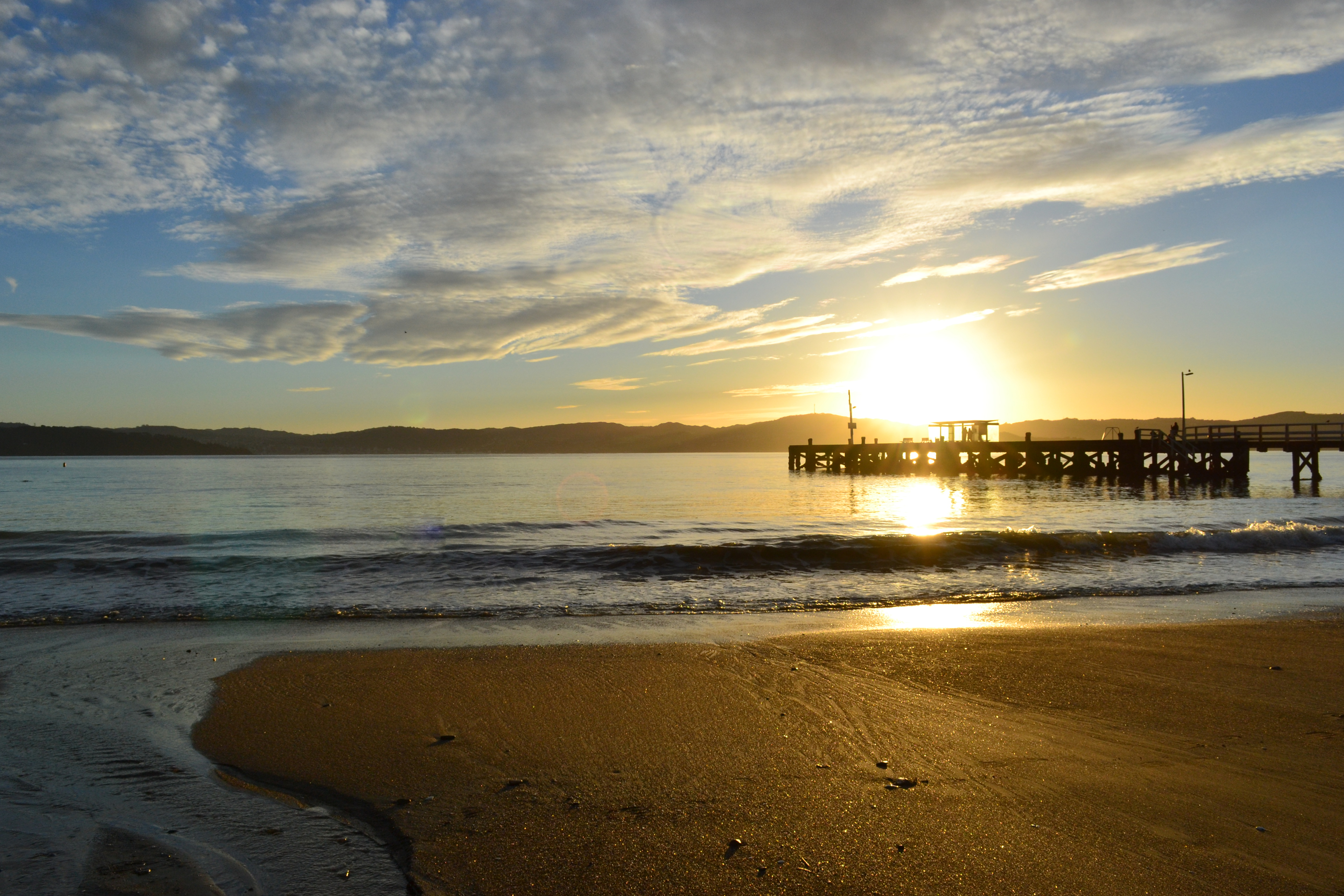
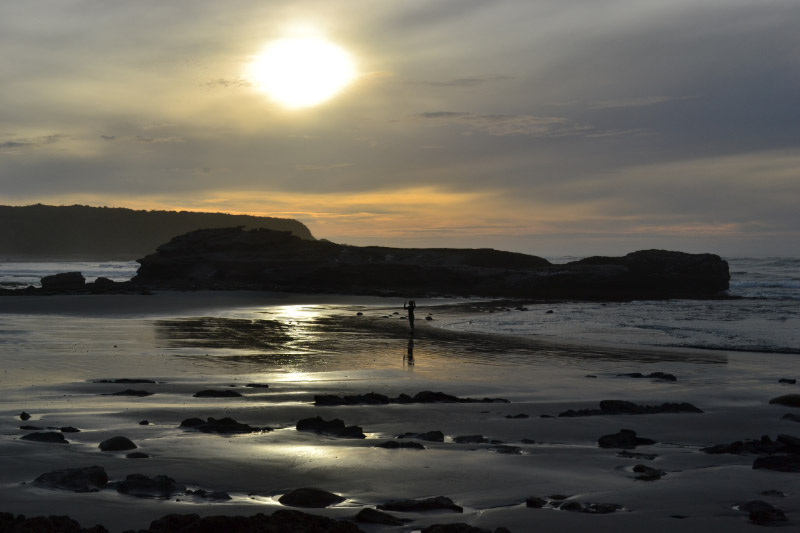
And so I’ll end with a Clive James quote from his conversation with Kim Hill ‘Life is not a picnic – it’s not all laid out for you.’ But if it were, then where better than at our local beach to spread your picnic. (photo by John).

Days Bay, Eastbourne sunset

Kate Sheppard and a tinfoil mouse

Standard

I recently read Penelope Lively’s ‘Ammonites & Leaping Fish‘, a thoughtful memoir in which she explores the meaning of memory and links moments in her life to precious objects, not valuable artefacts necessarily, but meaningful and even sentimental. Ian Wedde, too in his recent memoir ‘The Grass Catcher’ evokes memory through objects and the odours of his youth. The main object being the grass catcher. (Some of the odours he mentions are best left to be read about.) Although, I guess there’s probably not a Kiwi kid from the 50’s and 60’s who doesn’t remember the smell of freshly cut grass, and a hand mower with a canvas catcher. Or indeed, who doesn’t recall the whiff of two-stroke petrol when the family upgraded from a hand to a motor mower… and in your over-enthusiasm pulling out the choke, the mower flooded.

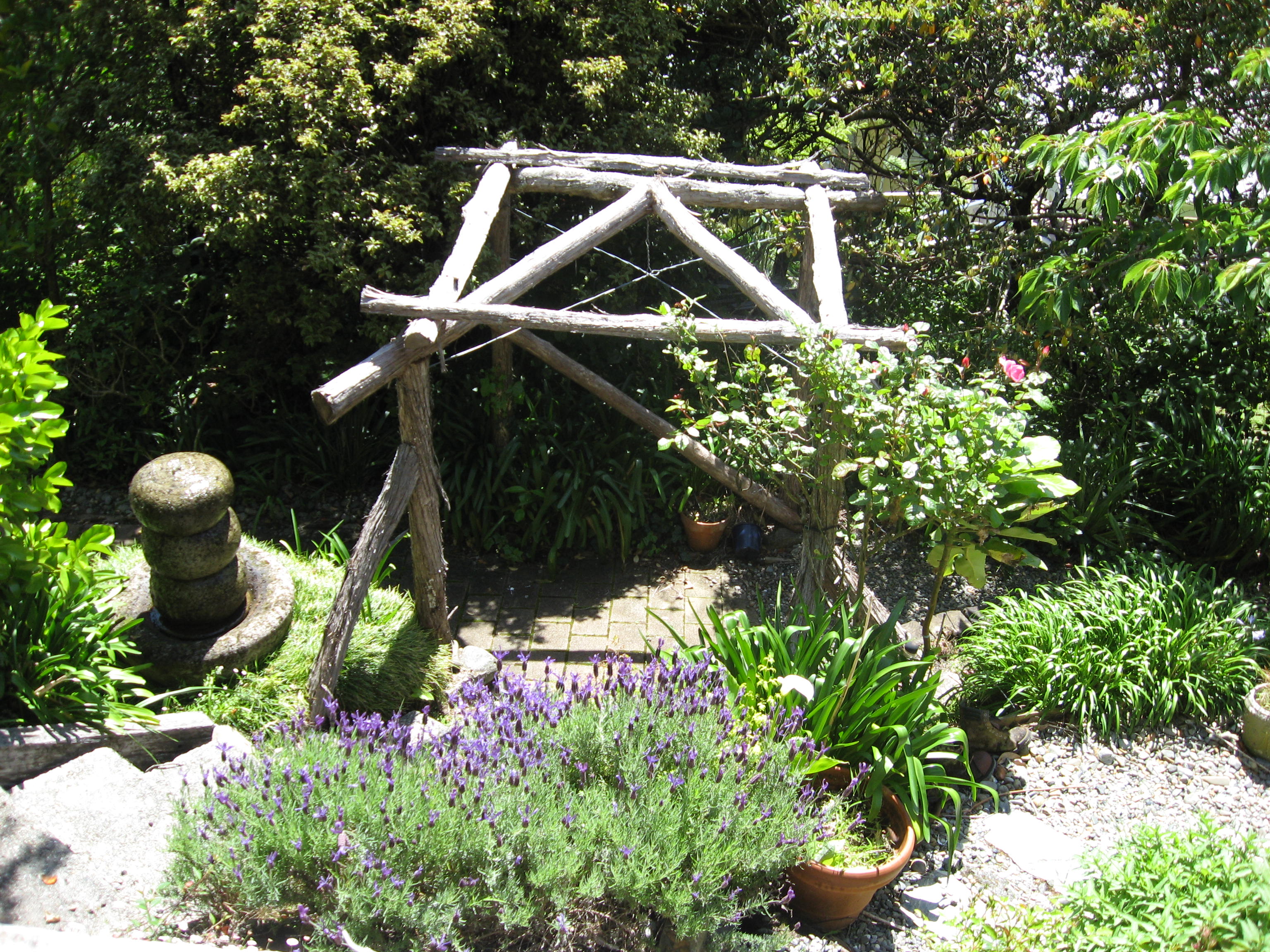
On reading these memoirs, I realised that my garden whenever I wander in it, evokes important milestones both happy and sad. It was over Labour Weekend, home alone with a broken wrist, somewhat sorry for myself, that I sat reading on our sunny deck and recalled it was my Aunt’s birthday.   That’s my deceased Aunty who would have been 94 this year. What made me recall her, was not just the date, the 25th of October, her birthday but that she would often come to stay with us for Labour Weekend and we would share her birthday. And that the cherry blossom tree that we built the deck around would be in full flower. Since then, we’ve chopped down the cherry tree – as it was taking up so much room on the deck but the memory of the cherry blossoms and my Aunt are intermingled.

001

This prompted me to explore my garden and I found another blossom tree that forms an almost canopy on the lower part of our hillside section. The first year we moved into this house, our youngest son was six (he’s now 33) and we have a photograph of him standing under the flowering canopy with a chipped front tooth – memorable, because that very next day he was going to be page boy at the wedding of friends, fully decked out in matching tail-coat with his father who was the Groomsman. I remember being annoyed he’d broken his tooth. The couple who married, now have a daughter off to university next year. Whenever I look out our bedroom window in Spring and see the blossoms, I see our son with his chipped tooth, and then I remember our friends’ wedding anniversary.

Immediately beneath the blossom canopy is a very important memorial to our deceased cat Red who just happened to be a almost twenty year old black and white cat. Our granddaughter who adored Red, has made a pile of stones and shells in the garden as a tribute, and this includes a once shiny tinfoil mouse. The cat’s ashes are inside our house in a box, or are they? That’s another story, told in a poem and here is the link.

DSCN0023[1]

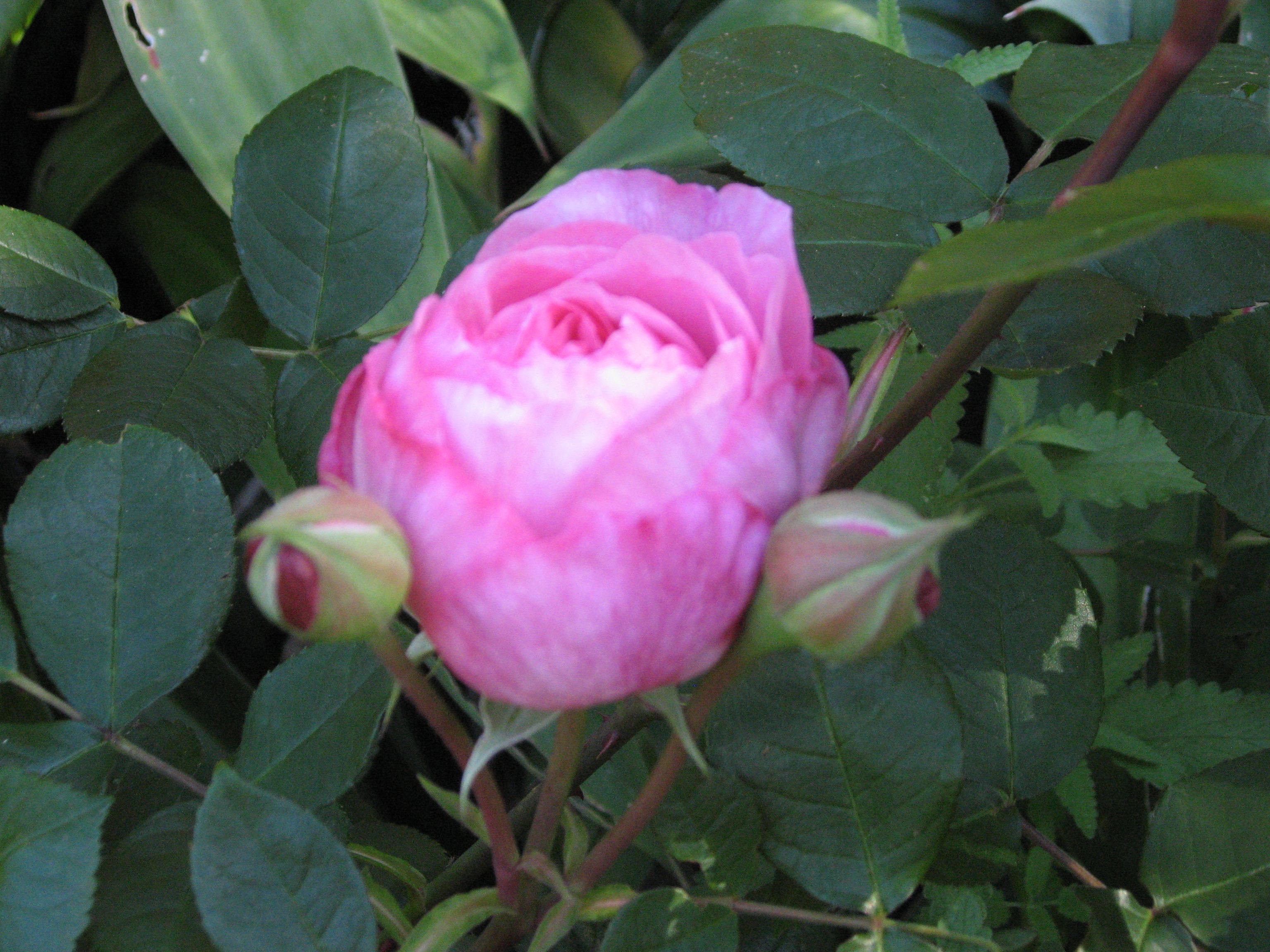
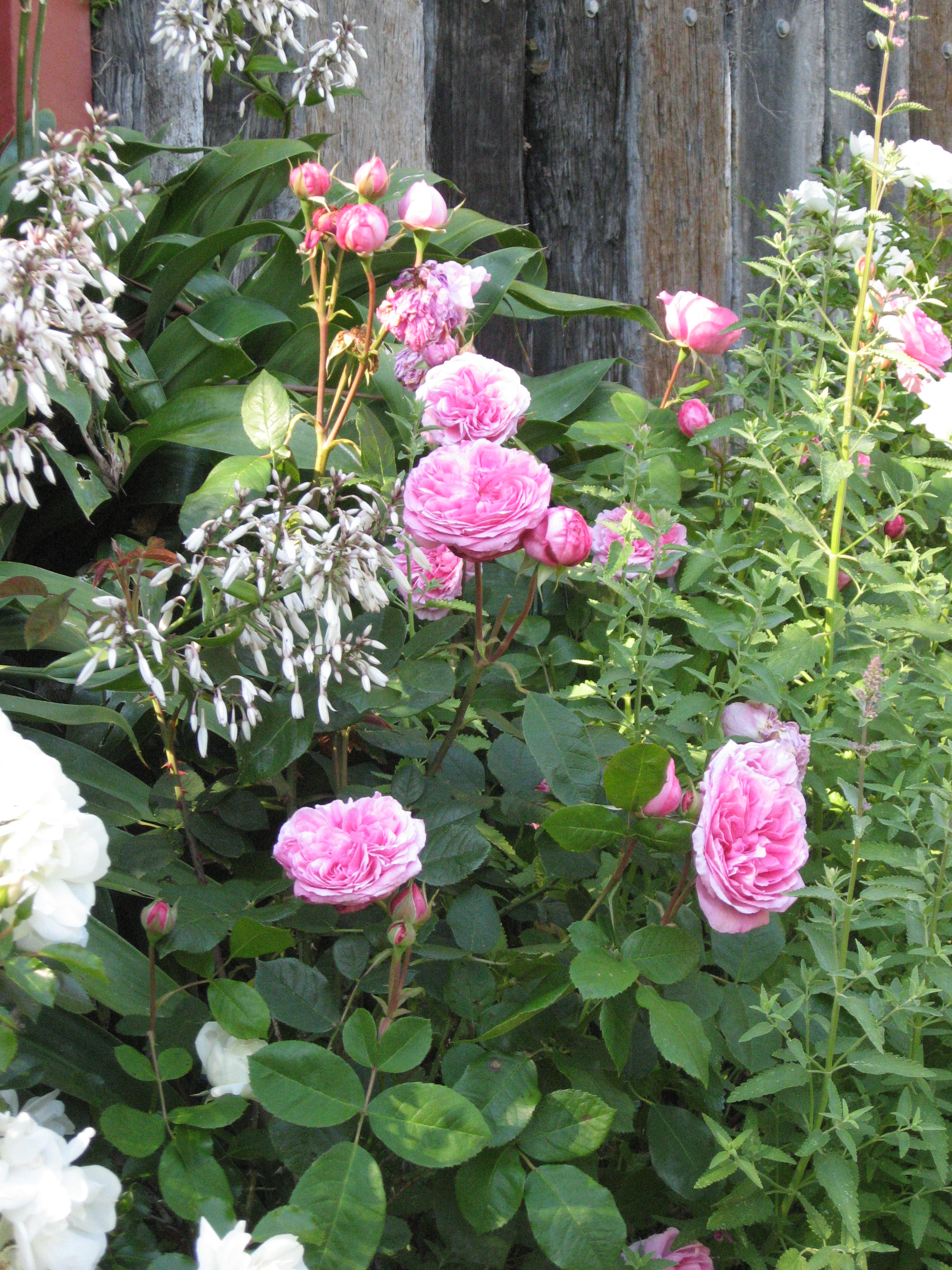
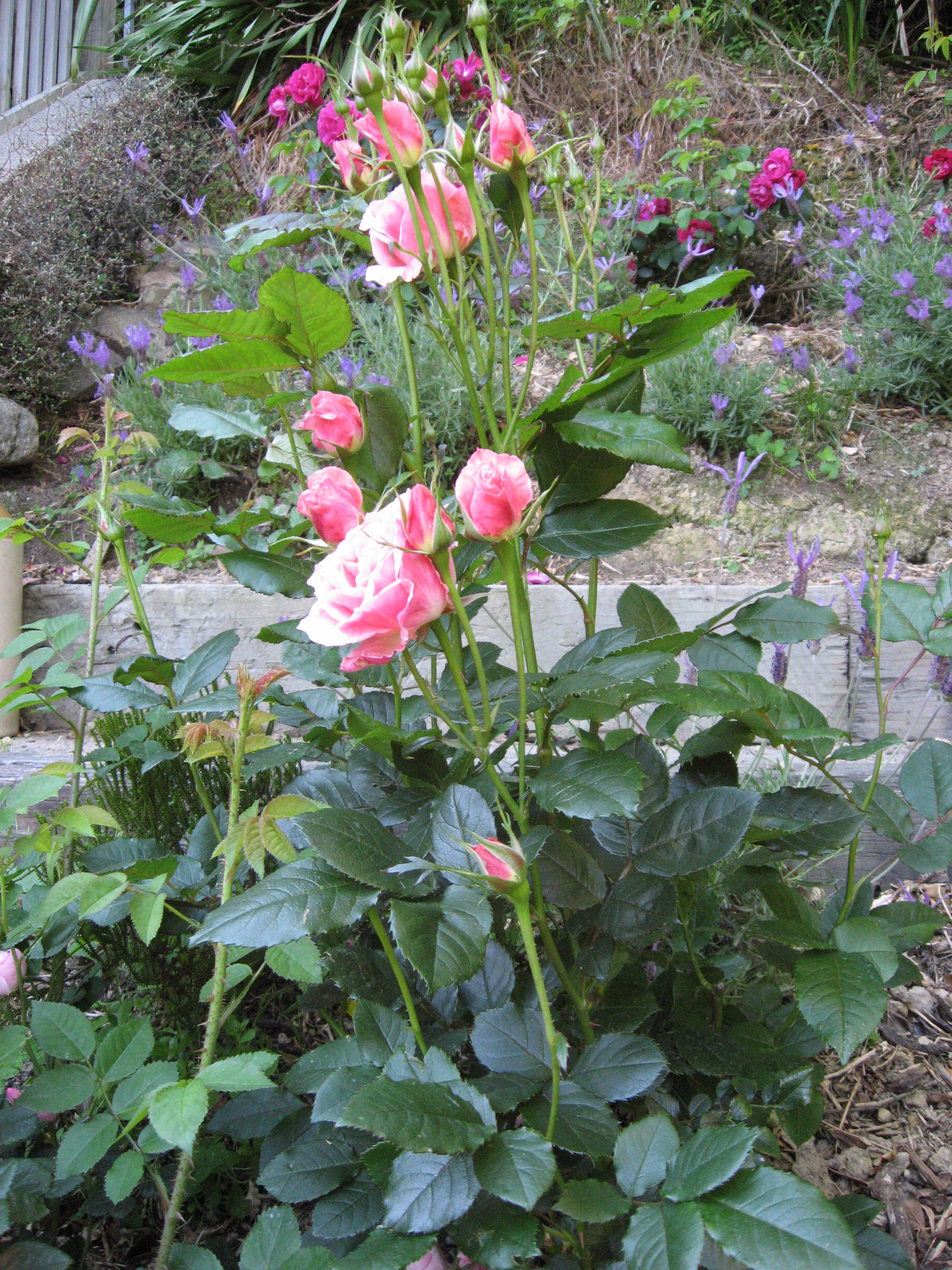
Then there are my roses. They bring me both joy and a stab of grief.   Roses enjoy being hacked it seems. The possums last year were feasting on my roses, and so I cut them back savagely to pervert the possums – it seems the roses enjoyed this and they are looking positively radiantly ready to burst into many buds. This includes Kate Sheppard, named after the feisty Kiwi feminist whom we thank for the vote. My Korean daughter-in-law helped me plant Kate – a treasured gardening memory, all the more poignant as this year, she moves on to a new life, away from our family. No-one warned me that as a mother-in-law I could also have my heart broken.

029

Kate Sheppard 2011 005

The Kate Sheppard Rose

The Kate Sheppard Rose

More violent and perhaps funnier, is the silk tree at our gate. One day, some years back now, after a fiery argument with my beloved, in fury and frustration, I attacked the silk tree – it was growing out over the path and obstructing the entrance. I chopped and chopped and snapped and attacked and I’m not sure what my neighbours thought. I felt bad afterwards and imagined the silk tree doomed, but it, like the roses, has thrived – but always to remind me of my tantrum.

Then there are the daisies that were once very fashionable in cottage country gardens. I tried slavishly to cultivate a cottage garden look to no avail. And then when we converted to a more coastal (but let’s keep the roses), suddenly the packet of seed that I sowed decided to grow. And now those daisies are considered weeds, but I allow them their rampancy as it only seems fair that they have tried so hard. They interweave with a beautiful old-fashioned red-leafed creeper with tiny mauve pom-pom flowers. The two fight for supremacy and I keep them both in check.

Too, as you enter out front gate by the almost demolished silk tree, there is a softly delicious smelling jasmine plant that entwines with the wildly fragrant honey-suckle. Both plants are now considered ‘outlaws’ as we live next to a native reserve… but the scent is so delicious of an evening that I cannot bring myself to be rid of them entirely. Inside our front gate are two Daphne bushes bringing their ‘lawful’ luxurious bouquet to our doorstep. Dare I mention my rogue (practically heretical) ginger plants. They look so striking and I’ve tried to strike them out. Alas, they resurge.

The last important memory is about our first day in this house. We inherited a beautiful old-fashioned garden and one of the main attractions were the pink water-lily dahlias. The previous occupant an older couple who had tended the garden for years with love and affection, slyly dug up some of the ‘considered rare’ dahlia bulbs and took them to their new abode. Due to landscaping and renovation, I no longer have any dahlias, but I know where they should be and they remind me of the key to the house, left in a glass bottle under the front veranda by the same elderly couple. And too the note they left us, filled with daily, weekly, monthly chores to be attended to, including the trimming and clearing of the zig-zag down to the road below. There’s a blackbird that comes to sing. We’ve named him after the dear old chap who lived here before us – although we’ve been in the house now for over 25 years, and I’m not sure how long blackbirds live…

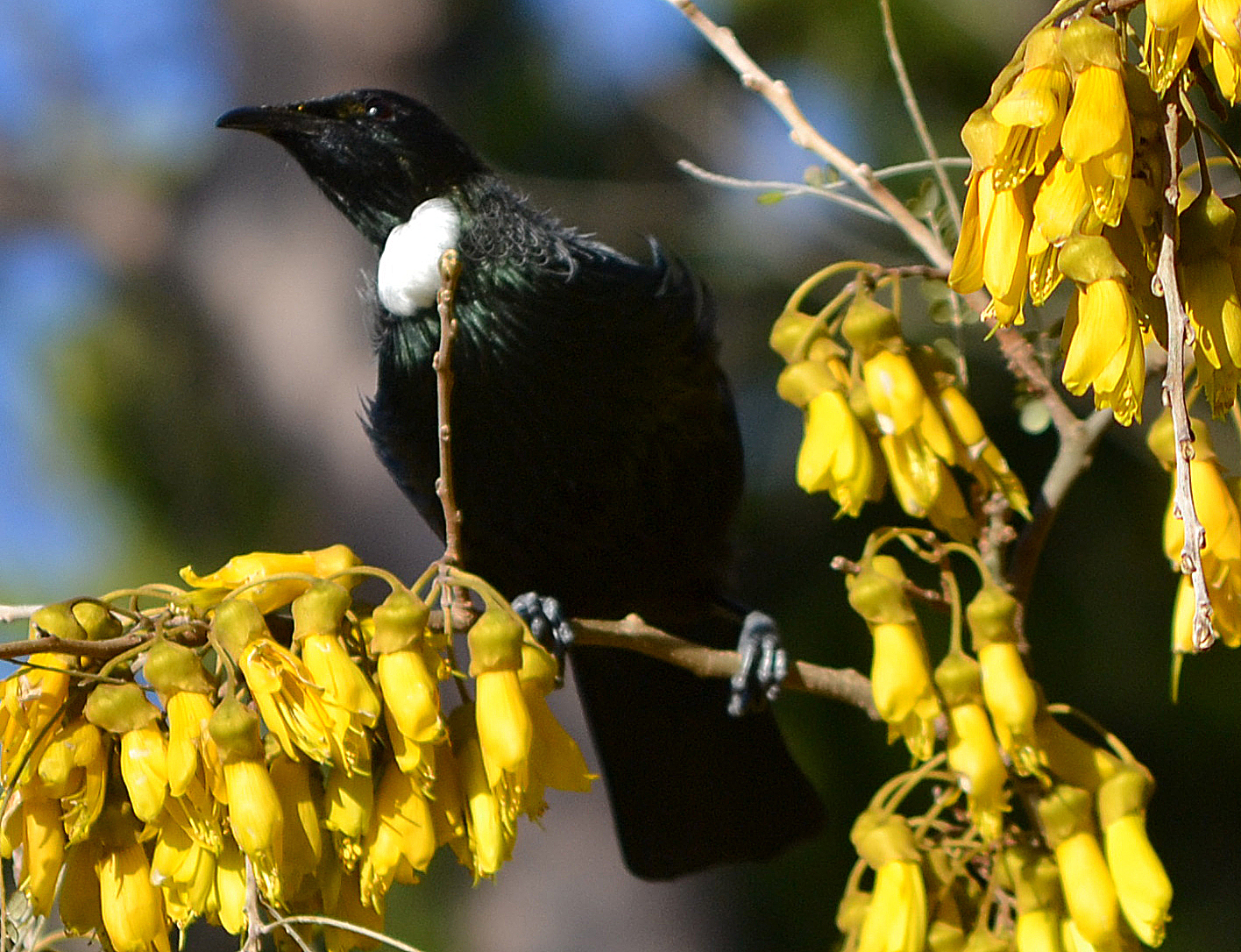
Recently I posted a poem inspired by the tuis in our Kohwai tree. This tree was but a wind-blown seedling on the side of a clay bank that I was about to tear out while weeding when we first moved in. Something stopped me. It seemed wrong to not want a Kowhai, even though it was in the wrong place. The Kowhai now is a superstar where in springtime eight or nine tuis can be found feasting. It shades my washing line, something I lament, but the song of the tuis and the sight of the overweight kereru, more than compensates.

Tui 3

So, my garden is full of birdsong, flowers and my heart’s song, a testimony to loss and new growth.

Essential New Zealand Poems and doggerel

Standard

Essential New Zealand Poems and doggerel

Essential New Zealand Poems book cover

I had the interesting honour recently of speaking to a group of writers completing a memoir course. It was a thrill for me to be invited and in particular, because they had been given my recent Landfall essay ‘Who is Left’ to read and compare with an article by Rosemary McLeod, one of my absolute favourite journalists.

My essay is a personal interrogation of my motivation for not just attending, but actually liking Anzac Day commemorations. Rosemary McLeod had written about stolen war medals and her distaste for the proposed new and very large local war memorial in the old Buckle Street Museum building.

I did not disagree with Rosemary’s piece. I rarely do. She usually nails it for me. I react privately to something in the news and then find that Rosemary can articulate it eloquently and intelligently and I mostly find myself nodding in agreement. I remember returning from my ‘OE’ in the mid seventies and opening up the Listener to read Rosemary McLeod – it was the first time I had read such smart, funny and insightful local journalism. I became a fan and have remained one.

So, there I was on a wet Saturday, talking to other aspiring writers about my journey as a writer, feeling somewhat amazed (flattered) that these students had read both my essay and Rosemary’s article. I’ve been one of those students many times in my journey as a writer. We hope that by listening to others we will unlock a secret door to our own creativity – a short-cut even, or a road-map.

And so, I told the students about what I now call my epiphany. That I was driven to writing passionate rhyming verse about my teenagers, one with dreadlocks and the other a green Mohawk. The epiphany came as I stood in a local mall with both lads and a letter from the local high school principal demanding that the green Mohawk be modified. We found some hair dye and he went from an emerald-green to Gothic black but I must say green suited him a lot better. Out of this, came the doggerel. And out of that, I gained a place on one of the first under-graduate poetry writing courses (now de rigueur) up at Victoria University in the late 1990’s – one of the 12 disciples with Greg O’Brien (not the Last Supper, but my first).

I had no idea that my rhyming verse, was in fact, doggerel. I had no idea what doggerel was, as I’d not heard the word before. I grew up with my mother reciting lines from ‘The Sentimental Bloke’ by C.J. Dennis, and we always called it poetry. So, here I was in Greg’s class with real poets (people who’d actually been published), and my own rather amateurish doggerel, as I discovered. But too, it can’t have been all bad, as there must have been an essence of something for the university to have taken the chance on me and invited me on to the course.

How proud am I, a decade or so later that one of the poems that I started to write during that course, is included in the newly published anthology ‘Essential New Zealand Poems – facing the empty page’… to be between the superb suede-like orange-flavoured covers with so many poets that I admire – too many to mention, many of them now friends.

Old friends and Cape Foulwind

Standard

Old friends and Cape Foulwind

When you’re from Wellington, travelling to Cape Foulwind holds no concern. After all, it’s the West Coast of the South Island, New Zealand, renowned for its weather. You share a bad reputation, it endears you to each other. But, we arrived at our accommodation, the dramatically appointed “Steeples” Cottage, on a calm sunny day. Our splendid front lawn runs right out to the cliff edges overlooking the sea. There’s a garden seat of driftwood under a wind-shaped macrocarpa. There’s also a darling garden of chaotic colour, old-fashioned flowers in full bloom, which belies the wind-shaped trees. And a fence and a child-proof gate at the perimeter, as our hosts have local grandchildren.

View from the cottage

Our modern and well-equipped cottage is named Steeples, because of the superb view from the cottage of the limestone steeple-shaped rocks jutting out of the sea in front of us. The hosts feted us with freshly collected mussels, the fattest, sweetest, we have ever eaten. And then we head to the local pub, just along the road and everyone there appears to be related in some way, either by marriage or birth. We’re served freshly rarely cooked and tender venison morsels, as almost tapas with our beer. Where else? Our fish, when we order it, is grilled Turbot, shaken in flour and crisped just a little with oil and lemon pepper.

Cape FoulwindSand in my shoes

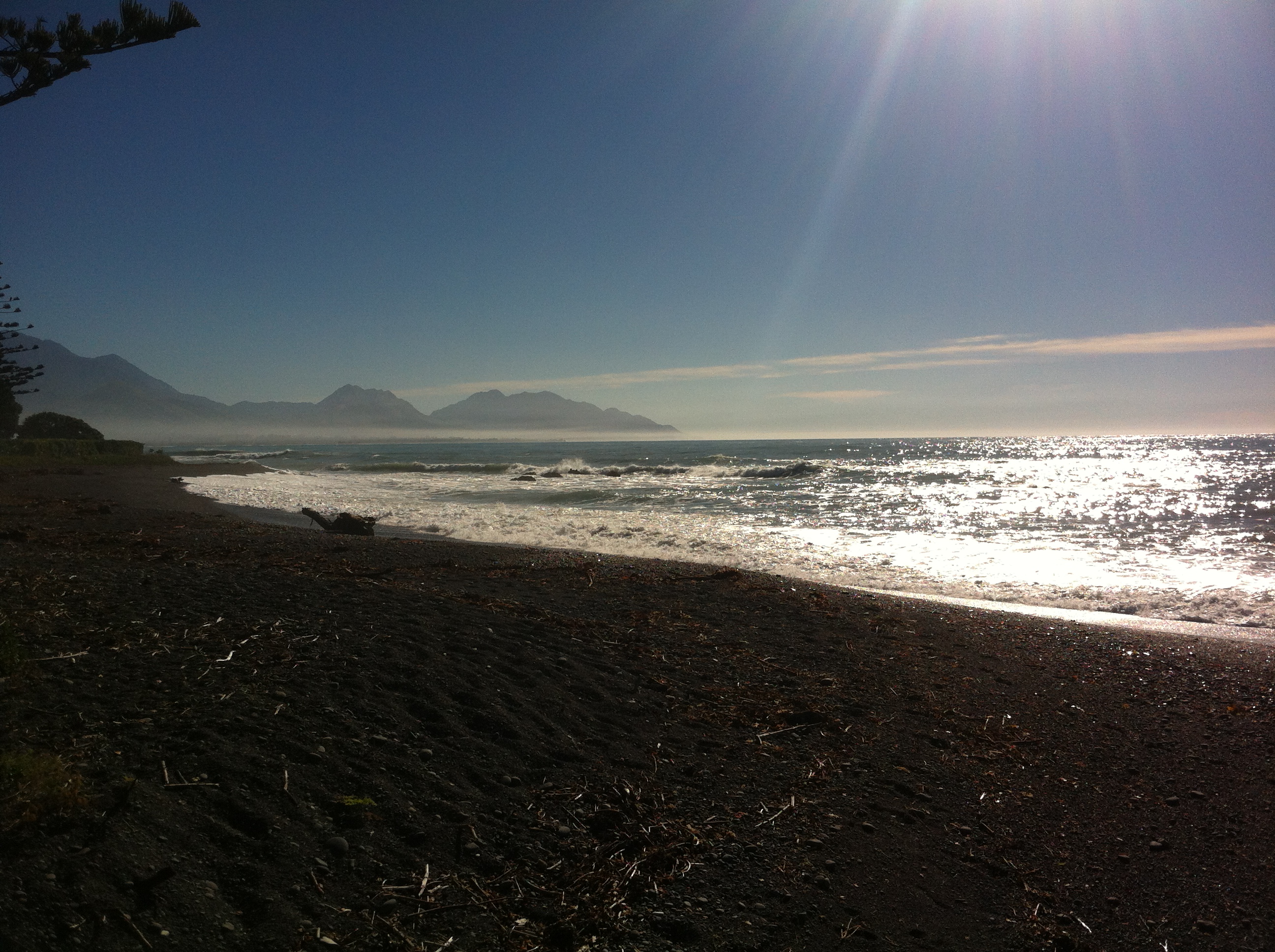
We’re running away. It’s what you do when life serves up parcels of grief. How lucky are we? We could have stayed home and wallowed, but we chose to travel instead. The spirit cannot help but be revived in this rugged landscape. I’d spent five days in Kaikoura with my sister on the trail of family secrets, stunned yet again by the jewel-like aqua of the East Coast sea. It was the first time probably in perhaps 50 years, that we had spent this much time together. We ate scallops as fat as your fist (almost) but missed out on the crayfish as it was the end of the season and the last of the crays were especially expensive. We met a first cousin for the first time. This adds to our collection, having recently found two aunts and an uncle we never knew about and who didn’t know about us either. We talked as sisters do, about our one successful family holiday in Kaikoura, where we hid in the hawthorn hedge and threw plums at passersby. We found the old house, almost unchanged on the corner, parked our car and sat and reminisced.

Kaikoura

Kaikoura

Then, my sister returned to Thames and John joined me. We visited old friends in Nelson, and Lake Brunner, saw the night sky in Tekapo and visited Christchurch. There’s something grounding about old friendships. People who know your story and whose story you know. Friends who forgive you your faults as you forgive them, and the comfort of familiarity. As for Christchurch, I was blown away on the sunny Friday by the sense of renewal and spirit of optimism down by the container shops, and then Saturday dawned grey, cold and sad and I saw the central city spaces in a new and sadder light.

DSC_0021

The beautiful church at Lake Tekapo

The beautiful church at Lake Tekapo

View from inside the church at Lake Tekapo

View from inside the church at Lake Tekapo

Cape Foulwind
The cliffs at Cape Foulwind

The cliffs at Cape Foulwind

John takes a great photo. So, I’ve decided to share some of his best with you on my blog. While I was travelling, I was reading a very good novel by Coral Atkinson, soon to be launched called ‘Passing Through’ which I am going to review for Beattie’s blog. There’s nothing like a good book to keep you company on a road trip. I also read the short stories of George Saunders, ‘The Tenth of December’ – a much heralded American short-story writer – it took me a while to ‘get’ the voices in his stories, but once I did, I was hooked. ‘The Semplica-Girl Diaries’ both startled, surprised and wowed me. And on my bedside is a new collection from Vincent O’Sullivan that I’ve already dipped into – delicious.

Siem Reap – where I left a part of my heart

Standard

IMG_0063

Recently, I spent three months as a volunteer ESOL teacher in Siem Reap, Cambodia. I’ve left a part of my heart behind. Some people said, before I left, what a grubby little tourist town Siem Reap was and that I wouldn’t like it. How wrong could they be? I loved it. I love the red dusty roads that erupt whenever the rain falls; the smell of the Monsoon and dust, the sound of motos, the choreography of traffic, tuk-tuks, motos, cyclists, pedestrians and the occasional big black Lexus.
IMG_0073

I love the resilient spirit of the people of Siem Reap, their optimism, in the face of endless rejection – from the girls on massage lane to the tuk-tuk drivers – always hopeful, up for a chat, and the cries of ‘teacher-teacher’. Where else could I possibly find so much (possibly undeserved) affirmation and respect? I can’t imagine being embraced so affectionately at my local coffee bar back home, nor having my eyes wiped by an attentive waitress (who just happens also to be my student), when I choke on a chilli over dinner. Or to go out alone, and find each time I enter a café, that one of my students is waiting tables there and I’m suddenly the most important customer.

IMG_0423

IMG_0342

I loved the one dollar out-door foot massage where I watched endless reruns of the story of Angkor Wat on a large open-air screen… the foot scrub for two dollars, the pedicure that ended up a brighter pink than I chose, and the nail polish that was very poor quality, so the finish was less than smooth, but the effort and focus gone into painting my toes far outweighed the less than perfect outcome.

The people of Siem Reap put their hearts on the line for the tourists. They offer up a piece of themselves for a small price. They work long hours for little return and the tuk-tuk drivers spend more time waiting for customers than they do actually driving anywhere. In the heat of the mid afternoon they sling their hammocks and rest. They are waiting for the balmy evening when the tourists will begin swarming down to Pub Street and maybe they can nab a newcomer and sell them a trip to the temples tomorrow… always tomorrow … the locals here believe in tomorrow in a way that is heart-warming and admirable.

IMG_0408

Madame, you want tuk-tuk, maybe not today, maybe tomorrow, maybe the temples, not today Madame, but tomorrow maybe, you call me, you have my card, tomorrow, tomorrow, I take you to the temples, Madame, Madame…

It’s one sentence, because they anticipate your rejection and already they’re moving with a smile to the next potential customer.

I loved the Old Market, the Night Market (there are several Night Markets) and the food – the food loved me too. I ate the juiciest mangoes I’ve ever tasted, sweet pineapple, longans, dragon fruit, and I never tired of the Khmer vegetable curries and the chilled 50 cent Angkor beers, not to mention the one dollar Margaritas on Soksan Road.
IMG_0704

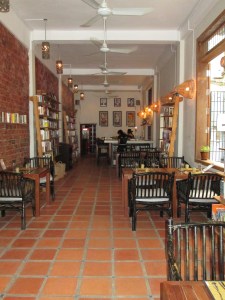
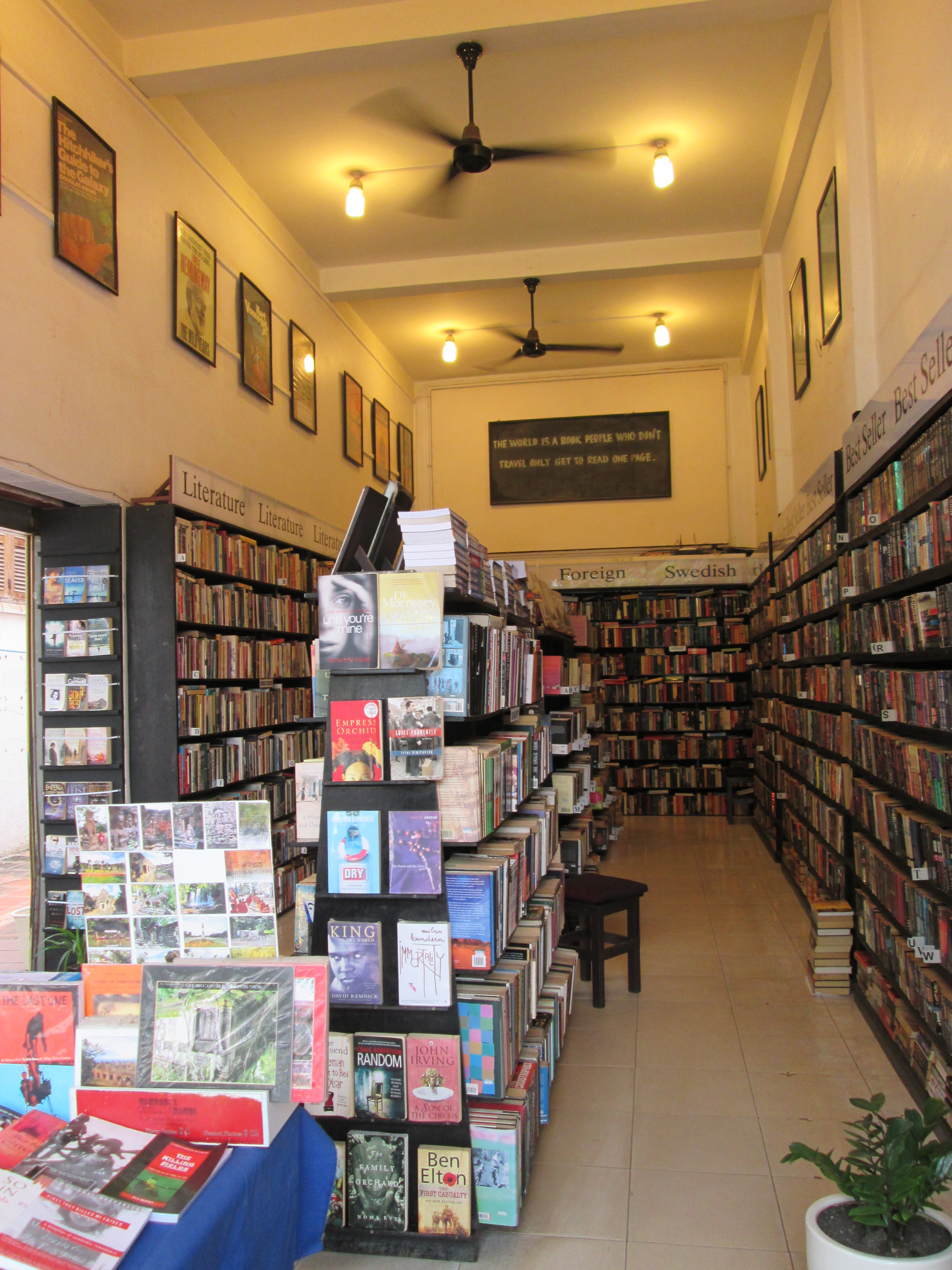
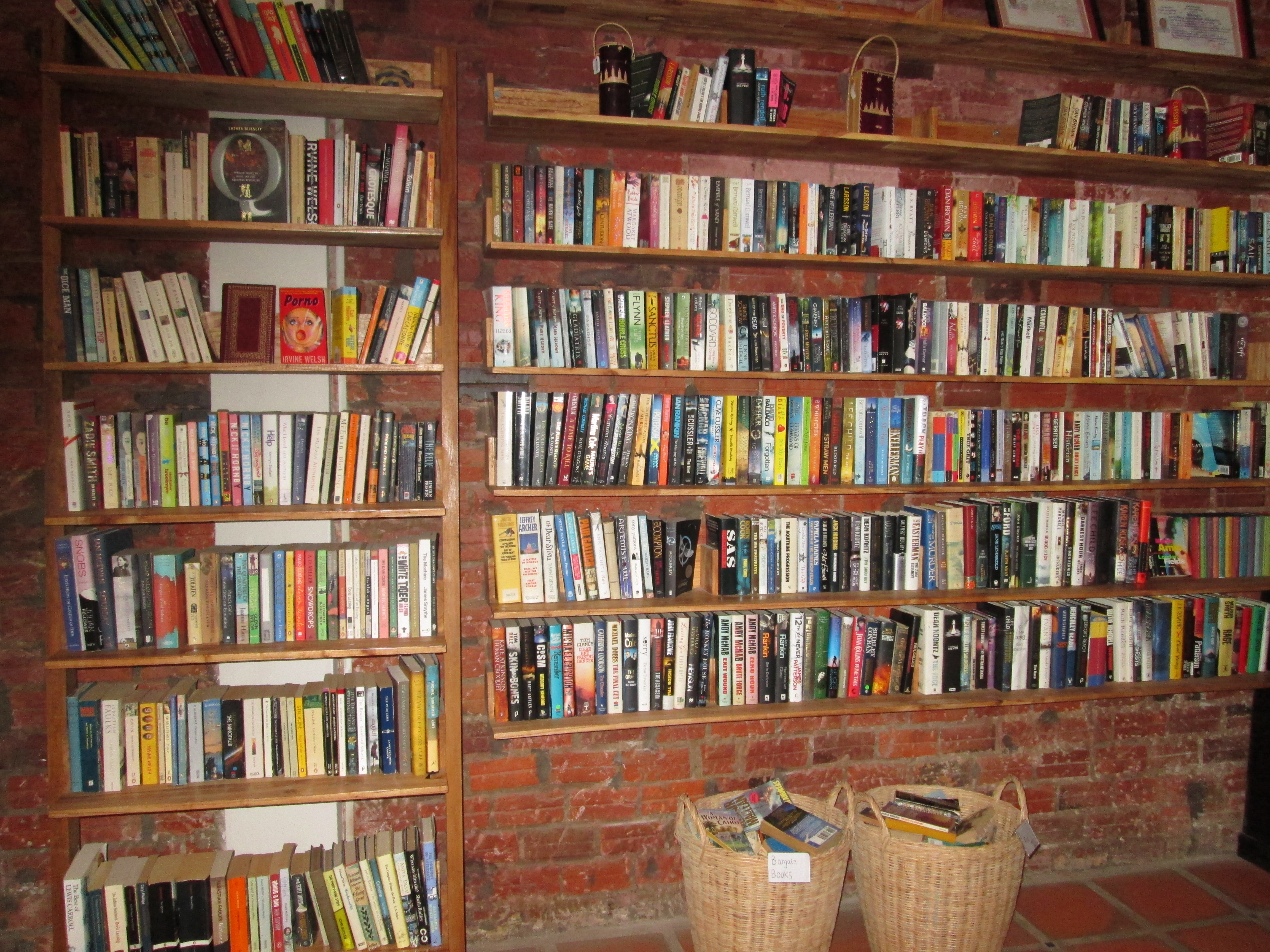
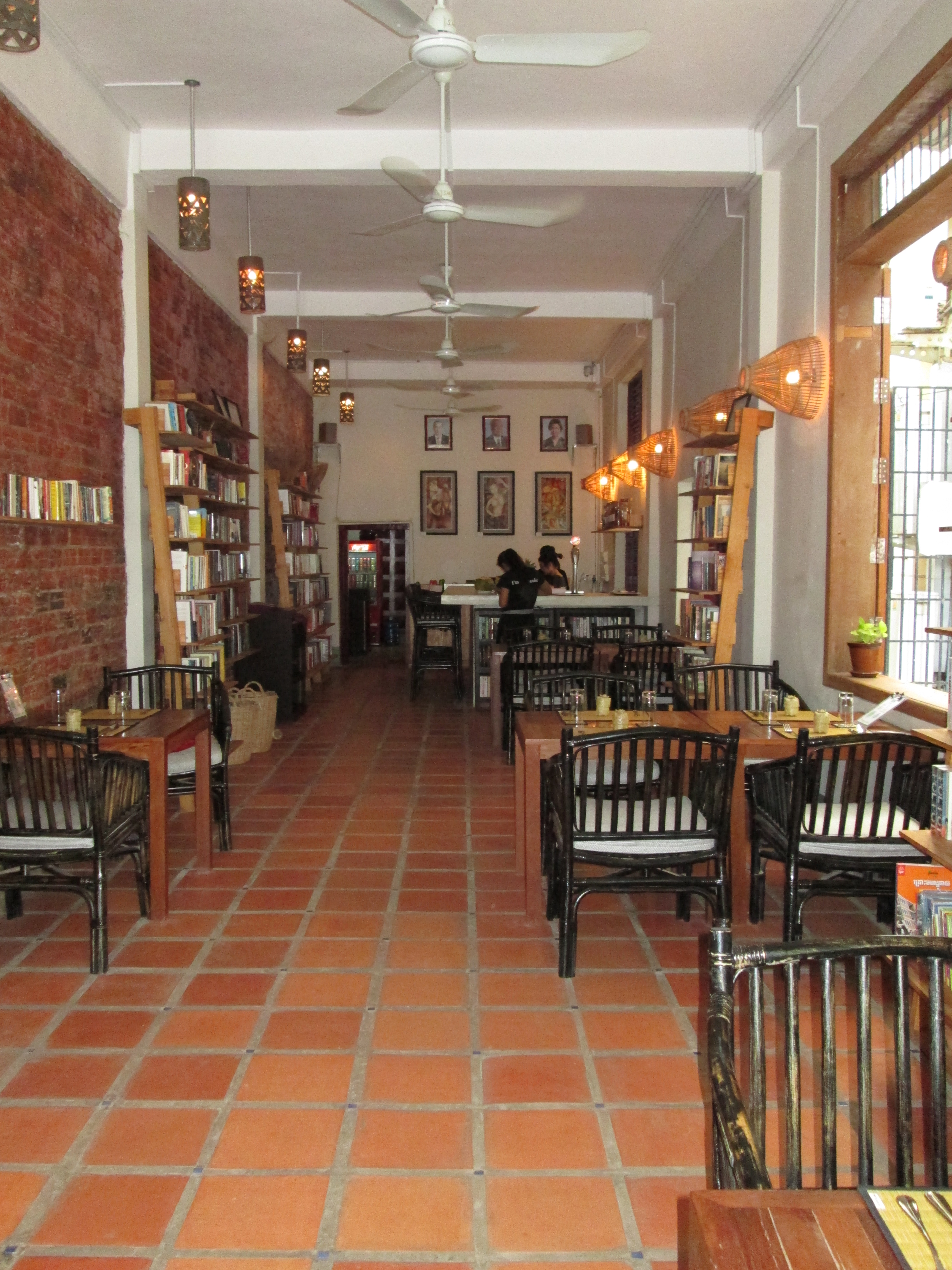
I found French pastries at the Blue Pumpkin, a designer cupcake café and the New Leaf Book Café where they make the most delicious banana blossom salad while selling second-hand books. And too, minus the food, D’s bookshop (both second-hand and new).
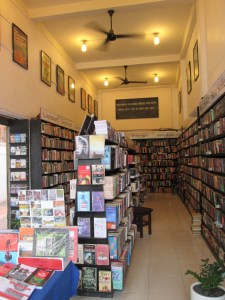
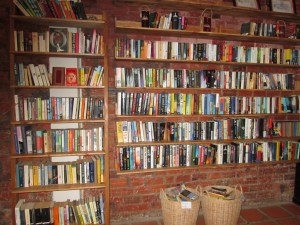
D's Bookshop, Siem Reap

IMG_0338

IMG_0337

I admired the ‘flower girl’ as I christened her. The same girl every night, plying her flowers along Pub Street, her witty patter, her sassy street-smarts and who knows, she looked fifteen, but perhaps she was older. I admired too, the young man (whom I decided ran away from the circus), who ran his own one-man-band sort of circus, swallowing fire, and juggling outside the cafés in the balmy evenings, his shiny naked skinny torso and the young boy who made the chocolate banana pancakes with such flair, one hand wiping, the other hand swiping, cooking and cleaning at the same time.

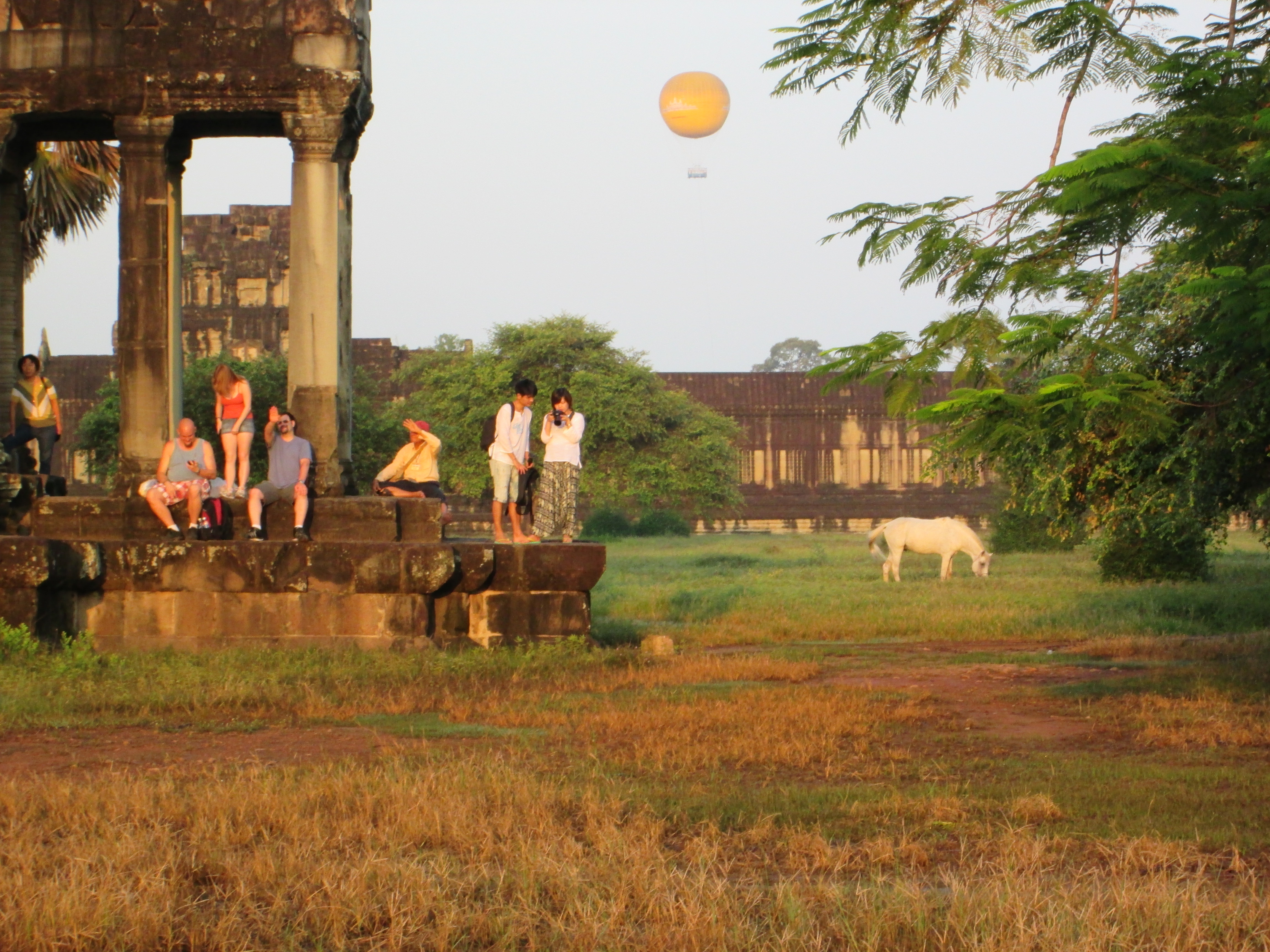
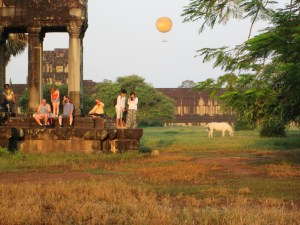
And yes, I stood with all the hundreds of other tourists at dawn, waiting for the sun rise at Angkor Wat.

IMG_0174IMG_0182

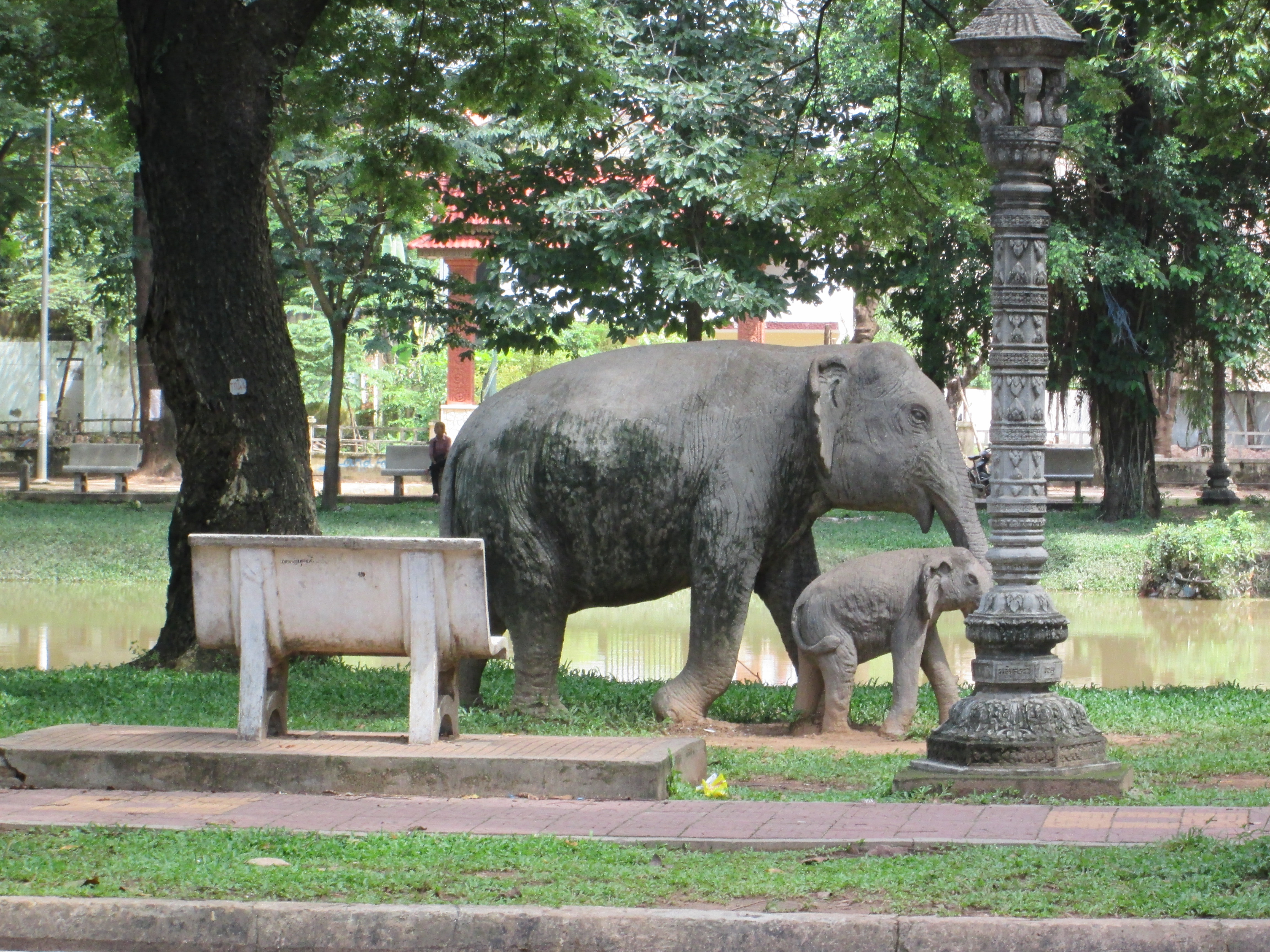
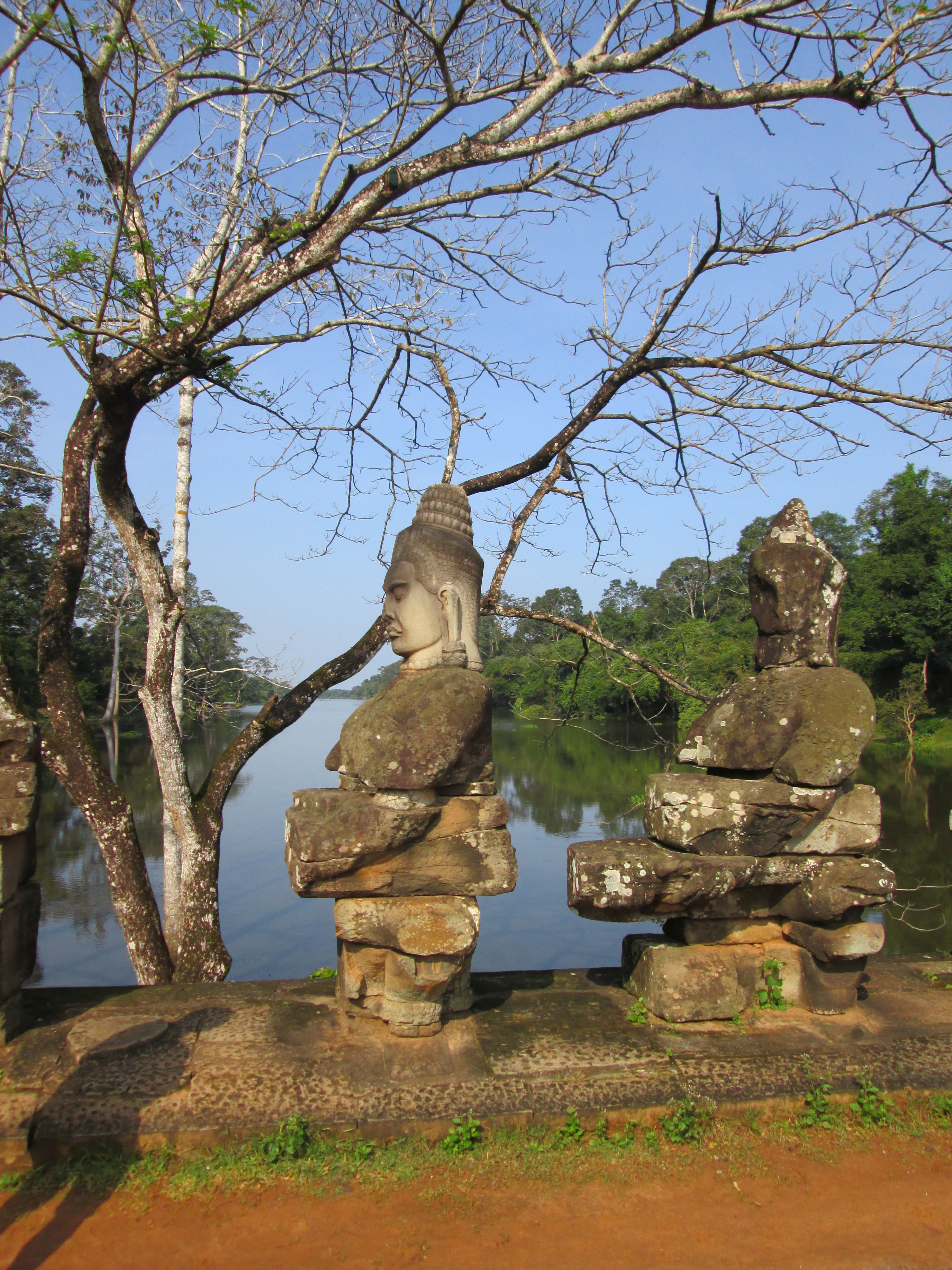
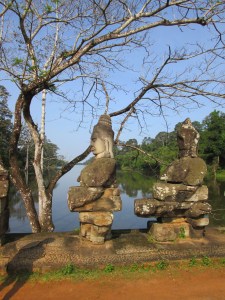
But it wasn’t so much about the temples for me, as the local people. I enjoyed a cycling alone to the temples on the school bicycle. The first time I’ve ever cycled close to an elephant or a monkey for that matter. I tried to imagine a quieter time, when the temples were abandoned and overgrown but not with tourists, the eerie mix of nature and man-made stone grandeur, uninhabited.

IMG_0233

IMG_0273

IMG_0223

One of the highlights for me wasn’t the temples, but the evening I rode pillion on a student’s moto into the balmy late afternoon-straight-into-evening – along the canal to Road 60 for a Khmer-style picnic with one of my classes (barbecued chicken with yummy seasonings from the local roadside stalls) and being one of only a handful of barangs.

As for the circus. If you never do anything else in Siem Reap, go to the Phare Cambodian Circus which describes itself as uniquely Cambodian, daringly modern. Be startled and astonished by the amazing acrobatics, the sheer energy, talent and something else… delight at its best, in its best form – delight from the performers and delight from the audience. This is what I found in Cambodia – you think you’re giving when mostly you are receiving.

But most of all I loved waking at 5.00 am to chase the frogs from the kitchen after the Monsoon and once too, a cheeky rat ran out from behind the portable gas hob. I would make porridge and drink black tea in the make-shift outside dining room. I’d feed the school cat in the hopes she would keep the rat at bay. And then, after gathering my lesson plans, at around 5.50 am each morning, I would pull the shiny yellow curtains in my bedroom open and see my always-early student Phanna, on his moto heading towards the school gates. He never failed me. And soon after, the rest of the class. At 6.00 am the Elementary One class would begin, with the fans going and the doors wide open. I would watch the dawn break as I taught. That moment between dawn and morning, the shifts in colour. Magic. But more than that, the amazing energy and affection that my students rewarded me with. There was no ‘class management’ required, I had rapt attention from hard-working, motivated, interesting and hugely admirable young adults. What more could a teacher ask for?

What I most admired is the extraordinary spirit of my students and all their golden hopes for tomorrow. I felt humbled by their resilience, their hard work, their generosity and their humour. It is hard to imagine a country with such a recent tragic history, where there is such a spirit of optimism.

I’m not forgetting though, there is much more to Cambodia than Siem Reap and my students. I saw the poverty between Siem Reap and Phnom Phen when I took the Giant Ibis bus journey between the two cities the weekend of the water festival. The way people live with their rice crops drying at the side of the road, no fresh running water or electricity, relying on oxen and water buffalo instead of modern-day farming methods. I was reminded of Cuba. I know the Government is corrupt, the recent elections weren’t fair and that people live in abject poverty. I read Joel Brinkley’s ‘Cambodia’s Curse’ before I left for Siem Reap and while I was there. It is without doubt a very sobering account of Cambodia’s history. I know it’s time for Hun Sen to go and democracy to have a fair chance. But somewhere in my heart, I have great hope, if the young people I taught, are an example of what lies ahead.

Eastbourne – an Anthology

Standard

Eastbourne – an Anthology

It’s time I blogged. I’ve been teaching English in Cambodia for the past three months. It has been a real adventure and I’ve loved it. There have been so many things to absorb, equal amounts of joy to challenges. My Cambodian students fill me with admiration. They work six days a week and sometimes two jobs and still they turn up to learn English.

I will leave a part of my heart here. I will blog about Cambodia, when I return to New Zealand.

And so, my thoughts are now turning towards home. While I was over here teaching English, the Eastbourne Anthology, was launched. I am proudly one of the co-editors of this publication, along with Mary McCallum and Anne Manchester. We worked together on it for two years (not imagining when we started, that it would take that long). I left to take up this volunteer teaching role in Siem Reap for three months, just before the final stages of the editing. And so I must say a big thank you to Mary and Anne for carrying on in the difficult final few weeks, with deadlines and proof reading to be done.

Too, I wish to acknowledge that the inspiration for this anthology was Mary’s. She invited us to join her on this project, knowing that all three of us share a passion for literature and our community. We knew too, that many famous New Zealand authors had featured Eastbourne in their work. But we didn’t know quite how many until we began our research. And nor did we realise how many talented local unpublished authors would submit their work. Constantly, we were surprised and delighted by the variety and the quality and this made our job has editors so much more difficult – and in the end rewarding.

The easy bit, was of course, the ‘Classics’. I’m a devotee of both Katherine Mansfield and Robin Hyde, so I was more than happy to re-read their work and rediscover the references to my own home bay, Days Bay. And then great joy, I was introduced to the work of Molly Falla and had the good fortune to meet her daughter, one of Days Bay’s oldest residents – well, she has lived in the bay perhaps the longest. My next most exciting discovery, with the assistance of Ali Carew of the Eastbourne Historical Society, was the writing of Mary Findlay and her astonishing memoir ‘Tooth and Nail’. I blogged about this a few months ago.

When our family first moved to Eastbourne, over 24 years ago now, we noticed how many second generation families there were in the community. I will confess, at first I had reservations about this. I scoffed a little. We were ‘newcomers’ in the bay and we lived in ‘The Barnett’s House’. Houses were named after the people who had lived there the longest, and not the new kids on the block. I was a working mother (and this wasn’t altogether approved of). It’s taken a while, but I think we’re now part of that same tradition – maybe if we sell our house one day, they’ll say to the new buyer ‘Oh, you’re in the Rainey-Smiths’ house’.

I now have a granddaughter living close by to me here in Eastbourne and I understand community in a different way. The dedication in the anthology from me, is for my granddaughter Sienna. I think it’s good to leave your community to gain a perspective and I’ve been away now for three months. I miss my family and friends. I miss the tuis and the wood pigeons and I miss the sound of the sea.

The Eastbourne anthology is a celebration of all the things that I miss and I’m very proud to be both a co-editor and to have two of my poems in the anthology. A special thank you to Makaro Press, the new publishing house of Mary McCallum. I hear that the anthology is about to go into reprint. It was Mary’s inspired choice to have the anthology ‘bay-themed’ and Anne’s to invite local artists to submit sketch impressions of their bays.

I wasn’t able to be at the launch but courtesy of Viber, I heard the launch speech by Mary and my husband John took these photographs for me. Fittingly, the anthology was launched at the Rona Gallery, home to all literary and artistic soirées in the village of Eastbourne. Joanna and Richard Ponder and their family are staunch supporters of the arts in our community.

Mary McCallum launching the anthology at the Rona Gallery

Mary McCallum launching the anthology at the Rona Gallery

John Horrocks, poet and neighbour, reading

John Horrocks, poet and neighbour, reading

Lloyd Jones (one of the famous faces) reading from his work.
Lloyd Jones (one of the famous faces) reading from his work.

Anne Manchester, co-editor (whose work also appears in the anthology).

Anne Manchester, co-editor (whose work also appears in the anthology).

It’s my best book

Standard

I was clearing my mailbox in our local village this week, and bumped into a fellow writer. She is a published children’s writer. I hadn’t seen her in a while and so I commented. “You haven’t been to any meetings lately.” The meetings I was referring to are the local meetings of the Wellington Branch of the New Zealand Society of Authors. We host local writers as guest speakers and there’s a good sense of community and shared experiences.

“No,” she replied, “I can’t get my book published!” I was taken aback, and queried her. “It’s my best book,” she told me. She went on to tell me how writing is her raison d’être, and how she feels about rejection … well, I know how she feels, but there’s no point is there, I told her in hiding away. Yes I understood, but I was also less sympathetic than perhaps I might have been a few years ago. The fact is good writers are being turned down all the time by publishers right now, I told her… I tried to jolly her along, with tips for self-publishing (quoted Ted Dawe’s success with ‘Into the River’), spoke of EBooks, plied her with encouragement and as I urged her forward, I was barracking for myself as well.

And then on Facebook, I saw a link to this comment by the astonishing, grounded, super-talented, Man Booker Prize long-listed, Ellie Catton, answering this question for the Herald…”Are you an easily intimidated woman?” She replied:
No. In my experience intimidation is linked to competition in a fundamental way – people who are intimidated, or who consciously intimidate, are competitive in their attitudes towards others – and there’s no room for competition in literature. I do feel very impressionable, though, both as a writer and as a person.

And this set me to thinking about my conversation with my fellow writer in our local village. I know she felt very alone in her sense of rejection, as if only she could understand how awful it was. I think I used to feel like that, but I don’t any more. I recognise now, such things as what a privilege it is to be able to write (the time for one thing). And too, what an honour and privilege it is to be published. And, more and more, how many talented writers there are – what competition we face.

I love the quote from Ellie Catton and too, I admire her talent and modesty. But I disagree. Writing in itself is not a competition. But being published, having your book purchased, making the long list (and surely the short-list) for the Man-Booker is all about competing. There are judges, and they have to choose, and this is a fiercely literary sort of competition – high art – and how do you judge – but judge they do, and it is the very best writing we hope that will win.

Here in New Zealand I sense pride, I think we are thrilled about Ellie Catton’s success. But too, it’s partly self-interest. I suspect we imagine that her success will cast a glow upon New Zealand literature and that somehow the reading public will be more inclined towards us – yes, us (local writers) all of us, by association. But that’s not true, not really. Ellie’s triumph and her talent is all her own.

“It’s my best book.” This lament has stayed with me. I feel the same about my third novel. But there’s no point in lamenting or wailing, there is only the writing – and it’s either good enough, or not. It may have been good enough before the advent of the EBook and the closing of book shops, but now your manuscript will have to compete even harder – it will have to look like a best seller.

Ellie Catton’s runaway best seller debut ‘The Rehearsal‘, evidently sold… 3,500 copies in New Zealand. You’d expect a lot more wouldn’t you for an internationally acclaimed, prize winning novel? I imagine it has sold more internationally – I sure hope so.

No, literature is not a competition in the way that sport is, but if you’re going to cross the finish line (i.e. a published manuscript), then you’re going to have to compete. Nowadays it often begins with competition for a place on an MA course at a university. Well, just like being selected for the swim team, you have to compete in the trials and meet a certain standard. this means submitting your ‘best’ pieces of writing. Not all of those who get selected get published, but the odds are probably stacked in their favour… normally an MA course means a University Press with a vested interest in their own ‘product’ and why not?

And then, if you win that round and have a real book in a real bookshop, you’re competing with all the other beautiful books (oh covers do matter), and you are competing for readers, reviewers, or goodness me,stars on Goodreads…and on it goes. And unlike swimming or running, where you know what the world record is, in writing, you have no idea… and nor should you, other than your ‘own idea’.

You can be a Booker Prize Winner, but still not sell as many books as, well, er Dan Brown. I guess it depends what you’re competing for…but readers surely are the bottom line, or not…

My friend’s lament ‘It’s my best book’ may well be the lament of writers everywhere. And indeed it may be true, and that indeed that is all you can do – the rest, is up to the publishers, the readers and the judges. And all the best to Ellie – go team New Zealand!

The Way We Live Now

Standard

The way we live now

I am reading Anthony Trollope’s ‘The way we live now’ a free to download classic on my Kindle and evidently (according to Wikipedia) Trollope’s masterpiece. I can’t comment on that, as I’ve not read any of his work before. It is a fascinating book and feels so contemporary in so many ways in light of the recent demise of so many respected financial institutions, the queries around appointing ex politicians as Directors of commercial enterprise and all the associated pitfalls of modern capitalism.

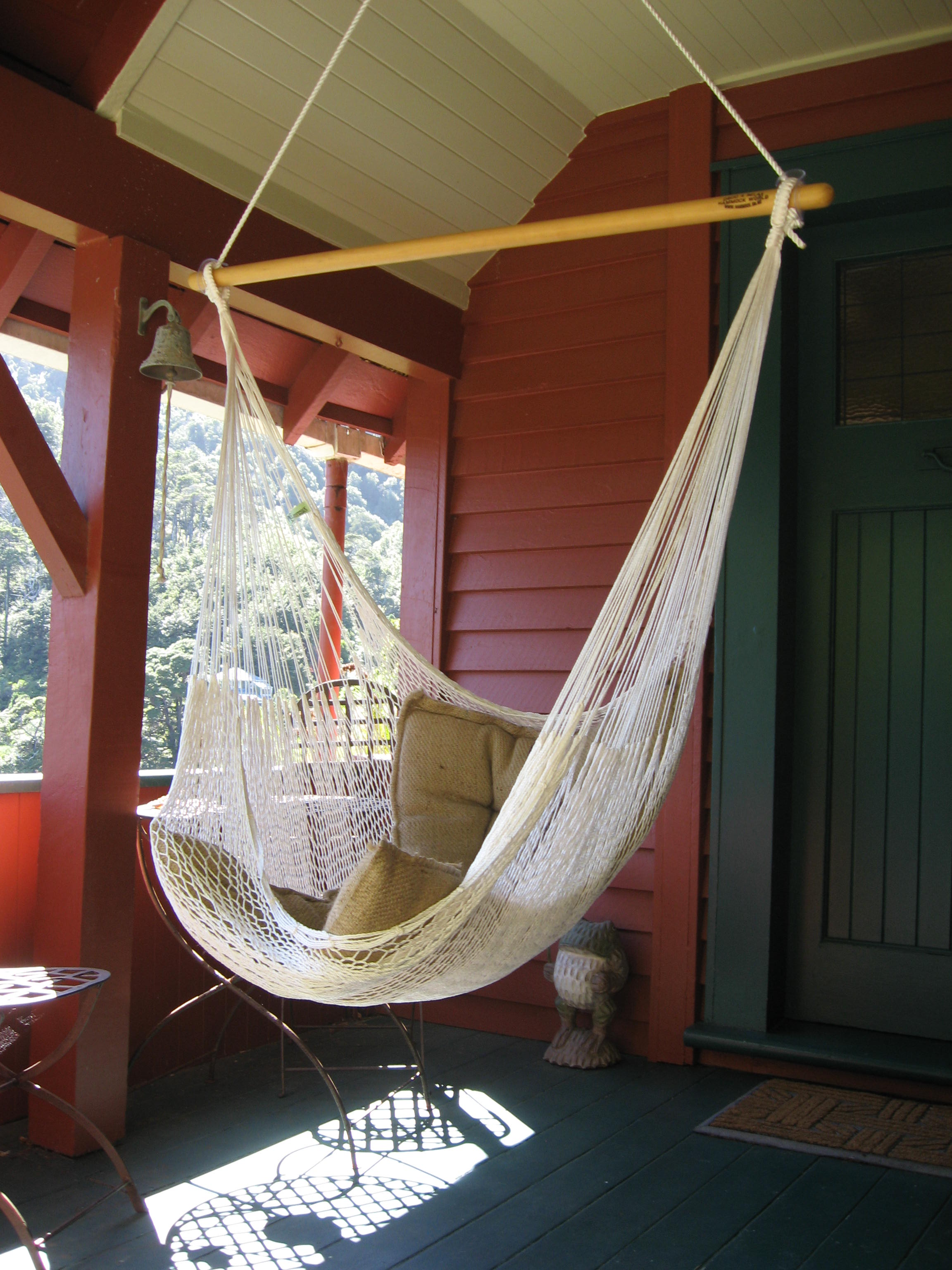
But too, I am captured by the comedy and pathos of Lady Carbury, her willful blind spots and her shameless literary ambitions, the delightful satire of book reviews… can’t help chuckling. I can’t wait to discuss the book with my book group who are among the smartest women I know and of course, they will have plenty to say, and I shall report back. In the meantime, from my hammock, on Sunday evening, as the sun went down, inspired by Lady Carbury’s efforts at self-promotion…

Reading Trollope from the Hammock

Reading Trollope from the Hammock

From the hammock

Lego from the garden
sits atop
the chopped sleepers
my raspberry Hydrangea
has faded
in the face of summer
Kate Sheppard, the last rose
has buds
there’s not a breath of wind
just birdsong and the faint
traffic
in the distance sound
of the southerly
Lady Carbury
keeps me company
on my Kindle, I worry
for her
for me, for all mothers
their gardens, old Lego
new weeds
our lemon tree losing leaves
although he pees under it
some times
we Skype our family
here and overseas
imagine
that if we stay up all night
but we’ve done that to death
my glass
of Pinot Gris reflects
an upside down tree
a dog
barks half heartedly
and mist rolls in
our pines
went out by helicopter
leaving bleached beech
corpses
there are screams too
from fathers louder than
birdsong
And silent mothers make
school lunches in the dark

Maggie Rainey-Smith copyright 12/03/2013.

Art to Heart with Edvard Munch, Gustav Vigeland, El Greco and Picasso

Standard

All of my art experiences, well the ones that have touched my heart, have been more or less accidental. I think it is this stumbling into art which has had the most impact on my life. I didn’t grow up with a specific artistic or literary education, but one of the biggest influences was of course religious art, iconic images from my Catholic childhood. It was astonishing for me as a young woman travelling through Spain in the seventies to step into a chapel in Toledo and find the original El Greco’s which I knew intimately as a child from the Columban Calendars that hung in all good Catholic homes. I had the very good fortune that day to be travelling in a group that included a young Australian priest in training, on temporary leave from the seminary, who took me on a guided tour of the El Greco’s. And, confession, it was many, many years later, in Kalamata, Greece in 2007 that I finally realised, attending a movie on the life of El Greco, that of course, he was ‘The Greek’, and not a Spanish artist after all.
SantoDomingo
It is a very fine thing I do believe to uncover these secrets accidentally, rather than academically.
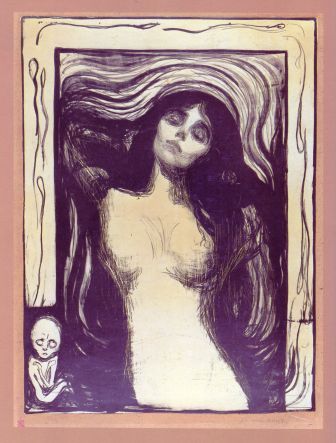
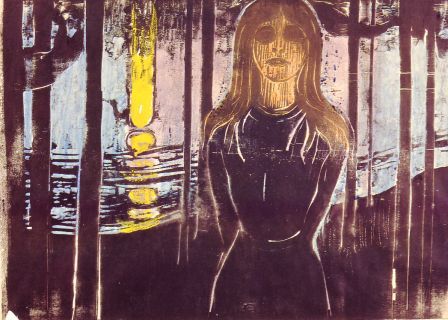
A friend recently emailed me a link to two beautiful images by the artist Edvard Munch… ‘The Madonna’ and ‘The Voice’ and

Edvard Munch

Edvard Munch

Edvard Munch

Edvard Munch

interestingly, the poems written by Munch about these paintings (from a book by Bente Torjusen – The Words and Images of Edvard Munch which is copyright, or I’d include the poems on this blog). The poems are exquisite – unnecessary you could say, for what is art, but a visual not verbal experience… but beautiful as well, because the lines of the poems are expressed in different colours (the mind of an artist). It reminded me of my first encounter with Edvard Munch, in Oslo, January 1973. I was on my way to taking up a job as a waitress in the Haukeli Mountains and staying in Oslo at a youth hostel. I found Munch and Vigeland. They’re pretty hard to miss in a small city the size of Oslo. It was snowing too, that much I remember. I was in love then with all things Norwegian and still hold huge affection in my heart for that time in my life. It was here I first learned to ski and to haltingly speak snippets of another language.

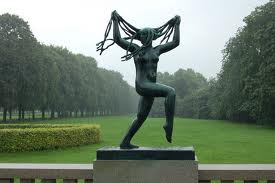
Gustav Vigeland sculpture

Gustav Vigeland sculpture


In Paris in 1997, with my youngest son who back then was just fifteen, together we literally stumbled upon the Picasso Museum. We had just previously laboured our way through the great halls of the Louvre in search of the Mona Lisa, almost running through a room of Rubens – so overwhelming was the art experience that we couldn’t take it in.

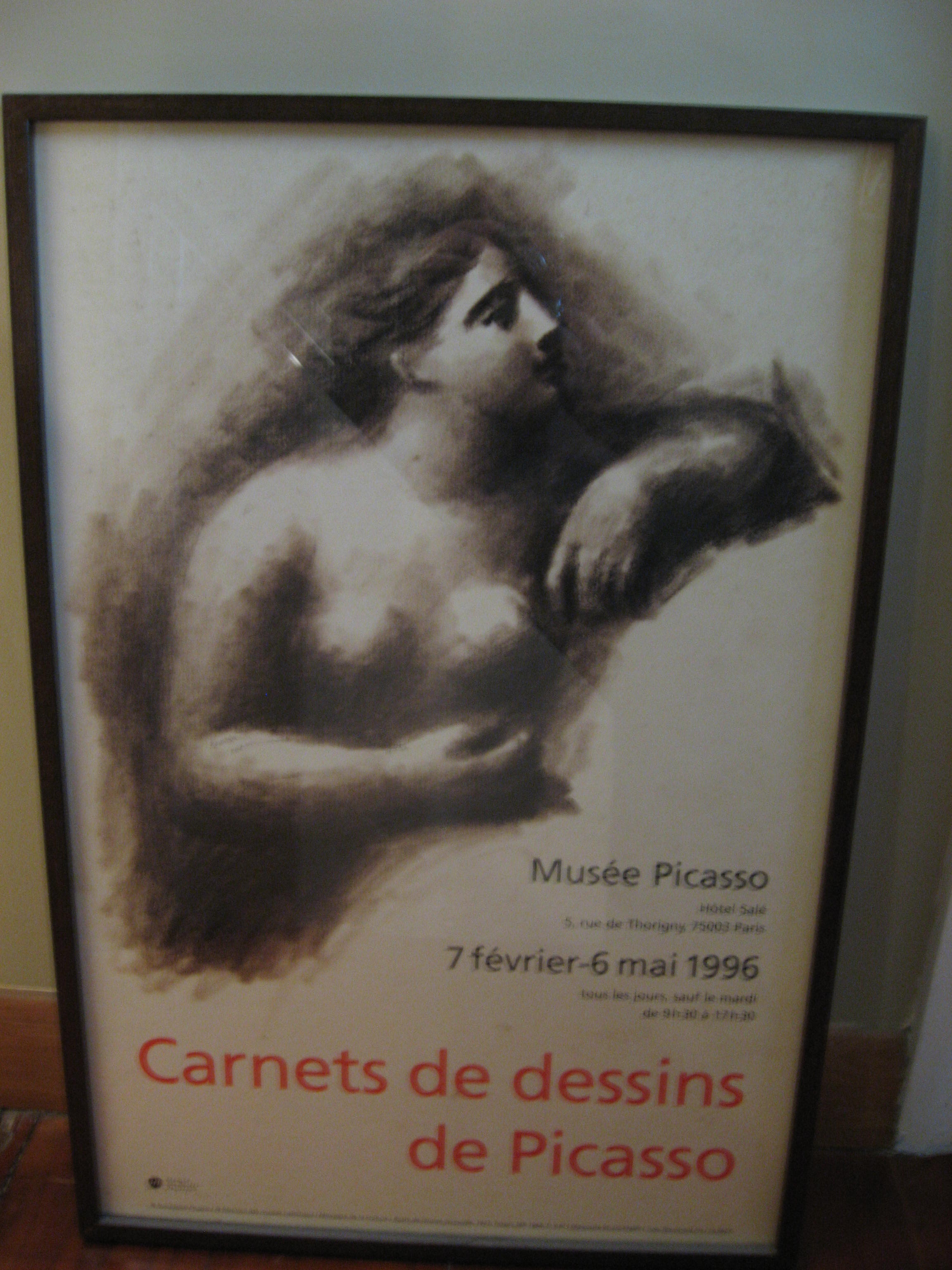
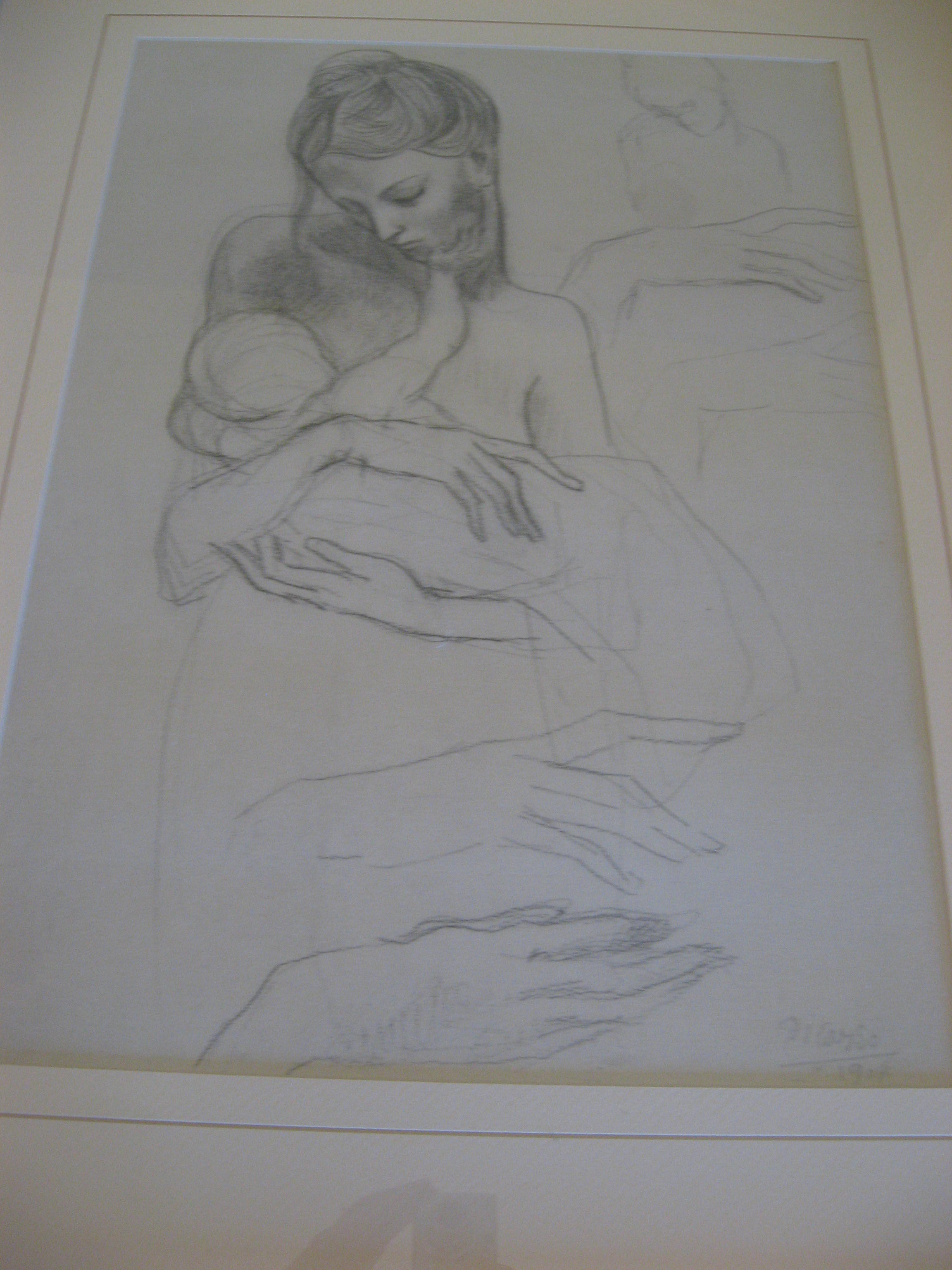
This delightful accident, the Picasso Museum, remains an unforgettable art experience both the intimacy of the setting, the sharing of it with my son and the lack of expectation enabling a true heart to art experience. I purchased this poster advertising an exhibition which now hangs in our bathroom and the other is a print which hangs in our bedroom.Poster from Picasso MuseumPrint Purchased from Picasso Museum

Years ago, when my children were preschoolers, and we didn’t have a lot of money to decorate our humble Edwardian villa in Brooklyn (not New York, but Wellington), I used to drive my olive-green Mini down to the Wellington library and fill the boot with art for hire. It was a lot of fun and a cheap way to dress our house and the great advantage being you never got bored as you just took the picture back and got another one. These were reproductions such as Vermeer’s ‘Girl with a Pearl Earring’ and Van Gogh’s ‘Bedroom in Arles’ but oh the joy racing through the Louvre to see the Vermeer original. I know, I know, they’re practically clichés, but they looked lovely on our wall.

At primary school in the fifties, one of my most humbling experience was being part of a team in class where you had to run to the front of the room and draw something – my task was to draw a hand – all I had to do was place my hand on the blackboard and draw around it to get a fairly reasonable image – but I didn’t have the confidence or imagination for that, and instead I froze at the board mortified, unable to even decide how many fingers a single hand held. It’s one of those frozen moments of life that you never forget. My own version of ‘The Scream’. Nowadays, I teach English as a second language and I find being unable to draw a big advantage – I have no shame and I attempt to draw and the students laugh and through their laughter they name the object that I have so poorly tried to represent – you see my lack of shame unlocks their language.

My friend has reminded me of my introduction to Edward Munch, my astonishment and attraction to ‘The Scream’ before I knew it was a famous painting, and too, of the joy of Frognor Park, my very first up close encounter with stone brought to life. Coming from New Zealand in the early 70’s I was too, a teeny bit startled by so much public nude abandonment (even in stone)… I loved the girl with the flying hair and now I am a grandmother, and I see my granddaughter, her plaits flying as she dances for me in our garden.