Eastbourne – an Anthology

Standard

Eastbourne – an Anthology

It’s time I blogged. I’ve been teaching English in Cambodia for the past three months. It has been a real adventure and I’ve loved it. There have been so many things to absorb, equal amounts of joy to challenges. My Cambodian students fill me with admiration. They work six days a week and sometimes two jobs and still they turn up to learn English.

I will leave a part of my heart here. I will blog about Cambodia, when I return to New Zealand.

And so, my thoughts are now turning towards home. While I was over here teaching English, the Eastbourne Anthology, was launched. I am proudly one of the co-editors of this publication, along with Mary McCallum and Anne Manchester. We worked together on it for two years (not imagining when we started, that it would take that long). I left to take up this volunteer teaching role in Siem Reap for three months, just before the final stages of the editing. And so I must say a big thank you to Mary and Anne for carrying on in the difficult final few weeks, with deadlines and proof reading to be done.

Too, I wish to acknowledge that the inspiration for this anthology was Mary’s. She invited us to join her on this project, knowing that all three of us share a passion for literature and our community. We knew too, that many famous New Zealand authors had featured Eastbourne in their work. But we didn’t know quite how many until we began our research. And nor did we realise how many talented local unpublished authors would submit their work. Constantly, we were surprised and delighted by the variety and the quality and this made our job has editors so much more difficult – and in the end rewarding.

The easy bit, was of course, the ‘Classics’. I’m a devotee of both Katherine Mansfield and Robin Hyde, so I was more than happy to re-read their work and rediscover the references to my own home bay, Days Bay. And then great joy, I was introduced to the work of Molly Falla and had the good fortune to meet her daughter, one of Days Bay’s oldest residents – well, she has lived in the bay perhaps the longest. My next most exciting discovery, with the assistance of Ali Carew of the Eastbourne Historical Society, was the writing of Mary Findlay and her astonishing memoir ‘Tooth and Nail’. I blogged about this a few months ago.

When our family first moved to Eastbourne, over 24 years ago now, we noticed how many second generation families there were in the community. I will confess, at first I had reservations about this. I scoffed a little. We were ‘newcomers’ in the bay and we lived in ‘The Barnett’s House’. Houses were named after the people who had lived there the longest, and not the new kids on the block. I was a working mother (and this wasn’t altogether approved of). It’s taken a while, but I think we’re now part of that same tradition – maybe if we sell our house one day, they’ll say to the new buyer ‘Oh, you’re in the Rainey-Smiths’ house’.

I now have a granddaughter living close by to me here in Eastbourne and I understand community in a different way. The dedication in the anthology from me, is for my granddaughter Sienna. I think it’s good to leave your community to gain a perspective and I’ve been away now for three months. I miss my family and friends. I miss the tuis and the wood pigeons and I miss the sound of the sea.

The Eastbourne anthology is a celebration of all the things that I miss and I’m very proud to be both a co-editor and to have two of my poems in the anthology. A special thank you to Makaro Press, the new publishing house of Mary McCallum. I hear that the anthology is about to go into reprint. It was Mary’s inspired choice to have the anthology ‘bay-themed’ and Anne’s to invite local artists to submit sketch impressions of their bays.

I wasn’t able to be at the launch but courtesy of Viber, I heard the launch speech by Mary and my husband John took these photographs for me. Fittingly, the anthology was launched at the Rona Gallery, home to all literary and artistic soirées in the village of Eastbourne. Joanna and Richard Ponder and their family are staunch supporters of the arts in our community.
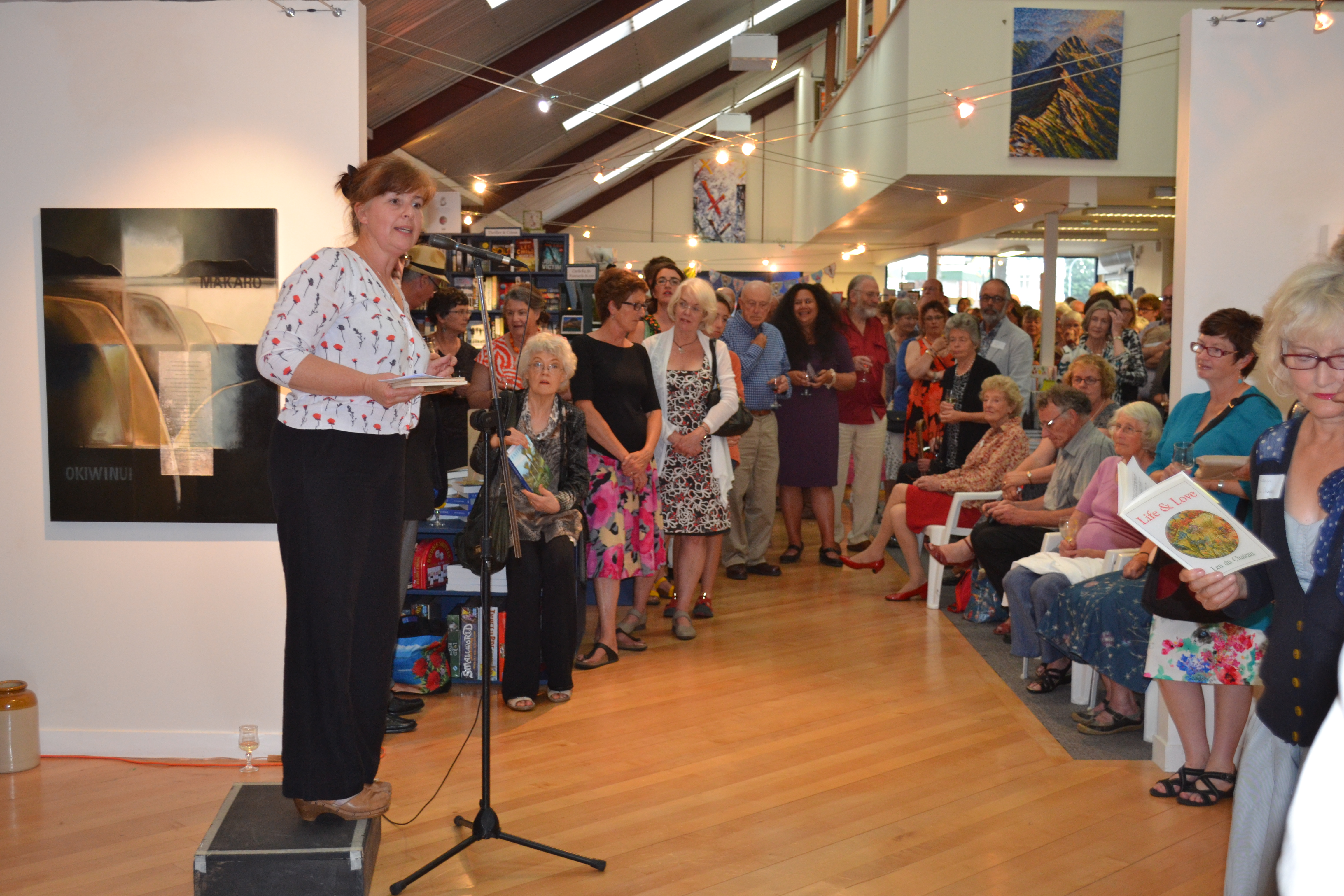
Mary McCallum launching the anthology at the Rona Gallery
Mary McCallum launching the anthology at the Rona Gallery

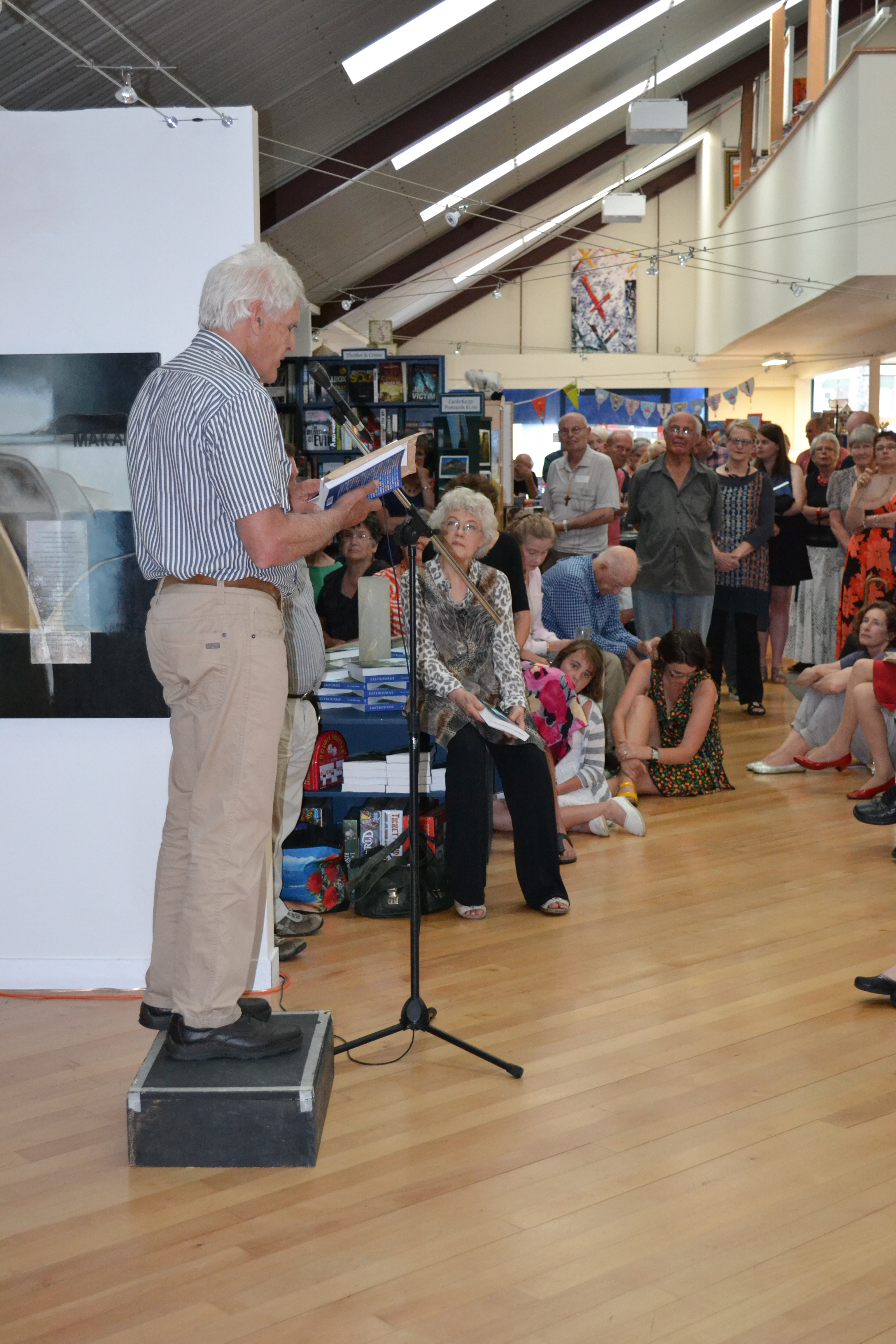
John Horrocks, poet and neighbour, reading
John Horrocks, poet and neighbour, reading

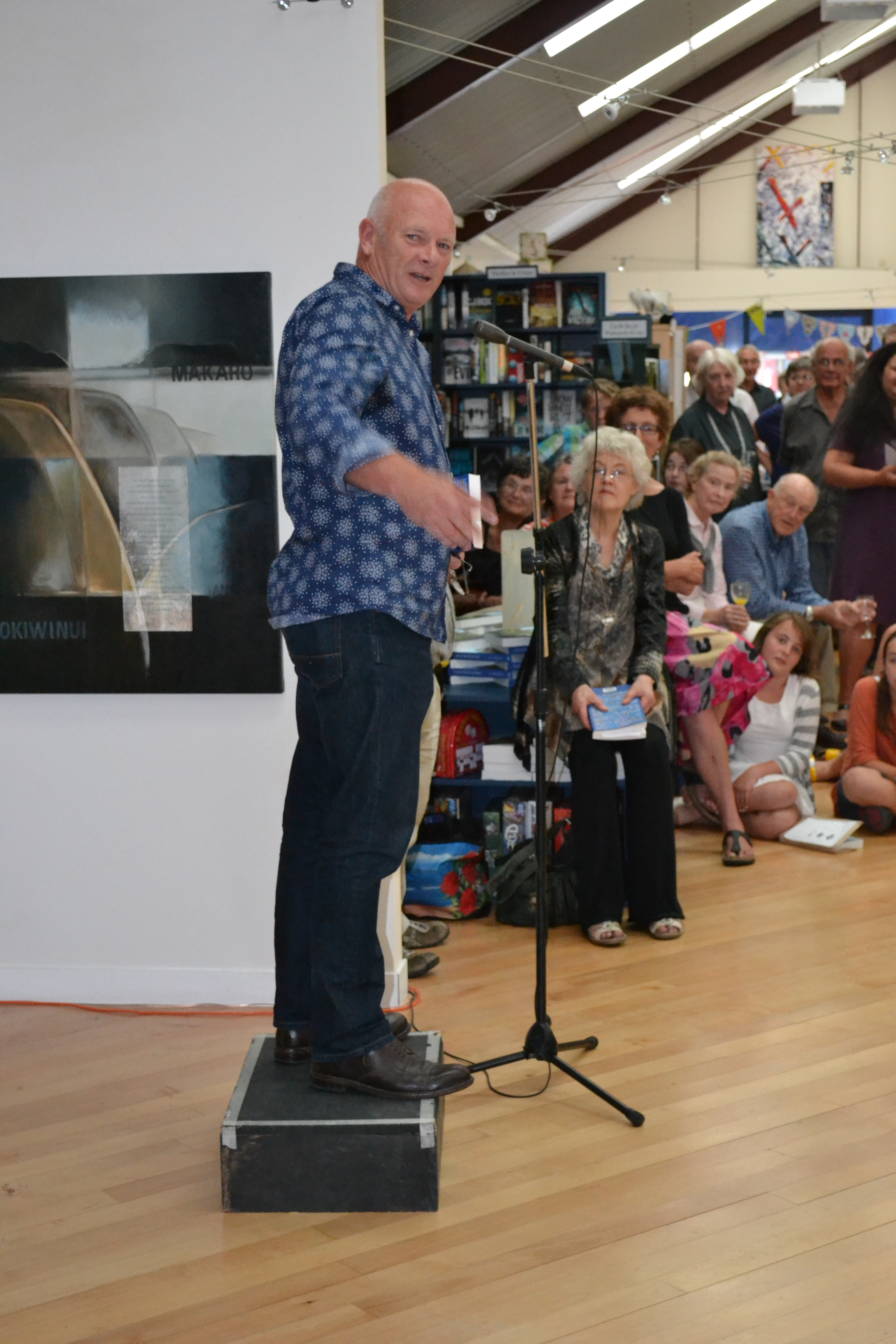
Lloyd Jones (one of the famous faces) reading from his work.
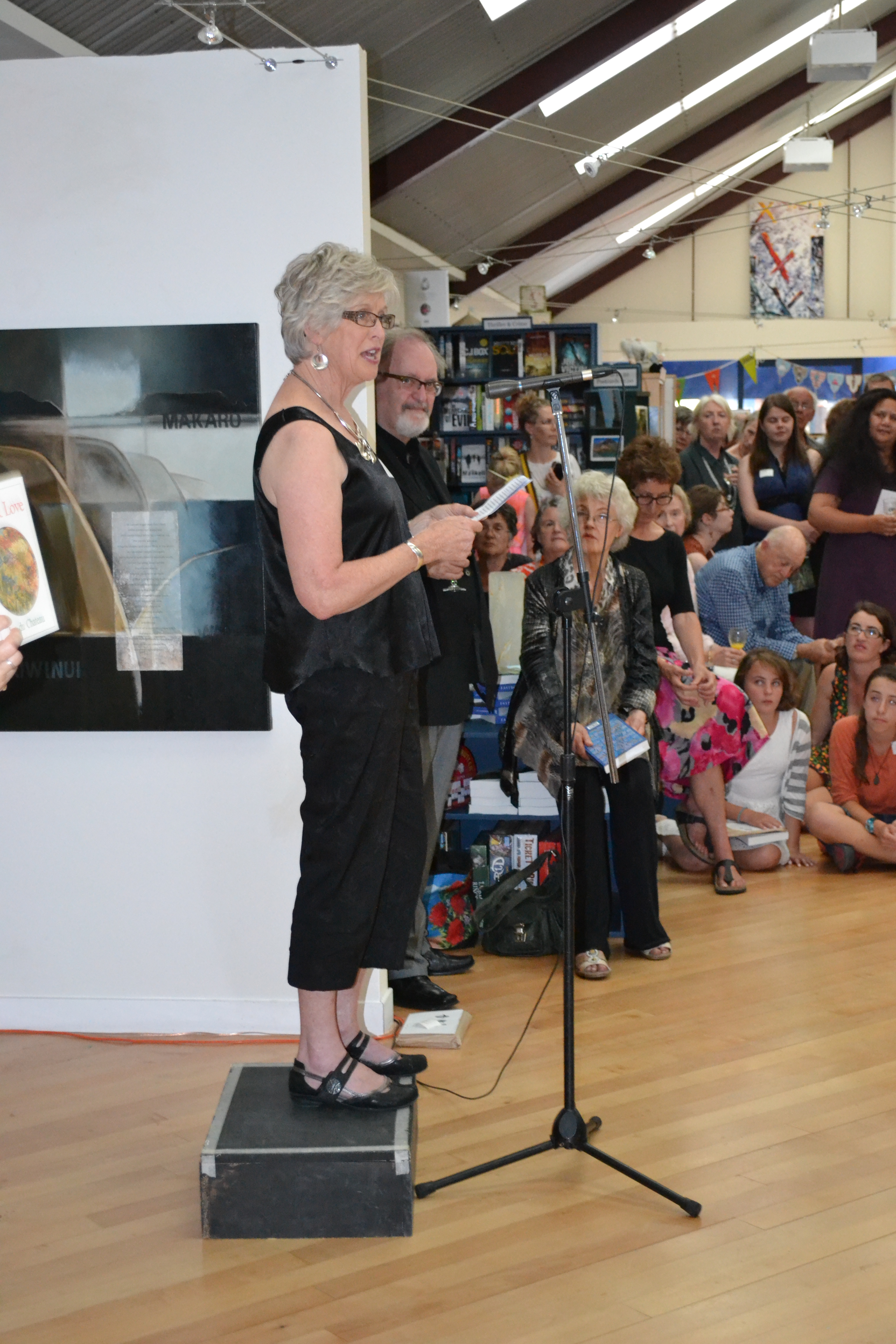
Lloyd Jones (one of the famous faces) reading from his work.

Anne Manchester, co-editor (whose work also appears in the anthology).

Anne Manchester, co-editor (whose work also appears in the anthology).

Right and Left

Standard

Right and Left

I recently attended the launch of ‘Anzac Day, The New Zealand Story – What it is and why it matters’ written by Philippa Werry. Inside this lovely publication, I found this brief but potent quote from Bertrand Russell.

War does not determine who is right – only who is left.”

Extraordinarily profound and yet how simply stated. How I admire that. The best writers of course, are able to do this. Meanwhile, I blog and find myself making extra long sentences to explain myself. But of course, the very best writing cuts to the heart of things without a great deal of noise.

Right now, I’m working with an editor on my Greek manuscript. It’s been a long time coming. In fact, I started my research back in 2007. Six years on, I am beginning to believe that my novel is ready. Working with an editor is the most amazing thing. Recently Craig Cliff blogged on this very topic.

I see pages of my manuscript with the word ‘tighten’ down the left-hand column, or even more specifically, the words “Do we need this?” Indeed, we frequently do not! Removing the debris I call it. A good editor enables a writer to look better than they really are. It’s fascinating to see where you have gone off piste often to indulge something, to show off, to weave in some vignette that is really irrelevant, but you just can’t help yourself (and often this vignette is not fiction, and frequently it fails).

Oh what bliss, removing the debris. Actually, I’ve just removed one whole character. Just like that. He’s gone. He was a sub-plot that was never working. My readers had already told me this, but no one had suggested killing him off… that is, until my editor came along. Murder your darlings. He was someone else’s fictitious darling actually and I’d rather liked him and I’d invested far too much time in him – and now he’s gone. Perhaps he’s going to have another life some day in another novel. But right now I am so relieved he has gone.

Who is right and who is left? My Dad was on Crete during the Second World War and in Poland as a POW for four years. I am part of who is left. My novel is about the Greek girls (well one fictitious girl actually) who came out to New Zealand in the sixties as part of a Government scheme. This close relationship between the two Governments developed as a result of the New Zealand support for the Greek campaign. My novel explores aspects of the Greek Civil War. It is about who is left.

Today, there have been two bombs in Boston. We’re all shocked. I notice on facebook the many posts and the outpouring of concern. We feel united in the horror. But too, I was reminded by my son, a peace activist living in Seoul, that today, not just in Boston, but in Iraq, many people have been killed in a series of bomb blasts in the past few days. It shouldn’t matter where the bomb blast happens, the horror should be equal. But the human condition is such, that we identify with what we know and who we know. It’s impossible to feel constant outrage and compassion for every act of violence – we would despair each day, and so we choose our sorrows and our outrage.

I’m looking forward to Anzac Day. How odd that I do. But it is now a part of my history. It is my father, it is my childhood. It is full of autumnal memories. A greyish shift frock newly made, my new cinnamon stockings, the parade. My Dolly heels caught in the cracks of the pavement outside the war memorial which was also the cinema and the library. Dad in his shiny brown shoes, wearing his war medals hand-sewn to his suit by Mum.

Yes, he would get pickled. We learned to dread Anzac Day. Dad would disappear to the RSA. He was a flagon man, but on Anzac Day, he drank whisky. Looking back, perhaps he had a right to get pickled. And now he’s gone, and I love Anzac Day, because of him. I share it with my granddaughter who loves to wear the red poppy. I’ve purchased the Book on Anzac Day for her with a dedication from the author – but it will be some time before she truly knows what the red poppy signifies.

The Way We Live Now

Standard

The way we live now

I am reading Anthony Trollope’s ‘The way we live now’ a free to download classic on my Kindle and evidently (according to Wikipedia) Trollope’s masterpiece. I can’t comment on that, as I’ve not read any of his work before. It is a fascinating book and feels so contemporary in so many ways in light of the recent demise of so many respected financial institutions, the queries around appointing ex politicians as Directors of commercial enterprise and all the associated pitfalls of modern capitalism.

But too, I am captured by the comedy and pathos of Lady Carbury, her willful blind spots and her shameless literary ambitions, the delightful satire of book reviews… can’t help chuckling. I can’t wait to discuss the book with my book group who are among the smartest women I know and of course, they will have plenty to say, and I shall report back. In the meantime, from my hammock, on Sunday evening, as the sun went down, inspired by Lady Carbury’s efforts at self-promotion…

Reading Trollope from the Hammock

Reading Trollope from the Hammock

From the hammock

Lego from the garden
sits atop
the chopped sleepers
my raspberry Hydrangea
has faded
in the face of summer
Kate Sheppard, the last rose
has buds
there’s not a breath of wind
just birdsong and the faint
traffic
in the distance sound
of the southerly
Lady Carbury
keeps me company
on my Kindle, I worry
for her
for me, for all mothers
their gardens, old Lego
new weeds
our lemon tree losing leaves
although he pees under it
some times
we Skype our family
here and overseas
imagine
that if we stay up all night
but we’ve done that to death
my glass
of Pinot Gris reflects
an upside down tree
a dog
barks half heartedly
and mist rolls in
our pines
went out by helicopter
leaving bleached beech
corpses
there are screams too
from fathers louder than
birdsong
And silent mothers make
school lunches in the dark

Maggie Rainey-Smith copyright 12/03/2013.

Art to Heart with Edvard Munch, Gustav Vigeland, El Greco and Picasso

Standard

All of my art experiences, well the ones that have touched my heart, have been more or less accidental. I think it is this stumbling into art which has had the most impact on my life. I didn’t grow up with a specific artistic or literary education, but one of the biggest influences was of course religious art, iconic images from my Catholic childhood. It was astonishing for me as a young woman travelling through Spain in the seventies to step into a chapel in Toledo and find the original El Greco’s which I knew intimately as a child from the Columban Calendars that hung in all good Catholic homes. I had the very good fortune that day to be travelling in a group that included a young Australian priest in training, on temporary leave from the seminary, who took me on a guided tour of the El Greco’s. And, confession, it was many, many years later, in Kalamata, Greece in 2007 that I finally realised, attending a movie on the life of El Greco, that of course, he was ‘The Greek’, and not a Spanish artist after all.
SantoDomingo
It is a very fine thing I do believe to uncover these secrets accidentally, rather than academically.
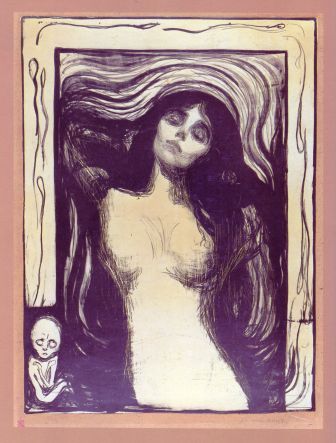
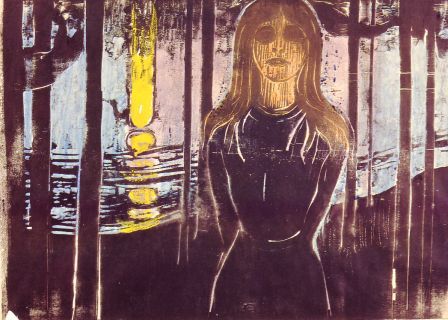
A friend recently emailed me a link to two beautiful images by the artist Edvard Munch… ‘The Madonna’ and ‘The Voice’ and

Edvard Munch

Edvard Munch

Edvard Munch

Edvard Munch

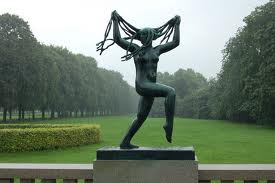
interestingly, the poems written by Munch about these paintings (from a book by Bente Torjusen – The Words and Images of Edvard Munch which is copyright, or I’d include the poems on this blog). The poems are exquisite – unnecessary you could say, for what is art, but a visual not verbal experience… but beautiful as well, because the lines of the poems are expressed in different colours (the mind of an artist). It reminded me of my first encounter with Edvard Munch, in Oslo, January 1973. I was on my way to taking up a job as a waitress in the Haukeli Mountains and staying in Oslo at a youth hostel. I found Munch and Vigeland. They’re pretty hard to miss in a small city the size of Oslo. It was snowing too, that much I remember. I was in love then with all things Norwegian and still hold huge affection in my heart for that time in my life. It was here I first learned to ski and to haltingly speak snippets of another language.

Gustav Vigeland sculpture

Gustav Vigeland sculpture


In Paris in 1997, with my youngest son who back then was just fifteen, together we literally stumbled upon the Picasso Museum. We had just previously laboured our way through the great halls of the Louvre in search of the Mona Lisa, almost running through a room of Rubens – so overwhelming was the art experience that we couldn’t take it in.

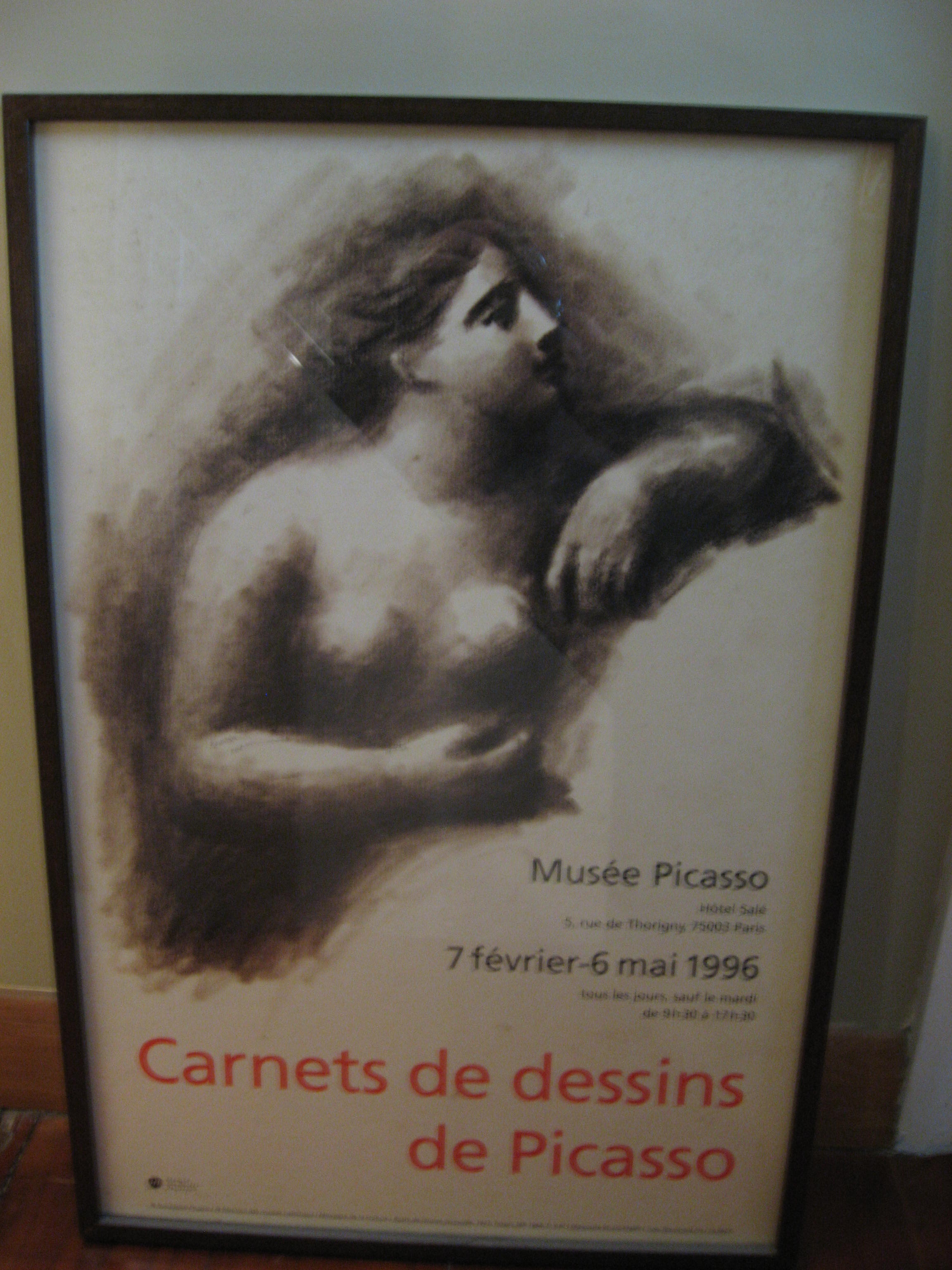
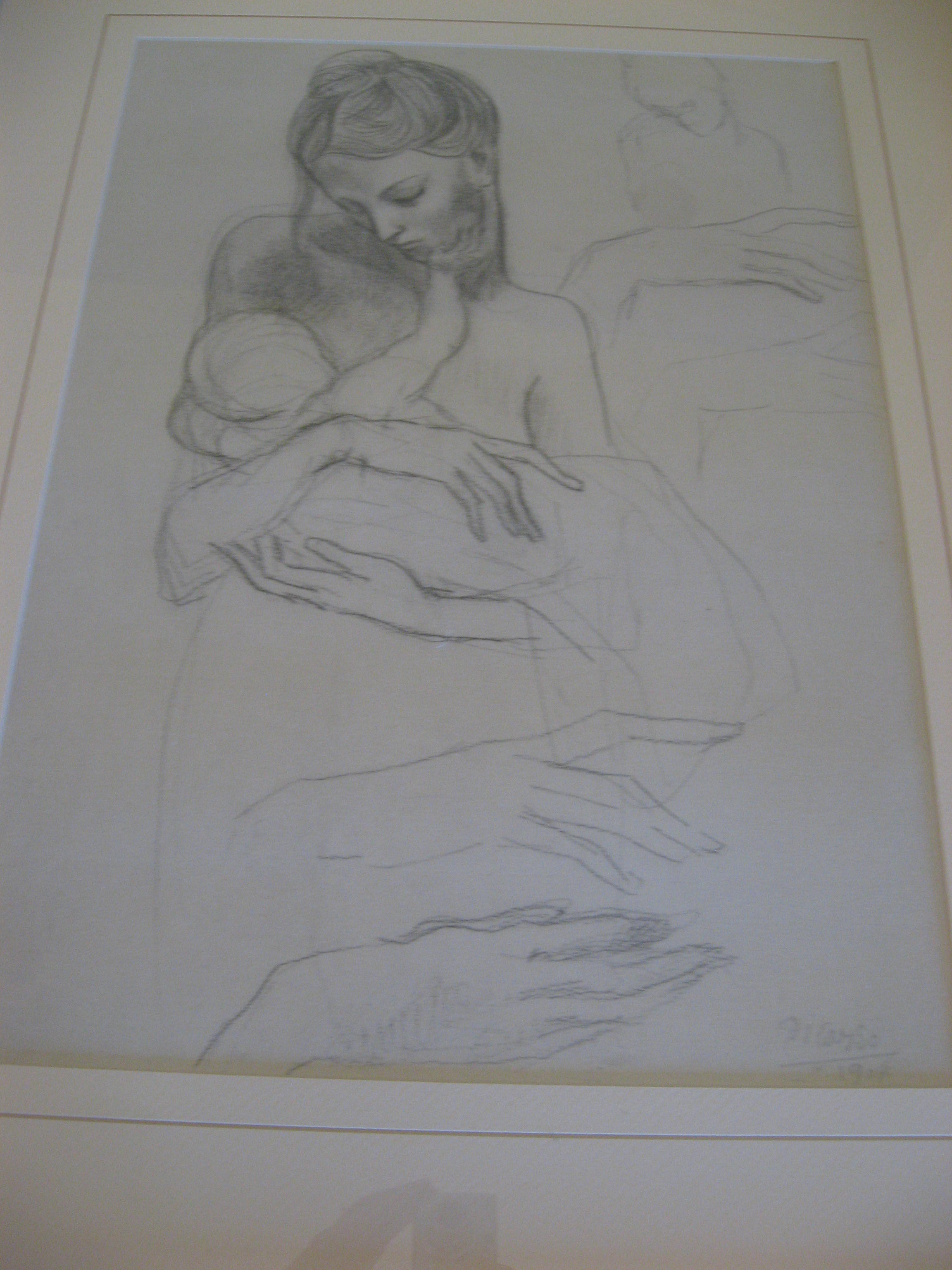
This delightful accident, the Picasso Museum, remains an unforgettable art experience both the intimacy of the setting, the sharing of it with my son and the lack of expectation enabling a true heart to art experience. I purchased this poster advertising an exhibition which now hangs in our bathroom and the other is a print which hangs in our bedroom.Poster from Picasso MuseumPrint Purchased from Picasso Museum

Years ago, when my children were preschoolers, and we didn’t have a lot of money to decorate our humble Edwardian villa in Brooklyn (not New York, but Wellington), I used to drive my olive-green Mini down to the Wellington library and fill the boot with art for hire. It was a lot of fun and a cheap way to dress our house and the great advantage being you never got bored as you just took the picture back and got another one. These were reproductions such as Vermeer’s ‘Girl with a Pearl Earring’ and Van Gogh’s ‘Bedroom in Arles’ but oh the joy racing through the Louvre to see the Vermeer original. I know, I know, they’re practically clichés, but they looked lovely on our wall.

At primary school in the fifties, one of my most humbling experience was being part of a team in class where you had to run to the front of the room and draw something – my task was to draw a hand – all I had to do was place my hand on the blackboard and draw around it to get a fairly reasonable image – but I didn’t have the confidence or imagination for that, and instead I froze at the board mortified, unable to even decide how many fingers a single hand held. It’s one of those frozen moments of life that you never forget. My own version of ‘The Scream’. Nowadays, I teach English as a second language and I find being unable to draw a big advantage – I have no shame and I attempt to draw and the students laugh and through their laughter they name the object that I have so poorly tried to represent – you see my lack of shame unlocks their language.

My friend has reminded me of my introduction to Edward Munch, my astonishment and attraction to ‘The Scream’ before I knew it was a famous painting, and too, of the joy of Frognor Park, my very first up close encounter with stone brought to life. Coming from New Zealand in the early 70’s I was too, a teeny bit startled by so much public nude abandonment (even in stone)… I loved the girl with the flying hair and now I am a grandmother, and I see my granddaughter, her plaits flying as she dances for me in our garden.

From Maleme to Mapua

Standard

I was inspired to think about this seemingly random link after reading a poem. The poem is called “Alive together” and it is by Lisel Mueller. The poem begins thus:
Speaking of marvels, I am alive
together with you, when I might have been
alive with anyone under the sun,
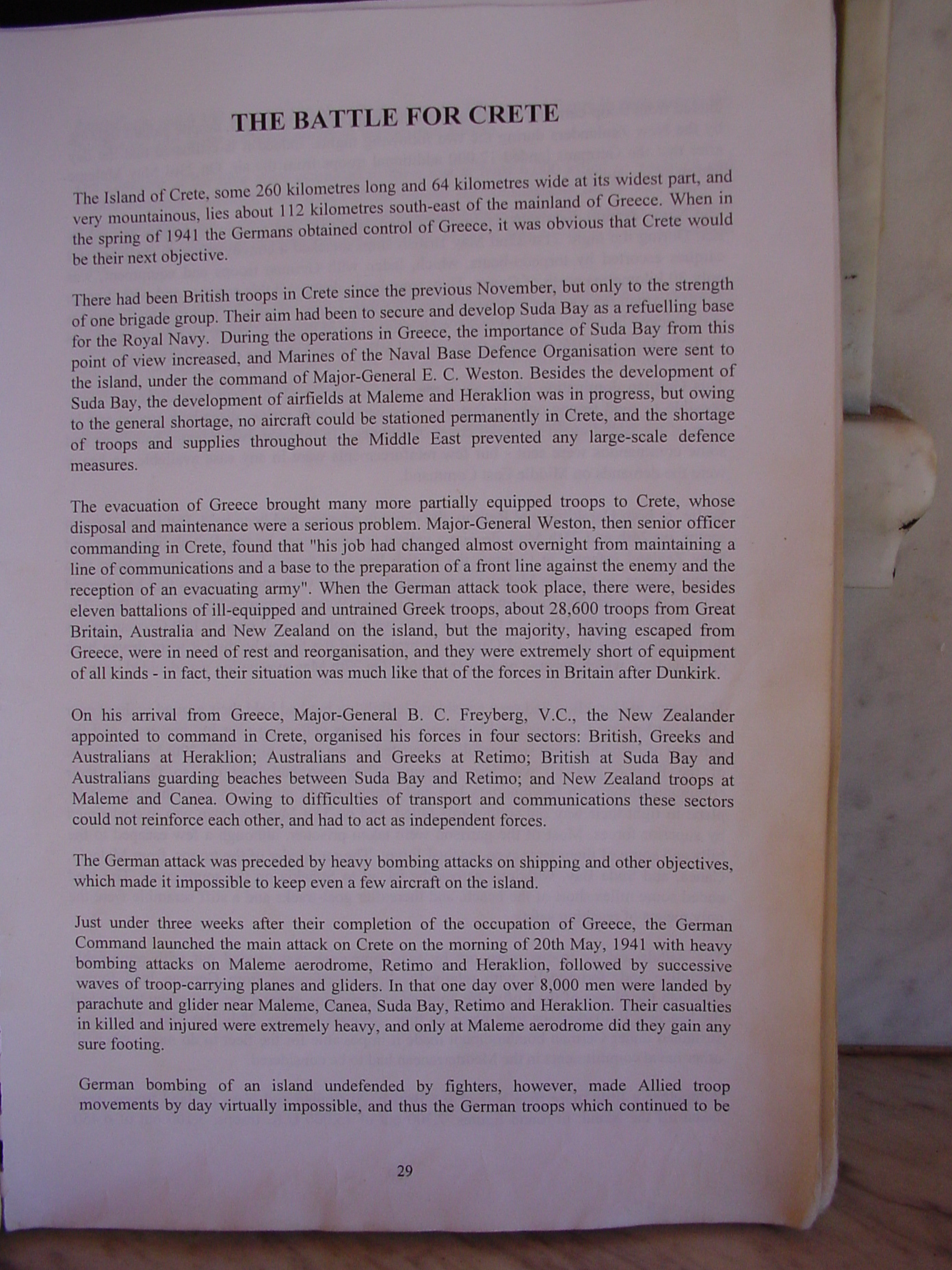
The poet goes on to imagine being a woman in a different time, married to different men, the idea of who we are being both random and minutely specific to a multitude of histories. I like this poem and I have recently been reading ‘Crete – The Battle and the Resistance”’ by Anthony Beevor. It is a very good account of a fearsome battle for control of the island in Greece during the Second World War, told from many sides of the story, the Germans, the New Zealanders, the British and the Cretans. My Dad was in the 5th field Regiment, a gunner, in the New Zealand 22nd Battalion defending the airport at Maleme, the point at which strategically the battle was lost, when it should have been won.

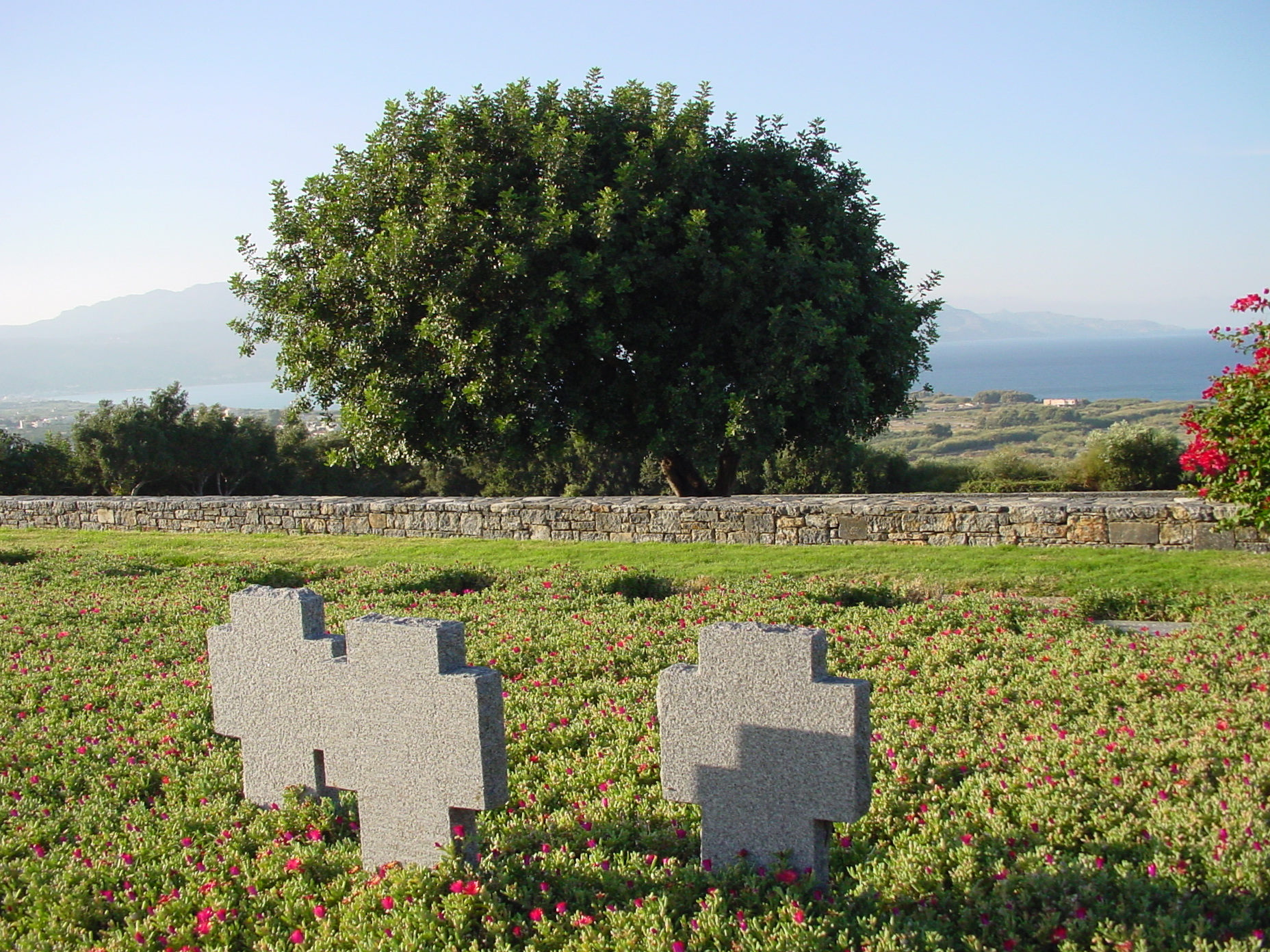
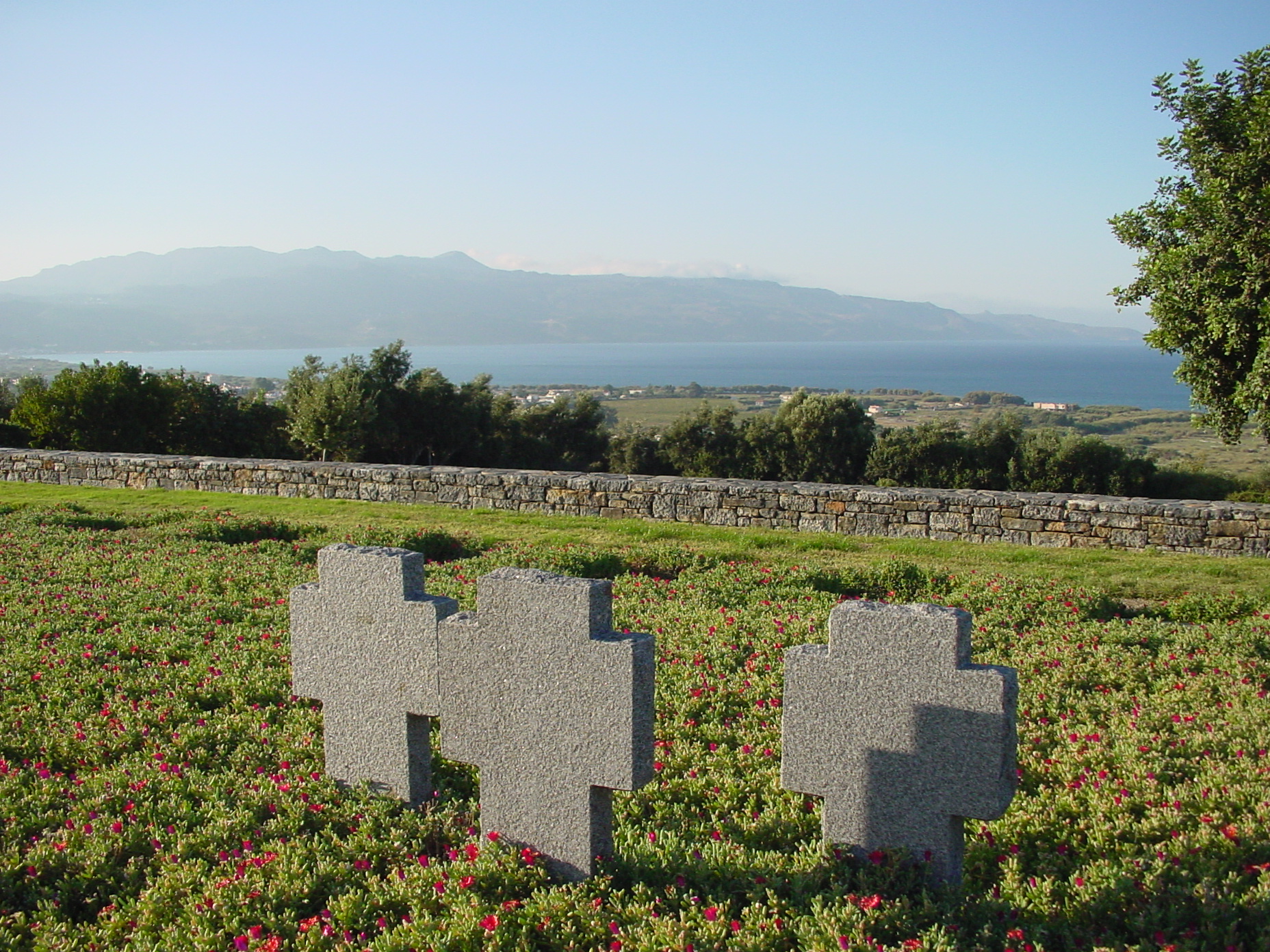
The German graveyard at Maleme

The German graveyard at Maleme

Stone crosses on the hillside among the graves at Maleme

Stone crosses on the hillside among the graves at Maleme

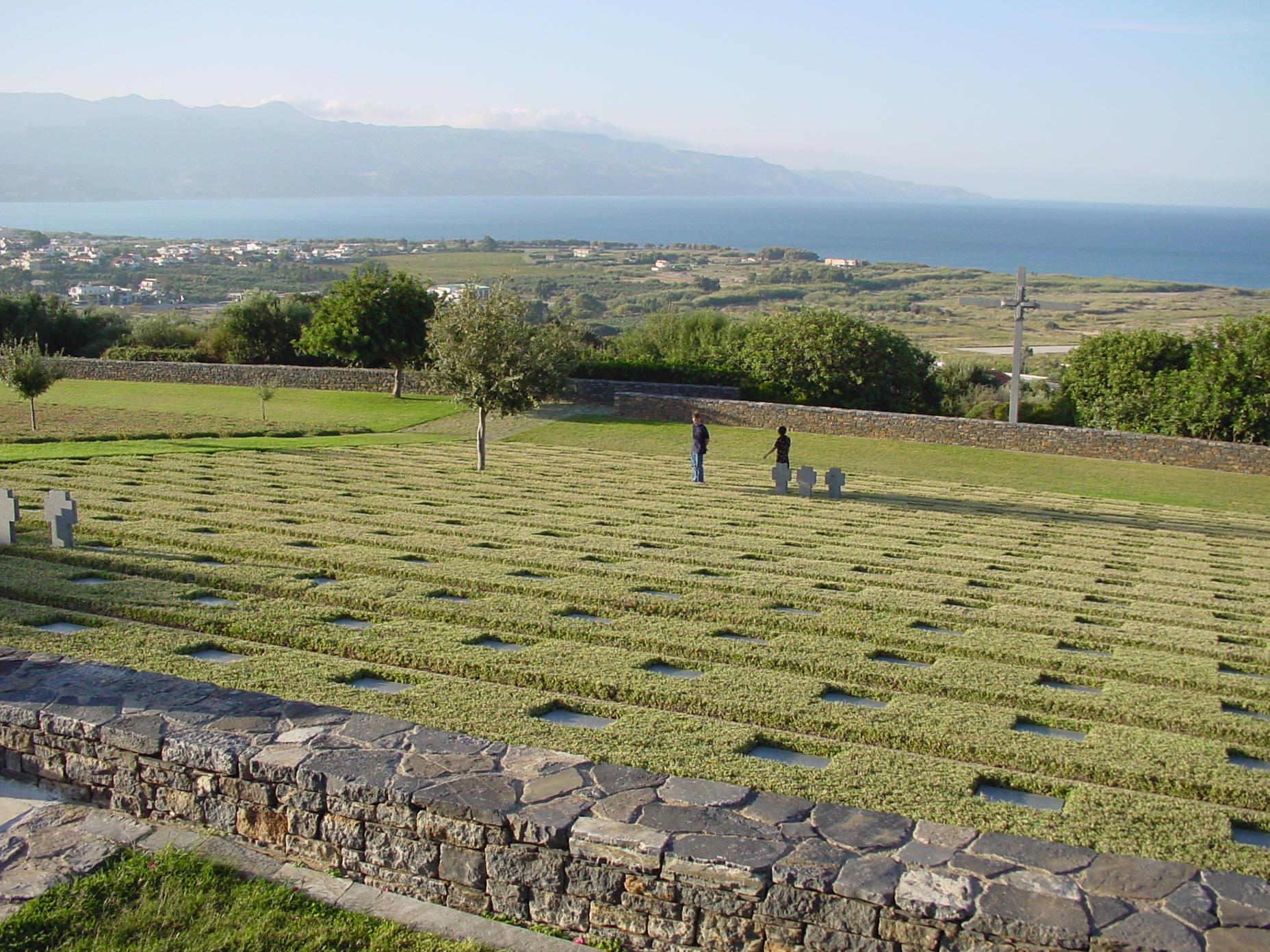
The graveyard at Maleme of German paratroopers killed in the battle of Crete

The graveyard at Maleme of German paratroopers killed in the battle of Crete

If, they say, General Freyberg had not been so hell-bent on the idea of a seaborne invasion… if Colonel Andrew (according to Beevor), “had gone forward before nightfall to observe the coastal trip and the western slopes of Hill 107…” … so many ifs. I imagine too, if they’d all had I phones, perhaps a few texts to and fro with some pictures attached… but then too, it seems Freyberg was very concerned about revealing to the Germans that the Brits had cracked their code, and so I guess I phones can easily be hacked . And too, imagine instead of young men dropping from the sky (like Icarus) in their parachutes, if instead, the Germans had used drones. The account of hand to hand combat between the Germans, local Cretans and the Kiwis is fierce and brutal. It seems that the Geneva convention did not apply as far as the Cretans were concerned. They were civilians defending their own patch. Oddly, the Germans imagined that the Kiwi soldiers would not fire upon them as they descended in their multi-coloured parachutes. But of course they did. And I have it first hand from my Dad, how extraordinary it was, to be firing at such easy targets, but too, how sickening. I read in Beevor’s account, how the gunners were told to aim low at the falling body because of the rapid descent, thus ensuring an accurate hit.

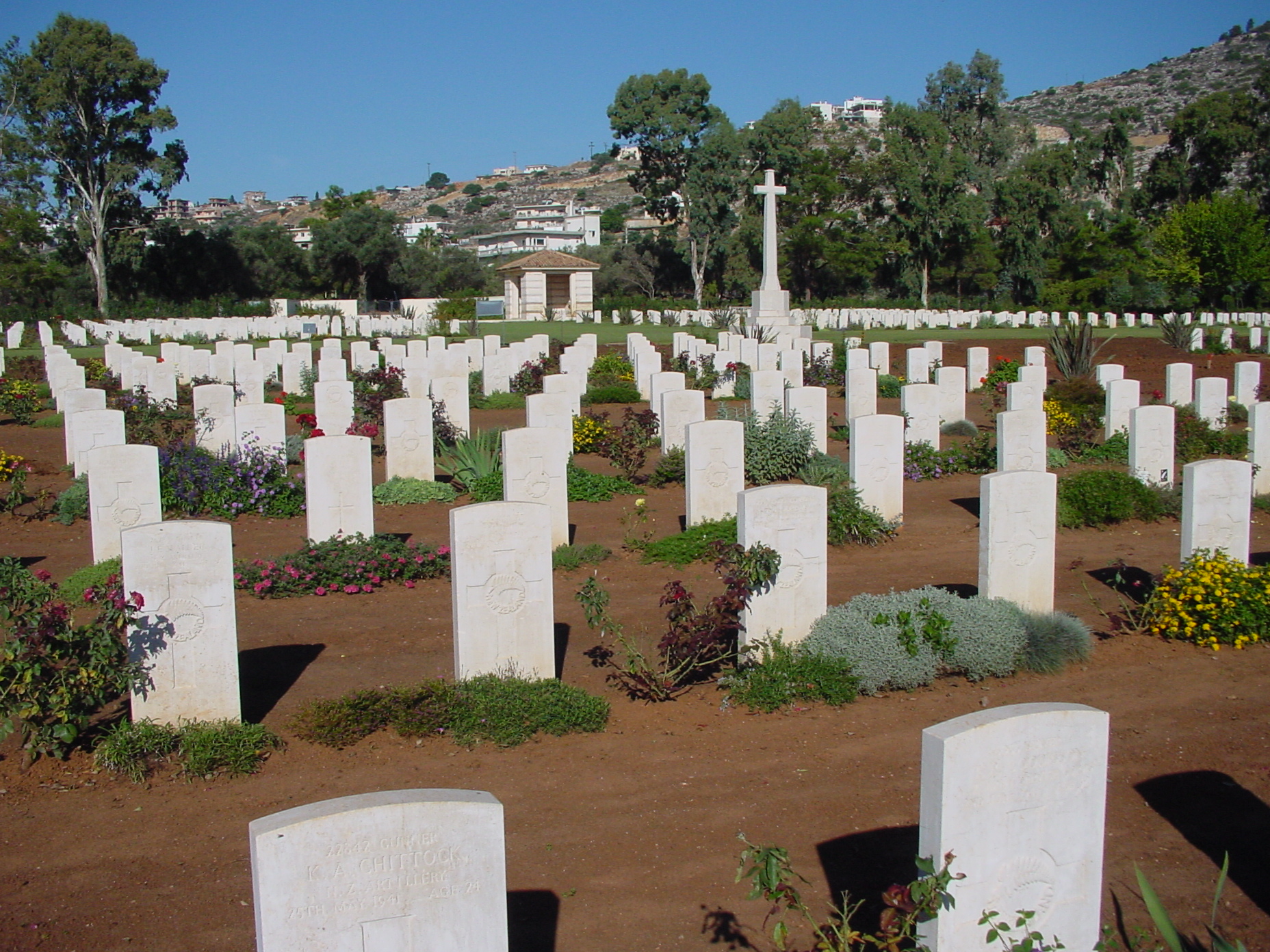
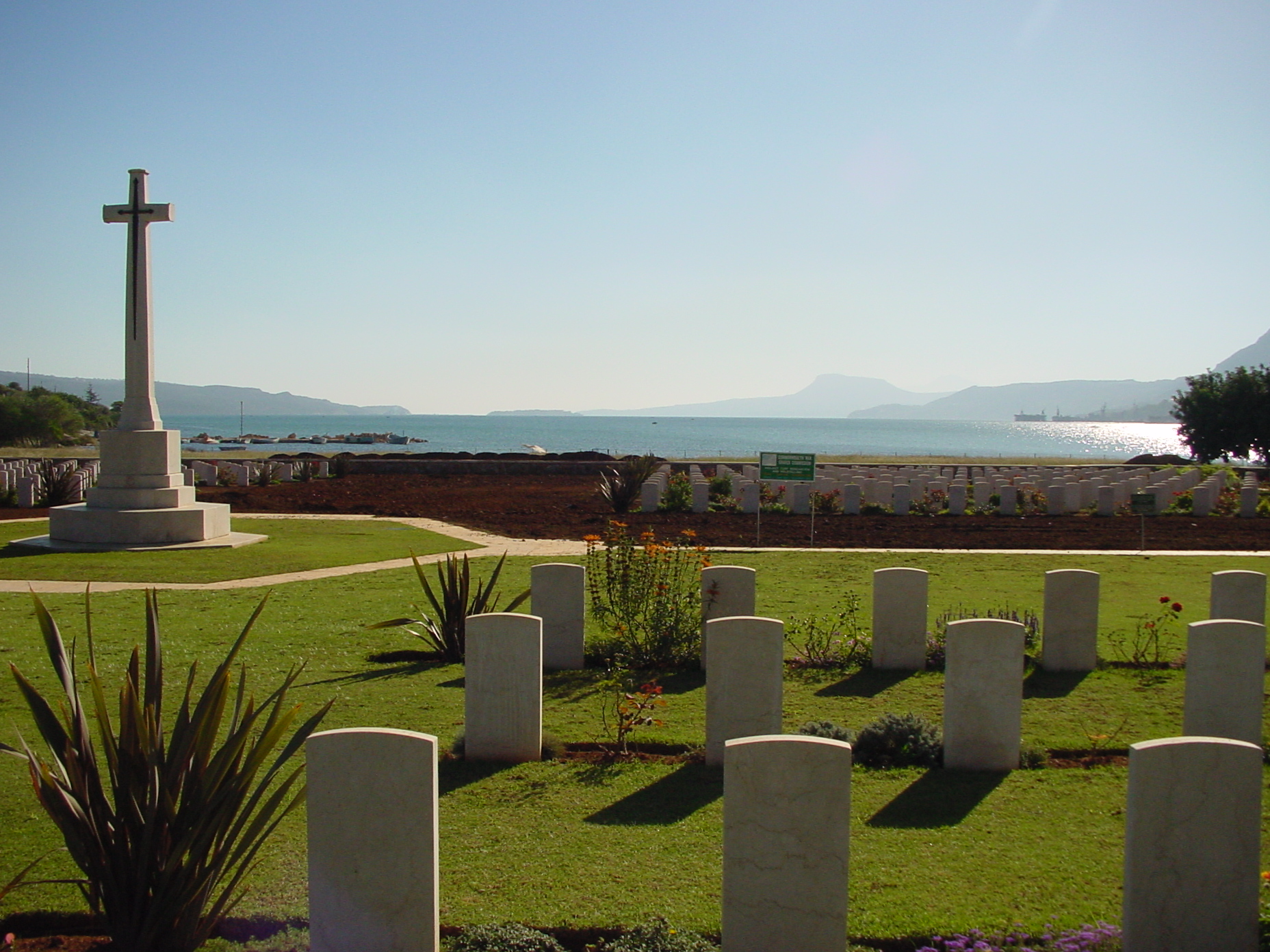
New Zealand graves at Suda Bay

New Zealand graves at Suda Bay

Suda Bay cemetery where the Kiwi soldiers lie

Suda Bay cemetery where the Kiwi soldiers lie

DSC00031

But in spite of this, the battle was won by the Germans, although they suffered extraordinary casualties. The paratroopers were young men (the German elite), some as young as sixteen and thousands were slaughtered in the first two days of the battle. So, what brings me to me Mapua? What is my connection? It is really rather random as I mention at the start (but then you see, don’t you, how random all of our histories really are).

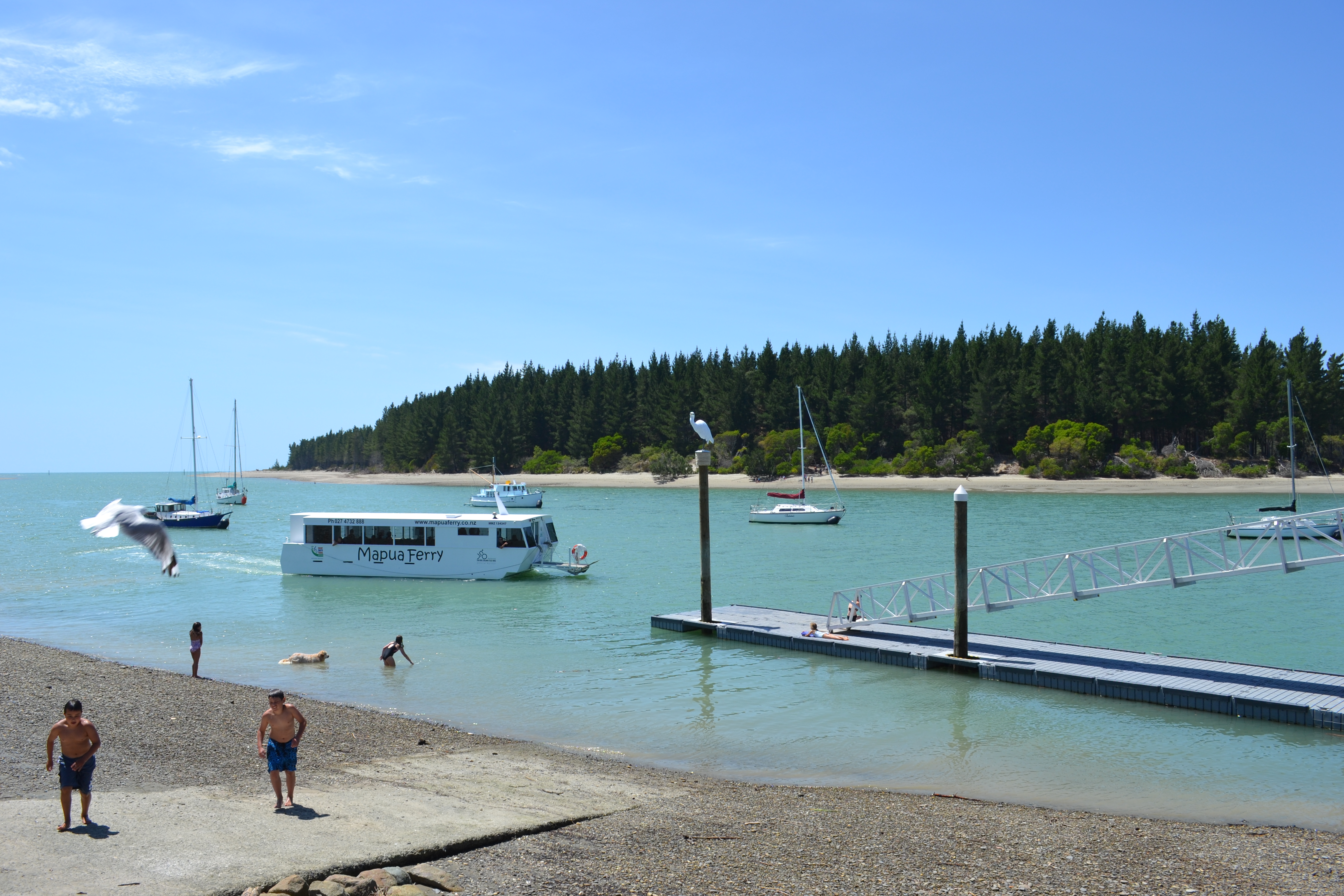
Mapua wharf with the ferry that crosses to my favourite childhood beach, Rabbit Island

Mapua wharf with the ferry that crosses to my favourite childhood beach, Rabbit Island

Ruby Bay

Ruby Bay

Ruby Bay

Ruby Bay

I was reading about the Battle of Crete, perched on the seafront at Ruby Bay (a hop skip and a jump from Mapua where I drank my morning coffee and had these thoughts) and I realised that if the 5th Field Regiment had held the airfield, I may not have existed. The defence of Maleme would have required a further battle – my Dad instead of retreating might have died in the ensuing violence – or so I told myself under the hot Tasman sun. That he survived to be taken POW and then shipped on cattle trains to Poland to spend four years as a POW – not to mention the subsequent 600 mile march in snow at the end of the war … well, that is neither here nor there, because this is what happened and so I know he survived all of this. But too, at each step along the way, there are a multitude of ifs to consider.

And as a result of my father’s war experience, I am fascinated with Greece, with the Battle of Crete, and too, I am ‘alive together with you, and you, and you (my family, my friends, my readers)… and there’s something both thrilling and fateful about this very being alive. If the chance came, would you change your life, be an entirely different person? As a child I used to look at people and try to imagine what it might be like to be them and then be terrified that I had wished too hard and what if I did become them and I didn’t like it and then I couldn’t get me back. Whatever befalls us, we may wish it had not, but do we ever really want not to be ourselves? Perhaps some people do (and here one can imagine a child in the slums of Mumbai). I am currently reading ‘Behind the beautiful forevers’ by Katherine Boo. Yes, perhaps if I was atop a rubbish dump, scavenging for a living, I may well be happy for my wish to be granted… but thankfully in my own fortunate life … it is enough to be ‘alive and together’ …
the poem ends thus:

alive with our lively children
who — but for endless ifs —
might have missed out on being alive
together with marvels and follies
and longings and lies and wishes
and error and humor and mercy
and journeys and voices and faces
and colors and summers and mornings
and knowledge and tears and chance.

Isn’t it just a grand poem? I have Diana Gilliland Wright of Firesteel to thank for her blog which alerted me to this beautiful poem and of course, if you wish to read the entire poem, click this link to Firesteel.

The ghosts of Christmas past

Standard

It was the little bit of bitumen stuck to my shoe that started this post. A sultry windless day this week and the temperature had risen to the mid twenties. In Wellington, this is a heat-wave. I lifted the irksome piece of road from my shoe and saw the tar. Lovely black tar, the warm ooze from the road that summer sometimes brings. I grew up in Nelson where in summer the tar oozed all season long. This piece of road stuck to my shoe reminded me of streets shimmering with watery mirages, the impulse to lie down, lay your cheek against the bitumen. Of course we could back then. There weren’t so many cars.

A week earlier I made my Christmas cake. I know, it’s late, and I should have made it weeks ago. It’s a ritual that I love. I use my mother’s recipe which is something now of a mini legend. I’ve lent it to friends over the years and the title is ‘Maggie’s Mum’s Christmas Cake’. She put a teaspoon of curry powder into her cake and so do I. This lends my cake something of the exotic, although of course you cannot taste the curry in it. Once a year, I honour my Mum when I make this cake. And I mix the cake in my late Uncle’s Gripstand Mixing Bowl which I suspect may well have once been my grandmothers.

IMG_0041

When I stand in my kitchen running my fingers through the dried fruit to make sure the flour and spices and fully incorporated, I have time to indulge the ghosts of Christmas past. It’s aided of course by the whiff of brandy in which the fruit has been soaking. I recall my mother decorating our Christmas tree with a concoction of egg whites that she flicked at the tree randomly using I think the back of a spoon to create our very own fake snow. I remember too vividly, the night my brother had woken and disturbed Santa. He’d seen Rudolph disappearing up the chimney, and the only evidence was the fallen fire-screen.

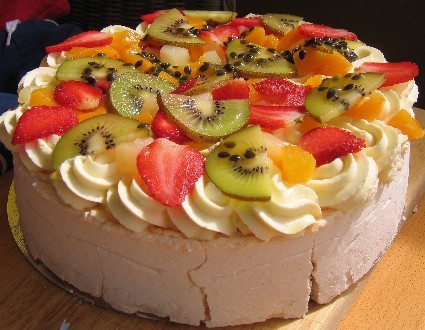
And then too, there is the boiling day when we were going to Grandma’s for Christmas lunch. My mother’s youngest bachelor brother was in town. My maiden aunt who lived with Grandma had loaned her Morris Minor to her brother. He’d gone to the pub and hadn’t come back. We didn’t have a car and we were relying on my aunt and her Morris Minor to transport us and all the food that my mother had prepared up to Grandma’s house. And so as memories are made, we traipsed instead on foot, with plates of trifle and pavlova in the hot sun. Mum’s trifles were legendary (sponges made without the aid of Fielders cornflour, whipped with a hand beater, baked in the coal range). Her pavlova was the crunchiest, deepest, softest in town. She smothered it with cream, and cherries, and pineapple and ginger and walnuts. It wasn’t all that far to walk really, perhaps a couple of miles but much of it was up-hill. I’m not sure how the whipped cream fared, or what trouble my uncle got into, but it’s a Christmas memory.

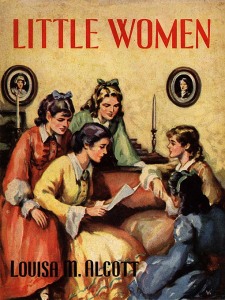
We always got a book for Christmas – maybe the latest School Friend or Andy Pandy annual for me, and one year Meg, Jo, Beth and Amy of “Little Women”came into my life.

Little Women

I recall buying a bicycle bell for my Dad from McKenzie’s Department Store one year for Christmas. We always shopped at Woolworths or McKenzies and I guess they are the equivalent of the two dollar shop nowadays. One of my favourite Christmas present as a child was a brand new swimsuit from a maiden aunt who came from Wellington. She was a waitress at the St George Hotel and worked there for 40 years during its hey-day. Up until then, I’d worn a hand-me down (from my mother or some other adult) pair of togs that filled with water and gave me a bosom, and at five years of age, that was too embarrassing. The swimsuit is a Christmas legend – it was covered in pink and green Christmas bon-bons, had a wee flared skirt and a pink bow at the back. I’ve never forgotten it.

My Christmas past is filled with maiden aunts and uncles who arrived and left, trips to the beach or the river in my aunt’s Morris Minor, car sickness, ice-creams, the long slide, midnight mass, Mum’s mince pies made with flakey pastry instead of the short pastry, minted peas, new potatoes, and the back door open with the afternoon sun shining on the new green lino. It’s pea-picking with my friends as a teenager, weeding strawberries, picking boysenberries, saving up for Christmas …it’s the Mardis Gras the beachcomber ball sunshine and sunburn, swimming holes and bike rides, fishing off Rocks Road, the endless hot summers of Nelson.

And too, it’s the whiff of brandy, the butter, sugar and egg yolks, the egg whites beaten to soft peaks and folded into the cake mixture, the dusting of baking powder at the bottom of the thickly paper-lined cake tin. It’s the wrapping of layers of newspaper around the cake tin and tied with string, so the cake won’t burn at the edges. It’s spreading the mixture and packing it firmly into the four corners with a small hollow in the middle to ensure when it cooks, the cake will rise to a perfectly flat shape for icing. It’s rolling out the almond icing and nibbling the left-over’s, and nowadays, it’s waiting for my granddaughter to arrive, to decorate the Xmas tree.

IMG_0044

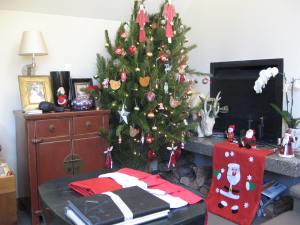
We have our own new rituals that we are creating together.   She buys me a Christmas decoration every year and I buy her one.   We decorate the tree together and we bring out the papier-mâché reindeer that I bought for my boys (one of them her Papa), and she adds pretty coloured ribbons to the reindeer’s antlers each year, to update his imageThe ghosts of Christmas past, the deceased; my Mum, my Dad, my brother and all my maiden aunts and uncles are with us.

Frosty nights and Andy Williams

Standard


Television was black and white back then, but my memories of that time are colourful.    My very   first memory of TV is Lassie, when I came to Wellington in the school holidays sometime in the early sixties and stayed at Houghton Bay with my cousins and their neighbour had a TV.   I briefly caught a flash of dog and screen, barely a minute or so, but I do know it was a very snowy picture.   And then I had a friend called Janice in my hometown whose father I think, had the very first TV set in Richmond.  He was receiving pictures from Australia – well at least I think he was.   There was no Kim Dotcom back then, so he must have had his own satellite dish even then.

We lived at No.43 and my best friend Liz who lived at No. 53, had a TV.   On Wednesday nights I would walk to her house to watch Dick Van Dyke and Peyton Place – practically the double-feature.  I loved when Dick Van Dyke fell predictably on the split level floor (how flash, a split level floor), and of course, we adored Mary Tyler Moore.    As for Peyton Place – well even back then I found Mia Farrow aka Alison McKenzie, tedious with her long blonde hair, sitting on the swing, insipid and uninspiring – whereas Betty Anderson with her dark and dangerous smouldering – we loved her  and so did Rodney Harrison (Ryan O’Neal) – and as for Dr Michael Rossi… we loved him even more.   Oh, it was True Confessions in pictures and we couldn’t get enough.   As for Constance Mackenzie; surely a cougar before they were invented.

Once, my friend Liz and I visited a friend whose father sold television sets.  This was even before Liz’s family owned a television.   We were invited as a special treat to watch TV and there were strict instructions about how to view television.   The screen was covered with a blue filter that was supposed to lessen the glare of the snowy picture.  But the father of our friend instructed us that we should look up and around the room while the advertisements were showing, to rest our eyes.   And we still laugh about this – the strange sight of three young girls all glued to the television (the Patty Duke Show if I recall correctly) and whenever there was a commercial break, we would all obediently roll our eyes around the room, trying to avoid eye-strain, and desperately trying not to laugh.

But my fondest memory, in my early teens, is walking up the hill from our house to my Aunt’s to watch TV with her on a Saturday night, about a mile on a gradual incline.  My grandmother had died, and my Aunt was one of those women from a certain era, the youngest of a big family, the only one with a secondary education and able to earn a good income, and so she ‘stayed home’ to look after her parents.   My Aunty Del and I would watch the Andy Williams show together, sitting on her recently upholstered Sanderson floral chairs (the rose and peony pattern I think).

I can’t find the exact floral pattern, but I think it was the rose and peony pattern but I’m sure there was more blue and grey than green, but it’s funny how memory works, I may be wrong.

We would eat chocolate sultana pasties, and drink tea brewed strongly with plenty of milk so the tea turned tan.   Grandma’s front room had been all rust and gold with autumnal Axminster carpet.   When Grandma died, Aunty Del had recovered the floor with mushroom pile and a new Queen Anne glass cabinet through which to view her Lladro.   I didn’t covet the Lladro but I drooled over the red and gold coffee set which my Uncle (the roguish lovable bachelor brother) had won with his race horse ‘Arrow Royal’ at the picnic race meeting one summer.    When he died, in a lonely pensioner flat near the Wellington Zoo, and I went with her to clean his flat out, we found his jockey colours, a brilliant emerald green coat.  He didn’t ride the horse, but he had kept the jockey’s colours.   I remembered him most for the half a crown he would toss us, when he came home to Grandmas now and then for a weekend, from Wellington.

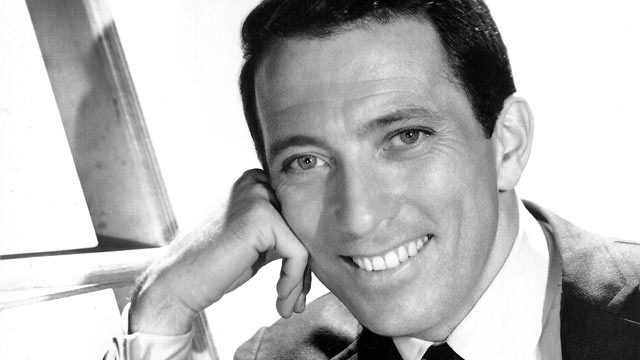
This week, I heard on the news that Andy Williams has died, and on the radio or the TV, I keep hearing  his crooning version of ‘Moon River’. It’s taken me back to my Grandma’s house with the hydrangeas out front, to remembering those Saturday nights with my Aunt, when television was a novelty.  When a man with a voice like Andy Williams was moonlight and pastel Sanderson all rolled into one. The TV station, from memory the only one, closed down at 11.00 pm I think.  We waited until the very last moment, until the screen turned to snow….  and then my Aunt would slip a hot water bottle into her bed, put on her slippers and we’d cross the frosty front lawn together to her green Morris Minor.   She’d drive me home under the inky canopy when even home fires couldn’t mar the star-filled skies.  Mum would leave the porch-light on and I’d sneak into my room, and into bed, a hot water bottle already there waiting for me.

Working in the Sixties

Standard

I recently had a poem published in ‘Typewriter’ an on-line journal for emerging poets edited by the delightful Elizabeth Welsh, a poet and passionate supporter of other poets.

The poem is about my first job really, as a shorthand typist with the Post Office in Nelson.    That’s quite some time ago now.   But it’s got me thinking about those times and how it was I ended up there and what it felt like.    You have to cast your mind back a bit to the 60’s when girls like me had to choose between being streamed ‘professional’ where you could study French and German and go on to become perhaps, well, ah… usually a nurse, or a teacher.   And then, if you wanted to learn to type, you had to choose ‘commercial’ and never the twain shall meet.

I wanted to be a reporter, as I recall, and I knew that I would need shorthand.   I didn’t know anything else and to boot, I had a very glamorous single (maiden or unclaimed treasure as she called herself) aunt, who worked at the Post Office.   It was my aunt who came to our house and tested my shorthand prowess which did reach 120 wpm at one stage.   It was she too, who gave me my first portable Olivetti typewriter to practice on.

Years later, when I was running my own recruitment company in the late 1980’s and the share-market plummeted, I recall meeting young women from private schools whose ambitious parents and teachers had refused them anything so ordinary as learning to type.   Oddly though, at this very point in history, the computer keyboard was becoming integral to most people’s working lives.  Being a touch typist, as I am, is a big advantage to anyone, male or female.

Yes, I learned to type at Waimea College, one of the first co-ed schools in New Zealand.   I sat in the commercial class with a bib over the typewriter keys so that now I can rattle off a book review or a blog without having to look at the keys, or to do the one-finger peck-peck that so many people are reduced to.   At one stage in my illustrious typing career (admittedly on an electric typewriter), I could do 100 wpm typing.   Indeed – I cannot vouch for absolute accuracy at this speed.     On an old manual typewriter, I think the top speed was 60 wpm to pass my Public Service examination.

Back then, in my first job, we sometimes had to type with up to six carbon copies, and that meant if you made a mistake, you had to erase all the copies one by one (Twink I think – I can’t remember) and I often ended up covered in carbon – no long-sleeved white-blouses for me as I stretched across the carbon copies.    I was always glad that I wasn’t a legal typist as they had to type perfect copy without erasures or amendments.

I wasn’t a super-star shorthand-typist because I had a tendency to day-dream.   Back then it was considered a lack of focus and I struggled with this, but now realise that probably I was bored with the content of much of the stuff I had to type and didn’t pay sufficient attention to it.   Yes, back then, I felt somewhat of a failure when I had to do”retypes” and watch my rubbish bin fill to overflowing.   I think I might have even smuggled out some discarded copy under my cardigan to avoid the embarrassment of yet more wasted paper – goodness knows what I did with it, but we did have a coal range at home that Mum cooked dinner on, so perhaps it went in there.

We used to clean our typewriters every Friday in the afternoon before we knocked off.   I had the uncanny knack of dismantling bits and pieces of my typewriter (unintentionally) as I cleaned it.   As I recall, I ended up with several pieces of my typewriter sitting in a basket beside my typewriter – and fortunately back then these old machines were so sturdy, that it continued to function, minus these missing parts.

I also operated the switchboard when it was my shift to do so.

That meant headphones on while typing and stopping mid-flight during a memorandum and transferring calls from outside to inside extensions – the criss-cross of cords as described in my poem – here’s the link.  You could eavesdrop to if you were that sort of girl, but of course I wasn’t!

From memory there was talk back then, that typists pushed the equivalent of ‘tons – tonnes’ per day, with the sheer pressure required to push the old manual keys.  I know our hands were held higher than they are for a modern electronic keyboard and you couldn’t just peck-peck.    Unless you were doing a stencil and you had to be very careful when pushing the letter ‘o’ as if you pushed too hard you cut the ‘o’ completely out and ended up with a black dot on the page instead of the lovely circular letter.

Recently, a librarian responsible for choosing books for the Catholic library service throughout Germany made contact with me.   He’d read a book review I had written for a book he had also reviewed and liked.   He had also read my blog about teaching English to German High School students.  And too, I think because of the Frankfurt book fair and the current interest in New Zealand writing.   I asked him about Catholic libraries and he gave me a very brief history which evidently go back to the second half of the 19th century.   “In those times Catholics were a (huge) minority in the Prussian dominated “Kaiserreich”.  Most of them lived in rural areas, worked as craftsmen and farmers and only a few have had an academic education, most of them were priests. Some of those academics saw the need of education for as many Catholics as possible.”  He said that after World War II, the libraries broadened their scope and now run more or less like any local library with a wide range of contemporary literary fiction, children’s literature, as well as gardening and cook books.

This reminded me of how it was back in the 50’s and 60’s in New Zealand.  I’m only quoting hearsay and legend, but it is said that many private companies wouldn’t hire Catholics and so by default many were in the public service.  My Aunt and two of her brothers worked in the Post Office and it seemed only natural that I would follow in my Aunt’s (to me glamorous) footsteps.   You see she drove an apple green, hand-painted Morris Minor, while we didn’t own a car.  She also earned more than my Dad (he was a carpenter) and she had an amazing wardrobe which included many pairs of stiletto shoes.    What else was there to aspire to?

I never regret the Commercial path that I took.    In the early seventies, I worked in London, Newcastle, Manchester, and Edinburgh as a Temp Secretary – and late in life, I’ve found my feet as a writer – typing has proved a most fortunate and useful skill.   I never did get to be a reporter, but I am now doing book reviews and blogging as well as working on my fourth novel – so yes, typing turned out to be the right thing after all.

Autumn, Anzac Day and Gerard Manley Hopkins

Standard

Autumn, Anzac Day and Gerard Manley Hopkins

Where we live, in the bush, by the sea, autumn for me is the best time of year.   We moved to our house on the hill in autumn twenty something years ago, and it was the still air, the mellow sunshine, and the leaves dropping in the garden, that captured our hearts.   The harbour is quieter this time of year, calling us to kayak.    The cicadas have ceased their courtships and the wasps are out, lured by the Easter spices.   I’m affected by the light, the warmth, the sense of peace that only autumn seems to bring.

And then, it is Anzac Day and the brass band, the bagpipes and the haunting bugle, bring another layer of nostalgia peculiar to my Kiwi childhood, that lovely in-between season thing where summer has ended, but winter hasn’t yet begun.    I ran behind my granddaughter today on our nature walk, she was wearing a hand-knitted cardigan in strawberry, aqua and bluish hues.  I watched her back running through the bush collecting special sticks so we could block the creek further up the hill.  When she snuggled for a cuddle I could smell shampoo and wool and the damp soft mud beneath our feet.  I bought her a poppy to wear on Wednesday and she loves red.  We looked for the toadstools we’d seen the week before, and mourned their loss, wondering what had happened to them.

I was reminded of this beautiful poem by Gerard Manley Hopkins that I only encountered late in life studying English Literature at Victoria University when I was 50, and indeed, I used a line or two of this poem in my first novel ‘About turns’.

          “Spring and Fall” (1880)   Gerard Manley Hopkins

 To a young child

Margaret, are you grieving
Over Goldengrove unleaving?
Leaves, like the things of man, you
With your fresh thoughts care for, can you?
Ah! as the heart grows older
It will come to such sights colder
By and by, nor spare a sigh
Though worlds of wanwood leafmeal lie;
And yet you will weep know why.
Now no matter, child, the name:
Sorrow’s springs are the same.
Nor mouth had, no nor mind, expressed
What heart heard of, ghost guessed:
It is the blight man was born for,
It is Margaret you mourn for.

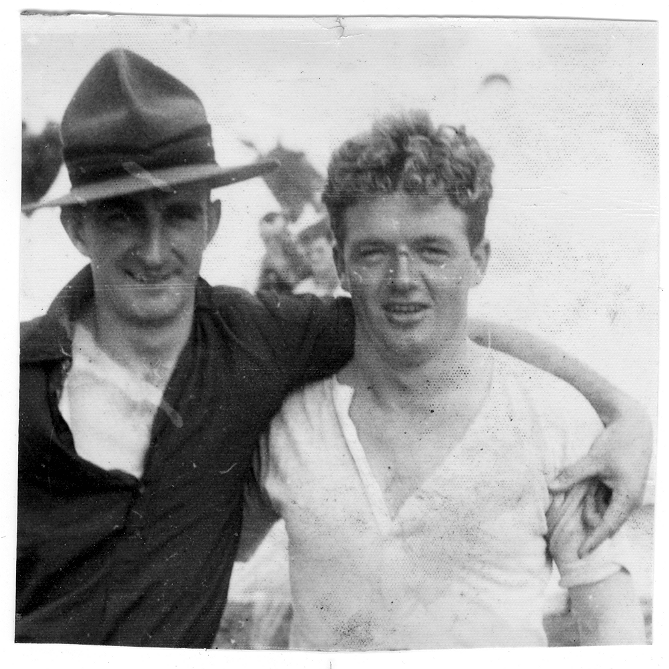
My granddaughter and I will meet outside the local school on Anzac morning.   Then we will march alongside the war veterans (there cannot be many left, but perhaps from the Vietnam War), and I will be stirred by the music on two counts.  One because I was a marching girl in the 50’s and 60’s and two because I’ve always followed the Anzac Parade, to see my Dad in his shiny and freshly polished shoes, wearing his war medals that Mum would stitch temporarily on to his suit, so they hung straight.  Now I have his medals and his Crete badge and his small barbed wire pin, remnants of his war efforts.   Perhaps this year I will wear them.   When he was alive, and after I was married with a family, he would sometimes come and stay with us and we would do the Dawn Parade in Wellington and then our own local parade.   We couldn’t get enough of it.   Nowadays, I just do the local parade and adjourn to the RSA for the home-made pikelets, sausage rolls and cups of tea, followed by an obligatory beer with my friends and we toast my Dad.     This will be my first Anzac Parade with my granddaughter.

In 2002, I travelled with my husband to Greece and to Crete to retrace my father’s war journey and to Poland where he spent four years as a prisoner of war.   I wrote about it and the story was published in the New Zealand Listener.  Regrettably, I inadvertently wrote of Stalag VIIB instead of Stalag VIIIB, and neither the Listener nor I picked it up before it went to print.

Here is a link to the story: Looking for Curly

What prompted this post about Anzac Day is one of my favourite blogs Surprised by Time.and on reading this blog I found more information about where my Dad might have been on mainland Greece, before arriving at Suda Bay for the Battle of Crete.     This is part one of a two-part blog that includes excerpts from New Zealand and Australian veterans of the Greek campaign, both on mainland Greece and Crete. It is well worth reading.

A Broken Heart

Standard

Please Look After Mother

I usually read with my head.    Books that try to claim my heart, frequently meet with my resistance.   I like to second-guess an author if they are trying to make me weep, feel sad, or to tug at my emotions.  The books that seduce me are mostly darkly funny to mask their sadness.   I loved ‘The Forgotten Waltz’ by Anne Enright; I like her writing, the wicked way she carves into your heart through your head.          We bring to our reading so much of ourselves, both our past selves and the now.    My youngest son lives in Seoul, is married to a Korean girl and has through marriage, become part of a Korean family.  I have visited Seoul now three times and I love the city and the people and most especially of course, my son’s wife and her family.    Add to the mix, that I am almost 62, the same age that my mother was when she died.     Then one more ingredient.   I am in Sydney on a short holiday, which is where I was working forty years ago, when my Aunt phoned to say ‘come home’ your mother has had a heart attack.

So, perhaps I am predisposed at this particular time, for this particular book that has just won the Man Asia Literary Prize Please Look After Mother by Kyung Sook Shin translated from Korean by Chi-Young Kim.    I found it heart-breaking.    Almost from the start, my heart was breaking.   It is such a superbly simple, yet deeply affecting novel.    I’m not sure if it is because the book is in translation that the writer is so easily able to transgress, to override, to ignore my self-erected emotional barriers.

I cried easily and without self censure.   It is a beautiful story, made all the more affecting because of the shifting perspectives in each chapter, as the family set out to find their mother, lost at Seoul Railway Station.    Seoul is one of the most modern, populated cities in the world today.   The mother in this novel who has always walked a few steps behind her husband, fails to get on to the train and it’s only after the train has left the station that he realises she is not on it.   We get to hear from her children and from her husband how they see their mother, now that she is missing as they comb the train stations, hand out flyers, and revisit parts of Seoul they lived in years ago, where she might have gone looking for them.

The first voice is her daughter, now a feted and famous author and she recalls spontaneously going to visit her mother one day after one of her novels is translated into Braille and she had read to a group of blind people.    She buys an octopus and visits her mother.  It is the blending of food, train stations, cultural customs, convention, tradition and modernity that makes this book sing.   Yes, I admit, I found even the names of places enchanting, because I recognised them, newly recognised them, and felt a connection.    My son is fortunate to have the loving affection of his wife’s family and because he is vegetarian, when he visits his mother-in-law, she prepares all his favourite foods with delicious meat substitutes, pampers him, mothers him, and as his mother back in New Zealand, I feel deep gratitude for this.    So, yes, I am the perfect candidate for this book, I recognise that.

When my mother died, I was young and travelling; just back from living in London and now in Australia, doing my own thing.  I didn’t want to go home when she had her heart attack.  In fact, after I received the phone call from my aunt, I waited another two days until I received an urgent ‘come now’ and I abandoned my job and flat on the very same day to fly home.  I still recall the mad rush to gather my belongings (modest thankfully) from a flat on the North Shore and the taxi driver in New Zealand when I arrived, eschewing my attempts to tip him as he carried my heavy suitcase for me.   But I was resistant, callow and self-interested, unable to really give my mother my full attention, even when she was dying.   This book explores those very themes through the eyes of the children of the mother lost at Seoul Station.  They explore their memories of their mother, their last encounter with her.

And so, here I was in Sydney again after many years, catching up with a friend with whom I had flatted in London in 1972.  I was in a cheap but modest Pensione on George Street.   Across from Central Station is the strange-shaped Dental Hospital building where it was I worked when I received the phone call about my mother.   I rode the trains reading this novel, and now the doors on the trains close automatically, but back then, I rode the trains in the hot summer and the doors never closed.   My heart was in several places at one time.   I was in Sydney now and back then; I was in London, I was in love, I was all over the place, warmed by the Sydney sun and completely disarmed by this evocative novel.

Kyung-Sook Shin manages to incorporate with subtlety, the extraordinary history of South Korea , from poverty to extreme modernity in sixty years, without being particularly political or weighty posturing.    I recently readBruce Cumings ‘The Korean War’ which is heart-breaking in a different and more factual way, and gives insight into the plight of the North Korean people both during the war and after – ‘the oceans of napalm’ dropped on the North by the United States and read that during the Korean war, four million Koreans were killed, two thirds of them civilians.   So, yes, Korea, both the North and the South have an extraordinary recent and mostly untold history.

I have only one small quibble with the novel and perhaps that is the ending.  But that too may reflect something of my prejudice and predisposition.   I won’t spoil the ending, but I felt it was perhaps too overtly symbolic, but still, a very small quibble.   The translation isn’t always perfect either but somehow for me that lent authenticity to the text, so that I knew it was a translation and I wished that I could read Korean, to see the words in their original context.  I wondered would they be more, or less, sentimental from a native speaking perspective.

Please Look After Mother broke my heart a little and it was lovely to have it broken.   I can see why it is a best-seller.   But too, I can see how this review from the New York Times was written with a more cynical and critical reading – yes, I can see this point of view, but this time, I left my head and followed my heart, and that’s okay, it’s only fiction. It seems the book has also been translated as Please Look After Mom  and that evidently sealed its fate for many, as a piece of sentimental fiction – the whole ‘Mom’ thing.   I guess this also goes to show, how much of ourselves we bring to our reading.