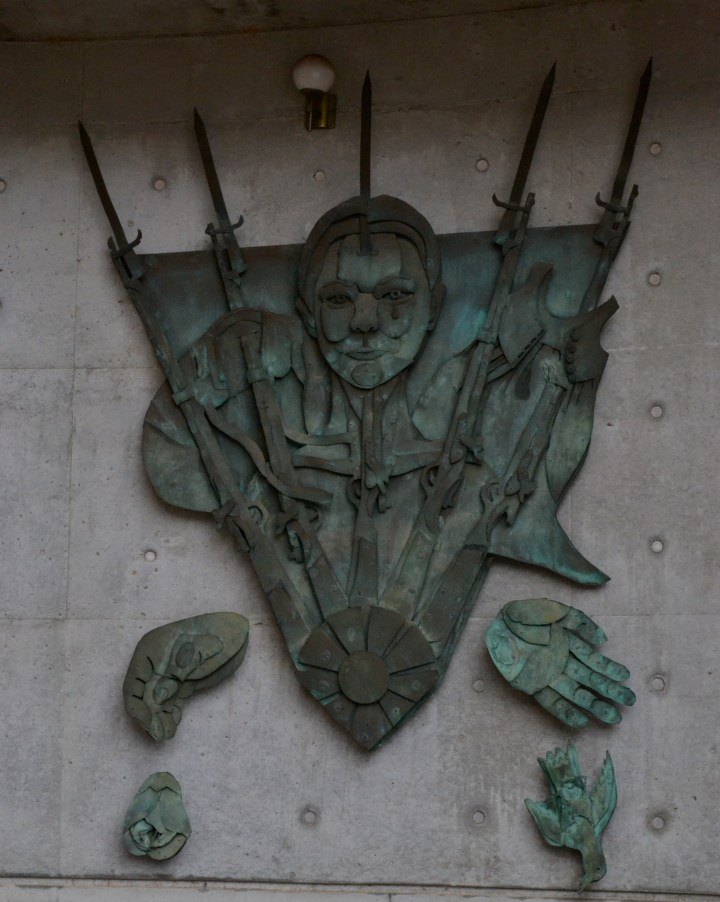
Wives to consider

Standard

There are wives

to consider now

with two sons

and a grand

daughter

our lives have

grown, and

the photos

we found

show us

how we thought

we were

back then

but looking

at them now

is different

somehow

new ways

to see the

brothers

their father

and as

for me

well, you

can’t rewrite

history

but you can

reinvent

yourself

© Maggie Rainey-Smith 29/12/2011

Faded Beauty

Standard

Faded Beauty

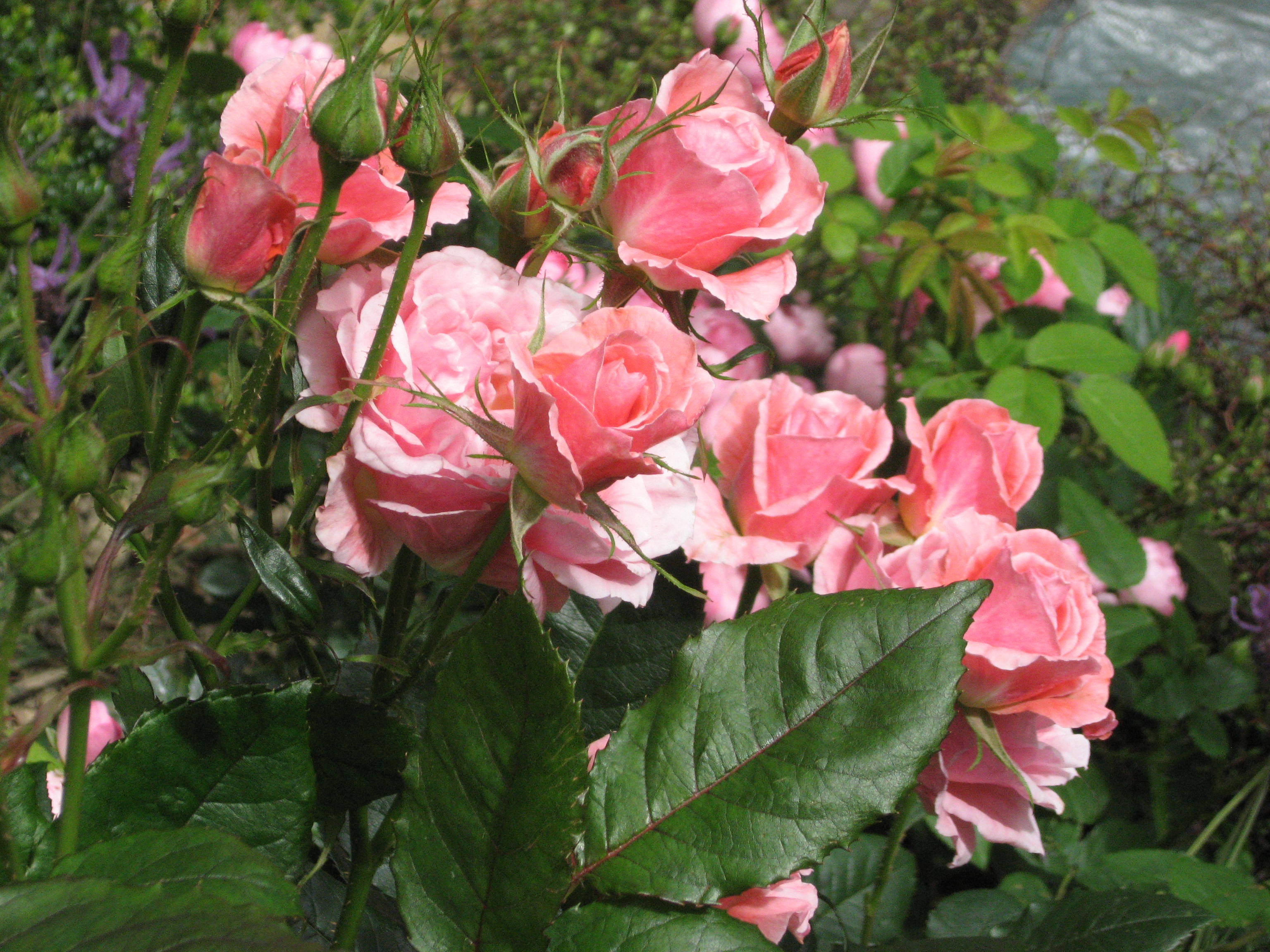
Last year, my daughter-in-law, a human rights activist in Seoul, visited my garden in Wellington and helped me to plant roses.   We planted the Kate Sheppard rose, named after New Zealand’s most famous suffragette on the forefront of the fight for universal suffrage, who died in 1934. The rose is a soft apricot-pink colour, sturdy, tall and upright and appears to flower once a year.

This week in our local newspaper, a story featured about a woman they called the ‘faded beauty’.   A sad story.   Her husband was on trial for assisting her suicide and the good news is that later in the week, he was found not guilty.   But it wasn’t that aspect of the story that moved me to write this – it was the woman’s story, her great sadness at the passing of her beauty and her inability to live without it.  This ephemeral and much sort after blessing of beauty that for the very beautiful, must eventually, if they live long enough, become a curse.    For without Botox, face-lifts and collagen, it is impossible to maintain the perfection of youth.   And now, with Botox, face-lifts and collagen, we have a growing mass of startled baby-boomers, with smooth brows, widened eyes and impossibly pumped lips.   It’s a frightening generic sort of face, that lacks laughter lines and grief and as so acutely described by Anne Enright in her novel ‘The Forgotten Waltz’ “Indeed, a couple of women in the room had the confused look that Botox gives you, like you might be having an emotion but you couldn’t remember which one.”

This week too, I reviewed two coffee table books for the Good Morning Show  – both featuring attractive, older blonde women on the front covers.   One was ‘Absolutely Joanna’ by Joanna Lumley, in her early sixties, a blonde and fading beauty whom we all love for her role as Patsy in the Ab Fab series, and of course, we recognise that she sustains this fading beauty with the aid of either Botox or collagen or both (and perhaps a lift here and there).   The other book was ‘Pippa Blake – a Journey’ featuring the wife of our yachting hero, Sir Peter Blake, killed so tragically ten years ago.   She too is blonde, in her mid to late 50’s and showing a more natural countenance, the normal lines of life.

Joanna’s book is primarily about her famous life with plenty of photographic images of her absolute beauty as a young woman, her modelling career and her television fame.   It is framed by the story of her British Colonial heritage (born in Kashmir) and ends with her more recently high-profile successful campaign for residency rights for the Nepalese Gurkhas in Britain.     We love her, of course we do, and we don’t mind that she wants to stay beautiful, because it’s part of who she is – we forgive her the slightly startled, slightly scary, almost-parody of beauty.   She is boastful and self-deprecating all in one hilarious breath, and the photographs of her modelling career are a stunning look at fashion for any nostalgic baby boomer.

Of course, we all have preconceptions about famous people and in particular ageing blondes (well, I do) – that’s because I’m an ageing brunette with the aid of my six weekly magic-shampoo.    What is it about being blonde and ageing?   Well, there’s a certain cliché I guess, that is merely a broad brush stroke and wildly inaccurate.   But still, there is an ideal that women strive for and men admire, and other women who aren’t so blonde and attractive may scoff at.

Pippa Blake is no ordinary ageing blonde.   She is the bereaved (ten years) wife of one of our national heroes, she is one of us, an honorary Kiwi, intimately involved with the America’s Cup campaign when we won the silverware for the first time, bringing it home to a raging red sock welcome.   As such she is most probably one of our national treasures, although we know very little about her.

Her book about a journey through grief written to coincide with the ten-year anniversary of Sir Peter Blake’s death is an impressive read.   It dispels all myths about privilege, beauty, the yachting world and any other clichés that might have skipped through your mind as your thumbed the book shelves in your favourite book shop.  You do not have to be the least bit interested in yachting to find this book a most impressive read.   By exploring her very public grief, she rediscovers the artist in herself.  It is this journey that is for me the most fascinating part of her story and by the end of the book there was real emotional eloquence.   When she writes of her life with Sir Peter there is warmth and joy and true love, but there is a distance… when she writes of her journey through grief and her art, she unravels for us real intimacy.

I was moved to write this blog, thinking about the beautiful local woman from Eastern Europe, Eva,  ‘the faded beauty’ who had married well, raised a family (for some of us the greatest reward), but still, this wasn’t enough.  In fact, it seems she was estranged from some of her children.  How sad would that be?    Why is it that we lust after the ephemeral, trying to pin down something about our exterior that we hope reflects our interior, but somehow never quite does.

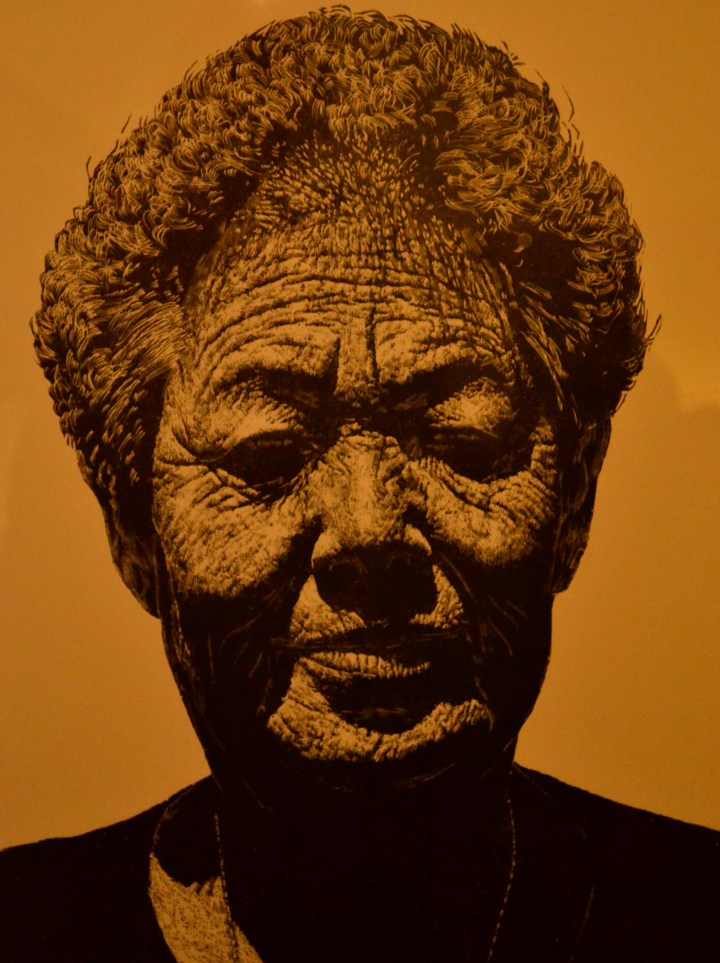
I’m 61 and now I’m noticing the lines I hadn’t noticed before, in myself, in my friend’s faces, and back again at me reflecting my age through them, their age through me, a mirror to our lives.   I dye my hair but I don’t plan to have a face-lift or use Botox, but some friends I know have begun this already – I wonder how they will negotiate this with frozen smiles, widened staring eyes, and emotions never quite expressed on taut faces.    Don’t you love old faces?    Some of the most beautiful faces that I know are the images by Marti Friedlander in Michael King’s original “Moko” – strong Maori women sporting beautiful moko, striking, handsome, powerful, lasting images.

I mean no disrespect to the bereaved family of the woman who inspired this post.  I feel great sadness for her and wonder if I ever saw her, took a second glance, noticed her beauty, honoured her one day in town with a second glance, out shopping, or catching a bus…    If that is what she craved, I hope that I did.   The tragedy is that now her beautiful life, the one she craved, has become public and like any beauty, when one tries to pin it down, to hold it, to name it, to own it, the beauty becomes elusive, impossible to know, fleeting, unsustainable.   The woman’s son is quoted saying that his father had loved her more than any sensible person would have. “I don’t think anyone could have done more than he did.”

It seems perhaps this woman had an interior beauty that she was unable to embrace.

Good Morning

Standard

Here is a link to my brief career on TV… one more to go … talking books with Sarah Bradley on the Good Morning Show.


Book Reviews and all that jazz

Standard

I was tickled pink as they say when Graham Beattie invited me to be a guest reviewer on his literary blog.   I belong to three book clubs and read quite a bit I guess (mostly I always tell myself, as a way of catching up).   You see, many of my super-smart book club friends grew up on a diet of books and they can quote from childhood memories, books they’ve read several times.   In this regard, I am way behind, apart from recalling the cover of my ‘School Friend’ annuals.   Yes, my family always gave books for Christmas and birthday, so I cannot complain, and my parents were regular library users.   Mum read detective stories and Dad loved Barry Crump or Hori and the Half Gallon Jar.  The local library was part of my landscape tucked as it was inside the brick council building that also housed the local cinema.   On Anzac Day, this very same building was where we gathered to pay homage to Gallipoli, The Somme and other legendary battles (in our house, the battle of the bottle).

The librarian was a serious but kindly woman who peered down over spectacles and used a long pencil with a rubber stamp attached to mark the library card and stamp the book, so you knew when to return it.   There was a certain smell of polished floors and stacks of books and the odour of silence and shuffle that is impossible to rekindle.    Libraries nowadays lack the holiness of our public library lodged in-between the Council Chambers and the Cinema.

I was a regular at the Cinema, and if movies could have been withdrawn like library books back then, I’m sure I’d have been one of the biggest borrowers.   Movies were my entertainment.   When other kids went to the beach on a hot Saturday, I queued for the matinée.   The Wednesday double-feature was for grown-ups, but if a really good movie was showing, my parents might agree that I could go on a week-night.   I recall watching Rin Tin Tin and Woman Obsessed as a double-feature one Wednesday school night and my Dad waiting outside after to walk me home in the dark.

It was outside the library one evening that we stood on the eve of a particularly important local body election when one Mayor was ousted and half the town stood with us while my Dad slipped behind the Doctor’s surgery (a small stucco building that still stands) to take a leak as we waited for the announcement.   Back then, local body politics were deemed as important as national elections and the Right or the Left were on either side of the street so to speak.   We were dyed in the wool Labour supporters with Tory neighbours in a working-class street that included two chemists, a builder (my Dad), a butcher, a baker, two school teachers, and eventually, a Prime Minister (but I’d long left home by then).

My sister was always way ahead of me.   She was ahead of many of her contemporaries too in small-town New Zealand; reading Shakespeare alongside more salacious banned books, collecting art books, drinking illicit Cona coffee in a candle-lit dive on the main street with red checked table cloths, where candles dripped wax down Chianti bottles.   Oh yes, she was way ahead of me, as I fled out the door weekdays to six am mass to keep my soul from the devil.

So, catching up, I call it.

And now I am writing to defend my style of reviewing.  Not that I’ve actually been asked to defend it (yet…).   But I’ve been thinking about reviews and the more academic point of view, that the “I” in the review should be absent.   Well of course, as you can tell from this preamble, leaving me, out of anything is going to be a challenge.  I make no excuses.   I read blogs and I write one and I’ve yet to find a blog that isn’t really about its creator, no matter how well written, researched, diverse, or interesting … their passion for the material, the topic, their desire to have you engage with them in a debate, discussion or dream.   Or, their desire for a voice, or just plain self-promotion…  Yep, that too.

I am not an academic book reviewer.   When I read a book, I bring my life experience as a woman, mother, wife, book clubber, writer, and my ego (oh yes, that most definitely).  I bring my opinions, my prejudice, my bias, my passion and my ignorance.    We all of us bring this to any book we open to read.    Hopefully, when we close the book we have perhaps lost some of our ignorance and ignited more of our passion, reduced or informed our prejudice/bias so that we recognise it and all of that jazz and more… we have perhaps fuelled our desire to read more, or to write better (better than we have been writing, as opposed to better than the writer we just read – because usually as a writer, I am mostly humbled and awed when I read).

Anyway, this is just an unplanned rant that I plan to post, about book reviews and why I feel no need to attempt to take the “I” or the “me” out of my reviews.    Not everyone will want to read my opinion or even care why I like or dislike a book and in this I am reminded of one of my favourite quotes (framed and on a shelf in my office) about writing – by Brian Joseph Epstein – and here is the link.

And a link to some of my book reviews.

Learning to sing

Standard

There is something quite extraordinary about discovering your voice.    Although…  to be fair, my journey of discovery has only just begun.   For years I have sung my heart out, but always with the knowledge that I was out of tune, “flat”, unable to match pitch.     I didn’t know it was called matching pitch, until last weekend.     I didn’t even know what a major scale was … perhaps it is no wonder I couldn’t always match pitch.

Well, what joy I had at the Reclaim your Voice workshop with the help of Nikki Berry and Gary Easterbrook, and seventeen other extraordinarily courageous women over a weekend at Turnbull House in Wellington.    We were warned on the Friday night that it would be an interesting journey and that perhaps there would be tears.   Well, I thought to myself, tears there may be, but not from me, because I don’t do ‘crying in public’ unless of course, it is a funeral.   And this was no funeral.  I had booked to reclaim my voice.   I’d been assured that this was definitely a workshop for people who couldn’t sing and not as happened when I tried to learn French and the people in the Beginners class all turned out to have studied French at school, or university.

As it turned out, some of the people in my singing workshop, actually sing in choirs, and on hearing this during the obligatory personal introductions, I felt the terror rising.    But, it turned out we all had a level of terror, even the most beautiful of our voices was constrained by some inner critic, childhood memory, grief, or embarrassment.   I was quite shocked to hear women who to me sang like nightingales, who didn’t believe they could sing.   At least my terror was somewhat more warranted.   But then too, some of my own fears were manufactured, as it turned out to my great surprise and delight, on the first round, solo, I matched pitch.  I got the thumbs up from Nikki.   I was taken aback, but found very quickly that Nikki Berry doesn’t do thumbs up when it’s not warranted.

Over and over, throughout the weekend, we sang solo in front of strangers, who became friends, shed tears (sobs sometimes), as our voices emerged, tested new styles and we sang, belt, twang, sob, falsetto… mostly new terms to me but the sounds were amazing.    People surprised themselves first and then the rest of us.  I was filled with admiration for the women who took courage in hand and wanted more, even when their voices sounded beautiful to me, they wanted more.    They stood alone in the room, encouraged by Nikki, took risks and we applauded with our laughter, and often our tears of joy for their achievement.

Don’t go away.   This isn’t therapy.   Hubby was puzzled when I told him how much I had cried.   He enquired was it singing lessons I had enrolled for?    Yes, before this weekend, I might too have looked a little askance at someone telling me how much they had cried learning to sing.     Well, as it turns out, laughing and crying are a great start for the vocal folds, and once you’ve released all that air and emotion, something beautiful happens (eventually, and after a few false starts and horrible noises), music happens, clarity occurs, voices surprise their owners.

I thought about what happened over the weekend, and it reminded me of skiing.  I learned to ski as a young adult in Norway  on a working holiday in the early seventies, in the Haukeli Mountains on what was then called the E.76 highway between Oslo and Bergen at the Vagslid Høgfjellshotell .   I had no fear of failure back then because I was so excited to have this opportunity.   Falling was just part of skiing and the snow was metres deep and the world was at my feet.    Then I returned to New Zealand and had a family in the late seventies and began learning downhill skiing, so very different from cross-country.   My fears began, I didn’t want to fall, my technique was wrong, and I was self-conscious.   My progress at downhill was so much slower than my first foray into skiing as a young woman on her OE, unencumbered by expectations and fear of failure.

But too, something else about skiing and singing…  If you’ve ever been on a crowded ski field and stopped to listen, you will know what I mean.  People don’t compete (perhaps some do), but the average family skier is just so thrilled to make it down the hill trying out a few new turns, tackling a slightly trickier track.   Over and over you hear people saying ‘did you see me’…. with joy, as much as pride… did you see me … they’re not looking at the other skiers, they’re so excited at their own unexpected progress and their families and friends are happy to applaud, agree, be delighted with and for them.

It felt like skiing a little, when I learned to sing this weekend.   Everyone seemed as happy for me as I was for me, when I sang on one note, then two notes, oh my goodness, I can sing on five notes… we were all engaged with each other and our progress was not in comparison to one other, but simply about each person’s individual progress, in comparison to their expectations (whether just meeting them, or going beyond).

Turnbull House in Wellington, lends itself to the intimacy needed for this sort of workshop.  It was here, back in the late nineties that I read my very first poem in public.  I’d just finished the undergraduate Poetry Course run by Greg O’Brien at Victoria University, and our class was invited by the Poetry Society to read.   I turned up with my whanau (husband and two sons), and the rest of my class just turned up and I recall one of my sons, who is now a builder, told me that he endured the boredom of the poetry readings by counting the ceiling panels or some such detail.  It seemed fitting that my first solo public singing, was also within these walls.

And so, I am writing to thank the extraordinary women who shared my singing journey this weekend, for their tears, for their laughter, for their courage, for their beautiful voices.   Of course, none of this could have occurred without the insightful, grounded, guidance of Nikki Berry, a talented teacher and singer.   Nikki generated an environment that was completely safe for all emotions and enabled us to take risks with our voices and our hearts.    I felt at times for Gary (the only male) who so expertly accompanied us on guitar and piano, exposed to so much joy and grief and laughter among so many women, but he didn’t seem to mind.   Evidently there are usually men too in these singing groups but for some reason, our group was all women.   Maybe this allowed more emotion, who’s to say, but it is true, that the emotions propelled the singing and made our journey all the more valuable.

If like me, you think (or know) you can’t sing, take a risk, enroll in one of these workshops and be surprised.    Oh I won’t kid you, I’m still singing out of tune, but now I know how to find that voice, how to match pitch and I am practising.  I have a song to sing to my granddaughter, and it goes like this.

http://www.libbyroderick.com/

A Grain of Rice

Standard

(I wrote this, after my first brief visit to China, back in 2007, before I had a blog).

China was not part of our original itinerary but we were planning to visit Seoul and it’s just a hop, skip and a jump to Beijing.  It seemed silly not to take the leap.

I’d imagined grey sky, smog, and a reckless juggernaut of capitalism.   Well, the smog proved true, and the capitalist invasion is too.   But  grey, Beijing is not. All over the city are parks and carefully cultivated gardens.   The Forbidden City is a riot of colour.  In Tiananmen Square, Mao’s portrait looked far more benign than I’d imagined.   I wanted to join the large queue moving slowly to view his embalmed body, but we didn’t have time.

They’re preparing for the Olympics with a clock counting down and in the Square there is a topiary Acropolis which will no doubt impress the Olympic tourists.  What are they planning to do about the smog?   It seems they will shut down the factories for three months before the Olympics and ban cars from the city. Many of the factories are owned by European car manufacturers.   We heard that there were three million cars in Beijing (I don’t know who counts them) but yes, the air was more like a good meal than a mild refreshment.    I’m more concerned about the athletes making it in one piece to the Olympic Stadium – you see the traffic is unforgiving and unrelenting.  A green light to a pedestrian means very little to the traffic.   You need either an enormous bravado (he who dares wins, or dies) or else you need to gather a large group of people with yourself in the middle, before you cross the road.

It was easy to imagine how beautiful the city would have seemed without all these cars and with people riding their bicycles dressed in their Mao pyjamas.   For just a moment, I wanted to see that.    But then I thought about the fate of the sparrows and the intellectuals.  I asked our tour guide, Mark about his family.    His father had been a schoolteacher.  I questioned him about his father’s life.   Mark went quiet.   “So-so”, he said.   And that was that.  He had no wish to say any more.

Nothing in Mark’s commentary about the history of this beautiful city, mentioned what is now perceived in the west, as Mao’s reign of terror (otherwise known as … The Great Leap Forward).   Everything was carefully worded to exclude any criticism.   Here is a city embracing capitalism with a capital “C” and yet still somehow honouring Mao.

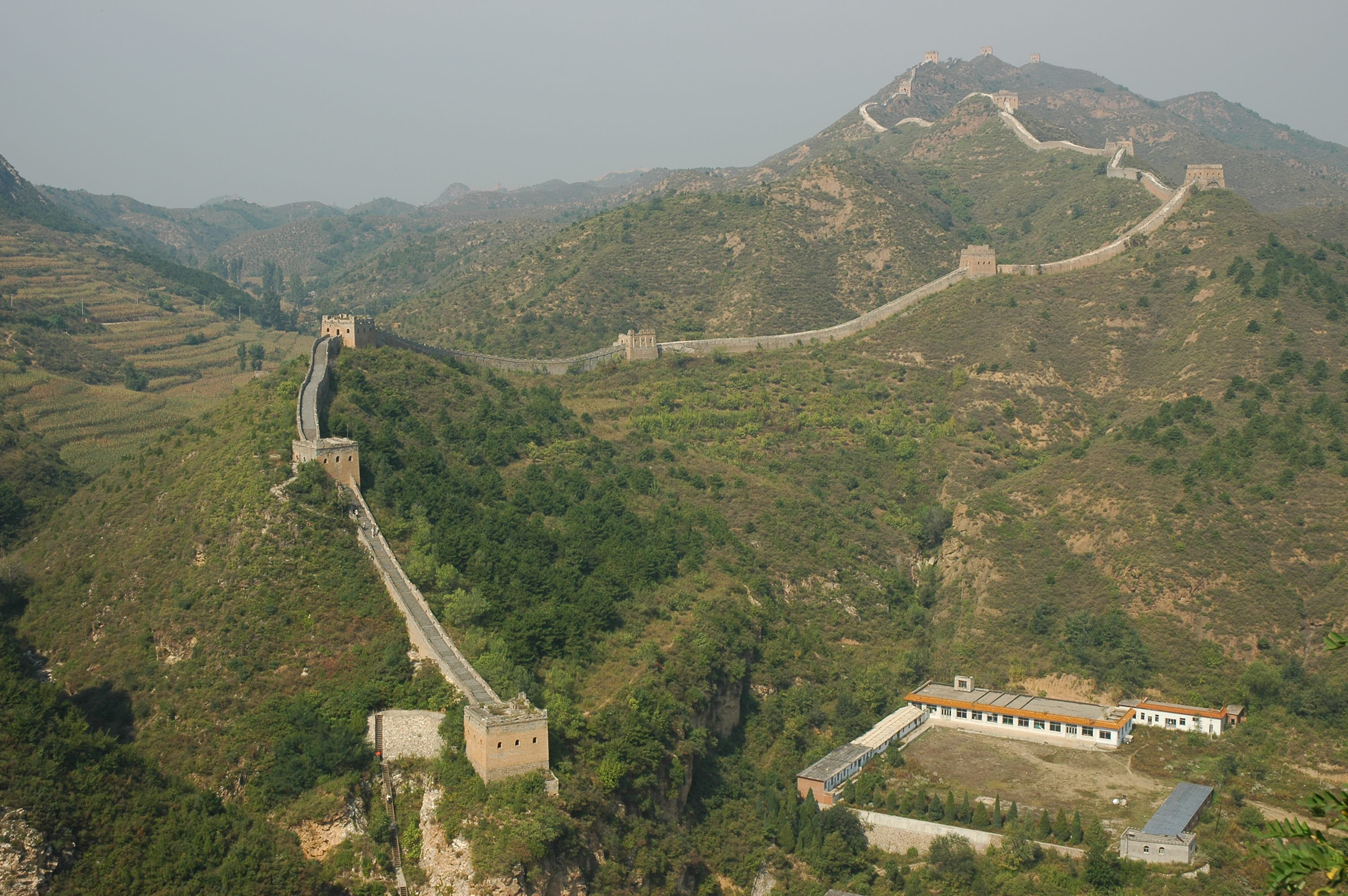
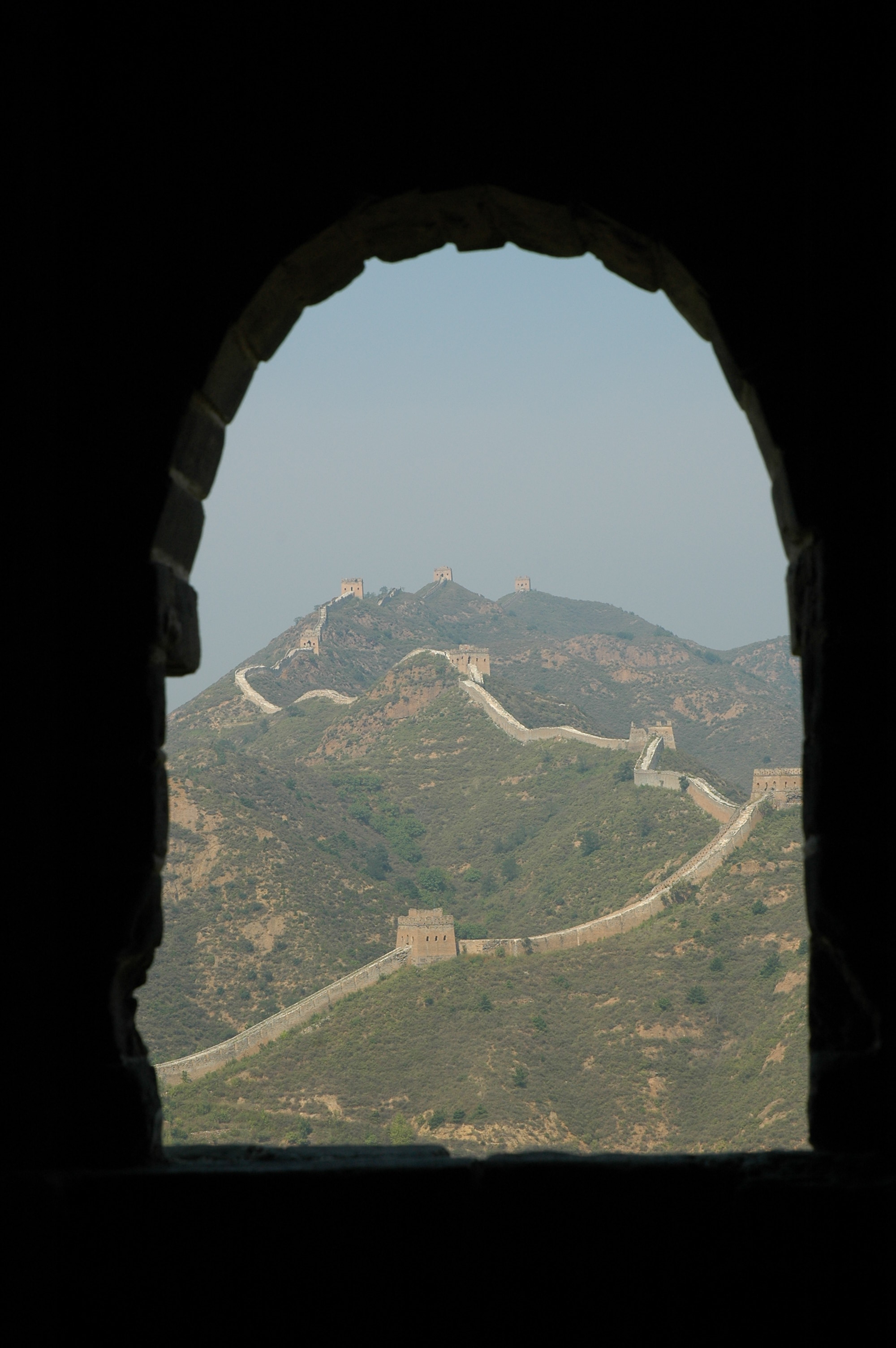
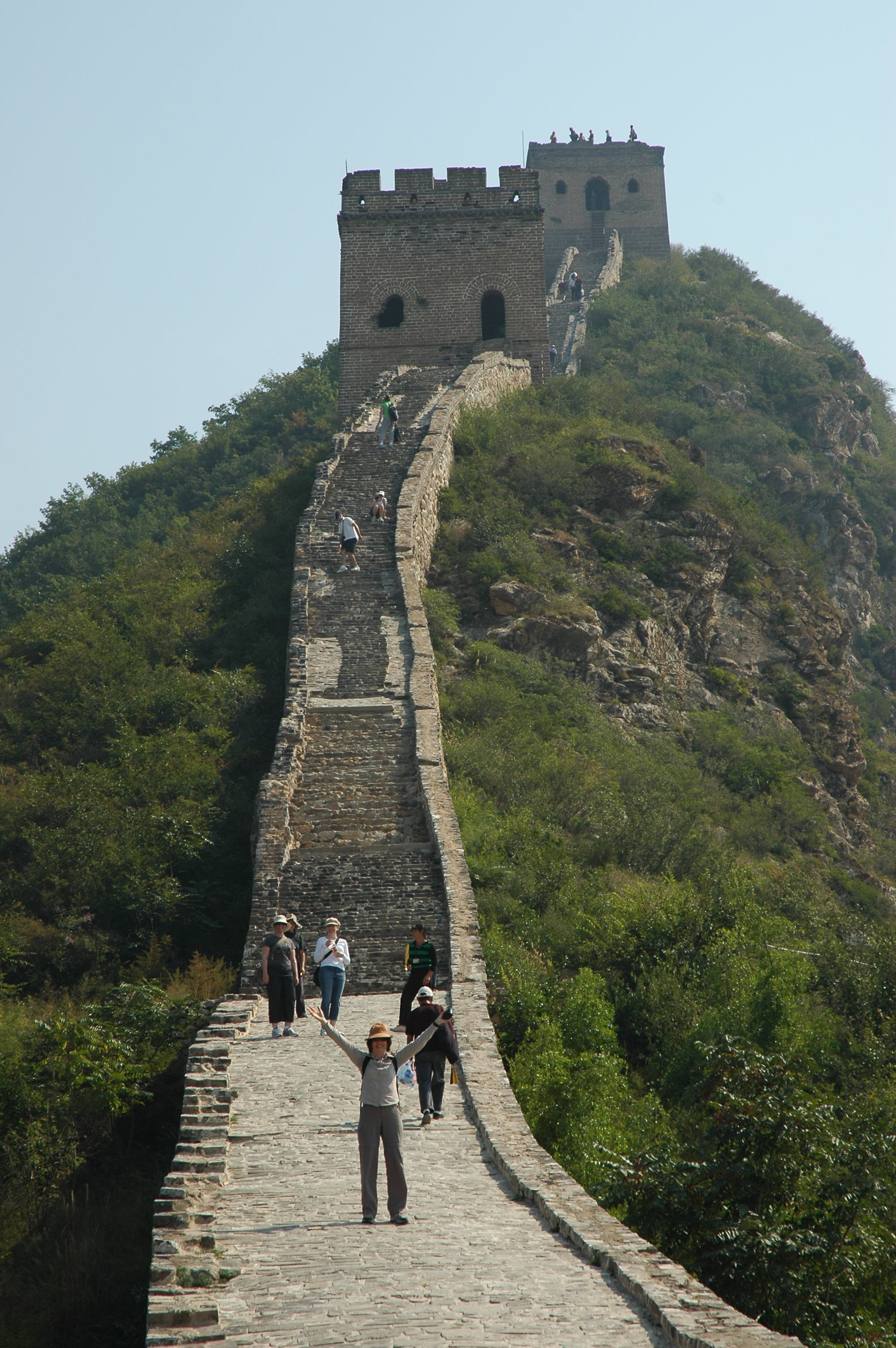
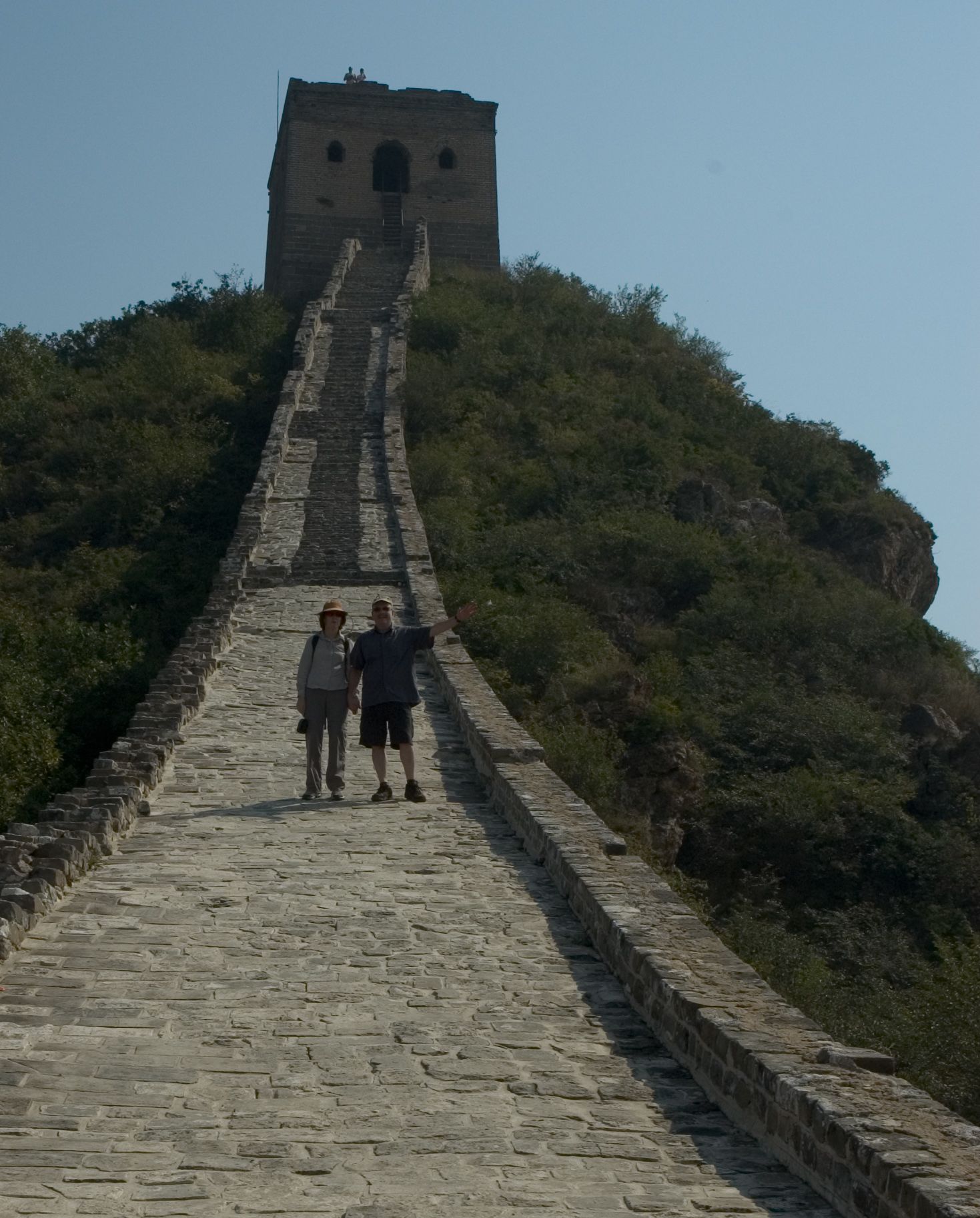
This is not an in-depth tour of China but more of a tourist’s overview.  A highlight is our walk along the Great Wall.  We’re most fortunate to be on a section of the wall with not a lot of tourists and because we are reasonably fit we manage to burn off our Chinese fan club (yes literally, they walk beside you and fan you because of the heat) and end up alone, just the two of us walking until we meet a guard with his mobile phone who prevents us from going any further, because that section of the wall is unsafe.   Many (many) years ago in Form One (Intermediate School), I gave a speech to my class on The Great Wall of China.   I cannot recall why I chose this topic or indeed, what I spoke of, but it is an extraordinary feeling to be actually walking on the wall, something back then that I had never imagined.

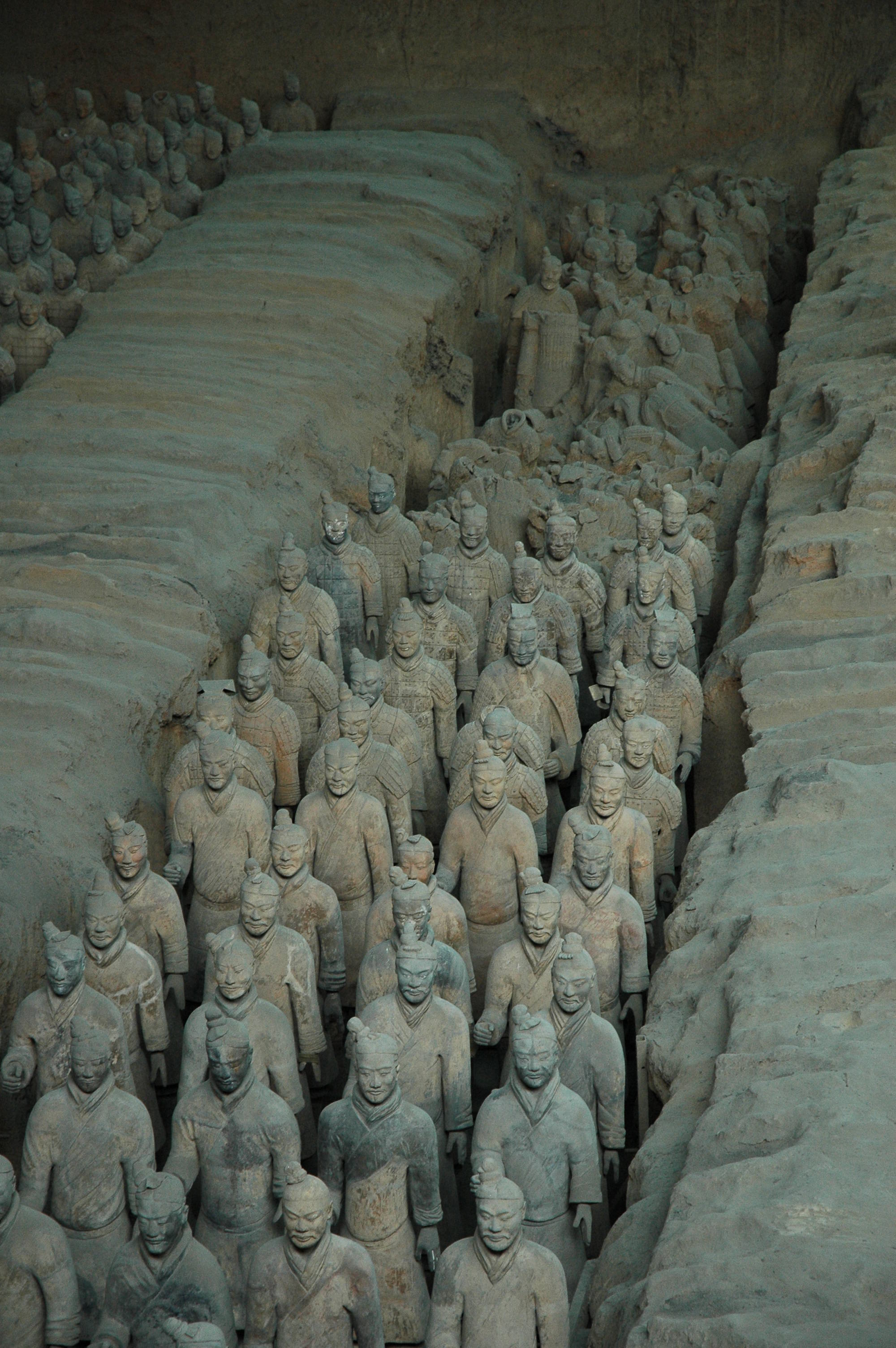
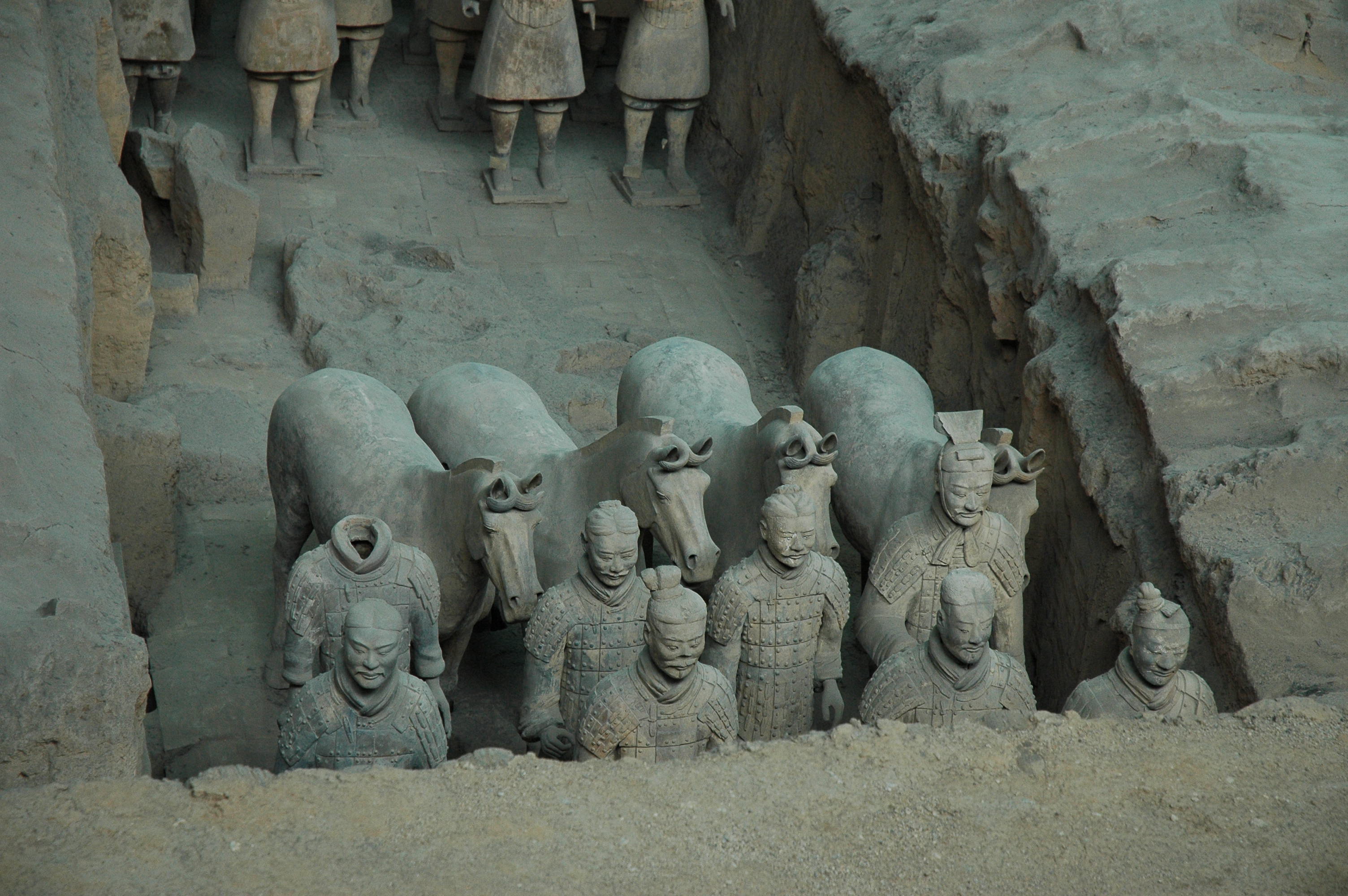
We catch the overnight train to Xian from Beijing to marvel at the Terracotta Warriors and find ourselves cycling around this beautiful walled city, almost eating the air.  Yes, to quote my son after his first trip to India (a place he fell in love with) the air was as thick as wasabi on a wafer.   I want to peel back the pollution to uncover this ancient city, its clouded beauty.  If I cup my hands, I am certain I can catch a piece of air and hold it.

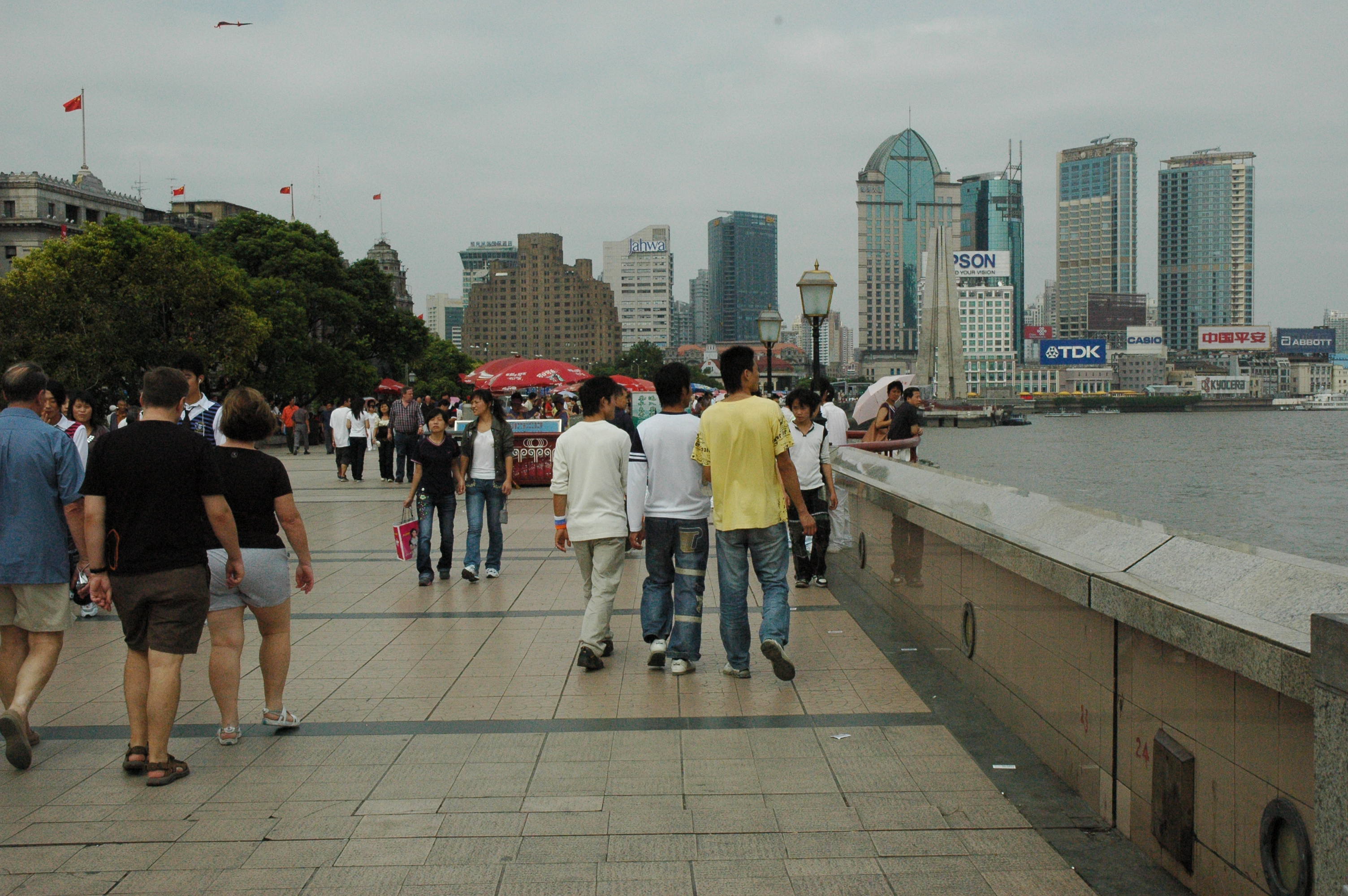
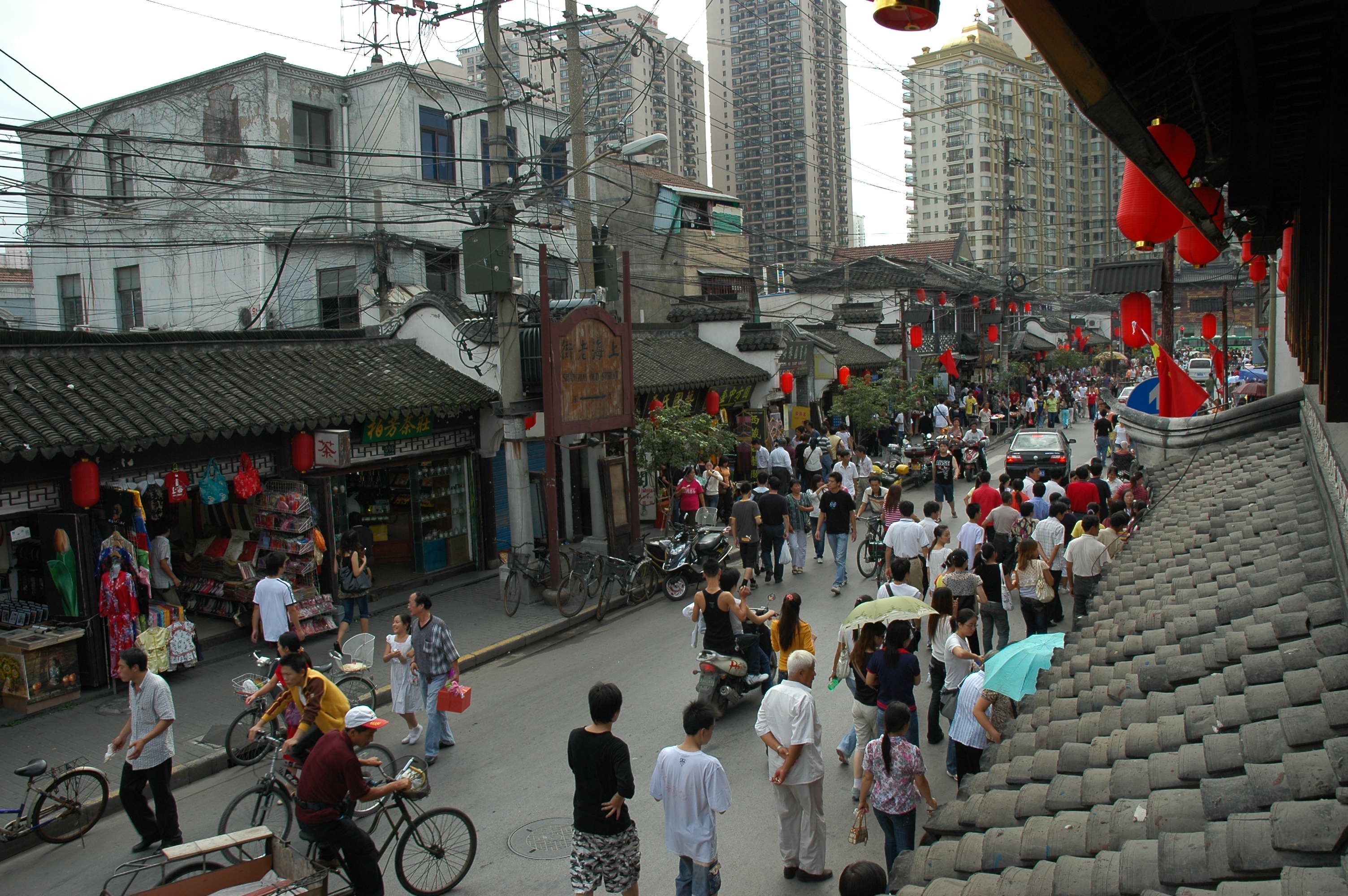
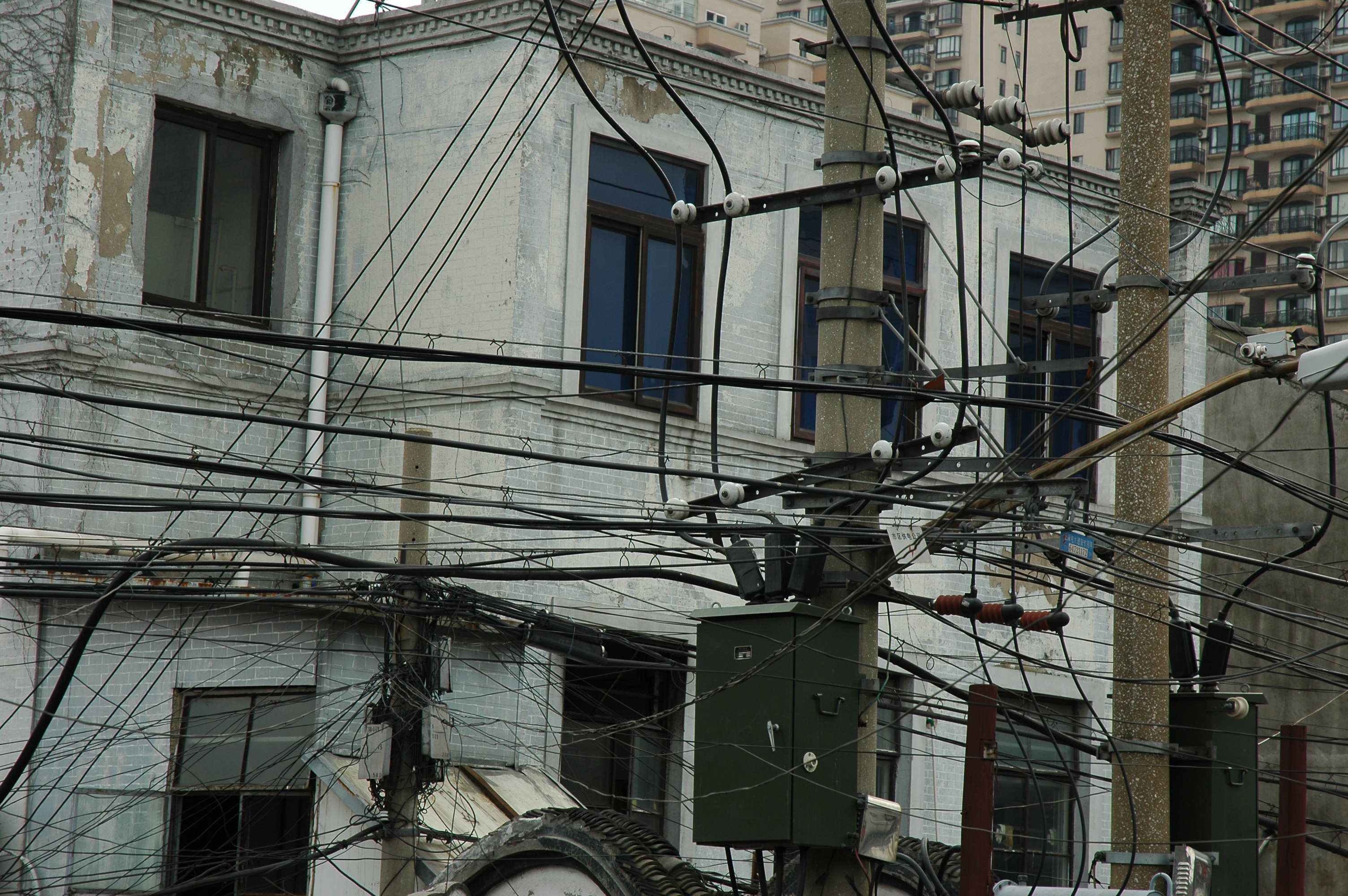
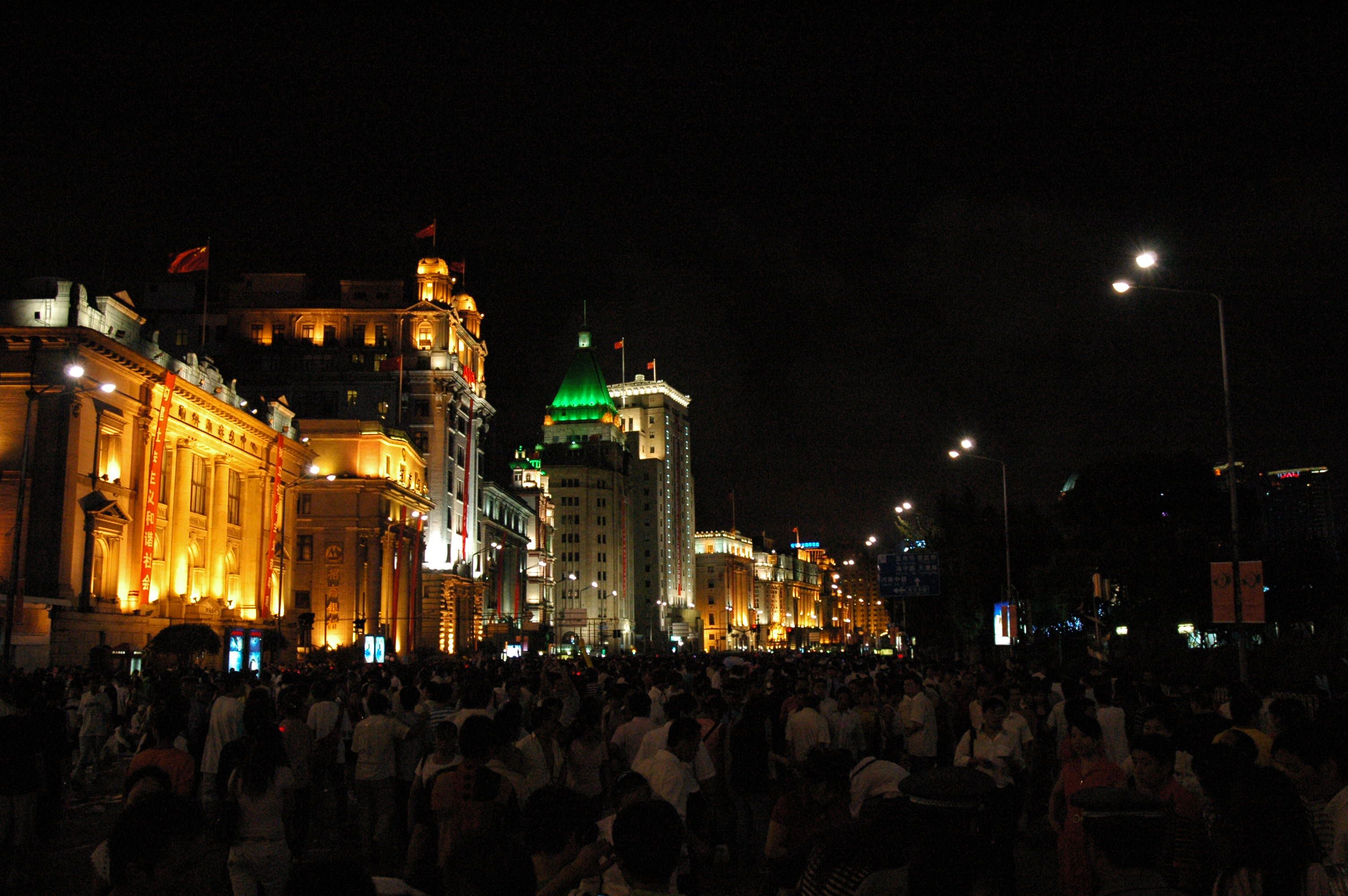
Our next stop is Shanghai, a city vivid in my imagination.  My dreams are of the Bund as it had been without the spectacular high-rise development on the other side of the river (Pudong) and so I am disappointed.   But we have a taste of what might have been old Shanghai in a historic teahouse looking out through a tangle of overhead wires.

It is October and we are there to witness the national celebration of  the People’s Republic of China. Cars are banned from the city centre and The Bund for three nights.   It truly happens, causing stress to unsuspecting tourists in mid city hotels who have planned to catch taxis to connecting flights or trains.  The streets throng with Chinese (one child) families enjoying themselves – no liquor – no violence – just a swell of families and innocent pleasure – in contrast to the screaming neon along the waterfront;  although they are quite beautiful too.  And then on the third evening of celebrations, we look up at a clear blue sky.   So, it is possible!    Maybe by the time all those highly trained athletes arrive in Beijing, the air there will be clear.   What will happen to all the industry that is shut down?  It is hard to imagine.    But noting how obedient the traffic in Shanghai is in obeying the ban, I am heartened.

            Flying out of Shanghai heading towards Athens, on Lufthansa, I sit next to an enthusiastic Chinese travel agent.   She is sitting in my allotted seat, but I don’t have the heart to complain, as she is so excited having just swapped seats with another travel agent to sit by the window.  She confides in me this is her first overseas flight.   She expresses her disappointment at the lack of “uniformity” of the Lufthansa hostesses who are all wearing similar coloured casual but not matching outfits.    The meal arrives and we have to choose between hot noodles in a carton or cheese and salad on a bread roll.  My new friend chooses the bread roll because she tells me she wants to try everything.  She asks me, holding up her bread roll “Is this the cheese that makes you fat?”  Before I can reply, she is waving to the hostess and has swapped her roll for noodles.   We talk about food and waste and living in China.   She tells me when she was a young girl her Mother said they must not waste a single grain of rice because if every person in China wasted one grain of rice, each day…  the mountain of rice grows before my eyes.  I ask about her parents and Mao, and she explains that it had not been easy for her parents growing up under Mao.  At this point her voice changes, just like Mark our tour guide’s had. It’s a tone that implies that they understand but we don’t. ‘Difficult” she says, and then so I won’t get the wrong impression, she adds, “Mao meant well”.

The European car manufacturers say they mean well too, producing low-cost cars in China.  I heard one such manufacturer bragging on television about how cheaply they could reproduce their brand in China.

I imagine the mountain of rice and the mountain of cars, growing side by side.

The Comfort Women

Standard

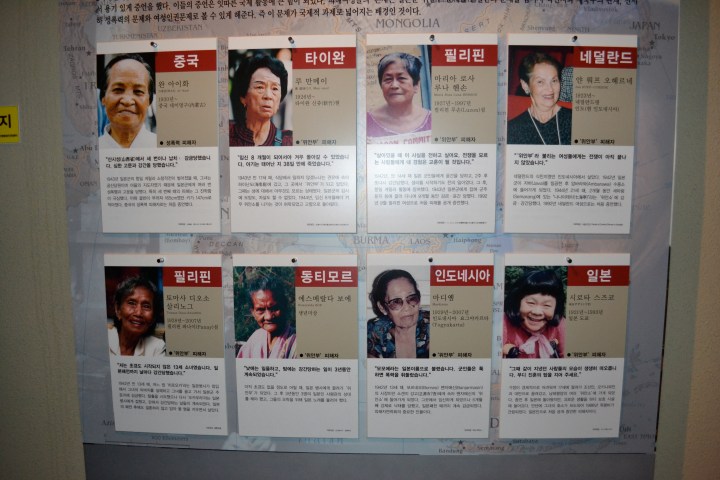
The title is of course an oxymoron of the cruelest kind.   Comfort for whom?  It reminds me of the title of Julian Barne’s book ‘Nothing to be Frightened of’, it all depends entirely where you put the emphasis. Until recently, I had not realised the number, the territory, the vast canvas of this henious crime.   It was on a recent visit to Seoul to be with family, that I came face to face with the history of sexual slavery during the Second World War.  According to Wikipedia a majority of the women were from Korea, China, Japan and the Philippines, although women from Thailand, Vietnam, Malaysia, Taiwan, Indonesia and other Japanese-occupied territories were used for the Japanese military “comfort stations.” Many of these women have gone to the grave carrying their secret.     And now, a few, very old, very brave, live on as long as they can, hoping that by holding out, at some point, the Japanese Government will hear them, will see them, will give them all that they want… recognition, by way of an ‘official’ apology.

It is with pride that I write of my encounter with some of the still living sexual slave survivors at the House of Sharing in Gwangju, Gyeonggi Province, about a two-hour bus ride from the centre of Seoul.   Pride because they are resilient old women with dignity, courage, and often a surprising sense of humour.   Many of them survived the horrors of sexual slavery and because of the shame, married, raised families and did not ‘come out’ until later in life.    Even now, in this quiet rural setting, they are not entirely welcome.   Some of their neighbours would prefer them to be elsewhere, and believe they bring shame upon the district.   So, instead of the overdue compassion, they still carry both inwardly and outwardly, the stigma imposed brutally upon them, their dignity so tragically stolen by a Japanese Government at war.     Simply put, many people, the Japanese Government included, would like that these women would just die quietly, their secrets buried with them.

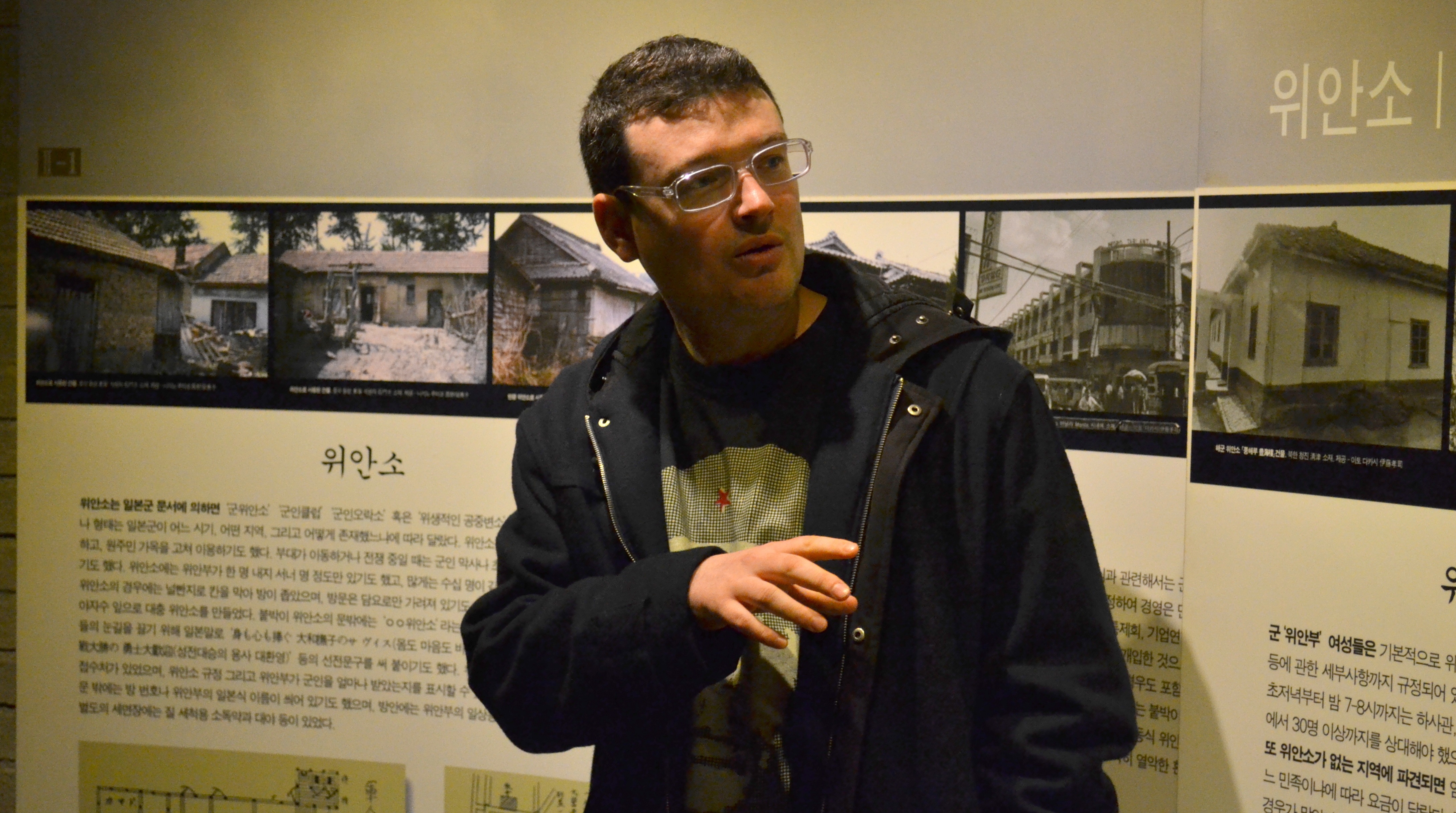
We were taken on a tour of the House of Sharing by my son and his Korean wife who actively campaign for and support the cause of the Comfort Women. On this particular day, they were the tour guides for a group of around sixty international tourists from Japan, America, China as well as local Koreans, and my husband and I, from New Zealand.   The tour is advertised in the Lonely Planet Guide for the socially conscious tourist who wants to know more about Korea than just the LCD screens, amazing restaurants and famous palaces.

Every Wednesday, a protest is held outside the Japanese Embassy in Seoul (near Insadong) and whenever they can, my son and his wife, join the protestors, and too, some of these elderly women (in their late eighties now and failing) will travel the two hours or more by van from their rural home at the House of Sharing to join the protest.   Why?   Because, the one thing they still demand from the Japanese government is a formal apology.    The Japanese have admitted that these events took place, have even given funds to support the women, but the most important step they seem unable to take, to offer the women the one thing money cannot buy, an official apology.   An apology will mean that this barbarous act against these women will finally be acknowledged as a a war crime, and not just some collateral damage to be swept under the carpet and forgotten.                 Alas, these women are dying now, one by one, every few months, another survivor dies without the dignity of an official apology.

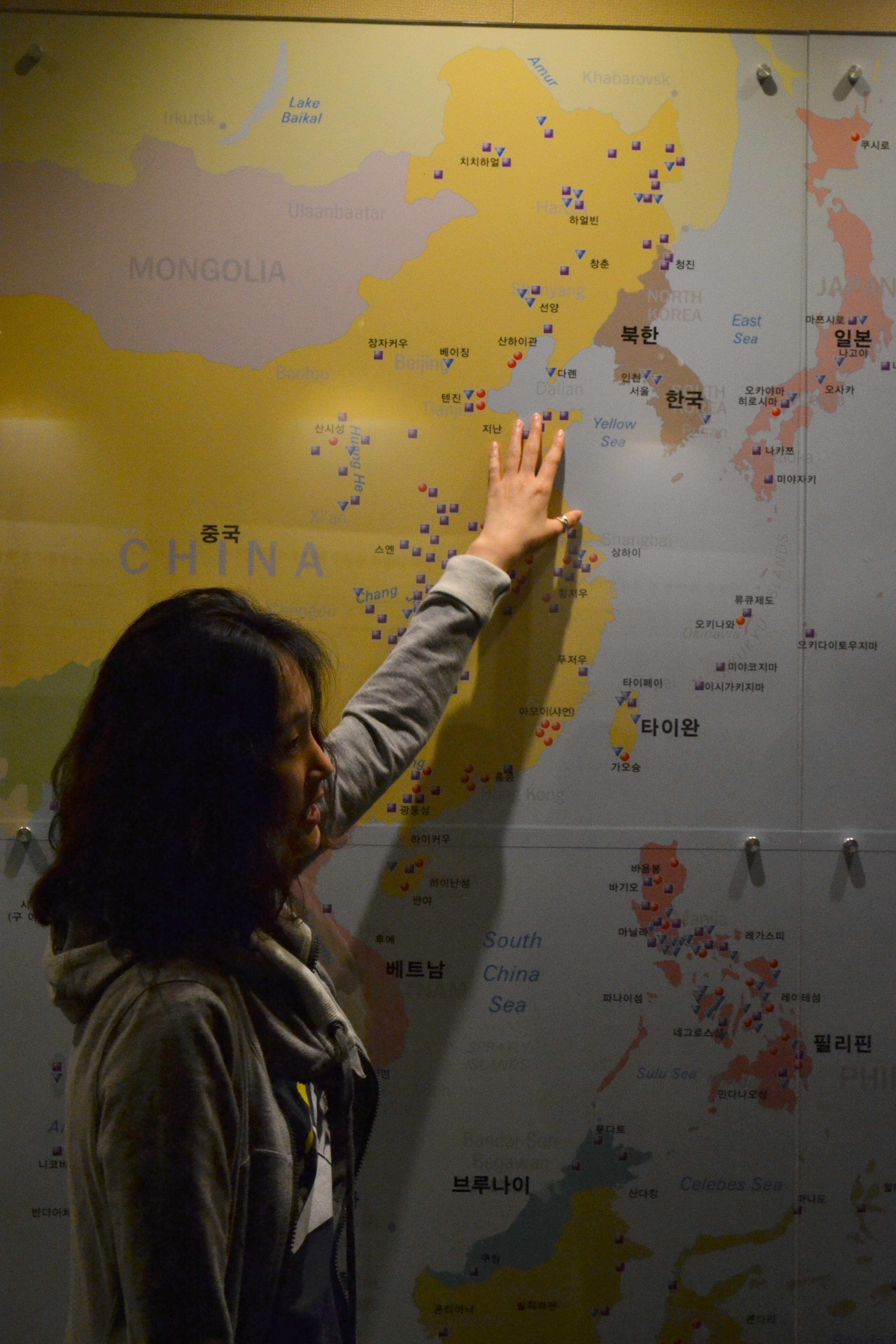
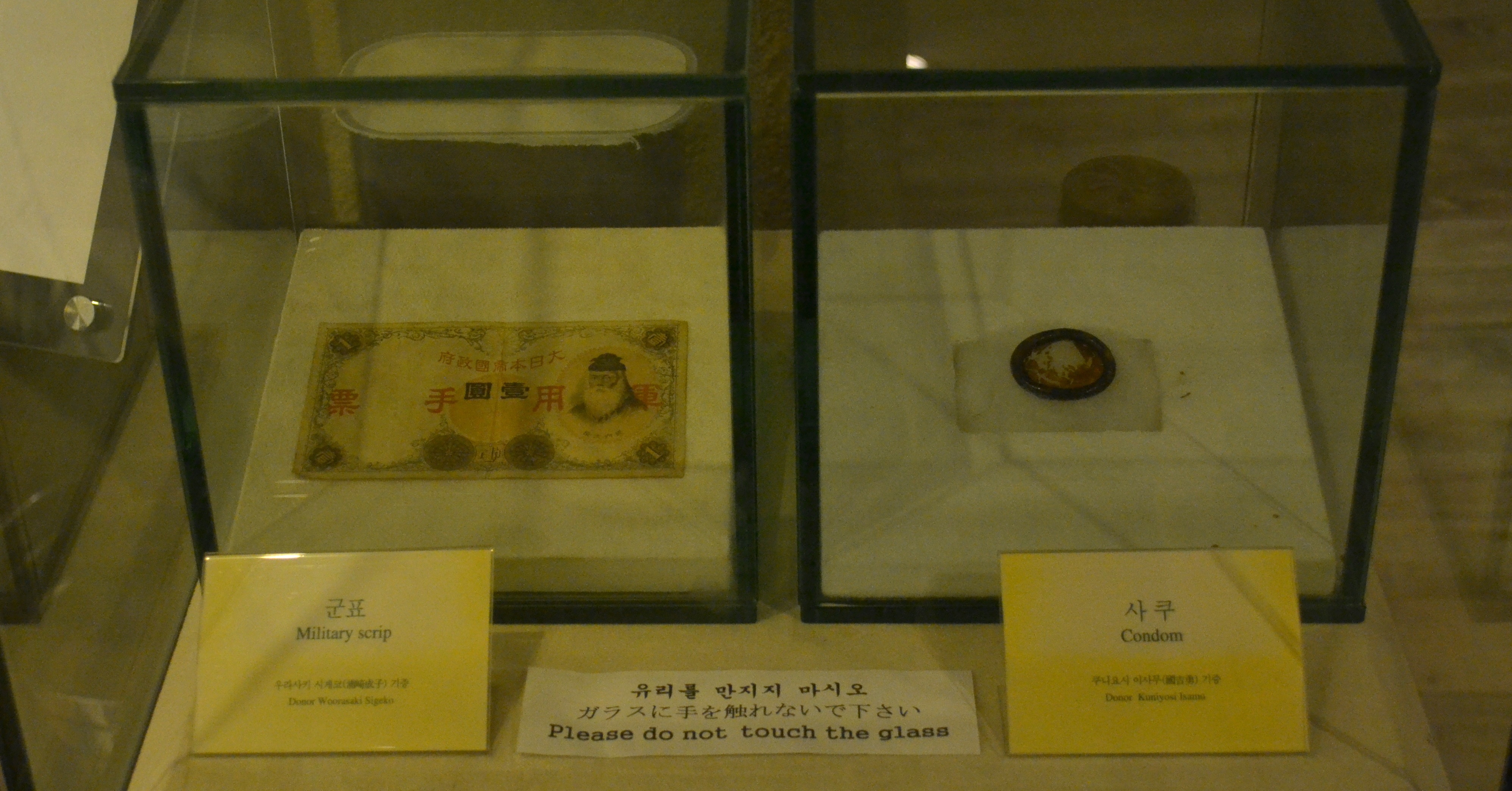
                  Take a look at the photograph of the map I have posted and see for yourself the shocking geography of it, scan the map, look at the colour, trace for yourself the transportation of young Korean women, some as young as sixteen, as mere bodies to satisfy the Japanese invading troops.   Imagine yourself as one of those women, taken from your family, to serve as a sexual object for not just one, but hundreds of soldier’s gratification.   Imagine that now in your last years, all you long for is recognition, a piece of your dignity restored and all that it requires is a public apology, so that it is known officially, noted in the history books, a dark stain on the maps of Asia, that you and hundreds of other women were sexual slaves of the Japanese Government.   And although you have great dignity as a survivor, maybe something else, maybe but a piece, a small shining piece of something will be yours, before you die.   That small piece of something will be a light that shines on this crime, so that it may never be repeated.

And yet, as I write, and as you read, we all know that around the world in scenes of conflict both within and between national borders, women are still, often, the first victims of violence in acts of aggression by the state, or the soldier.

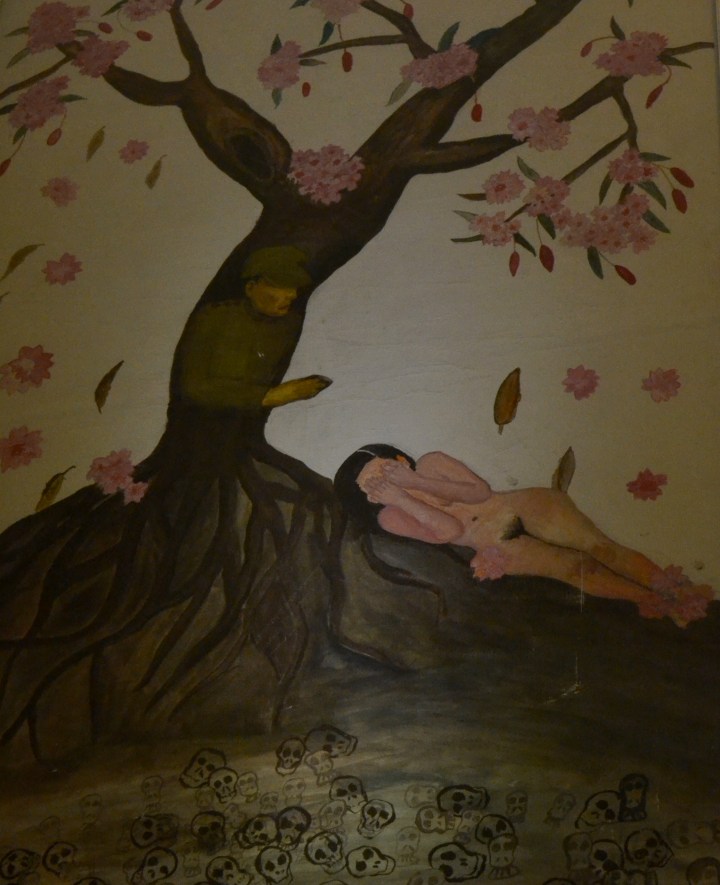
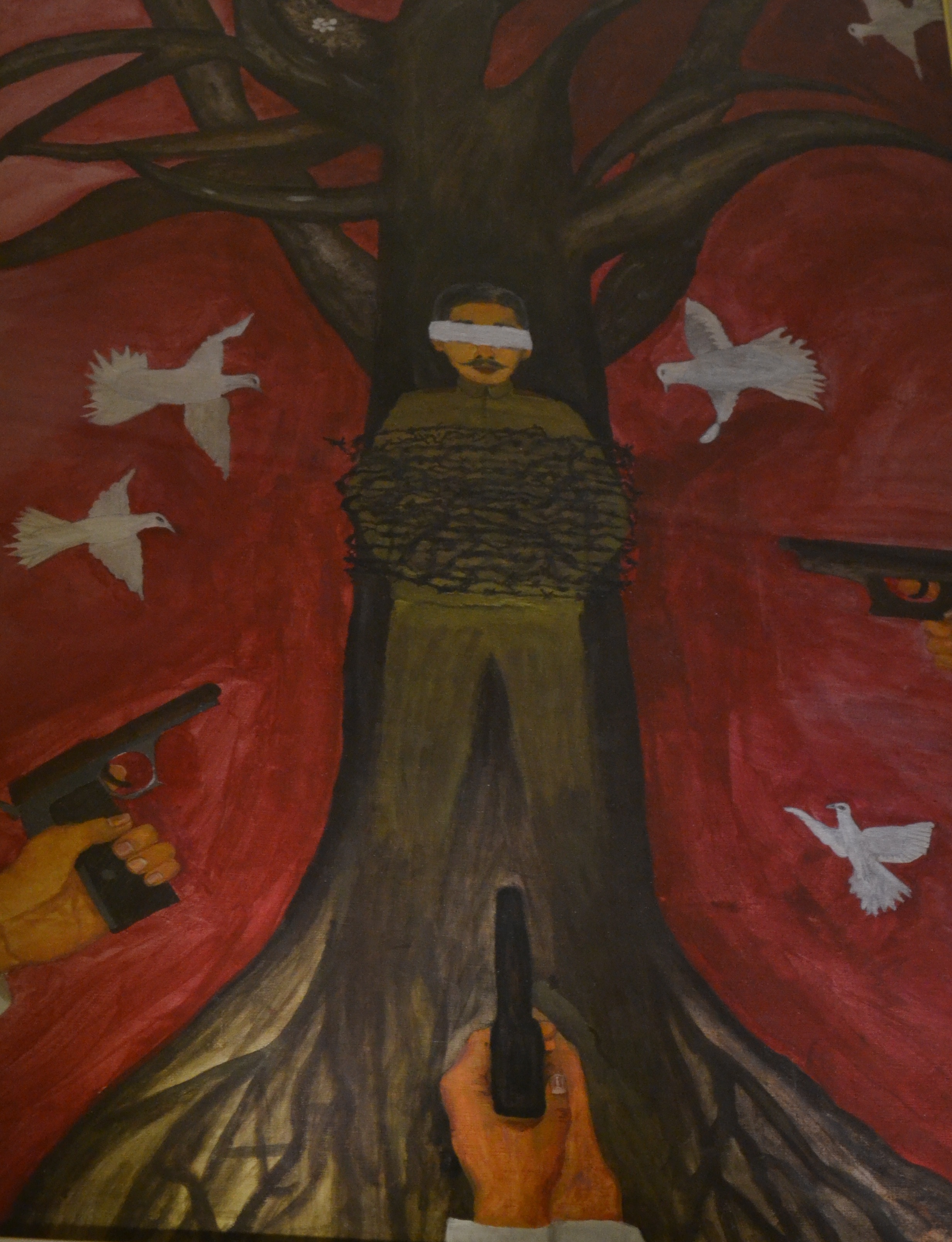
I am posting some of the poignant and eloquently tragic paintings by some of the women from the House of Sharing.  Unable to put into words the dramatic degradation they experienced as young  girls and women, they have taken to painting to express their pain.   Words are not necessary.

I met some of these women.  I sat with them in the afternoon, after a tour of the House of Sharing that unveiled the history and horrific details of their experiences.   What a contrast.   From the museum part of the settlement, we moved with a swarm of delightful young tourists, to the home where these elderly women are feted like famous movie stars.     These young people come regularly on the bus and the women, to be their friends, to love and to show support for them.   There is much laughter, affection and ordinary conversation.

It might have been any small residential home for the elderly – under-floor heating, spacious rooms, quite luxurious toilets with heated seats, and smiling older women, some more stylish than others, one knitting herself a pair of woollen trousers, one holding my hand with humorous affection and telling me what a wonderful son I have.   My son laughing and teasing her because he said that normally, when he visits, she tells him he is not good enough to be married to our beautiful daughter in law.   The humour is good-natured and the women can be just as cantankerous and difficult as any elderly people might be.   Except they are not ordinary elderly women – they are extraordinary and their story ought to be told, over and over, that it may never happen again.
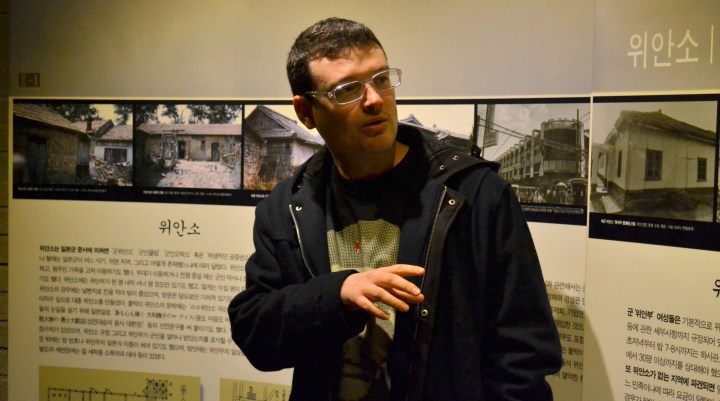
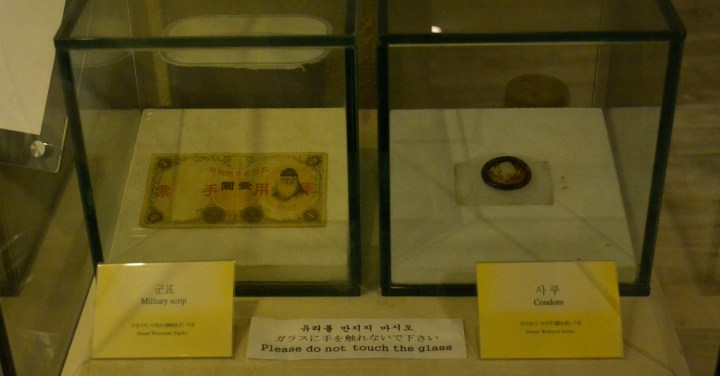
The systematic rounding up of young women, their transportation to the battle fronts, moved like livestock from camp to camp from Korea to Japan and as far south as Indonesia across vast areas of Asia, to serve as sexual slaves for soldiers – some young women servicing up to sixty men in a day.  Records were kept to ensure the sexual health of the soldiers; prophylactics provided but with no concern for the health of the women….waiting in the small room……listening for the footsteps….   We entered a small wooden hut at the museum restored to the dimensions of the huts used, where the young women lay like objects, listening for the footsteps…   the dark, repetitive, footsteps.
I met two dedicated women volunteers from Japan, living in at the House of Sharing and caring for the elderly women.  Indeed it is common for Japanese volunteers to come and stay for weeks at a time, and through their caring to do what their government refuses to do – acknowledge what has happened. I found meeting these Japanese women a very emotional experience as it highlighted the common decency of the average person and how most of us at any level abhor what war brings, especially to women.  I was very moved by their dedication, generosity and obvious loving affection for the women they cared for.   But too, even this, a small house in the middle of almost nowhere, is not without cultural politics, disagreements, and differing ideals within the groups of people who care and support the women at the House of Sharing.   The Korean’s demand an apology from the Japanese and I hear whispers from the Japanese as to why the Korean Government has not looked after its own women better, with the money given to them by the Japanese.   And so, seventy years on, politics still blur the lines of compassion.

If no-one listens, (and you almost feel this is what the Japanese Government is hoping for), these women will go to their graves, all of them, without ever having had their dignity upheld, their story acknowledged, officially, that they were brutally and repeatedly raped, as part of an official Japanese government programme.   No amount of money or reparation is as important as this official apology.     An official apology will not take away the past, but it will highlight the stain, focus the forensic eye, so that this crime enters the history books and so that it can never be repeated.
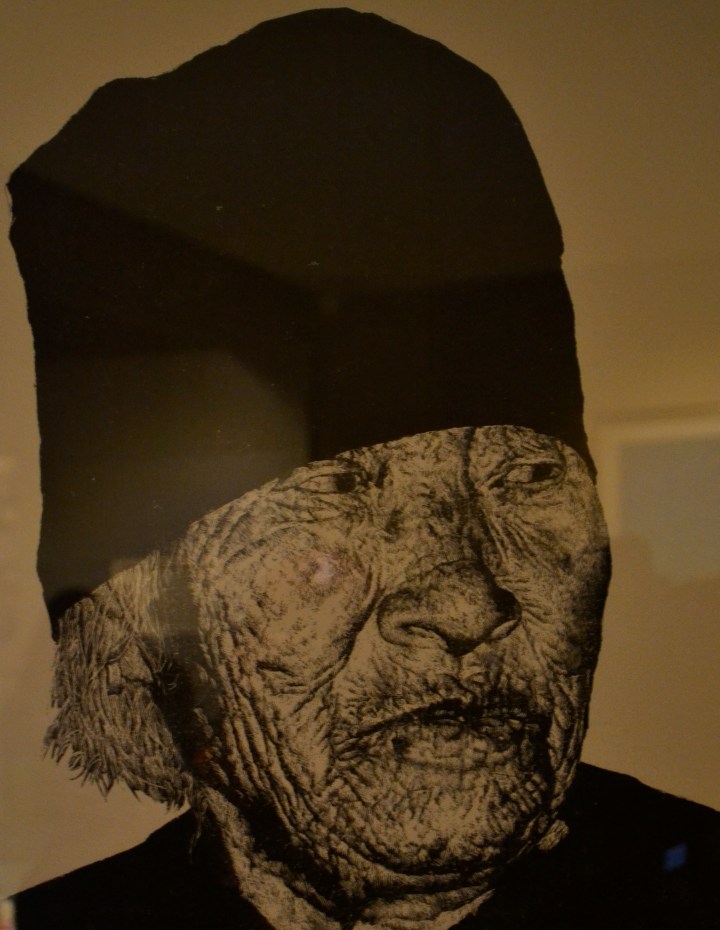
I’m adding to this blog from 2011, and including a link to a newly released short film (sub-titles in English) about the recent agreement between the Japanese and Korean Governments which includes a commitment to removing the beautiful and most poignant bronze statue across the road from the Japanese Embassy. http://newstapa.org/31980

The ‘P’ word and the play ‘Oleanna’

Standard

The P. Word and the play ‘Oleanna’.

I have to say that my life has been lightened with laughter this week due to the scandalous “P” word being one of the lead items on the six o’clock news.   I’m a girl from the sixties who pre-dates the Tampon practically, and I haven’t enjoyed such a good joke in years.   You see, I raised two men to adulthood and I’m a grandmother, and I don’t ever recall talking openly about my monthly cycle to my lads.  It wasn’t until my first daughter-in-law arrived at our dinner table, that we kind of tacitly agreed that I too might have had cycles that affected my monthly well-being (mood-swings even).

Of course I had hormonal mood swings and possibly even more dramatic as my monthly cycle declined.   I was emotional, probably a bit frightened, and mournful too, of the ending of the joyous fertility that the monthly cycle heralds.   All of those things and more; because each cycle is a time of extraordinary potential.   Ah, but did I burden my employer, or my family?  Well, hubby was in on the secret and we both knew what pre and post monthly tension was and we both enjoyed too, the added benefits of the fertility cycle – it is of course, not without its benefits.   But too, may I add, I count myself one of those fortunate women whose life was not seriously affected, so I’m speaking from you might say, a vantage point.

But, the hue and cry this week all around New Zealand over the anachronistic remark of Alasdair Thompson, of the Employers Association, has lifted my laughter levels and reminded me that laughter is surely the very best medicine.   Mr Thompson it seems has gathered his scientific evidence from a female member of staff in his human resource team who was monitoring the sick leave of his own staff.  Is the human resource manager who monitors the leave, a menopausal granny with an axe to grind who wishes she was still menstruating, or is she one of those fortunate women who barely bleeds and who can’t believe that others do?   And here I must confess that perhaps I was once one of those; although not the granny with an axe to grind.   Ah, but isn’t it the case so often, that we girls are sometimes in on upholding these entrenched views – you know how it is, I get on with it, so you should too.

I worked in recruitment for almost twenty years and so I know the attitudes of employers, the make-up of groups like such as the Chamber of Commerce back in the eighties, and many male Chief Executives of small to medium-sized your average-run-of-the-mill home-grown Kiwi companies.  It is not that long ago (the mid to late seventies) when to send six CV’s to the National Bank for graduate intake, that we knew if someone had a Maori sounding surname, that only five candidates would be interviewed and the gender balance would tip in favour of men, whichever way it went.   I stand by this assertion but I recognise it’s untrue in this the 21st century.    I recall a time when an employer was able to ask upfront, if a woman newly married was planning a family, and if so… when!    As a recruiter, I was expected to pre-screen candidates about this.   My boss at that time, a wonderful woman I worked for in the recruitment industry used to say, and…  you could just as easily get hit by a bus.

I’ve read the outrage over Mr Thompson’s remarks and the hilarious tweets.   This from Hilary Barry “Feeling hormonal. Might go home. #alasdairthompson” and a tweet or two later she tells us she is planning sex education to her sons using Mr Thompson as an example.    A few people who are equally outraged also point out that he’s not a bad bloke.   I quote in this morning’s Dompost, Mai Chen “I’ve known Alasdair for a long time and I like him, but frankly, he’s wrong.”   And from Australia, Deborah Bush, a member of Pelvic Pain Steering Committee Australia evidently said ‘although she agreed his comments were discriminatory, he had a point.”

I for one thank the man from the bottom of my granny heart, that finally, periods have made the six o’clock news.

Awesome.

How come it took so jolly long?

And the truth is that everyone is laughing at Mr Thompson, men and women alike, all around New Zealand, laughter… surely?

And here I must shamelessly alert you to my début in 2001 into  Sport, the prestigious Victoria University Press literary magazine.   It is my only publication in Sport titled ‘Saturday Night Shopping‘ a story about the purchase of the productivity-stopping monthly supplies.

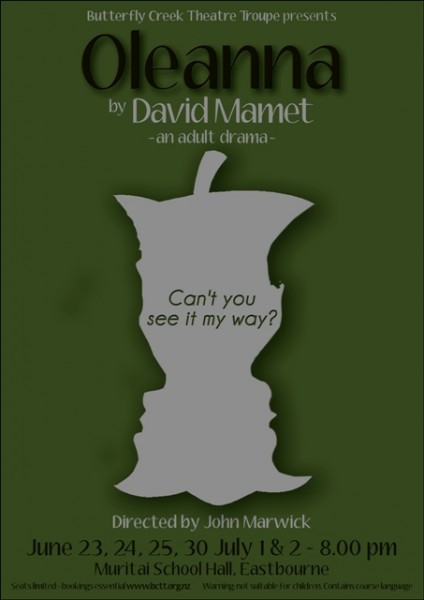
And this allows me to segue nicely to a play I saw last evening ‘Oleanna’ by David Mamet.   This is a terrific performance by the Butterfly Creek Theatre Troupe.    They describe the play in the promotional flyer thus ‘this play about political correctness gone wrong or maybe it’s about the misuse of power has divided audiences around the world’.   Well, I don’t think Mr Thompson has quite managed that, I think he has united audiences in New Zealand who think his ideas dated, unscientific and well, as mentioned before, laughable.

David Mamet’s play is not so funny, more compelling, and thought-provoking.   The acting is outstanding and all the more impressive  because one of the actors, Damian Reid, was stranded in Melbourne due to the ash-cloud from the Chilean volcano, and John Marwick, Director of the play, stepped in and read the lines (to perfection) of the Professor.  The student, Carol, is mesmerizingly played by Sarah-Rose Burke who has to develop the character of Carol over eighty minutes in a stunning yet subtly splendid performance.   It is the first time I have seen the play and cannot compare this production with any other, but it was brilliantly rendered so that your sympathies are constantly moving (well mine, anyway) from one character to another.   The wardrobe too, played a fascinating role in the development of the character of Carol, the student, who starts the play as a confused almost hapless student in her ankle-length little black socks and slipper-style shoes, and in the next act she is wearing fabulously hot shiny red shoes and the final act wearing lace-up boots, in the powerful position of being able to threaten the Professor’s tenure, and finally, much worse, for both of them.

Oh, the ending is superb, and having looked up the play, I see that the ending is often changed sometimes, depending on the Director...

“The danger with the play is that it can easily seem a partial, loaded, one-sided attack on the student and on female solidarity in general .But Pinter’s production scrupulously avoids that trap by giving equal weight to both sides of the argument.”

And so too, does John Marwick’s production.

I was reminded of ‘Disgrace’ (J.M. Coetzee), both the book and movie, which explore the sexual power relationships both within a university and in a compelling story of forgiveness in a rural apartheid setting.

If you live in the Wellington region, it’s worth booking a seat in the intimate theatre up on stage at Muritai School, to be at the very least disturbed at the very best, spellbound and provoked.

Sir Patrick Leigh Fermor

Standard

This morning, I opened my computer to eleven emails alerting me to the news that Sir Patrick Leigh Fermor has died.

In 2007, I had the great good fortune to catch a bus to The Mani, seeking inspiration for my third novel, a Greek New Zealand story for which I am currently seeking a publisher.   Believe it or not, back then, I had not heard of Sir Patrick (call me Paddy) Leigh Fermor.   I was living in Kalamata in the Southern Peloponnese for two months, searching for the muse, and one day I caught the bus to the Mani and stopped in Kardamyli and ended up staying there for ten days, and discovering not only Paddy’s book on the Mani, but the man himself.

The article I wrote about this encounter was published in the Herald on Sunday

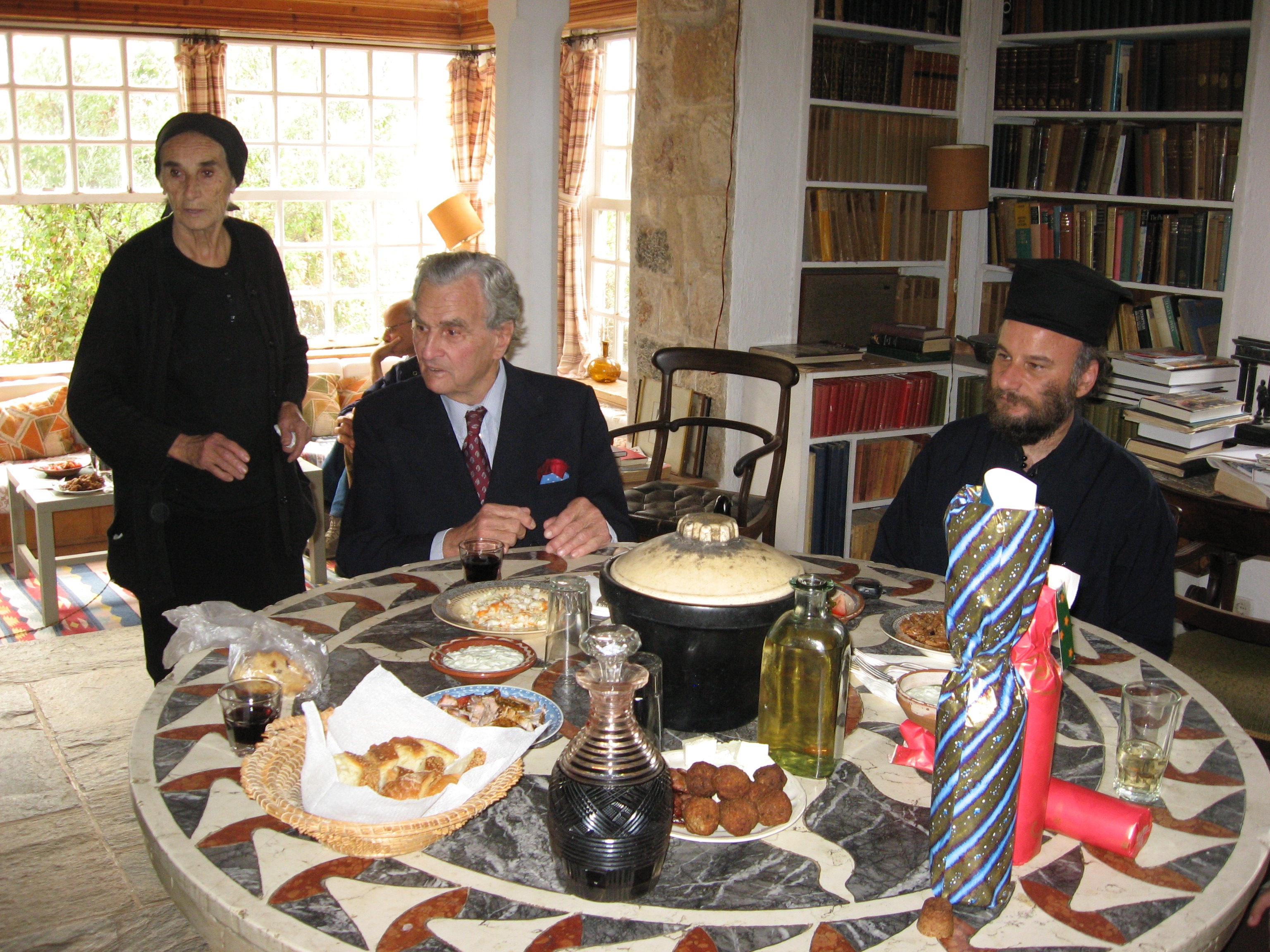
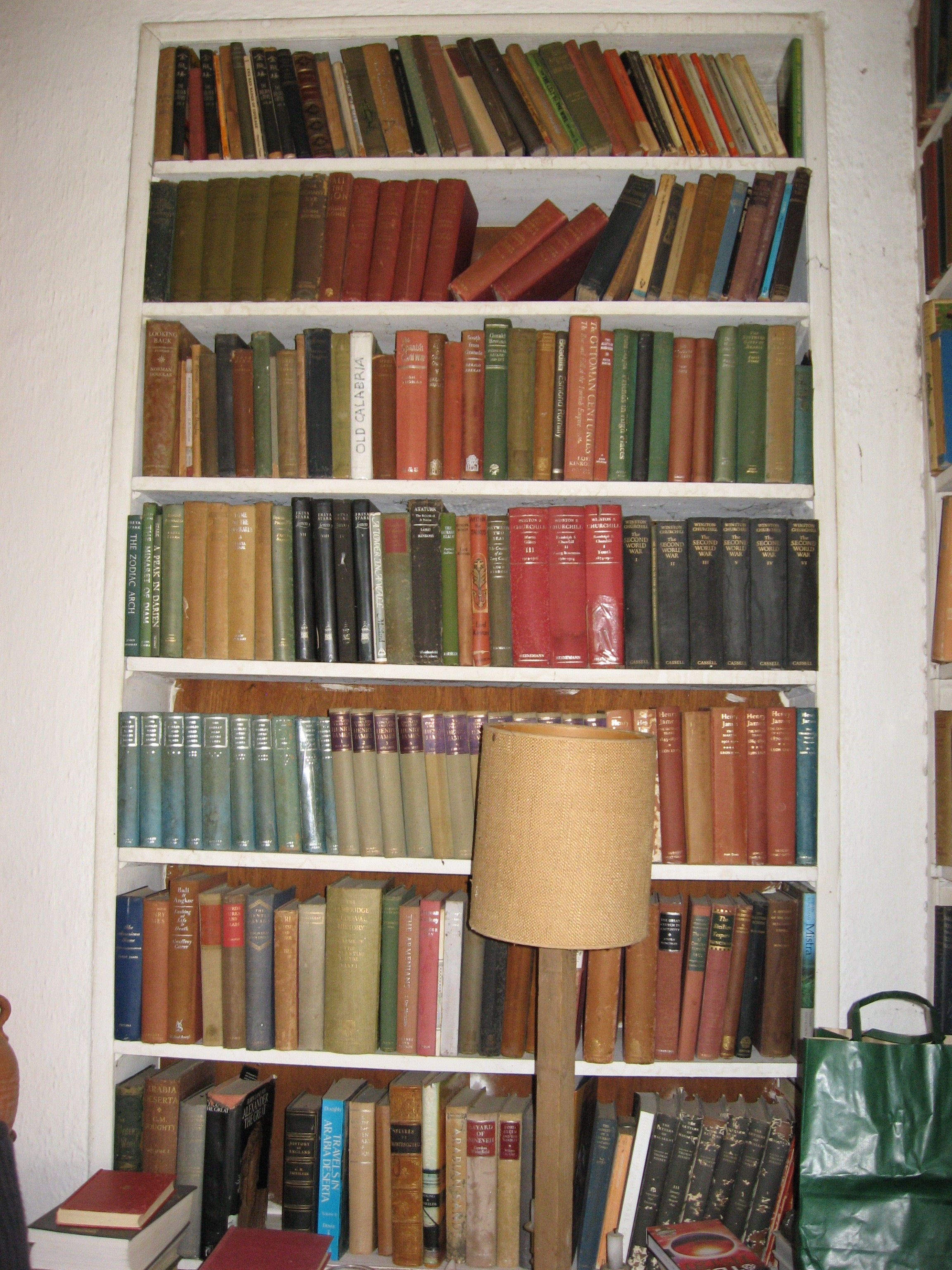
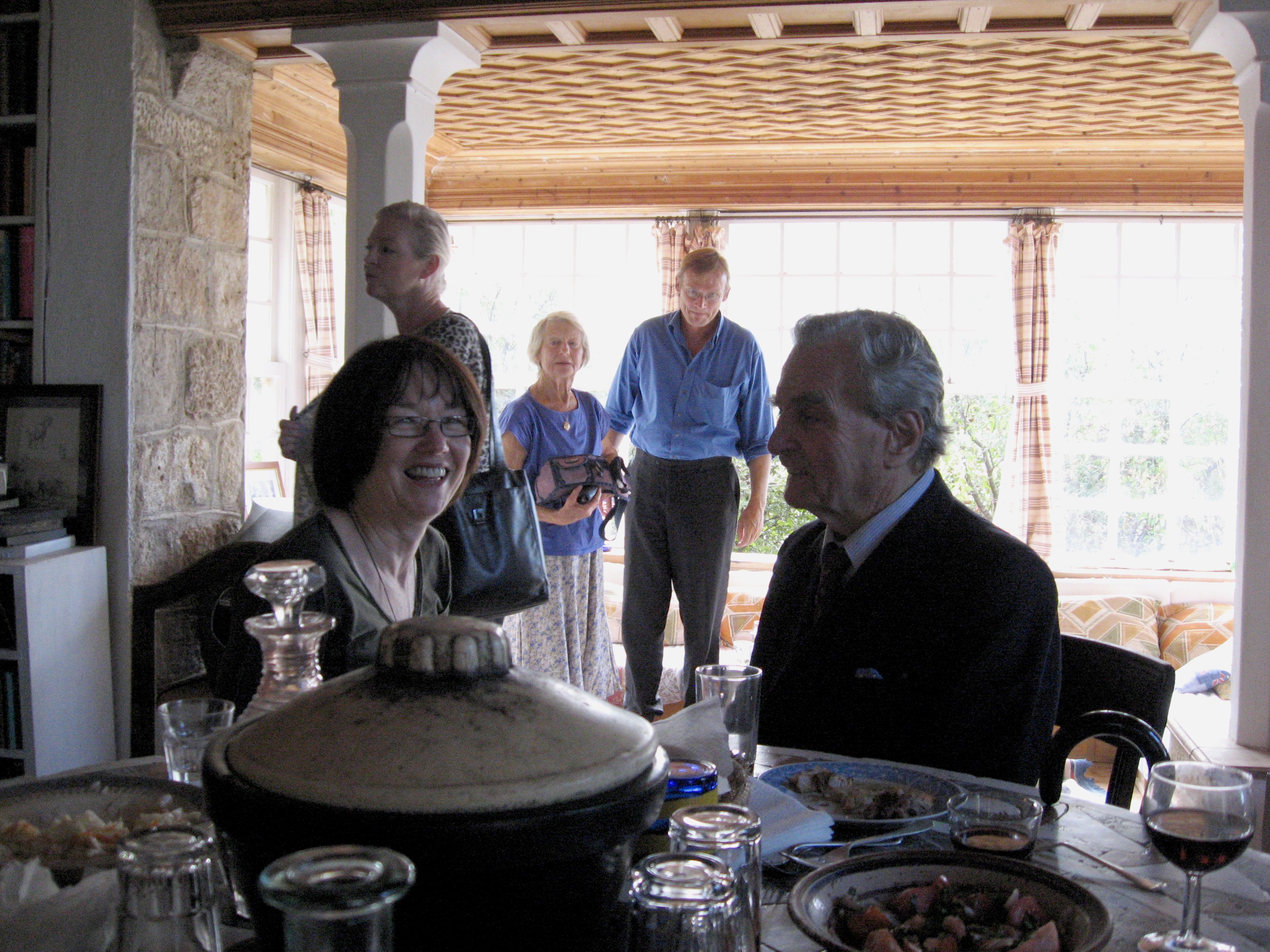
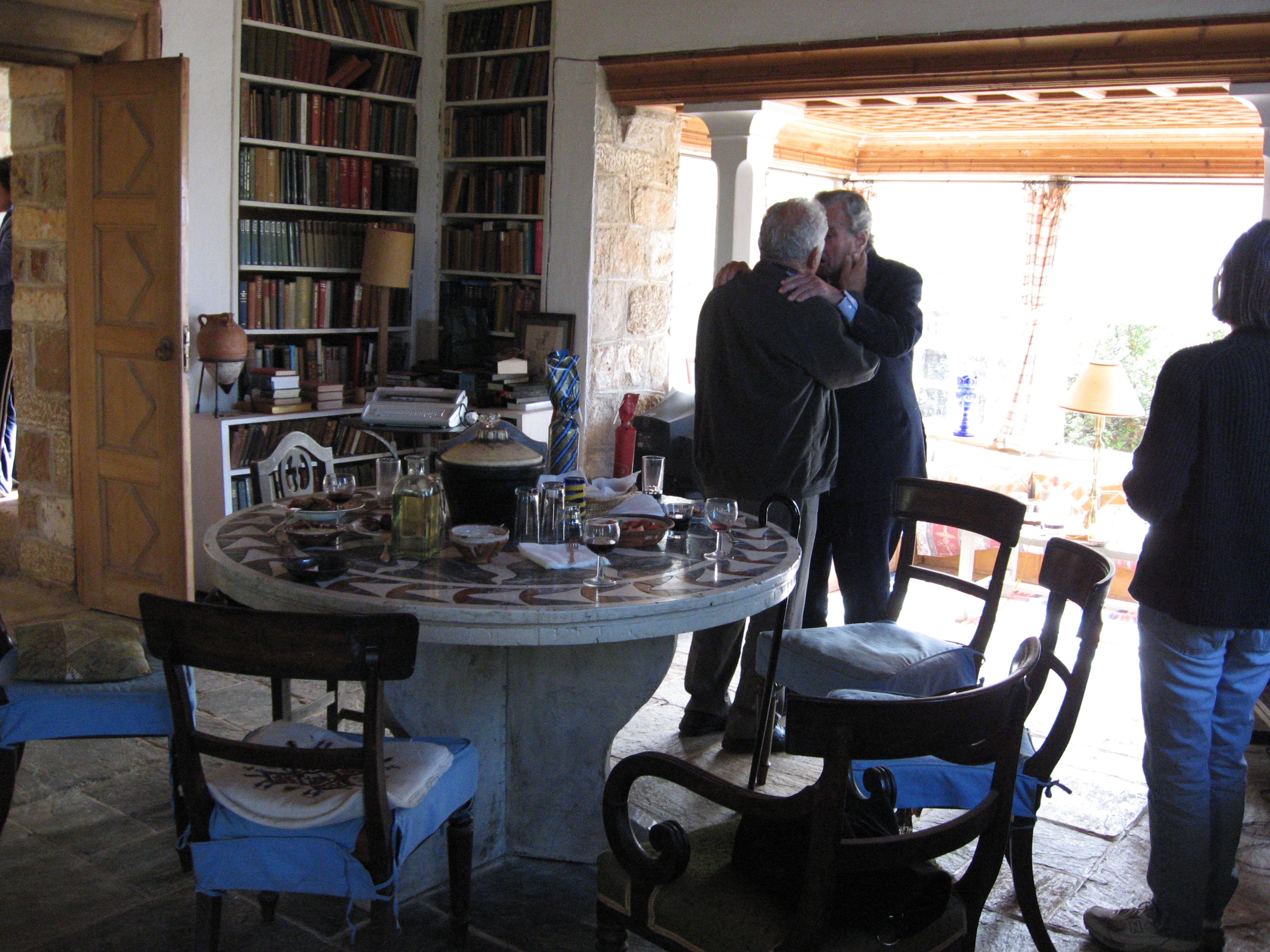
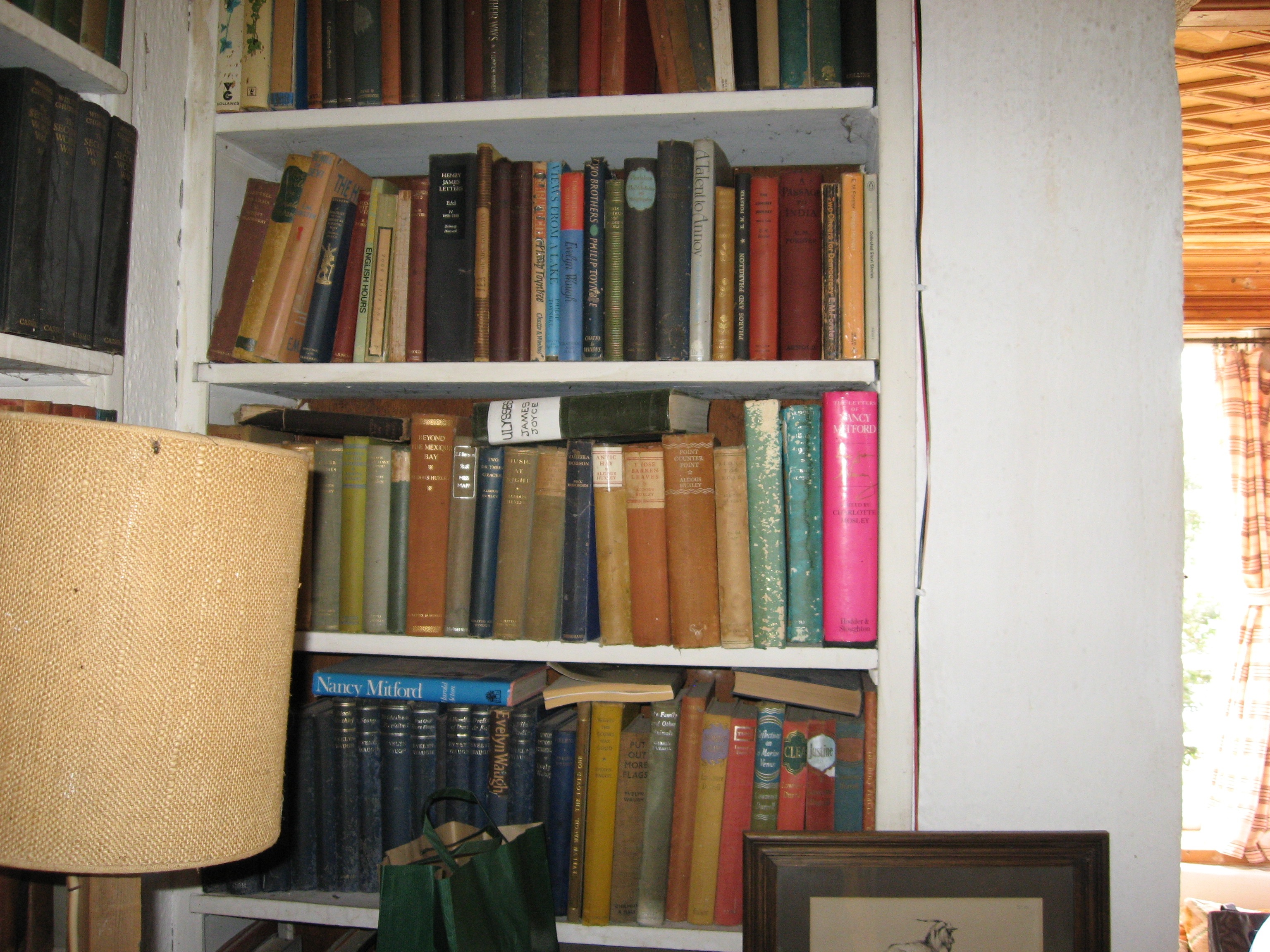
At Paddy’s house, I took several photographs both inside and out, but felt afterwards that perhaps I had naively overstepped the mark taking such liberties.  I was so excited and had no thoughts of writing an article or publishing photographs, just in thrall to the man, his writing and his beautiful home.  Today it feels like the right time for me to share my amazing morning with the man himself, his generous hospitality and indeed, his bookshelves.    I hear that his home has been purchased by the Benaki museum, and so hopefully this will mean that many devoted fans, travellers, and writers will get the opportunity to pay homage and visit this beautiful sanctuary, of a much loved Englishman, war hero, practically a Greek Saint, the man from the Mani.

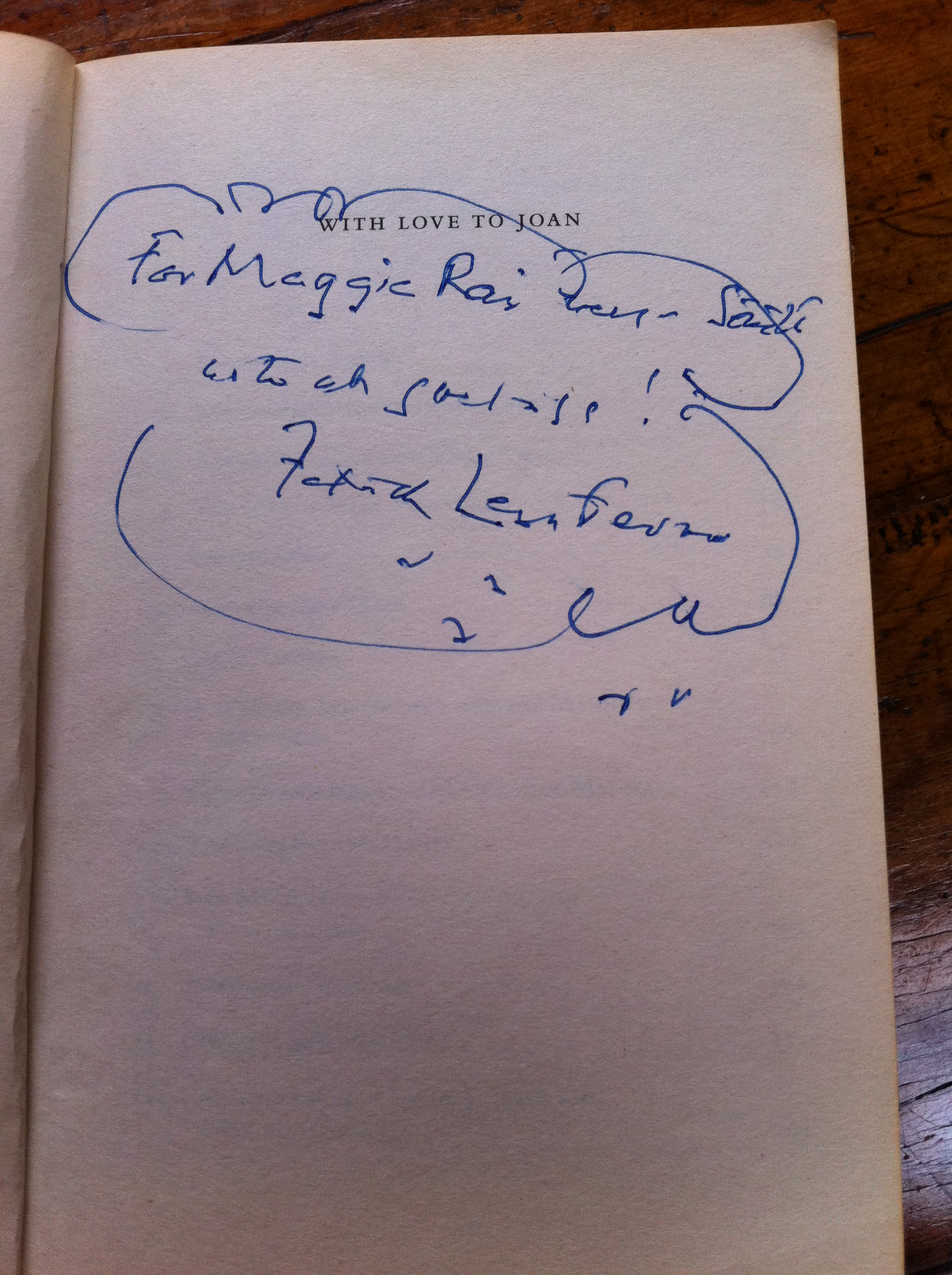
and this is the inscription (which I have never quite been able to decipher, even with the help of Greek friends

My photos, taken on Paddy’s Name Day in November 2007 include a few movie clips of the local women singing and at one stage Paddy pretending to fire a pistol.  I have hesitated in the past to post any of this intimate and personal images, but because Paddy has died, I am hopeful that the locals featured in these clips won’t mind being part of history.

And, here is a link to an obituary by Artemis Cooper

Book Reviews on Beattie’s Blog

Standard

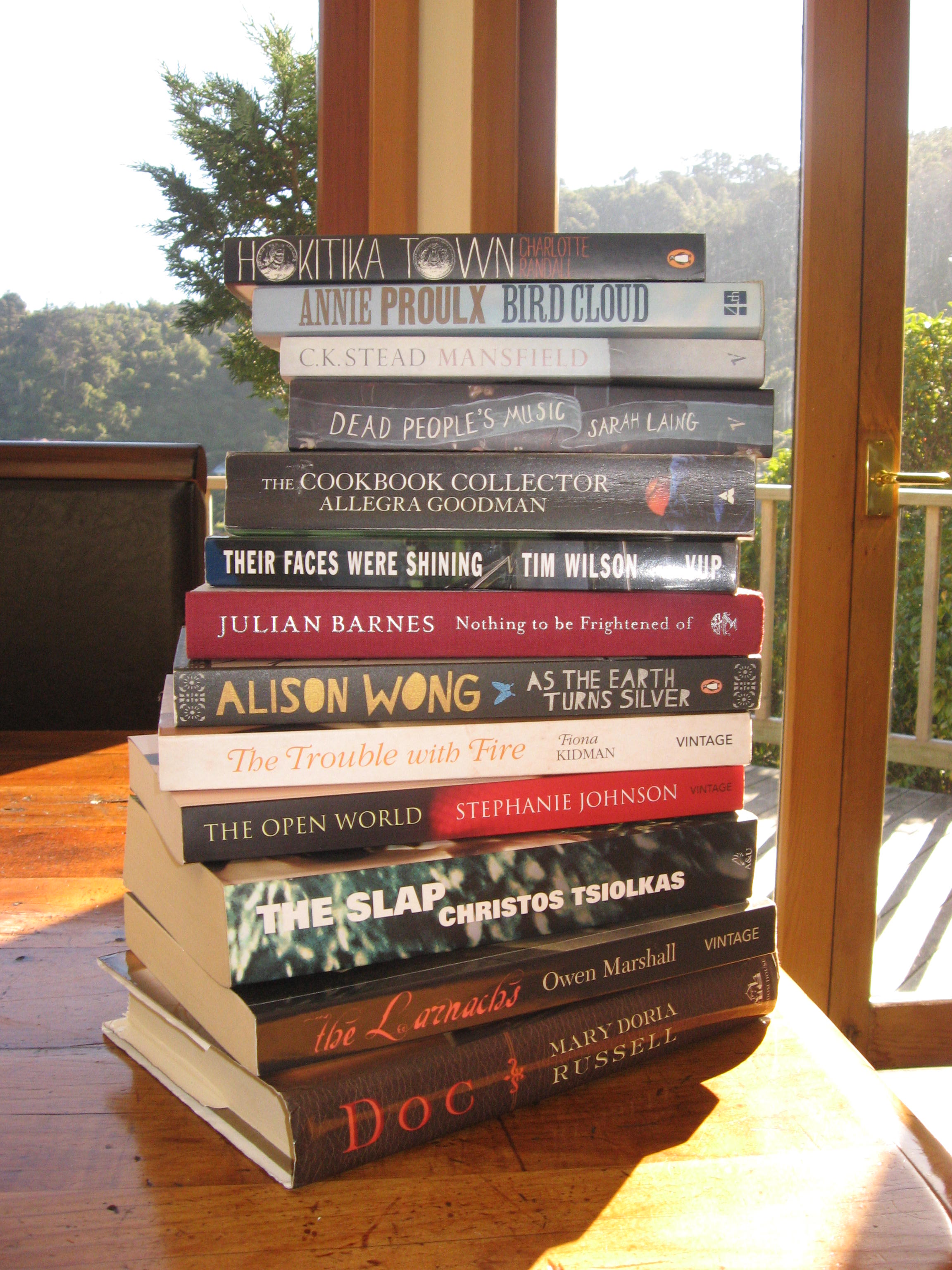
My blog started out as a writer’s blog and along the way it has morphed into a travelogue.   I thought it time to bring the focus back to literature and what better way than to showcase the book reviews that I have written over the last couple of years for Graham Beattie’s blog.

I am extremely grateful to Graham for giving me a voice as a reviewer, something I really enjoy and feel confident in doing because of the experiences I have had in belonging to no less than three book groups.

In a small country like New Zealand it is difficult for reviewers because we are a small literary community and there are many connections.   I’ve had my share of both good and bad reviews and the only important thing that I require from a review is that it is the truth from that reader, how they respond to the work and integrity is all we can ask for, not specifically praise.

I would never review a book simply to appease an author, and so my reviews are my response both as a reader and writer (always enthusiastic, and entirely my own opinions, except of course, when I quote my terribly clever book club friends).

If you get time, and any of these titles appeal, or indeed you have read them, do let me know if you agree, disagree, like or dislike.   The reason for a blog is of course, to encourage feedback and conversation about the things we writers and readers all love – books.

(And of course, I shall continue now and then to feed you photos of my travels – of course I will).