
Compos Mentis

Cross your fingers we used to say
as kids, when we heard the siren
saw an ambulance racing somewhere
blow your nose we said and hope
(because it rhymed) you never go
In one of those


Except of course, unless you’re dying
and that’s a good enough reason
perhaps to dial 111 although nice
if someone else can do it for you
because it’s tricky assessing life
and death when you’re worried
about inconveniencing everyone


So, we were super impressed with
the 20 something driver who backed
down our driveway (you have to see
the tricky bend at the top to get this)
right almost to our front door
and oh golly, I wonder what the
neighbours were thinking


the teenager (well he looked that
age) with dreadlocks, head paramedic
entered our shoeless house in his boots
(it wasn’t a good time to announce our
house rules)
followed by a bright-faced young woman
who as it turned out was a trainee
and full of smiles - they all were


lots of explanations, questions, kindness
and nek minnit  I’m in the back of the
ambulance (no chance to cross my fingers
or even blow my nose) and the trainee
girl full of smiles is putting in her very
first canula OUCH  but hey, there’s a
first time for everything me in the ambo
and her with the canula
hubby hot on our tail in his car


Would you like some fentanyl? I was surprised
such a nice offer and in shock I declined
worried that I might be out to it before we
arrived at the hospital and I wanted to be
compos mentis (you know, so I could explain
to the doctors just how I was feeling) and now
on reflection I wish I’d said, yes thank you


Anyway, it wasn’t life threatening even if
It had felt like it at the time with a heart rate
out of control, chest pressure and woozy woozy
Like I was dying I told my GP a week or so
later … when she explained I’d had a bad
reaction to the antibiotics she’d prescribed


And Hutt Hospital has to be nicest
place (via the back door) if you think you
might be dying
Courage Day
StandardFirst she was harassed by the morality police for not wearing her hijab properly
or that’s the news down the international grapevine, and they ripped her clothes
What would you do? It seems she decided to strip off down to her underwear
walk outside and sit among men and women mostly other students by the look
in her bras and underpants, arms folded in defiance or was that nonchalance
She’s become a meme and we retweet because we can and we feel virtuous
Of course, we can’t do a lot more than frown and rage at the rules that ensure
she must be covered up because we are Westerners with the right to run naked
Well, not to ruin a cricket match, but we could bathe openly on a beach or
strut our stuff unimpeded, half naked if you will without being arrested
or considered mental (well not legally, but some folk might disapprove)
but they can’t get us locked up in psychiatric care …
Well, not this year at least, but it’s only thirty or so years ago we did just that
put people who didn’t fit into strait jackets, locked them up, abused them
and refused to listen to them. Mr Luxon wanted all the glory with
a big apology but not so much a big wad of money and let’s be careful here
journalists who like to ask sticky questions might get banned from Parliament
I mean we have to keep things seemly, although we don’t believe in censorship
So we’re free as women to dress how we choose, and rock our stuff
Ready to rebuff any unwanted attention, because we have rights but
hang on … we might be legally stalked by an ex boyfriend, raped by
a high-flying sportsman, whose career matters more than us or
murdered perhaps but at least we have our rights ...
To be furious that some men in some countries demand women cover up
We know about men who want to protect us, those caring, domineering,
high profile, good men (could even be an eye surgeon doing pro bono work)
but I digress, I’m here on Courage Day to honour Ahoo Daryaei,......
The Nor’wester
StandardI was walking down the zig zag this week and peeked over the fence at my old garden (roses now in bloom), got a bit nostalgic and wrote a poem about the Nor’wester …
then, this morning a dear friend in Sunny Nelson sent me a photo of her blooms
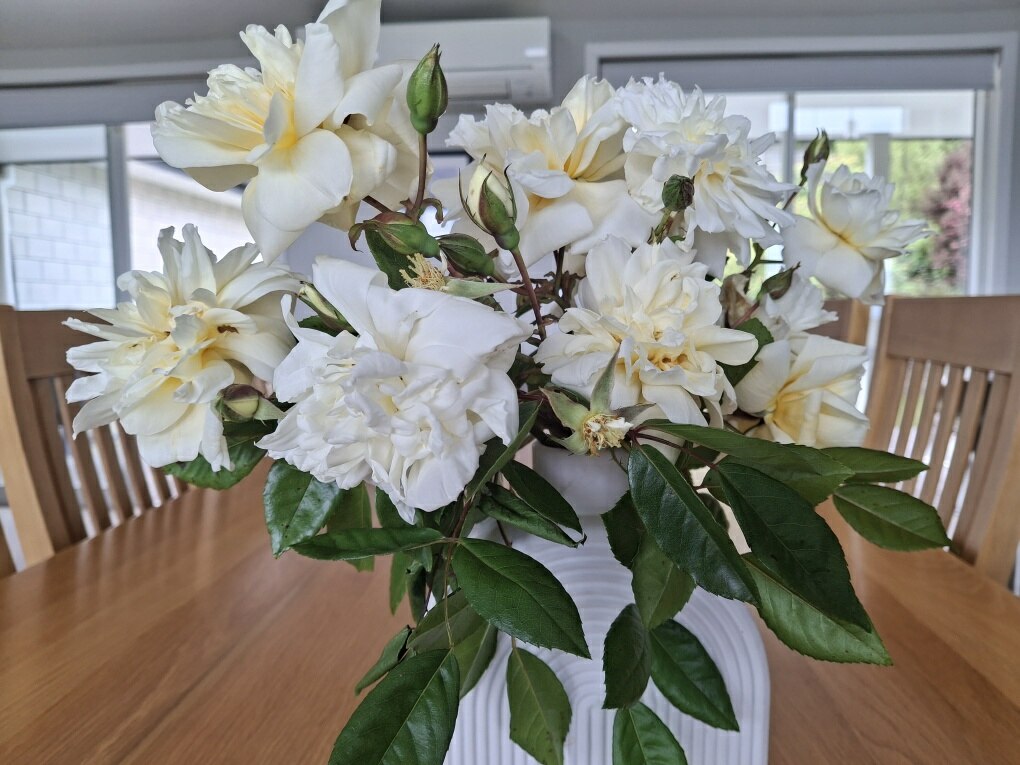
November means roses erupting all over the show
bundles of scented beauty in clusters on arbours
standard and staked, rambling and rambunctious
glossy leaves before the aphids arrive, thorns
rise up and out in defence protection agents
before grandma or whomever arrives with secateurs


quickly, take yourself down to the garden to
breathe in the fragrances, heavy, light some say
green tea or honey, but rush, rush why don’t you
before that damn Nor’wester arrives
to startle the tuis, shift the kereru, entwining
cabbage tree flora to sway and dangle


why did you plant those roses right here in line
of the wind, in clay soil near the sea, surrounded
by manuka, kanuka, kawakawa, beech those
cabbage trees, the flax bushes, the kowhai
did you think your Constance Spry would not fly
away shedding petals in November?


But still, year in, year out you cosset them
Your favourite flowers, out of place in your
native garden where geckos manoeuvre unseen
where tuatara might once have been, but no
you wanted roses, by the sea, so you could
glimpse perfection, inhale summer
then you curse the Nor’wester
Cheers (good health)
StandardCheers (good health)
It’s a throw-away when glasses collide
or you might get continental and say
Santé, or try Korean, with geonbae
Or jjan if you’re feeling fluent
Travelling, light-hearted, toasting
In multiple languages, wishing
yourself and others good health
because why not, and who wouldn’t
every friend and stranger in a bar
across a noisy table, at a birthday
maybe Christmas or your team
just won or you have a drink so why not
Once a Norwegian boyfriend taught
me how to say cheers in Russian
alas it seems Nostrovia is really
the English version of Na Zdorovie
But by then I had Skål well and truly
under my hat, and knew alcohol
content of both Bokk and Juleøl
drank Pilsner at lunchtime
cin-cin (Italian) too try-hard
somehow a kind of private school
pretension or should that be public
the English are very confusing
I do know drinking makgeolli from
wooden bowls in a student pub
in Seoul, reminded me of Kava in Fiji
bula or jjan under sedation almost
nothing beats an outdoor table
by the 24/7 with a plastic bottle
of Soju and a group of halmoni
in sunshades on a Sunday morning
Cheers, jjan, goenbae, cin-cin
Sante, Sláinte, I almost forgot
bottoms up
fill up your cup
and I came to this
because
well, that good health suddenly
in my seventies has a whole new ring
to it, never mind the clash of glasses
and recalling that I took the Pledge
aged 12
After the wars
Standard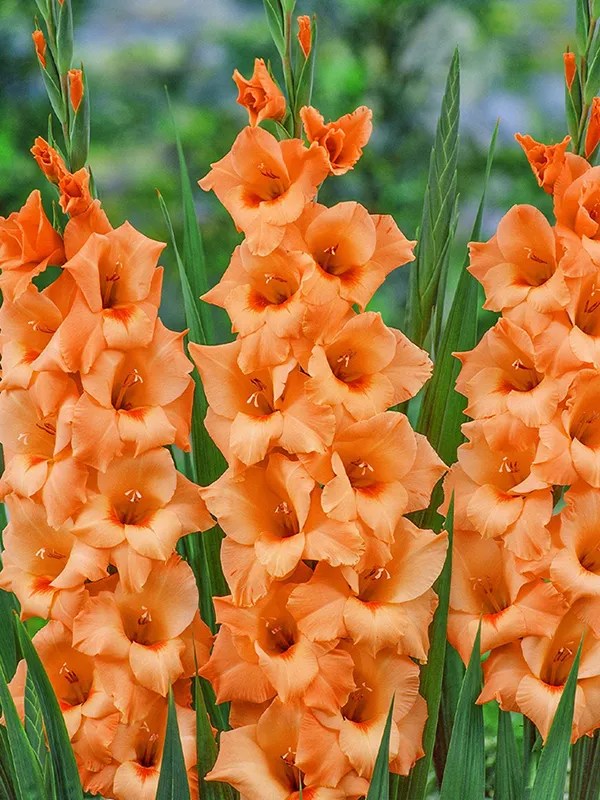
Gladioli staked, tied and tall
orange-throated in friable soil
in front of wide weatherboard
gaudy early summer glory


our uncle back from Korea
snaps photos on his box brownie
to give us little black and white
pictures with crinkle-cut edges


silk tigers stalk our front room
mum’s fake pearls housed in
black lacquered boxes from
Seoul, or maybe from Japan


K Force and J Force, brothers
in both places with albums
full of pictures of post bomb
Hiroshima and geisha girls


home bearing gifts for grandma
my mother and her sisters, we
kids unaware our own father
home from a different war


mowers, the smell of petrol
grass clippings into catchers
a postman’s whistle, the whine
of a blade on concrete


tennis mid road if you like
cows grazing on chamolly
mushrooms in the back
paddock for picking


the peanut butter scent
of the Harlequin Glorybower
the bush between us and
the next door neighbour


their son who fell from the sky
taking photos from a tiny plane
that swooped too low for
the perfect shot in peacetime


our first local tragedy
before the taxi driver who
was murdered and our
brother who killed himself


the gladioli fooled us with
their orange-throated glory
triumphant post war as if


this

         was
                     it
My Greek novel Οι κόρες της Μεσσήνης
Standard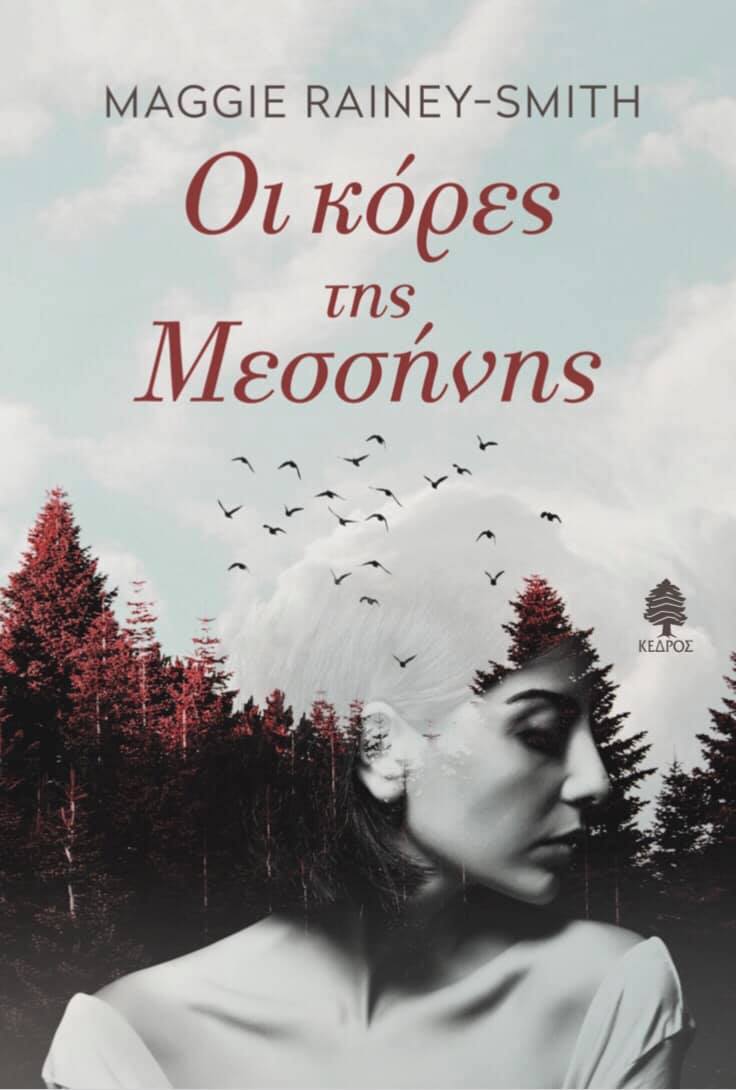
My publisher was recently visiting Hydra and spoke to a bookseller there who has been selling the Greek translation of ‘Daughters of Messene’ Οι κόρες της Μεσσήνης and was planning to order more in. This prompted me to look at any new Greek reviews and I found this wonderful review. I’ve had to use Google translate and I’m just going to post some of the parts of this review that gave me a heart glow.
If you speak and read fluent Greek I will post a link to the full review below. In the meantime:
Όμορφη και στρωτή αφήγηση καθ’ όλη τη διάρκεια του μυθιστορήματος με μια πλοκή τόσο όσο χρειάζεται ώστε να προκαλεί το ενδιαφέρον του αναγνώστη να διαβάσει τη συνέχεια με λαχτάρα.
Beautiful and layered storytelling throughout the novel with just enough of a plot to keep the reader interested and eager to read more.
Με ποιητικό λυρισμό αγγίζει με τη λογοτεχνική της πένα θέματα που έχουν σημαδέψει γενιές ολόκληρες και καταφέρνει να τους δώσει το ύφος και την αξία που τους αναλογεί. Χωρίς μελοδραματισμούς, η συγγραφέας μέσα από την πορεία της συγκεκριμένης οικογένειας, μιλάει για τις γυναίκες που έμειναν και υπέμειναν τα πάντα στη διχασμένη Ελλάδα, για τις γυναίκες που μετανάστευσαν στην άλλη άκρη του κόσμου για να ξεχάσουν και να αναζητήσουν ένα καλύτερο αύριο χωρίς όμως να ξεχάσουν τα ήθη, τα έθιμα και τις αντιλήψεις τους, για τις γυναίκες που πάντα αναζητούν και παλεύουν.
With poetic lyricism, she touches with her literary pen subjects that have marked entire generations and manages to give them the style and value that is attributed to them. Without melodrama, the author, through the path of this particular family, talks about the women who stayed and endured everything in divided Greece, about the women who migrated to the other side of the world to forget and look for a better tomorrow without forgetting their morals, customs and perceptions, about women always seeking and fighting.
Τέλος, θα ήθελα να να τονίσω ότι μέσα από αυτό το υπέροχο, αληθινό και συγκινητικό μυθιστόρημα που μας ταξιδεύει στο χρόνο, παρελθόν-παρόν, δίνοντας μας και την ελπίδα του μέλλοντος, η συγγραφέας δίνει το ιστορικό πλαίσιο της Ελλάδας και αποτυπώνει τη ζωή κάθε Έλληνα των τελευταίων εκατό χρόνων μαζί με τα ήθη, τα έθιμα, τη κουλτούρα, τη καθημερινή μας συμπεριφορά, την ιδιοσυγκρασία μας, τα όμορφα αλλά και τα στραβά μας, αλήθειες που βλέποντας τες αποτυπωμένες στο χαρτί, εμένα προσωπικά με έκαναν να χαμογελάσω, γιατί διέκρινα το χιούμορ της αλλά και την αλήθεια σε όλα αυτά που περιέγραψε και πραγματικά είμαστε αυτοί οι άνθρωποι
Finally, I would like to emphasize that through this wonderful, true and moving novel that takes us through time, past-present, giving us hope for the future, the author gives the historical context of Greece and captures the life of every Greek of the last hundred years together with the manners, the customs, the culture, our daily behavior, our temperament, the beautiful but also the ugly, truths that, seeing them printed on paper, made me personally smile, because I saw the her humor but also the truth in everything she described and we really are these people.
Another brick in the wall
StandardYou will learn your times table under Mr Luxon
Turn off your mobile phone and focus in class
You will have multiple assessments under Erika
And you’d better make sure that you can pass
Forget the Arts you silly child, ‘cos they won’t make a buck
For you, or for anyone, and it’s not just down to luck
You’ll need to learn to multiply, to know how to cook the books
Make a spreadsheet work for you and not just for the crooks
How to cancel a ferry build and make it look like saving
And when the bill gets larger, pretend you’re well just waving
And not drowning – mathematicians are not frowning
Decide to build a bridge instead calculations in your head
A tunnel here, a tunnel there, and speed limits upping everywhere
Phonetics will only get you so far but speed will move your motorcar
And should you crash, your head might smash, and oh alas
A and E is not so flash, they’re understaffed I hear…
There’s tele doctors everywhere and if things get really rough
We could fundraise for a helicopter just before you snuff it
But never fear, a plan is here, mathematics to the rescue
Let me test you, oh what a shame, the accident has hurt your brain
Hold up your hand and count to five, to prove to me you’re still alive
We’ll pop you in the hallway while we ask our 14 layers to assess
The likelihood that you’ll survive, oh no, you cannot count to five
You’ve died… well, that’s not good, too late to test your mathematics
A hymn or two, perhaps a poem, let’s hope the eulogists are
known wordsmiths or they could recite the ten times table
Literary Monsters
StandardI inadvertently generated 98 comments on Facebook. Admittedly, many of those 98 comments are my responses to the comments. The topic is the devastating news that Alice Munro, a literary hero to many of us, had willingly and knowingly, covered up the sexual abuse of her nine-year-old daughter.
What are we to do with this news? I was first alerted when a Creative Writing teacher I admire, posted on Twitter that she will never teach Munro again. I was taken aback by this and even once I knew the full story, I wondered if this cancelling of Munro was the right thing. It ran through my mind that teaching Munro in the light of this new evidence would be, well potentially fascinating. But then I stopped and thought about this and realised it would be vicarious and abusive to have students interrogating stories she has written that allude to such abuse… something akin to abusing her daughter all over again.
Another friend described what Munro has done as reprehensible but also ‘moral frailty’ and I liked this description. But it also appears to forgive or excuse, and I found myself, to some extent wanting to do this. Someone else in the lengthy thread mentioned that often mothers who have themselves been abused are more likely to turn a blind eye when abuse happens to their own daughters. I recall a school friend who I stayed in touch with, she married early and had four or more children. She married the boy who used to deliver our fruit and veges. We knew his Dad and we knew him. He had the loveliest open face and was a hard-working reliable young man with an alcoholic father. Roll forward many years, and my friend left her hard-working husband whom we all really liked and admired. It turned out he had been physically abusive. It turned out too that my school-friend’s father had also hit her mother. She told me her mother had ignored her black eyes.
Someone else posted a link to an article written by the daughter of Jan Morris, another one of my literary heroes. ‘Conundrum’ was a ground-breaking memoir in 1974. Morris’s travel writing and more recent musings on ageing have accompanied me throughout my life. I’ve admired what appeared in the public eye as an almost seamless transition from one identity as a male journalist on Hilary’s expedition to Everest, to a gender reassignment and an ongoing loving relationship with her ex-wife (they divorced but continued to live together). It’s a kind of fairy tale. Alas, Morris’s daughter Suki Morys who was only six when her then father began his transition, sees Morris and their journey as parent and daughter in quite a different light.
Suki wrote an account of her childhood and confusion in the British Sunday Times. She claims that Morris was ‘selfish, neglectful, sexist and deeply unkind’. Gosh. And as we all recognise, every child has their own version of childhood and accounts from siblings and parents may vary. Of course, it is entirely possible Morris was all of these things and also an extraordinary writer.
But when sexual abuse occurs as in the case of the Munro cover-up, there is no alternative version. And deeply concerning is that Munro knew this would eventually be known. Such lack of courage not to have faced this head on, and to hell with her literary legacy. So, we her readers are left to loathe, cancel, or try to understand… the more comments that came into my thread, the more I realise it is impossible to understand.
A few years ago, I watched a short clip of Sam Hunt and Gary McCormack visiting a Girls School somewhere in New Zealand. I cannot locate the clip on you-tube anymore, so perhaps it has been removed. It was in the height of their fame as minstrels and roving poets. Indeed, I recall returning to New Zealand from my OE, living in Auckland and being enchanted by the sight of Sam Hunt leaping a small picket fence outside a pub or café in Parnell to entertain patrons. It looked entirely spontaneous. But I digress. The clip I am speaking of, has disturbed me ever since. Gary was wearing some very short shorts, Kiwi-bloke-style and I think Sam was in his usual stovepipe attire. The thing that startled me was these young schoolgirls sitting doe-eyed and attentive (in the company of two adult women teachers watching over them), as Sam read a poem overladen with double entendre. From my observation of the short clip, the young schoolgirls were oblivious to the sexual innuendo, but the teachers could not have been. I was struck by the power imbalance and manipulation at work. And yes, I know, it was a different era, and I might have even laughed myself, had I watched it back then. I wonder how the teachers who sat there, back then, if they reflect, feel. What might they have done? To react would have drawn attention to the inappropriate insinuations in the ‘poem’… letting it wash over their heads as it seemed to, may well have been the right choice. Our lives on replay are complex as we move from an era where men set the agenda more often than not about what was or wasn’t okay.
Recently, my book group read ‘Life with Picasso’ by Francoise Gilot. It generated really strong feelings and responses. Personally, I found the book riveting and felt that Francoise Gilot had reclaimed her agency and her art along with candidly admitting to her own complicity in the acceptance of what was a very abusive relationship. I learned so much about Picasso the man and the artist through her lens and I was full of admiration for the way she reclaimed her space in the art world against all odds. The word ‘hate’ was used in regard to Picasso in some of our vivid responses to this work. Some in the group felt hate was far too strong an emotion and others were unequivocal. We bring our own stories to our reading of any novel or memoir, and I never fail to find new ways to see the world through belonging to a book group.
We read to find ourselves. Do we write to find ourselves? Was Alice Munro writing these stories because she failed in her moral duty to take the right action for her daughter, herself and her family?
But, Munro was not alone, the whole extended family were complicit in the cover-up. Her father and stepmother, even after hearing of the abuse, allowed her to go on holiday year after year to see her mother and this monster Gerald Fremlin. The idea that the father insisted her sister accompany her to protect her beggar’s belief. Imagine two daughters being molested by your ex-wife’s husband? It seems the entire family was willing to keep the silence for the sake of Munro’s literary legacy… until now where they appear to be fully supportive of Andrea Robin Skinner’s story.
And then of course, the discourse will continue, whether to cancel, Munro, (indeed all the literary Monsters) and I’ve ordered ‘Monsters’ by Claire Dederer from my local library (as urged to do in my thread of 98 comments and climbing).
Most of my literary friends are judging Munro ruthlessly and without reservation. I blame my Catholic childhood where all sins could be expunged, or forgiven with a few devout Hail Marys, and a really fervent Glory Be. I want to understand the complexity of her feelings for such a ruthless swine as Fremlin. With all the public prestige that she had, to think she needed his affirmation even more than the safety of her own daughter and grandchildren.
Is this why we read and why we write. The answers continue to elude us. The same stories repeated as if new and ghastly, yet really on replay.
And here is a brutal take down of Munro’s legacy (ouch)..
and this from Arts & Letters Daily
I’m on Insta
StandardNone of us poets know quite
what to write, although many do
thoughtfully, yet it’s never quite
right, not really… apart from the
risk of labels such as virtue
signalling
Words in a time of war carry weight
and most of our words don’t weigh
quite enough in the face of Gaza
poetry isn’t going to cut the mustard
somehow, no matter how heartfelt
somehow
I’m on Insta and scroll for comfort
I find Ruhama, from Boston,
Mother of four, Middle Eastern Cook
she’s Jewish and lately, I hesitate
to tick like and instead I push ‘save’
secretly
She’s not responsible for Gaza any more
than I am, or you are. For a while I did
watch the reports on Insta from
Middleeasteye, but frequently now
there’s a ‘sensitive content’
warning
I have no problem watching videos where
planes have dropped thousands of feet
startling passengers, tossing them around
bloodied crew and oxygen masks amok
in fact I’m deeply engrossed in their drama
vicarious
I want to look, to force myself to witness
what’s happening, not to be a wimp
not put my head in the sand become an
Ostrich scroller only looking for food content
or a comedy diversion from Tom Sainsbury
selective
But I want to look away, avert my eyes
rather than watching mothers wailing
their babies bodies dismembered, burned
buried, bombed, brutalised, babies
we’re talking about babies
babies
The words of poets seem, well, less
than adequate, no matter how adequate
their form, intent and language, because
how can a poem adequately, accurately
begin to convey
what
is
happening
today
in
Gaza
I almost slept with Don Binney
StandardSo said a woman in Nelson at a talk
by Gregory O’Brien, or so he tells us
At his talk at Featherston Booktown
Almost slept, the words fill the air
in the Anzac Hall. All those military
men gazing down in disapproval
There must be millions of us, who
‘almost’ slept with someone and
that doesn’t even include fucking
I recall a US sailor off an Icebreaker
at my flat in Hataitai… we slept
together but we didn’t, you know
I was saving myself at the time
stocking my glory box with Irish
linen and pearl handled cutlery
So, I’m distracted, as Grego describes
two bold birds mating, the print his
parents gave him for his 8th birthday
two birds (God knows what sort of birds)
mating but it took Greg several years
to know this fact… Steve Braunias in
an altogether different session in
the Kiwi Hall tell us you need at least 70
facts in a piece of non-fiction
(I see writers scribbling this gem or
committing it to memory)
Almost slept could well be a fact but
could be easily misunderstood
I’m still thinking about it
The whole idea that this woman and I’ve
no idea how old she was when she said
this, wanted us to know
I almost slept with Don Binney
Greg is eloquent, passionate, he’s a man
to whom the letter P applies, a poet and
a painter, inspired by Binney’s mating birds
But it’s the woman who almost slept with
Binney, who holds us, riveted, her voice
unheard, fills the Anzac Hall
 a curious half hour