
A view of the world

Elton John’s yellow brick road races across towards our house from Matiu Soames
Mid Winter, the sun dropping in its usual show-offy way, exploding grey clouds
I’m chopping a red onion that ought to be a shallot but I forgot and it will do
the dill is waiting with the cream, the capers, the chopped garlic, zest of lemon

Tomorrow an eye surgeon will scoop out my old useful lens from my right eye
someone described it as akin to a designer scoop for a delicate entrée of
well, who knows, something that small, a small scoop and out comes my lens
my faithful view from my right eye of the world, my perspective, a wee bit cloudy

I’m having a wee slosh of wine as the recipe demands a deglaze and I only have
my favourite Pinot Gris with which to do this, so of course, I’m going to taste it too
in the meantime a friend just emailed to say they had their cataract done yesterday
And it was … challenging and everyone else had assured her it was a doddle

She emails back almost immediately to say she didn’t mean to scare me and that
her eyesight is better already but you know she just wanted to be honest and her advice

        You just lie back and let it happen as with so many things in life

I’ve warned the surgeon I sometimes get vertigo but now I’m practising lying flat

I will lie back as my friend suggests and think of England as the saying goes
But there’s so much else to think of, eyesight aside, right now its Gaza and Tehran
And I live at the bottom of the world where I can have a new plastic lens for my
new view of the world safe inside a sheltered harbour nowhere near war
writing
The Sisterhood
StandardBrooke Van Velden has a way with the flick of her hair
a nonchalant movement that says to us all, she just doesn’t care
Not a wit or a worry about changing the Bill that will
stop fair payment claims for our sisterhood, how dare she
but you see she’s in thrall to David the Atlas guy, he of
the Treaty Bill if you will, and the school lunch revamping
an 8 % vote but don’t worry, he’s stamping all over the PM
our hapless, and hatless, and utterly witless blue suited man
who always gets tongue-tied while trotting out slogans
wherever he can things like What I’ll say to you – yet he
hasn’t clue he’s the fmcg guy, aisle ends all the way
most of the time on a plane, and flying away from us
while Winnie takes charge blaming all things too woke
crying get back to basics where a bloke is a bloke
and a sheila knows better than Winnie for sure
when it comes to the pay check the bloke he gets more
how else could he cop up for all those blue suits
shiny shoes and fine dining, our Winnie’s a winner
Brooke Van Velden is simply a total beginner
She’s sold out the sisterhood but not on her own
shoulder to shoulder the girls they lined up
Erica, Nicola, Judith, Louise, a new breed of women
all eager to please David Seymour … ?
Bring back Marilyn Waring a girl with some guts
or some guys from the back bench could throw us
a crutch, it’s not as if equal pay is asking too much
The ballot box girls is our only solution, get started
campaigning, there’s no absolution
for girls with the hair they flick in defiance, pants suits
they button with casual compliance, it’s time for
a change, we need hearts in the mix
Gird your loins girls of all sorts and all chromosomes
the whole bloody alphabet and all antinomes
Let’s show them what we think in 2026
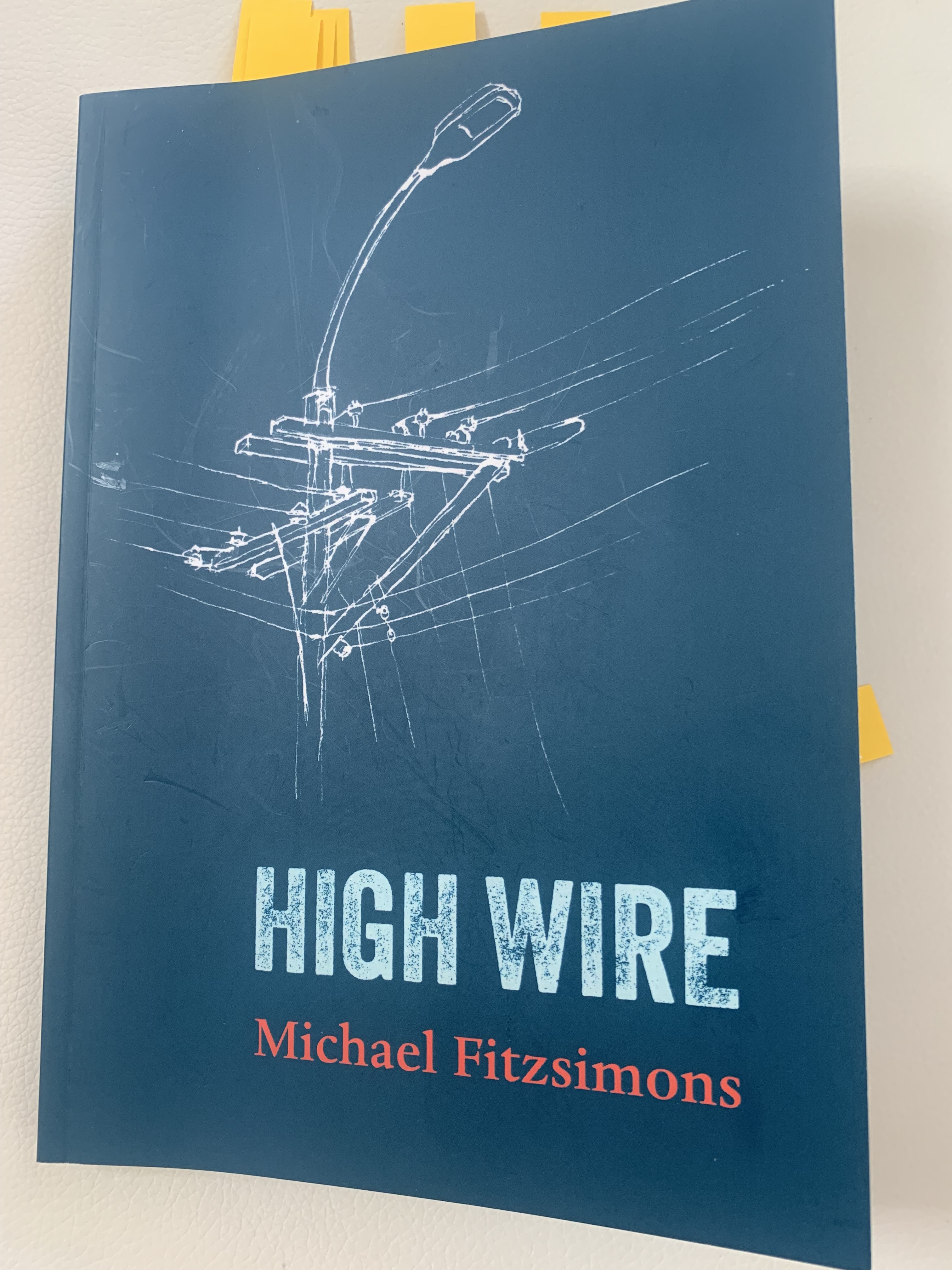
High Wire by Michael Fitzsimons
StandardHigh Wire
I went to the launch at the Seatoun Bowling Club. You just gotta love the venues poets choose to launch their books. Mine was launched from the bedroom of the bookseller during lockdown. And more recently, Simon Sweetman’s The Richard Poems were launched in a trendy men’s clothing store/barber shop.
I first met Michael when we were reading poems together in Kapiti at a Retirement Village and indeed we also read to one of our most receptive audiences in the dementia ward of that village. An unforgettable and unexpectedly heart-warming experience for all the poets involved.
Early on in this lovely collection, Michael writes:
My poems seem to appeal
To people who don’t read poetry.
He got me, right there and then. I feel such a connection to these words about my own poetry. I’ve been picking his book up every day to read at random and each poem brings joy. There’s a theme of gratitude throughout. The poems speak of the ordinary with such love and affection and too, the profound. His love of family is palpable and joyful. He speaks lightly of a brush with death (more than a brush, a serious cancer diagnosis which he has written about in an earlier collection) but he manages to be uplifting and grateful in all his observations.
There’s delightful humour and I just love this poem/anecdote – yes, Michael pops poetic anecdotes into this collection, stylishly and inspiring.
A friend buys bulk chicken on special from PAK’Nsave.
He divides the chicken into meal-size portions and freezes them. You have no idea, he says. A few bucks a meal.
He and his wife live on the pension. They eat enough chicken to fly business class to Europe every three years.
Another poem that leapt out at me and I just love, is about his daughter coming home to watch the All Blacks snatch a 16-15 victory in Dunedin … the poem talks of Razor Robertson’s first test …
Surprisingly for an All Black
Coach, he’s a talker
This made me laugh out loud as I said almost exactly that when I listened to Razor’s after match chat.
Then there’s the very beautiful love poem The Fin with dolphins and orcas but at the very heart is love, romantic, domestic and true.
Another that spoke to me On the white carpet – musings about moving into a house with white carpet and spilling coffee. Memories for me of white shagpile carpet in an apartment in Auckland in the late 70’s. Play us a tune Maureen an evocative family poem reeking of all things Irish, family, history and heritage. A gorgeous glimpse into the author’s roots.
There’s so much to love in this collection. It is uplifting and for a poet, it is inspiring. I rushed to write my own poem about an encounter I had at our local Pavilion Café, after reading Michael’s delightful encounter at his local 4Square Four Square Philosophy.
The final poem in this collection Credo is one of my favourites. It’s a perfectly placed poem to end such a loving collection. It feels like a questioning of faith and yet a deeply embedded faith too. The final lines …
So when you step out the front door
by the olive tree,
you have something to take with you,
something sustaining,
like a cut lunch.
How Good is This? … (the title of another poem).
Road Cones
Standard
Orange road cones appear to incite brain fog
community Facebook pages bedecked with outrage
traffic disrupted, slowed, held up, drivers fume
and the sea lap laps at the road edge unaware

and the sea laps, the sun shines, the birds sing

all over the motu, angry motorists decry cycle lanes
fury spills over orange road cones onto Facebook
people calculate the lost seconds, minutes even
imagine hours of their happy lives destroyed

and the sea laps, the wind blows, the birds fly

sometimes traffic lights accompany the road cones
those infuriating orange road cones (don’t you wish
you had shares in the company who makes them)
people idle away in cars waiting, waiting, fuming

and the sea lap-laps, the sun shines, clouds scuttle

late model tinted window turbo charged saloons
rev their engines impatiently owners sweat on
leather seats, cursing, checking Apple watches
fearing the lost seconds, minutes possibly hours

and the sea splashes, the birds cry, clouds fly


European sports cars, boat trailers, camper
vans, double cab utilities even caravans
big diesel buses and electric build your dreams
ageing Tesla, Jaguars with branded spotlights

everyone is in their car, or so it seems

and the sea lap laps and the birds sing

and then one day all the road cones float
away and the sea swallows them all
Literary Monsters
StandardI inadvertently generated 98 comments on Facebook. Admittedly, many of those 98 comments are my responses to the comments. The topic is the devastating news that Alice Munro, a literary hero to many of us, had willingly and knowingly, covered up the sexual abuse of her nine-year-old daughter.
What are we to do with this news? I was first alerted when a Creative Writing teacher I admire, posted on Twitter that she will never teach Munro again. I was taken aback by this and even once I knew the full story, I wondered if this cancelling of Munro was the right thing. It ran through my mind that teaching Munro in the light of this new evidence would be, well potentially fascinating. But then I stopped and thought about this and realised it would be vicarious and abusive to have students interrogating stories she has written that allude to such abuse… something akin to abusing her daughter all over again.
Another friend described what Munro has done as reprehensible but also ‘moral frailty’ and I liked this description. But it also appears to forgive or excuse, and I found myself, to some extent wanting to do this. Someone else in the lengthy thread mentioned that often mothers who have themselves been abused are more likely to turn a blind eye when abuse happens to their own daughters. I recall a school friend who I stayed in touch with, she married early and had four or more children. She married the boy who used to deliver our fruit and veges. We knew his Dad and we knew him. He had the loveliest open face and was a hard-working reliable young man with an alcoholic father. Roll forward many years, and my friend left her hard-working husband whom we all really liked and admired. It turned out he had been physically abusive. It turned out too that my school-friend’s father had also hit her mother. She told me her mother had ignored her black eyes.
Someone else posted a link to an article written by the daughter of Jan Morris, another one of my literary heroes. ‘Conundrum’ was a ground-breaking memoir in 1974. Morris’s travel writing and more recent musings on ageing have accompanied me throughout my life. I’ve admired what appeared in the public eye as an almost seamless transition from one identity as a male journalist on Hilary’s expedition to Everest, to a gender reassignment and an ongoing loving relationship with her ex-wife (they divorced but continued to live together). It’s a kind of fairy tale. Alas, Morris’s daughter Suki Morys who was only six when her then father began his transition, sees Morris and their journey as parent and daughter in quite a different light.
Suki wrote an account of her childhood and confusion in the British Sunday Times. She claims that Morris was ‘selfish, neglectful, sexist and deeply unkind’. Gosh. And as we all recognise, every child has their own version of childhood and accounts from siblings and parents may vary. Of course, it is entirely possible Morris was all of these things and also an extraordinary writer.
But when sexual abuse occurs as in the case of the Munro cover-up, there is no alternative version. And deeply concerning is that Munro knew this would eventually be known. Such lack of courage not to have faced this head on, and to hell with her literary legacy. So, we her readers are left to loathe, cancel, or try to understand… the more comments that came into my thread, the more I realise it is impossible to understand.
A few years ago, I watched a short clip of Sam Hunt and Gary McCormack visiting a Girls School somewhere in New Zealand. I cannot locate the clip on you-tube anymore, so perhaps it has been removed. It was in the height of their fame as minstrels and roving poets. Indeed, I recall returning to New Zealand from my OE, living in Auckland and being enchanted by the sight of Sam Hunt leaping a small picket fence outside a pub or café in Parnell to entertain patrons. It looked entirely spontaneous. But I digress. The clip I am speaking of, has disturbed me ever since. Gary was wearing some very short shorts, Kiwi-bloke-style and I think Sam was in his usual stovepipe attire. The thing that startled me was these young schoolgirls sitting doe-eyed and attentive (in the company of two adult women teachers watching over them), as Sam read a poem overladen with double entendre. From my observation of the short clip, the young schoolgirls were oblivious to the sexual innuendo, but the teachers could not have been. I was struck by the power imbalance and manipulation at work. And yes, I know, it was a different era, and I might have even laughed myself, had I watched it back then. I wonder how the teachers who sat there, back then, if they reflect, feel. What might they have done? To react would have drawn attention to the inappropriate insinuations in the ‘poem’… letting it wash over their heads as it seemed to, may well have been the right choice. Our lives on replay are complex as we move from an era where men set the agenda more often than not about what was or wasn’t okay.
Recently, my book group read ‘Life with Picasso’ by Francoise Gilot. It generated really strong feelings and responses. Personally, I found the book riveting and felt that Francoise Gilot had reclaimed her agency and her art along with candidly admitting to her own complicity in the acceptance of what was a very abusive relationship. I learned so much about Picasso the man and the artist through her lens and I was full of admiration for the way she reclaimed her space in the art world against all odds. The word ‘hate’ was used in regard to Picasso in some of our vivid responses to this work. Some in the group felt hate was far too strong an emotion and others were unequivocal. We bring our own stories to our reading of any novel or memoir, and I never fail to find new ways to see the world through belonging to a book group.
We read to find ourselves. Do we write to find ourselves? Was Alice Munro writing these stories because she failed in her moral duty to take the right action for her daughter, herself and her family?
But, Munro was not alone, the whole extended family were complicit in the cover-up. Her father and stepmother, even after hearing of the abuse, allowed her to go on holiday year after year to see her mother and this monster Gerald Fremlin. The idea that the father insisted her sister accompany her to protect her beggar’s belief. Imagine two daughters being molested by your ex-wife’s husband? It seems the entire family was willing to keep the silence for the sake of Munro’s literary legacy… until now where they appear to be fully supportive of Andrea Robin Skinner’s story.
And then of course, the discourse will continue, whether to cancel, Munro, (indeed all the literary Monsters) and I’ve ordered ‘Monsters’ by Claire Dederer from my local library (as urged to do in my thread of 98 comments and climbing).
Most of my literary friends are judging Munro ruthlessly and without reservation. I blame my Catholic childhood where all sins could be expunged, or forgiven with a few devout Hail Marys, and a really fervent Glory Be. I want to understand the complexity of her feelings for such a ruthless swine as Fremlin. With all the public prestige that she had, to think she needed his affirmation even more than the safety of her own daughter and grandchildren.
Is this why we read and why we write. The answers continue to elude us. The same stories repeated as if new and ghastly, yet really on replay.
And here is a brutal take down of Munro’s legacy (ouch)..
and this from Arts & Letters Daily
For last year’s words belong to last year’s language
StandardFor last year’s words belong to last year’s language
(Four Quartets, Little Gidding, T.S. Eliot).
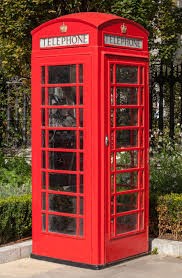
I am standing somewhere in Leicester Square. It is either midnight or close to. I am inside a red phone booth. Maybe it reeks of urine, but I do not remember. In my hand is a black receiver with a mouthpiece into which I am speaking. My head is nestled into an earpiece straining to catch the words coming from 12,000 miles away. I can hear my own words echoing back at me over the voice of my mother, and then my father. Just before the three minutes is up, an operator interrupts our stilted conversation to let me know that if I wish to continue, I need to insert more coins. Three minutes is all I can afford and all it affords me, is a series of frantic hellos and goodbyes echoing into the night. It is 1972, phone calls are expensive.
Christmas that same year, I am in Edinburgh living in a neoclassical (now historic A listed) building in Leith, on the edge of respectability. My flat is dark, bitterly cold and has a bold red street facing front door. A telegram arrives to wish me Merry Christmas Stop and a Happy New Year Stop. Each word costs my parents a small fortune, the two stops included. We are not on Viber, we cannot see each other and my blue aerogrammes take a week or two to cross the dateline homewards. My Dad drinks at the local pub after work every night. He is good friends with the local postman. Sometimes, if an aerogramme has arrived before delivery the next day, the postman will take my letter and deliver it in person to my Dad at the pub.
I grew up in a modest post-war Jerry-built wooden bungalow. Ostensibly we were working-class but New Zealand was more egalitarian back then. In our street including my Dad, a carpenter, were the butcher, a baker, a painter, a chemist, a doctor, three schoolteachers, and eventually, years after I left, a Prime Minister. Most women back then were not in paid work, well not in our street. We had no telephone. If we wanted to call my grandmother we needed to walk to the top of our street, up a small hill, to a phone booth. I was born in a cottage hospital at the top of that hill. My father and I received the news of my grandmother’s death in that phone booth. My mother was with my dying grandmother. Dad and I walked up the hill to the phone booth to call for news. I recall I screamed. A man passing by in his car, heard me scream, stopped and came to rescue me – seeing me in a phone booth with my Dad, and not knowing quite what was going on. This same man, when he learned our sad news, that my grandmother had just died, drove us up to my grandmothers.
When I lived at home, I woke each morning to the sound of the BBC News, as my father washed himself in the bathroom and sang. We had a tin bath but no shower. His ablutions were a ritual of running water and a lot of sloshing. Big Ben would chime before the news over shortwave radio and the news reader had a gravitas that brooked no doubt. No one speaking in such a well-bred, carefully modulated timbre could possibly be telling other than the truth. The Cuban Crisis, Kennedy’s assassination, and his funeral, all came to us from the blue Bakelite radio above the small green fridge. The fridge I might add, was a modern wonder that had replaced but not entirely, the safe above the kitchen sink near the coal range.
My eldest brother left school to join the Merchant Navy and was travelling as a teenager to the Pacific Islands specifically Nauru for phosphate and up to Hong Kong and Japan. He returned from a trip with a portable tape recorder as a gift for me. It had a small microphone for recording and tiny reel to reel tapes. My best friend and I would visit the local shops and record our conversations with the fruiterer or the local bookshop. I would secrete the tape recorder, uncomfortably under my cardigan. I would disguise the microphone which hung around my neck with a daphne cutting from my mother’s garden. We felt like spies and thought ourselves entirely clandestine. I cannot recall any of the recordings, but I smile now to think that we thought we fooled anyone.
Many families back in the 60’s owned stylish stereograms, which appeared to be as much about furniture as about music. Some cabinets that housed the turntable also converted into a drinks cabinet. Our very first musical turntable was a wind-up gramophone and from memory, we had two records. One was Mario Lanza which may well have been quite hi-brow and the other played the Irish song The Stone Outside Dan Murphy’s Door. The gramophone was in a case that sat on the floor in the front room when it was played and then it was put away in the big cupboard in Mum and Dad’s bedroom. Unless you wound the handle sufficiently, the record would slow right down and that is my memory of the final refrain of the song which repeats the title, in a slow motion sound as the gramophone wound down. Many years later, an older sibling purchased a full-size ACME reel to reel tape recorder. We taped from the radio and had everything from Herman’s Hermits, the Beatles, Dusty Springfield, Petula Clark, Simon and Garfunkel, Sandie Shaw, Helen Shapiro, Diana Ross and Cilla Black. When I look back, we were lucky with so many outstanding female singers to listen to back then. Our influences were very much persuaded by the English pop charts early on, rather more than the American.
Then in the early 70’s, travelling by myself, I took my music with me on a small cassette player, listening to Carole King, Cat Stevens, Donovan, Neil Young and Blood Sweat and Tears, mostly American music. Later, in the mid 70’s, travelling with my now husband, we would make recordings of ourselves talking to our families on small cassettes and post these small cassette tapes home. The cassette would then be recorded over by the recipient, my husband’s brother, or my Dad, as by then my mother had died. I still recall our laughter, as we sat in a Norsk hytter surrounded by metres of snow, as my future brother-in-law back in New Zealand with a young family, regaled us with the woes of the newly instigated daylight saving. The entire one-way conversation was meticulous detail of the complications of old time and new time, the impact it was having. It made no sense to us that someone could be so disturbed by a one-hour difference in their lives. We’d just hitch-hiked to Lapland to observe the Midnight Sun. It wasn’t until we had our own family in the late 70’s and very early 80’s, that that one-hour difference when putting a toddler to bed, finally registered with us.
All my photos taken when travelling by myself in the early 70’s, including a solo Greyhound Bus trip around the USA, living in London, Newcastle, Manchester, Edinburgh and Norway, were recorded on slides. When I returned for the first time from overseas, a friend of my dear maiden aunt’s, invited me to her house along with her local friends and neighbours to show my slides. I recall how amateur my slides were, so dark and different from the instantly captured high resolution photos that an iPhone can capture. We were all in her front room, the lights out, a slide projector was whirring as photos of me in a purple midi coat standing by Cleopatras Needle on the Thames finally came into focus upon a white bed-sheet on the wall. The audience were all appreciative and I was the feted returning traveller. London, our Colonial homeland, and I had been there, although both my mother and father were born in New Zealand. Watching Helen Mirren before she was famous, at Stratford on Avon in a Royal Shakespeare production which from memory was performed outdoors by the river. But memory fails me on which particular play.
For a short time during my OE, I was staying in Nazareth Pa, USA having fallen in love with an American Coastguard sailor who had dodged the Vietnam Draft by signing up for seven years on the Icebreakers. We met at the Downtown Club in Wellington in the late 60’s and I ended up staying for some weeks with his family who were bemused by this girl from Downunder. I recall Polaroid photographs were the technology of that time, an instant image rolling out from the camera in technicolour. I kept a couple from that era, but they have faded. Then, more recently, my daughter-in-law purchased a brand-new super-duper Polaroid camera which had a brief moment in our lives, but not for very long. TikTok, Instagram, Facebook, Twitter, Snapchat, the list continues and images of sunsets and sunrises so ubiquitous as to be rendered schmaltzy. Everyone is a photographer, and everyone can communicate almost instantly with almost anyone in the world. We are blinded by sunsets, sunrises, and airbrushed joy.
When I returned from my travels in the mid to late 1970’s, I was employed for a while with the Time Life Magazine Sales Office in Auckland. These were heady days when triple page spreads for Rothmans or some Liquor brand, kept the magazine viable. The Sales Team at Time simply wined and dined the advertising agencies at such places as Antoine’s, Le Brie or Clichy’s ensuring ongoing advertising placements. It was a time of lavish expense accounts and too, the emergence in Auckland of trendy fine dining. Time Magazine had prestige and clout back then. Possibly a time of general naivety without the Twitter trail of fact checking. I recall an issue of Time Magazine dedicated to South East Asia when Muldoon and some sheep were on the front cover. Advertising was easy to sell with a front-page story about New Zealand. Journalists and a famous photographer, Rick Smolan, fresh from his filming of Robyn Davidson trekking across Australia on a camel, came to New Zealand for about three days. Nowadays, Robyn Davidson would be more likely instagramming her own journey on a camel. I recall Rick Smolan travelling light with a camera slung across his shoulder and the straps of the camera festooned with baggage tags. Baggage tags back then were an overt status symbol. Those of us who travelled, left the tags on our suitcases, proof of our international adventures. The photographer and a couple of Time Life journalists travelled to Taupo. They stayed at Huka Lodge and wrote romantically about Zane Grey and fishing in Lake Taupo. I saw the expense account. For the price paid, I envisaged scuba divers in the lake putting trout onto the fishing lines of the journalists… but worse than that, the statistics in the primary piece about New Zealand, specifically about child mortality were somehow grossly over misrepresented. There were other factual errors and my faith in the 4th Estate began to wane.
I recall the heady afternoon, when one of the Time Life Sales Team brought in a fax machine. It was I think 1977 and the fax didn’t really take off for everyday use commercially until the 80’s. We may well have been the very first commercial companies in New Zealand to receive a fax. A small group of us waited in the boardroom with the Sales Team, our eyes glued to a compact machine on the coffee table. A fax came through from the Time Life Sydney office. Prior to that, the communications had been by telex. Back in the sixties, when I joined the Post Office as a shorthand typist, we would use up to six carbon sheets when typing a single memorandum, so that it could be circulated around the branch office. I was also responsible on shifts, for a small switchboard answering incoming phone calls and plugging the phones in manually to the extensions required.
About ten or fifteen years ago, we rented a holiday house in the Marlborough Sounds. The house had its own private beach reached by boat from Picton. We were somewhat surprised to read the instructions left by the owner of the house regarding phone calls. The house was on a party line and we were told not to answer the phone unless it was (for example, as I no longer recall exactly), long short long. Throughout the long weekend, the phone rang and rang incessantly. It was the same number (not ours) over, and over again. Finally, in frustration, my friend answered the phone. The caller was from London and furious that we had answered the phone, thus incurring her the cost of the call. She did, however, stop phoning, thank goodness, as it seemed obvious to all of us that whomever she was calling was not at home that weekend.
I contrast all of this with my solo adventures around the USA in 1972, doing a Greyhound bus trip from Vancouver Canada down the West Coast and up the East Coast including forays to Las Vegas (in those days, merely a strip and a few pokie machines). I even naively and yet safely, hitch-hiked on several occasions. Thankfully, my mother and father back in New Zealand, knew nothing of my adventures, apart from postcards that probably arrived, long after any perilous adventures. Too, there were broken hearts that I healed by myself, without recourse to instant contact with close friends and family back in New Zealand. My adventures were frequently about romance and idealised love, and I am glad in retrospect to have had these challenges to myself, made mistakes that only I know of, and poured my heart out into a diary, from which several pages have been torn and destroyed. The short few weeks when I was certain I was pregnant after unprotected sex. My mother back in New Zealand didn’t need to know and I had no one to tell. When I bled, it was a great relief. I’m glad I wasn’t in daily contact with my mother during these times. Too, when I ended up at the clinic for sexually transmitted diseases after my first sexual experience. This was a solo adventure, the penicillin worked and to be honest I was mortally ashamed. I imagine nowdays, that it might even be Twitter worthy news. That same first experience spawned a successful poem, fifty years later.
I’m on Twitter nowadays and mostly for the political links that I find. I’m fascinated by the banal, trivial and outright nasty comments that people I admire are prepared to post. Most recently Neil Gaman and his partner Amanda Palmer, stranded here in New Zealand during lockdown, enacted the early stages of a relationship breakdown, live on Twitter. My thoughts were for the innocent child in the middle of this so very personal muddle. Oh, I judged them, I did, but I could see that most people responded with empathy and compassion. And as happens on Twitter, many took sides, alas. It all seemed odd to be washing their laundry in public as my mother might have said.
I compare the use of Twitter and contrast this with the gravitas of the BBC News on shortwave radio. At least now I can verify facts, double check with several sources and make informed decisions. So I’m not wishing to go back to a time of censorship. A time when I idolised JFK and Jackie Kennedy and knew nothing really of American Politics. A time when I loved the Royal Family and went eight miles on the suburban bus to the picture theatre to watch the film of Princes Margaret’s wedding. Innocence indeed, and we also stood at the local Picture Theatre for God Save the Queen. A few dissidents in the more expensive seats at the back, often protested by sitting down, but we kids in the cheap front three rows knew nothing of politics. We were in thrall to the Metro Goldwyn Mayer’s and Paramount Pictures. Enchanted by the raising of the rich velvet scallop shaped curtain as it rose from the stage to expose the white screen. Billy Vaughan’s Sail Along Silvery Moon can still transport me to the magic of the Saturday Matinee, a sense of wonder. Yet nowadays I’m more likely to watch foreign films and arthouse movies than blockbuster Hollywood releases.
I started work as a sixteen-year-old at the Post Office, working on an Imperial 66 manual typewriter pounding the keys with up to five or six carbon copies. And today I write this essay from my brain to the screen on a Surface Pro that is so light, I carry it like a clutch bag. My travel in the 70’s was not documented on Instagram or Facebook. I have barely any photographic record of this adventure and instead I must retrieve these memories from my own internal memory bank without Facebook to prompt me, or photos from my phone. I can switch screens to check Facebook, check my phone for updates from Radio New Zealand about Covid-19 cases, use Google to verify the spelling of Rick Smolan the famous photographer I met briefly in 1977 and return with ease to place my thoughts on a screen that allows me to justify, spellcheck, delete and importantly to ‘save’, ready for emailing my entry to the Landfall Essay Competition. No doubt Instagram will remind me of the looming deadline.
Typewriters
StandardTypewriters
I loved you my Hermes Rocket
Portable in your beautiful case
Those black keys, the clatter
Your smooth black platen
The gentle smack of carriage
Returning… returning…
My unfamiliar fingers practising
For School Cert, in the front
Room on the carpet square
No chair clakkity clakkity clack.
I left you for an Imperial 66
sturdy, upright, dark grey metal
Weighing a ton or more I’m sure
Requiring a new dexterity
Depressing heavy metal keys
Oh what a squeeze it was, each
Internal memo needing six copies
Carbon paper sandwiched in
Between, and how to keep
Each copy clean, clack, clack.
And then you, my flash Corona
With darling cream keys indented
Each finger knew its place upon
Your keyboard both chunky and light
So modern and bright by
Comparison and portable too
I think you were deluxe, but it is
So long ago, I can’t be sure
I know I loved you though
Your softer clakkity-clack.
I learned to type at school
With an apron over the keys
Each finger knew its place
And there was a certain grace
A ballet to the position of the
Fingers, so light and yet so heavy
Too. There was backspace but no
Button for delete. When Twink
Arrived we were surprised, although
Nothing can compete with accuracy
The golf ball electric, was my first
IBM Selectric, and I missed the rise
And fall, the gentle arc of metal
Arms reaching to the platen the
Falling clatter clatten sound and
Now this ceaseless whirring
No ribbons to replace, no keys
To catch each other in a momentary
Embrace, a chance to stop and breathe
With carbon running up my sleeve
It wasn’t long before the typewriter
Got a memory and all my skills of
Pound and pace were lost upon the
pretty face, of lightness and technology
Did you like my novel?
Standard‘I like your novel. I enjoyed it.’ She says this plainly, a mere fact, but there’s no mistaking the rising inflexion making joy into a query… a statement of surprise.
‘I’m reading your novel.’ Nothing more. Just what should be a reassuring statement. But what does it mean? Has she finished the first chapter, where’s she up to? She doesn’t say.
‘I loved your novel,’ with a notable circumflex. But that’s over the top and you don’t believe her. It’s gushy, can’t be true. And a noted circumflex indicates there’s more to be said, but she says nothing more. What is it she won’t say?
Then there’s the silent friend, who came to the launch and never mentions your novel, ever again. Her silence more potent even than a notable circumflex or rising inflexion.
‘I liked your novel.’ The past tense. You feel robbed somehow. Only liked it.
Then a good friend goes on Goodreads and gives your novel four stars. You’re delighted and then you think… why not five stars? You check other books they gave five stars to. You try not to feel aggrieved. Now the distance between four and five stars becomes the distance between friends.
At last, a critic. You pay careful attention. Someone who read your novel and didn’t like it. They tear it apart skilfully, piece by piece, analyse its flaws. The flaws you already knew about and hoped no one would notice. You are riveted, you read every terrifying thing they write, not once, not twice, but over and over and over. You become greedy and Google your own novel become convinced that none of your friends know half as much as this really negative woman on Amazon. It feels good, you know you deserve this.
Praise is overrated.
The simplest words
StandardFor Christmas, I bought myself a copy of Alex Miller’s memoir ‘The Simplest Words’, a series of sometimes quite short personal essays. I’m only part way into reading them but was struck to the core by his essay about the death of his elderly mother. He begins with a low-key description of a week they spent together when she was 86 years old. Indeed, he points out, that she pointed out, that this was the first time the two of them had ever spent a week alone together. He lives in Australia and left home aged sixteen to follow his Antipodean dream, and then became a writer. This essay-vignette, one week, ends with Alex and his mother walking home arm in arm from a pub after polishing off a bottle of Spanish wine, ‘Bulls Blood’.

I was reading this sitting at a café overlooking our beautiful local bay. The water unusually calm, one person swimming, a grandmother towelling down her granddaughter, and a motor boat noiselessly edging towards the beach. A woman beside me was talking loudly on her mobile. I frowned first and then decided I would eavesdrop (I’m a writer), but she stopped before anything useful was uttered. I returned to Alex Miller.
Tragically, after spending this memorable week with his mother, a few weeks later when she was dying, he had to choose between returning to the United Kingdom to see her or his commitment to a new job at La Trobe University, Melbourne, teaching creative writing. He explains that he chose to stay with his students who had given him the gift of their unpolished first drafts – and to abandon them would be to betray that trust. He then goes on to say that it took six weeks for his elderly mother to die and when he returned some time later and caught up with his sister, she told him that his mother had been waiting for him to come. It’s quite brutal to read as her death was horrible, her spirit fighting to hang in beyond her physical pain. The sister tells him “It’s all right, you know, Mum understood that writing meant everything to you.”
It revived my own memories of my mother’s death. I was living in Sydney at the time and my aunt phoned to tell me my mother had suffered a heart attack and was in hospital. I’d just moved to a new flat on the North Shore and gone through an emotional romantic break-up. I stayed put. My Aunt phoned again three days later telling me I should come quickly. Reluctantly, I packed up my flat and job in one day and flew home. It took my mother a couple of weeks to die. She wasn’t in a lot of pain as far as I know, but she was very tired. A few years earlier my eldest brother had committed suicide. The last time I saw her, a nurse urged me to stay, but I had a bus to catch and a dinner date, so I said I had to go. I know now that the nurse knew my mother was dying, but she didn’t tell me. I made my dinner date and my mother passed away less than an hour after I said a cheerful goodbye to her. I often revisit this moment and wish the nurse had told me but too, I regret my own callow youth – I was impatient with her – she’d disrupted my adventures, I was anxious to be on my way.
So now there was just my Dad and me. One sibling was dead and the other was missing. As the hearse pulled up outside our modest Jerry-built post war weatherboard house – I was standing in the hallway with a view through the open front door – the phone rang and it was the missing child – not in a position to attend the funeral. I was used to life being askew, and this was just another permutation. We were a small team, my Dad and I and my Aunt and it took me motherhood, teenagers and becoming a grandmother to really know what happened that day. My grief came in unexpected moments over the years, tinged with regrets, and I was grateful, when my father died, that I was encouraged by the hospital to stay close, to sit still, to be there, and I was.
Working in the Sixties
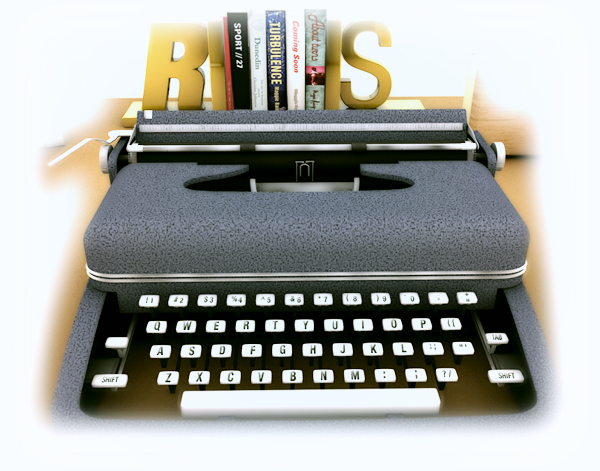
StandardI recently had a poem published in ‘Typewriter’ an on-line journal for emerging poets edited by the delightful Elizabeth Welsh, a poet and passionate supporter of other poets.

The poem is about my first job really, as a shorthand typist with the Post Office in Nelson. That’s quite some time ago now. But it’s got me thinking about those times and how it was I ended up there and what it felt like. You have to cast your mind back a bit to the 60’s when girls like me had to choose between being streamed ‘professional’ where you could study French and German and go on to become perhaps, well, ah… usually a nurse, or a teacher. And then, if you wanted to learn to type, you had to choose ‘commercial’ and never the twain shall meet.

I wanted to be a reporter, as I recall, and I knew that I would need shorthand. I didn’t know anything else and to boot, I had a very glamorous single (maiden or unclaimed treasure as she called herself) aunt, who worked at the Post Office. It was my aunt who came to our house and tested my shorthand prowess which did reach 120 wpm at one stage. It was she too, who gave me my first portable Olivetti typewriter to practice on.
Years later, when I was running my own recruitment company in the late 1980’s and the share-market plummeted, I recall meeting young women from private schools whose ambitious parents and teachers had refused them anything so ordinary as learning to type. Oddly though, at this very point in history, the computer keyboard was becoming integral to most people’s working lives. Being a touch typist, as I am, is a big advantage to anyone, male or female.
Yes, I learned to type at Waimea College, one of the first co-ed schools in New Zealand. I sat in the commercial class with a bib over the typewriter keys so that now I can rattle off a book review or a blog without having to look at the keys, or to do the one-finger peck-peck that so many people are reduced to. At one stage in my illustrious typing career (admittedly on an electric typewriter), I could do 100 wpm typing. Indeed – I cannot vouch for absolute accuracy at this speed. On an old manual typewriter, I think the top speed was 60 wpm to pass my Public Service examination.
Back then, in my first job, we sometimes had to type with up to six carbon copies, and that meant if you made a mistake, you had to erase all the copies one by one (Twink I think – I can’t remember) and I often ended up covered in carbon – no long-sleeved white-blouses for me as I stretched across the carbon copies. I was always glad that I wasn’t a legal typist as they had to type perfect copy without erasures or amendments.
I wasn’t a super-star shorthand-typist because I had a tendency to day-dream. Back then it was considered a lack of focus and I struggled with this, but now realise that probably I was bored with the content of much of the stuff I had to type and didn’t pay sufficient attention to it. Yes, back then, I felt somewhat of a failure when I had to do”retypes” and watch my rubbish bin fill to overflowing. I think I might have even smuggled out some discarded copy under my cardigan to avoid the embarrassment of yet more wasted paper – goodness knows what I did with it, but we did have a coal range at home that Mum cooked dinner on, so perhaps it went in there.
We used to clean our typewriters every Friday in the afternoon before we knocked off. I had the uncanny knack of dismantling bits and pieces of my typewriter (unintentionally) as I cleaned it. As I recall, I ended up with several pieces of my typewriter sitting in a basket beside my typewriter – and fortunately back then these old machines were so sturdy, that it continued to function, minus these missing parts.
I also operated the switchboard when it was my shift to do so.

That meant headphones on while typing and stopping mid-flight during a memorandum and transferring calls from outside to inside extensions – the criss-cross of cords as described in my poem – here’s the link. You could eavesdrop to if you were that sort of girl, but of course I wasn’t!
From memory there was talk back then, that typists pushed the equivalent of ‘tons – tonnes’ per day, with the sheer pressure required to push the old manual keys. I know our hands were held higher than they are for a modern electronic keyboard and you couldn’t just peck-peck. Unless you were doing a stencil and you had to be very careful when pushing the letter ‘o’ as if you pushed too hard you cut the ‘o’ completely out and ended up with a black dot on the page instead of the lovely circular letter.
Recently, a librarian responsible for choosing books for the Catholic library service throughout Germany made contact with me. He’d read a book review I had written for a book he had also reviewed and liked. He had also read my blog about teaching English to German High School students. And too, I think because of the Frankfurt book fair and the current interest in New Zealand writing. I asked him about Catholic libraries and he gave me a very brief history which evidently go back to the second half of the 19th century. “In those times Catholics were a (huge) minority in the Prussian dominated “Kaiserreich”. Most of them lived in rural areas, worked as craftsmen and farmers and only a few have had an academic education, most of them were priests. Some of those academics saw the need of education for as many Catholics as possible.” He said that after World War II, the libraries broadened their scope and now run more or less like any local library with a wide range of contemporary literary fiction, children’s literature, as well as gardening and cook books.
This reminded me of how it was back in the 50’s and 60’s in New Zealand. I’m only quoting hearsay and legend, but it is said that many private companies wouldn’t hire Catholics and so by default many were in the public service. My Aunt and two of her brothers worked in the Post Office and it seemed only natural that I would follow in my Aunt’s (to me glamorous) footsteps. You see she drove an apple green, hand-painted Morris Minor, while we didn’t own a car. She also earned more than my Dad (he was a carpenter) and she had an amazing wardrobe which included many pairs of stiletto shoes. What else was there to aspire to?

I never regret the Commercial path that I took. In the early seventies, I worked in London, Newcastle, Manchester, and Edinburgh as a Temp Secretary – and late in life, I’ve found my feet as a writer – typing has proved a most fortunate and useful skill. I never did get to be a reporter, but I am now doing book reviews and blogging as well as working on my fourth novel – so yes, typing turned out to be the right thing after all.


 a curious half hour