
(Bastards)
A Tuesday morning crossing the harbour led to a compelling conversation. I was seated next to an ‘elderly’ man, in a suit. We were both using our gold cards to travel free across the sea. He made the comment ‘It’s not bad being old,’ or something like that. I’m a succour for a chat. Some would say I am an incurable chatterbox and I will admit I am an over-sharer.
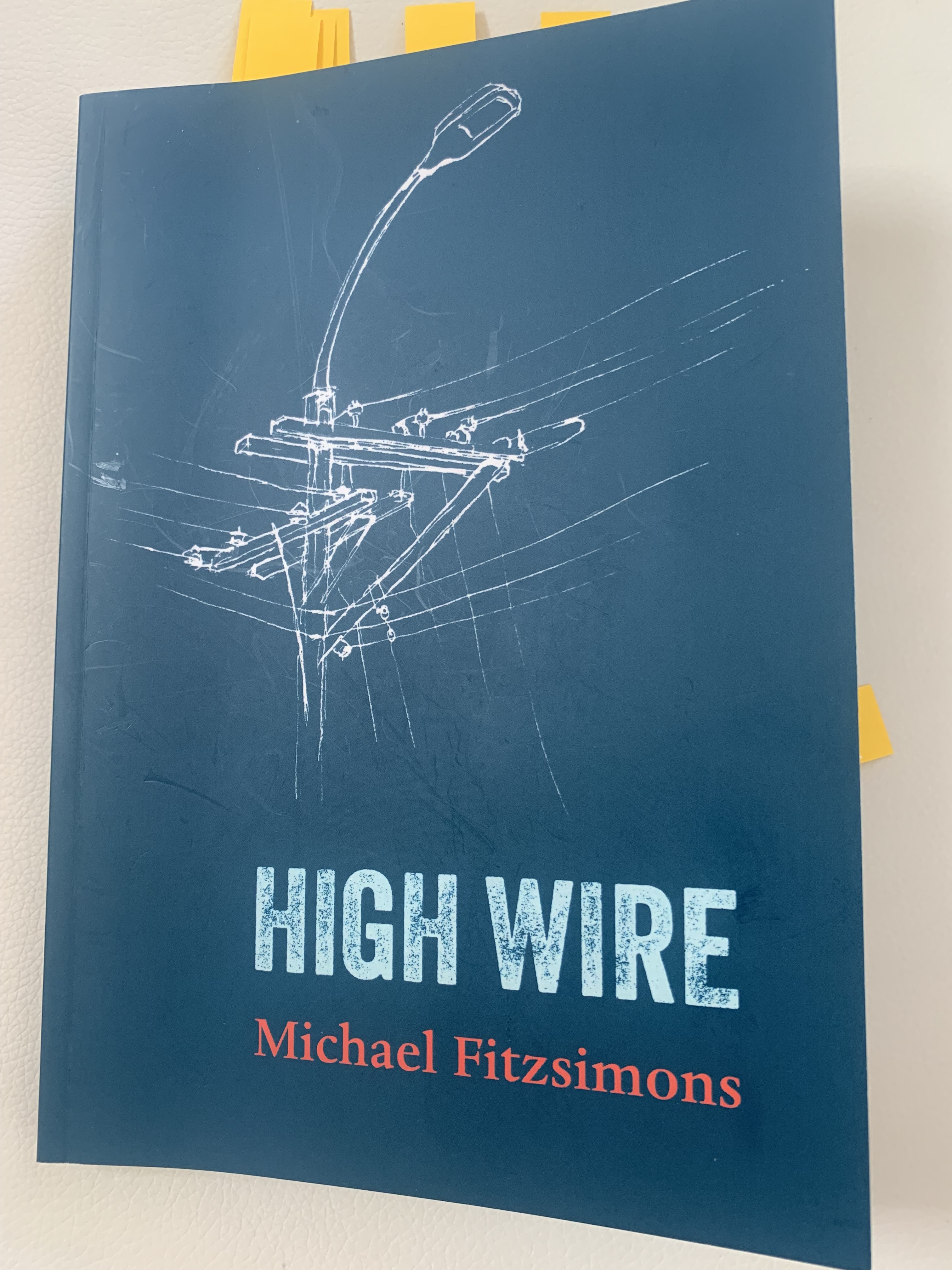
So, it was not long before this elderly chap in a nice suit and I were chatting like old friends. I am good at asking questions. He was crossing the harbour for lunch with some other chaps who like hunting and fishing. I mentioned I was meeting a friend who I had shared 8 years at Arohata with. I like to test the water when I mention my 8 years at Arohata before I finish ‘running a book group’. Somehow from this, we segued to me asking this chap what he used to do for a living. It is called ‘small talk,’ we Kiwis are good at this. He said he had gone to university really young and ended up in a Law Firm where his father worked. His Dad spent 60 years with the firm, and this chap had managed something around forty plus years. Do not ask me how we moved to this next topic, but soon he was telling me that he was a lawyer who dealt with all the pretty young things who were giving up their babies for adoption back in the sixties. I was riveted. Just that morning on Facebook I was reading about Barbara Sumner, herself an adoptee, who is an advocate for adopted children and her planned book Bastards. She is crowd funding. She is passionate and rightly so, angry that New Zealand adoption laws give more rights to the adopting parents than to the adopted child.
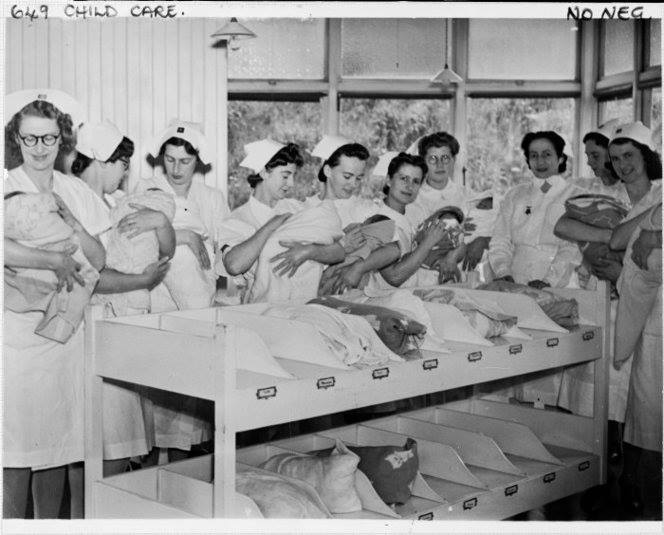
I imagined this still quite handsome but now elderly man (I mean everyone with a gold card aged between 65 and 85 starts to look the same, so how old was he … ), as a good looking, privileged (went to Scots College he told me) young lawyer, dealing with distraught pretty young things. He told me he always had a hanky at the ready because they were always weeping. This is not hard to imagine (the weeping). He sounded as if this made him a caring, kind young man and I am guessing it did in his mind, and I am still deciding in my own mind. He said he really admired the Matron of the Alexandra Home for Unwed Mothers at the time. He went on to tell me there was one really pretty young thing for whom he felt really really sorry. And he gestured to show me she had a cute little cleavage (do not judge I say to myself, he is a man of his time). The Matron told him not to feel sorry for this young girl because according to the Matron, below her midriff, under her dress or whatever, she had tattooed Pay as you Enter’. He seemed to consider this was a mitigating factor and looked at me as if to say, see, they were not all innocents, expecting me to agree. I responded with polite fury … ‘You don’t think a girl that young chose that life?.’ I spoke about my experience with the young women I met through the years at Arohata and just how often abuse lay at the heart of things. I scrolled feverishly through my phone to find Facebook and show him this upcoming book by Barbara Sumner Bastards insisting he really should read it. He agreed it looked like a book he should read – although whether he meant that or not, who knows.
We carried on chatting amicably until the boat docked. And then, we connected yet again on the return ferry ride. Friends almost, and he had had a couple of wines I suspect over lunch, and I had had a wonderful affirming coffee lunch with a woman I really admire and who admires me back – the sort of fill-up that wine cannot compete with. I was happy to sit and chat again. I’m incorrigible really.
By now, I was most intrigued by this chivalrous chap. How do I know chivalrous? He let me get on the boat first and insisted without words that I disembark first. We were old friends by now and as we went our separate ways, I reached out to shake his hand, as I’d enjoyed the chit chat even if a part of me was judging and disturbed by aspects of our conversation. He leaned forward and pecked my cheek (not quite a kiss) and said self consciously ‘I suppose I can do that.’ Ha, of course he could. And no, I did not mind. I chuckled to myself and guessed that back in the day, those sixties when I first came to Welly, I would have found him quite a catch. Chivalry I hear you. What is it? Well, it is the patriarchy of course, but hey, I’m a child of the 50’s and I want it both ways. I demand equality but I don’t mind getting off the boat first if it makes an old chap feel good. Yep, my book club friends are going to frown at this. Indeed, I’m frowning myself as I type this.
Well, roll forward to book group. I am an inveterate storyteller, and of course I had to regale the group with this compelling encounter. One of the more staunchly feminist (well, we all are really), women, commented ‘Oh, Maggie, I bet you encouraged him. I bet you thought what a nice chap.’ And in my defence, I pointed out how horrified and yet how compelled I was by the conversation. Should I have been rude right away when he mentioned those pretty young things? I felt defensive. Was I encouraging him? I saw him as a man of his time. Am I wrong to make an allowance for this? Should I have ended the conversation immediately to show my reproof? How would I have heard his account if I had not engaged in a convivial conversation, even if the topic were confronting and discomforting? Her next comment was words to the effect ‘I suppose you think/thought he’s a good chap.’ Well, indeed, she had me there. I can see that in his mind, back in that time, he may well have been one of the ‘good’ chaps. He told me he never forced them to sign and always told them not to rush to make up their minds. Did I believe him? Yes, I did, I do. I saw a man of a certain age from a certain background in a certain situation, with this extraordinary power. I can look at it through both lenses. Both now and back then and maybe a better young man would have eschewed such a responsibility. I wondered why more senior staff were not overseeing this legal area. Why did they throw a new graduate in his early twenties into the mix, to deal with distraught pretty young things? Something so powerfully life changing and this young man dealing with it as a routine legal procedure, but caring because he always kept a hanky on hand. Were there no women lawyers? Perhaps the women, if there had been any, had refused to carry out this work.
I have a dear friend who has written a book ‘Don’t ask her name?’ which her own story of adopting two children from two different birth mothers. It is a heart-warming story about loss and love. Both children reconnected with their birth mothers. It feels like a success story. But there is deep grief from one of the mothers who is not reconciled to her loss. And then there is my deceased friend who had a baby in the late 60’s early 70’s and she was sent away in shame to Napier to give birth. Her family never spoke again about this. Roll forward 32 years, and her baby that she ‘gave away’, found her and my friend was now a grandmother. Sadly, she died one year to the day of her daughter finding her, of a brain tumour. I always remember the anger she felt when her family, suddenly were delighted to embrace this newfound granddaughter. Times had changed. They now had two great grandchildren. But my friend had carried this secret, silently, painfully without any support for thirty-two years. I have always felt her brain tumour was a metaphor or even direct result of the internalised trauma she had carried unacknowledged.
I do not think this elderly chivalrous chap on my morning commute was ever a cruel person. But the fate of those young women giving up their babies for adoption, was cruel. He pointed out, that the pipeline stopped once the DPB came in …



 a curious half hour