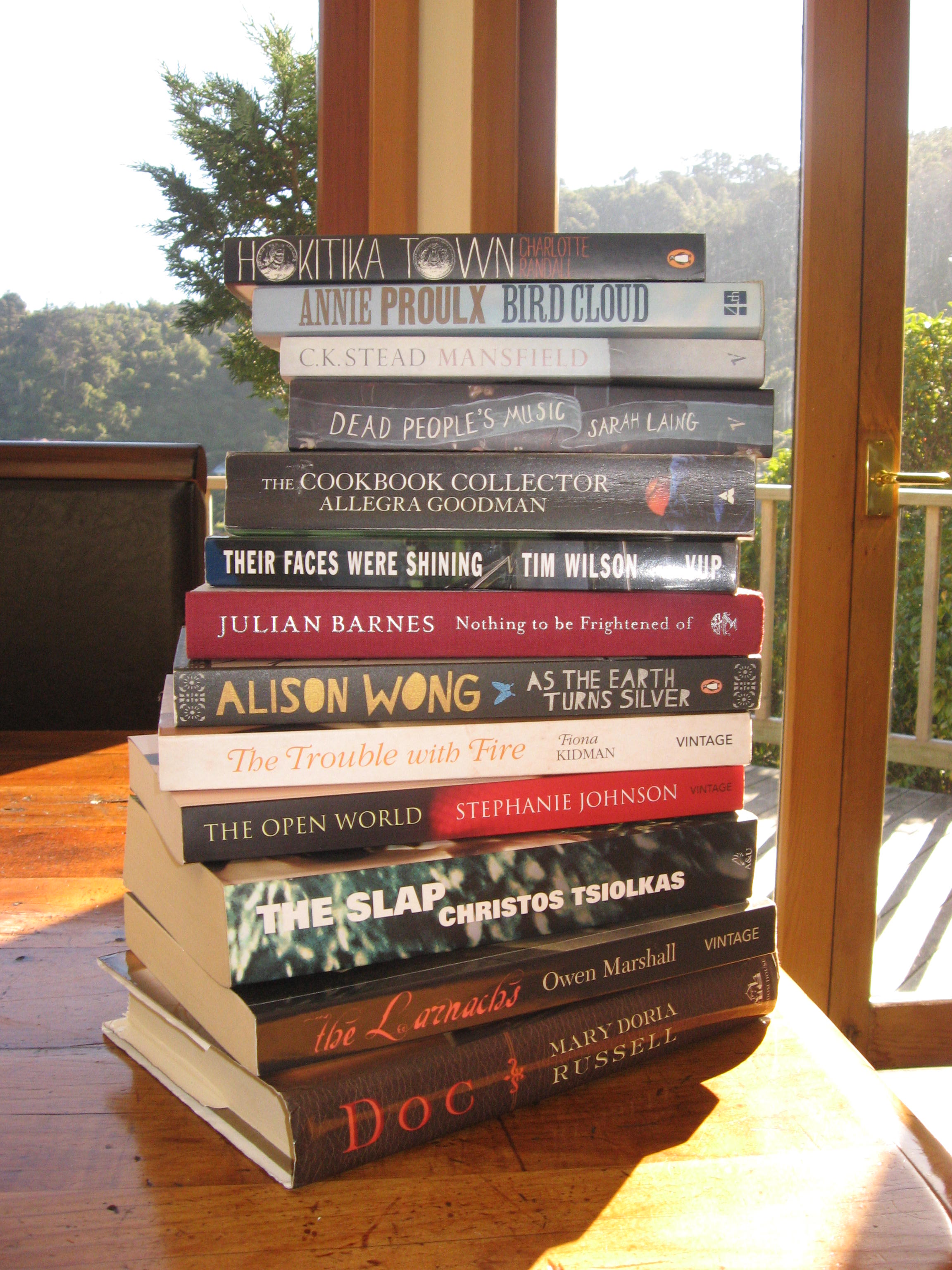
In praise of editors

Standard

In praise of Editors

Inspired by Stephen Stratford’s recent article ‘The Book didn’t sell…’ I decided to write about my experience of editors from an author’s point of view.

My first novel ‘About turns’ was published by Random House. I had the great good fortune to be assigned Jane Parkin as the editor (arguably NZ’s best editor). I was totally new to this process. Although, most gratefully, the manuscript had been somewhat tamed and shaped through the generous mentoring of Barbara Else of Total Fiction Services, before being offered to Random House.

Jane invited me to her home. We sat at her kitchen table. We chatted like old friends about the characters in my novel. It was a revelation to me. Jane engaged with my characters as if they were ‘real’. She even went so far as to identify one of them as just like her friend from the local tennis club. I was flattered, delighted and excited. The experience was unforgettable. I knew that Jane had worked with the likes of Maurice Gee and Witi Ihimaera and other luminaries. It was my ‘pinch me’ moment.

And then, the edits came back to me, and I was dismayed to see how many things needed my attention – a word order reversal (actually many), a sentence (many sentences) to remove, a paragraph to create, a scene to cut, and queries in the margins of every page. It was daunting and then it was exciting. Jane made me a better writer (well, she made me look like a better writer).
Once my novel was published, I had a coffee with Jane and chatted about the edits and her experience as an editor. Where did I fit on a scale of how bad to how good, I nervously asked? She told me that when she read Maurice Gee, she barely had to touch a thing. She said there were some novels she joked she could have put her own name as author and somewhat hesitantly I asked ‘Where do I sit?’ Perhaps generously, perhaps she fibbed to flatter, but she said ‘somewhere in the middle’… I was relieved – after all, this was my first novel.

Then came my second novel ‘Turbulence’ published by Random House. My assigned editor was in Auckland, so we worked on-line and on the phone. She’d just finished editing the reissue of works of Janet Frame. I felt trepidation that mine was the next manuscript. We developed a working rapport but there was none of the affection and connection to the story or my characters in the same way there had been with my first novel. It felt like more of a ‘technical’ edit. The novel didn’t do so well, although all my male friends preferred it to my first novel and Owen Marshall, who I so admire, felt it was better than my first novel.

My most recent novel ‘Daughters of Messene‘ (7 years in the making) was by far the most stressful and yet the most rewarding editing experience. I had done so many revisions prior to the novel being presented to Makaro, but Mary McCallum, both a writer herself and a publisher, saw where the novel wasn’t working. She pushed me to increase the pace in the first part of the book, to get my central character to Greece where the action would take place. She pestered me for conversation, names of characters, and challenged me constantly. Then work began with the Whitireia students Emma Bryson and Megan Kelly, two very talented young women completing the Publishing Diploma. They became champions for my young character Artemis. They identified with her and took me to task when she wasn’t on track. They pushed me to make her stronger, to give her a backbone. It was thrilling. I revelled in the collaborative nature of this editing – lots of it was on-line and every new query became an opportunity to either stand up for my work or take up the challenge to improve it. Although exhausted, and at times utterly frustrated, it was exhilarating and unforgettable. I always be grateful to Makaro and Whitireia. It is my best piece of work.

Questions about Appropriation – My Greek Novel (The right to write fiction)

Standard

It wasn’t until days before the final print run of my Greek novel that any sense of audacity crept in. Up until that moment, I’d been so focussed on the story, certain of it in the way that only an author can be when in the grip of writing fiction. My novel took seven years to be ready and to find the right publisher. The writing of it, the revising of it and finding a publisher, consumed me as a writer. I believed in the story. But now my book is out and about, it’s not doubt that grips me, but the realisation of what I’ve done. You see, I don’t speak Greek. Yes, I travelled to Greece for three months in 2007 to do my research. I was fortunate. There I was, a woman of a certain age, alone in a foreign city, seeking stories from the locals about the Greek Civil War. It’s only now in hindsight that I can see with clarity, the audacity of this venture. I met with resistance as you can imagine and then too through circumstance and happenstance, I stumbled on opportunities, including an extraordinary invitation to the home of Sir Patrick Leigh Fermor on the Mani, to celebrate his Name Day, in November that year.

Why did a Kiwi author want to write about the Greek Civil War? It started with my father. He was a lad from Kaikoura who ended up on Crete with the 22nd Battalion during the Second World War. I’ve written an essay about this in Landfall. In the 1980’s the Greek Government offered a Greek Medal to Kiwi veterans still living. My Dad was still alive and with the help of my Greek friend Maria I applied for his medal. At that stage I had a young family and we’d just moved next door to Maria. I had no idea of her own amazing journey from Kalamata to Wellington during the 60’s but I was eventually to find out.I’m a writer, so what did I do? I realised very few people knew about the journey of the young Greek girls (most of them from Crete), to New Zealand in the sixties, as part of a special scheme between the two Governments. The girls had to be under 30, unmarried and work in the hospitality industry. The established local Greek community were less than impressed with this sudden influx – the thought of any scandal.And so, using my imagination, I began to weave a fictional account of a young woman who leaves Greece to live on the other side of the world. I’m a baby boomer, born in 1950, only five years after the end of the Second World War. It’s only now that I recognise the very proximity of that war to my own parents’ lives at the time I was born. Back then, ‘the war’ seemed like a very distant affair. I began to imagine what impact not just the Second World War, but the ongoing Greek Civil War might have had on the lives of some of these young women. My story is purely and simply imagined. It is not any one girl’s particular story. Through research and reading, I’ve woven a story which at the heart is a mother and daughter story. It is a story of immigration. It is a story of war and its aftermath.

My local Greek friends have embraced my story and I am grateful. I’ve had generous feedback. The novel has had very good reviews so far. While writing this novel, I had so much help from the Greek community. My intention was to bring the story of these brave young women to the fore, to honour them and to re-imagine the possible circumstances that might have propelled them to travel so far from home. And yes, it is only now, that my novel is out and about, that any sense of doubt has arisen, that a writer who doesn’t speak Greek, has dared to write a Greek-Kiwi novel. Did I have the right? Have I got it right? Who has the right to write a story? During the editing process, one of the super smart young editors working at Whitireia made the observation that I needed to be careful with the use of the Greek language, the insertion of Greek phrases, lest I strayed into the territory of ‘exoticising’, and thus undermining the integrity of the story.

I recall my book group, reading Alex Miller’s ‘Lovesong’, a story I loved. Two of my book club friends were unhappy that within the story, two male characters had appropriated the story of the main character, a woman from Tunisia. Not that the author had written about a woman from Tunisia, but that he’d allowed two male characters to tell her story.

My second novel ‘Turbulence’ was about a middle-aged man from the suburb of Lower Hutt. He worked in manufacturing. He was a stepfather in a new relationship, with a broken marriage, the result of his child who had died in a tragic accident in his driveway with him at the wheel. Did I know this man? I knew aspects of him, but he is a fictional character. I had worked in recruitment for many years in the Hutt Valley and so I felt I knew this man, an ordinary man, the sort of man who doesn’t always make it into fiction – not an artist, a doctor, a lawyer, but something rather more ordinary – a man running a factory.Did I have the right to write with the voice of a man? It never occurred to me that I didn’t. And I was heartened by the first review on Radio NZ by John McCrystal who felt I’d nailed it. Unfortunately, the ensuing reviews from two younger, academic women, did not concur. We bring to our reading our own experiences. Many of my women friends didn’t enjoy ‘Turbulence’, but almost all my men friends did.

My first novel ‘ About turns’ was about book clubs and marching girls. This is territory that I know well. It was about a sixties working-class childhood. Yes, I mined my own experiences and many people who’d known me during my childhood claimed to recognise characters. But the book was also about a transgender character, female to male. Did I have the right? This book is fiction with experiences rendered to represent truths, both my own and other peoples.

I won’t have got everything right in my Greek novel in spite of all the support from native Greek speakers and spouses of native Greek speakers. But I’m hopeful that being an outsider, has enabled me to write with a different sort of clarity, that of the observer. But this begs the question. Did I have the right to appropriate a foreign language, to use it and many of its sayings, without being a speaker of that language? All the mistakes (if there are any and there must be) of history, time, place, language and ideas of what it is to be Greek, and how to express this, are entirely mine.

Links to reviews of ‘Daughters of Messene’
http://www.stuff.co.nz/entertainment/books/75331829/Sizzling-summer-reads http://www.listener.co.nz/culture/books/my-big-fat-greek-family-reunion/ http://www.odt.co.nz/entertainment/books/365679/story-greek-womens-voyage-nz-informs-book

Clive James and the humblebrag

Standard

I’ve just listened to Clive James talking to Kim Hill. She mentioned the ‘humblebrag’ when he deferentially said ‘I’m a fairly ordinary story’ in response to questions about someone writing his biography. ‘Don’t’ forget, ‘he said, ‘sometimes reputations just melt away overnight.’ With further modesty he claimed that one of his main talents was his ability to concentrate and that he had a knack for a turn of phrase.

All I can do is turn a phrase until it catches the light.

He’s dying and so this conversation was about death and regret and about a poem too, that went viral when published in the New Yorker. It’s called ‘Japanese Maple’ about a tree his daughter gave him that is destined to outlive him – but he’s already survived longer than his poem about himself and the tree predicted.

I was struck by the difference in Clive James in conversation with Kim, and a time when I saw him at the Wellington Writers and Readers festival a few years ago. My first impression was great, because he was interviewed by Kate Camp who was an obvious devotee and she brought out the best in him. They had what I call a ‘love-fest’, where the interviewer as admirer creates what feels like a true and mutual intimacy in conversation. Alas, at the same festival, on a panel, he behaved boorishly and condescendingly and was embarrassing. It was as if he didn’t know how to share the limelight.

And so, I am interested in the humblebrag. It’s a tricky thing to achieve and I think writers in particular are quite adept at it. There’s the gorgeous stuff that only the very young can pull off whereby they claim not to care about fame, but draw attention to themselves all the same with their foxy protestations. Then too, there are blogs about rejection. It can sound like self-pity, or self-promotion. But it can also be superb. I recommend Paula Morris nominated for the prestigious Sunday Times short story competition, and her blog posting ‘Not Real Life‘ about daring to dream she might win.

I recently read somewhere that at age 20, we worry what other people think of us. And then at 40, we don’t give a damn what they think, and then at 60, we realise (thankfully at last) it wasn’t us they were thinking about after all. I like that very much and it’s such a gem of wisdom that you wish it was a vaccination.

Why am I writing this? Because I have a blog, and excitingly I have a new novel coming out in October. I wanted to draw attention to myself and to my writing. I needed a hook. Shamelessly I’ve used Clive James as my lure. It’s my version of the humble-brag.

And so I’ll end with a Clive James quote from his conversation with Kim Hill ‘Life is not a picnic – it’s not all laid out for you.’ But if it were, then where better than at our local beach to spread your picnic. (photo by John).

Days Bay, Eastbourne sunset

Wearing a Poem

Standard

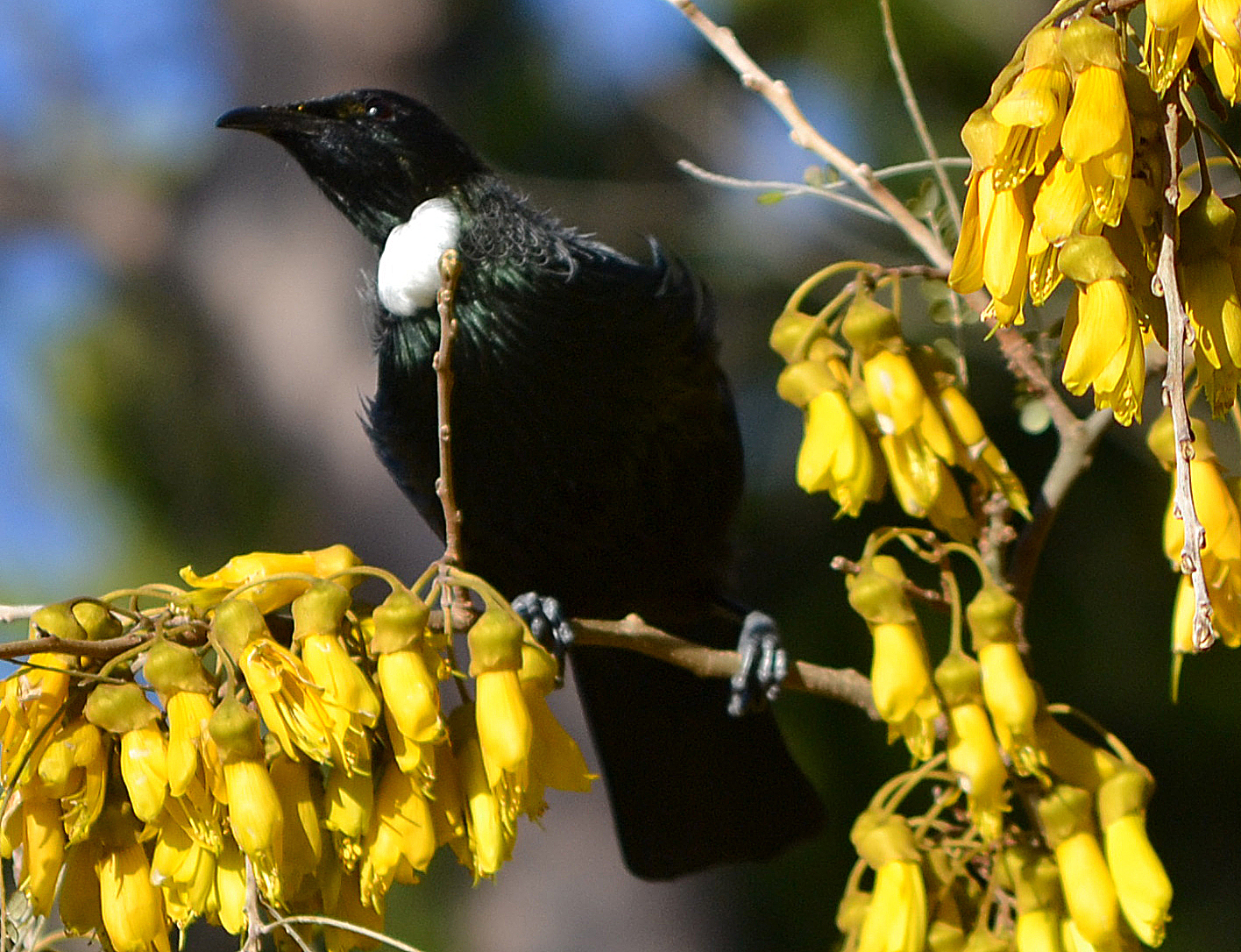
Tui 4

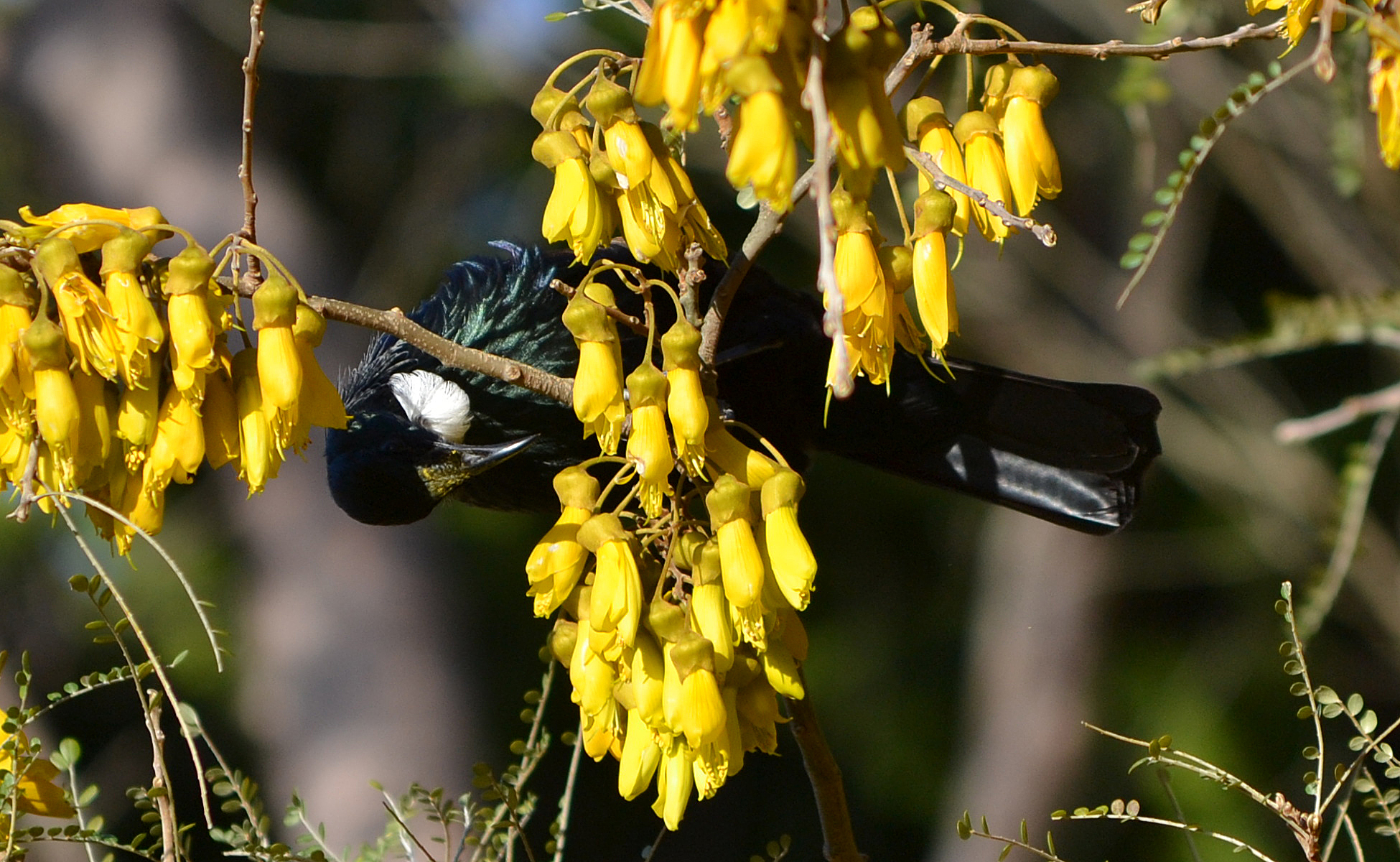
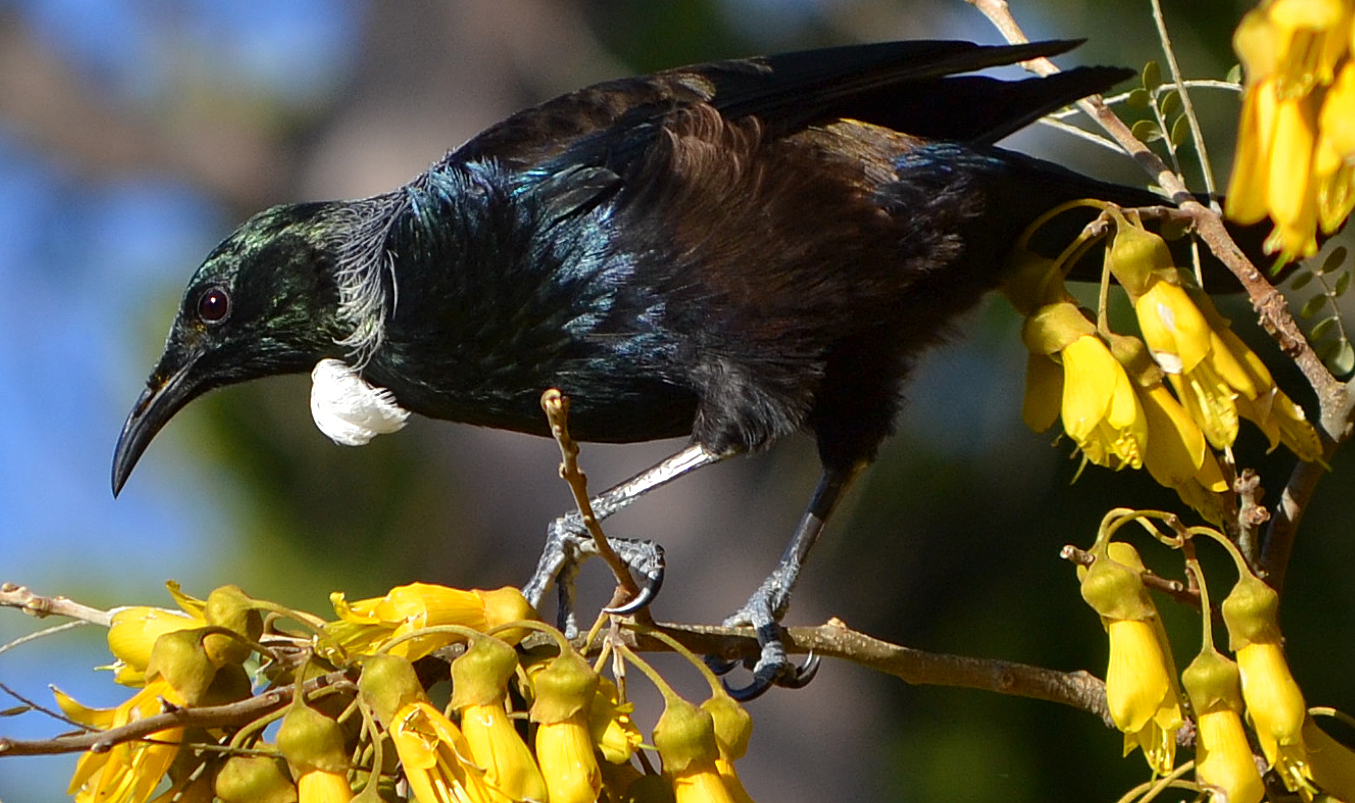
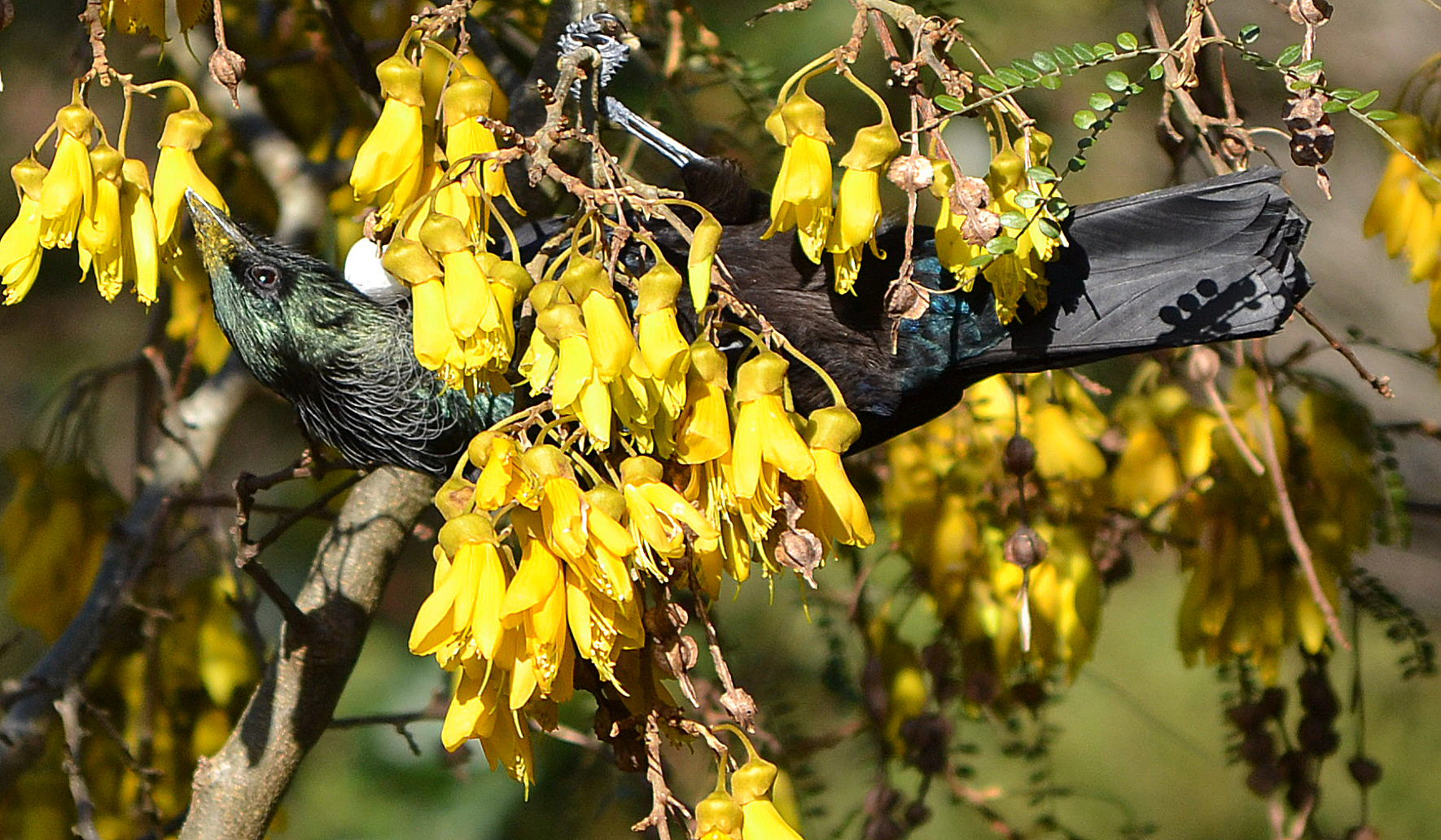
I don’t normally rush to publish a poem in progress, but these photographs by John Rainey-Smith are so beautiful that I’ve decided to take a risk – publish the photos and the poem that the tuis inspired, yesterday. I reserve the right to rewrite the poem, extend it or end it. But it does capture the first day of creativity for me in quite a while.

Wearing a Poem

Into this windless blue
cubes of sunlight land askew
on painted indoor walls
accompanied by hammering

as builders repeat their
renovating heartbeat of
another suburban almost
summer in our street

fat and sonsy tuis
gobble kohwai, their
throats awash with song
amid golden profusion

fatter even than last
year, more flowers to
feed upon, thanks
to the endless rain

my silver beet stalks
shine phosphorous red
trapped on the deck
with the mint and thyme

I was reaching for
a grief to nurture
to feed on like
the sonsy tuis

hoping to wear a poem
a somewhat dated outfit
but instead, a poem
wore me.

Tui 3Tui 2_edited-1Tui 1Tui 5Tui 6

We sat together on our deck in the late afternoon sun, sharing a beer, waiting patiently for the birds to return to sip the kohwai nectar. They rewarded us for our silent vigil. I like my poem but I’m even prouder still of John’s beautiful photographs.

The Way We Live Now

Standard

The way we live now

I am reading Anthony Trollope’s ‘The way we live now’ a free to download classic on my Kindle and evidently (according to Wikipedia) Trollope’s masterpiece. I can’t comment on that, as I’ve not read any of his work before. It is a fascinating book and feels so contemporary in so many ways in light of the recent demise of so many respected financial institutions, the queries around appointing ex politicians as Directors of commercial enterprise and all the associated pitfalls of modern capitalism.

But too, I am captured by the comedy and pathos of Lady Carbury, her willful blind spots and her shameless literary ambitions, the delightful satire of book reviews… can’t help chuckling. I can’t wait to discuss the book with my book group who are among the smartest women I know and of course, they will have plenty to say, and I shall report back. In the meantime, from my hammock, on Sunday evening, as the sun went down, inspired by Lady Carbury’s efforts at self-promotion…

Reading Trollope from the Hammock

Reading Trollope from the Hammock

From the hammock

Lego from the garden
sits atop
the chopped sleepers
my raspberry Hydrangea
has faded
in the face of summer
Kate Sheppard, the last rose
has buds
there’s not a breath of wind
just birdsong and the faint
traffic
in the distance sound
of the southerly
Lady Carbury
keeps me company
on my Kindle, I worry
for her
for me, for all mothers
their gardens, old Lego
new weeds
our lemon tree losing leaves
although he pees under it
some times
we Skype our family
here and overseas
imagine
that if we stay up all night
but we’ve done that to death
my glass
of Pinot Gris reflects
an upside down tree
a dog
barks half heartedly
and mist rolls in
our pines
went out by helicopter
leaving bleached beech
corpses
there are screams too
from fathers louder than
birdsong
And silent mothers make
school lunches in the dark

Maggie Rainey-Smith copyright 12/03/2013.

Working in the Sixties

Standard

I recently had a poem published in ‘Typewriter’ an on-line journal for emerging poets edited by the delightful Elizabeth Welsh, a poet and passionate supporter of other poets.

The poem is about my first job really, as a shorthand typist with the Post Office in Nelson.    That’s quite some time ago now.   But it’s got me thinking about those times and how it was I ended up there and what it felt like.    You have to cast your mind back a bit to the 60’s when girls like me had to choose between being streamed ‘professional’ where you could study French and German and go on to become perhaps, well, ah… usually a nurse, or a teacher.   And then, if you wanted to learn to type, you had to choose ‘commercial’ and never the twain shall meet.

I wanted to be a reporter, as I recall, and I knew that I would need shorthand.   I didn’t know anything else and to boot, I had a very glamorous single (maiden or unclaimed treasure as she called herself) aunt, who worked at the Post Office.   It was my aunt who came to our house and tested my shorthand prowess which did reach 120 wpm at one stage.   It was she too, who gave me my first portable Olivetti typewriter to practice on.

Years later, when I was running my own recruitment company in the late 1980’s and the share-market plummeted, I recall meeting young women from private schools whose ambitious parents and teachers had refused them anything so ordinary as learning to type.   Oddly though, at this very point in history, the computer keyboard was becoming integral to most people’s working lives.  Being a touch typist, as I am, is a big advantage to anyone, male or female.

Yes, I learned to type at Waimea College, one of the first co-ed schools in New Zealand.   I sat in the commercial class with a bib over the typewriter keys so that now I can rattle off a book review or a blog without having to look at the keys, or to do the one-finger peck-peck that so many people are reduced to.   At one stage in my illustrious typing career (admittedly on an electric typewriter), I could do 100 wpm typing.   Indeed – I cannot vouch for absolute accuracy at this speed.     On an old manual typewriter, I think the top speed was 60 wpm to pass my Public Service examination.

Back then, in my first job, we sometimes had to type with up to six carbon copies, and that meant if you made a mistake, you had to erase all the copies one by one (Twink I think – I can’t remember) and I often ended up covered in carbon – no long-sleeved white-blouses for me as I stretched across the carbon copies.    I was always glad that I wasn’t a legal typist as they had to type perfect copy without erasures or amendments.

I wasn’t a super-star shorthand-typist because I had a tendency to day-dream.   Back then it was considered a lack of focus and I struggled with this, but now realise that probably I was bored with the content of much of the stuff I had to type and didn’t pay sufficient attention to it.   Yes, back then, I felt somewhat of a failure when I had to do”retypes” and watch my rubbish bin fill to overflowing.   I think I might have even smuggled out some discarded copy under my cardigan to avoid the embarrassment of yet more wasted paper – goodness knows what I did with it, but we did have a coal range at home that Mum cooked dinner on, so perhaps it went in there.

We used to clean our typewriters every Friday in the afternoon before we knocked off.   I had the uncanny knack of dismantling bits and pieces of my typewriter (unintentionally) as I cleaned it.   As I recall, I ended up with several pieces of my typewriter sitting in a basket beside my typewriter – and fortunately back then these old machines were so sturdy, that it continued to function, minus these missing parts.

I also operated the switchboard when it was my shift to do so.

That meant headphones on while typing and stopping mid-flight during a memorandum and transferring calls from outside to inside extensions – the criss-cross of cords as described in my poem – here’s the link.  You could eavesdrop to if you were that sort of girl, but of course I wasn’t!

From memory there was talk back then, that typists pushed the equivalent of ‘tons – tonnes’ per day, with the sheer pressure required to push the old manual keys.  I know our hands were held higher than they are for a modern electronic keyboard and you couldn’t just peck-peck.    Unless you were doing a stencil and you had to be very careful when pushing the letter ‘o’ as if you pushed too hard you cut the ‘o’ completely out and ended up with a black dot on the page instead of the lovely circular letter.

Recently, a librarian responsible for choosing books for the Catholic library service throughout Germany made contact with me.   He’d read a book review I had written for a book he had also reviewed and liked.   He had also read my blog about teaching English to German High School students.  And too, I think because of the Frankfurt book fair and the current interest in New Zealand writing.   I asked him about Catholic libraries and he gave me a very brief history which evidently go back to the second half of the 19th century.   “In those times Catholics were a (huge) minority in the Prussian dominated “Kaiserreich”.  Most of them lived in rural areas, worked as craftsmen and farmers and only a few have had an academic education, most of them were priests. Some of those academics saw the need of education for as many Catholics as possible.”  He said that after World War II, the libraries broadened their scope and now run more or less like any local library with a wide range of contemporary literary fiction, children’s literature, as well as gardening and cook books.

This reminded me of how it was back in the 50’s and 60’s in New Zealand.  I’m only quoting hearsay and legend, but it is said that many private companies wouldn’t hire Catholics and so by default many were in the public service.  My Aunt and two of her brothers worked in the Post Office and it seemed only natural that I would follow in my Aunt’s (to me glamorous) footsteps.   You see she drove an apple green, hand-painted Morris Minor, while we didn’t own a car.  She also earned more than my Dad (he was a carpenter) and she had an amazing wardrobe which included many pairs of stiletto shoes.    What else was there to aspire to?

I never regret the Commercial path that I took.    In the early seventies, I worked in London, Newcastle, Manchester, and Edinburgh as a Temp Secretary – and late in life, I’ve found my feet as a writer – typing has proved a most fortunate and useful skill.   I never did get to be a reporter, but I am now doing book reviews and blogging as well as working on my fourth novel – so yes, typing turned out to be the right thing after all.

The All Blacks of Literature

Standard

The All Blacks of Literature

I feel qualified to write this post.   I like rugby.   I spent many Saturday afternoons in the sixties glued to the blue Bakelite radio that sat on a ledge above our green fridge, listening to rugby broadcasts.   The announcers back then had to use their voices to generate excitement and they succeeded.   I can still visualise Don Clarke converting the Kel Tremain try with his legendary kick at Athletic Park from behind the 25 yard mark with the goalposts shifting in the wind.  Or can I?   It’s a legend now and it doesn’t matter, it’s as if I saw the whole thing live.

Somehow after all those Saturday afternoons listening to rugby, many of them international test – not to mention the Lions tours in the sixties when I was beginning to notice not just football form – has turned me into a somewhat unreasonable rugby enthusiast.   I have to watch that I don’t become one of those one-sided bores who forget to applaud the opposition for good play.    My nationalistic fervour knows no bounds and I yell at the television demanding tackles and accusing the referee of bias unless he agrees with me (even though I still don’t really know the finer details around the ruck or all the off-side rules).    So, yes, I feel somewhat qualified to make this post.

The New Zealand Post Book Awards short-lists have recently been announced.  You knew that didn’t you….  what, you didn’t know?   How is that?   Well it’s simple really, because there has been almost no fanfare whatsoever.    This has been the case now for some years.     The pinnacle perhaps of a writer’s career and their triumph, a short-listing in the awards, is barely observed.   Unless, like me, you follow the local literary blogs, you might never know.   But you are bound to hear if Dan Carter’s groin is still hurting, or if Piri Wepu is gaining weight, or Ma’a is replacing Sonny Bill.   Yes, there will be blow-by-blow accounts of their injuries and predictions about upcoming matches and match fitness.   Can you imagine if there was a page devoted to author fitness?

I imagine it running something like this.

The team has been announced, and this year we have Fiona Kidman out on the wing, Owen Marshall is the tight-head prop or possibly hooker, and Eleanor Catton is the newbie at fly-half.   Craig Cliff is trying out for full-back, replacing Carl Nixon, but this is a trial period and the selectors are watching their fitness and form closely.    The forward pack of Emily Perkins, Charlotte Grimshaw, Jenny Pattrick, and Vanda Symon are working well with their different strengths, ensuring excitement and potential tries.    Alice Tawhai is the dark-horse who seems to go on the bench in-between rather spectacular games and I think she is overlooked when she ought to be picked.   She’s one of my favourites but shy about publicity which is not always good when the selectors are out their choosing their teams.    Charlotte Randall is another who seems to sit quietly on the bench and then when called upon scores almost immediately.

In the line-out, you can absolutely rely on Owen Marshall throwing in a perfectly straight ball, never missing and always generous, and he’s called on time and time again, and never falters.    Witi Ihimaera is a bit of a show pony who the crowds love and when he’s on form, you have to say, there’s no-one else to watch on the field – a scene stealer for sure… plays many positions.  Barbara Else and Stephanie Johnson have just come off the bench and made an excellent impression.  C.K. Stead and Maurice Gee, sometimes in the stands now, but they are frequently called on for advice to the coaches and can never been truly ruled out… both still on form.    The same goes for Margaret Mahy and Joy Cowley – part of the original winning forward pack and really never quite surpassed but generously letting some of the younger players have a turn and lending a hand at practice.

There are so many upcoming players who could make the team, many of them MA graduates from the university talent pools.   But you can’t always overlook the resilience of the rural sector, the late starters with good club games, who given a chance, can score runaway tries like Sasha De Bazin and Tanya Moir.  

And of course, all our legends who’ve battled and won the international games for us – Knoxy, Jonsey, Gunn, Grace and Hulme, house-hold names, never to be forgotten, surely.

Frankly, there’s just too much talent both on and off the bench and I’m going to stop now, having failed to mention many hugely talented players.    I mean how will I choose, who subs who?           Yes, I’ve decided, after picking some of my literary All Blacks, that it’s just not going to work. I can see the scrum and the line-out becoming far too technical for its own good and I’d worry that the game plan would become more important than the score with absolutely no regard for the spectators and long periods of consideration before passes were even made and then some would have to be re-played, possibly even erased, and there would be endless resorting to video replays for accuracy.   I think we’d have a fall-off in ticket sales and the inability to tackle, sacrificed for admiration for outstanding play by the opposition would hinder the whole point of the game.

Plus our writing athletes would suffer OOS, writers block, gain weight, lose weight, gain weight and nobody would care – they just wouldn’t care.   They might write best sellers and get shortlisted for international prizes, but the public just won’t be interested.   They are not going to make a full-page on the back or the front of the newspaper.

Although in France, they might.  I have heard that Fiona Kidman was recently in Paris where Le Figaro wrote (about her Frank O’Connor short-listed collection ‘The Trouble with Fire’) – “that there seemed to be more to New Zealand than Peter Jackson and the All Blacks, there was Fiona Kidman.    We knew that didn’t we?

Yes, I’d have liked to pick the First XV of Literature, but it would have proved impossible really with so much talent and shifting form – impossible.   Plus  I think the lack of interest from the New Zealand public would mean we’d never get the money for a stadium  – nope, I’ve abandoned the idea already.   I think the Sunday Star Times has the right idea, just forget about books and publish more salacious scandal and scandalous fashion.

As much as you can

Standard

A friend recently alerted me to the poetry of Cavafy and I have found this one poem that I love (as well, of course, as many other divinely sensual poems)… ‘As much as you can’.

The reason I chose this poem to write about is because of the addiction I have felt recently to social media, Facebook, twitter and following other peoples’ (mainly writers) blogs… and too, the emptiness that this feverish addiction can leave me with.    A kind of literary on-line party that has no ending. And lately, it has begun to feel as if all the words, the poems, the cacophony of literature, are but a clamour, and not as I thought them to be, a balm.

Cavafy exhorts us to not degrade our lives with too much contact with the world, activity and talk, and to stop dragging our life around to parties etc, until our life ‘comes to seem a boring hanger-on’.

Writers have this challenge – the solitary life required to write, and the need to inhabit the real world in order to have something to write about.  I’ve been struggling since my last posting to find a topic, to feel the passion for my topic, to feel the confidence that anyone would care to know my thoughts and this lead me to my favourite quote by Brian Epstein  which I read at the launch of my second novel – because it summed up how I felt – this lunacy, this nuttiness, to imagine that words I might choose should have any significance, or indeed that anyone might care to read them.

Then, this week I followed a link on twitter from the International Institute of Modern Letters  with quotes from writers about the best and worst things about being a writer.   Some are short and pithy and some more belaboured and a wee bit defensive (as per James Brown, who tells us that because he is published by Victoria University Press, some people envy him, perhaps think him too successful).   He’s a talented, witty poet and of course we all envy not just him, but anyone blessed by VUP because they hold sway, have cache, and denote a certain high-water mark – not everyone’s tide goes that high.   I liked what Victoria McHalick said in two short sentences about freedom versus the pay and too, I enjoyed Hinemoana Baker who worries about her mother and father who worry about her finances!  Yes of course, but I bet they’re very proud as well.

And this week, I was talking with other writers about where to send their (my) work – how we choose which press, which publisher, to submit to and where we fit.    We are aware that there are some publications where our style, our genre, our voice doesn’t fit.   That doesn’t mean we don’t have a voice, but if we continue to butt up against this, and not recognise it, we could stop in our tracks, feel permanently rejected.

Self-publishing.   It sounds like a dirty word.   It even feels like swearing.    But I remind myself that every blog post is self-publishing and self-promotion.   And then I remind myself that I own a very precious faded red hard-back book called ‘Supper Waltz Wilson’ written and published (I think) by Owen Marshall himself at Pegasus Press.  I have a signed copy which I was given in 2001, after spending 20 weeks in Timaru at Aoraki doing the Creative Writing Course.    Owen obviously had a wee stash of these beautiful books that he’d been handing out to his students over the years – I treasure my copy – perhaps a slight over-run on the publishing front?   And now, he is one of the top writers in the Random House stable, and arguably one of our best, if not our very best short story writer.

And so as much as I can, I will continue to blog, to write, and to try to find the balance between my solitary self, my social self, my writing life and my perceived ‘real’ life.

Book Reviews and all that jazz

Standard

I was tickled pink as they say when Graham Beattie invited me to be a guest reviewer on his literary blog.   I belong to three book clubs and read quite a bit I guess (mostly I always tell myself, as a way of catching up).   You see, many of my super-smart book club friends grew up on a diet of books and they can quote from childhood memories, books they’ve read several times.   In this regard, I am way behind, apart from recalling the cover of my ‘School Friend’ annuals.   Yes, my family always gave books for Christmas and birthday, so I cannot complain, and my parents were regular library users.   Mum read detective stories and Dad loved Barry Crump or Hori and the Half Gallon Jar.  The local library was part of my landscape tucked as it was inside the brick council building that also housed the local cinema.   On Anzac Day, this very same building was where we gathered to pay homage to Gallipoli, The Somme and other legendary battles (in our house, the battle of the bottle).

The librarian was a serious but kindly woman who peered down over spectacles and used a long pencil with a rubber stamp attached to mark the library card and stamp the book, so you knew when to return it.   There was a certain smell of polished floors and stacks of books and the odour of silence and shuffle that is impossible to rekindle.    Libraries nowadays lack the holiness of our public library lodged in-between the Council Chambers and the Cinema.

I was a regular at the Cinema, and if movies could have been withdrawn like library books back then, I’m sure I’d have been one of the biggest borrowers.   Movies were my entertainment.   When other kids went to the beach on a hot Saturday, I queued for the matinée.   The Wednesday double-feature was for grown-ups, but if a really good movie was showing, my parents might agree that I could go on a week-night.   I recall watching Rin Tin Tin and Woman Obsessed as a double-feature one Wednesday school night and my Dad waiting outside after to walk me home in the dark.

It was outside the library one evening that we stood on the eve of a particularly important local body election when one Mayor was ousted and half the town stood with us while my Dad slipped behind the Doctor’s surgery (a small stucco building that still stands) to take a leak as we waited for the announcement.   Back then, local body politics were deemed as important as national elections and the Right or the Left were on either side of the street so to speak.   We were dyed in the wool Labour supporters with Tory neighbours in a working-class street that included two chemists, a builder (my Dad), a butcher, a baker, two school teachers, and eventually, a Prime Minister (but I’d long left home by then).

My sister was always way ahead of me.   She was ahead of many of her contemporaries too in small-town New Zealand; reading Shakespeare alongside more salacious banned books, collecting art books, drinking illicit Cona coffee in a candle-lit dive on the main street with red checked table cloths, where candles dripped wax down Chianti bottles.   Oh yes, she was way ahead of me, as I fled out the door weekdays to six am mass to keep my soul from the devil.

So, catching up, I call it.

And now I am writing to defend my style of reviewing.  Not that I’ve actually been asked to defend it (yet…).   But I’ve been thinking about reviews and the more academic point of view, that the “I” in the review should be absent.   Well of course, as you can tell from this preamble, leaving me, out of anything is going to be a challenge.  I make no excuses.   I read blogs and I write one and I’ve yet to find a blog that isn’t really about its creator, no matter how well written, researched, diverse, or interesting … their passion for the material, the topic, their desire to have you engage with them in a debate, discussion or dream.   Or, their desire for a voice, or just plain self-promotion…  Yep, that too.

I am not an academic book reviewer.   When I read a book, I bring my life experience as a woman, mother, wife, book clubber, writer, and my ego (oh yes, that most definitely).  I bring my opinions, my prejudice, my bias, my passion and my ignorance.    We all of us bring this to any book we open to read.    Hopefully, when we close the book we have perhaps lost some of our ignorance and ignited more of our passion, reduced or informed our prejudice/bias so that we recognise it and all of that jazz and more… we have perhaps fuelled our desire to read more, or to write better (better than we have been writing, as opposed to better than the writer we just read – because usually as a writer, I am mostly humbled and awed when I read).

Anyway, this is just an unplanned rant that I plan to post, about book reviews and why I feel no need to attempt to take the “I” or the “me” out of my reviews.    Not everyone will want to read my opinion or even care why I like or dislike a book and in this I am reminded of one of my favourite quotes (framed and on a shelf in my office) about writing – by Brian Joseph Epstein – and here is the link.

And a link to some of my book reviews.