Mainlining Mansfield

Standard

(And a link to my report on the recent conference in Wellington on Beatties Book Blog).
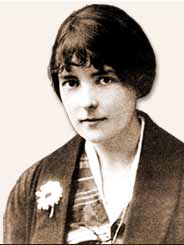
mans_portrait

I overdosed recently. A strange drug set me reeling into literary dismorphia. I was mainlining Mansfield at the time, being drip-fed abstracts over a period of three days. I began to hallucinate, imagine myself tubercular, talented, a genius with a Dad who had enough dosh to keep me afloat – something like a yearly stipend. It felt lovely for a while and I scribbled feverishly in my computer notebook, aware that if the National Library did suddenly want my feverish jottings, that I should spell check now and then. But too, I knew, my odd use of commas and ellipsis would be found exquisite, rather than extravagant and that whole new abstracts would be written, eventually, years after my demise, so I didn’t worry… well, I did a little – but not enough to stop me.

I knew too from listening to more erudite and analytical writers than myself (before the dismorphia and hallucinating) that words like ‘little’ had no place in the literary canon. I used Google and an on-line thesaurus to find alternatives… and ‘not big’ seemed highly original and after all I could embed the link to the Merriam-Webster on-line dictionary and thereby avoid any plagiarism charges.

Mind you, (replace with an expression of ‘so what’), I’ll swear I heard scholars insisting that plagiarism was a writer’s right, that ‘The child who was tired’ by Katherine Mansfield, was merely a flattering reframing of Chekhov, perhaps even an improvement on. There was no proof they said that KM had even read the English version of this short story, as if somehow, the Russian rendition would render her English version authentic. Aha, I imagined momentarily channeling Anna Akhmatova ‘s poetry for my blog, claiming never to have read the English translations. But I was distracted as two eminent scholars began arguing over whether or not KM (and therefore me at the time), had contracted Gonorrhea. Someone very clearly wanted proof one way or the other. It was suggested this was impossible without an exhumation, and I didn’t want to offer up myself, my own medical records… for scrutiny…

Someone took me to task too for living through the Russian Revolution, the First World War and the very first General strike in the United Kingdom – as if these things mattered to my literary efforts. Hadn’t I achieved enough with ‘Bliss’, this one story, an almost manifesto for the liberated woman’s libido. Some bright spark even mentioned a fabulous pun running through the story, the pear/pair tree and the various flowerings/pairings, and I have to say I was delighted to claim this subliminal reading as my very own intention. This is the wondrous thing about my fans re-reading me – yes, I know, I know, I’m not KM. But you see, I was mainlining, and the effect was the same.
Me, kayaking almost in front of the Days Bay holiday home of KM

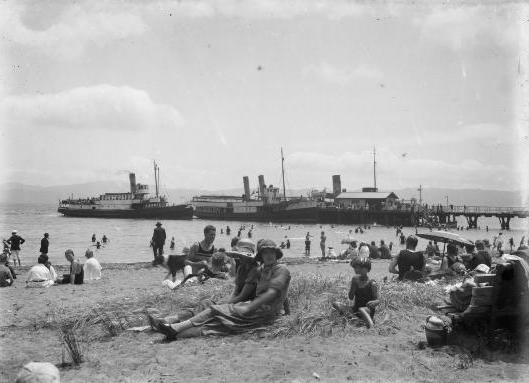
I grew tired though, after three days, and on the fourth, I witnessed the staging of a small play about my short story ‘At the bay’ – just a stone’s throw from the beach – writers leaping up from their flat whites to appropriate my words. Two grown men pretended to swim in the Pavilion, as if it were the sea and Linda, Granny and Beryl muffed their final lines, the great moment when Stanley is finally GONE. I saw one of the writers viciously punch the other to prompt her… it was that punch I think that bought me to my senses, and made me realise, I was just another wannabe, hanging on the coat-tails of the Colonial Shop Girl of literature and I realised I didn’t want to swap lives after all. I like being me, here ‘at the bay’, alive, able to swim in the sea without Jonathan Trout… I wasn’t prepared after all for a Faustian pact, to be famous and dead and remembered, instead of here, today, alive and aspiring.
Days_Bay,_Eastbourne_1920s

I’m doing the twelve steps now… having had a literary awakening, recognising that I am powerless in the face of KM, and I’ve asked for forgiveness for my own literary shortcomings, admitted that the critics at times have been right about my failings, and I’m trying to remove all defective characters from my stories…
I’ve abandoned the excess, found the limit of myself, but I continue to write… and I always will…
From Maleme to Mapua

Standard

I was inspired to think about this seemingly random link after reading a poem. The poem is called “Alive together” and it is by Lisel Mueller. The poem begins thus:
Speaking of marvels, I am alive
together with you, when I might have been
alive with anyone under the sun,
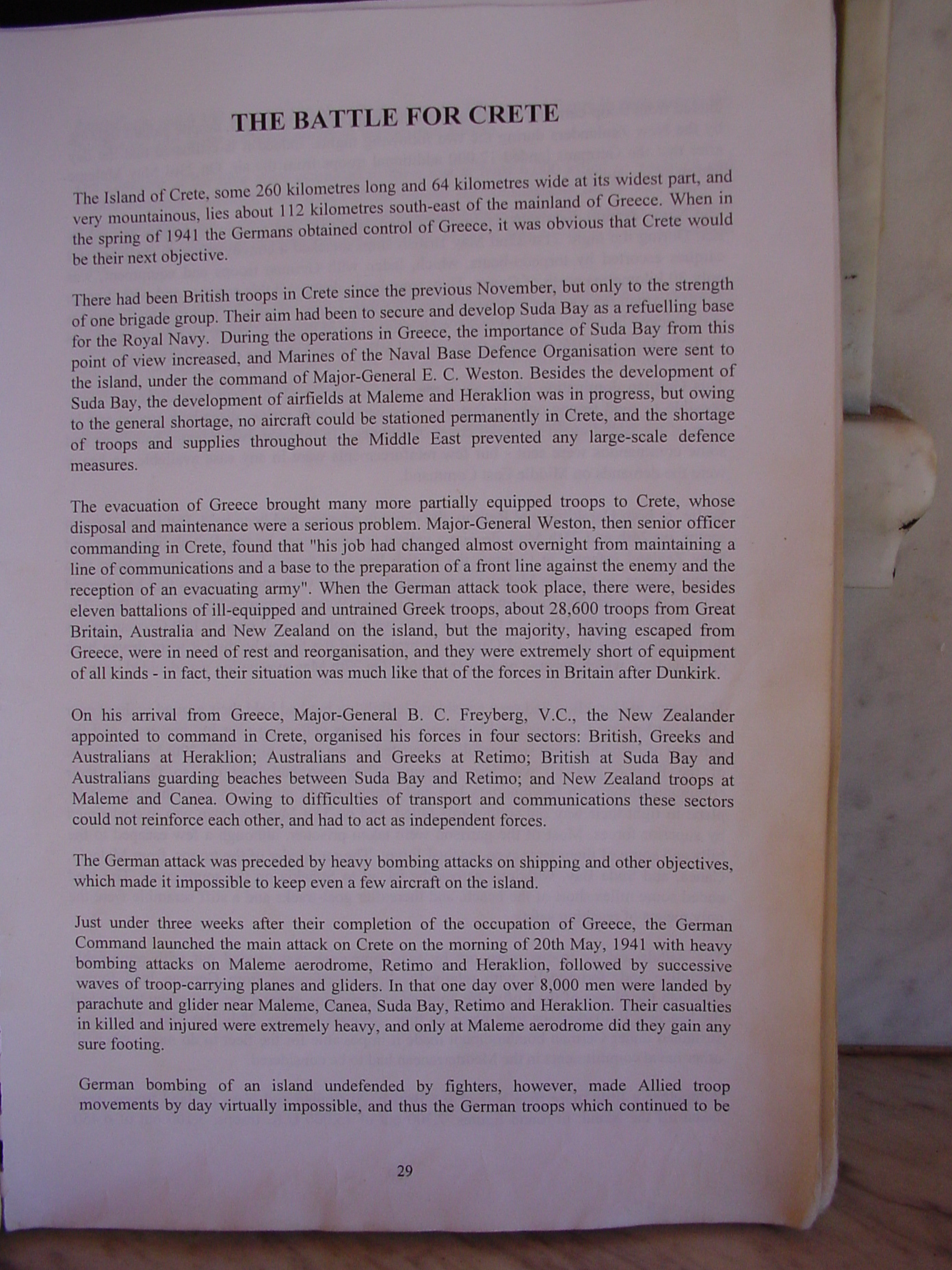
The poet goes on to imagine being a woman in a different time, married to different men, the idea of who we are being both random and minutely specific to a multitude of histories. I like this poem and I have recently been reading ‘Crete – The Battle and the Resistance”’ by Anthony Beevor. It is a very good account of a fearsome battle for control of the island in Greece during the Second World War, told from many sides of the story, the Germans, the New Zealanders, the British and the Cretans. My Dad was in the 5th field Regiment, a gunner, in the New Zealand 22nd Battalion defending the airport at Maleme, the point at which strategically the battle was lost, when it should have been won.

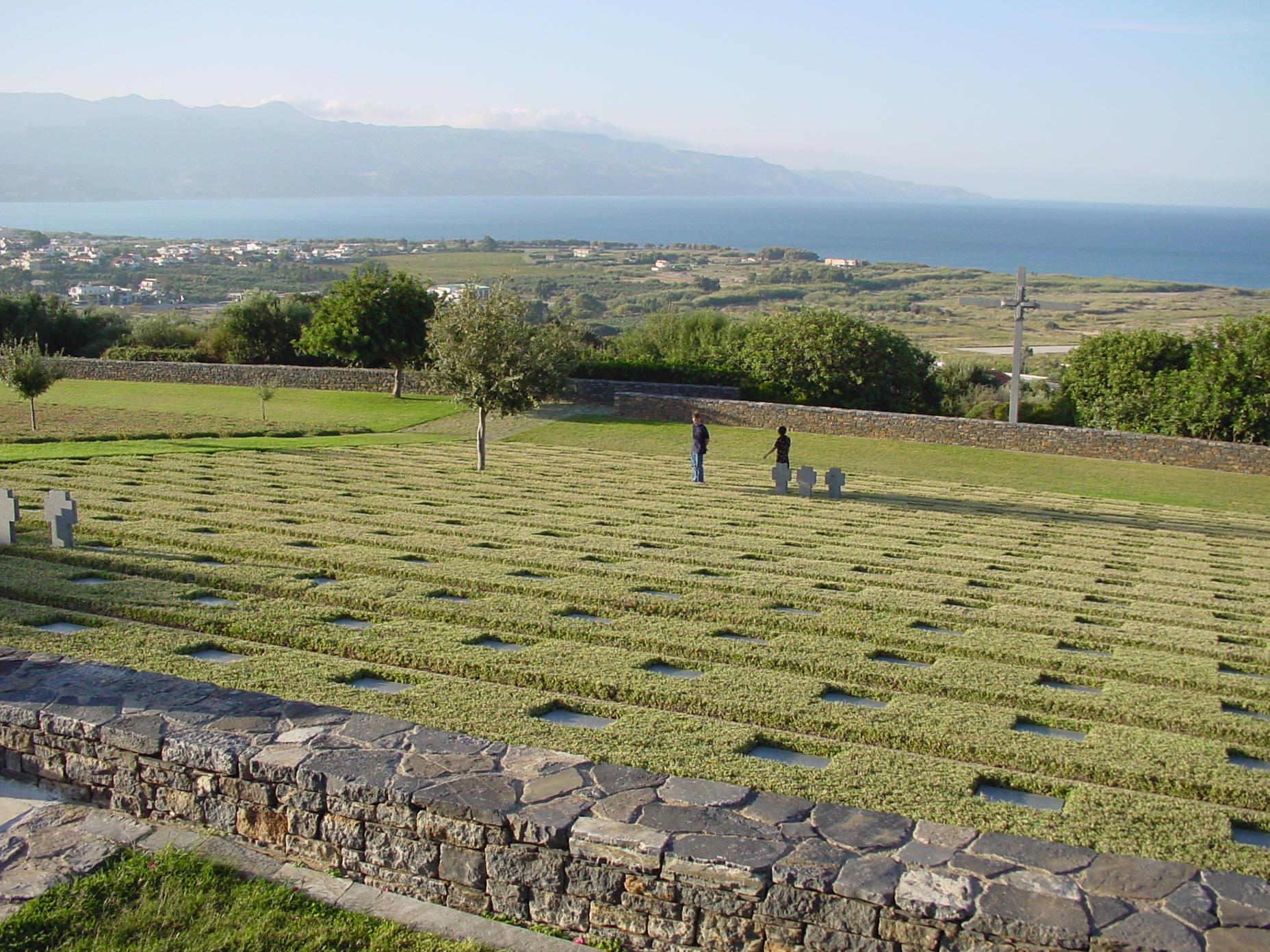
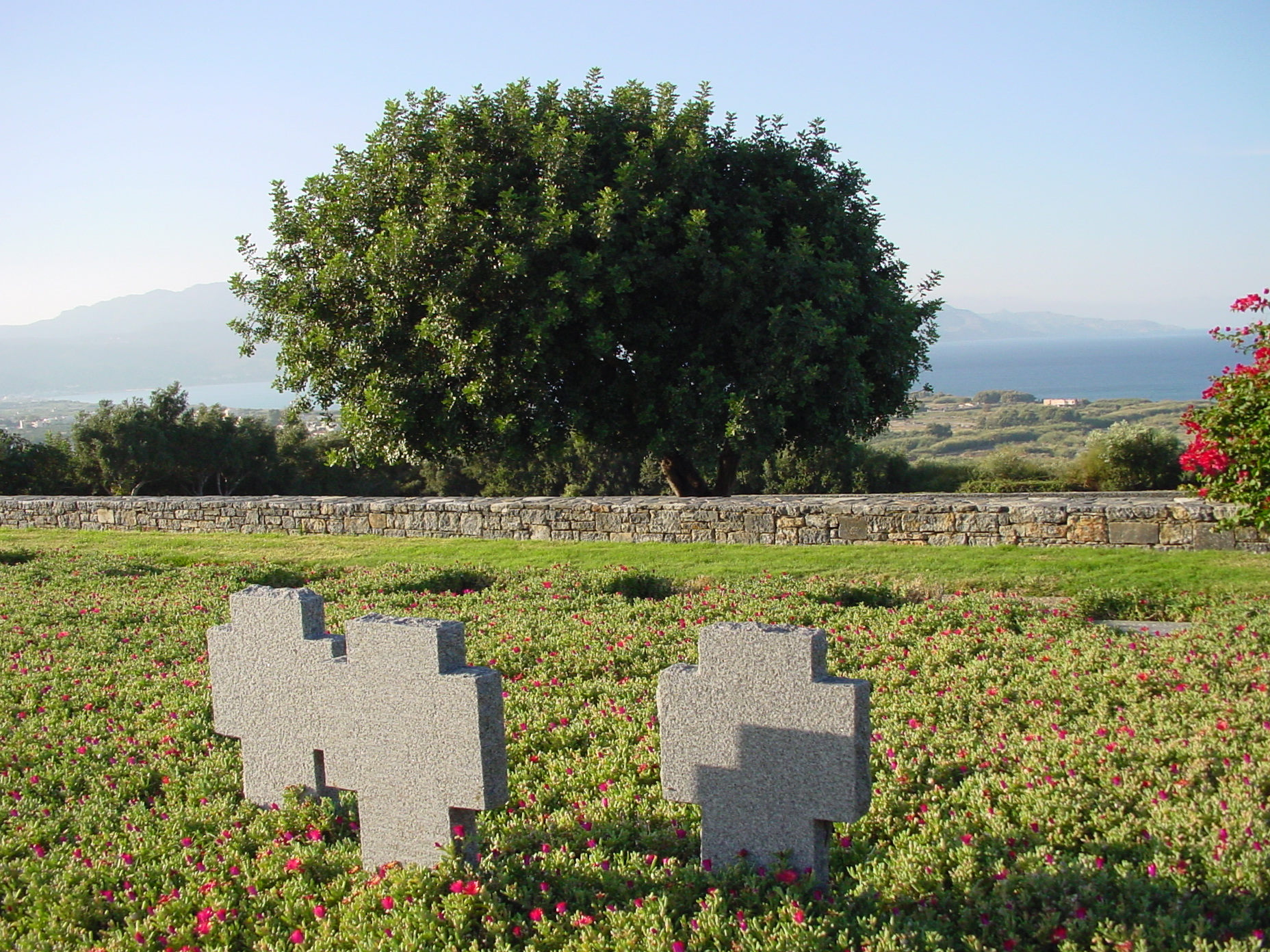
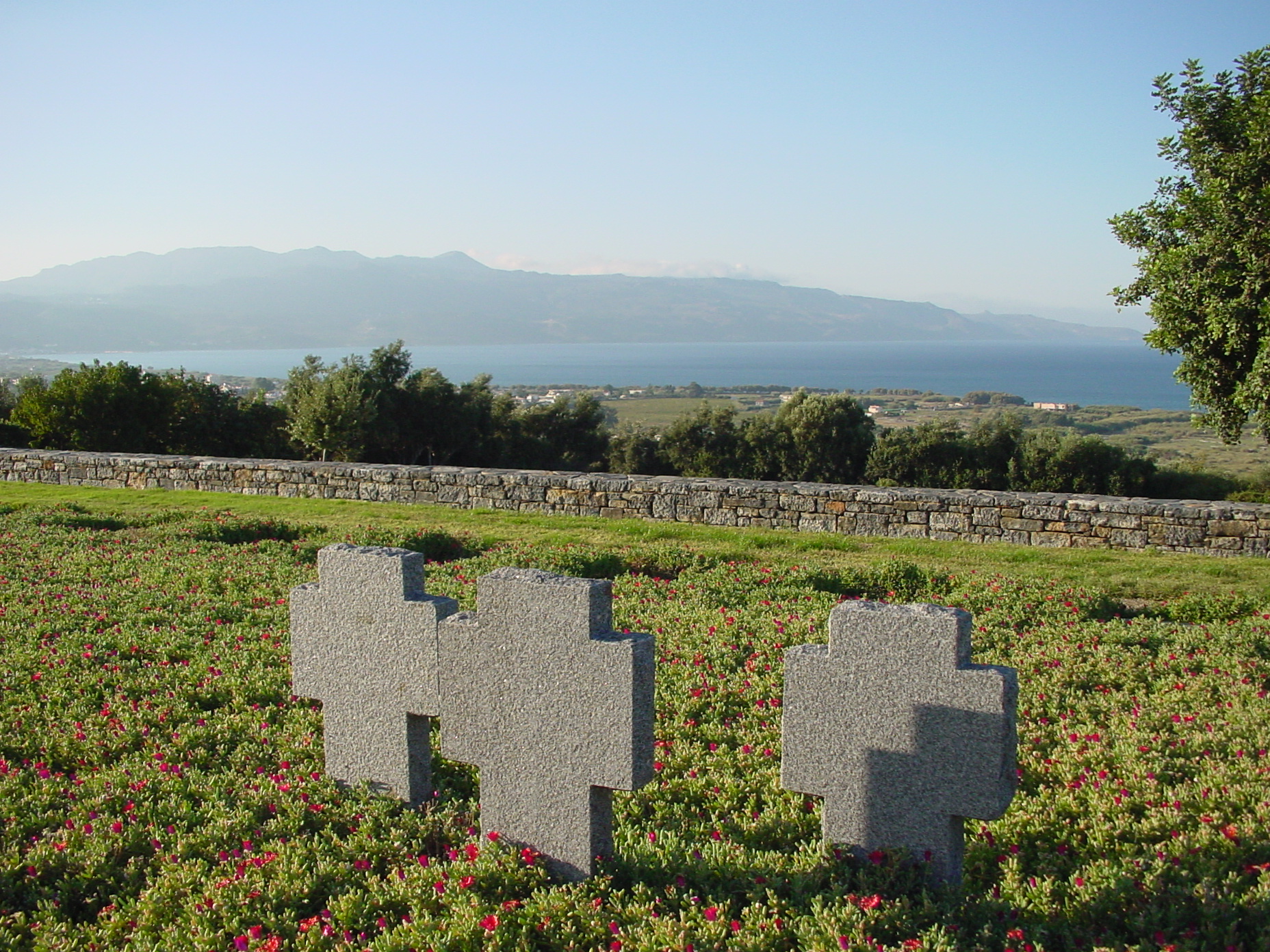
The German graveyard at Maleme

The German graveyard at Maleme

Stone crosses on the hillside among the graves at Maleme

Stone crosses on the hillside among the graves at Maleme

The graveyard at Maleme of German paratroopers killed in the battle of Crete

The graveyard at Maleme of German paratroopers killed in the battle of Crete

If, they say, General Freyberg had not been so hell-bent on the idea of a seaborne invasion… if Colonel Andrew (according to Beevor), “had gone forward before nightfall to observe the coastal trip and the western slopes of Hill 107…” … so many ifs. I imagine too, if they’d all had I phones, perhaps a few texts to and fro with some pictures attached… but then too, it seems Freyberg was very concerned about revealing to the Germans that the Brits had cracked their code, and so I guess I phones can easily be hacked . And too, imagine instead of young men dropping from the sky (like Icarus) in their parachutes, if instead, the Germans had used drones. The account of hand to hand combat between the Germans, local Cretans and the Kiwis is fierce and brutal. It seems that the Geneva convention did not apply as far as the Cretans were concerned. They were civilians defending their own patch. Oddly, the Germans imagined that the Kiwi soldiers would not fire upon them as they descended in their multi-coloured parachutes. But of course they did. And I have it first hand from my Dad, how extraordinary it was, to be firing at such easy targets, but too, how sickening. I read in Beevor’s account, how the gunners were told to aim low at the falling body because of the rapid descent, thus ensuring an accurate hit.

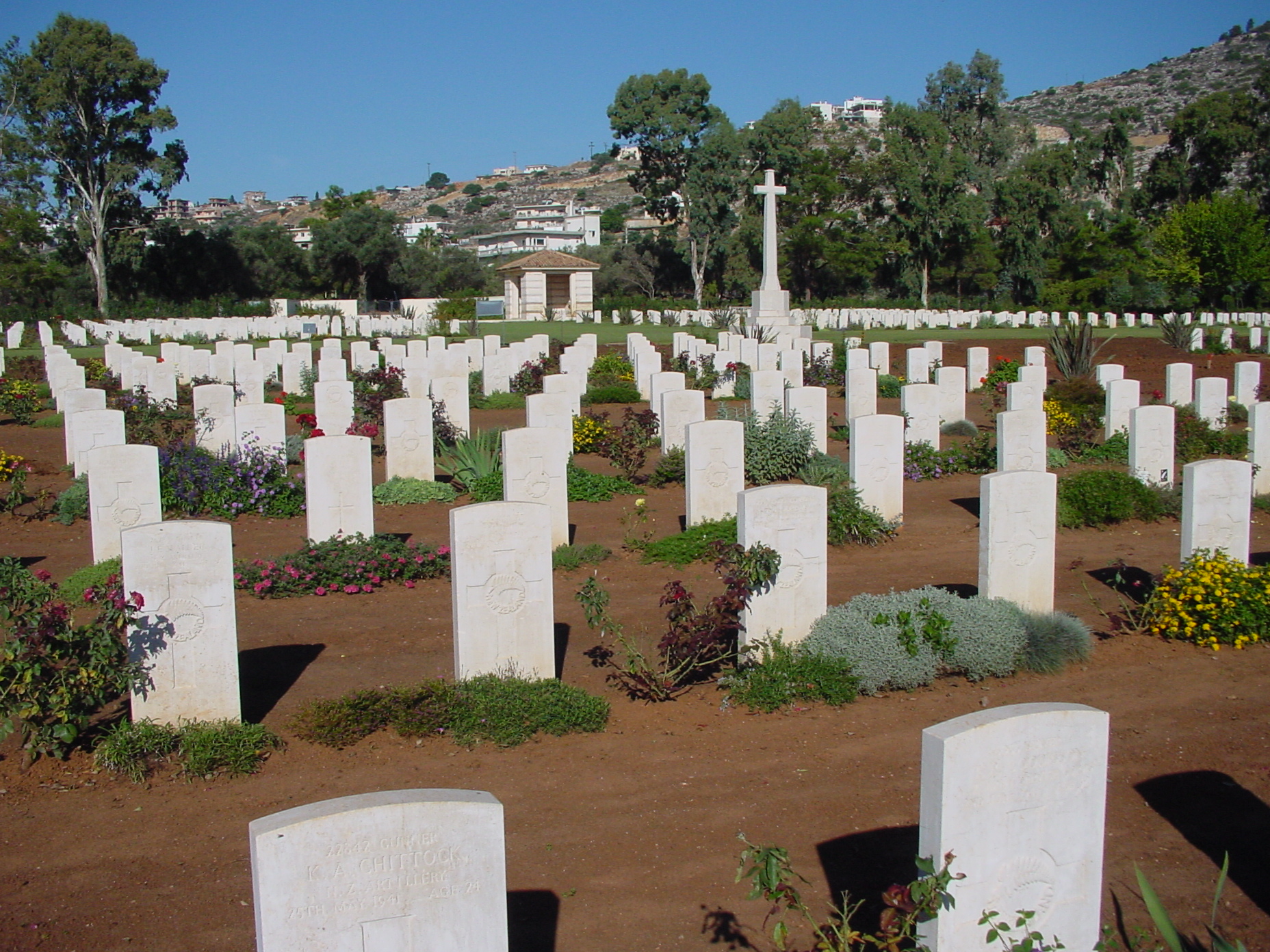
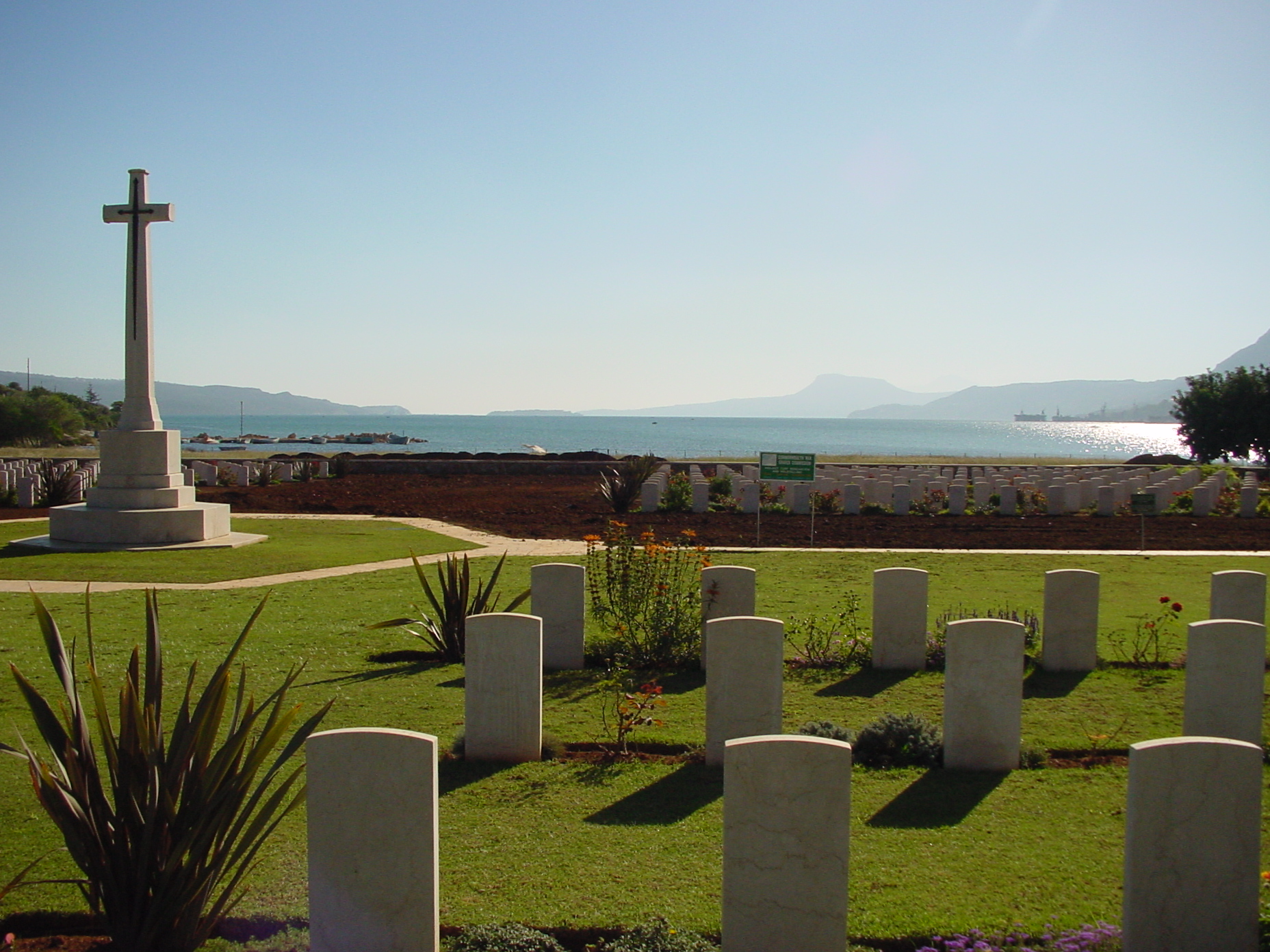
New Zealand graves at Suda Bay

New Zealand graves at Suda Bay

Suda Bay cemetery where the Kiwi soldiers lie

Suda Bay cemetery where the Kiwi soldiers lie

DSC00031

But in spite of this, the battle was won by the Germans, although they suffered extraordinary casualties. The paratroopers were young men (the German elite), some as young as sixteen and thousands were slaughtered in the first two days of the battle. So, what brings me to me Mapua? What is my connection? It is really rather random as I mention at the start (but then you see, don’t you, how random all of our histories really are).

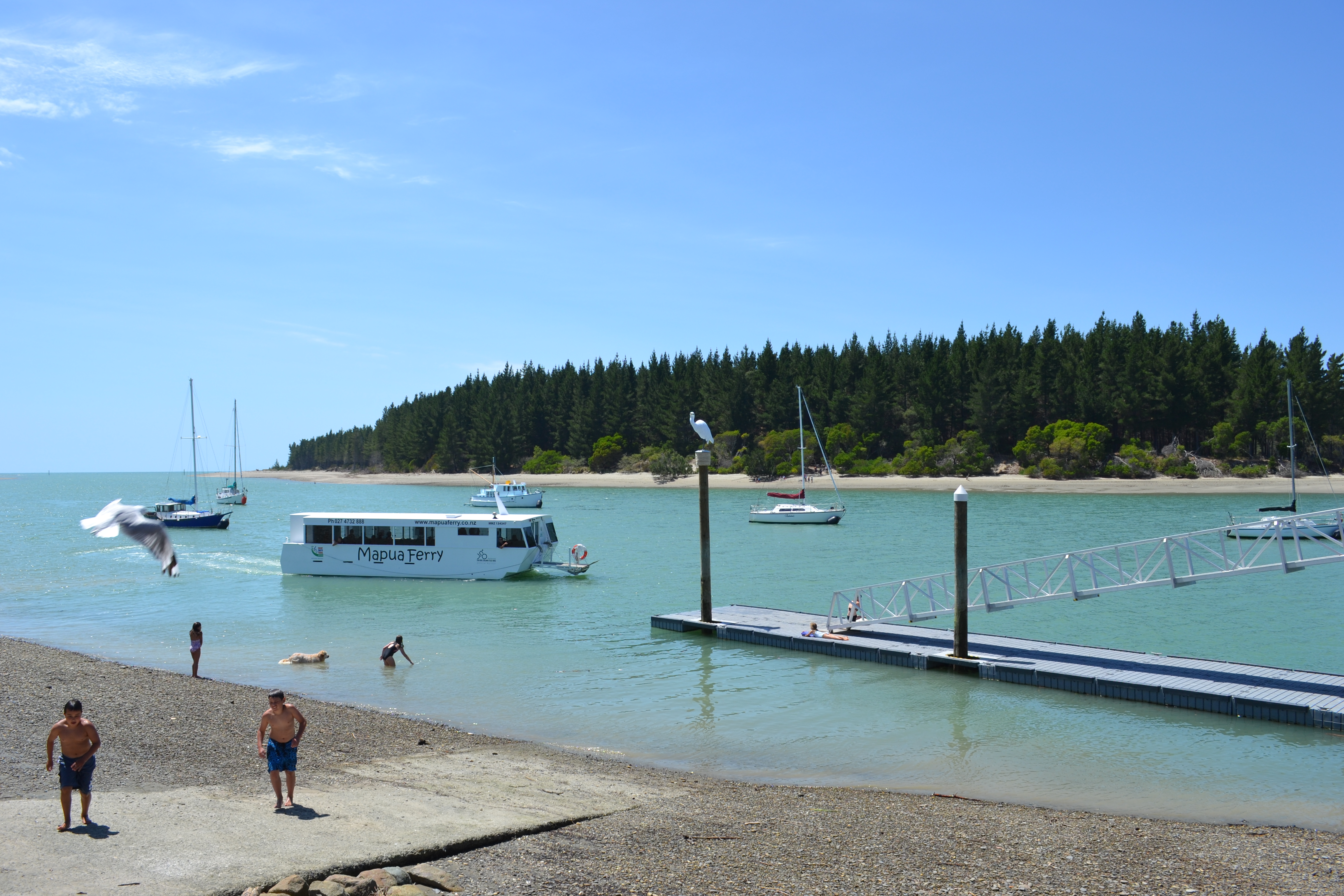
Mapua wharf with the ferry that crosses to my favourite childhood beach, Rabbit Island

Mapua wharf with the ferry that crosses to my favourite childhood beach, Rabbit Island

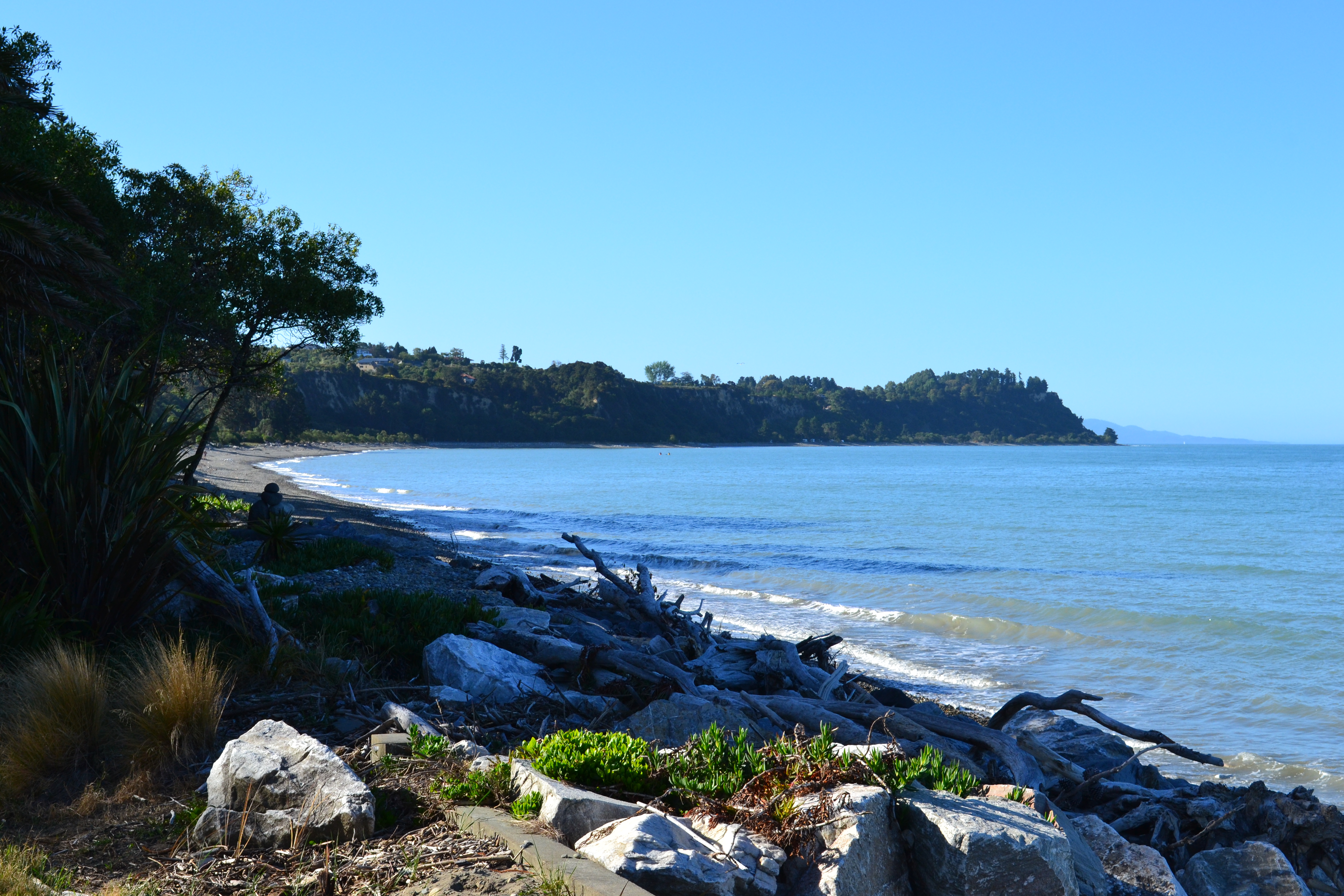
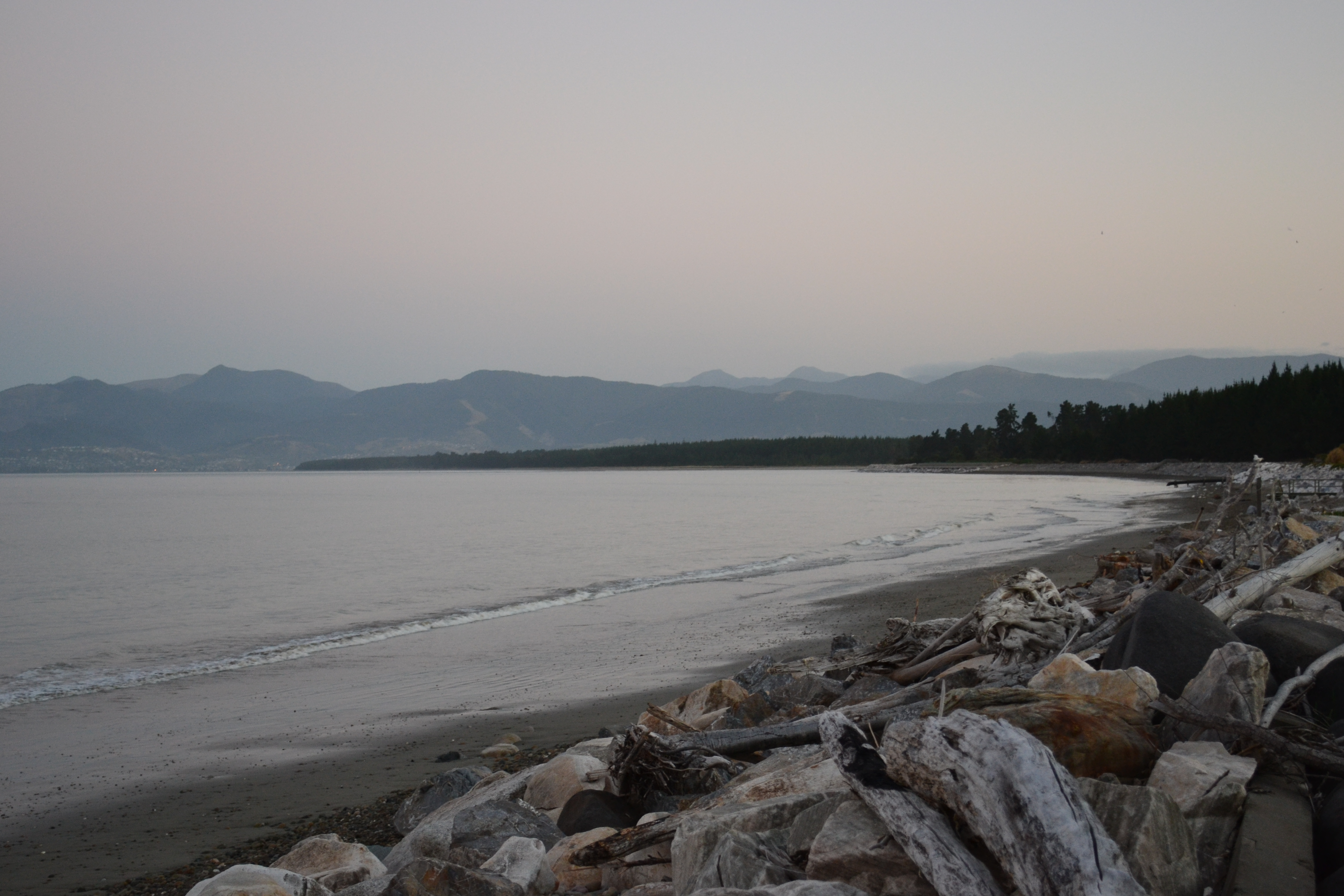
Ruby Bay

Ruby Bay

Ruby Bay

Ruby Bay

I was reading about the Battle of Crete, perched on the seafront at Ruby Bay (a hop skip and a jump from Mapua where I drank my morning coffee and had these thoughts) and I realised that if the 5th Field Regiment had held the airfield, I may not have existed. The defence of Maleme would have required a further battle – my Dad instead of retreating might have died in the ensuing violence – or so I told myself under the hot Tasman sun. That he survived to be taken POW and then shipped on cattle trains to Poland to spend four years as a POW – not to mention the subsequent 600 mile march in snow at the end of the war … well, that is neither here nor there, because this is what happened and so I know he survived all of this. But too, at each step along the way, there are a multitude of ifs to consider.

And as a result of my father’s war experience, I am fascinated with Greece, with the Battle of Crete, and too, I am ‘alive together with you, and you, and you (my family, my friends, my readers)… and there’s something both thrilling and fateful about this very being alive. If the chance came, would you change your life, be an entirely different person? As a child I used to look at people and try to imagine what it might be like to be them and then be terrified that I had wished too hard and what if I did become them and I didn’t like it and then I couldn’t get me back. Whatever befalls us, we may wish it had not, but do we ever really want not to be ourselves? Perhaps some people do (and here one can imagine a child in the slums of Mumbai). I am currently reading ‘Behind the beautiful forevers’ by Katherine Boo. Yes, perhaps if I was atop a rubbish dump, scavenging for a living, I may well be happy for my wish to be granted… but thankfully in my own fortunate life … it is enough to be ‘alive and together’ …
the poem ends thus:

alive with our lively children
who — but for endless ifs —
might have missed out on being alive
together with marvels and follies
and longings and lies and wishes
and error and humor and mercy
and journeys and voices and faces
and colors and summers and mornings
and knowledge and tears and chance.

Isn’t it just a grand poem? I have Diana Gilliland Wright of Firesteel to thank for her blog which alerted me to this beautiful poem and of course, if you wish to read the entire poem, click this link to Firesteel.

The ghosts of Christmas past

Standard

It was the little bit of bitumen stuck to my shoe that started this post. A sultry windless day this week and the temperature had risen to the mid twenties. In Wellington, this is a heat-wave. I lifted the irksome piece of road from my shoe and saw the tar. Lovely black tar, the warm ooze from the road that summer sometimes brings. I grew up in Nelson where in summer the tar oozed all season long. This piece of road stuck to my shoe reminded me of streets shimmering with watery mirages, the impulse to lie down, lay your cheek against the bitumen. Of course we could back then. There weren’t so many cars.

A week earlier I made my Christmas cake. I know, it’s late, and I should have made it weeks ago. It’s a ritual that I love. I use my mother’s recipe which is something now of a mini legend. I’ve lent it to friends over the years and the title is ‘Maggie’s Mum’s Christmas Cake’. She put a teaspoon of curry powder into her cake and so do I. This lends my cake something of the exotic, although of course you cannot taste the curry in it. Once a year, I honour my Mum when I make this cake. And I mix the cake in my late Uncle’s Gripstand Mixing Bowl which I suspect may well have once been my grandmothers.

IMG_0041

When I stand in my kitchen running my fingers through the dried fruit to make sure the flour and spices and fully incorporated, I have time to indulge the ghosts of Christmas past. It’s aided of course by the whiff of brandy in which the fruit has been soaking. I recall my mother decorating our Christmas tree with a concoction of egg whites that she flicked at the tree randomly using I think the back of a spoon to create our very own fake snow. I remember too vividly, the night my brother had woken and disturbed Santa. He’d seen Rudolph disappearing up the chimney, and the only evidence was the fallen fire-screen.

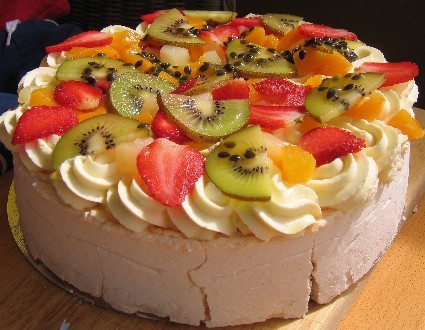
And then too, there is the boiling day when we were going to Grandma’s for Christmas lunch. My mother’s youngest bachelor brother was in town. My maiden aunt who lived with Grandma had loaned her Morris Minor to her brother. He’d gone to the pub and hadn’t come back. We didn’t have a car and we were relying on my aunt and her Morris Minor to transport us and all the food that my mother had prepared up to Grandma’s house. And so as memories are made, we traipsed instead on foot, with plates of trifle and pavlova in the hot sun. Mum’s trifles were legendary (sponges made without the aid of Fielders cornflour, whipped with a hand beater, baked in the coal range). Her pavlova was the crunchiest, deepest, softest in town. She smothered it with cream, and cherries, and pineapple and ginger and walnuts. It wasn’t all that far to walk really, perhaps a couple of miles but much of it was up-hill. I’m not sure how the whipped cream fared, or what trouble my uncle got into, but it’s a Christmas memory.

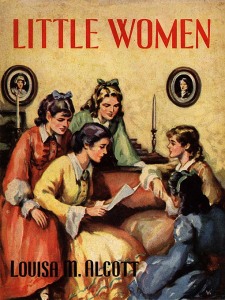
We always got a book for Christmas – maybe the latest School Friend or Andy Pandy annual for me, and one year Meg, Jo, Beth and Amy of “Little Women”came into my life.

Little Women

I recall buying a bicycle bell for my Dad from McKenzie’s Department Store one year for Christmas. We always shopped at Woolworths or McKenzies and I guess they are the equivalent of the two dollar shop nowadays. One of my favourite Christmas present as a child was a brand new swimsuit from a maiden aunt who came from Wellington. She was a waitress at the St George Hotel and worked there for 40 years during its hey-day. Up until then, I’d worn a hand-me down (from my mother or some other adult) pair of togs that filled with water and gave me a bosom, and at five years of age, that was too embarrassing. The swimsuit is a Christmas legend – it was covered in pink and green Christmas bon-bons, had a wee flared skirt and a pink bow at the back. I’ve never forgotten it.

My Christmas past is filled with maiden aunts and uncles who arrived and left, trips to the beach or the river in my aunt’s Morris Minor, car sickness, ice-creams, the long slide, midnight mass, Mum’s mince pies made with flakey pastry instead of the short pastry, minted peas, new potatoes, and the back door open with the afternoon sun shining on the new green lino. It’s pea-picking with my friends as a teenager, weeding strawberries, picking boysenberries, saving up for Christmas …it’s the Mardis Gras the beachcomber ball sunshine and sunburn, swimming holes and bike rides, fishing off Rocks Road, the endless hot summers of Nelson.

And too, it’s the whiff of brandy, the butter, sugar and egg yolks, the egg whites beaten to soft peaks and folded into the cake mixture, the dusting of baking powder at the bottom of the thickly paper-lined cake tin. It’s the wrapping of layers of newspaper around the cake tin and tied with string, so the cake won’t burn at the edges. It’s spreading the mixture and packing it firmly into the four corners with a small hollow in the middle to ensure when it cooks, the cake will rise to a perfectly flat shape for icing. It’s rolling out the almond icing and nibbling the left-over’s, and nowadays, it’s waiting for my granddaughter to arrive, to decorate the Xmas tree.

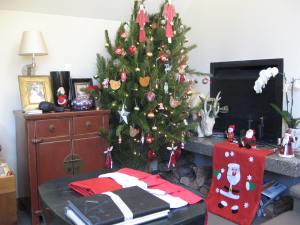
IMG_0044

We have our own new rituals that we are creating together.   She buys me a Christmas decoration every year and I buy her one.   We decorate the tree together and we bring out the papier-mâché reindeer that I bought for my boys (one of them her Papa), and she adds pretty coloured ribbons to the reindeer’s antlers each year, to update his imageThe ghosts of Christmas past, the deceased; my Mum, my Dad, my brother and all my maiden aunts and uncles are with us.

Ursula LeGuin, High Tea and the Menopause

Standard

Ursula K LeGuin, High Tea and the Menopause

Recently, I attended a high tea for a friend’s 70th birthday.   We were all girls and we dined on dainty sandwiches, sipped tea in china cups and ate pretty cakes.

My friend is a writer and she asked if her friends would bring a poem they could read at her birthday.   She especially wanted something that spoke of age and being a woman.   I took my ‘Menopause’ poem and read it.    It seemed to strike a chord.

I’m in that genre now, the one made famous by Ursula Le Guin in her essay on ‘The Space Crone’.  In fact I think I’ve passed through the planet Altair already.  My poem is a response to Ursula’s essay.     It had its debut in New Zealand Books, Volume 17, Number 2, Issue 78 in the Winter of 2007.     I see that New Zealand Books will soon be celebrating the launch of their 100th issue at Unity Books in late November.

Menopause

(Inspired by an essay by Ursula K. Le Guin “The

Space Crone” 1976).

Ursula urges me to

become a Crone

to not bemoan

my declining hormones

to wear grey hair

catch a space ship

somewhere out there

so I can share

my wit, my wisdom

my years of fertility

raising children

(ensuring my humility)

so the fourth planet Altair

can learn about the human race

from a woman (once a virgin)

and now a Crone  (on loan)

But I’m all for my inner space

and I won’t go grey

well, not yet, not today

there’s plenty of time

because I still want to play

to flaunt in the twilight

my age now my highlight

on the cusp of something

almost a Crone – not quite

ready for Ursula’s throne

but not afraid either

thumb out – hitching a ride

not looking back, nor

particularly forward

pausing as they say – oh,

but not for men

for me.

©  Maggie Rainey-Smith