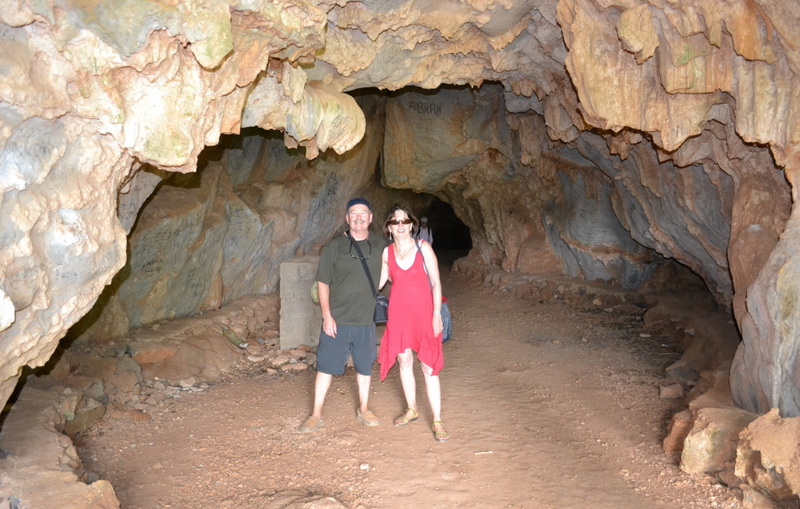
A Broken Heart

Standard

Please Look After Mother

I usually read with my head.    Books that try to claim my heart, frequently meet with my resistance.   I like to second-guess an author if they are trying to make me weep, feel sad, or to tug at my emotions.  The books that seduce me are mostly darkly funny to mask their sadness.   I loved ‘The Forgotten Waltz’ by Anne Enright; I like her writing, the wicked way she carves into your heart through your head.          We bring to our reading so much of ourselves, both our past selves and the now.    My youngest son lives in Seoul, is married to a Korean girl and has through marriage, become part of a Korean family.  I have visited Seoul now three times and I love the city and the people and most especially of course, my son’s wife and her family.    Add to the mix, that I am almost 62, the same age that my mother was when she died.     Then one more ingredient.   I am in Sydney on a short holiday, which is where I was working forty years ago, when my Aunt phoned to say ‘come home’ your mother has had a heart attack.

So, perhaps I am predisposed at this particular time, for this particular book that has just won the Man Asia Literary Prize Please Look After Mother by Kyung Sook Shin translated from Korean by Chi-Young Kim.    I found it heart-breaking.    Almost from the start, my heart was breaking.   It is such a superbly simple, yet deeply affecting novel.    I’m not sure if it is because the book is in translation that the writer is so easily able to transgress, to override, to ignore my self-erected emotional barriers.

I cried easily and without self censure.   It is a beautiful story, made all the more affecting because of the shifting perspectives in each chapter, as the family set out to find their mother, lost at Seoul Railway Station.    Seoul is one of the most modern, populated cities in the world today.   The mother in this novel who has always walked a few steps behind her husband, fails to get on to the train and it’s only after the train has left the station that he realises she is not on it.   We get to hear from her children and from her husband how they see their mother, now that she is missing as they comb the train stations, hand out flyers, and revisit parts of Seoul they lived in years ago, where she might have gone looking for them.

The first voice is her daughter, now a feted and famous author and she recalls spontaneously going to visit her mother one day after one of her novels is translated into Braille and she had read to a group of blind people.    She buys an octopus and visits her mother.  It is the blending of food, train stations, cultural customs, convention, tradition and modernity that makes this book sing.   Yes, I admit, I found even the names of places enchanting, because I recognised them, newly recognised them, and felt a connection.    My son is fortunate to have the loving affection of his wife’s family and because he is vegetarian, when he visits his mother-in-law, she prepares all his favourite foods with delicious meat substitutes, pampers him, mothers him, and as his mother back in New Zealand, I feel deep gratitude for this.    So, yes, I am the perfect candidate for this book, I recognise that.

When my mother died, I was young and travelling; just back from living in London and now in Australia, doing my own thing.  I didn’t want to go home when she had her heart attack.  In fact, after I received the phone call from my aunt, I waited another two days until I received an urgent ‘come now’ and I abandoned my job and flat on the very same day to fly home.  I still recall the mad rush to gather my belongings (modest thankfully) from a flat on the North Shore and the taxi driver in New Zealand when I arrived, eschewing my attempts to tip him as he carried my heavy suitcase for me.   But I was resistant, callow and self-interested, unable to really give my mother my full attention, even when she was dying.   This book explores those very themes through the eyes of the children of the mother lost at Seoul Station.  They explore their memories of their mother, their last encounter with her.

And so, here I was in Sydney again after many years, catching up with a friend with whom I had flatted in London in 1972.  I was in a cheap but modest Pensione on George Street.   Across from Central Station is the strange-shaped Dental Hospital building where it was I worked when I received the phone call about my mother.   I rode the trains reading this novel, and now the doors on the trains close automatically, but back then, I rode the trains in the hot summer and the doors never closed.   My heart was in several places at one time.   I was in Sydney now and back then; I was in London, I was in love, I was all over the place, warmed by the Sydney sun and completely disarmed by this evocative novel.

Kyung-Sook Shin manages to incorporate with subtlety, the extraordinary history of South Korea , from poverty to extreme modernity in sixty years, without being particularly political or weighty posturing.    I recently readBruce Cumings ‘The Korean War’ which is heart-breaking in a different and more factual way, and gives insight into the plight of the North Korean people both during the war and after – ‘the oceans of napalm’ dropped on the North by the United States and read that during the Korean war, four million Koreans were killed, two thirds of them civilians.   So, yes, Korea, both the North and the South have an extraordinary recent and mostly untold history.

I have only one small quibble with the novel and perhaps that is the ending.  But that too may reflect something of my prejudice and predisposition.   I won’t spoil the ending, but I felt it was perhaps too overtly symbolic, but still, a very small quibble.   The translation isn’t always perfect either but somehow for me that lent authenticity to the text, so that I knew it was a translation and I wished that I could read Korean, to see the words in their original context.  I wondered would they be more, or less, sentimental from a native speaking perspective.

Please Look After Mother broke my heart a little and it was lovely to have it broken.   I can see why it is a best-seller.   But too, I can see how this review from the New York Times was written with a more cynical and critical reading – yes, I can see this point of view, but this time, I left my head and followed my heart, and that’s okay, it’s only fiction. It seems the book has also been translated as Please Look After Mom  and that evidently sealed its fate for many, as a piece of sentimental fiction – the whole ‘Mom’ thing.   I guess this also goes to show, how much of ourselves we bring to our reading.

A Grain of Rice

Standard

(I wrote this, after my first brief visit to China, back in 2007, before I had a blog).

China was not part of our original itinerary but we were planning to visit Seoul and it’s just a hop, skip and a jump to Beijing.  It seemed silly not to take the leap.

I’d imagined grey sky, smog, and a reckless juggernaut of capitalism.   Well, the smog proved true, and the capitalist invasion is too.   But  grey, Beijing is not. All over the city are parks and carefully cultivated gardens.   The Forbidden City is a riot of colour.  In Tiananmen Square, Mao’s portrait looked far more benign than I’d imagined.   I wanted to join the large queue moving slowly to view his embalmed body, but we didn’t have time.

They’re preparing for the Olympics with a clock counting down and in the Square there is a topiary Acropolis which will no doubt impress the Olympic tourists.  What are they planning to do about the smog?   It seems they will shut down the factories for three months before the Olympics and ban cars from the city. Many of the factories are owned by European car manufacturers.   We heard that there were three million cars in Beijing (I don’t know who counts them) but yes, the air was more like a good meal than a mild refreshment.    I’m more concerned about the athletes making it in one piece to the Olympic Stadium – you see the traffic is unforgiving and unrelenting.  A green light to a pedestrian means very little to the traffic.   You need either an enormous bravado (he who dares wins, or dies) or else you need to gather a large group of people with yourself in the middle, before you cross the road.

It was easy to imagine how beautiful the city would have seemed without all these cars and with people riding their bicycles dressed in their Mao pyjamas.   For just a moment, I wanted to see that.    But then I thought about the fate of the sparrows and the intellectuals.  I asked our tour guide, Mark about his family.    His father had been a schoolteacher.  I questioned him about his father’s life.   Mark went quiet.   “So-so”, he said.   And that was that.  He had no wish to say any more.

Nothing in Mark’s commentary about the history of this beautiful city, mentioned what is now perceived in the west, as Mao’s reign of terror (otherwise known as … The Great Leap Forward).   Everything was carefully worded to exclude any criticism.   Here is a city embracing capitalism with a capital “C” and yet still somehow honouring Mao.

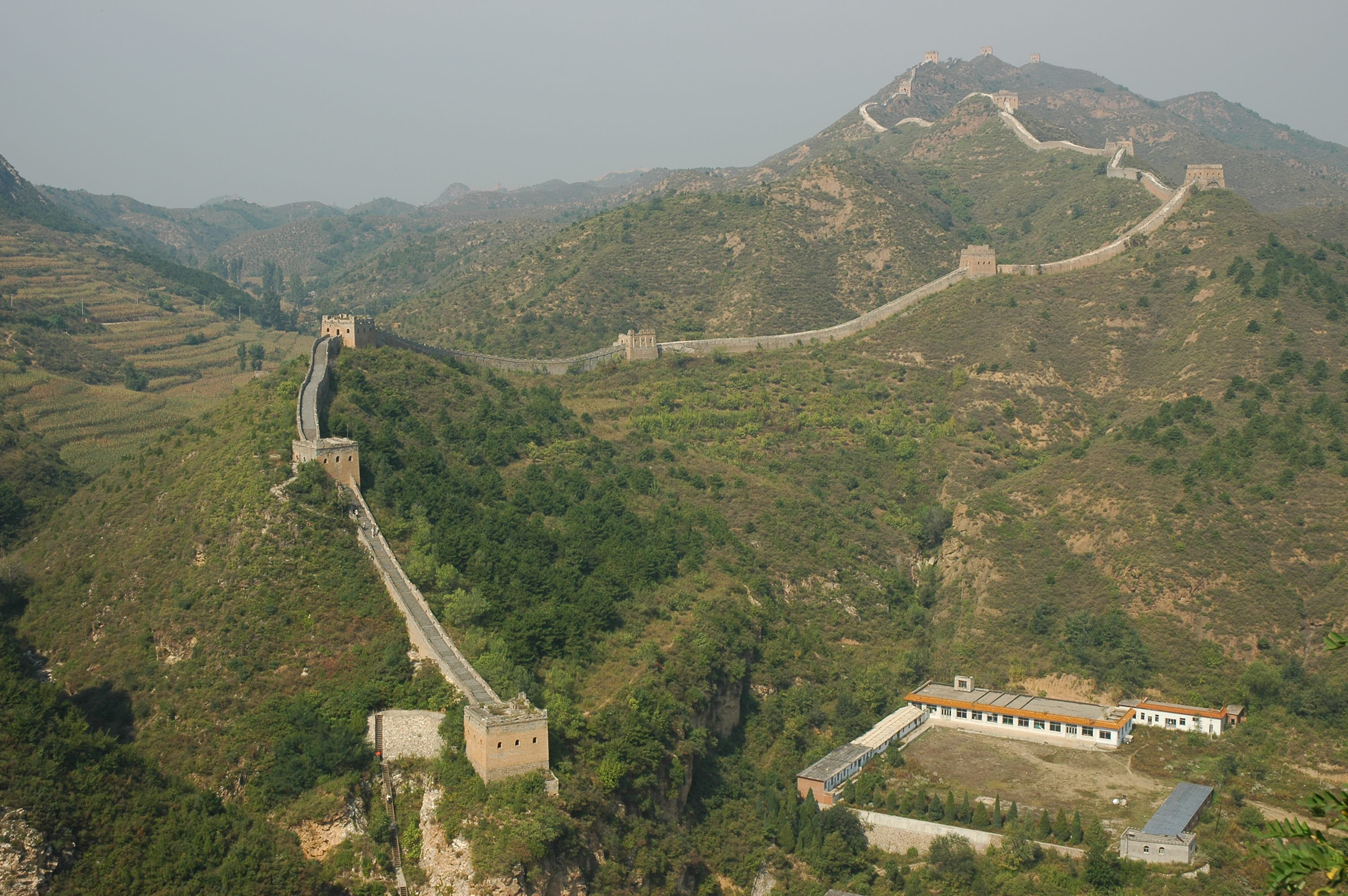
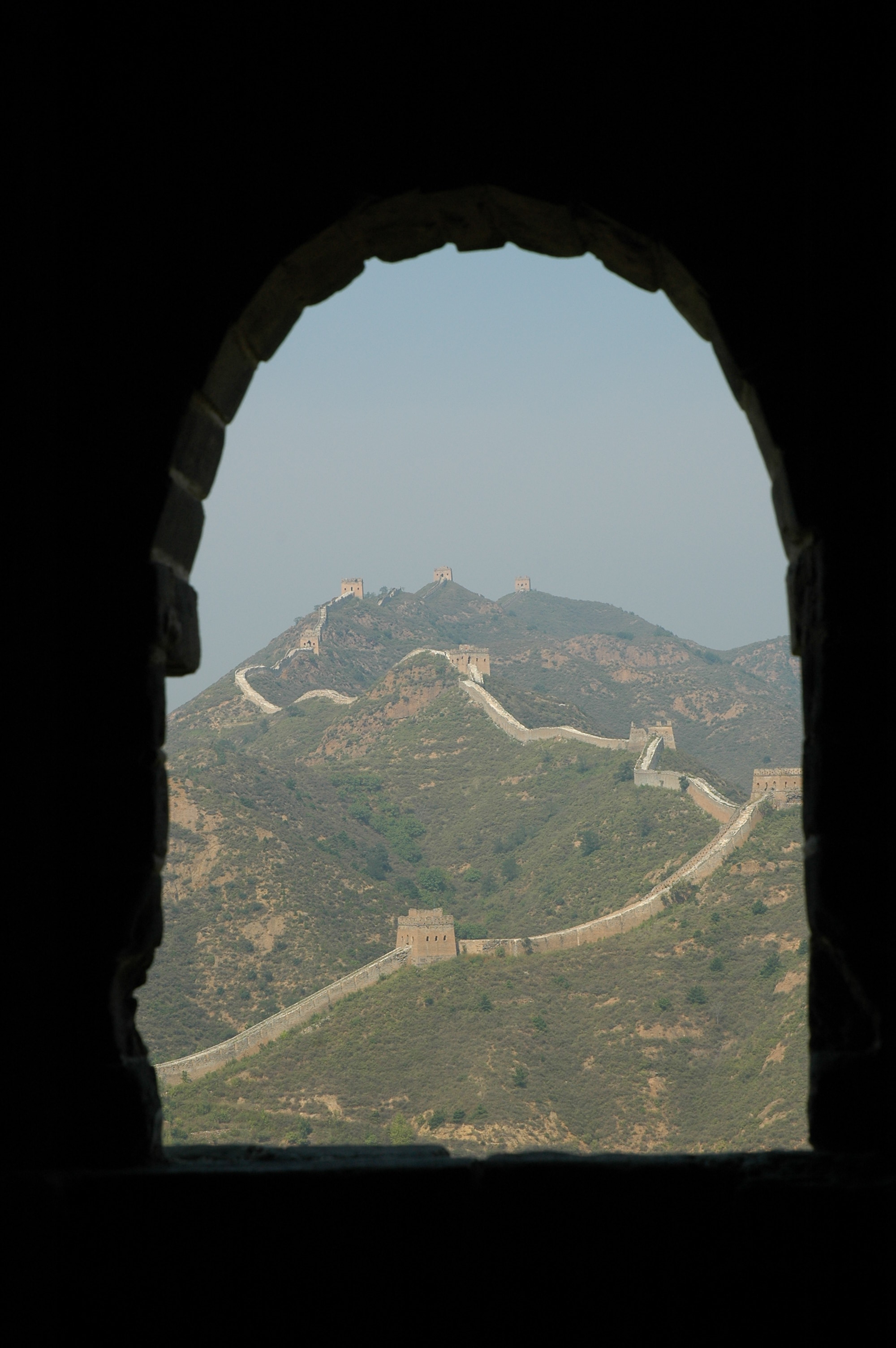
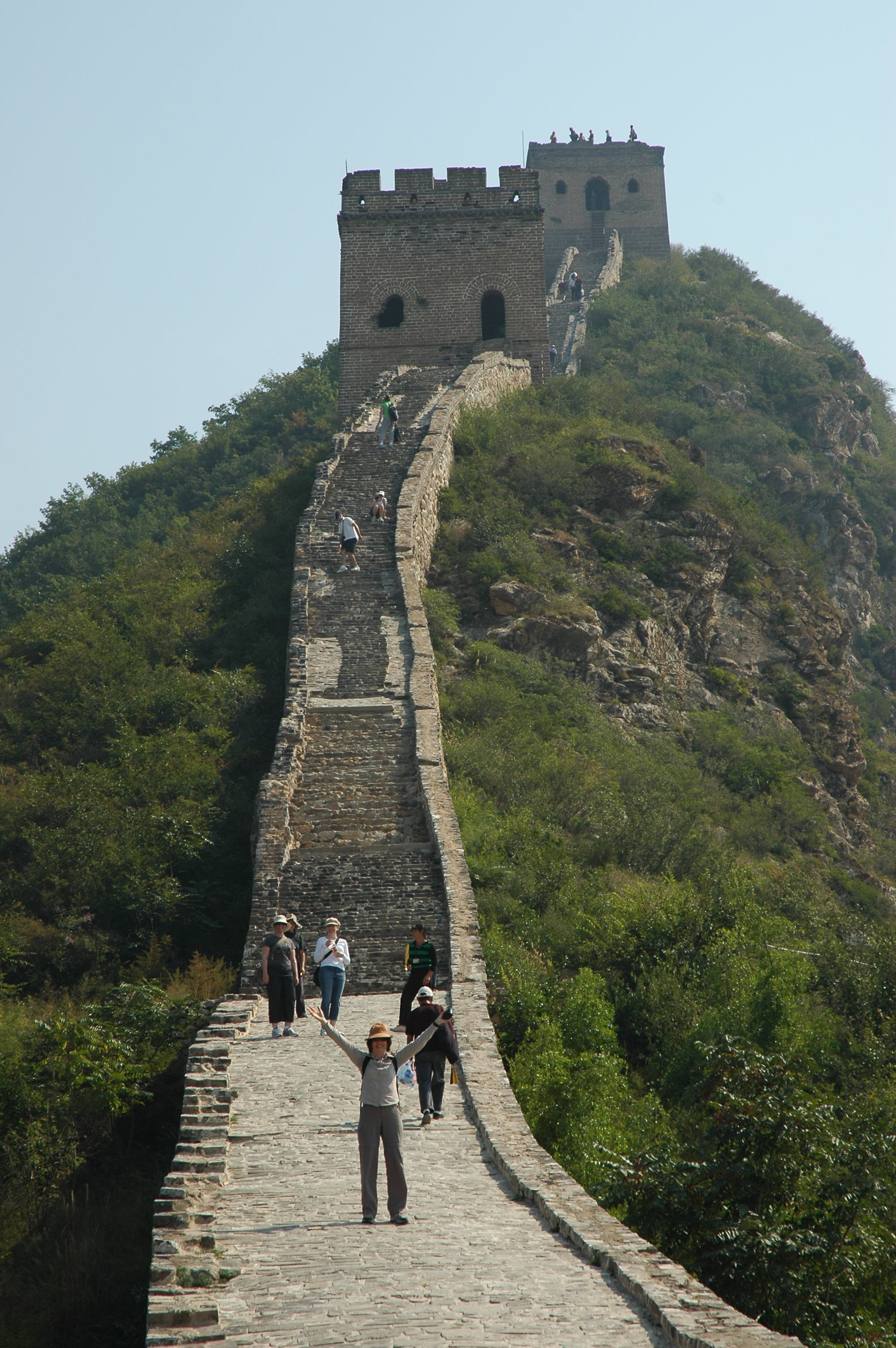
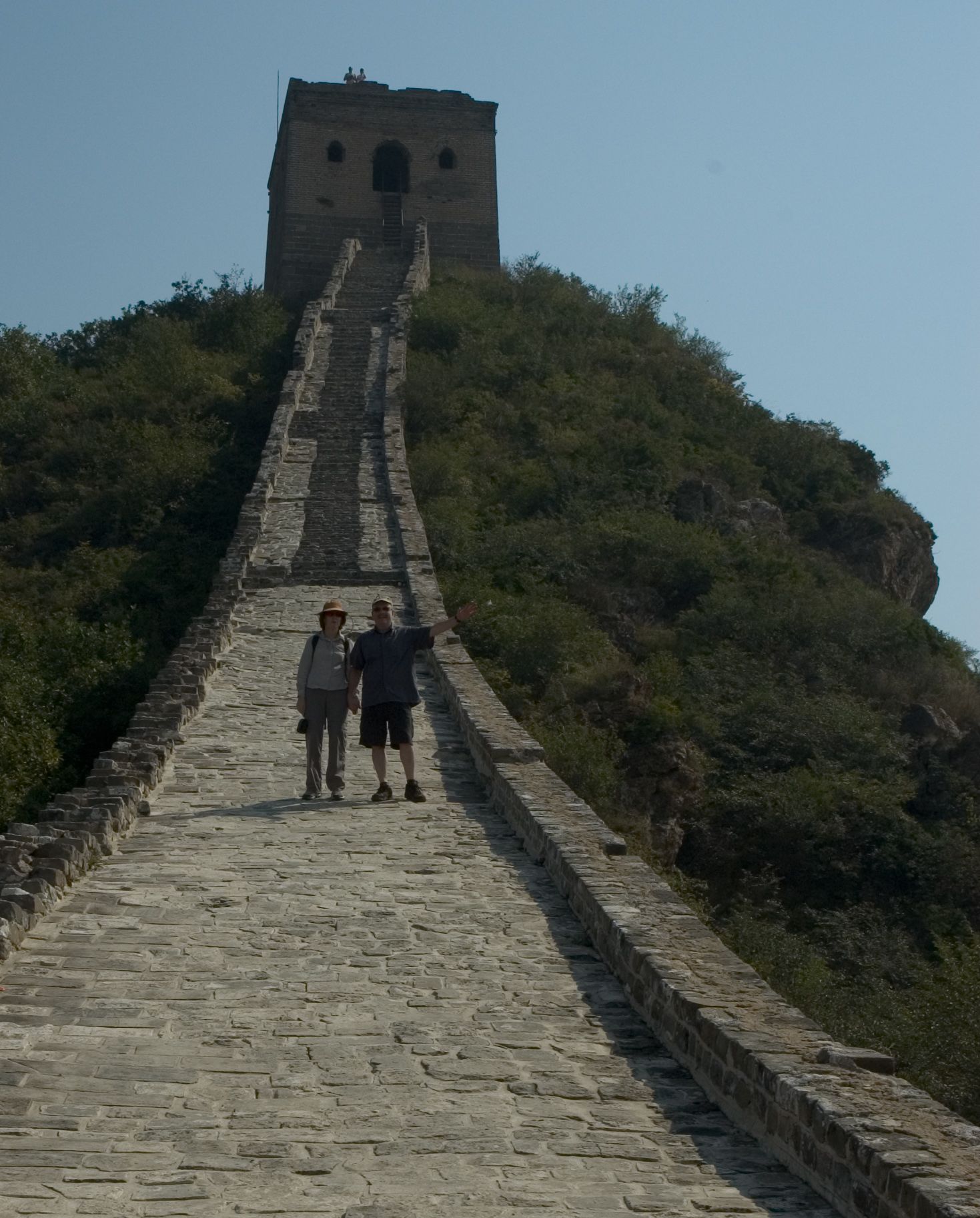
This is not an in-depth tour of China but more of a tourist’s overview.  A highlight is our walk along the Great Wall.  We’re most fortunate to be on a section of the wall with not a lot of tourists and because we are reasonably fit we manage to burn off our Chinese fan club (yes literally, they walk beside you and fan you because of the heat) and end up alone, just the two of us walking until we meet a guard with his mobile phone who prevents us from going any further, because that section of the wall is unsafe.   Many (many) years ago in Form One (Intermediate School), I gave a speech to my class on The Great Wall of China.   I cannot recall why I chose this topic or indeed, what I spoke of, but it is an extraordinary feeling to be actually walking on the wall, something back then that I had never imagined.

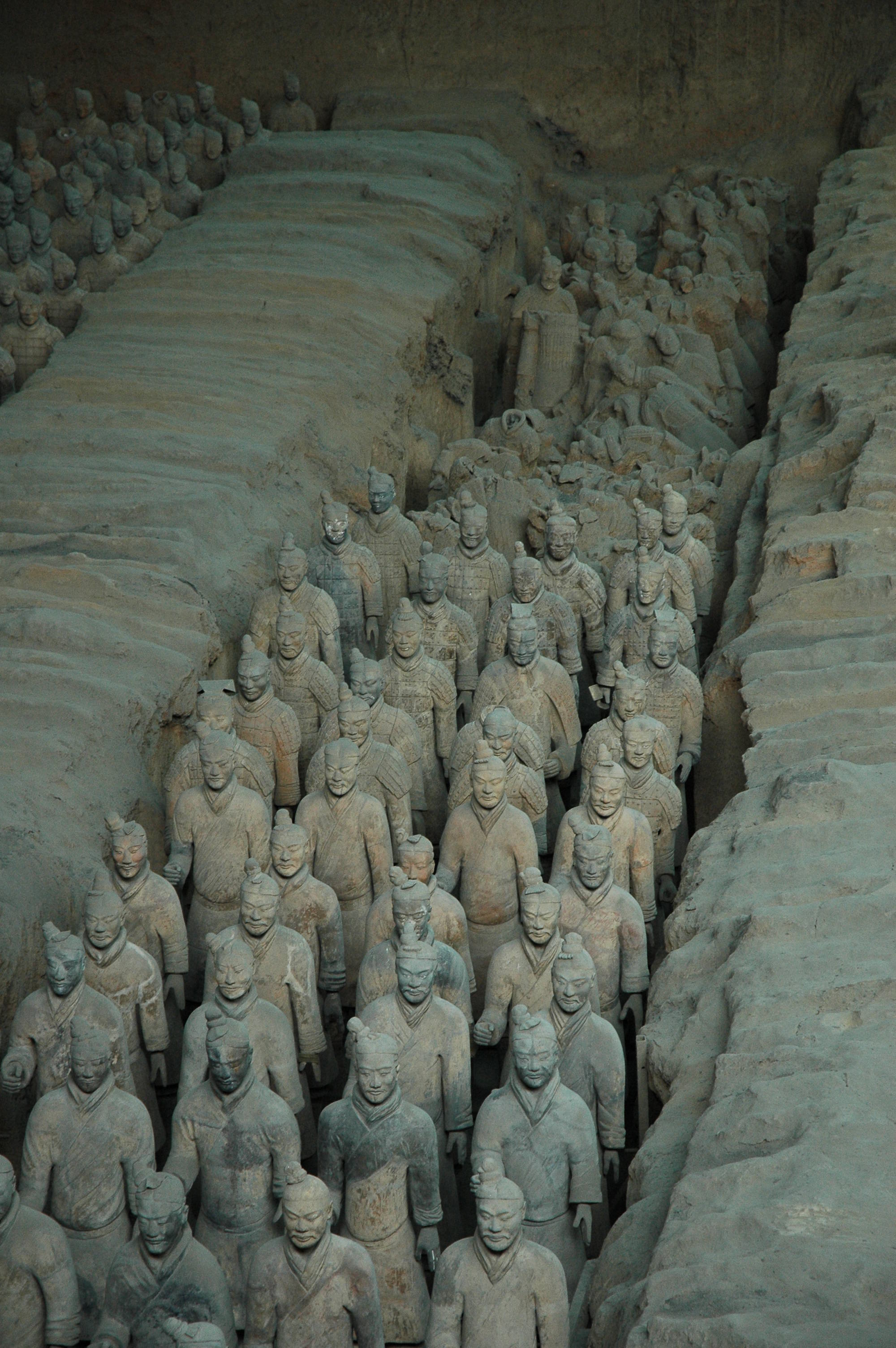
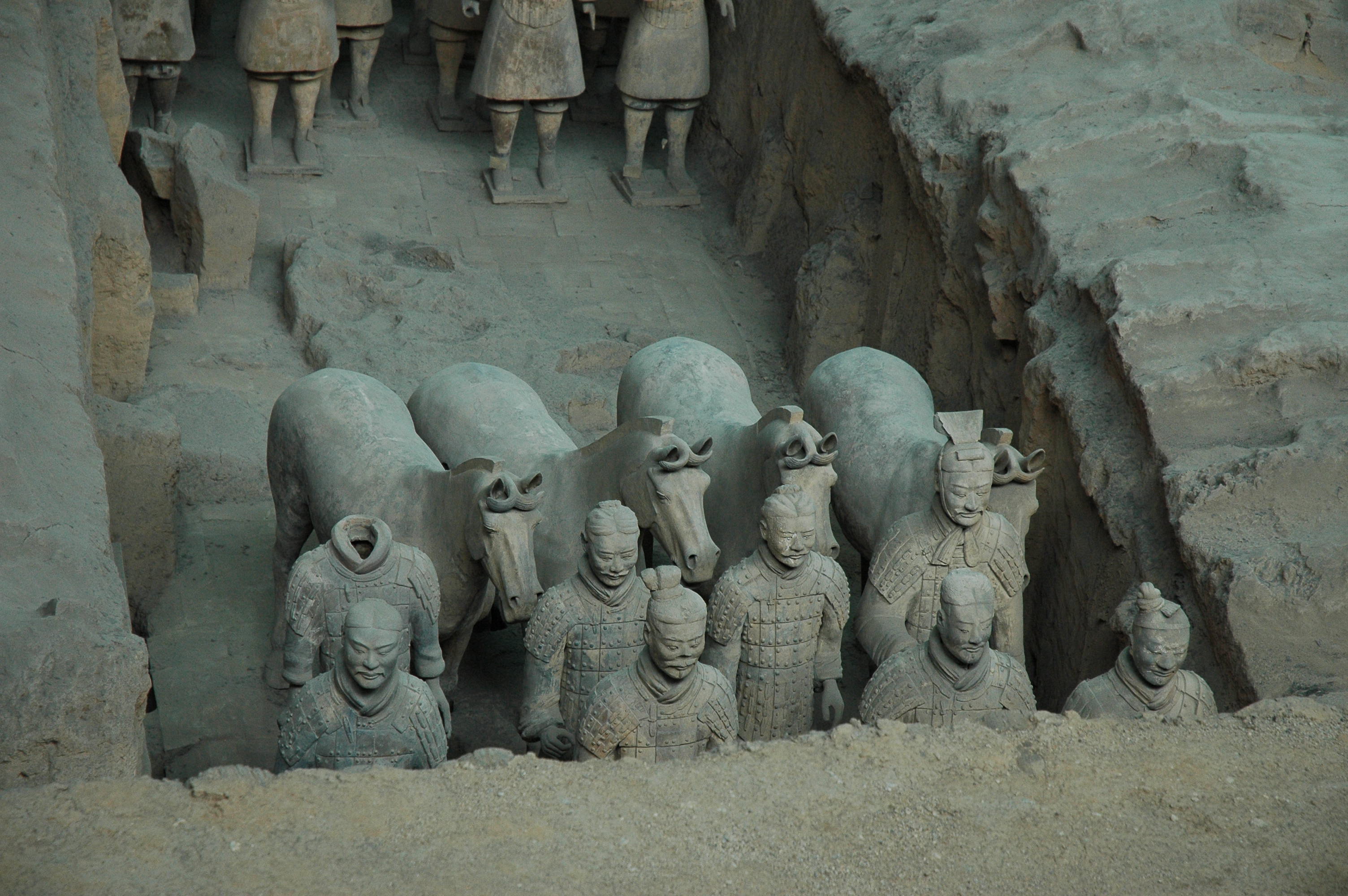
We catch the overnight train to Xian from Beijing to marvel at the Terracotta Warriors and find ourselves cycling around this beautiful walled city, almost eating the air.  Yes, to quote my son after his first trip to India (a place he fell in love with) the air was as thick as wasabi on a wafer.   I want to peel back the pollution to uncover this ancient city, its clouded beauty.  If I cup my hands, I am certain I can catch a piece of air and hold it.

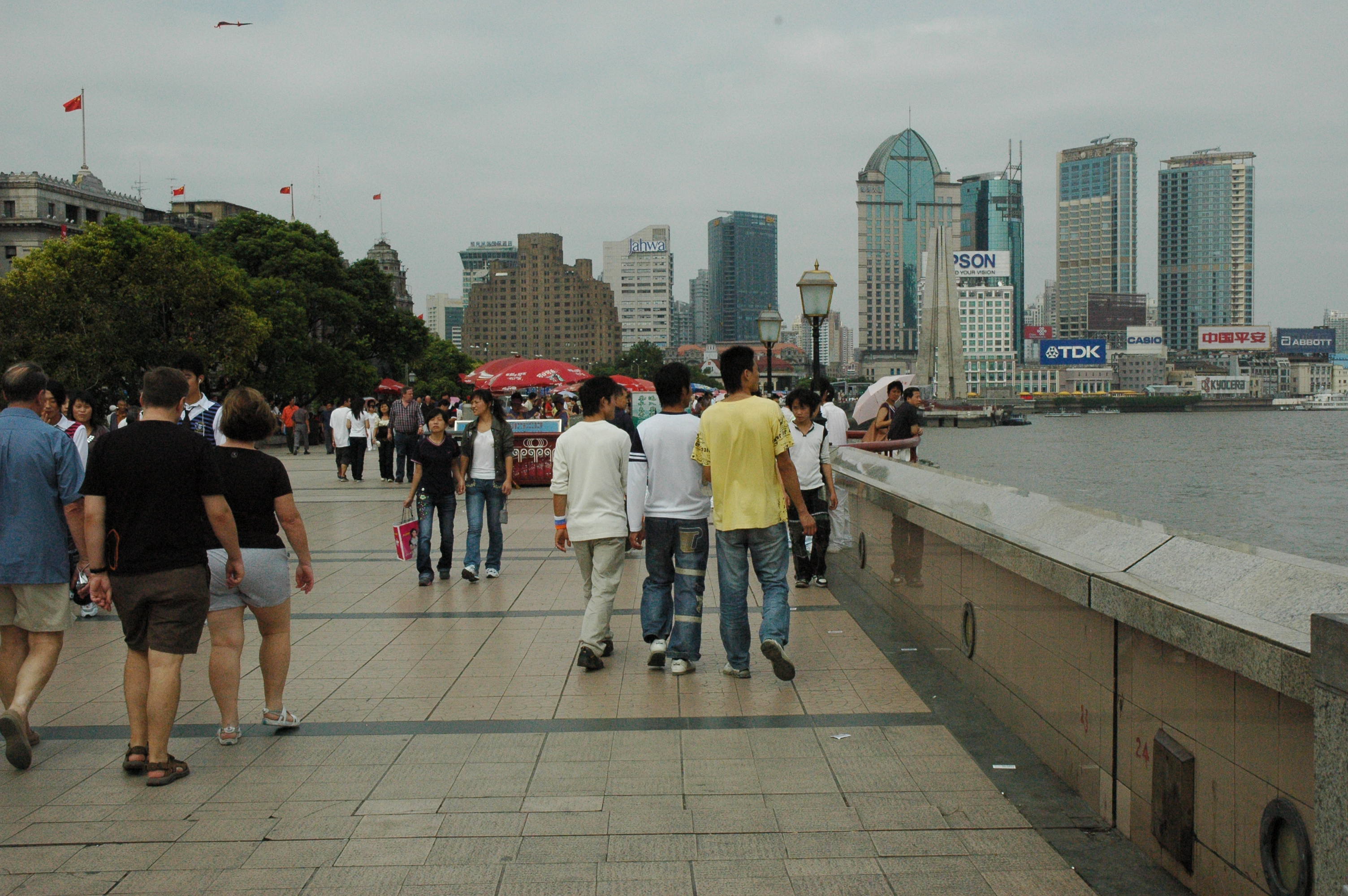
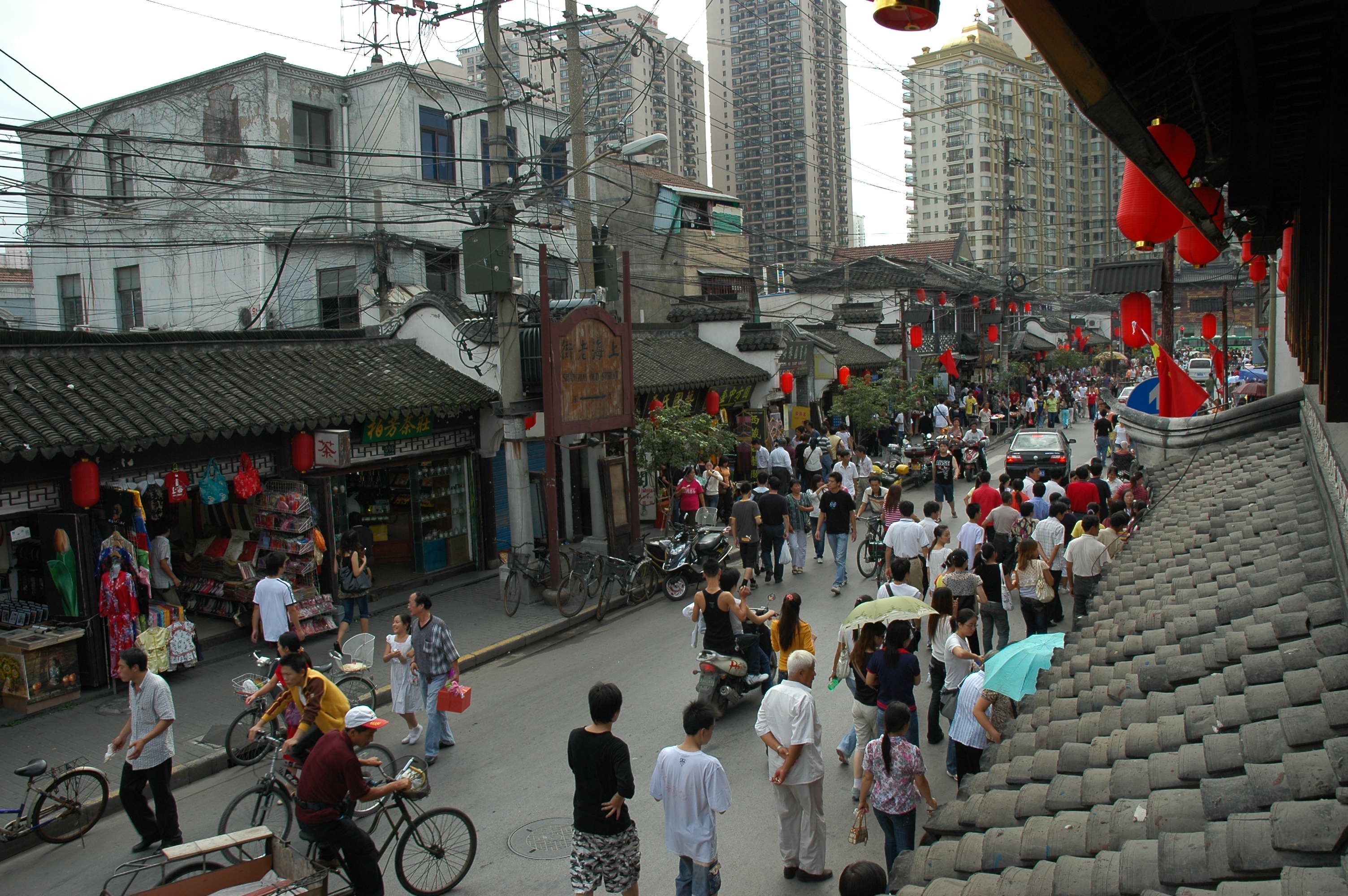
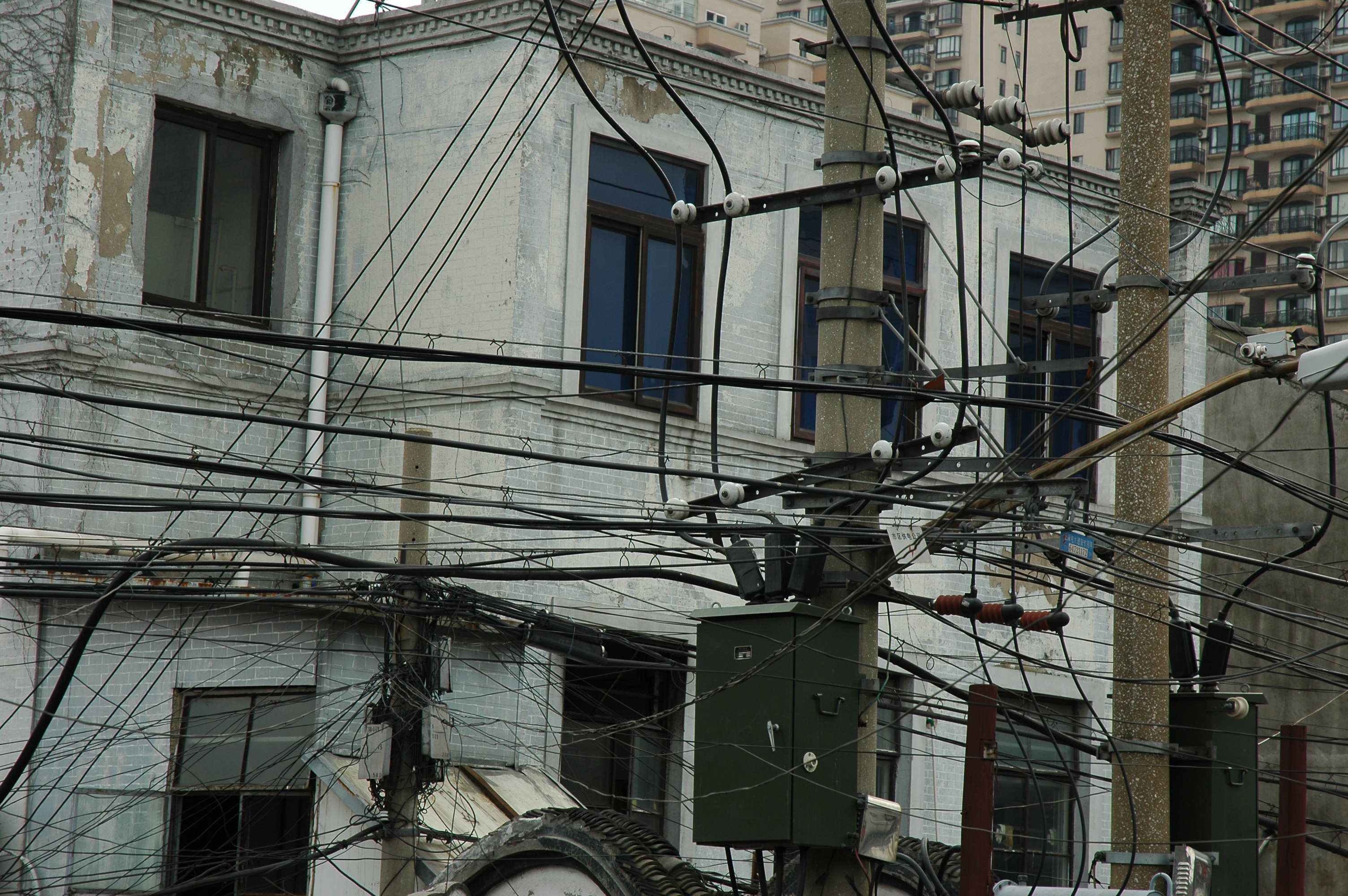
Our next stop is Shanghai, a city vivid in my imagination.  My dreams are of the Bund as it had been without the spectacular high-rise development on the other side of the river (Pudong) and so I am disappointed.   But we have a taste of what might have been old Shanghai in a historic teahouse looking out through a tangle of overhead wires.

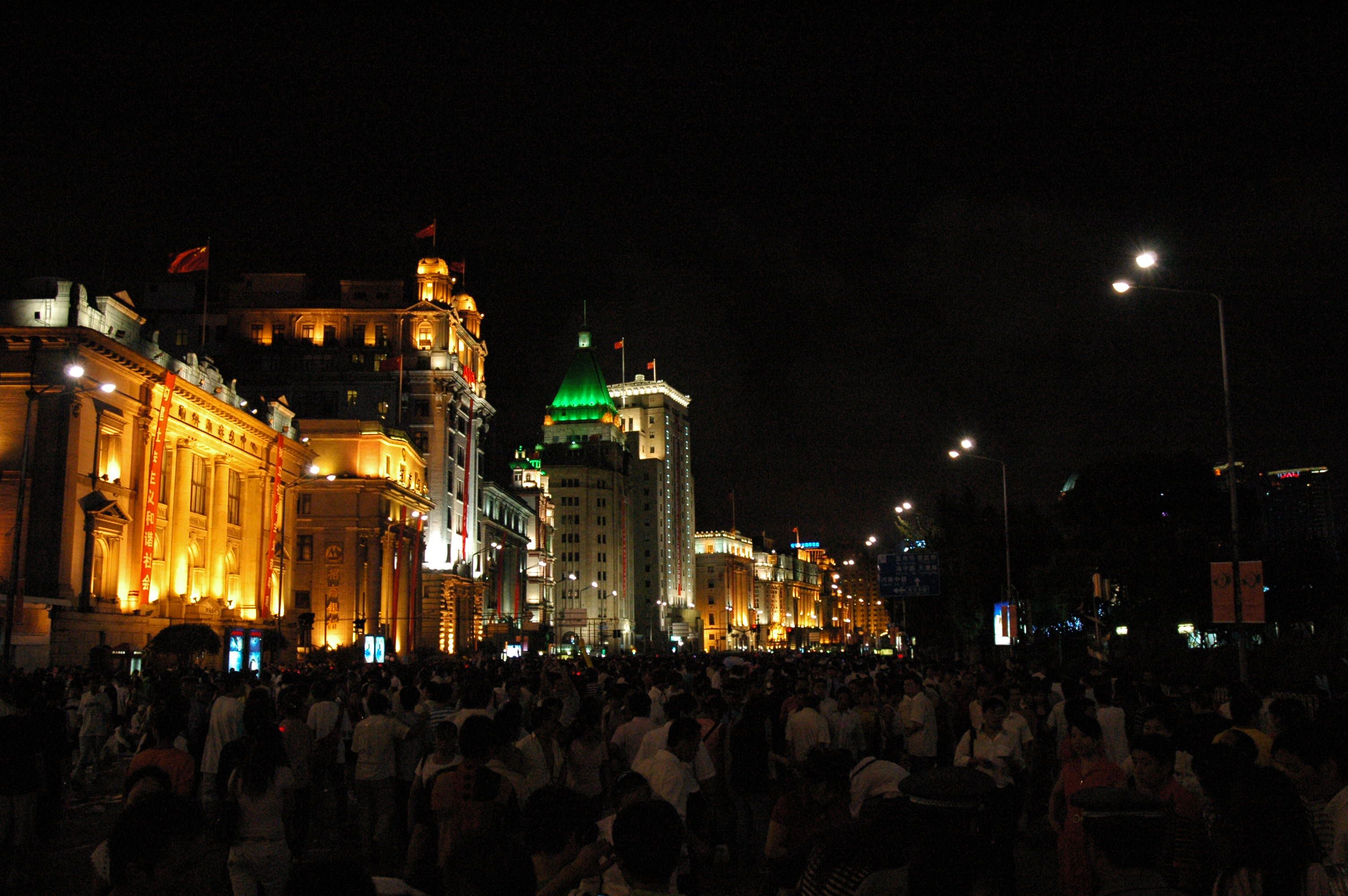
It is October and we are there to witness the national celebration of  the People’s Republic of China. Cars are banned from the city centre and The Bund for three nights.   It truly happens, causing stress to unsuspecting tourists in mid city hotels who have planned to catch taxis to connecting flights or trains.  The streets throng with Chinese (one child) families enjoying themselves – no liquor – no violence – just a swell of families and innocent pleasure – in contrast to the screaming neon along the waterfront;  although they are quite beautiful too.  And then on the third evening of celebrations, we look up at a clear blue sky.   So, it is possible!    Maybe by the time all those highly trained athletes arrive in Beijing, the air there will be clear.   What will happen to all the industry that is shut down?  It is hard to imagine.    But noting how obedient the traffic in Shanghai is in obeying the ban, I am heartened.

            Flying out of Shanghai heading towards Athens, on Lufthansa, I sit next to an enthusiastic Chinese travel agent.   She is sitting in my allotted seat, but I don’t have the heart to complain, as she is so excited having just swapped seats with another travel agent to sit by the window.  She confides in me this is her first overseas flight.   She expresses her disappointment at the lack of “uniformity” of the Lufthansa hostesses who are all wearing similar coloured casual but not matching outfits.    The meal arrives and we have to choose between hot noodles in a carton or cheese and salad on a bread roll.  My new friend chooses the bread roll because she tells me she wants to try everything.  She asks me, holding up her bread roll “Is this the cheese that makes you fat?”  Before I can reply, she is waving to the hostess and has swapped her roll for noodles.   We talk about food and waste and living in China.   She tells me when she was a young girl her Mother said they must not waste a single grain of rice because if every person in China wasted one grain of rice, each day…  the mountain of rice grows before my eyes.  I ask about her parents and Mao, and she explains that it had not been easy for her parents growing up under Mao.  At this point her voice changes, just like Mark our tour guide’s had. It’s a tone that implies that they understand but we don’t. ‘Difficult” she says, and then so I won’t get the wrong impression, she adds, “Mao meant well”.

The European car manufacturers say they mean well too, producing low-cost cars in China.  I heard one such manufacturer bragging on television about how cheaply they could reproduce their brand in China.

I imagine the mountain of rice and the mountain of cars, growing side by side.

The Comfort Women

Standard

The title is of course an oxymoron of the cruelest kind.   Comfort for whom?  It reminds me of the title of Julian Barne’s book ‘Nothing to be Frightened of’, it all depends entirely where you put the emphasis. Until recently, I had not realised the number, the territory, the vast canvas of this henious crime.   It was on a recent visit to Seoul to be with family, that I came face to face with the history of sexual slavery during the Second World War.  According to Wikipedia a majority of the women were from Korea, China, Japan and the Philippines, although women from Thailand, Vietnam, Malaysia, Taiwan, Indonesia and other Japanese-occupied territories were used for the Japanese military “comfort stations.” Many of these women have gone to the grave carrying their secret.     And now, a few, very old, very brave, live on as long as they can, hoping that by holding out, at some point, the Japanese Government will hear them, will see them, will give them all that they want… recognition, by way of an ‘official’ apology.

It is with pride that I write of my encounter with some of the still living sexual slave survivors at the House of Sharing in Gwangju, Gyeonggi Province, about a two-hour bus ride from the centre of Seoul.   Pride because they are resilient old women with dignity, courage, and often a surprising sense of humour.   Many of them survived the horrors of sexual slavery and because of the shame, married, raised families and did not ‘come out’ until later in life.    Even now, in this quiet rural setting, they are not entirely welcome.   Some of their neighbours would prefer them to be elsewhere, and believe they bring shame upon the district.   So, instead of the overdue compassion, they still carry both inwardly and outwardly, the stigma imposed brutally upon them, their dignity so tragically stolen by a Japanese Government at war.     Simply put, many people, the Japanese Government included, would like that these women would just die quietly, their secrets buried with them.

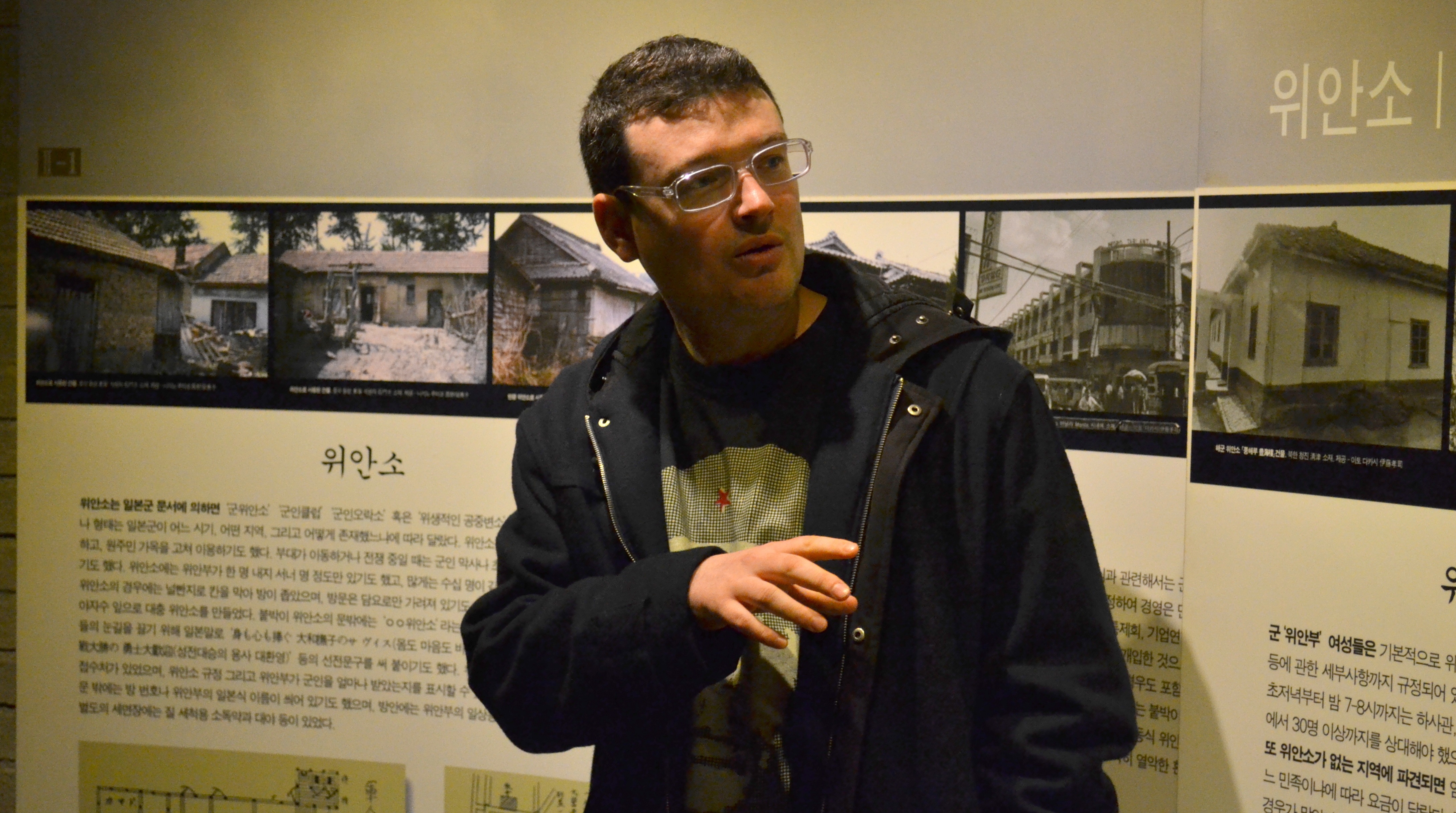
We were taken on a tour of the House of Sharing by my son and his Korean wife who actively campaign for and support the cause of the Comfort Women. On this particular day, they were the tour guides for a group of around sixty international tourists from Japan, America, China as well as local Koreans, and my husband and I, from New Zealand.   The tour is advertised in the Lonely Planet Guide for the socially conscious tourist who wants to know more about Korea than just the LCD screens, amazing restaurants and famous palaces.

Every Wednesday, a protest is held outside the Japanese Embassy in Seoul (near Insadong) and whenever they can, my son and his wife, join the protestors, and too, some of these elderly women (in their late eighties now and failing) will travel the two hours or more by van from their rural home at the House of Sharing to join the protest.   Why?   Because, the one thing they still demand from the Japanese government is a formal apology.    The Japanese have admitted that these events took place, have even given funds to support the women, but the most important step they seem unable to take, to offer the women the one thing money cannot buy, an official apology.   An apology will mean that this barbarous act against these women will finally be acknowledged as a a war crime, and not just some collateral damage to be swept under the carpet and forgotten.                 Alas, these women are dying now, one by one, every few months, another survivor dies without the dignity of an official apology.

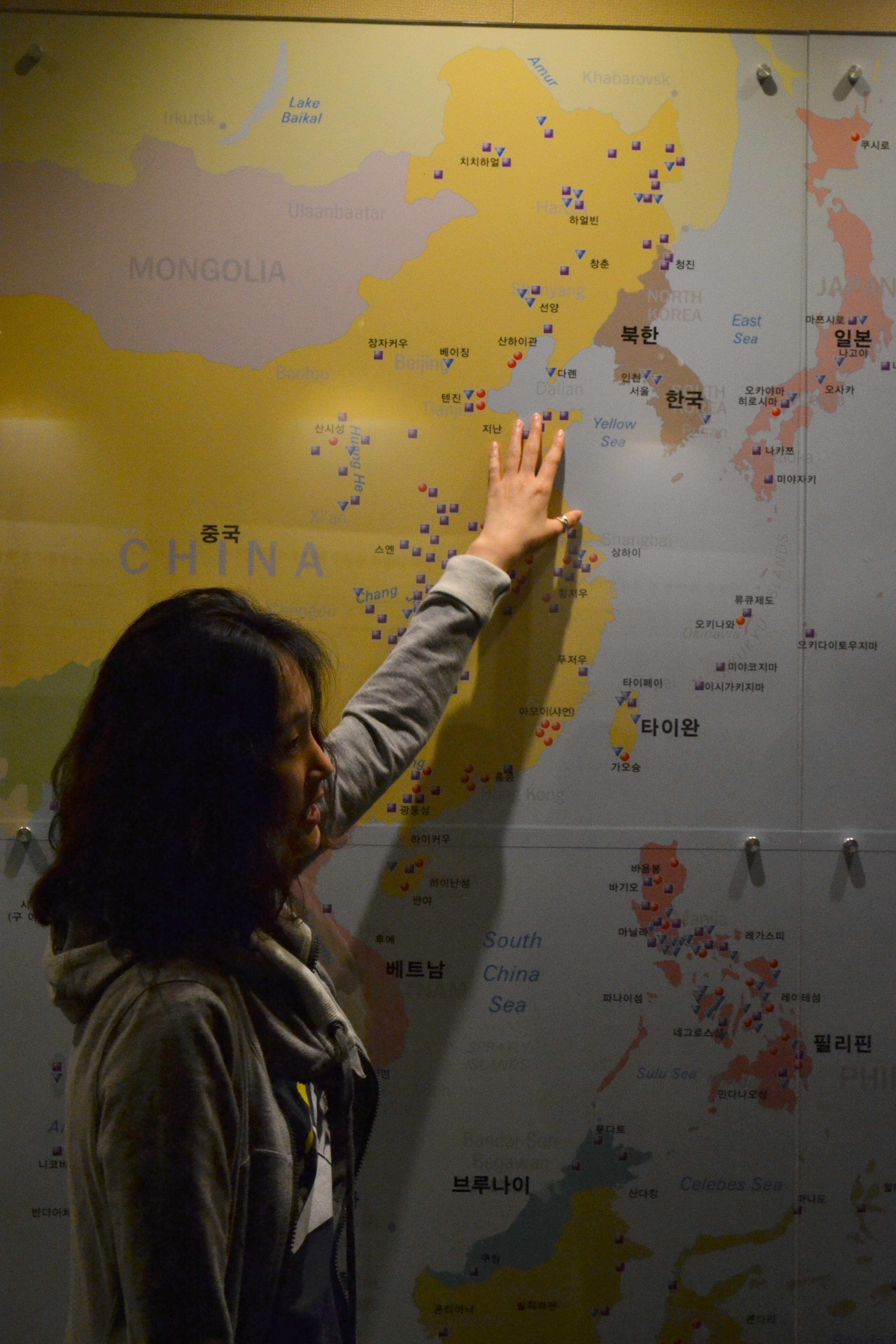
                  Take a look at the photograph of the map I have posted and see for yourself the shocking geography of it, scan the map, look at the colour, trace for yourself the transportation of young Korean women, some as young as sixteen, as mere bodies to satisfy the Japanese invading troops.   Imagine yourself as one of those women, taken from your family, to serve as a sexual object for not just one, but hundreds of soldier’s gratification.   Imagine that now in your last years, all you long for is recognition, a piece of your dignity restored and all that it requires is a public apology, so that it is known officially, noted in the history books, a dark stain on the maps of Asia, that you and hundreds of other women were sexual slaves of the Japanese Government.   And although you have great dignity as a survivor, maybe something else, maybe but a piece, a small shining piece of something will be yours, before you die.   That small piece of something will be a light that shines on this crime, so that it may never be repeated.

And yet, as I write, and as you read, we all know that around the world in scenes of conflict both within and between national borders, women are still, often, the first victims of violence in acts of aggression by the state, or the soldier.

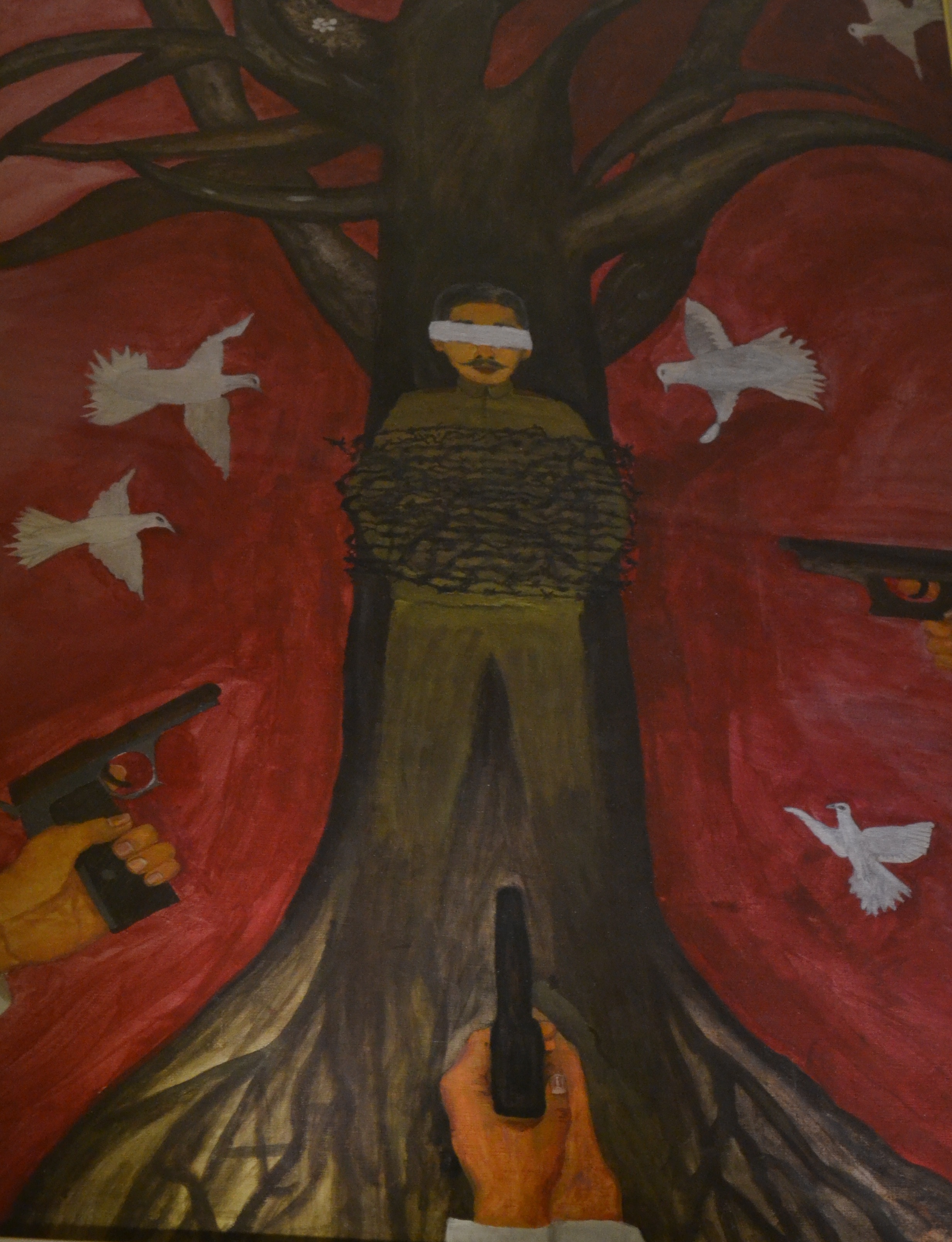
I am posting some of the poignant and eloquently tragic paintings by some of the women from the House of Sharing.  Unable to put into words the dramatic degradation they experienced as young  girls and women, they have taken to painting to express their pain.   Words are not necessary.

I met some of these women.  I sat with them in the afternoon, after a tour of the House of Sharing that unveiled the history and horrific details of their experiences.   What a contrast.   From the museum part of the settlement, we moved with a swarm of delightful young tourists, to the home where these elderly women are feted like famous movie stars.     These young people come regularly on the bus and the women, to be their friends, to love and to show support for them.   There is much laughter, affection and ordinary conversation.

It might have been any small residential home for the elderly – under-floor heating, spacious rooms, quite luxurious toilets with heated seats, and smiling older women, some more stylish than others, one knitting herself a pair of woollen trousers, one holding my hand with humorous affection and telling me what a wonderful son I have.   My son laughing and teasing her because he said that normally, when he visits, she tells him he is not good enough to be married to our beautiful daughter in law.   The humour is good-natured and the women can be just as cantankerous and difficult as any elderly people might be.   Except they are not ordinary elderly women – they are extraordinary and their story ought to be told, over and over, that it may never happen again.

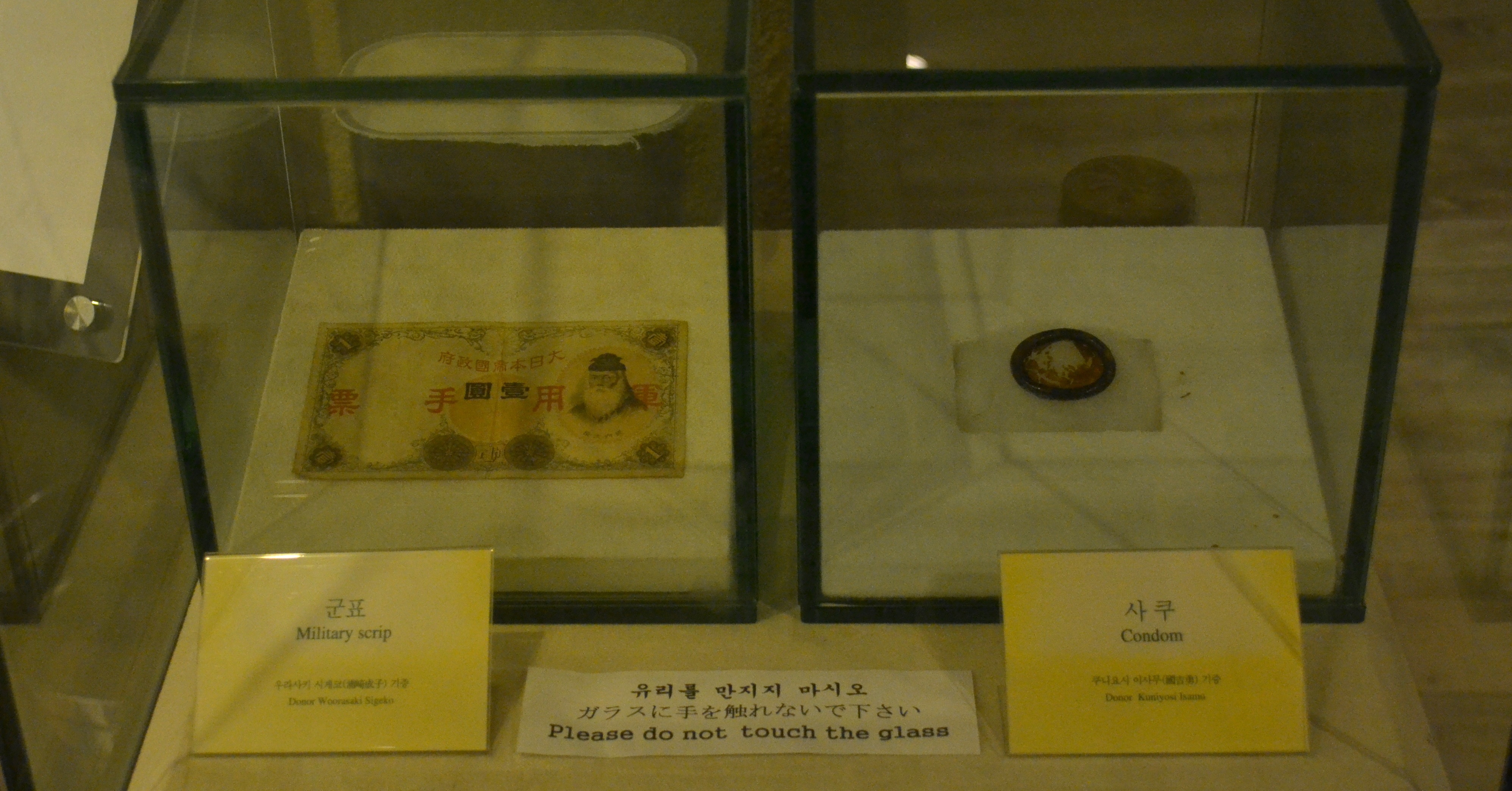
The systematic rounding up of young women, their transportation to the battle fronts, moved like livestock from camp to camp from Korea to Japan and as far south as Indonesia across vast areas of Asia, to serve as sexual slaves for soldiers – some young women servicing up to sixty men in a day.  Records were kept to ensure the sexual health of the soldiers; prophylactics provided but with no concern for the health of the women….waiting in the small room……listening for the footsteps….   We entered a small wooden hut at the museum restored to the dimensions of the huts used, where the young women lay like objects, listening for the footsteps…   the dark, repetitive, footsteps.

I met two dedicated women volunteers from Japan, living in at the House of Sharing and caring for the elderly women.  Indeed it is common for Japanese volunteers to come and stay for weeks at a time, and through their caring to do what their government refuses to do – acknowledge what has happened. I found meeting these Japanese women a very emotional experience as it highlighted the common decency of the average person and how most of us at any level abhor what war brings, especially to women.  I was very moved by their dedication, generosity and obvious loving affection for the women they cared for.   But too, even this, a small house in the middle of almost nowhere, is not without cultural politics, disagreements, and differing ideals within the groups of people who care and support the women at the House of Sharing.   The Korean’s demand an apology from the Japanese and I hear whispers from the Japanese as to why the Korean Government has not looked after its own women better, with the money given to them by the Japanese.   And so, seventy years on, politics still blur the lines of compassion.

If no-one listens, (and you almost feel this is what the Japanese Government is hoping for), these women will go to their graves, all of them, without ever having had their dignity upheld, their story acknowledged, officially, that they were brutally and repeatedly raped, as part of an official Japanese government programme.   No amount of money or reparation is as important as this official apology.     An official apology will not take away the past, but it will highlight the stain, focus the forensic eye, so that this crime enters the history books and so that it can never be repeated.

I’m adding to this blog from 2011, and including a link to a newly released short film (sub-titles in English) about the recent agreement between the Japanese and Korean Governments which includes a commitment to removing the beautiful and most poignant bronze statue across the road from the Japanese Embassy. http://newstapa.org/31980

Sir Patrick Leigh Fermor

Standard

This morning, I opened my computer to eleven emails alerting me to the news that Sir Patrick Leigh Fermor has died.

In 2007, I had the great good fortune to catch a bus to The Mani, seeking inspiration for my third novel, a Greek New Zealand story for which I am currently seeking a publisher.   Believe it or not, back then, I had not heard of Sir Patrick (call me Paddy) Leigh Fermor.   I was living in Kalamata in the Southern Peloponnese for two months, searching for the muse, and one day I caught the bus to the Mani and stopped in Kardamyli and ended up staying there for ten days, and discovering not only Paddy’s book on the Mani, but the man himself.

The article I wrote about this encounter was published in the Herald on Sunday

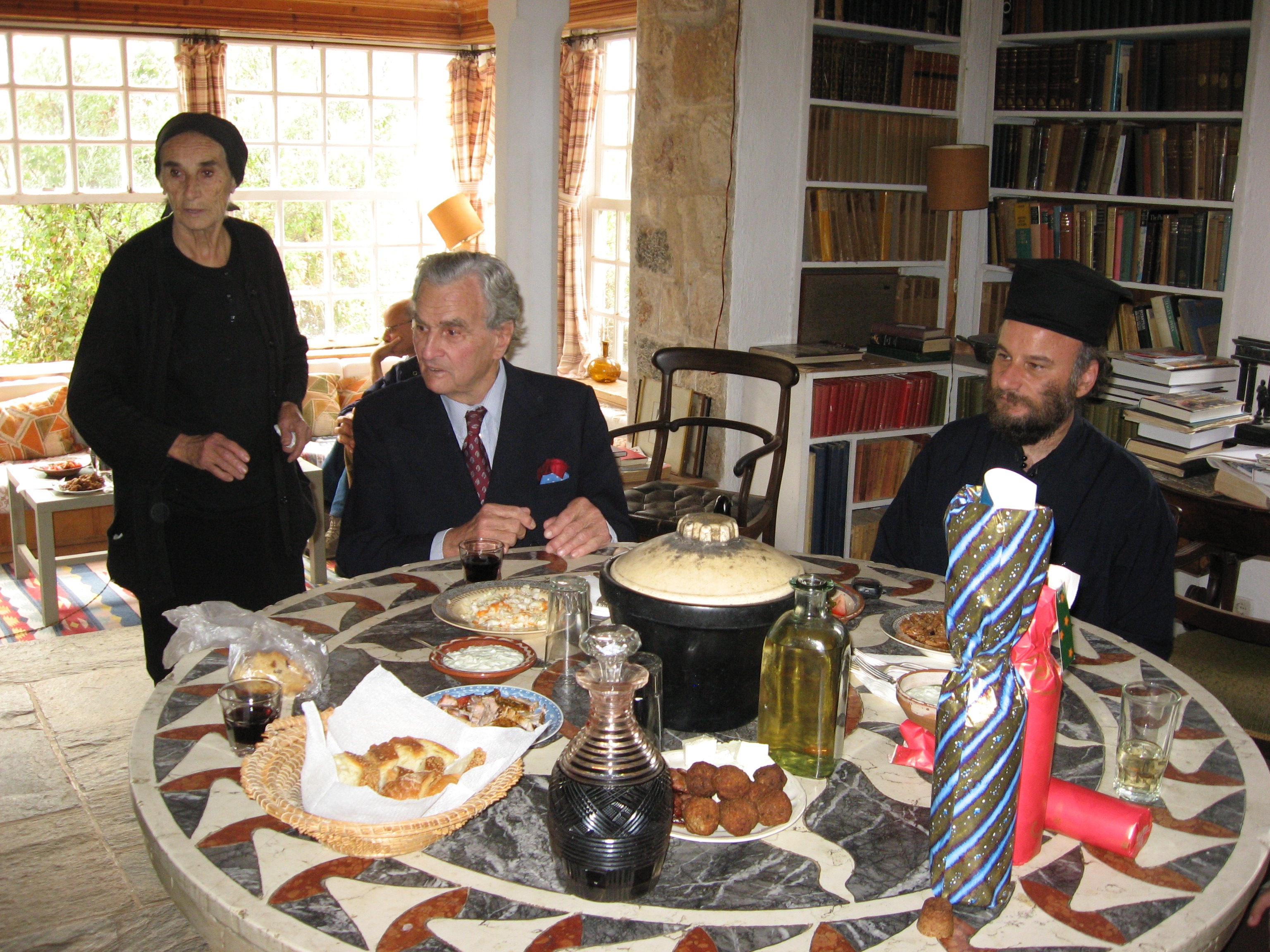
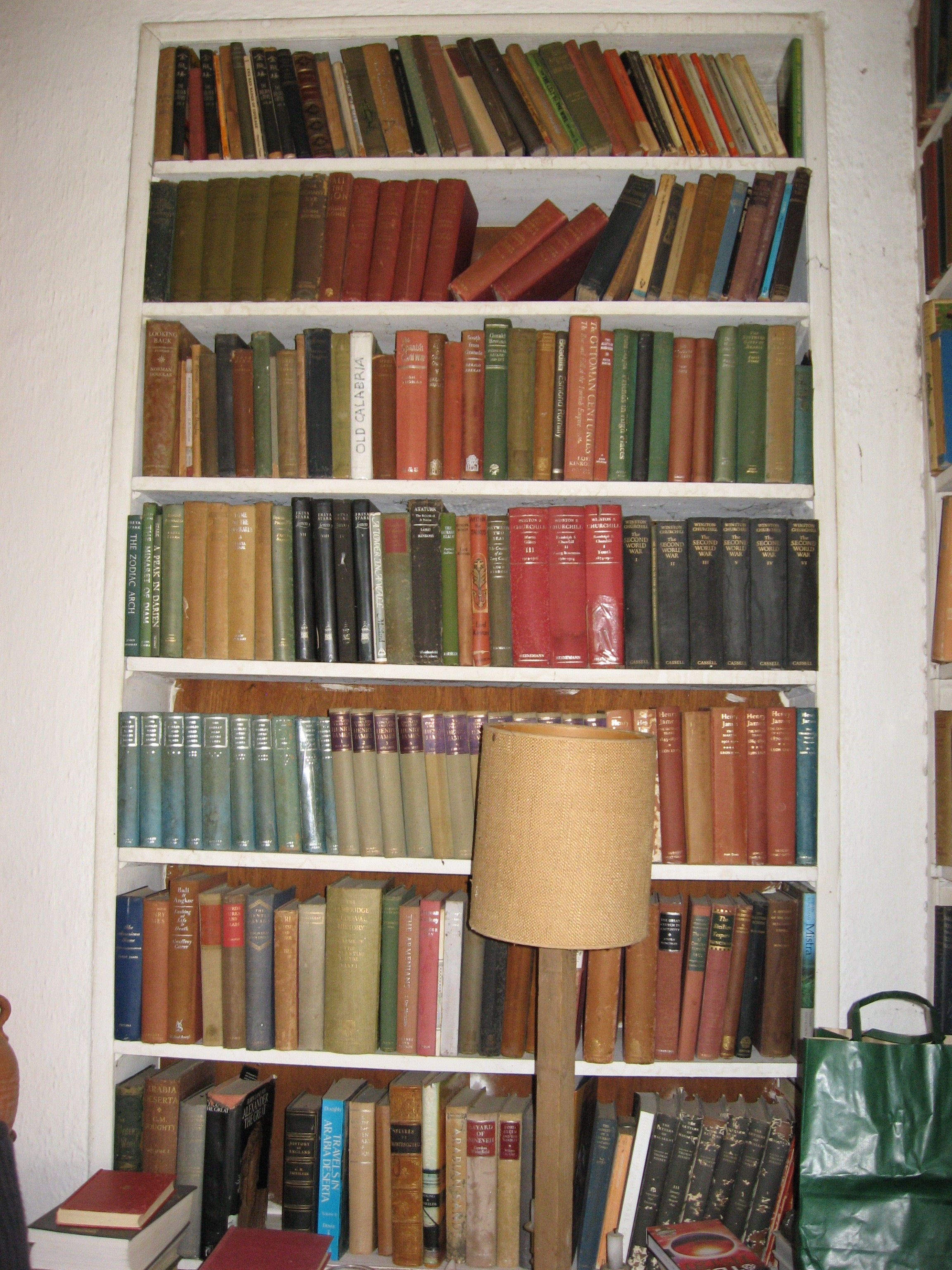
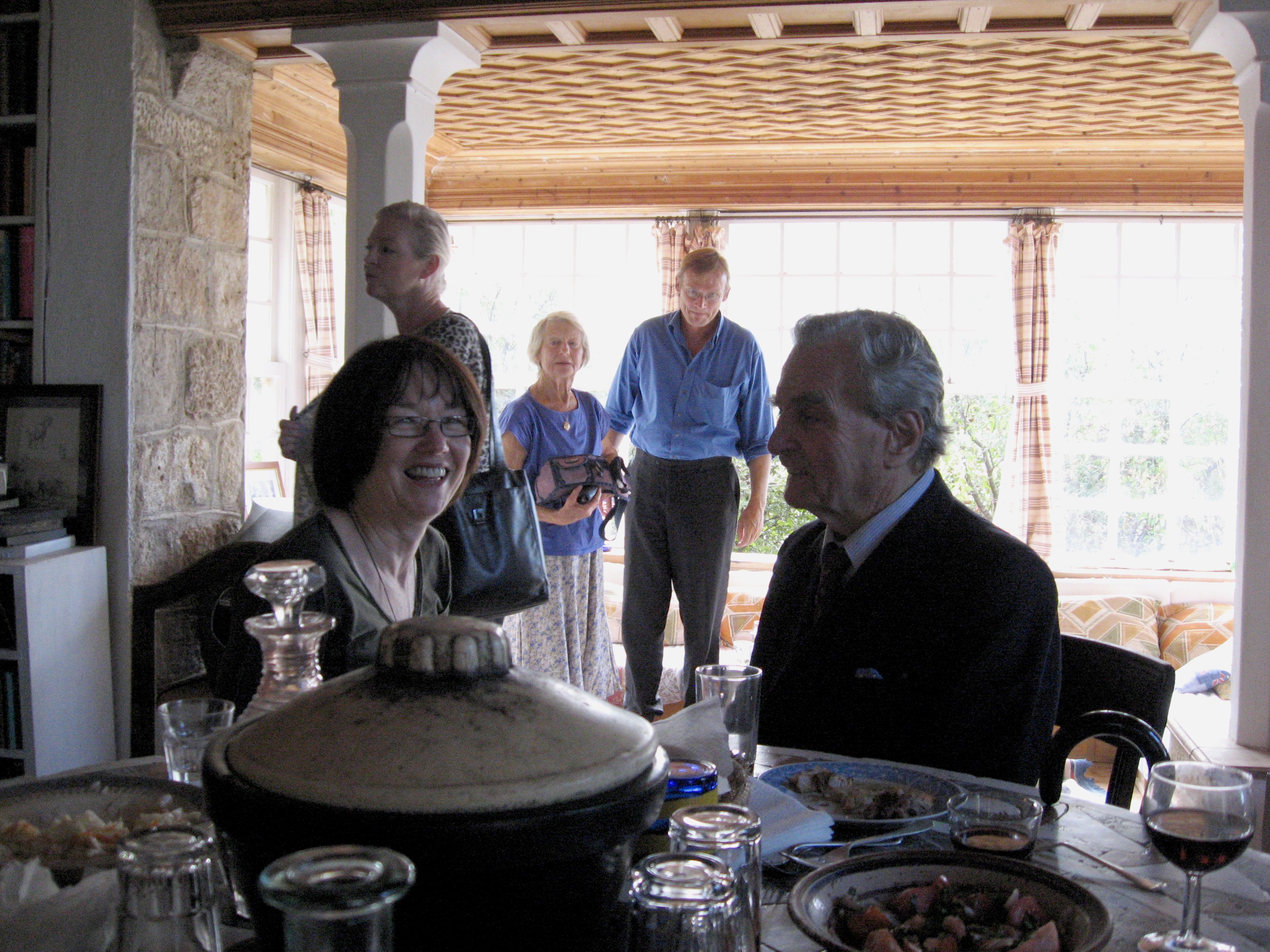
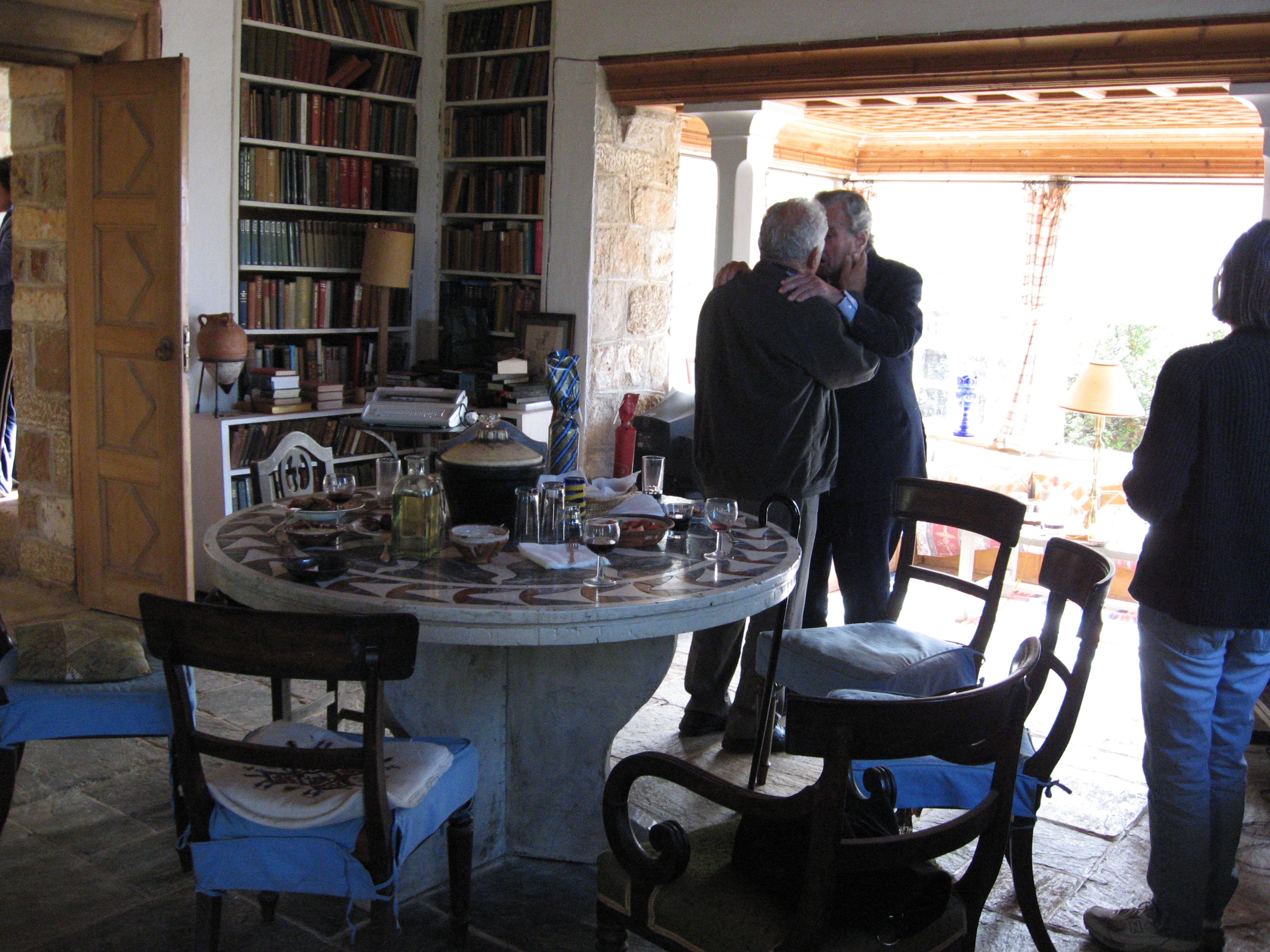
At Paddy’s house, I took several photographs both inside and out, but felt afterwards that perhaps I had naively overstepped the mark taking such liberties.  I was so excited and had no thoughts of writing an article or publishing photographs, just in thrall to the man, his writing and his beautiful home.  Today it feels like the right time for me to share my amazing morning with the man himself, his generous hospitality and indeed, his bookshelves.    I hear that his home has been purchased by the Benaki museum, and so hopefully this will mean that many devoted fans, travellers, and writers will get the opportunity to pay homage and visit this beautiful sanctuary, of a much loved Englishman, war hero, practically a Greek Saint, the man from the Mani.

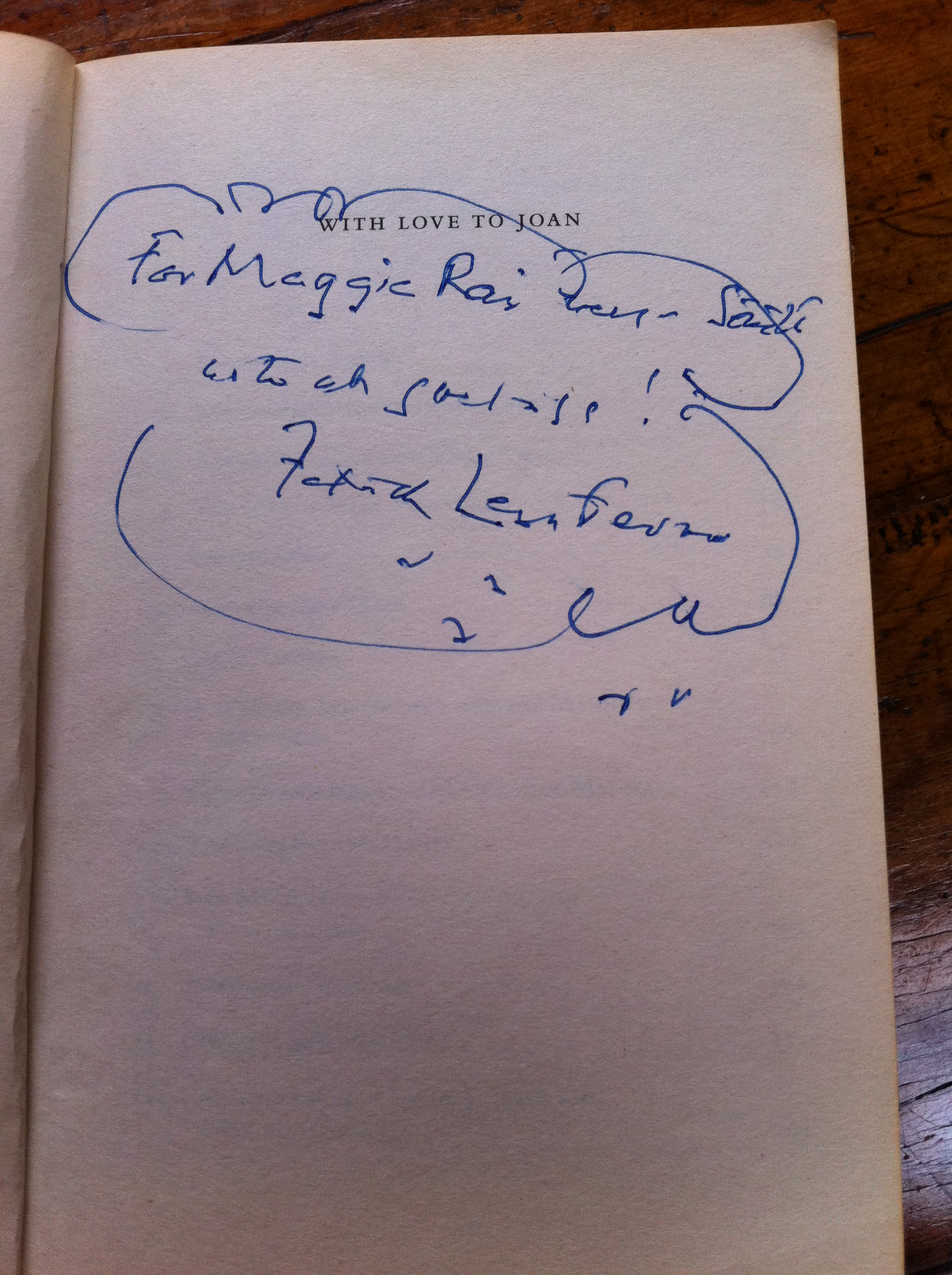
and this is the inscription (which I have never quite been able to decipher, even with the help of Greek friends

My photos, taken on Paddy’s Name Day in November 2007 include a few movie clips of the local women singing and at one stage Paddy pretending to fire a pistol.  I have hesitated in the past to post any of this intimate and personal images, but because Paddy has died, I am hopeful that the locals featured in these clips won’t mind being part of history.

And, here is a link to an obituary by Artemis Cooper

The Milford Milestones

Standard

The Milford Milestones

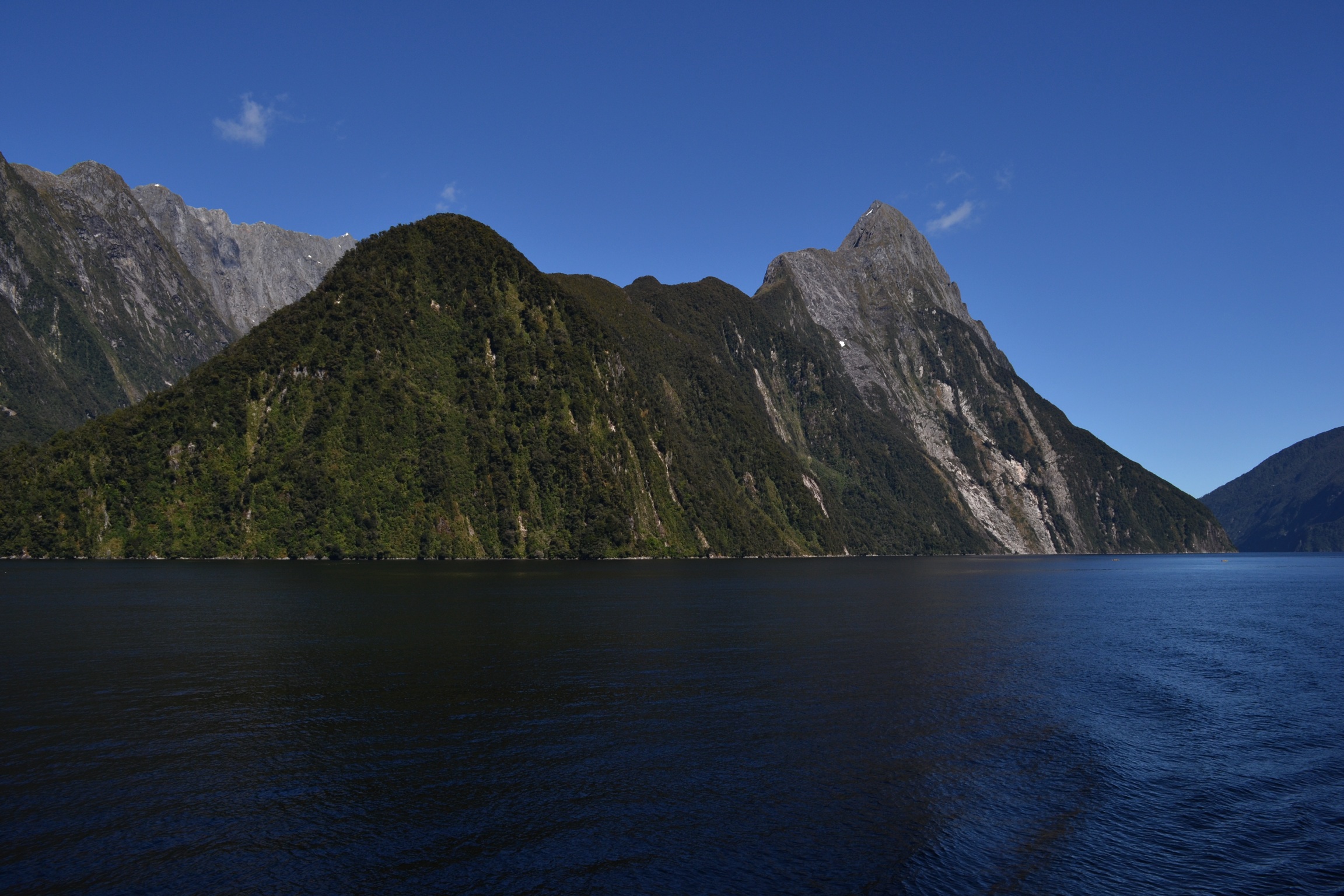
Queenstown in November sunshine – it isn’t over-crowded and the famous granite backdrop hovers, rather than imposes. All the decisions have been made prior to arrival, the tramp is pre-booked, the motel organised and all we have to do is choose a restaurant that suits all of us. It is my sixtieth birthday, and I fancy sushi, but we are sharing our holiday with a serious carnivore who craves steak – a compromise is struck – a low-key looking fish restaurant that serves the sweetest whitebait. The place is full and unpretentious and we’re glad.

Earlier in the evening, we had congregated to watch a film on the Milford Track and to cast an eye over our fellow travellers. We learned that five kilograms was about as much as we should dare to carry and watched as people rushed to buy Icebreaker t-shirts, that one extra layer in a colour they really liked, just in case. My friend found a shade of mauve that suited her.

We are four in a group of over thirty and apart from ourselves and three of the four guides born in New Zealand, nearly all of the rest of our group are from overseas. It seems that most true-blue Kiwis are freedom walkers and less inclined to lash out on the ‘luxury’ version of the Milford Track. Or so it appears to me, as people scoff when I talk of my journey… “Oh, you did it the easy way.” I’ve stopped trying to correct them and their view of me, by complaining how heavy my pack was (not to mention the book I carried that I was reading to review).

And ever since, on re-reading my review, I feel a bit guilty as I preface the review by mentioning that I kept falling asleep in the first chapter.  Unfortunately, I forgot to say that this was due to exhaustion from the walk, and not the fault of the novel.So, perhaps I’m not your average Kiwi tramper but of the four of us in our group, one of us is the sort of chap who goes bush in Fiordland at least once a year armed with a GPS and an inflatable kayak and he has paddled on lakes and tarns barely mentioned on maps. If he was happy to do the ‘luxury’ walk with us, then I can’t see what all the eye-rolls are about.

The beginning of the journey is sedate, with a scenic bus ride along the arm of Wakatipu with a laconic running commentary from the bus driver, translated immediately by one of our guides for the eight or so Japanese in the group. Each time she begins her version of an anecdote or description, I tried to imagine how closely, accurately she is translating, and worry too, because mostly we are already beyond the particular feature or moment that requires the translation.

We are told that Lake Wakatipu is an example of crypto depression – meaning most of the lake bed is lower than sea level. Bus journeys like this, with wide tinted windows and an elevated view, an adventure ahead, with new companions, mean that new words and unusual geographic details such as this, raise laughter, banter, and generate a bond – our first ‘word of the day’ and it is never quite supplanted.

Our driver entertains us with the story of the lake’s making, the Maori myth of the giant Matau,who fell in love and absconded with a Chief’s daughter. Here he lies still, folded in the foetal position, after the local tribe took revenge on him and set fire to the ferns he slept upon. The fire is supposed to have created a whole in the ground the shape of an S (the sleeping Giant… with Queenstown at his knee) and to have melted all the snow and ice around, creating the lake.  Each rise and fall of the lake is caused by the giant’s heartbeat we are told and we believe. Less than a week later, we hear that two young Frenchmen on kayaks who did not understand the force of his heartbeat were drowned in the rise and the fall of his breath.

The journey from Te Anau across the lake to begin our walk is poignant at the moment we pass a cross on a small island marking the spot where Quintin Mackinnon’s boat was found without him – the man who pioneered the Milford Track to the New Zealand public, instead of lost somewhere in a remote ravine, drowned somewhere in Lake Te Anau, his body was never found. The short journey we have taken from the jetty to here, illuminates for me how this could happen. I pour myself a cup of boiling tea from an urn and try to negotiate the ladder up to the top deck of the boat in spite of warnings from our guide. What might have been scalding water, bubbles and blows all over my hand on the open deck – but by the time the tea lands on my skin, it has already thankfully, cooled in the swiftly turbulent air. I barely taste tea, and instead watch as most of the content of the cup, mirror the surface of the lake we are crossing – and perhaps the sort of conditions in which Quintin Mackinnon was lost.

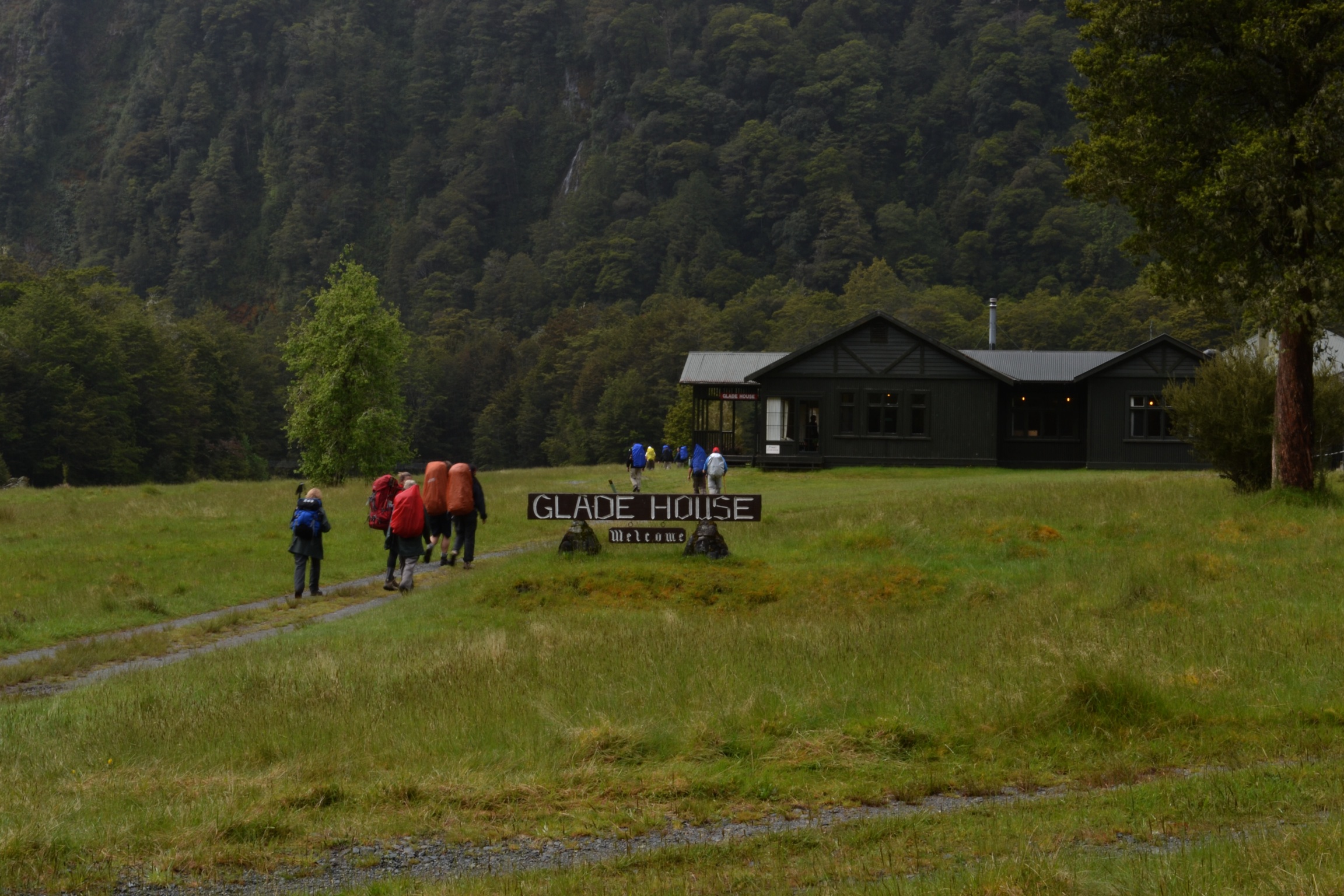
The walk to Glade House is a doddle. I feel invincible. My pack is a breeze and the lodge is less than 1.5 kilometres from where we’re dropped off. It’s disappointing too, because after sitting so long in the bus, so much anticipation, I’m ready to be challenged. We drop off our packs and take a short hike with our guides to a smallish waterfall and clamber on rocks to feast on fresh Fiordland-water that we scoop into our greedy hands.
</

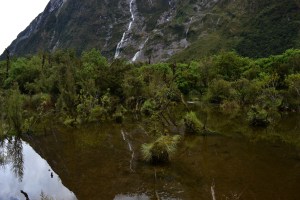
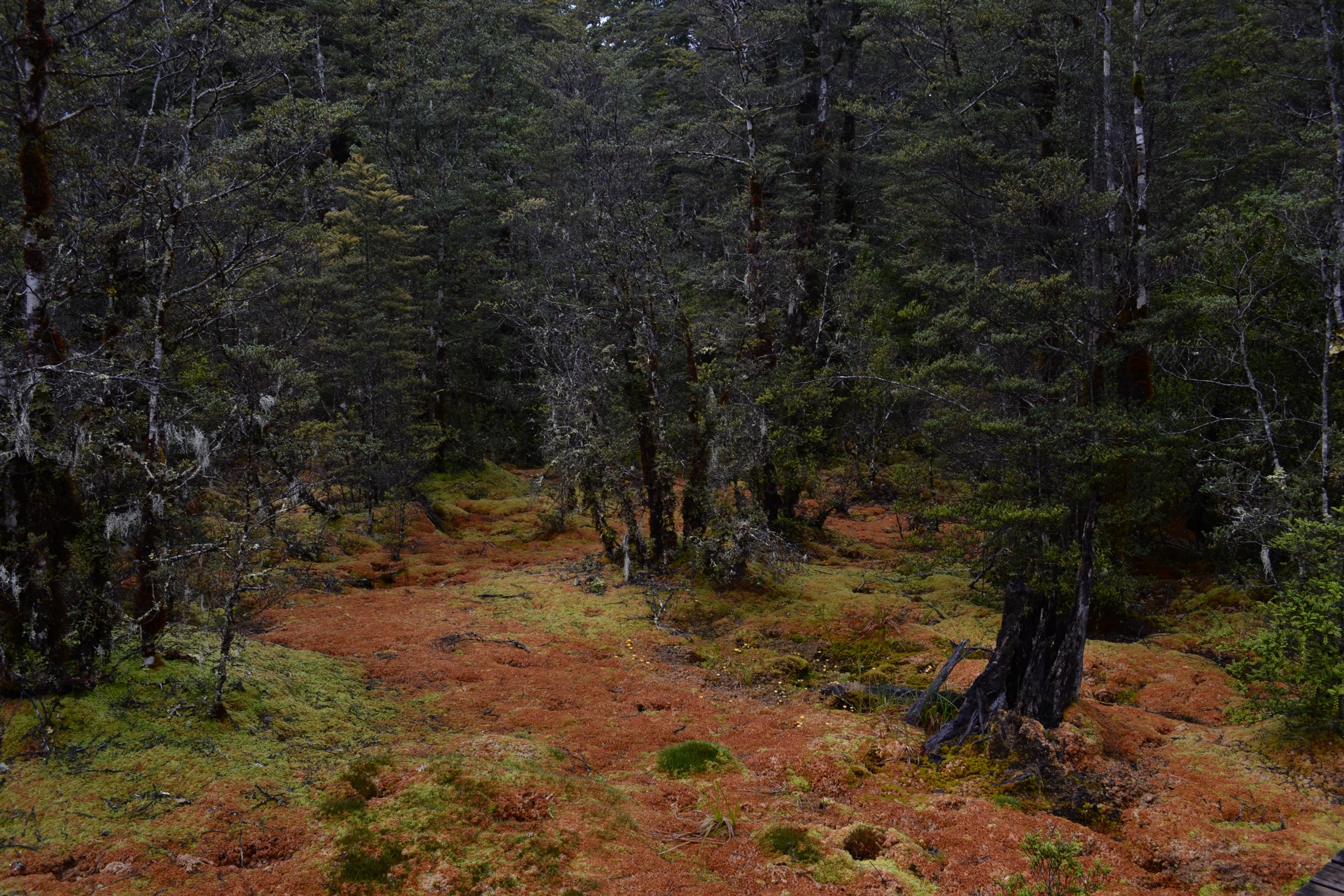
In the morning we begin the real thing by crossing the Clinton River via a suspension bridge, just low enough not to terrify and wobbly enough to delight. From here we start following the river, heading into Beech Forest, treading the soft underlay of leafy carpet. There’s a small detour to a circular boardwalk that transports us into unspoiled Wetlands. Spread before me is my Granny’s Axminster autumn carpet, the forgive-all brightly coloured thick-pile of orange, brown, limes, greens and red.
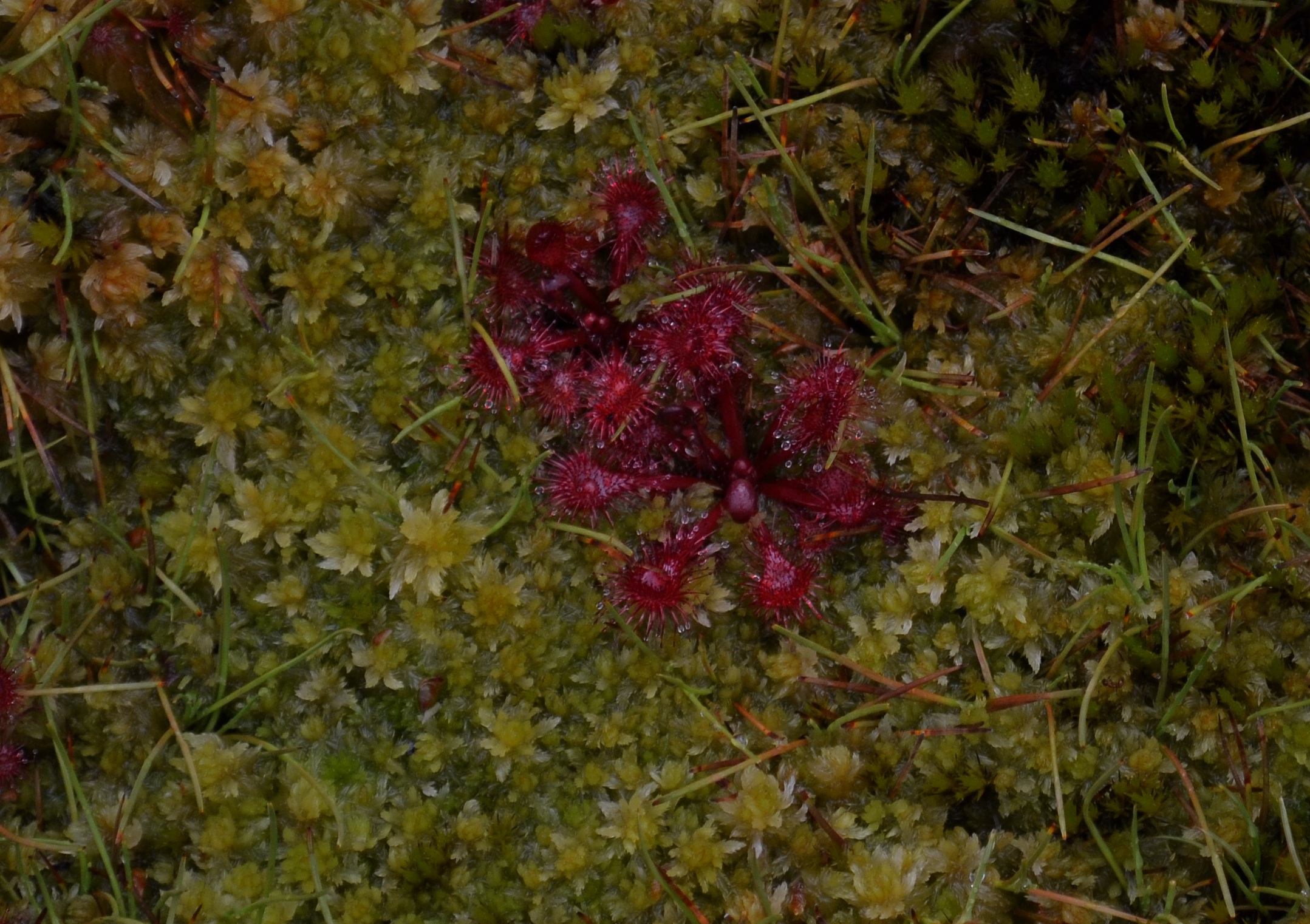
Except this carpet is alive, and it’s brightest tiniest carnivore, a small red flower, is eating insects whole, as we watch and with our encouragement, hoping they are the infamous sand flies we are trying to avoid. </
Hubby and I have doused ourselves in citronella and beeswax to foil the sand flies while others are relying on a more chemical solution. The guides spurn everything and tell us their bare legs are more or less immune now, after several seasons.
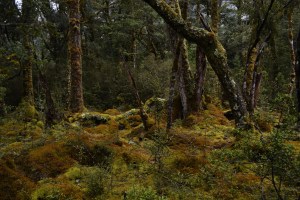
</

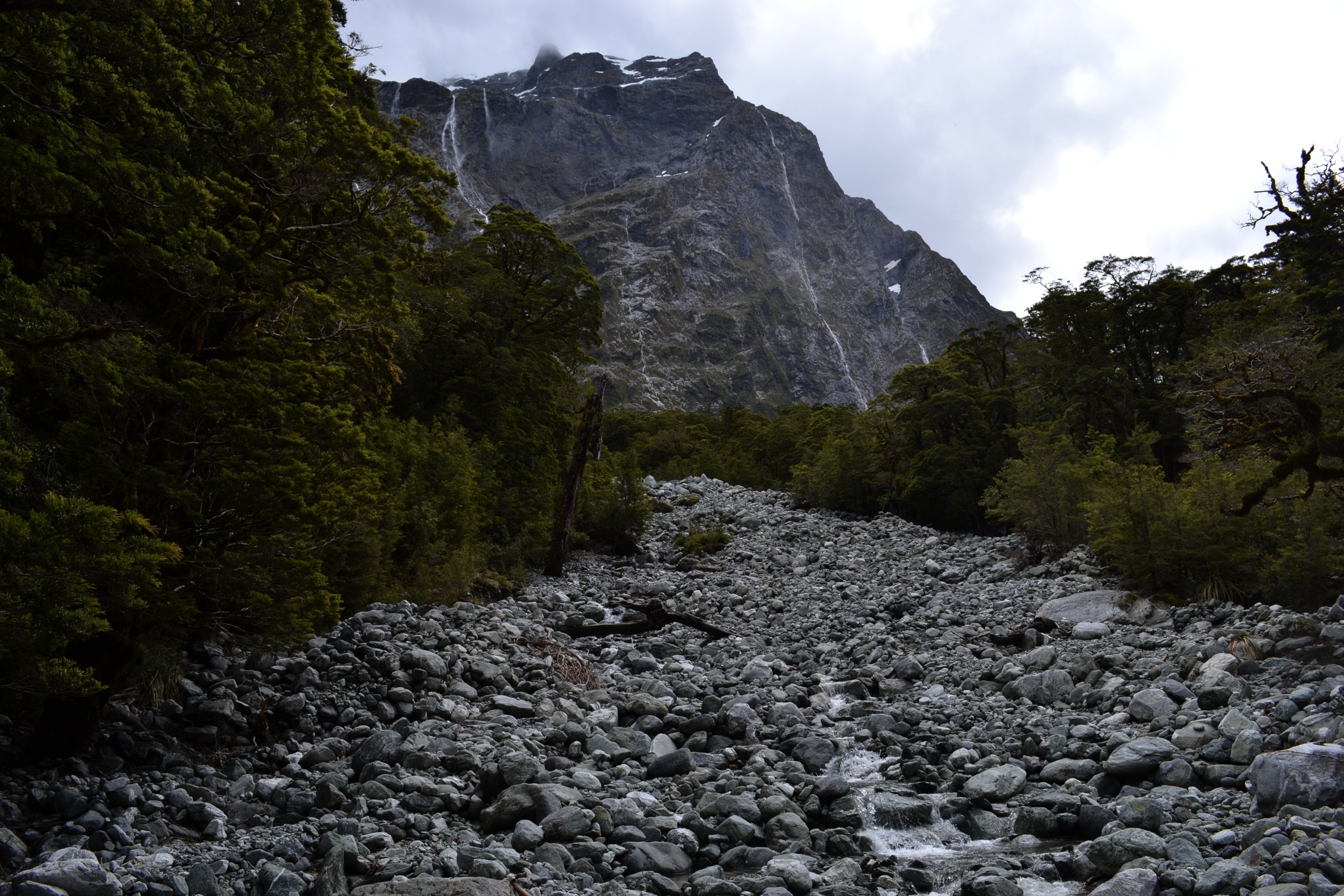
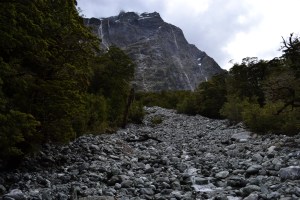
The Wetland leaves me tearful. I want to dance on the boardwalk and to sing, but it is early days and we are all, mostly strangers. And then we continue, out into the wide open along the old packhorse trail with perpendicular rock faces on either side of the valley. The Milford track is still pegged in miles, and as the four in our group are all baby boomers, we feel nostalgia. We think of Dick Whittington perhaps with his knapsack on his way to London seeking streets paved with gold, as we walk through this geographical wonderland paved with a different sort of gold.

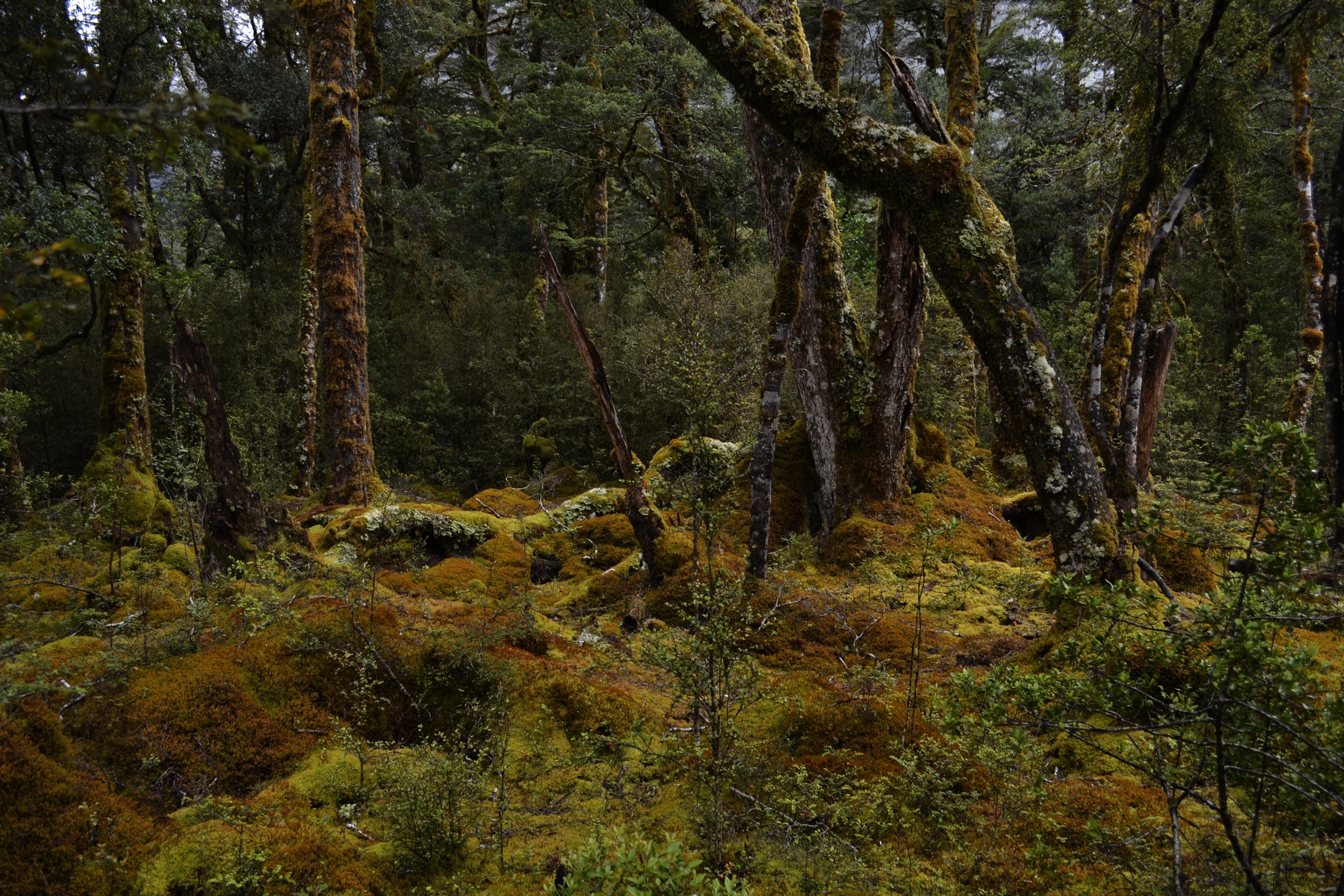
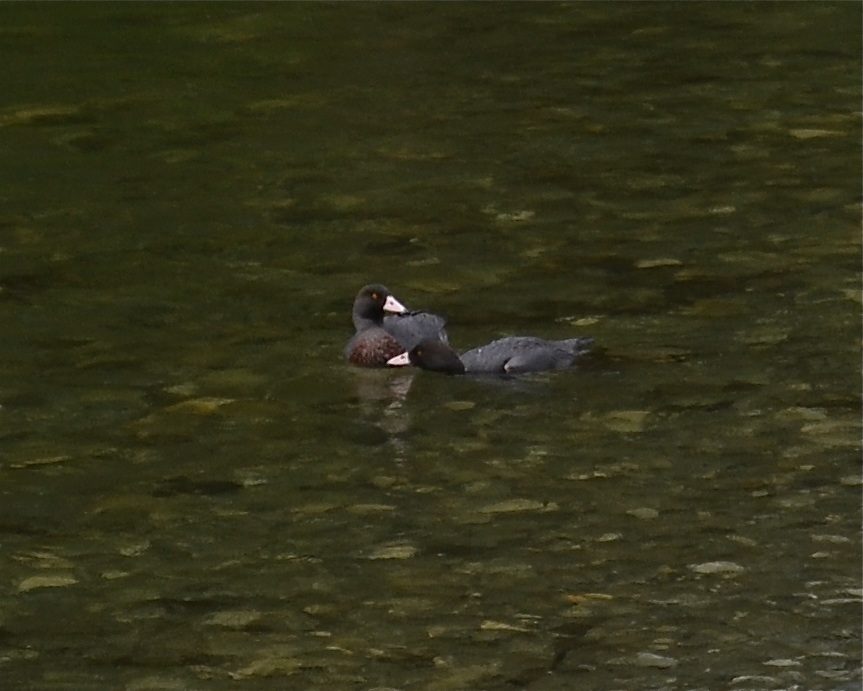
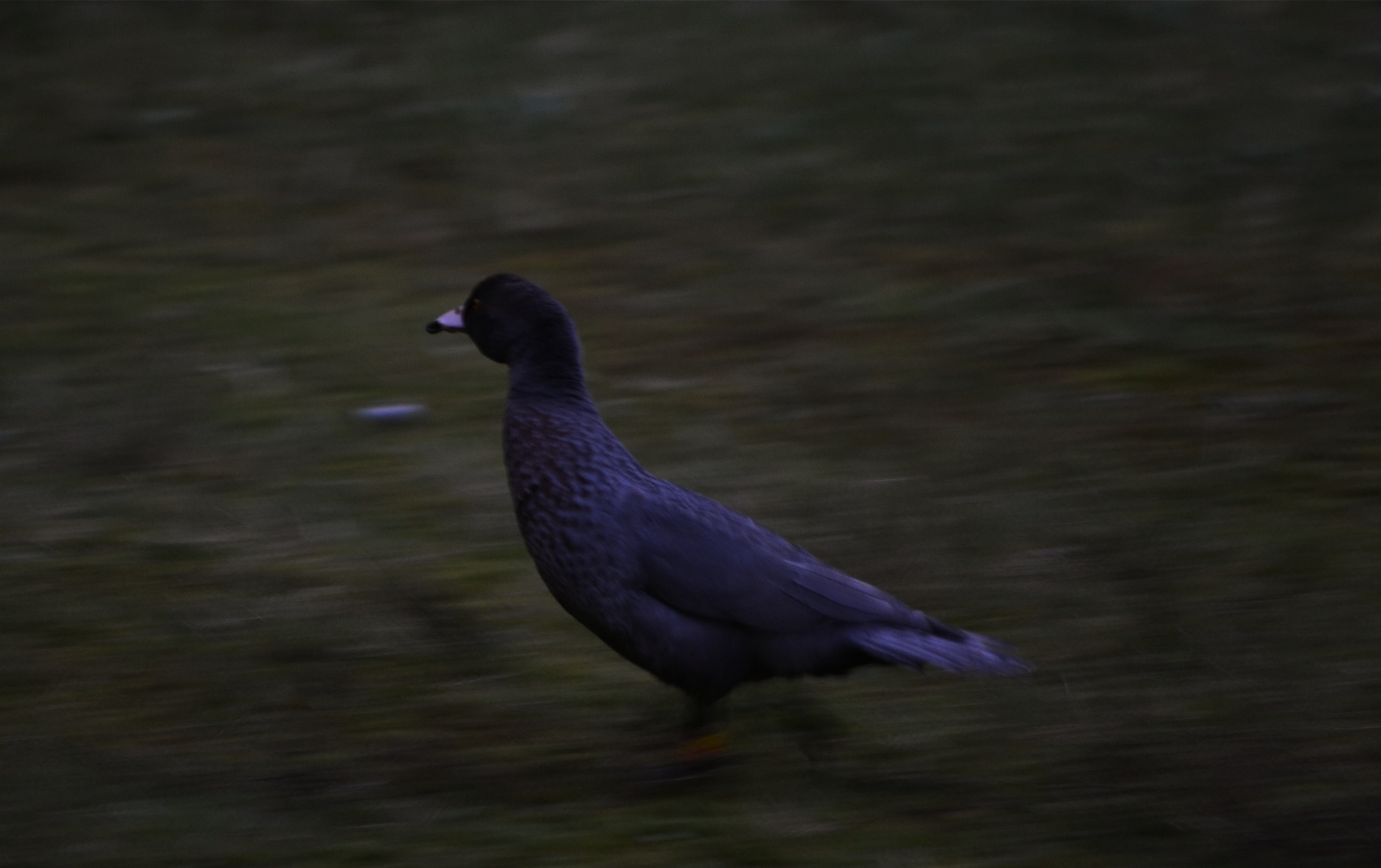
There’s a poem to be written simply re-sounding words like, brown teal, tui, tom tits, riflemen, walking sticks, sphagnum moss, crown fern, granite, kidney fern, grass, glacier and bell rock. All around is the sound of the bush, the beech trees, and later on, the water falling, oh the water falling. How lucky are we to be hiking in early November after a long wet spell and the water is everywhere, but not at flood level and we spot two blue ducks in the river.
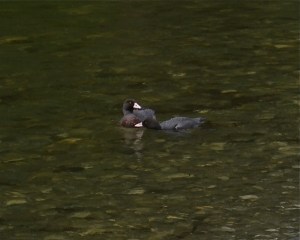
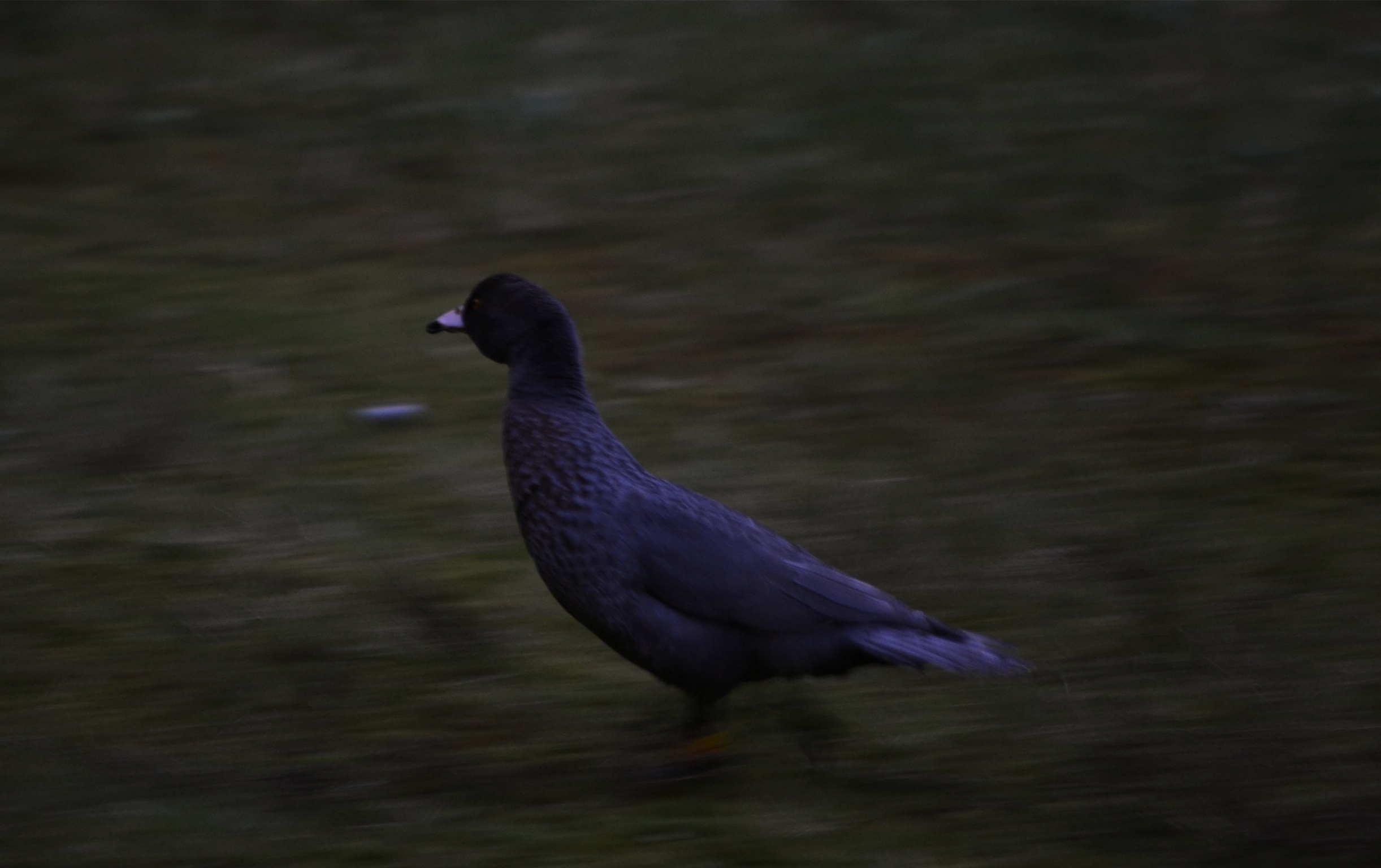
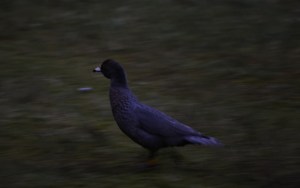
Evidently (according to our guide), there are only fifty breeding pair left in the world. We watch as they duck one another. I’m all grown up now and I know this is flirting and not fighting. I think they like the audience, and we’re impressed. Although they look less like blue and rather more like grey ducks on the blue water. And then, not that night but the very next we see a blue duck walk across the green grass, and he is cobalt, indigo, indescribable, and he or she knows it.
Ah, but that’s getting way ahead of myself, as we haven’t even ascended the Mackinnon Pass. We haven’t arrived at Pompolona Hut and like true amateurs, rushed for the hot scalding showers in our en-suite bedrooms, and then gone naked practically to wash our socks in the sun. The sand flies must laugh a lot at Pompolona Hut. They must chortle as they see us climb the last white boulders from the avalanche that blocked the Clinton river, all smothered in insect repellents, invincible and inedible. And they must congregate with stifled laughter in the bushes by the stainless steel basins, as we stand freshly showered, queuing to be eaten alive.
We discover a pianola at Pompolona and after dinner, and quite a lot of wine too, the mingling begins. The Japanese love their karaoke and the pianola as the hammers strike, the music plays and the words turn around on the paper roll, proves just as popular. We sing Bimbo possibly the silliest song ever written and we can see from the faces of our young guides that they cannot believe the words – and nor can we, and that we remember them!
Bimbo, Bimbo, where you gonna go-i-o somehow encapsulated our joy.

With a hole in his pants, and his knees stickin’ out, he’s just big enough to walk.

A silly, silly song, but our lungs are filled with joy and they spill with laughter, those of us old enough to remember the fifties.

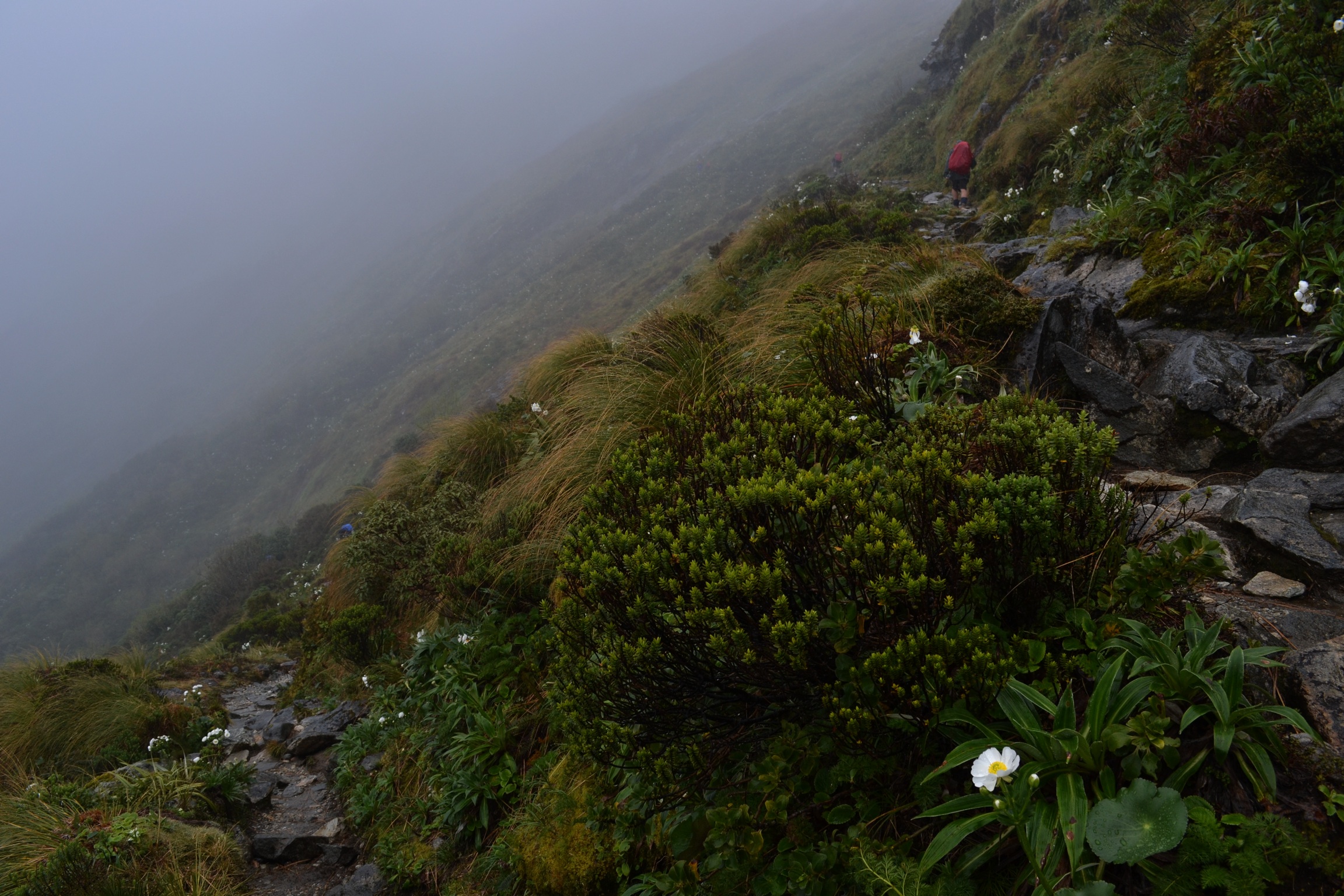
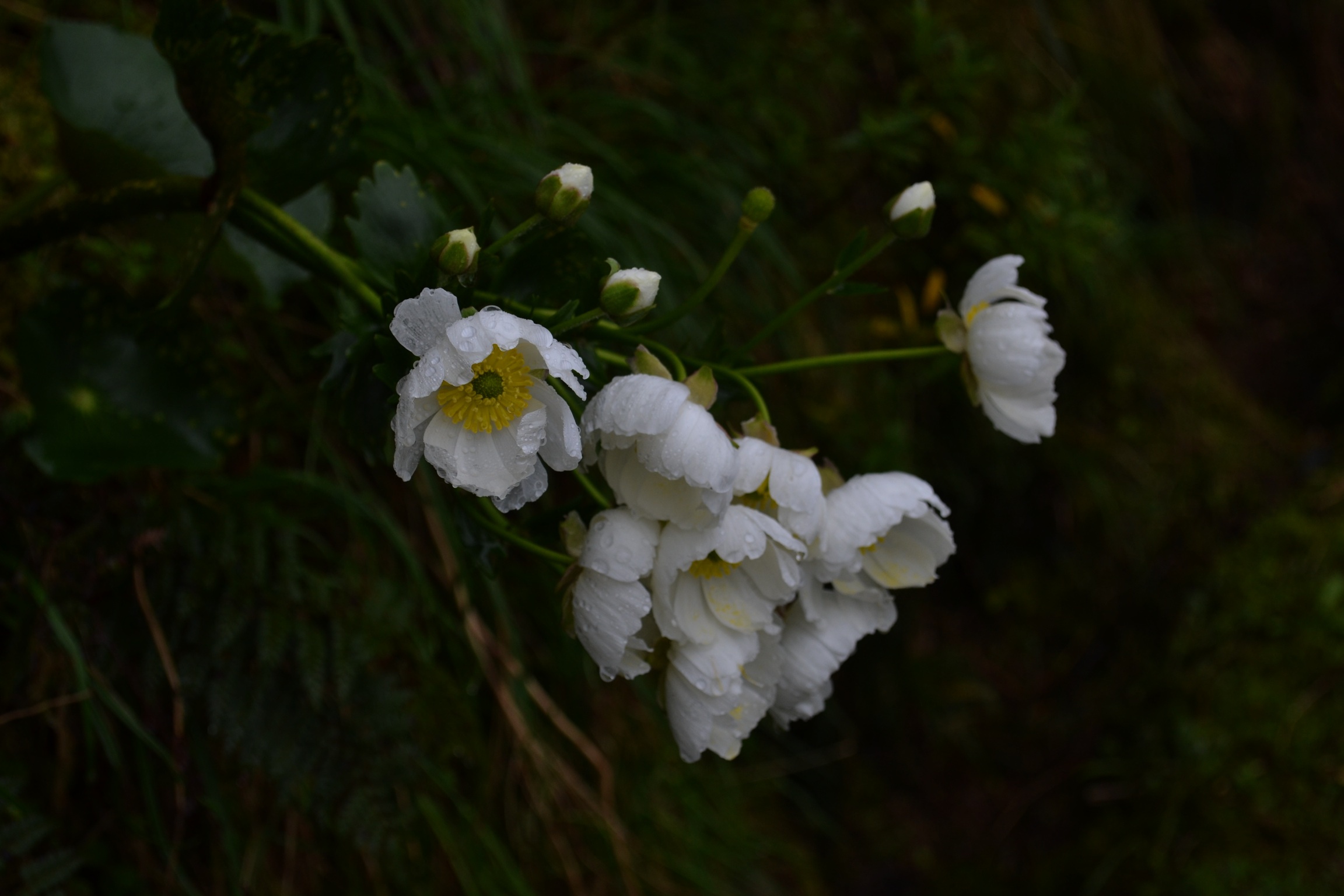
What is it about the Milford Track? It is a rite of passage for Kiwis and I felt a sort of religious awe as I trod this well-trodden path from meadow to riverbed, through wetlands and up the granite face of Mt Mackinnon in the footlights of Mt Cook lilies.
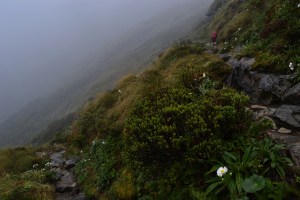
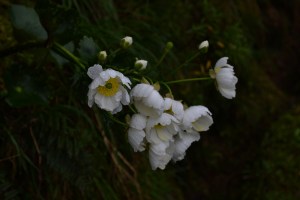
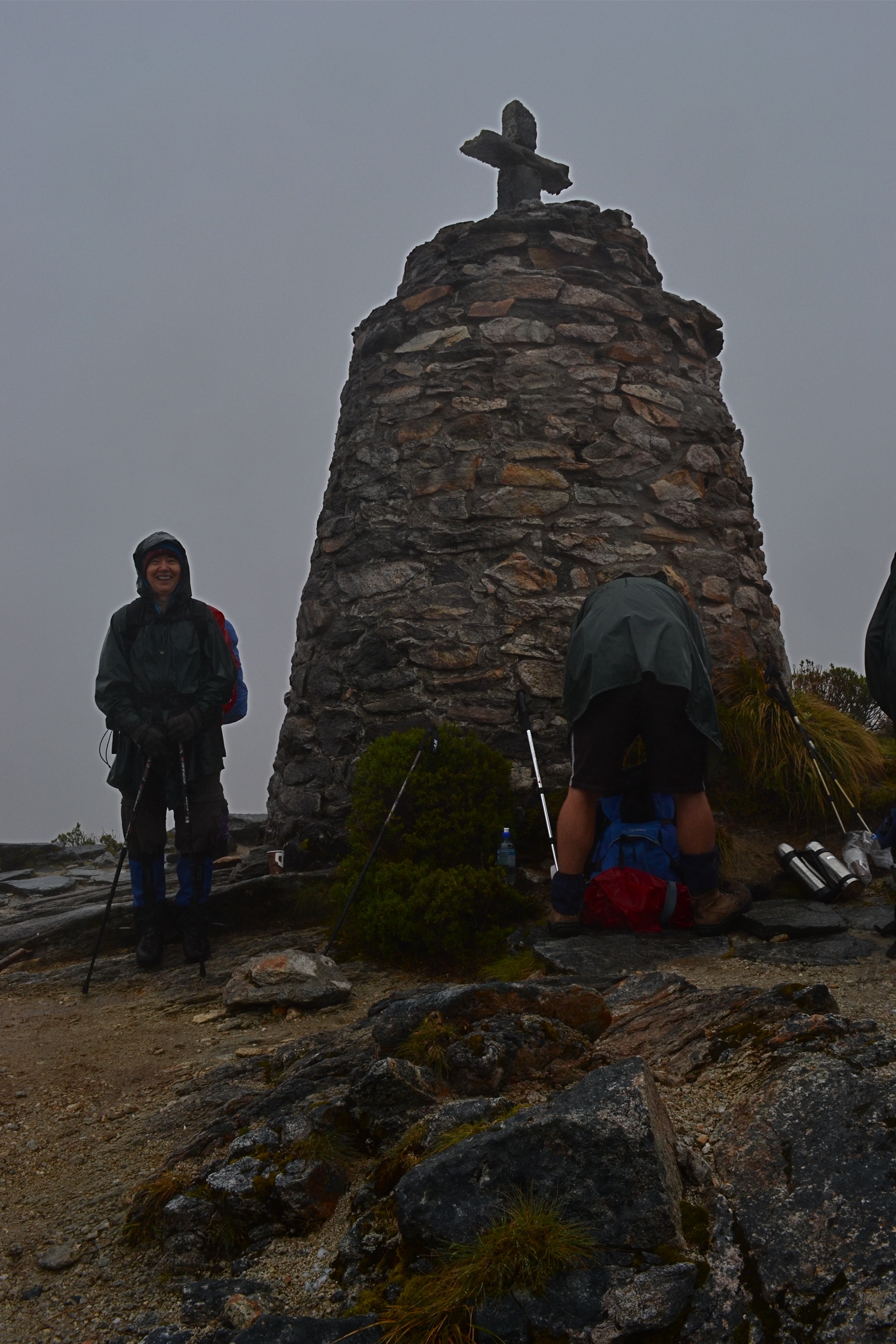
Okay, so it was misty and damp on the ascent and we stood at Mackinnon’s Pass drinking our Miso soup, minus the much vaunted view. We peer from the 12-second drop vantage point, imagining. But we have sung Bimbo on every corner, counted every zig and zag, and our voices perhaps are still echoing down somewhere where a rock wren rests with his hands over his ears, fearing tinnitus perhaps.
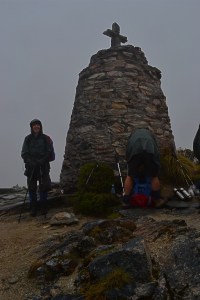
Walking in the wilderness with friends and complete strangers, lends itself to random confidences, unusual encounters and unexpected intimacies. We marvel at the stamina of the tall rangy Japanese man who calls himself Cowboy who drank too much the night before, harassed us and then sung his heart out with us, as he now stops on one of the zigzags, to light a cigarette. Rice, we decide, it must be the healthy rice diet. And then later, after an especially triumphant chorus uphill, my companions confess that when they were first married, the husband, a tall intrepid Man Alone, sort of guy, used to sing Running Bear to his wife at night in bed, until she fell asleep. I see him tenderly, sweetly, curled, for he is far taller than she is, his voice softened and singing, and I see her, his ‘Little White Dove’ her small blonde head upon the pillow. And of course, this leads me to tell them that my husband (who now lags behind on another zigzag as he finds the next perfect photograph), used to tap out tunes on the back of his front teeth as if playing the piano and ask me to guess the tune. And, that I rarely guessed correctly, and that he rarely taps his teeth now.

Then, there is the young tourist with us, all pale skin and delightful red hair, with a whine in her voice and who is certain that this Milford tramp is far too hard for her and would like for the rest of us to share her very heavy pack contents, so that she can ascend Mackinnon Pass more easily. Before we depart she shakes an array of pills onto her breakfast plate to prove how ill she is. When she tells me her back hurts, I tell her to stretch and bend and get the spinal fluids moving.  Our group are unmoved by her plight, she is far too beautiful and provocatively built, to need help with her pack. Plus we rationalise that she booked the trip and so she must have known, determined not to feel bad for turning our backs on her. Another far kinder fellow tourist weakens and tries to garner support from the rest of us, to spread the load. We feign indifference and allow her to be the martyr.

Pass Hut, at the top of Mackinnon Pass, is crowded with cold trampers, steaming breaths and walking poles. The loo with a view has a growing queue on the porch of the hut as it is far too cold to stand waiting by the toilet. Trampers who try either unwittingly or craftily to dodge the queue are castigated loudly and shamed until they return to shelter. One of our party loses his walking poles to an eager walker who departs early and there is confusion and consternation as everyone checks their own poles, making sure of ownership.

We are warned before even ascending Mackinnon’s Pass that the area is currently avalanche prone and we will have to descend via the emergency track. For the novices, this is disconcerting and afterwards, we urge the guides to consider renaming the route. We come up with original ideas such as the alternative route. It turns out to be the track used prior to the 1970’s and one whole kilometre (yes!) shorter than the new track. Of course it is steeper but with two trusty walking poles and a sturdy backside, it is worth it. The sun is re-emerging and groups of younger trampers are abandoning their packs on the track to scamper back up the hillside to catch the lost views from the top. We watch them envious of youth, but happy to keep descending.

I had vowed at the beginning of this day, that no matter how tired I felt after the descent to Quintin Lodge, I will embark on the extra one and a half hour return journey to see the Sutherland Falls. It would be so easy to simply drop your pack and sink into a sofa with a glass of wine. But instead, we barely pause for breath except to lift our packs from our backs and set off on the “short walk” (and that my friend is Guide-speak) to see the Falls. I was pretty much admiring of a nimble 71 year old Japanese mother-in-law travelling with her husband and daughter-in-law, wearing her low-cut practically trainers, as she leapt lightly from boulder to boulder, and passed me en route. And guilty too, as one of our group had purchased flash new tramping boots that hurt – and she’d decided to abandon them and only wear her trainers prior to leaving on this trip – and we had gang-pressed her into wearing her hurting boots – certain that trainers would not do the trick.
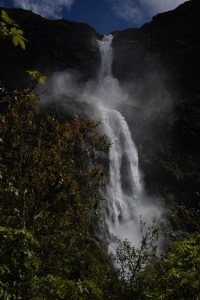
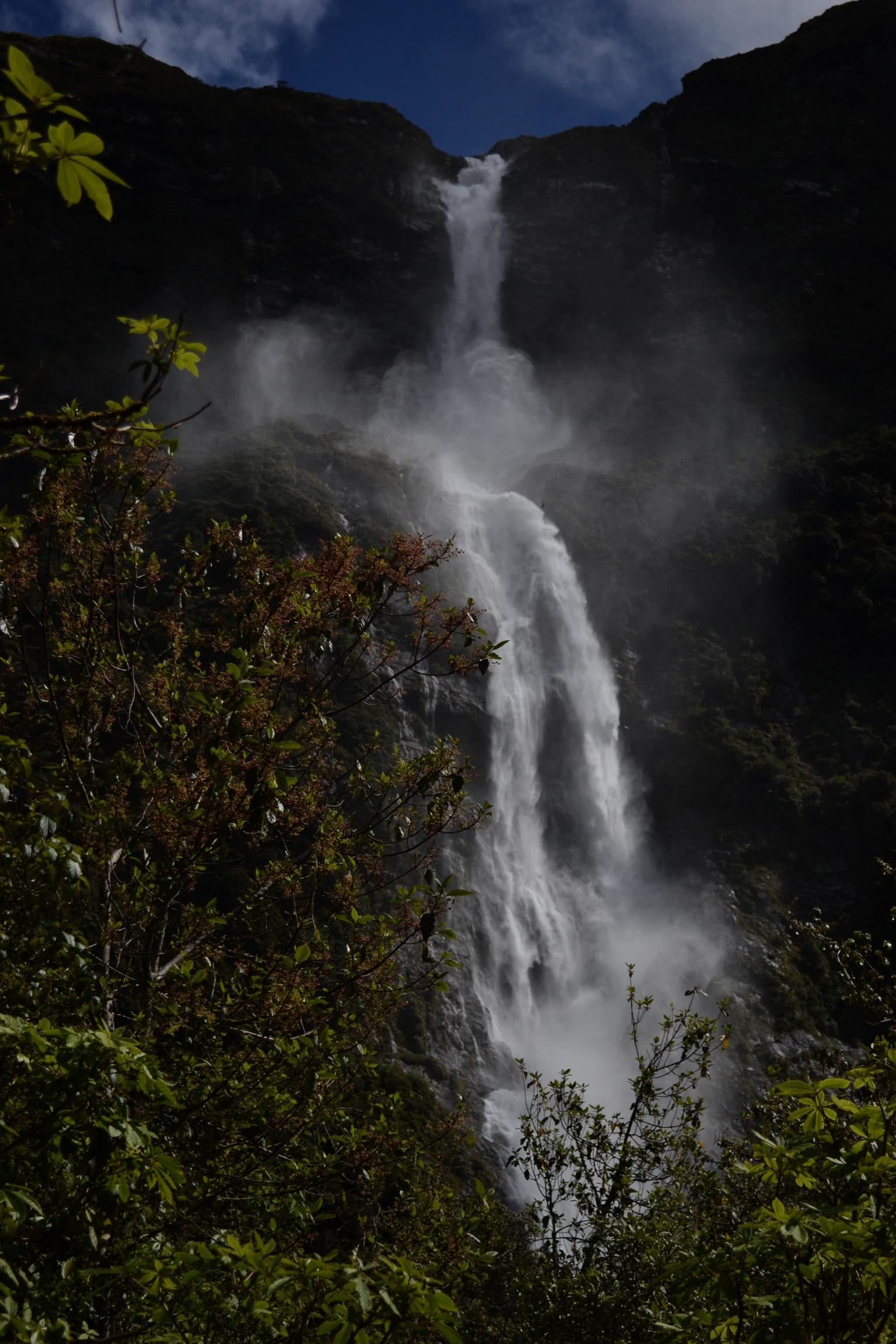
The Sutherland Falls are so abundantly full of water that we cannot get within cooee of them let alone attempt to walk behind them as I had imagined. The spray is spectacular and the sound of the falls like low flying bombers, if benevolent. It is impossible to take a photo close-up without drowning both the camera and the photographer. On the way back down we find a safe spot out of the spume in a clearing of meadow along a sidetrack. I promptly lie down and watch the sky like a child in a hammock of grass while hubby takes photographs.
Back at the lodge, I bump into the pale red-head who has just finished showering, her lovely hair all washed and wet and I ask her ‘How are you?’, she lifts her head slowly, as if to show that even her head is too heavy to hold and tells me “I’m alive”.
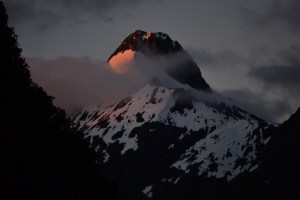
At the start of our hike, the first night at Glade House, we all stand up and introduce ourselves. Most people are hastily planning what they might say about themselves that they don’t really take in too much of what others are saying. But I am intrigued by a handsome English tourist who introduces not just himself, but his handsome wife who allows him to speak for her. She is one of those women; great posture, great profile, long greying hair coiled graciously and nice skin. My friend and I find it amusing to imagine allowing our husbands to speak for us.  I comment to one of the men in our group, how beautiful this woman must ‘have been’ and he replies almost sharply as if to admonish me,  ‘still is’. I’m fascinated, the way this woman commands attention, the same way the reluctant red-haired tramper encapsulates a certain pouting femininity that men seem to find attractive, a certain contrived helplessness in spite of an outward robustness. I compare (and oh, of course, I am generalising wildly here) the can-do, straight-forward, practical and resourceful Kiwi and Australian women walkers.

And in case you think me heartless, I must tell you, that on the very last 21 kilometre half marathon through bird-filled beech forest and the sounds of falling water, as I succumbed to extraordinary weariness, barely able to lift one foot in front of the other – I observed the red-haired invalid, practically sprinting, fresh-faced, radiant and shockingly youthful.

The whole journey has me casting my mind back to my upbringing and childhood as a young girl in the fifties in New Zealand. We had no car and we biked everywhere. Our parents didn’t mind that we vanished for the day to the river, or the beach, to swim or to fish, unsupervised. They applauded when we took off in the early morning light with a whitebait net over my brother’s head, me on the crossbar and the handle of the net facing forward, launching us. Down Beach Road we rode, towards the mudflats and just beyond the rubbish dump, to catch whitebait for breakfast, transporting them home in milk bottles. We leapt fences and private paddocks to collect mushrooms that Mum fried for us in a pan over the old coal range.

My friend and I walked for miles over the switchbacks in the pale summer grasses, and we climbed the blue hills in search of the reservoir (before we ever heard of Janet Frame). We played tennis in the evenings in the middle of the road outside our house; we rode to school three abreast, arms folded, and home again at lunch-time still talking; look, still no hands.

Except of course on Sundays; when having no car, was for me a source of deep melancholy, a sense of loss. My friends would vanish in the latest pastel Vauxhall with their families, their spades and buckets, and even over summer with their tents. I would languish on my front lawn alone, abandoned and certain they were having so much fun. Only years later did I learn how much my some of them loathed their Sunday drives, their forced family outings and that they envied me my solitude.

And so, at sixty, I have walked the Milford Track. I didn’t grow up with an outdoor family but I lived outdoors. We had a small house of a certain kind built in the fifties with a front room that was only used for visitors. People lived in their large kitchens but children lived outside until it was dark and their mother’s called them in, a chorus from street to street, under coal black and starry skies, the homecoming, like a flock of nesting birds, we returned, most often with unwashed feet to scamper into our beds. When we did wash our feet, it was in the kitchen sink.

The Milford Track reminded me of just how lucky I am, and how lucky I was.
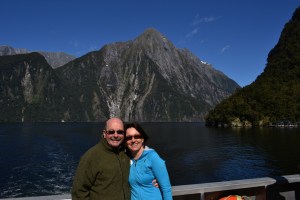
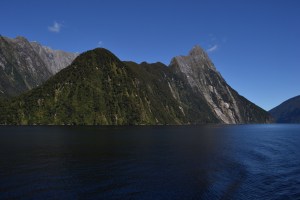
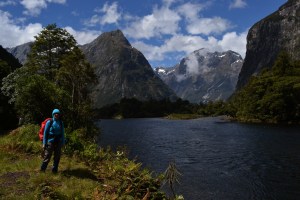
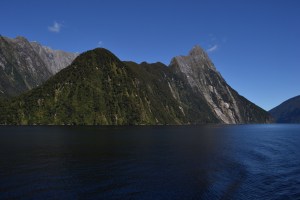
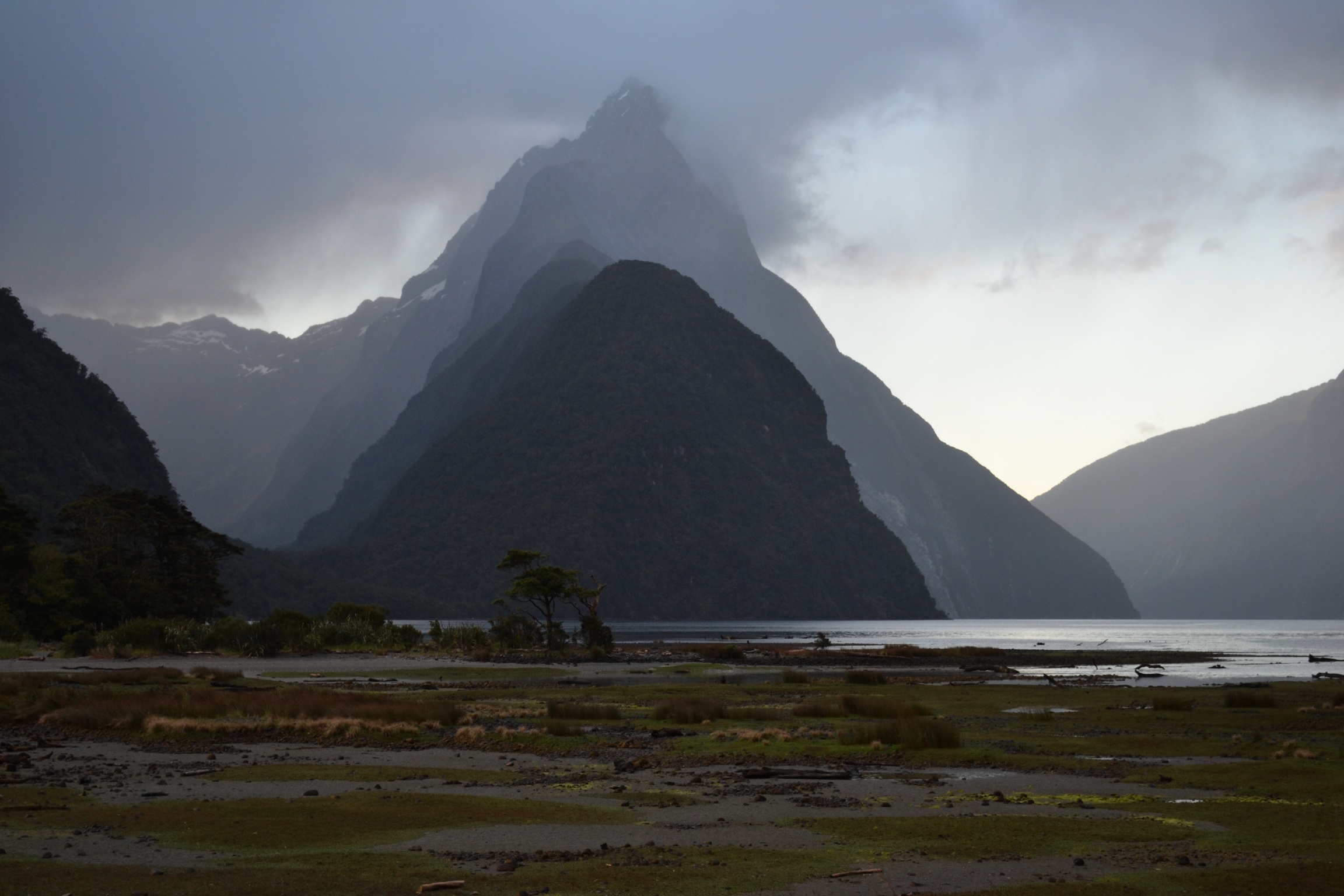
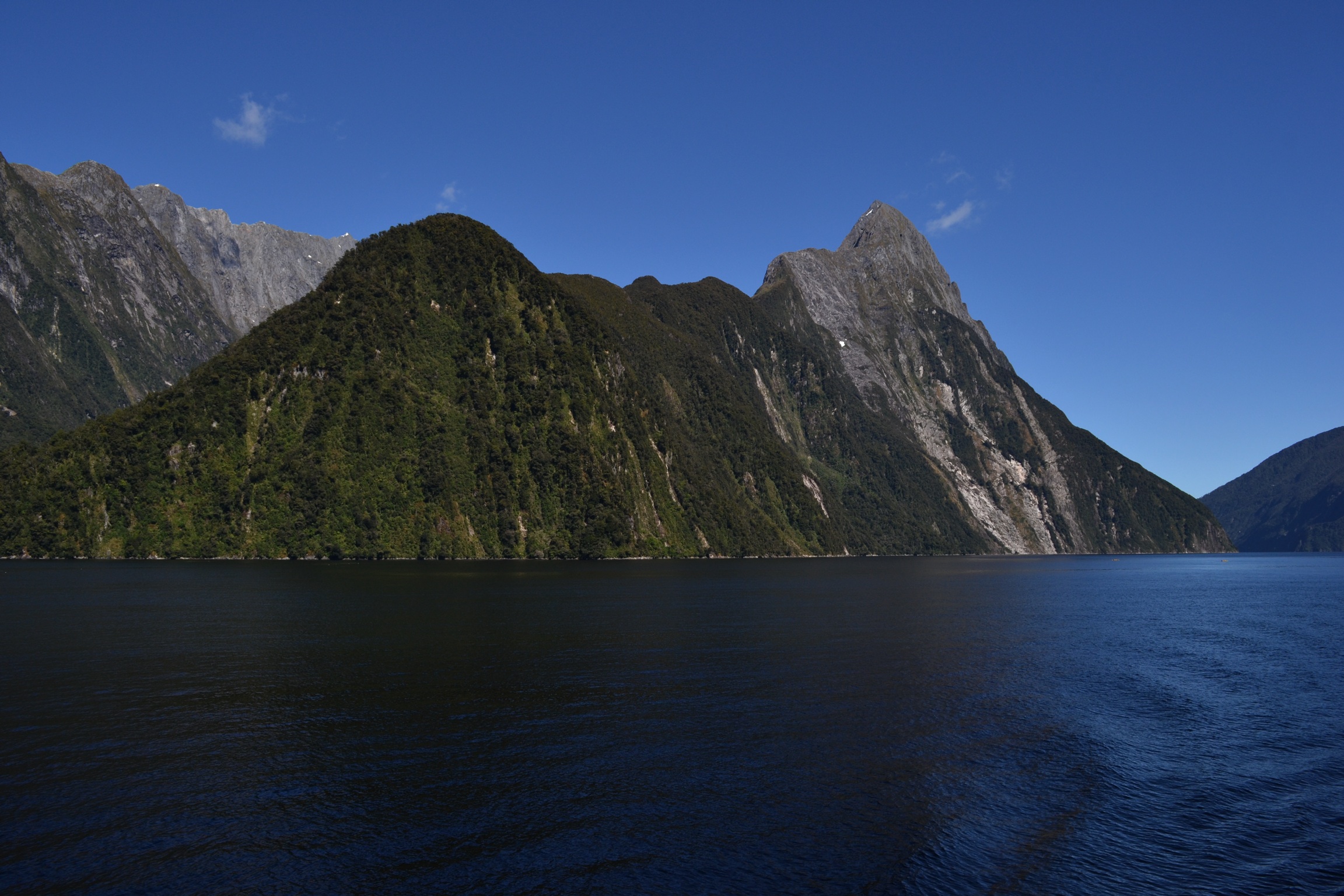
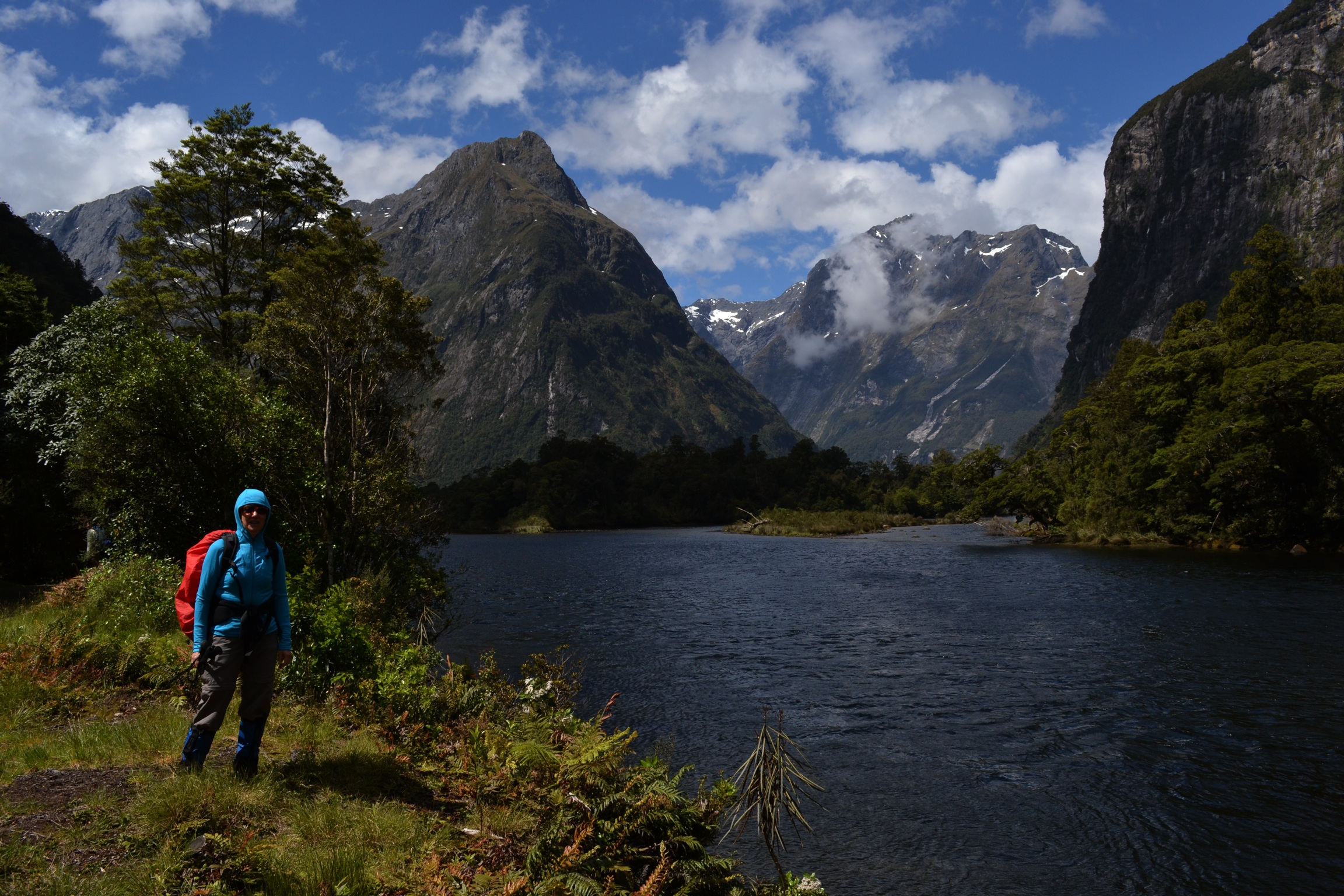
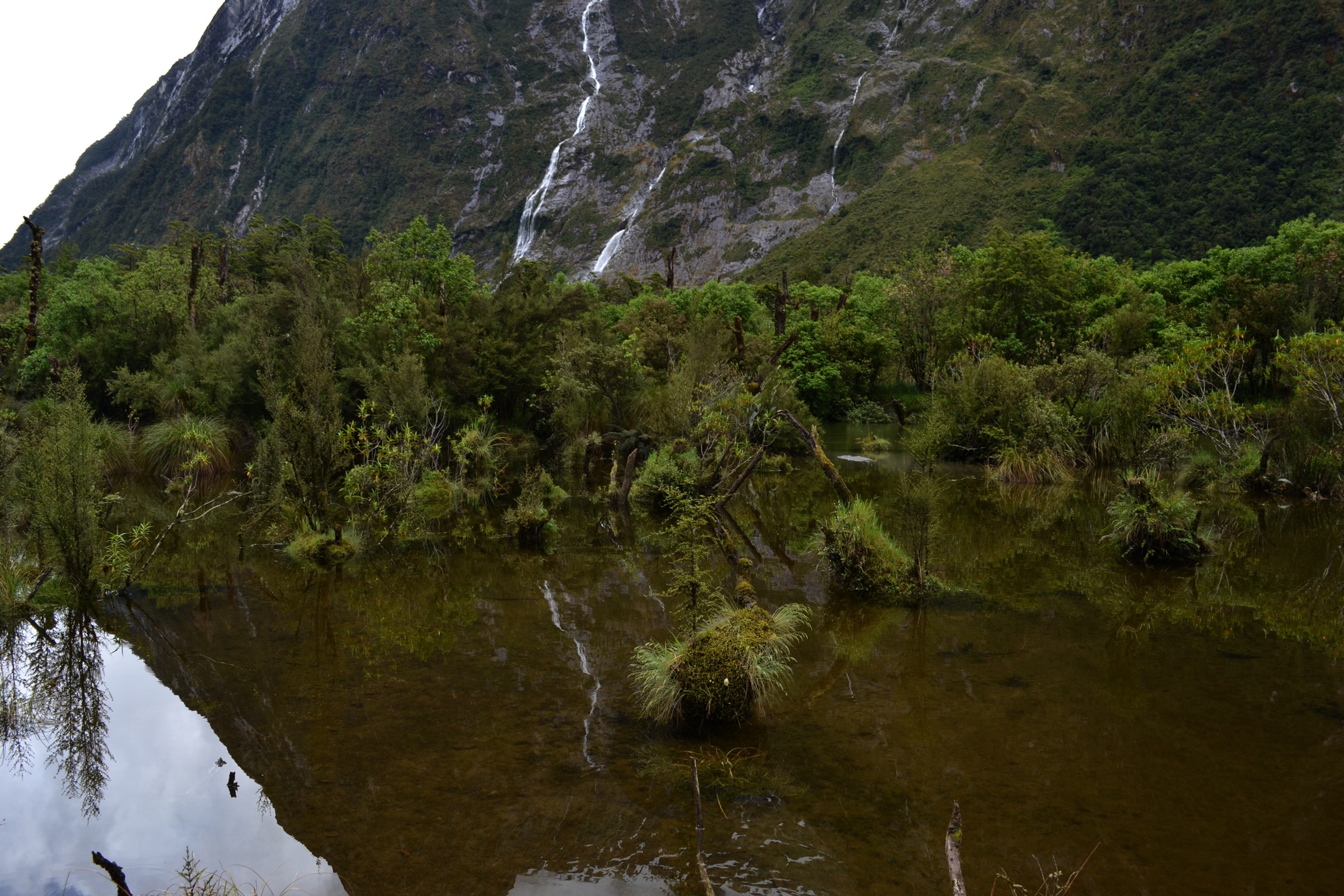
And here are some more of John’s great photographs –
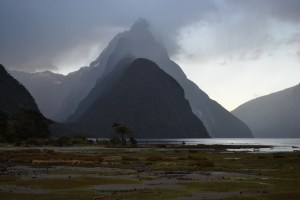
Cuba, Cuba, Cuba, I Love you

Standard

We were planning to visit Japan. Our son and his wife live in Seoul and it seemed like a great scheme to fly there via Japan in the season of blossoms. Alas, the now historic earthquake struck, followed by a tsunami and we decided to change our travel plans (thinking perhaps that Japan did not need tourists right at this time).

So, where do you go, when Japan is off the itinerary? We decided it was time to visit Cuba – a place we had hankerd to see ever since Ry Cooder rode his motor cycle around this country and discovered the Buena Vista Social Club. And so, we went, via Panama, as you do, because you cannot on a commercial airliner, fly direct from the USA. How odd this is when you think seriously about it and how entrenched the squabble is, when after all, the Berlin Wall came down in 1989. I’ve been to Berlin and to the Stasi Museum which is a whole other story.
We flew the 11 hours to Los Angeles, and transited there, which required a full body scan (I’m a grandmother now, so what do I care) and then we flew to Panama, another six hours. Panama is a fascinating place all by itself and perhaps worthy of a separate blog. It was exciting to be there because it features large in many Kiwi lives during the 60’s and 70’s en route to the big OE and the UK. I came home in the mid seventies via the Suez Canal (which had just re-opened), but did not go to England via the Panama. And so it felt like some sort of belated rite of passage, standing there, watching the locks rise and fall.
But, our destination was Cuba.

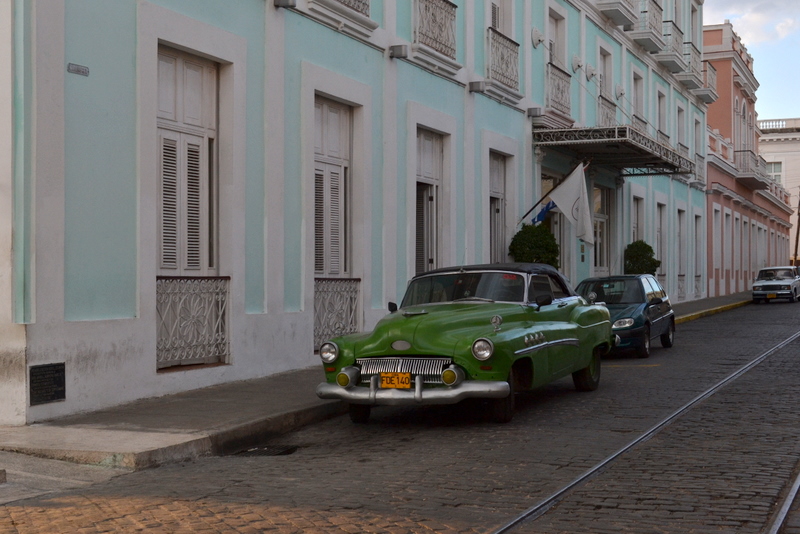
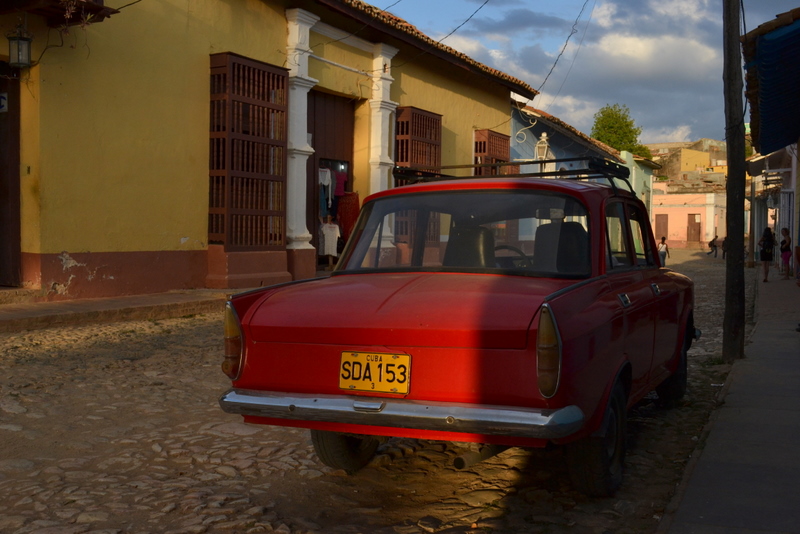
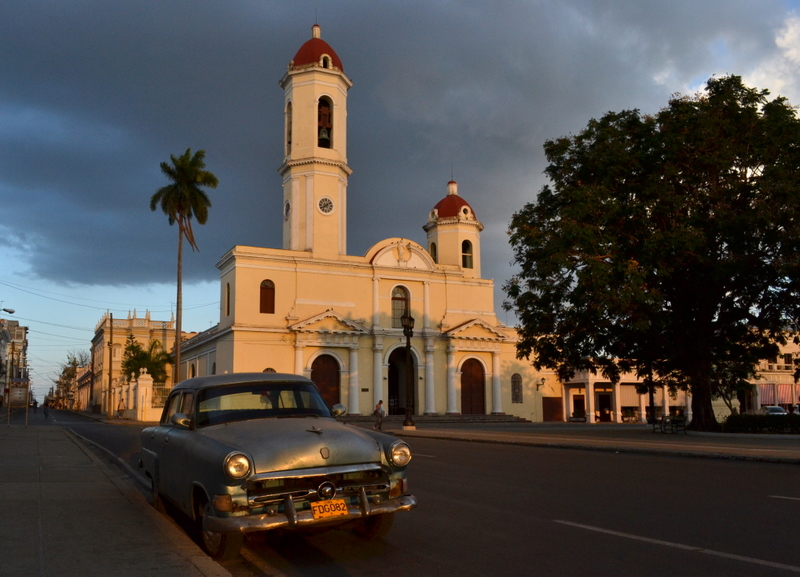
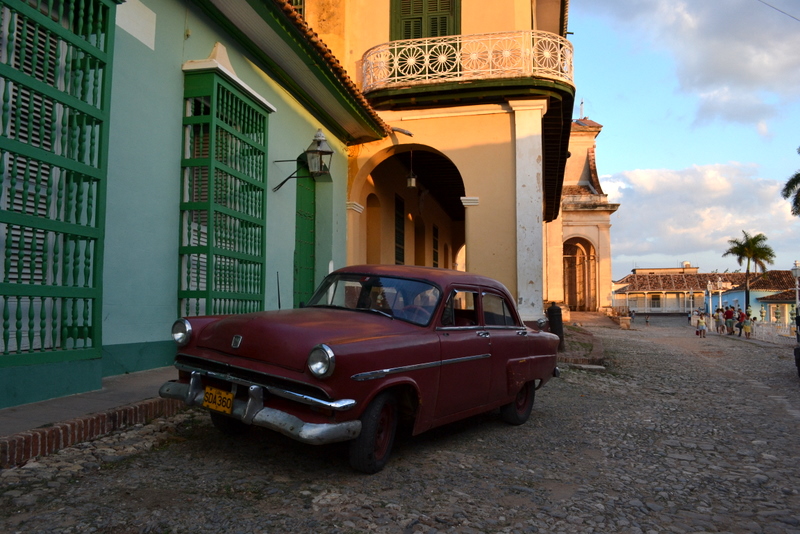
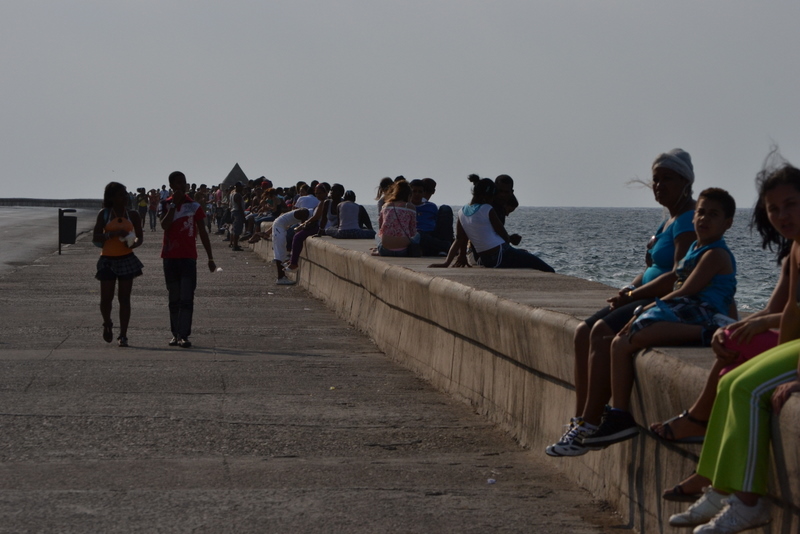
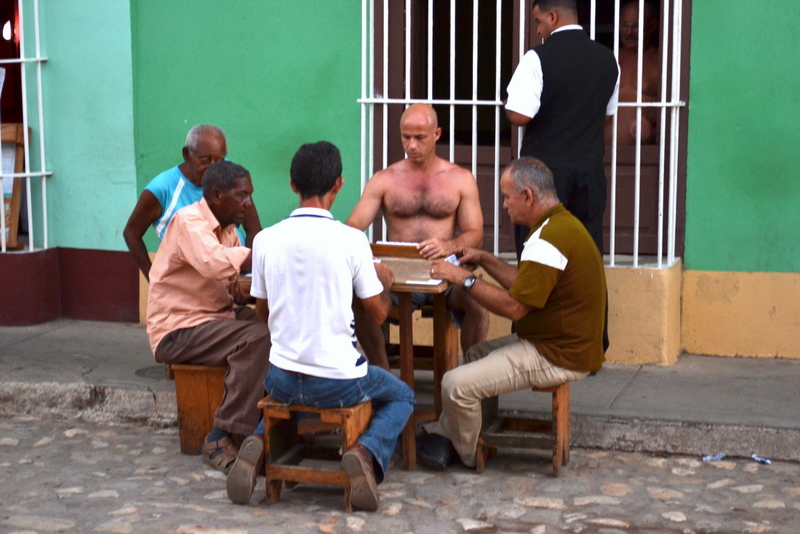
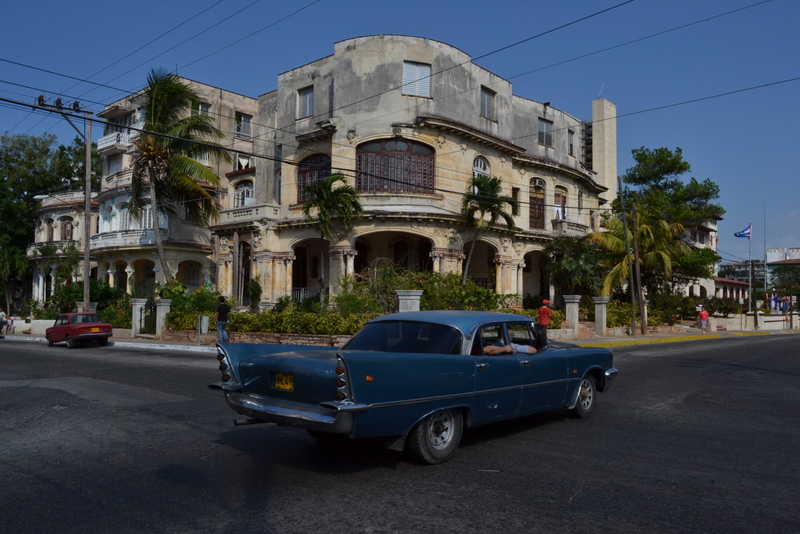
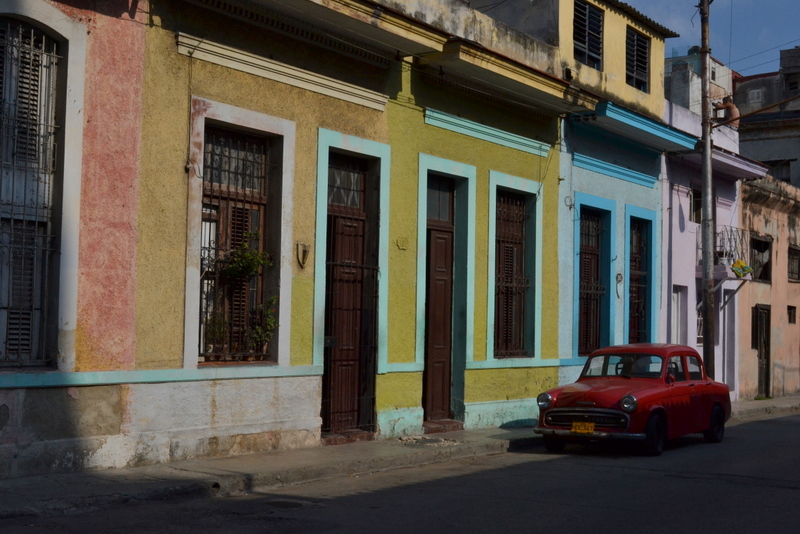
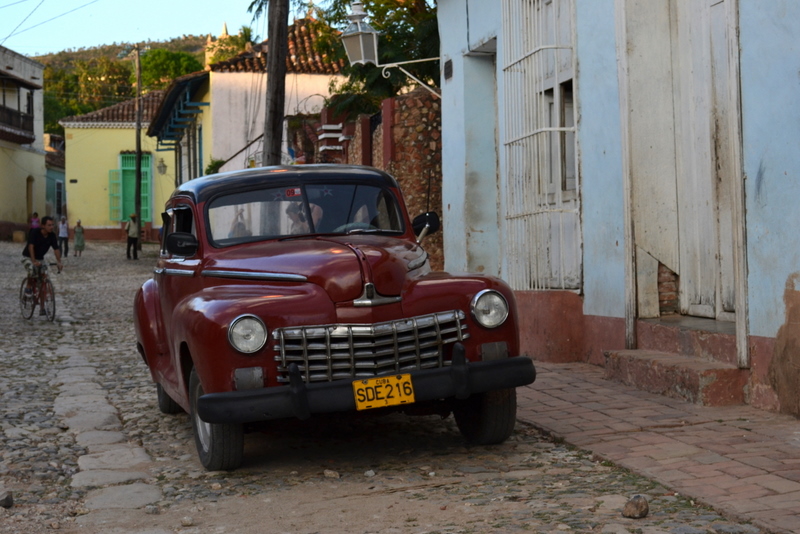
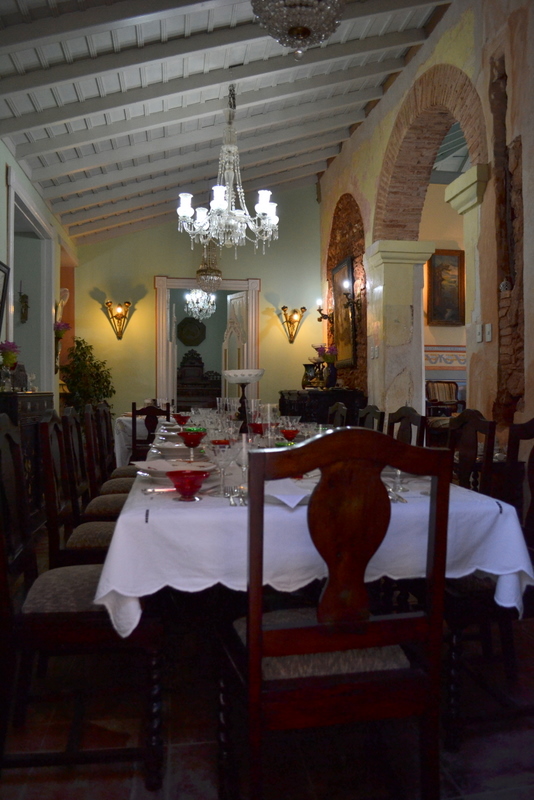
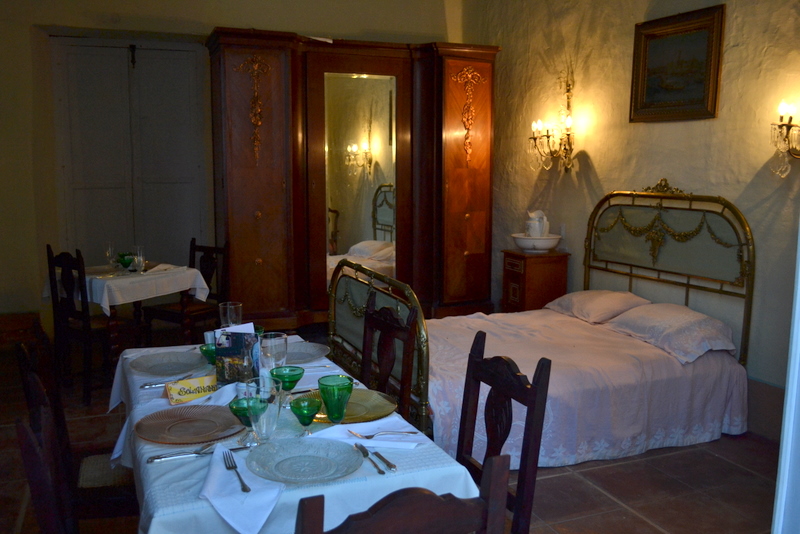
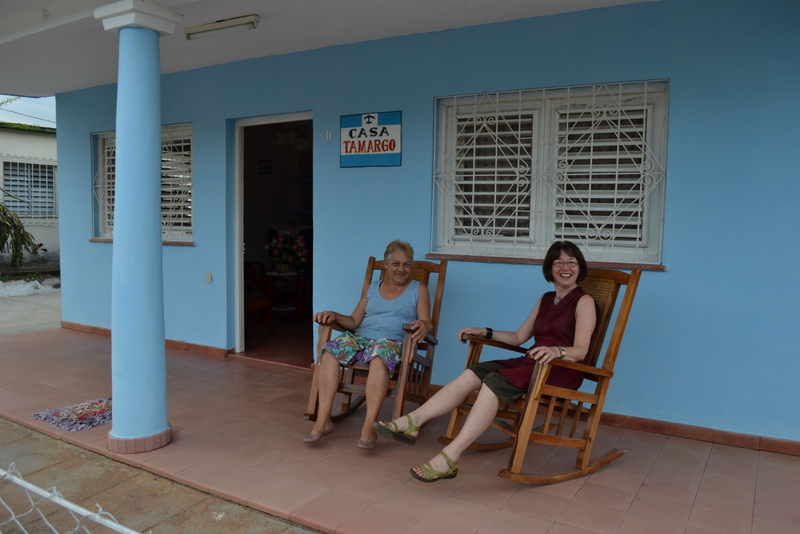
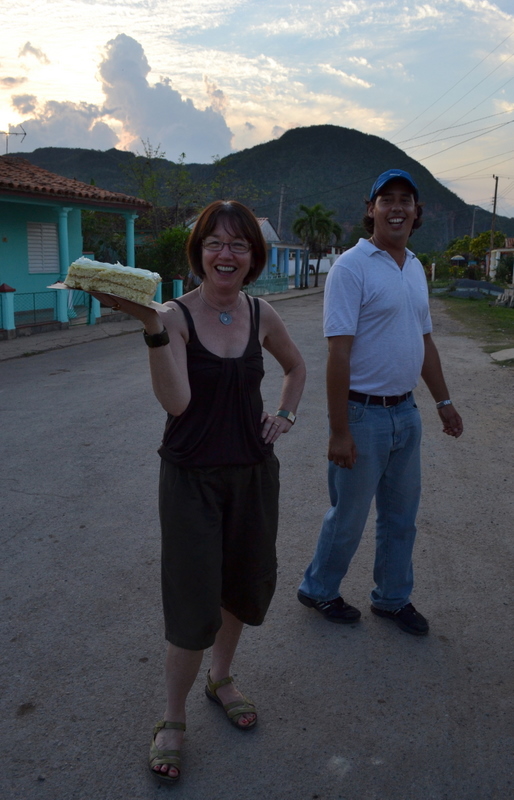
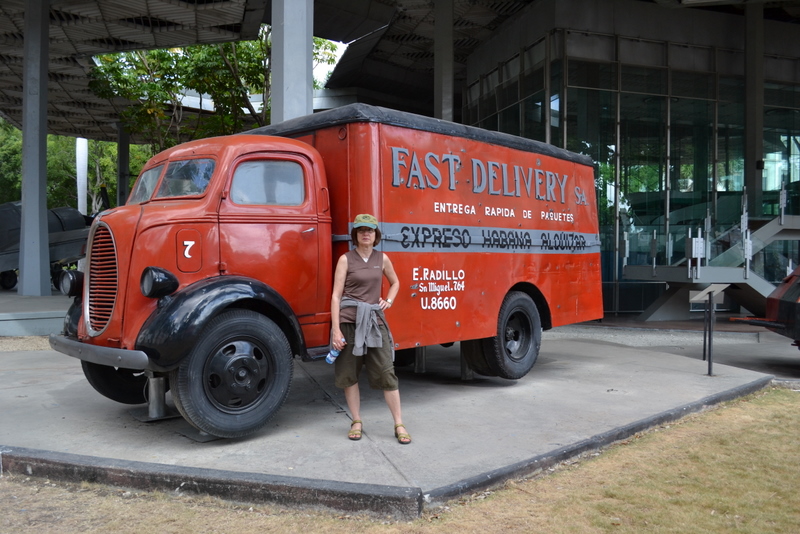
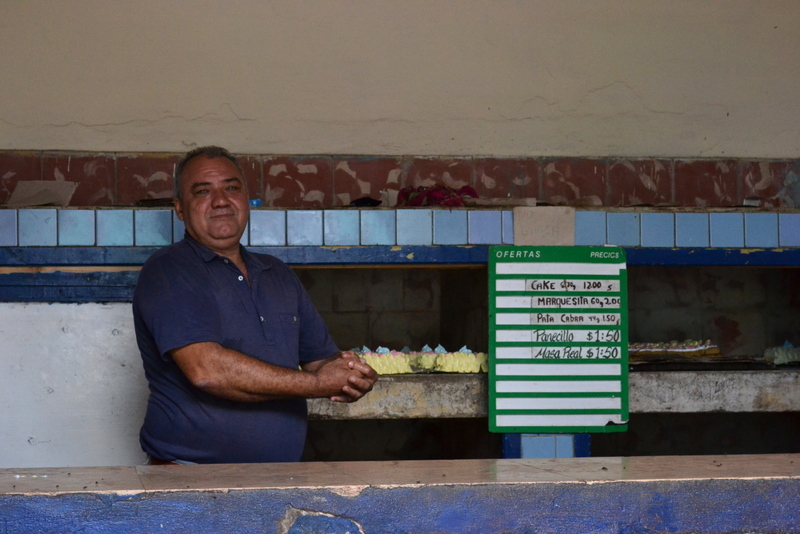
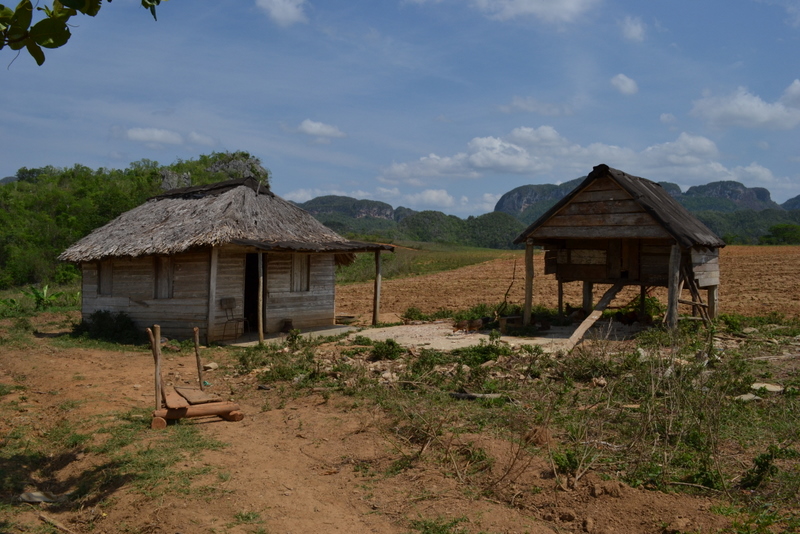
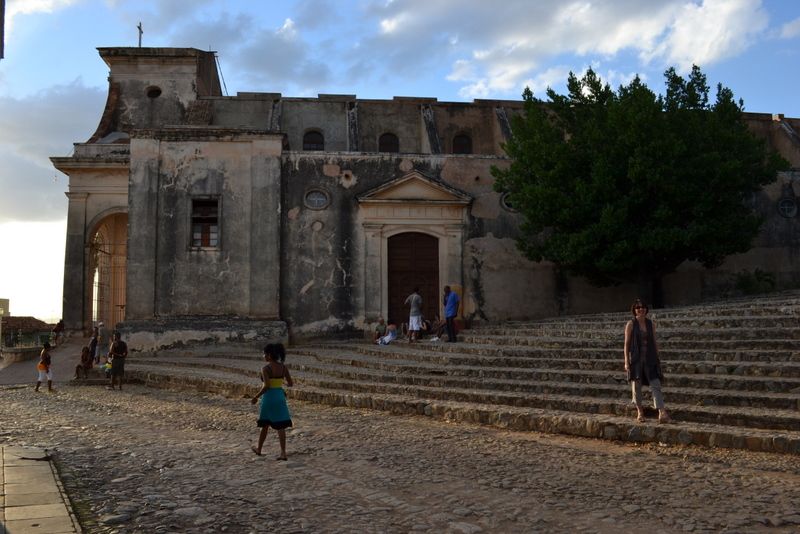
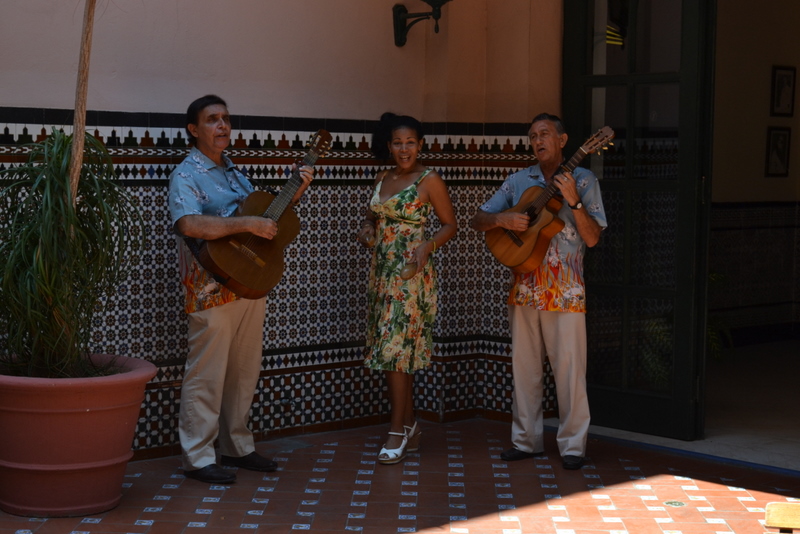
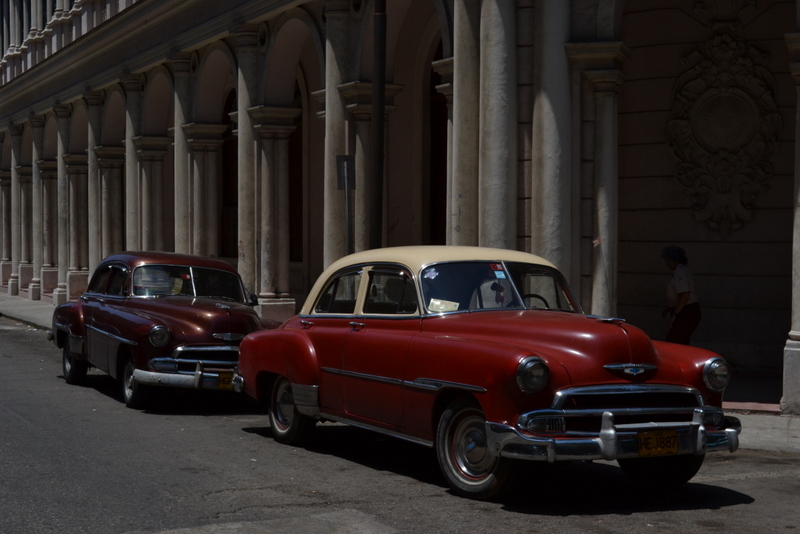
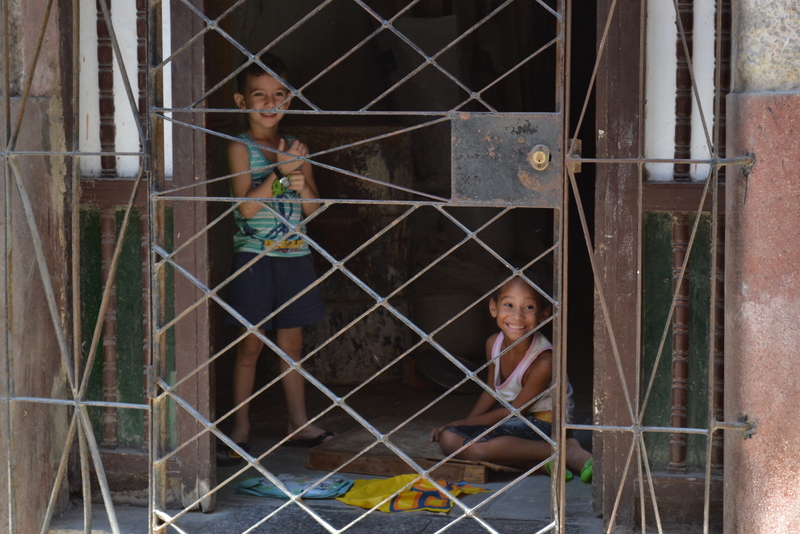
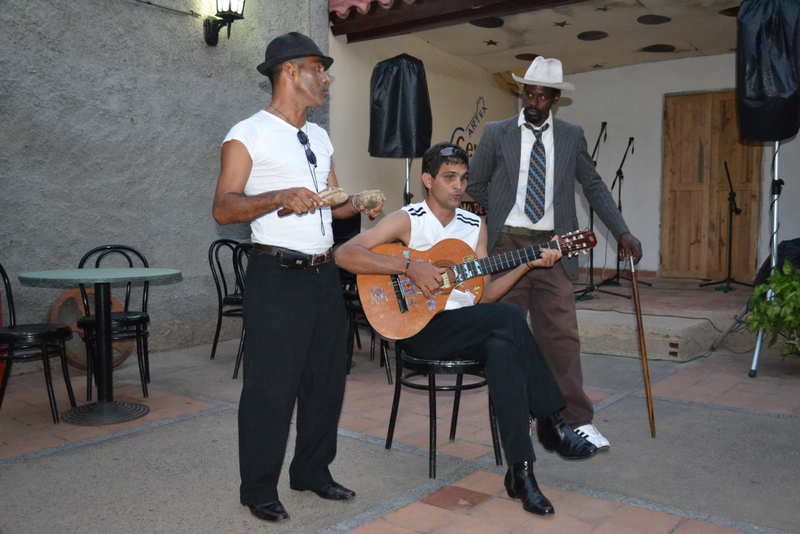
Oh Cuba. Where do I begin? I think the photographs that I am going to post will probably speak louder than anything I can say. These photographs are the work of John Rainey-Smith, my partner in life and I’m delighted to share them with you. There is so much to say about Cuba and I don’t think anything could really capture the spirit, the colour, the delight, but I think his photographs are indeed eloquent.

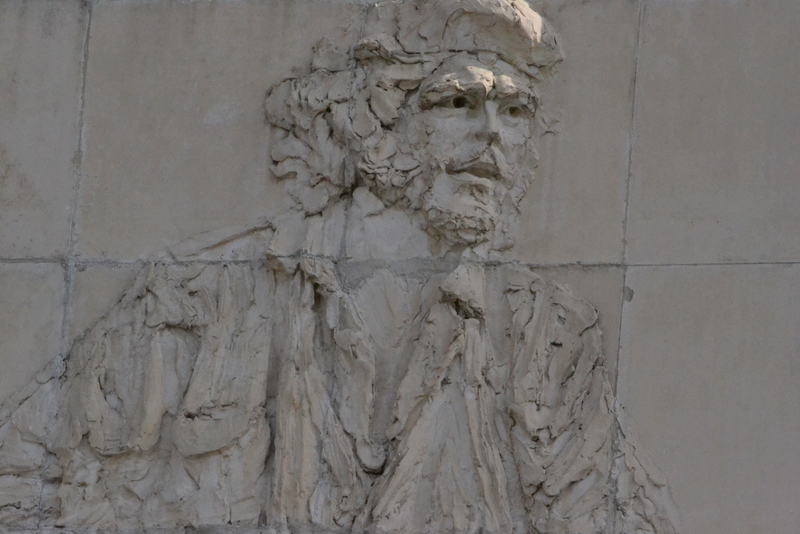
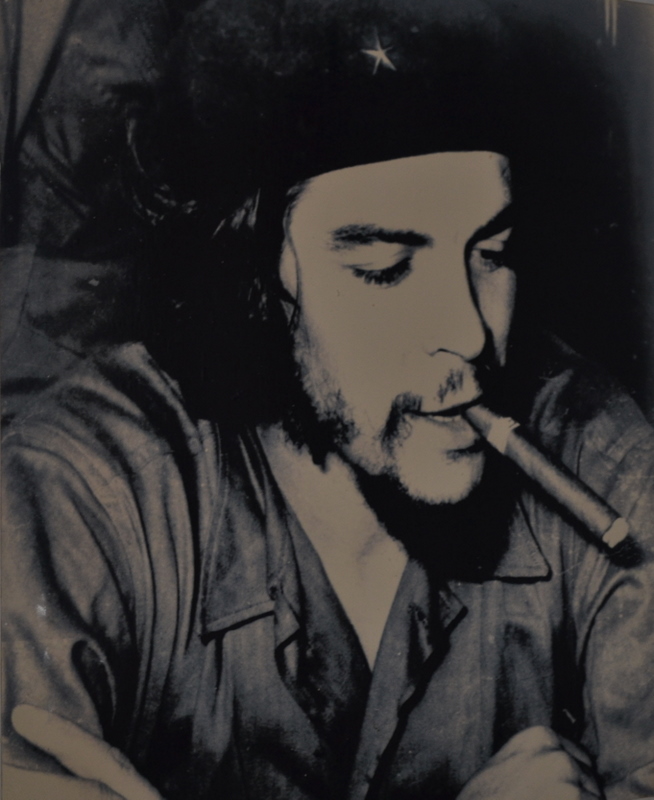
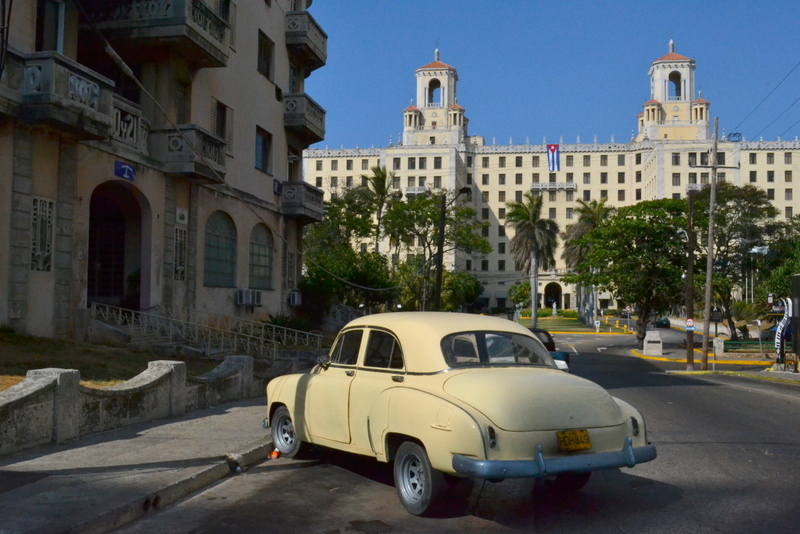
Enough to say, that we were enchanted, and you know how it is, sometimes when you have wanted for a long time to visit somewhere and the imagination is greater than the event – in this case, it was not so. Cuba is colour in every sense, and Cuba is history in a crazy time warp. Cuba is testament to the madness of the United States foreign policy, a study in intransigence – how silly can we be. But Cuba triumphs too. Of course, Fidel is not blameless and I’m not a political analyst, just a tourist. Oh what a dream that a doctor from Argentina had… Che; immortalised on tee-shirts and billboards, a rally cry to all young radicals, his memory somehow woven into the Cuban psyche.
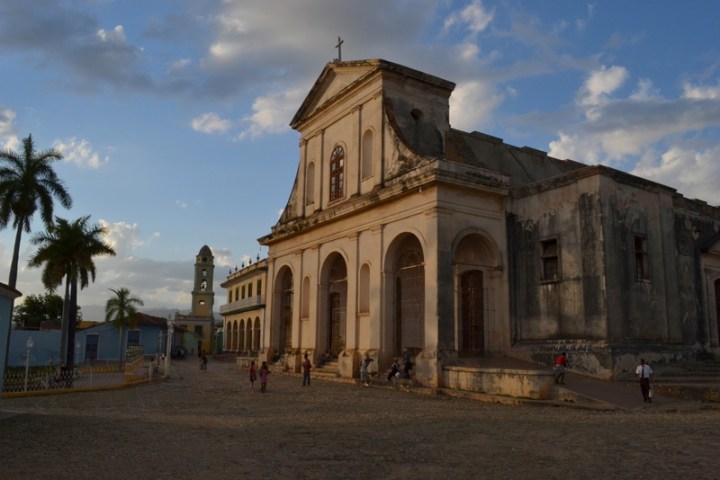
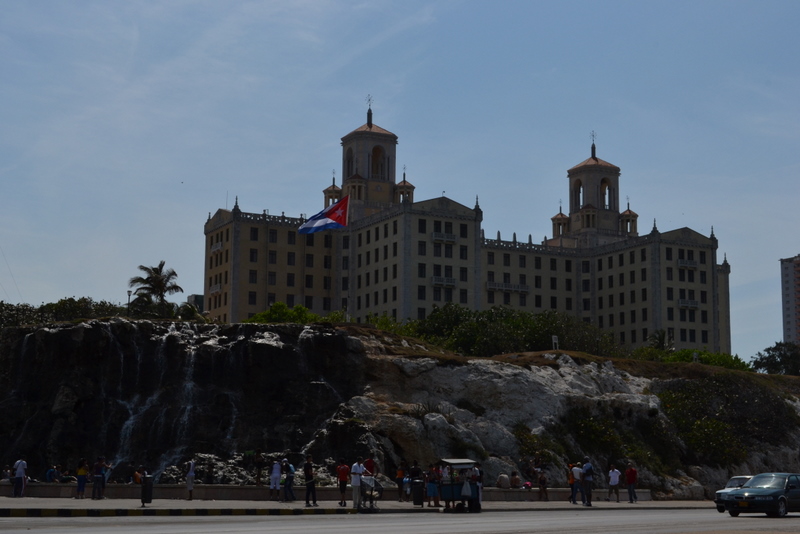
We stayed in Havana, at the Hotel Nacional (home of the Mafia really in those heady early days).

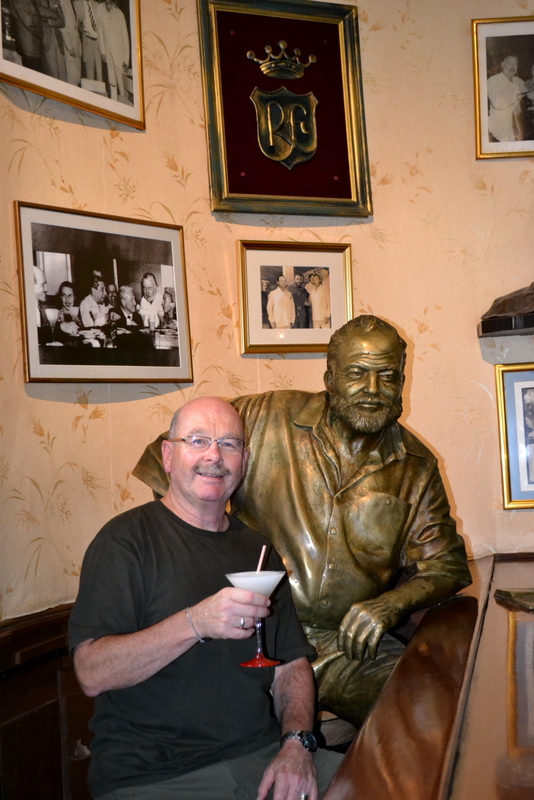
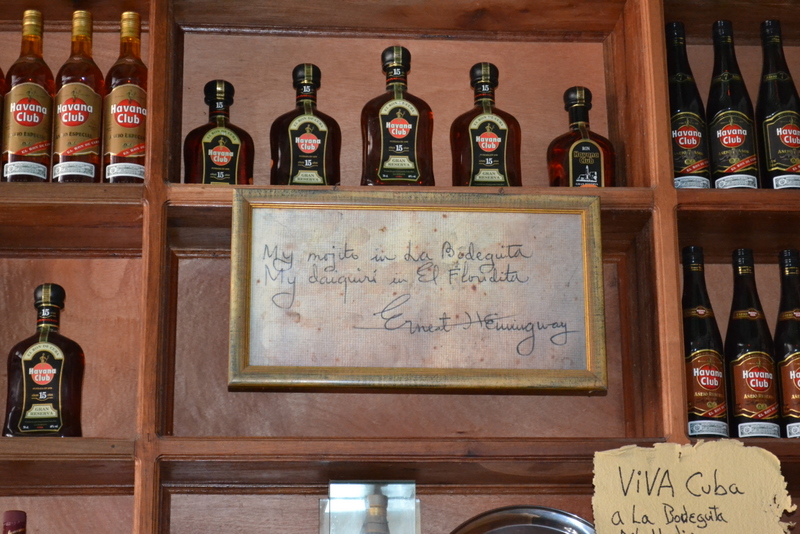
Oh, the incongruity of Cuba, the crazy dichotomies of grandeur, of passion, of salsa and sleaze, of social reform now on ice and melting, like the daiquiris that Hemingway sipped.

I can remember with vivid clarity, where I was when the Cuban Missile Crisis impacted on the world in the sixties. I recall standing in my Waimea Intermediate gingham red and white all in one button-through frock, wearing my Panama hat (except now I know that actually it was an Ecuadorian hat that people wore in Panama)… my hands were on my bicycle handlebars and I was looking down the asphalt driveway towards the bike sheds with fear in my heart… I had left home that morning after the radio broadcast and my parents conversation – that possibly, just possibly, Word War III was about to begin. (Yes, we lived sheltered lives back then and just as McCarthyism was rife in the USA, we too were terrified in the working class suburbs of New Zealand).
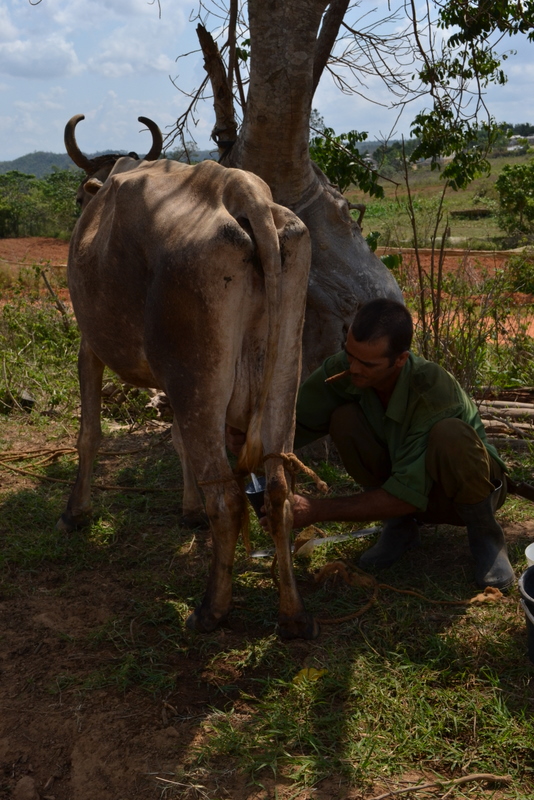
At the airport, en-route to Cuba, I was looking for a book about Cuba which I could not find, and on impulse I grabbed instead, with no real intent or knowledge, ‘On Green Dolphin Street’ by Sebastian Faulks. It is a tender, terrific love story based in the United States during the McCarthy years. And of course, there are very few writers of Faulk’s ability who can render love and history in such a compelling fashion. It turned out to be the perfect book to be reading really while travelling through Cuba, caught in a sixties time-warp. It seems inevitable me that the USA must, sooner, rather than later, open the door to Cuba and what a travesty if Coca Cola and McDonalds begin to colonise Cuba. For the past fifty years, the Cubans it seems have farmed organically, being unable to afford the chemical fertilisers or indeed the mechanisation (we saw men ploughing fields by hand and with bullocks pulling ploughs) – imagine if Trader Joe’s in the USA could buy fresh organic produce from Cuba – black beans for starters, strawberries, fresh lobster…

Our trip was booked through Intrepid Travel, although intrepid is perhaps an exaggeration. We were entirely comfortable, well fed and safe, for the entire journey and apart from miserly squares of tough toilet tissue that you have to pay for at most local toilets, everything else was probably quite luxurious in comparison to what I had imagined. Our accommodation was a mixture of flash hotels (think Mafia style palatial) and home-stays (humble, yet spotless and welcoming Casas). And of course for a writer, Havana is so much fun.

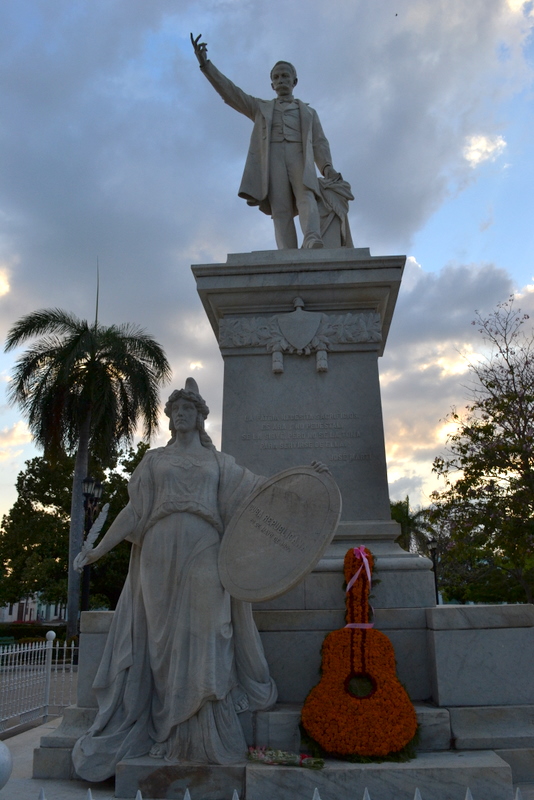
I’d heard of Fidel, of Che, but not of José Martí and so I found on-line a translation of his poem ‘A Sincere Man’ and these following lines of the translation seem particularly pertinent.

And seen butterflies emerging
From the refuse heap that moulders

I shall be seeking out more translations of José Martí’s poetry.

And now, my own poem and John’s amazing photos…

Dear Cuba;
I love your faded glory
your broken cobbles
the pink, pink and green of you
and too, the blue
your crumbling
buildings
the Malecon
where cool winds
speak of Cuban love
at night
star-bright on old Habana
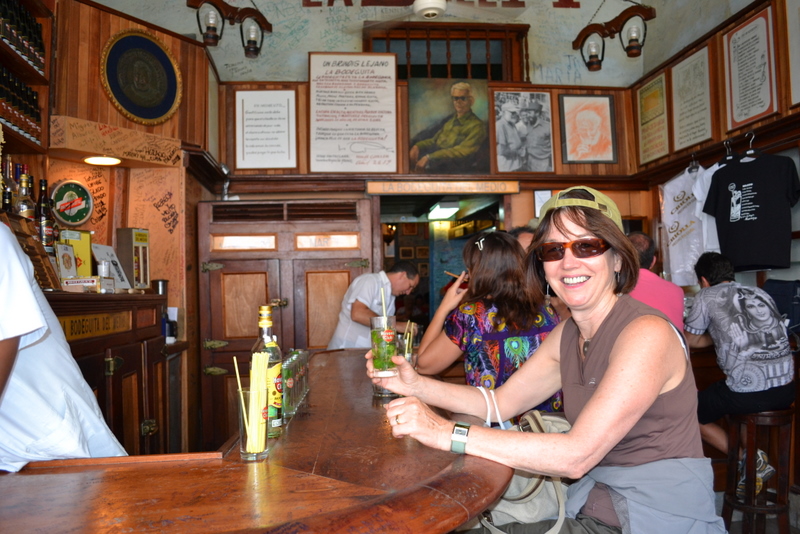
mint in our Mojitas
Hemingway on our mind
music in our hearts.

Viñales;
the Casa Tamargo
a blind singer and salsa
the way we danced each foreign beat
from three to five
to rest on four
facing full length mirrors
on a dusty floor.

Cienfuegos;
your square
the rotunda and
El Palatino, outside
where I danced
with a drunken old man
seduced by his toothless
smile,
and a Pina Colada.

Trinidad;
with your crazy cave disco
hinting at grandeur
thumbing your nose at decay
setting grand tables
visible through shuttered windows
lace and linen
fine wine even
cobbles worn to slippery
our suitcases
sliding on marble

Santa Clara;
here, where
an Argentinean doctor
who believed
he could change the world
piece by piece
(beloved friend of Camilo)
is buried.
Che
an eloquent star burns
bright in your tomb
a light
for a dream
frozen in time…

José Martí; a sincere man
on your white horse
in your black jacket
defiant to the end
the seeds of
revolution
in your legend

Cuba, I love you
the heart of you
the music in you
the colour of you
you are
art among the arts

I feel John’s photographs are the real highlight and so I’m going to open a gallery for those of you who wish to take a peek at Cuba.
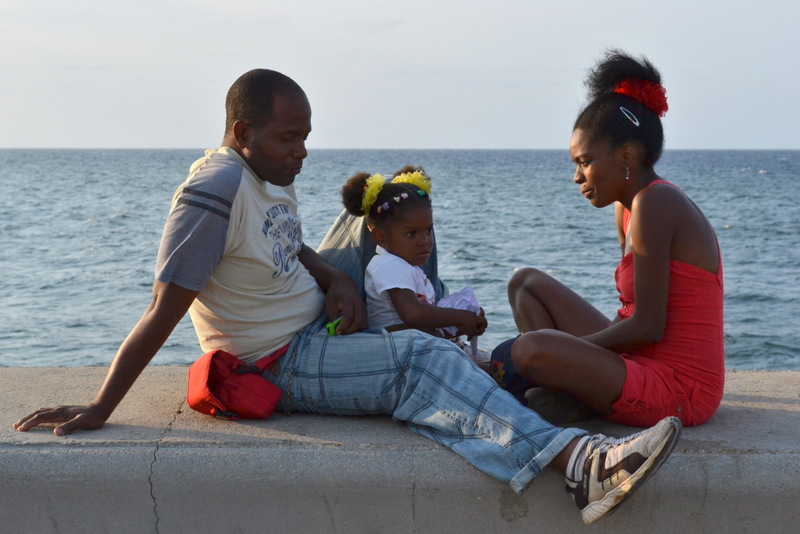
Some lovely candid people shots (he mostly asked permission!) – scroll through and enjoy.


<<a href=”https://acurioushalfhour.com/wp-content/uploads/2011/05/dsc_578-141.jpg”&gt;