The simplest words

Standard

For Christmas, I bought myself a copy of Alex Miller’s memoir ‘The Simplest Words’, a series of sometimes quite short personal essays. I’m only part way into reading them but was struck to the core by his essay about the death of his elderly mother. He begins with a low-key description of a week they spent together when she was 86 years old. Indeed, he points out, that she pointed out, that this was the first time the two of them had ever spent a week alone together. He lives in Australia and left home aged sixteen to follow his Antipodean dream, and then became a writer. This essay-vignette, one week, ends with Alex and his mother walking home arm in arm from a pub after polishing off a bottle of Spanish wine, ‘Bulls Blood’.

6924866-3x4-340x453

I was reading this sitting at a café overlooking our beautiful local bay. The water unusually calm, one person swimming, a grandmother towelling down her granddaughter, and a motor boat noiselessly edging towards the beach. A woman beside me was talking loudly on her mobile. I frowned first and then decided I would eavesdrop (I’m a writer), but she stopped before anything useful was uttered. I returned to Alex Miller.

Tragically, after spending this memorable week with his mother, a few weeks later when she was dying, he had to choose between returning to the United Kingdom to see her or his commitment to a new job at La Trobe University, Melbourne, teaching creative writing. He explains that he chose to stay with his students who had given him the gift of their unpolished first drafts – and to abandon them would be to betray that trust. He then goes on to say that it took six weeks for his elderly mother to die and when he returned some time later and caught up with his sister, she told him that his mother had been waiting for him to come. It’s quite brutal to read as her death was horrible, her spirit fighting to hang in beyond her physical pain. The sister tells him “It’s all right, you know, Mum understood that writing meant everything to you.”

It revived my own memories of my mother’s death. I was living in Sydney at the time and my aunt phoned to tell me my mother had suffered a heart attack and was in hospital. I’d just moved to a new flat on the North Shore and gone through an emotional romantic break-up. I stayed put. My Aunt phoned again three days later telling me I should come quickly. Reluctantly, I packed up my flat and job in one day and flew home. It took my mother a couple of weeks to die. She wasn’t in a lot of pain as far as I know, but she was very tired. A few years earlier my eldest brother had committed suicide. The last time I saw her, a nurse urged me to stay, but I had a bus to catch and a dinner date, so I said I had to go. I know now that the nurse knew my mother was dying, but she didn’t tell me. I made my dinner date and my mother passed away less than an hour after I said a cheerful goodbye to her. I often revisit this moment and wish the nurse had told me but too, I regret my own callow youth – I was impatient with her – she’d disrupted my adventures, I was anxious to be on my way.

So now there was just my Dad and me. One sibling was dead and the other was missing. As the hearse pulled up outside our modest Jerry-built post war weatherboard house – I was standing in the hallway with a view through the open front door – the phone rang and it was the missing child – not in a position to attend the funeral. I was used to life being askew, and this was just another permutation. We were a small team, my Dad and I and my Aunt and it took me motherhood, teenagers and becoming a grandmother to really know what happened that day. My grief came in unexpected moments over the years, tinged with regrets, and I was grateful, when my father died, that I was encouraged by the hospital to stay close, to sit still, to be there, and I was.

A cracker day

Standard

DSC_1172 3(1)

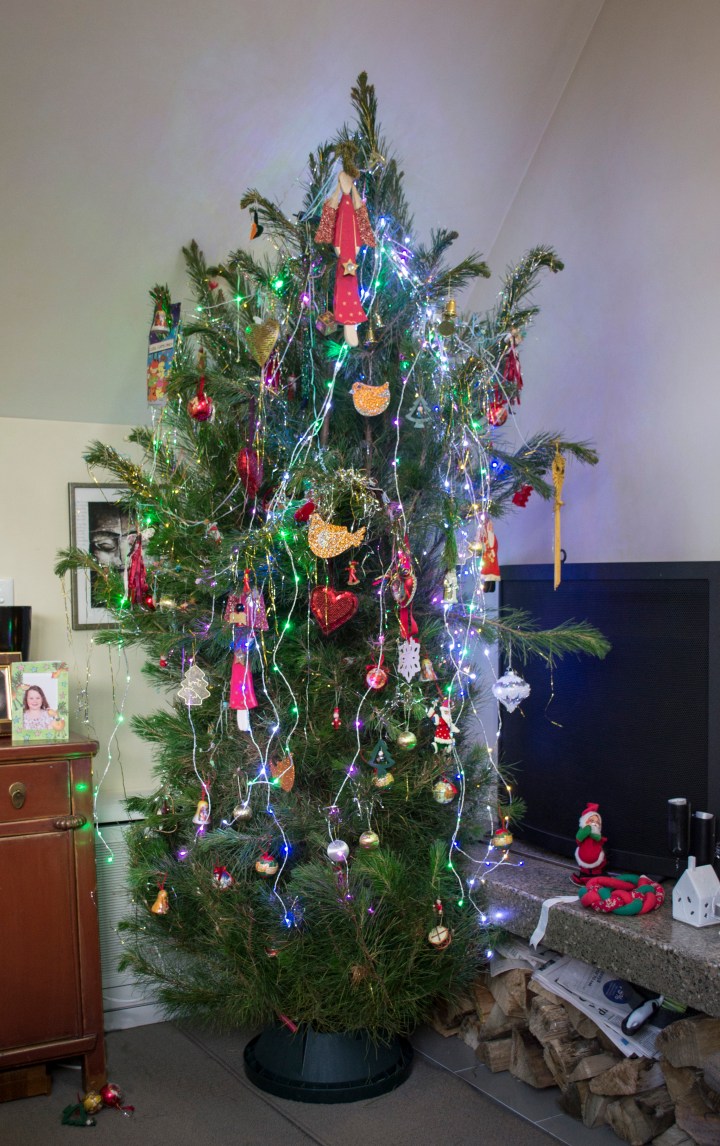
Wellington turned on a cracker day for us. We migrated outside early with our glasses of bubbles and festive spirit. The birds were cheerful, the wind was in abeyance and our harbour sparkled. We had family home from Seoul. Our tree was lit with new LED pretty-coloured lights, the colours a nod to our granddaughter, the lights a nod to our daughter-in-law who is a climate change campaigner with Greenpeace, Korea. We all played our part nicely. The foot of the symmetrical, but authentic Christmas tree (we travelled 28 kilometres to purchase this ‘real Xmas tree’) was strewn with beautifully wrapped presents – too many for certain but chosen with love and affection. It seemed to me that the most fun our granddaughter had, was reading the labels on the gifts and handing out the presents. She was our centre. She was our Santa.
It set me to thinking about what Christmas meant to me as a child. I’ve dredged my heart for memories. Interestingly (and somewhat affirming), it is not the gifts I got that I recall, but the moments when Christmas went a little awry, or wasn’t quite as the script predicted.

My first memory is second-hand and cemented through retelling. It’s the moment one of my siblings woke on Christmas eve and disturbed Santa placing presents on the hearth. To authenticate the moment, our parents knocked the fire screen over and told us that Rudolph had raced away up the chimney in fright.
A second memory, I’ve written about before, but it is a cherished memory. A maiden aunt (such a quaint term but one applicable to the era), who worked at the St George Hotel in Wellington as a waitress and lived in (for almost 40 years I think), gave me my first proper swimsuit. It was covered in pink bon-bons and had a bow that sat neatly at the back where the swimsuit flared into a skirt.

There’s the memory of sunlight, minted peas, roast chicken, or pork, the coal range belching plumes of smoke into the still summer air. My mother barely raised a sweat as she toiled with the back door open, manoeuvering pots from boiling to simmering, checking the crispy roast potatoes, moving her cigarette from lip to stove and back again. The roll your own would rest on the enamel perimeter of the Shacklock. She deftly opened one window and shut one door depending on the oven’s temperature and the meat’s progress.

There was always Mass of course early morning and although I’m not religious now, I can see that going to church brought something bigger into the picture with the gathering of our like-minded community in our finest summer frocks to celebrate the birth of Jesus – the manger always centre-stage. We didn’t have a car, so we would follow our mother in her high heels through the Anglican churchyard, past our primary school to the one true church, Our Lady of Perpetual Succour.
Even then, before we ate our festive midday dinner, there would be neighbours and friends dropping in to say hello and I often wonder how my mother coped, cutting her Christmas cake, dusting the mince pies (flaky, not short pastry) with icing sugar, while my Dad probably sipped from his flagon, sharing a glass or two with whomever appeared.

The thing is, I don’t remember presents. I know I always got a book. The School Friend Annual was my favourite. And one year I bought my father a bicycle bell from Woolworth’s. I even hold the memory of the moment of purchase. Woolworth’s and McKenzie’s were the two big department stores in Nelson where you took your pea-picking pocket money to purchase presents.

And lastly, I remember Pixie town. It came around at Christmas time and I’ve just googled it to be certain and it seems the first ever Pixie town was created by a Nelson man, Fred Jones in the 1930’s. So, it must have been a long held tradition and one that has obviously faded with the advent of holograms and more sophisticated entertainment. Pixie town was a mechanical animation that intrigued us and all the more because it was only once a year.
This year, my favourite gift is a journal from my husband, with the first page inscribed with love, urging me to write another novel. (If you know how much he suffers when I write – the ups, the downs, the angst, the rejection and the fear… you will know how generous this journal is).

Katherine Mansfield and a bookmark

Standard

Bookmark2

Last evening, October 14, we celebrated the birthday of Katherine Mansfield. Nicola Saker, Chair of the local KM Society made a short and pithy toast, pointing out that as poor Katherine had so few birthdays and had the misfortune to be married to a man who often forgot her birthday – it behoved us to raise our glasses on this (if she’d lived) her 127th birthday. This celebration was also a special occasion to raise funds for the prestigious Menton Fellowship.

We were in the new Meridian Energy building – glass from floor to ceiling, looking out at the almost calm and very blue harbour. One of the red tug boats made a cameo appearance, but most of the time our eyes were on the objects being auctioned. My heart was set on a painting of KM by Seraphine Pick. Alas, the auction for this, kicked off beyond my bidding price. It was a real joy to see that it reached $4,000 even if I wasn’t the lucky buyer. I am both a friend and fan of Seraphine who is a most joyful down to earth and hugely talented woman. It was the first time, she told me, that she had been in a room when one of her paintings was being auctioned.

It was interesting to observe the room. These were people with deep pockets. We were drinking French champagne and eating dainty canapés. I love French champagne and I scoffed the stylish canapés to keep pace with my bubbles. When I say deep pockets, I mean people with the discretion to bid recklessly and generously to support the Menton Fellowship. It was a very flash version of the local cake stall in the village – a fundraiser. Kiwis are good at this. And in the arts, we are very good at this and we have to be grateful for people with money who want to support the arts. There were a few writers in the room, but not many.. We talked about this. It’s probably because most writers do not earn enough to bid recklessly at auctions, but are very grateful for the support of the residency.

The highlight for me was queuing at a table where three local poets, Bill Manhire, Greg O’Brien and Jenny Bornholdt sat, on demand, and for a donation, creating one-line poem bookmarks. Earlier in the evening Bill made a very warm and witty speech about the personal impact of the Menton residency on his sense of self as a writer. He then read a poem he was commissioned to write for Sir Ed Hilary on the 25th anniversary of the Erebus crash. A most poignant poem and yet such a tricky topic to do well. Manhire paid tribute to his time in Menton giving him the courage to tackle such a poem for such an occasion. As he was reading the poem, spookily, the super-duper air-conditioning unit re-calibrated making the sound similar to a jet’s wings adjusting.

I chose to queue and wait for Greg O’Brien because he was my mentor in the late 90’s when I undertook the Victoria University undergraduate Poetry Course – I think one of the first of the CREW series. It was an amazing time in my life. I was almost 50, my teenagers had left home and I was full of crazy doggerel. Greg managed to find the poetry in my wild scribbles. I’ll always be grateful for this doorway to a writing life.

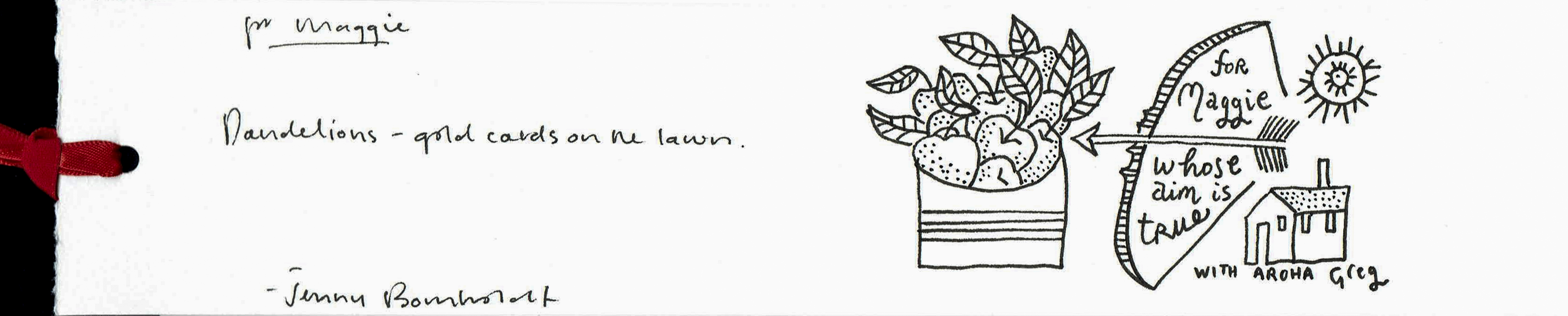
The poets asked that you give them a hint or theme for the bookmark poem. I mentioned my character Artemis from my new novel due out soon to Greg for his drawing and to Jenny, I said that I will be getting my ‘gold card’ in November.

This is the beautiful bookmark that I received. I will treasure it. And don’t you just love that something so special can be created ‘on the spot’ by true poets and artists.

Bookmark2

Clive James and the humblebrag

Standard

I’ve just listened to Clive James talking to Kim Hill. She mentioned the ‘humblebrag’ when he deferentially said ‘I’m a fairly ordinary story’ in response to questions about someone writing his biography. ‘Don’t’ forget, ‘he said, ‘sometimes reputations just melt away overnight.’ With further modesty he claimed that one of his main talents was his ability to concentrate and that he had a knack for a turn of phrase.

All I can do is turn a phrase until it catches the light.

He’s dying and so this conversation was about death and regret and about a poem too, that went viral when published in the New Yorker. It’s called ‘Japanese Maple’ about a tree his daughter gave him that is destined to outlive him – but he’s already survived longer than his poem about himself and the tree predicted.

I was struck by the difference in Clive James in conversation with Kim, and a time when I saw him at the Wellington Writers and Readers festival a few years ago. My first impression was great, because he was interviewed by Kate Camp who was an obvious devotee and she brought out the best in him. They had what I call a ‘love-fest’, where the interviewer as admirer creates what feels like a true and mutual intimacy in conversation. Alas, at the same festival, on a panel, he behaved boorishly and condescendingly and was embarrassing. It was as if he didn’t know how to share the limelight.

And so, I am interested in the humblebrag. It’s a tricky thing to achieve and I think writers in particular are quite adept at it. There’s the gorgeous stuff that only the very young can pull off whereby they claim not to care about fame, but draw attention to themselves all the same with their foxy protestations. Then too, there are blogs about rejection. It can sound like self-pity, or self-promotion. But it can also be superb. I recommend Paula Morris nominated for the prestigious Sunday Times short story competition, and her blog posting ‘Not Real Life‘ about daring to dream she might win.

I recently read somewhere that at age 20, we worry what other people think of us. And then at 40, we don’t give a damn what they think, and then at 60, we realise (thankfully at last) it wasn’t us they were thinking about after all. I like that very much and it’s such a gem of wisdom that you wish it was a vaccination.

Why am I writing this? Because I have a blog, and excitingly I have a new novel coming out in October. I wanted to draw attention to myself and to my writing. I needed a hook. Shamelessly I’ve used Clive James as my lure. It’s my version of the humble-brag.

And so I’ll end with a Clive James quote from his conversation with Kim Hill ‘Life is not a picnic – it’s not all laid out for you.’ But if it were, then where better than at our local beach to spread your picnic. (photo by John).

Days Bay, Eastbourne sunset

The Virgin birth and a faux Chinese chest

Standard

The Virgin birth and a faux Chinese Chest

Christmas. It used to have a religious significance for me. But that was a long time ago, the fifties and sixties when I believed almost everything, anyone told me. And I was a dutiful sort of person, obedient, willing and looking for a story that would explain the strangeness of ‘being’, human.

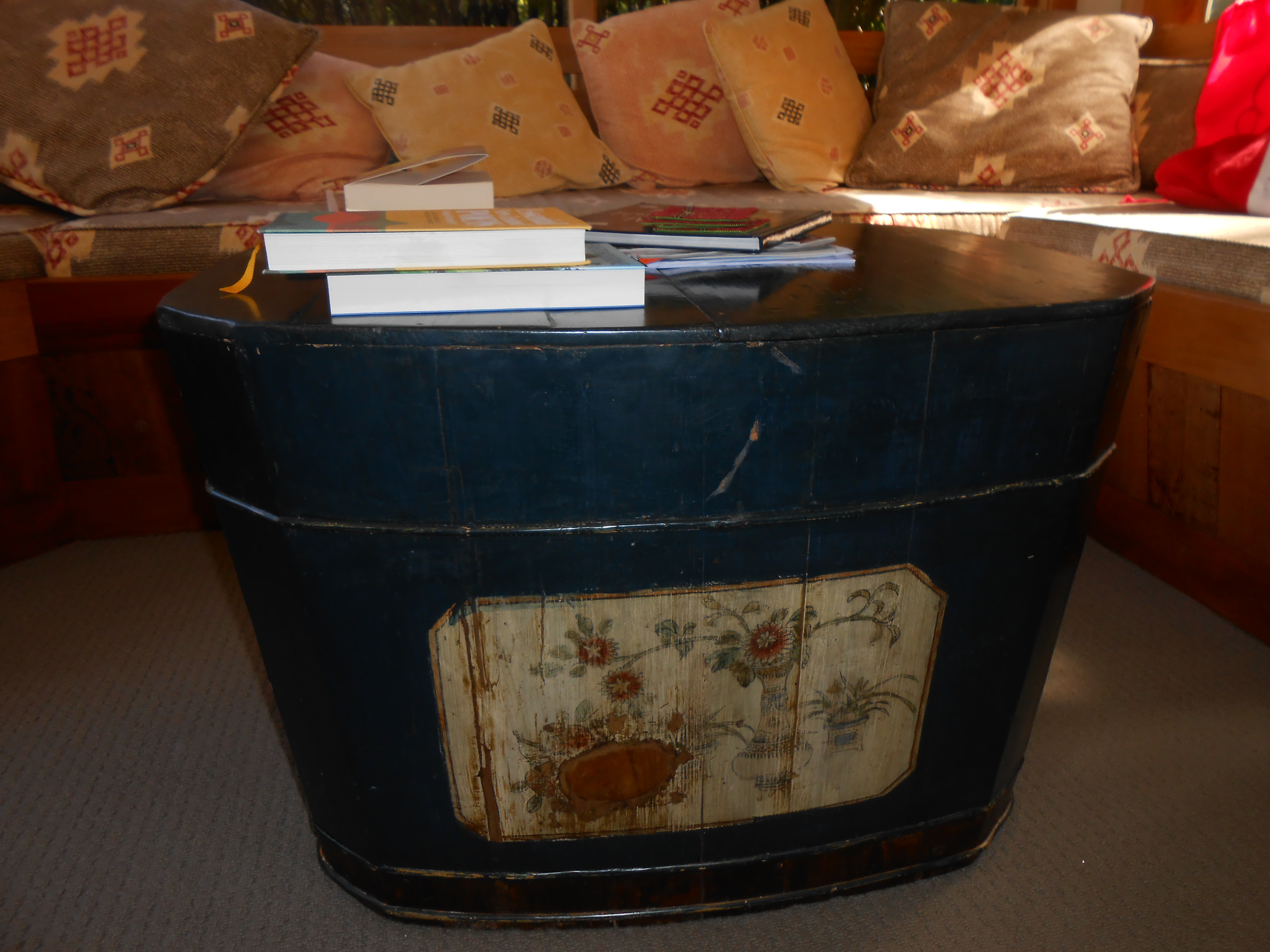
Then I had a family and Christmas was nostalgia and the creation of my own new story, a family story. It was sewing Christmas stockings that we still use, in spite of my limited skills as a sewer. Each year, I bring out the stockings for a brief cameo and then I stow them away in a faux Chinese wooden chest where we keep newspaper clippings and the Christmas lights.

DSCN0033

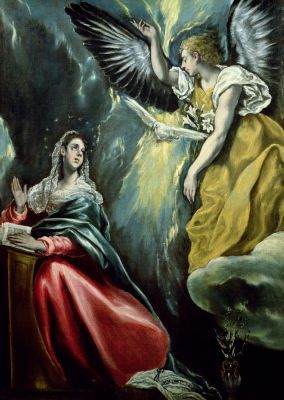
A virgin birth. It never occurred to me as a child how odd this was. How could a child be cynical about the Angel Gabriel arriving on a beautiful cloud? Mary so pious (in various versions, possibly a little startled), but attractively compliant. You have to remember, I was a Catholic girl who read her Catechism and could recite the Apostles Creed in English and possibly parts of it in Latin. The Angel Gabriel arriving at the annunciation was a powerful fairy-tale.

I had no sympathy for Mary who was to carry this unplanned pregnancy. I was filled with the light of El Greco paintings on Colomban calendars, sermons from a small church in Richmond – Our Lady of Perpetual Succour. And then after abandoning my faith, and travelling for a few years, eventually I married the man I’d been ‘living in sin’ with for almost five years.. and became that very Lady of Perpetual Succour… a wife and mother.

I’m older now, and there are decades between my love of filling stockings at midnight, baking the cake weeks before, writing cards, attending Midnight Mass (merely for nostalgia and now not at all), buying a real Christmas tree, decorating it, making food that will please everyone, and then, finally, realising, that it’s not up to me, and you cannot ever please everyone.

El_Greco_-_The_Annunciation_(Japan)

I no longer weep when Christmas music (Snoopy’s Christmas) comes on the radio. I still dance to the Pogues ‘Fairytale of New York’ because my granddaughter has been dancing to it with me for seven and a half years…

In my life-time, I have celebrated Christmas in Richmond, Nelson, Wellington, Washington DC, Norway (Santa arrived on Christmas eve in the snow), Edinburgh (practically alone), Istanbul (snow again) and Laos.

I’ve experienced joy and disappointment and one of my most memorable gifts was a swimsuit from an Aunt when I was about eight years old – it was covered in Christmas pink bon-bons and had a pink bow placed strategically at the base of the bodice where it flared into a cute skirt – prior to that I’d worn my Mother’s seersucker, over-sized swimsuit (with bra cups that possibly kept me afloat).

DSCN0032

It’s New Year now in our bay. The Pohutakawa next door is flowering. We’re re-united with our son who has been living overseas for ten years. We had a happy Christmas family breakfast and thoughtful inexpensive gifts under the tree. We were almost sitcom material on New Year’s Day with everyone on their best behaviour. Our granddaughter is besotted with her Uncle and we’re all besotted with her.

This year, I want to embrace being human, and to recognise the glorious potential of difference, rather than indifference, the beauty of the individual rather than the duty of togetherness, the magic of family in all its inordinate incarnations.

4th Floor Literary Journal

Standard

4th Floor Journal

This week, I had the pleasure of participating in the live launch of 4th Floor journal. It is the first time that I’ve been able to attend the actual launch. It was upstairs on the first floor of the Wellington Whitireia Campus and hubby was nonplussed in the lift, having assumed the 4th Floor, meant the fourth floor!

Lynn Jenner was the guest editor for the journal and it was very nice to finally meet her. She was so enthusiastic about the work of all the contributors. I found myself sitting next to the fabulous Renée Taylor and in the very good company of Adrienne Jansen and Jane Blaikie, who were tutors at Whitiriea when I completed the Advanced Fiction Diploma some years ago.

Adrienne read her terrific series of poems titled ‘Local’ about her observations while catching the bus and developing stories for the characters she saw. It’s a delicious poem kicking off with the opening line

She balances the tray of eggs

on her fingertips, just like a waiter.

I particularly liked these lines from the poem ‘At the Exhibition’ by Jane Blaikie.

It’s as simple as that, although as must be clear

to us all by now that love and simple are unrelated.

Renée read from her poem ‘Outside the Sun is Shining’

I wanted to post an excerpt from Renée’s poetry here, but the blog format won’t let me scan the full line, so instead I will post a link so you can go right on over to the 4th Floor Literary Journal and read it for yourself (which is partly the point of this blog anyway).

I am a big fan of Renée’s writing and will never forget the performance of her play ‘Wednesday to Come’ at Downstage on the 20th anniversary of its first performance.

I love being part of this prestigious journal alongside such esteemed good company. This year the likes of Elizabeth Smither, Lynn Davidson, Pip Adam, Natasha Dennerstein, Vivienne Plumb and Mercedes Webb-Pullman, to name just a few that I know. Mercedes was unable to attend the launch and I had the privilege of reading two of her poems. I’m always enjoy poetry, so it was a pleasure.

Here’s a couple of lines to tempt you from ‘Are all the pilots down’

through dark clouds colder than ice

into the peace of stars

then vanish where all pilots go

finally home to the sky.

I also really like the poetry of Helen Lehndorf and had planned to post an excerpt from her poetry but alas, I seem unable to retain the right line breaks and so instead, I will send you over to the 4th Floor Journal to read ‘So much white noise’. I can’t resist quoting this perfect question from the poem…

and how can you trust a man without a story?

The most affecting moment of the live launch was the reading of the poem ‘Exceeding Expectations’. I urge you to go on over to the 4th Floor and read this evocative, heart-rending poem. It’s a father son kind of poem and written by Brandon Mehertens who is autistic and unable to speak – a friend read the poem for him. As a poem it sure packs a punch.

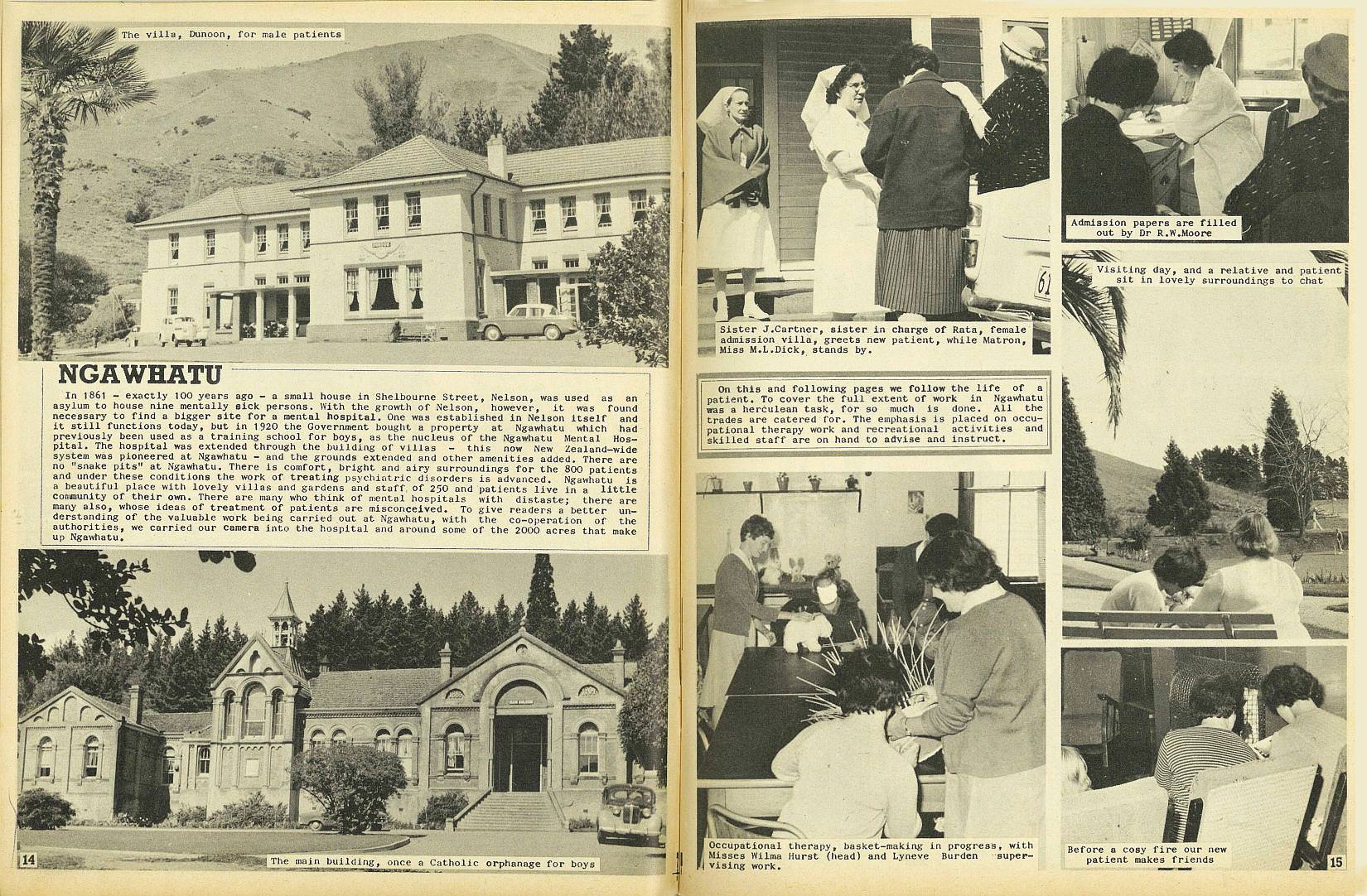
Lastly, there is my own poem. I’m very happy this year with my contribution. It is my very first sestina. I find that the villanelle and the sestina allow the writer to traverse tricky topics without becoming maudlin or over- sentimental. This poem, titled ‘Ngawhatu’, is about the psychiatric hospital in Nelson and my memories of it during the 50’s and 60’s – prompted by a recent visit to Nelson about which I have already blogged.

Here’s a teaser line or two for you:

if you’re not careful, shit a brick, you’ll end up there

What’s up there? But no one speaks, it’s all unspoken

get off the grass and up your arse with superstition

hoodackie, thingummybob, bite your bum thoughts

These lines were tweeted and a few of my friends made the comment that they couldn’t imagine these words coming out of my mouth – I rather like that – and yes they did!

Finally, it must be said, that the contributors owe a debt of gratitude to the Whitireia publishing team for all their work behind the scenes, tweaking, editing, putting the final touches to line breaks, mistakes and both querying spelling and author intent.

Kate Sheppard and a tinfoil mouse

Standard

I recently read Penelope Lively’s ‘Ammonites & Leaping Fish‘, a thoughtful memoir in which she explores the meaning of memory and links moments in her life to precious objects, not valuable artefacts necessarily, but meaningful and even sentimental. Ian Wedde, too in his recent memoir ‘The Grass Catcher’ evokes memory through objects and the odours of his youth. The main object being the grass catcher. (Some of the odours he mentions are best left to be read about.) Although, I guess there’s probably not a Kiwi kid from the 50’s and 60’s who doesn’t remember the smell of freshly cut grass, and a hand mower with a canvas catcher. Or indeed, who doesn’t recall the whiff of two-stroke petrol when the family upgraded from a hand to a motor mower… and in your over-enthusiasm pulling out the choke, the mower flooded.

On reading these memoirs, I realised that my garden whenever I wander in it, evokes important milestones both happy and sad. It was over Labour Weekend, home alone with a broken wrist, somewhat sorry for myself, that I sat reading on our sunny deck and recalled it was my Aunt’s birthday.   That’s my deceased Aunty who would have been 94 this year. What made me recall her, was not just the date, the 25th of October, her birthday but that she would often come to stay with us for Labour Weekend and we would share her birthday. And that the cherry blossom tree that we built the deck around would be in full flower. Since then, we’ve chopped down the cherry tree – as it was taking up so much room on the deck but the memory of the cherry blossoms and my Aunt are intermingled.

001

This prompted me to explore my garden and I found another blossom tree that forms an almost canopy on the lower part of our hillside section. The first year we moved into this house, our youngest son was six (he’s now 33) and we have a photograph of him standing under the flowering canopy with a chipped front tooth – memorable, because that very next day he was going to be page boy at the wedding of friends, fully decked out in matching tail-coat with his father who was the Groomsman. I remember being annoyed he’d broken his tooth. The couple who married, now have a daughter off to university next year. Whenever I look out our bedroom window in Spring and see the blossoms, I see our son with his chipped tooth, and then I remember our friends’ wedding anniversary.

Immediately beneath the blossom canopy is a very important memorial to our deceased cat Red who just happened to be a almost twenty year old black and white cat. Our granddaughter who adored Red, has made a pile of stones and shells in the garden as a tribute, and this includes a once shiny tinfoil mouse. The cat’s ashes are inside our house in a box, or are they? That’s another story, told in a poem and here is the link.

DSCN0023[1]

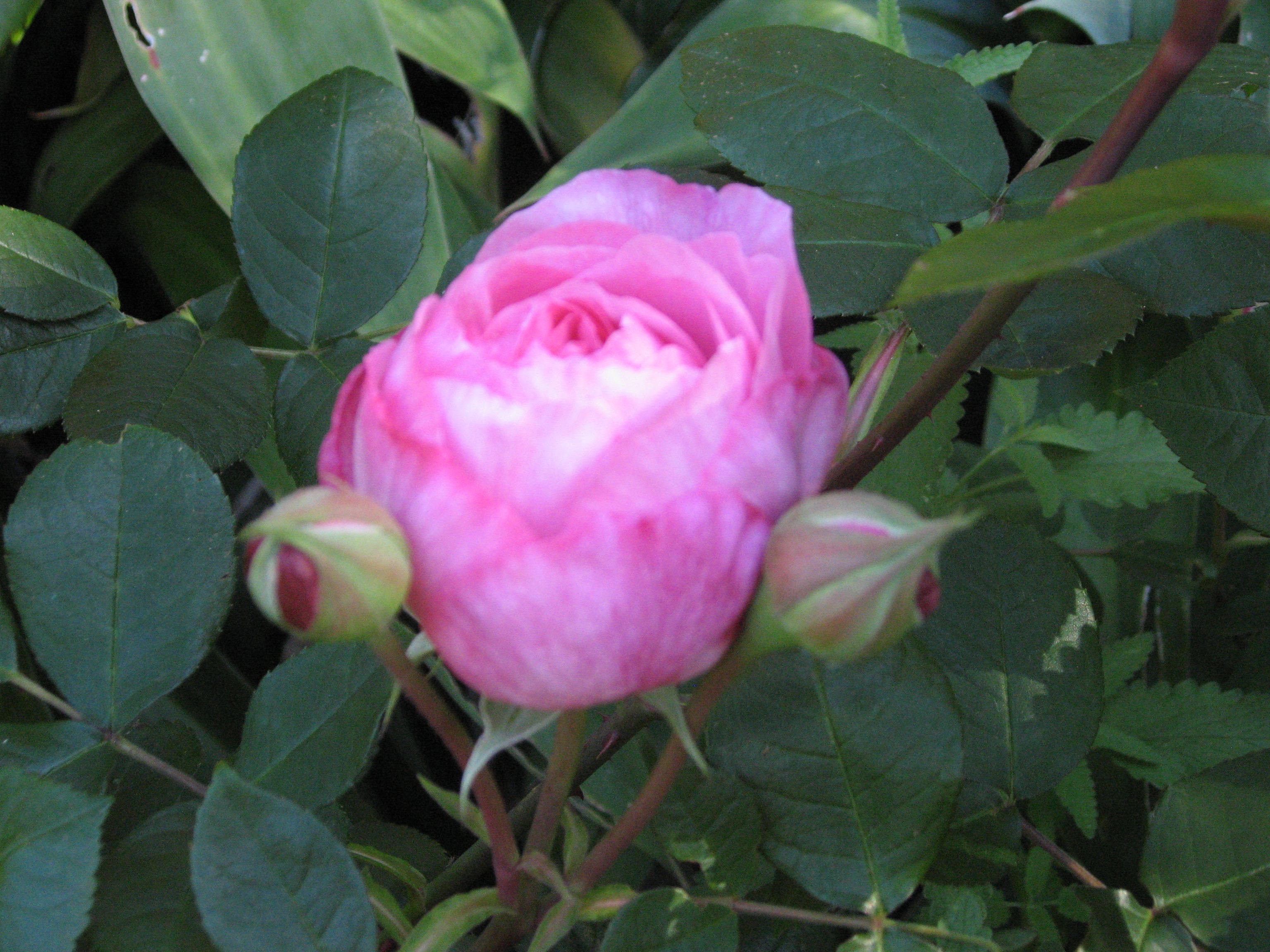
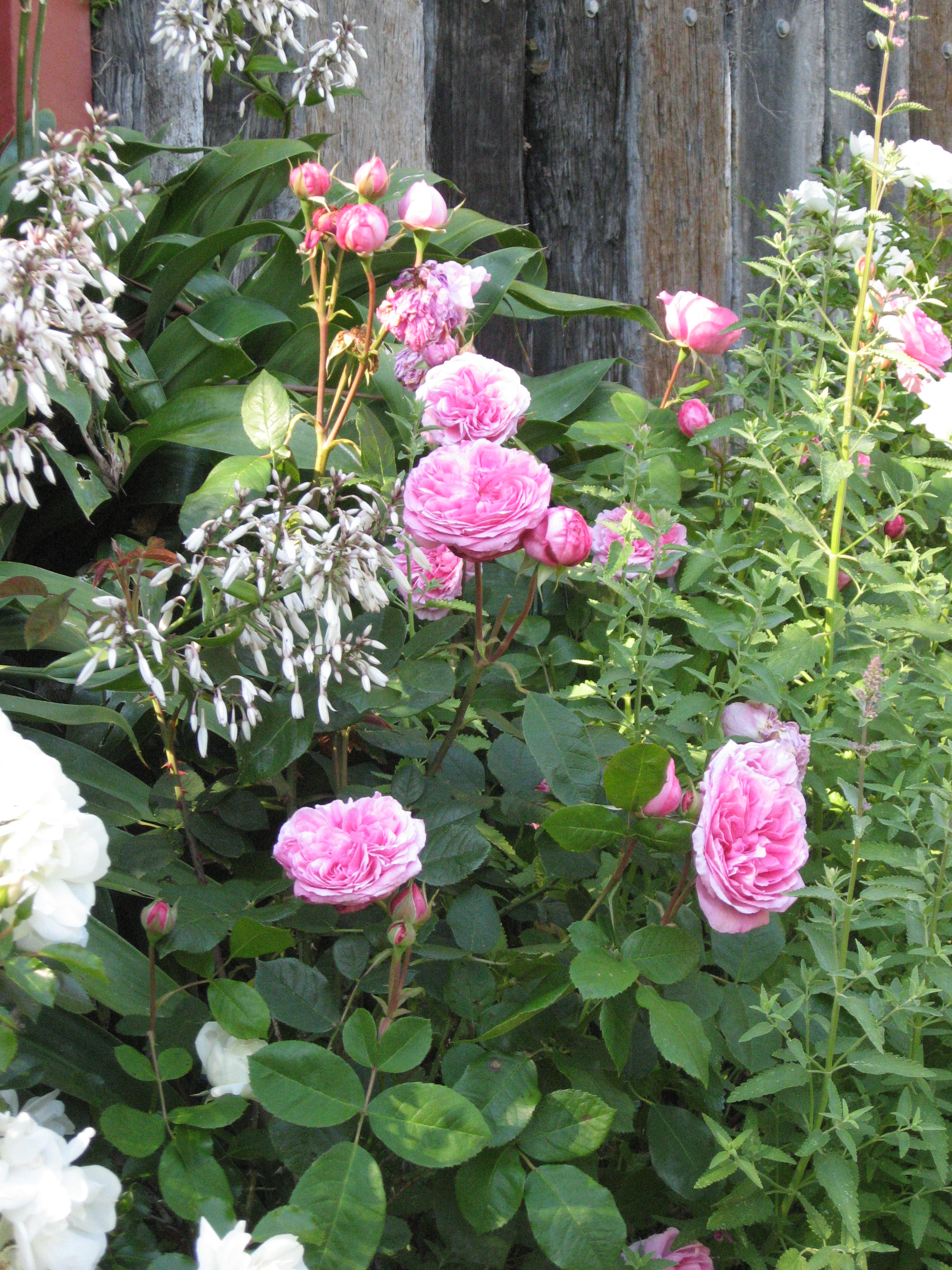
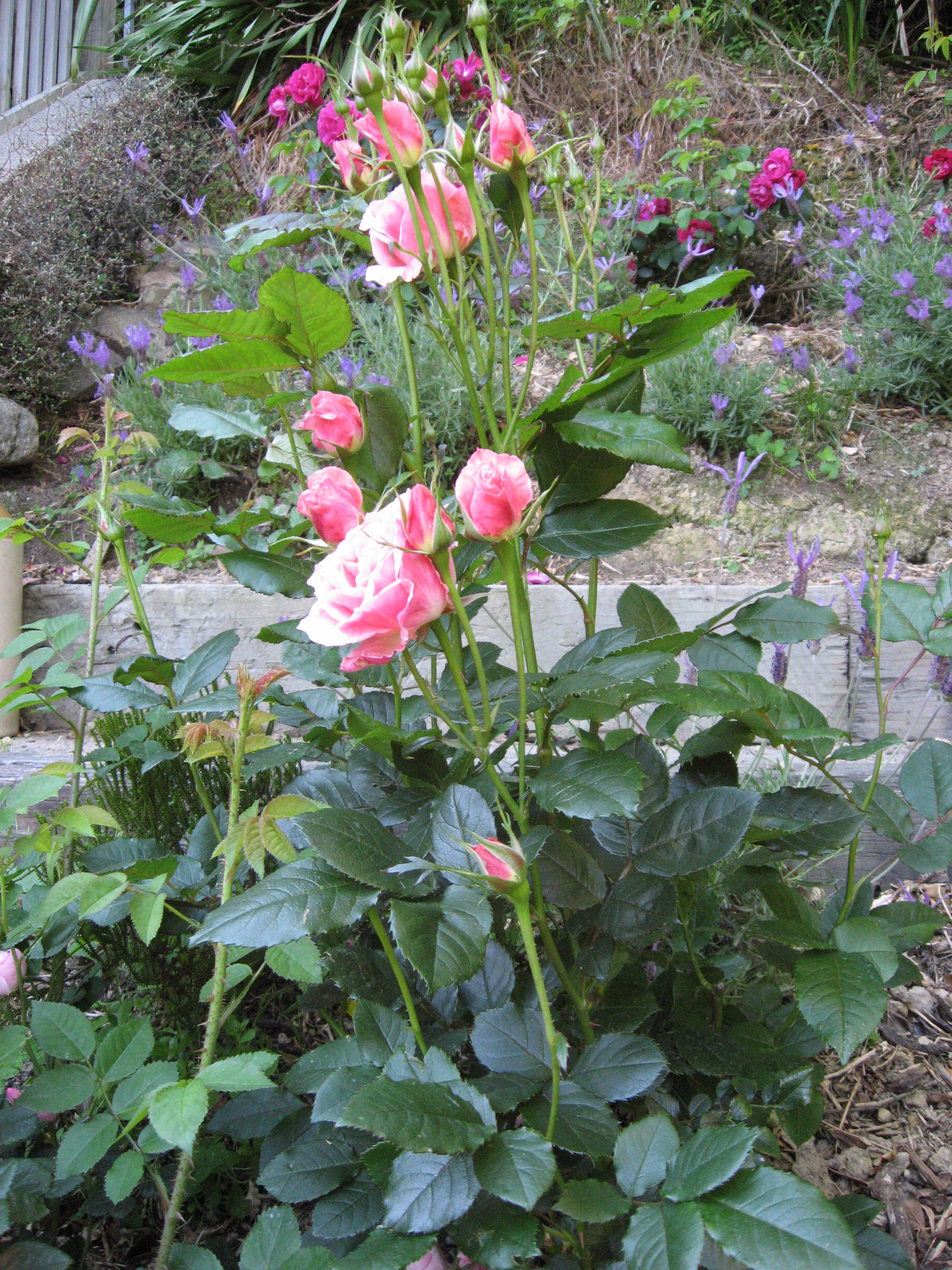
Then there are my roses. They bring me both joy and a stab of grief.   Roses enjoy being hacked it seems. The possums last year were feasting on my roses, and so I cut them back savagely to pervert the possums – it seems the roses enjoyed this and they are looking positively radiantly ready to burst into many buds. This includes Kate Sheppard, named after the feisty Kiwi feminist whom we thank for the vote. My Korean daughter-in-law helped me plant Kate – a treasured gardening memory, all the more poignant as this year, she moves on to a new life, away from our family. No-one warned me that as a mother-in-law I could also have my heart broken.

029

Kate Sheppard 2011 005

The Kate Sheppard Rose

The Kate Sheppard Rose

More violent and perhaps funnier, is the silk tree at our gate. One day, some years back now, after a fiery argument with my beloved, in fury and frustration, I attacked the silk tree – it was growing out over the path and obstructing the entrance. I chopped and chopped and snapped and attacked and I’m not sure what my neighbours thought. I felt bad afterwards and imagined the silk tree doomed, but it, like the roses, has thrived – but always to remind me of my tantrum.

Then there are the daisies that were once very fashionable in cottage country gardens. I tried slavishly to cultivate a cottage garden look to no avail. And then when we converted to a more coastal (but let’s keep the roses), suddenly the packet of seed that I sowed decided to grow. And now those daisies are considered weeds, but I allow them their rampancy as it only seems fair that they have tried so hard. They interweave with a beautiful old-fashioned red-leafed creeper with tiny mauve pom-pom flowers. The two fight for supremacy and I keep them both in check.

Too, as you enter out front gate by the almost demolished silk tree, there is a softly delicious smelling jasmine plant that entwines with the wildly fragrant honey-suckle. Both plants are now considered ‘outlaws’ as we live next to a native reserve… but the scent is so delicious of an evening that I cannot bring myself to be rid of them entirely. Inside our front gate are two Daphne bushes bringing their ‘lawful’ luxurious bouquet to our doorstep. Dare I mention my rogue (practically heretical) ginger plants. They look so striking and I’ve tried to strike them out. Alas, they resurge.

The last important memory is about our first day in this house. We inherited a beautiful old-fashioned garden and one of the main attractions were the pink water-lily dahlias. The previous occupant an older couple who had tended the garden for years with love and affection, slyly dug up some of the ‘considered rare’ dahlia bulbs and took them to their new abode. Due to landscaping and renovation, I no longer have any dahlias, but I know where they should be and they remind me of the key to the house, left in a glass bottle under the front veranda by the same elderly couple. And too the note they left us, filled with daily, weekly, monthly chores to be attended to, including the trimming and clearing of the zig-zag down to the road below. There’s a blackbird that comes to sing. We’ve named him after the dear old chap who lived here before us – although we’ve been in the house now for over 25 years, and I’m not sure how long blackbirds live…

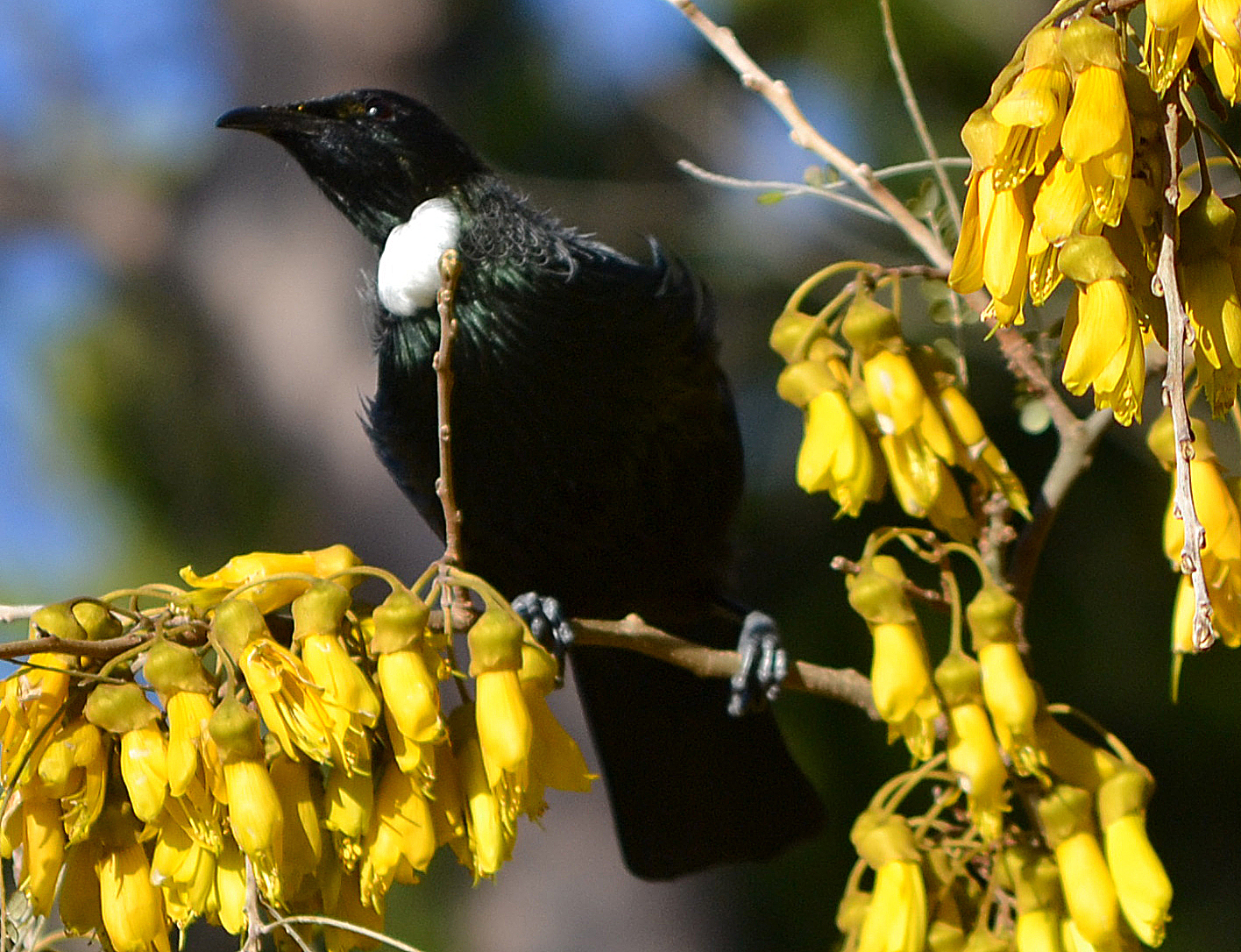
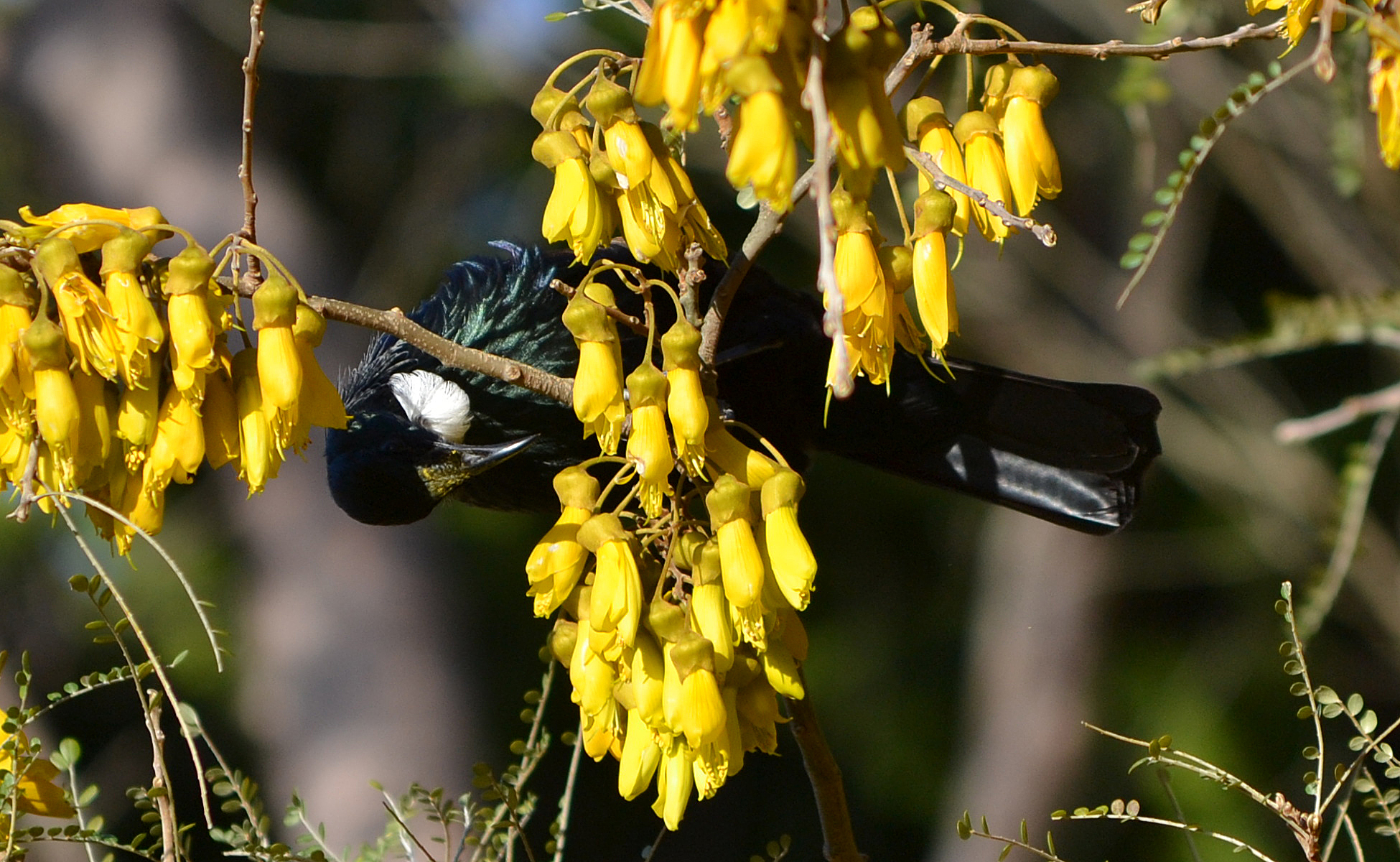
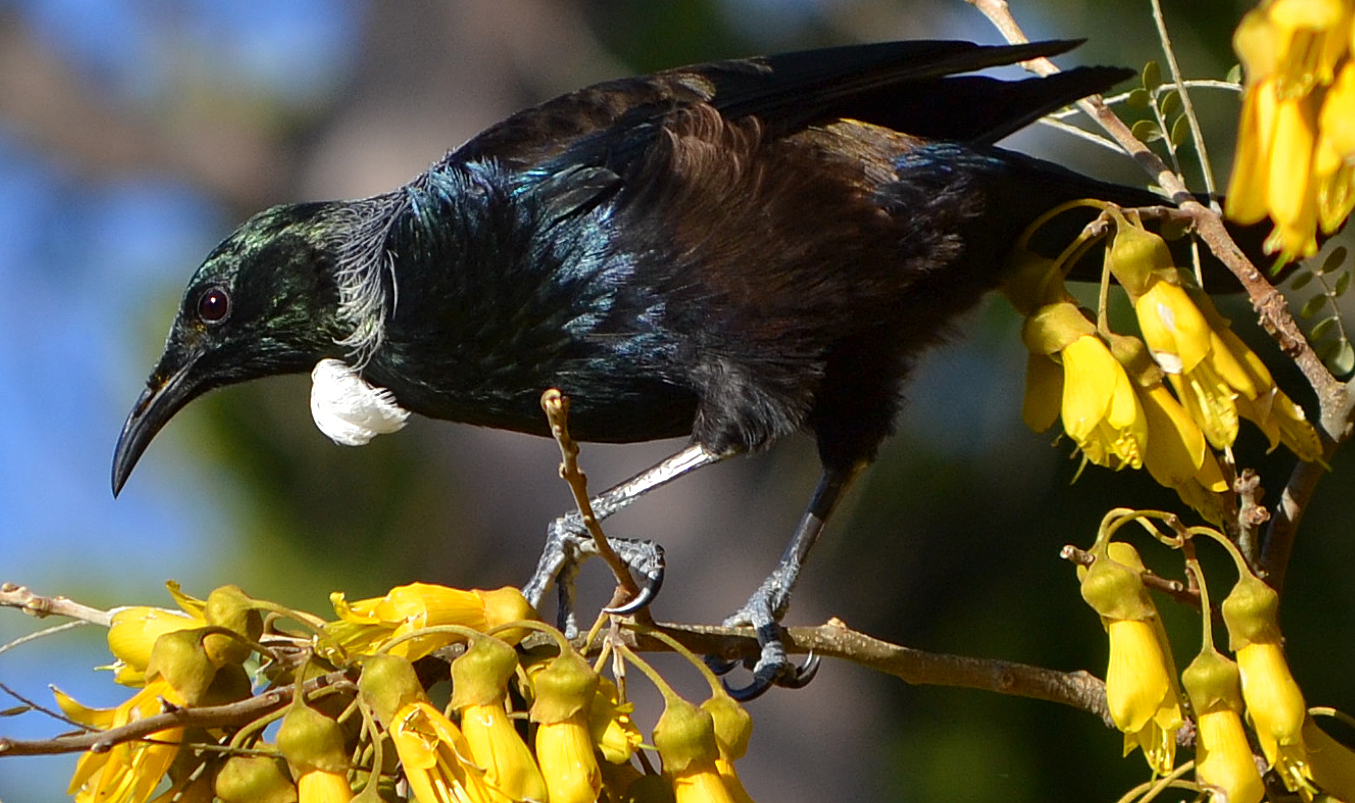
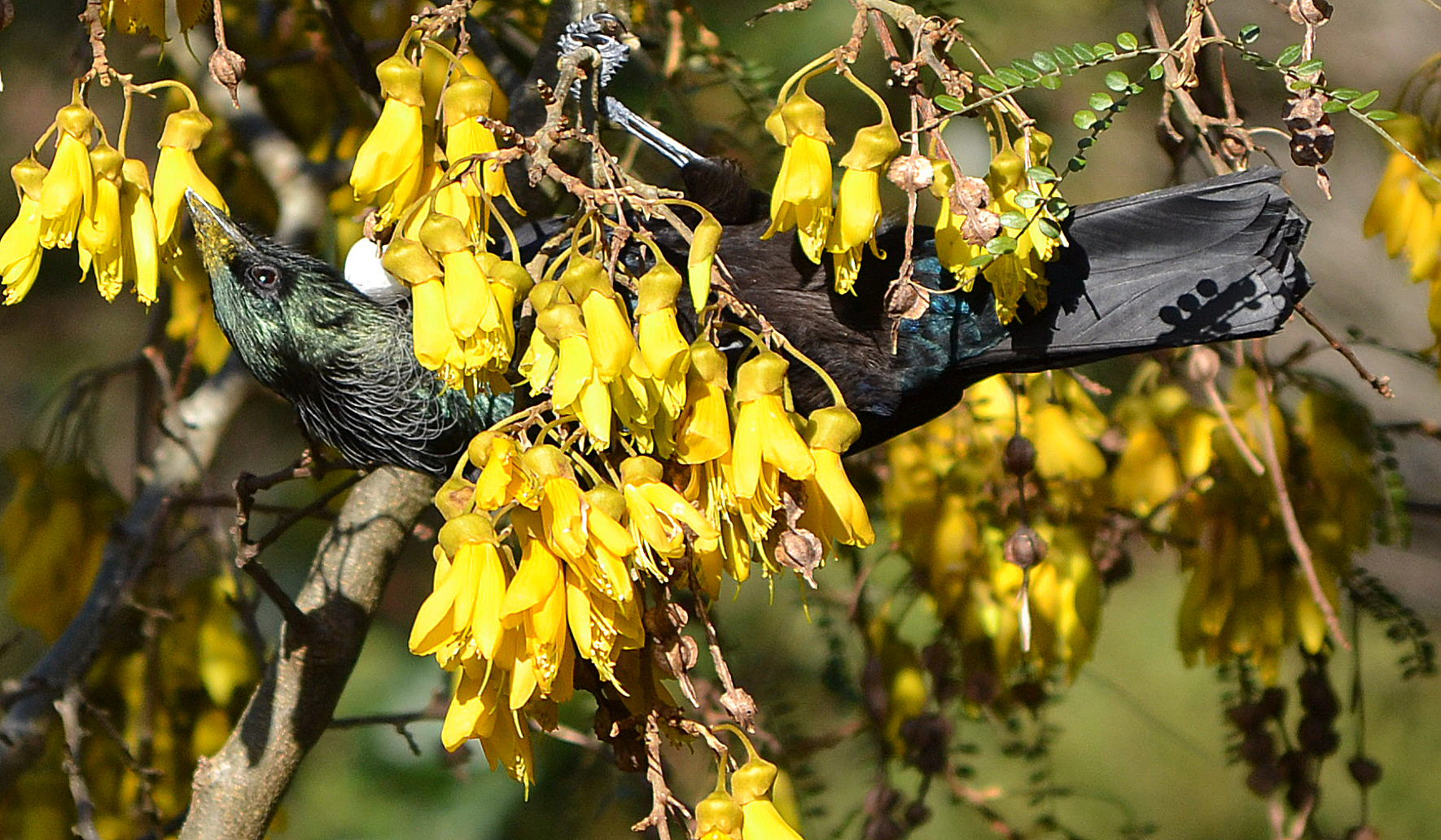
Recently I posted a poem inspired by the tuis in our Kohwai tree. This tree was but a wind-blown seedling on the side of a clay bank that I was about to tear out while weeding when we first moved in. Something stopped me. It seemed wrong to not want a Kowhai, even though it was in the wrong place. The Kowhai now is a superstar where in springtime eight or nine tuis can be found feasting. It shades my washing line, something I lament, but the song of the tuis and the sight of the overweight kereru, more than compensates.

Tui 3

So, my garden is full of birdsong, flowers and my heart’s song, a testimony to loss and new growth.

Wearing a Poem

Standard

Tui 4

I don’t normally rush to publish a poem in progress, but these photographs by John Rainey-Smith are so beautiful that I’ve decided to take a risk – publish the photos and the poem that the tuis inspired, yesterday. I reserve the right to rewrite the poem, extend it or end it. But it does capture the first day of creativity for me in quite a while.

Wearing a Poem

Into this windless blue
cubes of sunlight land askew
on painted indoor walls
accompanied by hammering

as builders repeat their
renovating heartbeat of
another suburban almost
summer in our street

fat and sonsy tuis
gobble kohwai, their
throats awash with song
amid golden profusion

fatter even than last
year, more flowers to
feed upon, thanks
to the endless rain

my silver beet stalks
shine phosphorous red
trapped on the deck
with the mint and thyme

I was reaching for
a grief to nurture
to feed on like
the sonsy tuis

hoping to wear a poem
a somewhat dated outfit
but instead, a poem
wore me.

Tui 3Tui 2_edited-1Tui 1Tui 5Tui 6

We sat together on our deck in the late afternoon sun, sharing a beer, waiting patiently for the birds to return to sip the kohwai nectar. They rewarded us for our silent vigil. I like my poem but I’m even prouder still of John’s beautiful photographs.

Essential New Zealand Poems and doggerel

Standard

Essential New Zealand Poems and doggerel

Essential New Zealand Poems book cover

I had the interesting honour recently of speaking to a group of writers completing a memoir course. It was a thrill for me to be invited and in particular, because they had been given my recent Landfall essay ‘Who is Left’ to read and compare with an article by Rosemary McLeod, one of my absolute favourite journalists.

My essay is a personal interrogation of my motivation for not just attending, but actually liking Anzac Day commemorations. Rosemary McLeod had written about stolen war medals and her distaste for the proposed new and very large local war memorial in the old Buckle Street Museum building.

I did not disagree with Rosemary’s piece. I rarely do. She usually nails it for me. I react privately to something in the news and then find that Rosemary can articulate it eloquently and intelligently and I mostly find myself nodding in agreement. I remember returning from my ‘OE’ in the mid seventies and opening up the Listener to read Rosemary McLeod – it was the first time I had read such smart, funny and insightful local journalism. I became a fan and have remained one.

So, there I was on a wet Saturday, talking to other aspiring writers about my journey as a writer, feeling somewhat amazed (flattered) that these students had read both my essay and Rosemary’s article. I’ve been one of those students many times in my journey as a writer. We hope that by listening to others we will unlock a secret door to our own creativity – a short-cut even, or a road-map.

And so, I told the students about what I now call my epiphany. That I was driven to writing passionate rhyming verse about my teenagers, one with dreadlocks and the other a green Mohawk. The epiphany came as I stood in a local mall with both lads and a letter from the local high school principal demanding that the green Mohawk be modified. We found some hair dye and he went from an emerald-green to Gothic black but I must say green suited him a lot better. Out of this, came the doggerel. And out of that, I gained a place on one of the first under-graduate poetry writing courses (now de rigueur) up at Victoria University in the late 1990’s – one of the 12 disciples with Greg O’Brien (not the Last Supper, but my first).

I had no idea that my rhyming verse, was in fact, doggerel. I had no idea what doggerel was, as I’d not heard the word before. I grew up with my mother reciting lines from ‘The Sentimental Bloke’ by C.J. Dennis, and we always called it poetry. So, here I was in Greg’s class with real poets (people who’d actually been published), and my own rather amateurish doggerel, as I discovered. But too, it can’t have been all bad, as there must have been an essence of something for the university to have taken the chance on me and invited me on to the course.

How proud am I, a decade or so later that one of the poems that I started to write during that course, is included in the newly published anthology ‘Essential New Zealand Poems – facing the empty page’… to be between the superb suede-like orange-flavoured covers with so many poets that I admire – too many to mention, many of them now friends.

Eastbourne – an Anthology

Standard

Eastbourne – an Anthology

It’s time I blogged. I’ve been teaching English in Cambodia for the past three months. It has been a real adventure and I’ve loved it. There have been so many things to absorb, equal amounts of joy to challenges. My Cambodian students fill me with admiration. They work six days a week and sometimes two jobs and still they turn up to learn English.

I will leave a part of my heart here. I will blog about Cambodia, when I return to New Zealand.

And so, my thoughts are now turning towards home. While I was over here teaching English, the Eastbourne Anthology, was launched. I am proudly one of the co-editors of this publication, along with Mary McCallum and Anne Manchester. We worked together on it for two years (not imagining when we started, that it would take that long). I left to take up this volunteer teaching role in Siem Reap for three months, just before the final stages of the editing. And so I must say a big thank you to Mary and Anne for carrying on in the difficult final few weeks, with deadlines and proof reading to be done.

Too, I wish to acknowledge that the inspiration for this anthology was Mary’s. She invited us to join her on this project, knowing that all three of us share a passion for literature and our community. We knew too, that many famous New Zealand authors had featured Eastbourne in their work. But we didn’t know quite how many until we began our research. And nor did we realise how many talented local unpublished authors would submit their work. Constantly, we were surprised and delighted by the variety and the quality and this made our job has editors so much more difficult – and in the end rewarding.

The easy bit, was of course, the ‘Classics’. I’m a devotee of both Katherine Mansfield and Robin Hyde, so I was more than happy to re-read their work and rediscover the references to my own home bay, Days Bay. And then great joy, I was introduced to the work of Molly Falla and had the good fortune to meet her daughter, one of Days Bay’s oldest residents – well, she has lived in the bay perhaps the longest. My next most exciting discovery, with the assistance of Ali Carew of the Eastbourne Historical Society, was the writing of Mary Findlay and her astonishing memoir ‘Tooth and Nail’. I blogged about this a few months ago.

When our family first moved to Eastbourne, over 24 years ago now, we noticed how many second generation families there were in the community. I will confess, at first I had reservations about this. I scoffed a little. We were ‘newcomers’ in the bay and we lived in ‘The Barnett’s House’. Houses were named after the people who had lived there the longest, and not the new kids on the block. I was a working mother (and this wasn’t altogether approved of). It’s taken a while, but I think we’re now part of that same tradition – maybe if we sell our house one day, they’ll say to the new buyer ‘Oh, you’re in the Rainey-Smiths’ house’.

I now have a granddaughter living close by to me here in Eastbourne and I understand community in a different way. The dedication in the anthology from me, is for my granddaughter Sienna. I think it’s good to leave your community to gain a perspective and I’ve been away now for three months. I miss my family and friends. I miss the tuis and the wood pigeons and I miss the sound of the sea.

The Eastbourne anthology is a celebration of all the things that I miss and I’m very proud to be both a co-editor and to have two of my poems in the anthology. A special thank you to Makaro Press, the new publishing house of Mary McCallum. I hear that the anthology is about to go into reprint. It was Mary’s inspired choice to have the anthology ‘bay-themed’ and Anne’s to invite local artists to submit sketch impressions of their bays.

I wasn’t able to be at the launch but courtesy of Viber, I heard the launch speech by Mary and my husband John took these photographs for me. Fittingly, the anthology was launched at the Rona Gallery, home to all literary and artistic soirées in the village of Eastbourne. Joanna and Richard Ponder and their family are staunch supporters of the arts in our community.

Mary McCallum launching the anthology at the Rona Gallery

Mary McCallum launching the anthology at the Rona Gallery

John Horrocks, poet and neighbour, reading

John Horrocks, poet and neighbour, reading

Lloyd Jones (one of the famous faces) reading from his work.

Lloyd Jones (one of the famous faces) reading from his work.

Anne Manchester, co-editor (whose work also appears in the anthology).

Anne Manchester, co-editor (whose work also appears in the anthology).