A Way of Talking

Standard

We don’t talk like that down here.

These are the words of a caller to Newstalk ZB talking to Marcus Lush. The recording has gone viral. It began with a conversation between Marcus and an 83-year-old woman who refused to accept the correct Maori pronunciation for her hometown of Ōpoho. Another caller phoned to berate Marcus for the way he spoke to this older woman and continued to insist that there was no such thing as the Taieri Plain, only the Tyree Plain.  When asked by Marcus about how they pronounced Camembert cheese, they both appeared indignant at the idea they might say burt instead of bear, one of them adding, because she was ‘educated’. I was reminded of Patricia Grace’s iconic short story A way of talking. This story challenges us all to step up, and to stand up, something that in the Kiwi tradition has not always been easy.

On hearing this recording, I was reminded of my upbringing in the fifties and sixties in post war small town New Zealand.  We regularly mispronounced Maori names, not willfully, but ignorantly. The one I particularly think about is, Mot-you-acre… which when spoken correctly is so much more beautiful as Motueka. Roll forward to 2019, and as a teacher of ESOL to migrants and refugees, I am dedicated to pronouncing the correct vowel sounds for Te Reo and teach Tikanga.

I feel robbed. I try to imagine my life, at primary school in Richmond and the enrichment of my education, if Te Reo had been taught alongside English. For some years, I was a volunteer at Arohata Prison running a book group and some creative writing classes.  I was confronted with many names that I found difficult to pronounce correctly, so I enrolled at Victoria University to do an introductory Te Reo course. The course tutor told me to practise rolling my ‘r’s in the shower, as I had never been able to do this. I’d accepted somehow, that it was impossible.  Faced with my role as a volunteer wishing to connect with women whose names and place names required rolled ‘r’s… I found that yes, with focus and attention and quite a bit of practise, I could roll my r’s’.  Some of the women at Arohata supportive of my efforts, told me to try using a ‘d’ instead of the ‘r’ until I had mastered it. They were encouraging and happy to see me trying.  I also met women who had beautiful Maori names (Rangimarie, one example) who seemed almost ashamed by the difficulty of their name to be pronounced and used correctly, so they preferred shortened nicknames.  In this very paragraph lies a whole other essay as to why there were so many young Maori women in our prison system. As a middle class Pakeha volunteer I was aware of my privilege being there and felt gratitude for the warmth, and at times genuine affection with which I was treated. I wasn’t there to make change, to patronise or to preach. I simply went armed with my newfound love of literature and my passion for New Zealand short stories and authors like Patricia Grace, Witi Ihimaera, Alice Tawhai, along with Owen Marshall, and Janet Frame.  Writers I had only newly encountered in my 50’s doing a BA (English Literature).

I grew up in post war New Zealand. A time we considered egalitarian. In my street alone, were the butcher, the baker, the chemist, two school headmasters, and eventually, after I’d left home, a Prime Minister. We are talking suburban Richmond, Nelson. At my Richmond primary school there were two Burmese boys and our next-door neighbours in my early childhood years, were a mixed-race Maori family.  Interestingly, this idea of race, didn’t enter my thoughts and it’s only in retrospect remembering their beautiful names, Arana, Tui and Rangi that I realise, of course, these were Maori names.  I don’t think it crossed our minds as kids to separate friends on ethnic or racial grounds.

The mother of the two Burmese boys was the nurse at our local medical centre. She was a widow, a very attractive woman, and held in high esteem within our community. Nevertheless, that didn’t stop my Dad calling her Bamboo Annie, although not to her face.  I realise now how racist this was, but at the time, I didn’t. My Dad also called her the Iron Curtain because she also acted as a receptionist for our GP and the joke was, you couldn’t get past her to get to the doctor. Obviously, she was doing a grand job.  In my memory (memory is faulty I know), my Dad and whole family had high regard for this woman. The epithets with which she was labelled would seem to dispute this. Again, ‘A Way of Talking’, something we didn’t as kids, challenge.  That my first kiss, was on our front doorstep, from the youngest one of those Burmese brothers, an old school friend, is now, on reflection, quite interesting, when you consider how mono cultural our small town was.

My Dad also spoke of the Yellow Peril and Reds Under the Bed which were prevailing themes post war in suburban New Zealand. Interestingly, although having been a POW, my Dad spoke with a kind of jocular affection for the Jerries.  Was he racist?  In his day to day life as a carpenter, working on building sites, he worked with and drank with a wide range of men, and from my childhood lens… I don’t think he was racist.  I think he was a man of his time, this was ‘a way of talking’. How I loved that story by Patricia Grace when I encountered it.   Yes, all this stuff should have been challenged, and I was in a sense ‘uneducated’.

An uncle on my mother’s side, was in the Korean war in the 50’s and with the Allied Troops in Hiroshima after the war. We grew up with lacquered trinket boxes from Korea on my mother’s dressing table, a beautiful embroidered kimono in her wardrobe while in our sitting room was a picture of two stalking tigers on printed silk.  What a surprise it was for me, when our youngest son moved to live in South Korea, and I encountered those tigers at the Seoul War Museum… my tigers!  We are now a multi-cultural family with a South Korean-Kiwi granddaughter, and I know if my Dad was alive, he would love and embrace this.  I sense the 83 year old woman calling Marcus Lusk and claiming her Ōpoho was the way she pronounced it, may not see herself as racist, but as Marcus put it, wilfully ignorant… and this takes me on a circular argument to my deep regret that we were robbed of a bi-lingual education.  I’m 70 next year, so this woman who has lived all her life in Ōpoho, will have grown up in an even more conservative educational environment than I did.  The whole England is home and Colonial viewpoint. It’s never too late to change, but she does I suspect, represent a way of talking. I am not attempting to defend this, but to examine it.

And there’s something else going on here, I believe. Once I became aware of how to pronounce our Maori place names more correctly, I also became self-conscious about doing this. An example is when we began going up the East Coast to stay at Anaura Bay.  I loved pronouncing this bay correctly, but I began to feel ‘pretentious’ as nobody else I knew said it correctly. Too, my husband’s family used to regularly stay at Matarangi, and we would join them. Alas, they still call it Matter-rang-ee, and again, I feel uncomfortable asserting the correct pronunciation. I’m not a meek and shy kind of woman, but I am able to be a bit of a chameleon when it comes to fitting into different social situations… is this traitorous of me, should I insist on the correct Maori pronunciation?  I remember vividly being corrected by an elderly neighbour as I was packing our car to take our then teenage sons skiing. He asked where we were off to and I replied ‘Awakoonee’… he replied with slightly raised eyebrows saying Ohakune in perfectly pronounced Te Reo, startling me into never forgetting to say it correctly again.

When I first left home in the late 60’s to work in Wellington at the Chief Post Office, I was living at a Post Office hostel in Oriental Bay and almost three quarters of the young women I lived with were Maori girls. Coming from mostly mono cultural Richmond, Nelson, this was my first encounter with so many Maori women. I envied the Maori girls, most (or all) of whom were from the North Island, their sense of camaraderie and belonging… something that I lacked.  Indeed, it wasn’t until many years later that I recognised the shy young man who would come calling at Berkeley House to meet with the girls from the hostel who formed part of a Maori Concert Party to greet incoming cruise ships in nearby Oriental Bay… none other than Witi Ihimaera, who worked I think at the Herd Street Post Office in telecommunications. I don’t recall the use of Te Reo in the hostel, but of course, these girls would have been singing in Te Reo, something I now regret, never going to listen to.

In my retirement, I retrained as an ESOL teacher working with migrants and refugees and have had the greatest privilege of working with students from so many different ethnicities and religions… unimaginable back in 1950’s New Zealand.  What has fascinated me, is the strength and bonds of family with so many of my students and I have encountered a sense of envy.  Many of the migrants and refugees have family spread over many countries with whom they are in regular contact thanks to the use of social media and mobile phones. I contrast this with my recent discovery that my father’s father was a sixteen-year-old Irish orphan immigrant to New Zealand, who never acknowledged paternity. I grew up with almost no contact with my father’s family, until recently.

I love that Lower Hutt, where I live, is now a melting pot of multiculturism. I think of the now banned song by Blue Mink (the lyrics, unpalatable in 2019), Melting Pot which at the time, was a song of optimism for racial integration and harmony. I saw Blue Mink live in Manchester in the early 1970’s and the song resonated, but I understand why it has been banned.  A way of talking, no longer acceptable.

A special experience in my role as an ESOL teacher was our school being invited to Takapūwāhia Marae in Titahi Bay, where our students were welcomed onto the marae and enjoyed a hangi (our Muslim students honoured with a halal hangi and vegetarian options for other religions and I think from memory, even gluten free options). It was also interesting, returning to the classroom to hear the feedback among the Indian and Sri Lankan students who related to the stories of British Colonialism, as told to them on the marae. Most of the ESOL students I have worked with, have no problem with Te Reo vowel sounds and find learning Te Reo alongside English almost effortless.  They are unencumbered with the past. I do warn them though, that the place in the middle of the North Island called Taupo, still presents many Kiwis with a challenge.  Even those who are committed to Te Reo seem to find slightly different ways to say it.

Now, as officially an ‘elderly’ Kiwi, I have a granddaughter, born in South Korea, and at fifteen months, she adores the haka.  And not any old haka will do.  It has to be the 2019 World Cup opening game against South Africa when TJ Perenara on you tube, appears from out of the assembled men in black, his face a picture of expressions.  She becomes mesmerised, goes very quiet and becomes entranced. She understands instructions in English and Korean and her bedtime song is Te Aroha.  After watching the haka with TJ, her next favourite You Tube clip is Ma is White by the Poppets.  I envy her this fluidity of sound and language in which she is immersed. My granddaughter’s name is Emma Aroha. At her day-care in Seoul, they call her Arawa… which is their version of Aroha. She answers to Emma and to Arawa and one day will know that the song Te Aroha which we sing to her, is how to pronounce her name.

I see a new New Zealand emerging from the Colonial English traditions and we hear Te Reo now daily on the radio and on TV. We are absorbing Te Reo words into our everyday parlance and so this, to me is Aotearoa, 2019, English and Te Reo, spoken with confidence by people from almost all corners of the earth. Kia ora it seems beginning to outclass Gidday.

A new way of talking.
Shut One Eye – Cycling the Otago Rail Trail

Standard

Shut One Eye

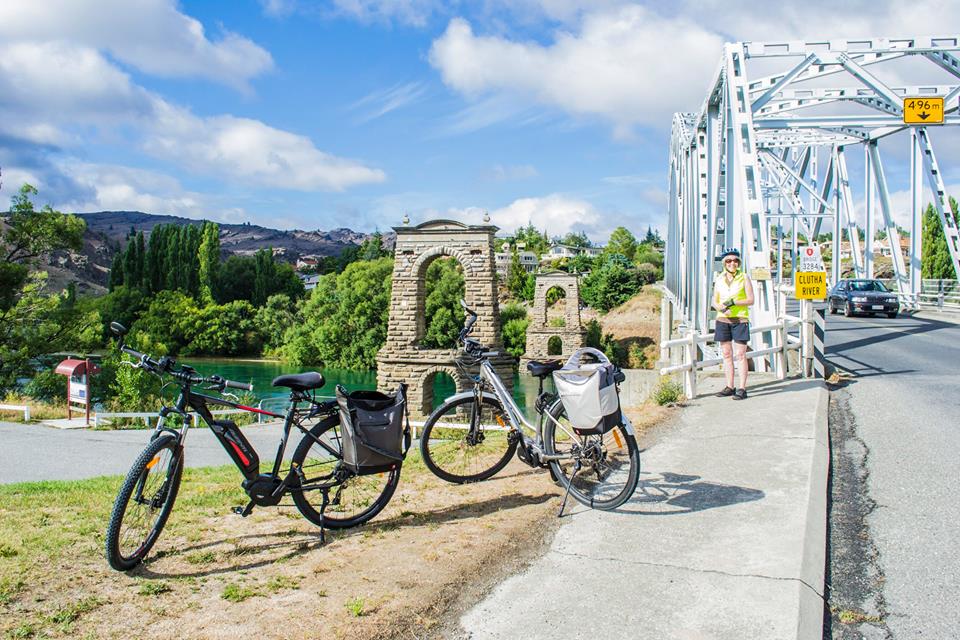
This is the advice given to us from a stranger. We were seated at an outdoor café in Alexandra.  It was the first day of our cycling the Otago Rail Trail. Already, in our lodgings at Clyde, we had encountered the warmth of southern hospitality. Then, at the start of the trail, as we entered the first stretch of gravel and dirt, a couple about our age, coming the other way, (locals biking from Alexandra to Clyde), ambushed us with hellos and endless chit-chat about the trail.  I was itching to be on my bike but fascinated too with the friendliness.

27332018_10155307174088634_1375147335808161575_n

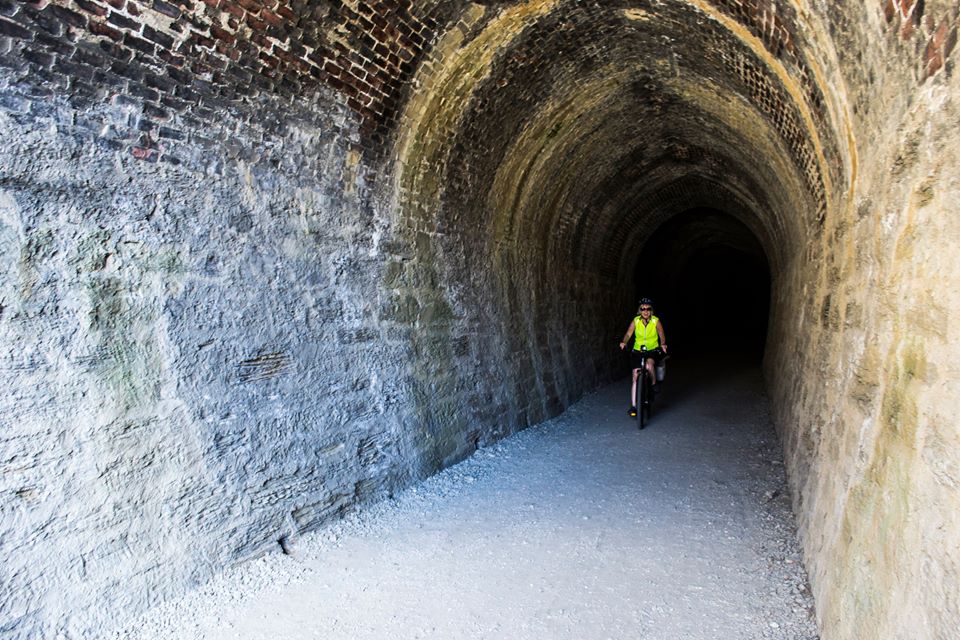
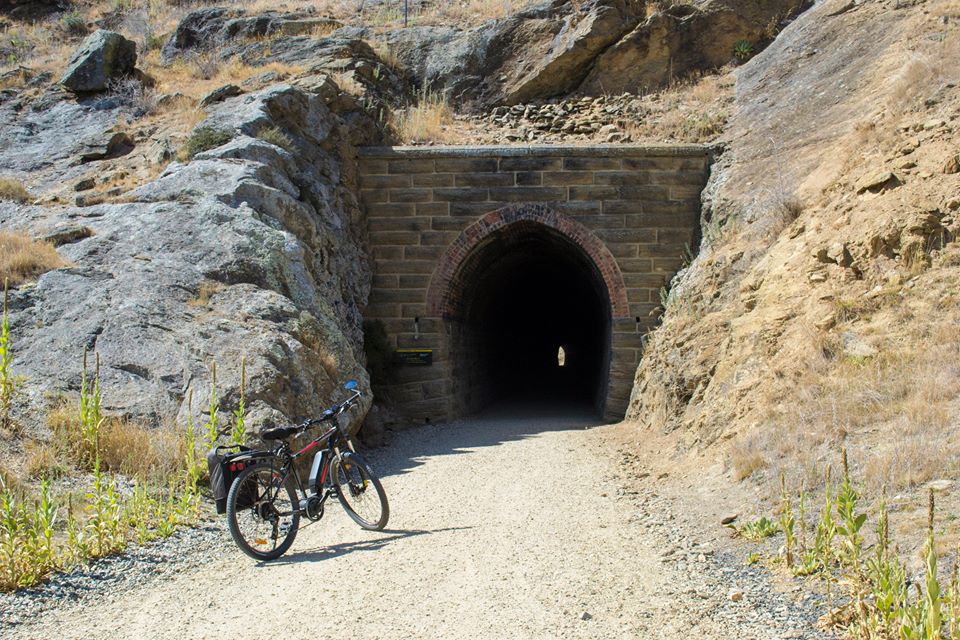
Shut One Eye.  By this stage, we had cycled the short distance from Clyde to Alexandra and we were enjoying a coffee in the sunshine. First one, then another, local, stopped to chat about our e-bikes, our cycling and where did we come from.  The man who told us to shut one eye before we entered the Poolburn Gorge tunnels on our bikes, was full of advice about recharging electric bikes and cars. He regaled us with his mileage on both his bike and in his car and where to plug in.

26993669_10155307174278634_3871213840278263761_n

And this was how I ended up cycling with one eye shut for half a kilometre prior to the tunnels. Precarious, but persevering, as I am a stickler for following advice. Whereas John, less worried than me about night blindness, shut his eye about half a minute before. We both sailed through the tunnels yelling and laughing and it was around the middle of the longest tunnel that I suddenly found myself slightly panicked with no idea of left, right, backwards or forwards – and then a light emerged at the end and John’s voice beckoned.

27067537_10155307173483634_2686783655310629293_n.jpg

It was afterwards, we read the sign advising us to walk and not cycle through the tunnels. Chatting with other cyclists that evening, we realised we’d been a bit foolhardy, as perhaps a cyclist coming the other way (who maybe hadn’t shut their one eye for a whole kilometre) would be cycling blind towards us.

It was stinking hot on this, the most scenic part of the trail. We left Omakau early, had coffee in Lauder which was 32 degrees in the shade and then found ourselves hurtling as fast as we could to create a breeze in the stifling, scorching, windless Central Otago. We passed young families, not on e-bikes, not all that well prepared, standing practically hugging an almost hedge, pretending it was shade. One of the kids was crying, the mother looked distressed and Dad with another toddler, was all decked out like a veteran cyclist.

We also noted a hierarchy and a bit of snobbery around e-bikes. You get the feeling from people who are not on e-bikes, that somehow you might be cheating.  We had a wee chuckle when heard that the Otago Rail Trail committee had a meeting to decide if they would allow e-bikes on the trail!  Er, yes, well, as imagine the baby boomer business they might have missed out on.

Apart from the cycling and the spectacular scenery, the revelation was the southern hospitality. From our first night’s accommodation in Clyde when a wine was foisted upon us, to the several locals in Alexandra who stopped to chat proffering advice and the wonderful fact, that everywhere we stayed, the homes remained unlocked.  In Omakau we had a large lodge with several rooms all to ourselves – the note on the table when we arrived, said pick a room.  When our host arrived to chat to us, I asked her for a key and she replied.

There is no key – this house has never had a key – when I bought it from the old couple who used to own it, there wasn’t a key.


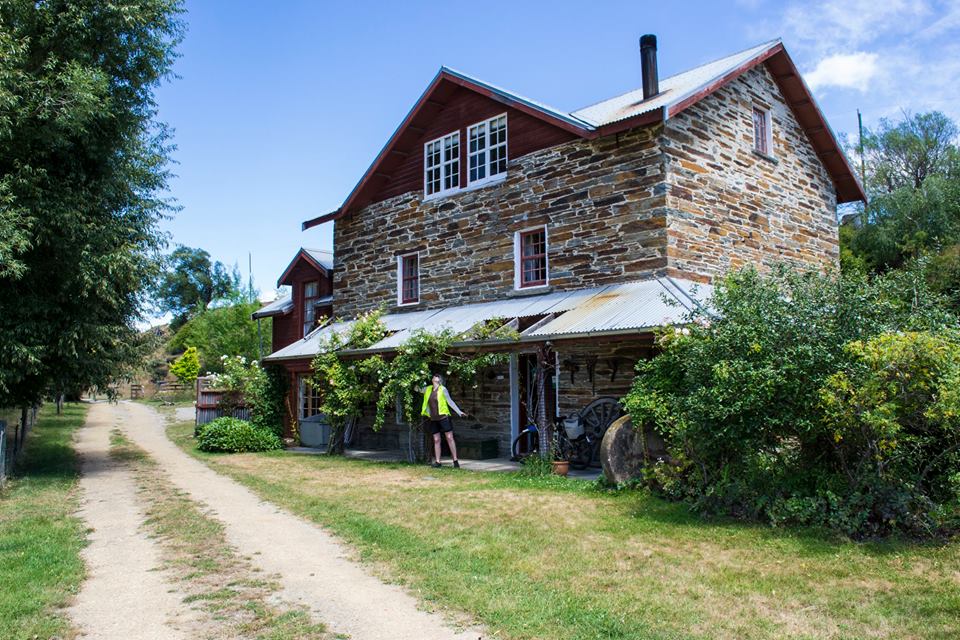
Then in Oturehua, we stayed at ‘The Mill’.  A beautiful, historic and utterly charming, quarried stone building. Our host was yet another Aucklander in retreat.  We met so many people who’d left Auckland to come to live in Central Otago. Driving us down to the local pub, our host pointed out houses along the way. One house was owned by the woman who bought firewood to our host as a welcoming gift when she first moved there and another house belonged to the people who own a trailer that is out the back and able to be borrowed at any time.

27336670_10155307174408634_7175385895354639110_n


At the Oturehua store, I bought a signed copy of Brian Turner’s Elemental and just love the earthy, wise and unpretentious poems. He lives somewhere nearby evidently.

26994209_10155307174373634_5613415870978962523_n

And finally, we met Basil Fawlty.  I guess it had to happen.   It was after the most generous and welcoming stay at the Waipiata Country Pub. We were the only people staying there.  This was so at all our accommodation. It seems we picked a week between seasons (end of Christmas summer holidays and just before the back to school crowd). The owner let us park our bikes in a spare bedroom to recharge. He let us use the washing machine for no extra cost and within half an hour on the old rotary clothesline, everything was bone dry.

So, it was, we rose early the next morning for the last part of the trail. 52 kilometres on a gentle downhill slope all the way to Middlemarch. We were told there were no cafes on this stretch and the pub owner made us a giant salad sandwich, bacon and egg pie and a muffin each.  John was certain there must be a café en route.  We reached Hyde.  A small country pub with a pop-up café. The pop-up café had hot water, coffee bags and various refreshments with an honesty box.  Alas, John’s bike hadn’t recharged the night before. It seemed it hadn’t been properly connected. John, ever pro-active, wheeled his cycle into the pop-up café, and plugged it in.

Well… within a few minutes, a man whom John has affectionately nicknamed Wal from Footrot Flats, appeared

You’re taking the piss.  

Pardon.

I said, you’re taking the piss.

He was outraged that John had brought his bike into the small pop-up café to plug it in.

John politely explained he was recharging and the conversation went back and forth about why couldn’t John take the battery off the bike (which he couldn’t as his adaptor was in his suitcase en route to Middlemarch)… Wal, was livid.   I was outside drinking my coffee and rushed in with my five dollars to pay for the coffee in case Wal thought not only were we stealing power, we were not going to pay for our coffee.  I couldn’t locate the honesty box, so I asked him where it was.

I’m not going to tell you – find it!

In a fluster, as he watched, I rushed around the room hunting for the honesty box which turned out to be a Cadbury Roses chocolate tin.

Then Wal decided he wanted a photo of John recharging the bike and insisted John stand beside the bike while he took a photo.  John, ever determined to keep the bike charging, agreed.  Alas, Wal couldn’t work his phone camera and seem to be appealing to us for help…. needless to say, no photo ensued. It was evidently stuck on panorama.

We enquired if the pop-up café was temporary and was there to be a new café?  And no, he wasn’t about to open another café, as in spite of all the glowing comments over the past several years about the wonderful food and coffee at the Hyde Café, he’d seen the books, and none of the owners made any profit whatsoever.  And, then he added, for good measure…

Anyway, we’re not latte types.

John kept Wal chatting and said that eventually he’d have to accept that e-bikes were here for good and they’d need to be charged.  And what about electric cars, wouldn’t he have to have charging stations for electric cars at his hotel?

Well, that was the last straw for Wal who said that out here in this part of the world no one was going to be driving an electric car.  Basil Fawlty himself would have agreed we are certain.

But don’t be put off – the Hyde Country Pub looks a darling place to stay and I do think this chap is probably a genuinely lovely southern man who just hasn’t quite got the hang of pushy city folks who wish to charge their e-bikes.

We rounded off our holiday with two days at Little River to be with old friends, and home along the amazing new Kaikoura road. Such pride and joy to see the extraordinary work done on the road and yet to be done. Passing young men and women in hard hats, waving to us, proudly controlling the flow of traffic. Gobsmacking to see the uplifted seabed, the tons of earth that tumbled across the rail lines, the incredible engineering that has seen the Irongate bridge installed, the stunning depth of colour that is the Kaikoura coastline.


A colander, a Christmas cloth and cupcakes

Standard

A Facebook friend has recently posted a beautiful update about a breadboard. He’s writing with great candour about a recent cancer diagnosis and heading towards chemotherapy. Because he is a writer, he is expressing his present pain, both physical and spiritual, most eloquently. His post has inspired me to write about, not a breadboard, but a colander, a mixing bowl, two tablecloths and a wedding ring.


IMG_2174

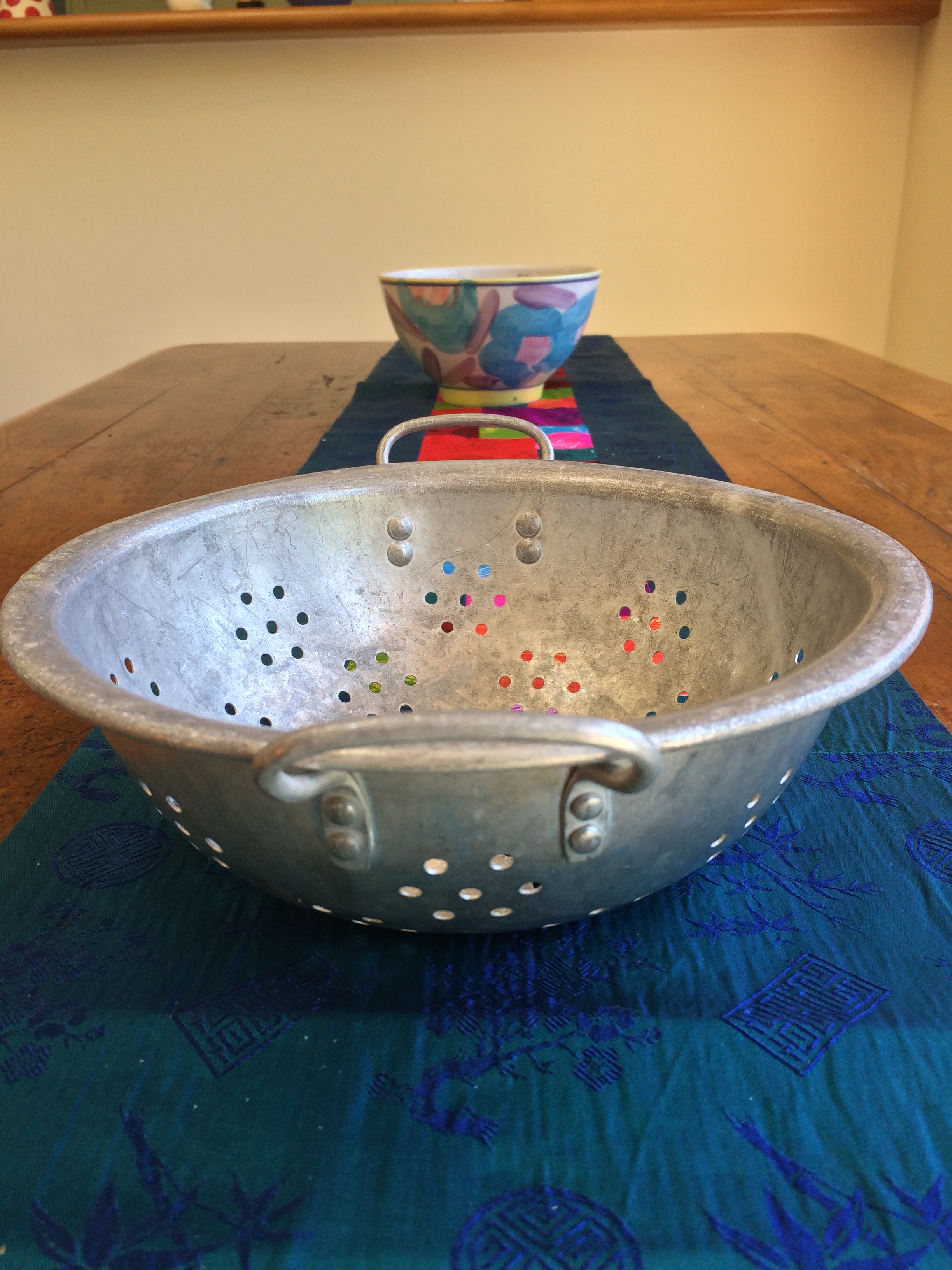
The colander, a beaten aluminum, was my mother’s. When I wash fruit, or rinse salad leaves, I am reminded of her. It’s just another household object, tossed into a very disorganised drawer of mismatched pots.  But this colander, carries the memory of a coal range, a small green fridge and a time when salads were chopped, like ribbons of crepe paper. When salads were an art form in a leaf shaped piece of Carlton Ware. Hard boiled eggs were halved and placed on the outer edge, carrot was grated atop, radishes, and tomatoes for a splash of colour. I think I can smell a whiff of mint that grew by the grace of the dripping outside tap. And the pièces de résistance would be the Highlander mayonnaise dressing – in a separate equally beautiful, possibly Carlton Ware jug. There would be the hot summer sun from the open back door, competing with the fire of the Shacklock. A delicate balance of opening and closing doors while the new potatoes boiled, regulating the temperature. A crochet cloth would be thrown over the beautifully set table to keep the flies at bay.

IMG_0041

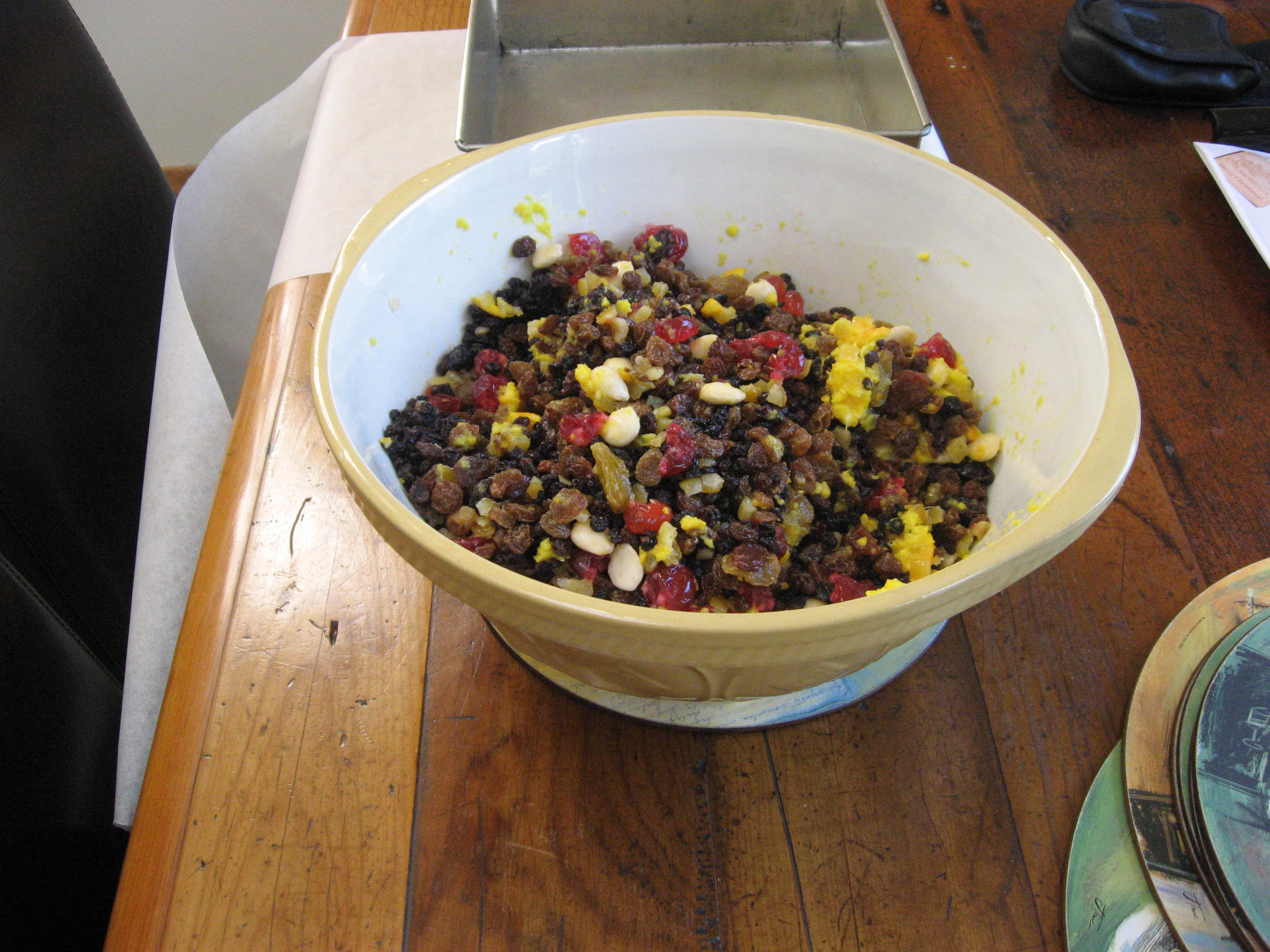
Uncle’s Gripstand mixing bowl (that might well have been my grandmothers)

Then, there is my uncle’s mixing bowl. I’ve spoken of this before. I use it once a year to make my Christmas cake, my mother’s recipe. It brings back memories of my favourite bachelor uncle, who taught me to swim. His bowl sits on the top shelf above the pantry and whenever I see it in passing, I am reminded of him. It has a small chip now which I ignore.  I was swimming in the Golden Bay in the late afternoon when word came that he had died. I had decided to go swimming on a whim, just prior to having guests for dinner.

Two days before Christmas, our youngest son got married in our garden. We’ve lived in our house for thirty years. The old house groaned with the pleasure. Every door was open to the outdoors and the garden chose to sparkle.  Listening to the wedding video, as the couple make their vows, unnoticed at the time, we can hear the birds chirping agreement. The house whispered loving secrets too, reminding us of wild teenage parties, old loves, new loves, friendships too. We all loved anew.

I found an old white tablecloth that I had purchased when I first left home and moved to Wellington. I was in a post office hostel and the Irish Linen man called. Back then I was in love with a faithless sailor. But the tablecloth survived.  My mother’s old white tablecloth, now a little worse for wear, but good quality linen was retrieved from obscurity –  the one that came out every Christmas during my childhood. A wedding loves a white tablecloth, but even more the mother of the groom loved the history of the two white tablecloths. When regaling my sons briefly with their history, the guffaws at the thought of a glory box sometimes known as a hope chest, overshadowed my romantic notions.

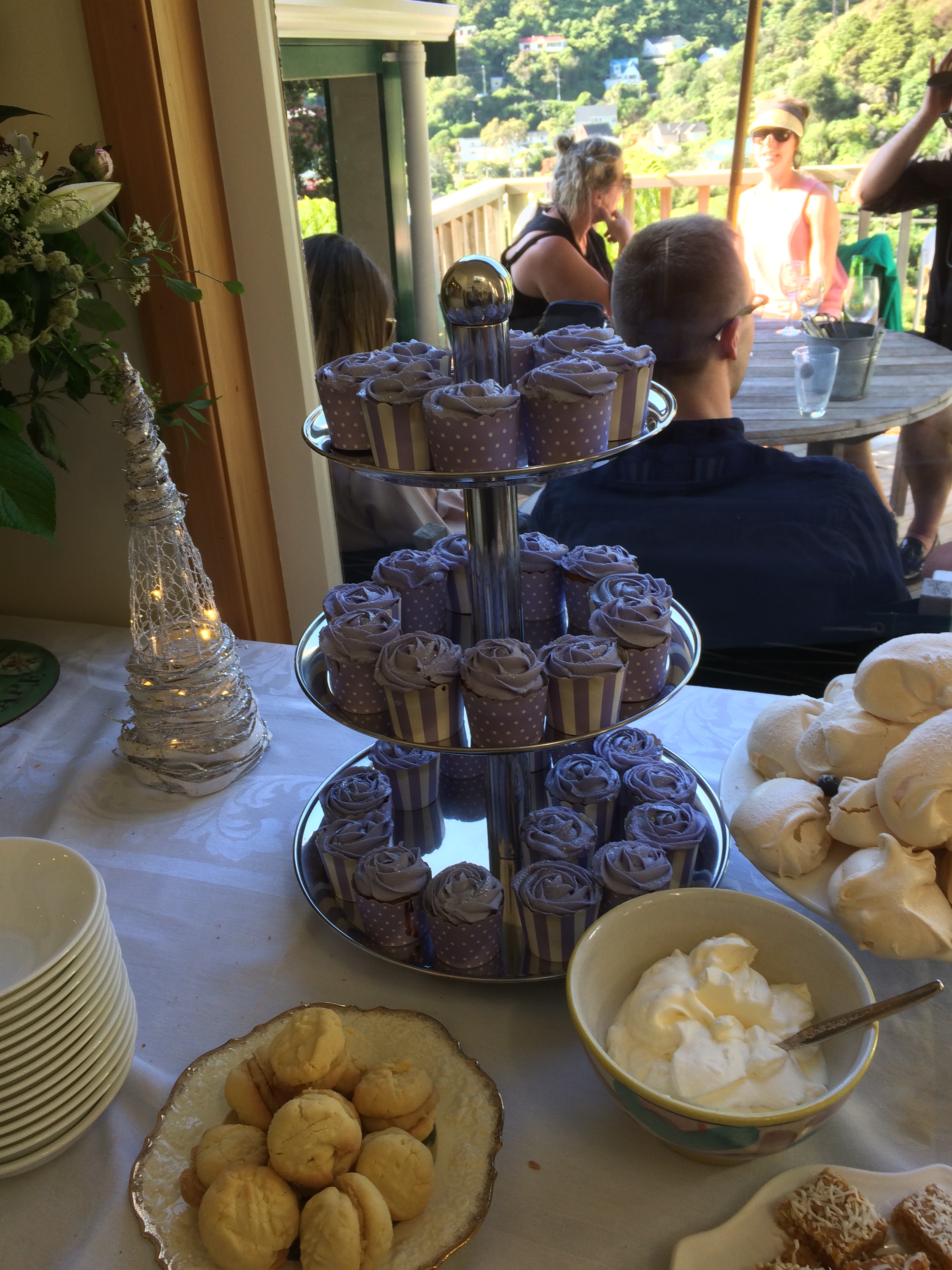
I’m posting a photo of the wedding cake, because it too is filled with precious ingredients. My granddaughter, my new daughter-in-law and I, made the cupcakes together. We had a batch failure which threw us into disarray. An over-beating of the mixture. We started again – three batches in all, and as happens when love is in the air, a friend of the groom, with a flair for decorating, iced the cakes for us.

IMG_2128


And then we have the bride’s wedding ring. From family rings, a new and modern ring was fashioned at short notice, by a local jeweller. It is beautiful, contemporary and a melding of family history. The groom too wears a family ring. Thehappy couple have left New Zealand leaving us with memories and carrying these physical objects that represent both their love and ours. Together they are growing their love and our next grandchild.


Is it Fiction?

Standard

Is it Fiction?

I was confronted with an extract from my second novel recently. The husband of an old friend who recently died, had just read my novel. He noticed a cameo appearance by his wife. We were out to dinner and he presented me with the extract, photocopied onto a plain piece of paper. Alone it stood, a piece of fiction, and he had a quibble with but one word.  I’d used the word ‘hefty’.  She wasn’t hefty, he said with a touch of regret or perhaps chastisement. He looked across at someone else at the table who knew my friend better than me, almost as well as he. She wasn’t hefty, was she, he asked again? No, she wasn’t hefty, and for a moment I had to interrogate myself as a friend, and then as a writer.

What had I done?  I’d written about a femme fatale, a woman who fitted physically (apart from hefty) the deceased wife. I’d also used her Baltic State ethnic origin, so that if you knew her, which most of my readers would not have, you would have known who it was.  The thing is, I was using my friend to disguise a completely different woman, who once again none of my readers would have known.  Indeed, a woman I barely knew myself, but not wishing to use a ‘real’ person, I’d stolen the character and looks (apart from hefty), of an old friend… not ever thinking I’d be held to account.

And there it was, more than ten years after my novel was published, the paragraph or two (a cameo character only), was placed before me, not accusingly as you might think, but with great delight and recognition.  But I was being held to account.  She wasn’t hefty.

How to clarify that I was using my friend, to disguise a woman I hardly knew, to create a fictional character?  Better still, my cameo character’s name seemed far from the name of either my friend or the woman I hardly knew. But that didn’t matter.  Her bereaved husband, decided, that the name was close to the spelling of his wife’s name backwards.  And I looked, and wondered, and perhaps it was… maybe inadvertently I’d done this, without realising. But my memory tells me that I simply googled the Baltic State country my friend had originated from and looked at possible names… attempting to disassociate the actual from the fictional.

The good news is that I haven’t offended anyone, as my friend’s husband loves this description of his wife. The scenario in which she appears is entirely fictional I say. But I realise this isn’t entirely true. It is an event that I have recreated, fictionalised, and reimagined, giving it more weight and intrigue than there ever was in the actual. But the truth is, his wife wasn’t part of this event.  Why this event stayed in my mind from the 1970’s until the new millennium and emerged as a fictional truth, I’ve no idea. But it has reminded me of my first novel, when a neighbour told another friend after reading my novel ‘well, that never happened’… the thing that never happened, was me the author having an illicit sexual encounter with the neighbour…   It seemed hilarious at the time, that the neighbour assumed my protagonist was indeed, myself, the author and another character was… goodness me… himself.  But too, I know an old school friend wrote to my publisher after my first novel came out to say he knew me and many of the characters (oh goodness me) in my novel.  Err… what to say.

After the publication of my third novel ‘Daughters of Messene’, I was stopped in the street by a neighbour who told me ‘I’ve just read your book.’  It was said in an ambiguous tone that implied ‘can you believe it, both that I’ve read your book and that you’ve written one’.  And then the best part. ‘I couldn’t find you anywhere in the novel… you really are a good writer.’

I’ll take the compliment and be glad that he hadn’t found his wife, or himself…


Defending Mothers’ Day

Standard

Once a year, in mostly the Western (capitalist) world, we are bombarded for a couple of weeks with promotions about what to purchase for our mothers… pyjamas, chocolates, electric kettles or nowadays, maybe even a diamond or two. Many men find themselves not only having to think about their own mother but to consider their wives as mothers, and eek, how to get that balance right!

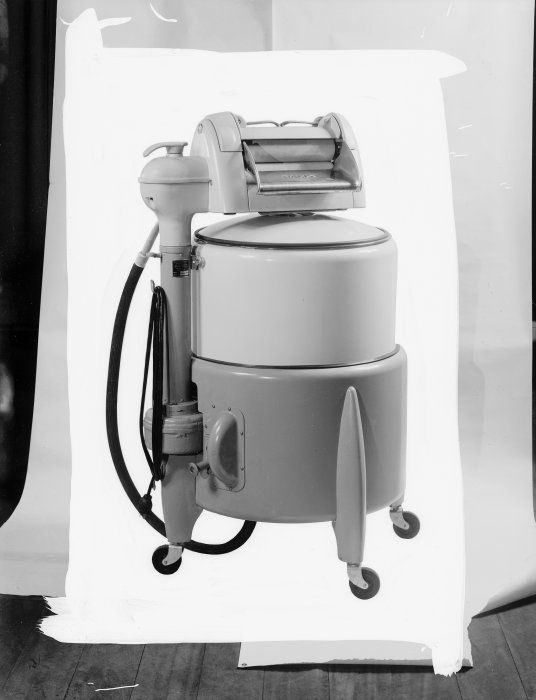
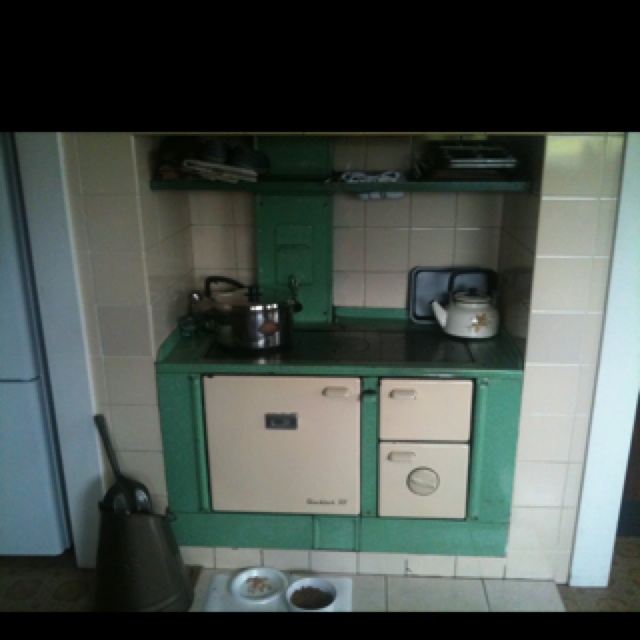
I grew up working class in the 50’s when working class was pretty much like any other class in New Zealand. The pay gaps between the chief executives and the humble carpenter like my dad, were probably big, but nothing compared to nowadays. We had a home, food on the table and support from the government when my dad couldn’t work. My mum didn’t work.  That’s not true. She cut kindling, filled the coal bucket, cooked the dinner on the coal range, keeping the damper at just the right angle to crisp the potatoes but not burn the meat and did the washing in a copper until she got a flash new Pallo agitator.

mp.natlib.govt.nz       Coal Range


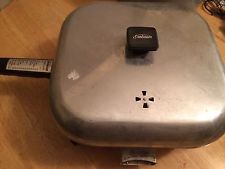
So back then, each Mothers’ Day, as kids, we clubbed together with our money earned from picking fruit over summer, and bought our mum something useful for the kitchen… such as one year, an electric fry pan.  It was really a gift for all of us, but we convinced ourselves it was revolutionary for our mum – she could cook pikelets perhaps, or fry a chop without lighting the fire.

Similar to Zip frypan

Then, I married, had a family and moved to the middle classes. I raised middle class intelligent young men and my youngest son began to scorn Mothers’ Day as a capitalist conspiracy. He didn’t stop making me arty funny and heart-warming cards, but he let me know, he didn’t believe in this nonsense.

The same son now lives in Korea and they celebrate Parents Day. He embraced Parents Day and we shared one of these with him and his partner at the time and her family. So, although on the one hand Mothers’ Day was a Capitalist Consumer Conspiracy, somehow Parents Day was a lovely shared family time. This year, he almost forgot Mothers’ Day and now, older, knowing how much it matters to me, in haste, he made a heart-warming video in a shopping centre, in public, declaring his affection for his mum. I appreciated this. He put my feelings above his political convictions.

Some of my Facebook feed in May had comments from feisty younger feminists disparaging Mothers’ Day, scorning it in fact. And I found myself yet again, interrogating my own attachment to this day (the way I once interrogated my attachment to Anzac Day).  And I’ve come to a similar conclusion, although I’m sure many will find it faulty.

I work with migrants and refugees from a wide variety of countries and I’ve watched the joy as a group of my Nepalese students celebrated Shiva – fasting for the health and prosperity of their…wait for it… husbands. Then seen photos of them dressed in their finest red saris having fun when the fasting ends.  I don’t ever intend to fast for my husband’s health and prosperity but I admire and enjoyed their enjoyment of this ritual. Should I, as a feminist denigrate their fasting for their husbands?  I did joke when do their husbands fast for them, and they laughed with me, joyfully.

In our secular society we have so few rituals.  I used to go to Mass and that was a Sunday ritual.  My life as a middle class, secular, older woman, is bereft of ritual in many ways.  Mothers’ Day for me is a ritual from my childhood, which I enjoy.  I like that my sons, even if they secretly think it is a consumer conspiracy, will still contact me, knowing it matters to me. Usually, nowadays, I share this day with my granddaughter and her Mother. Sure, we share other weekends together, but it is still somehow a special day, a ritual, small gifts, maybe just a card, but I would feel sad if it wasn’t acknowledged.

I recall many years ago when I finally ‘lost my faith’.  My mother was deceased but I had a beloved single aunt who was a devout Catholic. When I first returned from overseas, all grown-up, having abandoned Catholicism, I refused to attend Mass with her when I went to visit my hometown. I didn’t want anyone to think I still believed. I think this hurt her, but I didn’t care, because my convictions were much more important.

But then I had children and settled into family life and began to see that what mattered more than my convictions, was my affection for my beloved aunt.  So, I compromised and went to mass with her when I was in town, but refused to genuflect.  That was a step too far.  Looking back, I can see I was foolish – what harm for me to genuflect and enjoy the ritual and share this moment. My own personal beliefs would not be tarnished, and too, I knew it irked her.

Am I right, or am I wrong… I saw one smart young woman on Facebook say she thought she’d forgotten Mother’s Day and would probably get a passive aggressive text from her mum – I wanted to say, just pretend for your mum – what harm can it do, but imagine how happy it will make her?  I’m all for a bit of sentimental ritual, and honouring Mums if that’s what they would like. My own mum never met her grandchildren and I’m glad we bought her an electric fry pan. I even dare to say, that the divide between those who believe and those who don’t is often socioeconomic.  And I hear the scoffs already. The system, the oppression, the Patriarchal tree, but you can’t overthrow all these things by being scornful of less informed people who enjoy buying chocolates or pyjamas for their mother…

A postscript to this essay, as I am about to go to print… with great joy last week, I attended the Auckland Writers Festival and my first session ‘Portholes to the Past‘ was listening to 99-year-old Lloyd Geering in conversation with John Campbell.  What a treat. I’d never heard Lloyd Geering speak before and to add to that, he spoke with such eloquence about the lack of ritual in our secular society and mentioned both Mothers’ Day and Anzac Day in discussing the importance of ritual.  He told us how he became a Christian and it was more about fellowship than faith it seems… which I found most interesting.


Common girls and empanadas

Standard

Common girls and empanadas (or flash pies).

It’s my day off.  I slept late and followed the RoguePOTUS twitter account from my surface pro in bed. I need weaning from this addiction. Lies, lies and more lies from the realDonaldTrump. How very unreal. So, what nicer than to meet a friend for coffee late morning.  I could offload about vertigo to a sympathetic ear, sip my soy latte, and chill in the company of real friendship.

On the way home, I realise, after all that talking, I need food, so I slip into a local café and queue.  Behind me in the queue is a woman of a similar age to myself.  I hear her asking me in a loud voice.

‘Were you a ballet dancer?  I’m only asking because of the way you are standing with your toes pointing.’

I’m flattered of course.  I’d always wanted to be a ballet dancer. I turn towards her and say ‘No, I was a marching girl.’

And, predictably (to me anyway), she responds, ‘Oh, I always wanted to be a marching girl, but my mother wouldn’t let me.’   She goes on ‘My mother told me only common girls marched.’

I’ve heard this many times before. It’s a middle-class cliche.  It’s said with total recognition of the snobbery it implies and yet gives an authority to the very same thing.

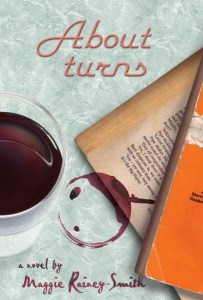
‘Yes, that’s me, I was a common girl,’ I say loudly but laughing too at her and myself.  Then shamelessly, I go on…‘There’s a book called About turns written on this very topic. It’s about marching girls and book clubs… are you a reader?’

‘Yes, I read…. Can I get it from the local library?’

‘Yes,’ I said, ‘You can.  I wrote this novel.’

‘What’s your name?’

‘Maggie Rainey-Smith’.

9781775531470

There’s a chuckle from her friend, who says they will remember it, after all, Maggie Smith is hard to forget.

And then we view the food cabinet together like old friends.  The woman whose mother said only common girls were marchers invites me into their conversation about the food in the cabinet. We’re all looking now at a filled roll really but they want to know how one should say ‘Brie and Cranberry Pide’ – was it Peed or was it Pied?  We all agree, it looks very much like a Panini and wonder why it is called a Pide.  I never do get to hear how to say it because out from the kitchen, steaming and fresh from the oven, comes a plate of Empanadas… looking exactly like a pie or Cornish pastie.


empanada-dough

‘Yum,’ I say, loudly, possibly too loudly, possibly overly self consciously and mischievously. ‘I’ll have the pie. We common girls love pies.’

Unperturbed, my new friend asks if I am still marching and I laugh and explain that no, I’m not. And here I have to check myself for my own snobbery, as goodness me, of course I’m not!  Hoist on my own petard so to speak.

My new friend confides…She recently saw a group of older women who were still marching and goodness she tells me confident I will laugh… they were so fat… she jokes that she thought they ought to be marching faster. Followed by a hearty chuckle (both of us – for what else should I do with a new-found friend from the queue by the food cabinet).

I do hope my new friend manages to find the novel About turns in the local library… and that the Librarian realises Maggie Smith didn’t write About turns…. but I do fear, that all those clichés that I tried to gently nudge when writing the novel, might very well float right over my new-found friend’s head.

Questions about Appropriation – My Greek Novel (The right to write fiction)

Standard

It wasn’t until days before the final print run of my Greek novel that any sense of audacity crept in. Up until that moment, I’d been so focussed on the story, certain of it in the way that only an author can be when in the grip of writing fiction. My novel took seven years to be ready and to find the right publisher. The writing of it, the revising of it and finding a publisher, consumed me as a writer. I believed in the story. But now my book is out and about, it’s not doubt that grips me, but the realisation of what I’ve done. You see, I don’t speak Greek. Yes, I travelled to Greece for three months in 2007 to do my research. I was fortunate. There I was, a woman of a certain age, alone in a foreign city, seeking stories from the locals about the Greek Civil War. It’s only now in hindsight that I can see with clarity, the audacity of this venture. I met with resistance as you can imagine and then too through circumstance and happenstance, I stumbled on opportunities, including an extraordinary invitation to the home of Sir Patrick Leigh Fermor on the Mani, to celebrate his Name Day, in November that year.

Why did a Kiwi author want to write about the Greek Civil War? It started with my father. He was a lad from Kaikoura who ended up on Crete with the 22nd Battalion during the Second World War. I’ve written an essay about this in Landfall. In the 1980’s the Greek Government offered a Greek Medal to Kiwi veterans still living. My Dad was still alive and with the help of my Greek friend Maria I applied for his medal. At that stage I had a young family and we’d just moved next door to Maria. I had no idea of her own amazing journey from Kalamata to Wellington during the 60’s but I was eventually to find out.I’m a writer, so what did I do? I realised very few people knew about the journey of the young Greek girls (most of them from Crete), to New Zealand in the sixties, as part of a special scheme between the two Governments. The girls had to be under 30, unmarried and work in the hospitality industry. The established local Greek community were less than impressed with this sudden influx – the thought of any scandal.And so, using my imagination, I began to weave a fictional account of a young woman who leaves Greece to live on the other side of the world. I’m a baby boomer, born in 1950, only five years after the end of the Second World War. It’s only now that I recognise the very proximity of that war to my own parents’ lives at the time I was born. Back then, ‘the war’ seemed like a very distant affair. I began to imagine what impact not just the Second World War, but the ongoing Greek Civil War might have had on the lives of some of these young women. My story is purely and simply imagined. It is not any one girl’s particular story. Through research and reading, I’ve woven a story which at the heart is a mother and daughter story. It is a story of immigration. It is a story of war and its aftermath.

My local Greek friends have embraced my story and I am grateful. I’ve had generous feedback. The novel has had very good reviews so far. While writing this novel, I had so much help from the Greek community. My intention was to bring the story of these brave young women to the fore, to honour them and to re-imagine the possible circumstances that might have propelled them to travel so far from home. And yes, it is only now, that my novel is out and about, that any sense of doubt has arisen, that a writer who doesn’t speak Greek, has dared to write a Greek-Kiwi novel. Did I have the right? Have I got it right? Who has the right to write a story? During the editing process, one of the super smart young editors working at Whitireia made the observation that I needed to be careful with the use of the Greek language, the insertion of Greek phrases, lest I strayed into the territory of ‘exoticising’, and thus undermining the integrity of the story.

I recall my book group, reading Alex Miller’s ‘Lovesong’, a story I loved. Two of my book club friends were unhappy that within the story, two male characters had appropriated the story of the main character, a woman from Tunisia. Not that the author had written about a woman from Tunisia, but that he’d allowed two male characters to tell her story.

My second novel ‘Turbulence’ was about a middle-aged man from the suburb of Lower Hutt. He worked in manufacturing. He was a stepfather in a new relationship, with a broken marriage, the result of his child who had died in a tragic accident in his driveway with him at the wheel. Did I know this man? I knew aspects of him, but he is a fictional character. I had worked in recruitment for many years in the Hutt Valley and so I felt I knew this man, an ordinary man, the sort of man who doesn’t always make it into fiction – not an artist, a doctor, a lawyer, but something rather more ordinary – a man running a factory.Did I have the right to write with the voice of a man? It never occurred to me that I didn’t. And I was heartened by the first review on Radio NZ by John McCrystal who felt I’d nailed it. Unfortunately, the ensuing reviews from two younger, academic women, did not concur. We bring to our reading our own experiences. Many of my women friends didn’t enjoy ‘Turbulence’, but almost all my men friends did.

My first novel ‘ About turns’ was about book clubs and marching girls. This is territory that I know well. It was about a sixties working-class childhood. Yes, I mined my own experiences and many people who’d known me during my childhood claimed to recognise characters. But the book was also about a transgender character, female to male. Did I have the right? This book is fiction with experiences rendered to represent truths, both my own and other peoples.

I won’t have got everything right in my Greek novel in spite of all the support from native Greek speakers and spouses of native Greek speakers. But I’m hopeful that being an outsider, has enabled me to write with a different sort of clarity, that of the observer. But this begs the question. Did I have the right to appropriate a foreign language, to use it and many of its sayings, without being a speaker of that language? All the mistakes (if there are any and there must be) of history, time, place, language and ideas of what it is to be Greek, and how to express this, are entirely mine.

Links to reviews of ‘Daughters of Messene’
http://www.stuff.co.nz/entertainment/books/75331829/Sizzling-summer-reads http://www.listener.co.nz/culture/books/my-big-fat-greek-family-reunion/ http://www.odt.co.nz/entertainment/books/365679/story-greek-womens-voyage-nz-informs-book

The simplest words

Standard

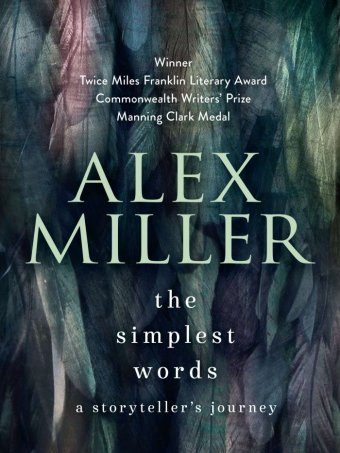
For Christmas, I bought myself a copy of Alex Miller’s memoir ‘The Simplest Words’, a series of sometimes quite short personal essays. I’m only part way into reading them but was struck to the core by his essay about the death of his elderly mother. He begins with a low-key description of a week they spent together when she was 86 years old. Indeed, he points out, that she pointed out, that this was the first time the two of them had ever spent a week alone together. He lives in Australia and left home aged sixteen to follow his Antipodean dream, and then became a writer. This essay-vignette, one week, ends with Alex and his mother walking home arm in arm from a pub after polishing off a bottle of Spanish wine, ‘Bulls Blood’.

6924866-3x4-340x453

I was reading this sitting at a café overlooking our beautiful local bay. The water unusually calm, one person swimming, a grandmother towelling down her granddaughter, and a motor boat noiselessly edging towards the beach. A woman beside me was talking loudly on her mobile. I frowned first and then decided I would eavesdrop (I’m a writer), but she stopped before anything useful was uttered. I returned to Alex Miller.

Tragically, after spending this memorable week with his mother, a few weeks later when she was dying, he had to choose between returning to the United Kingdom to see her or his commitment to a new job at La Trobe University, Melbourne, teaching creative writing. He explains that he chose to stay with his students who had given him the gift of their unpolished first drafts – and to abandon them would be to betray that trust. He then goes on to say that it took six weeks for his elderly mother to die and when he returned some time later and caught up with his sister, she told him that his mother had been waiting for him to come. It’s quite brutal to read as her death was horrible, her spirit fighting to hang in beyond her physical pain. The sister tells him “It’s all right, you know, Mum understood that writing meant everything to you.”

It revived my own memories of my mother’s death. I was living in Sydney at the time and my aunt phoned to tell me my mother had suffered a heart attack and was in hospital. I’d just moved to a new flat on the North Shore and gone through an emotional romantic break-up. I stayed put. My Aunt phoned again three days later telling me I should come quickly. Reluctantly, I packed up my flat and job in one day and flew home. It took my mother a couple of weeks to die. She wasn’t in a lot of pain as far as I know, but she was very tired. A few years earlier my eldest brother had committed suicide. The last time I saw her, a nurse urged me to stay, but I had a bus to catch and a dinner date, so I said I had to go. I know now that the nurse knew my mother was dying, but she didn’t tell me. I made my dinner date and my mother passed away less than an hour after I said a cheerful goodbye to her. I often revisit this moment and wish the nurse had told me but too, I regret my own callow youth – I was impatient with her – she’d disrupted my adventures, I was anxious to be on my way.

So now there was just my Dad and me. One sibling was dead and the other was missing. As the hearse pulled up outside our modest Jerry-built post war weatherboard house – I was standing in the hallway with a view through the open front door – the phone rang and it was the missing child – not in a position to attend the funeral. I was used to life being askew, and this was just another permutation. We were a small team, my Dad and I and my Aunt and it took me motherhood, teenagers and becoming a grandmother to really know what happened that day. My grief came in unexpected moments over the years, tinged with regrets, and I was grateful, when my father died, that I was encouraged by the hospital to stay close, to sit still, to be there, and I was.

A cracker day

Standard

DSC_1172 3(1)

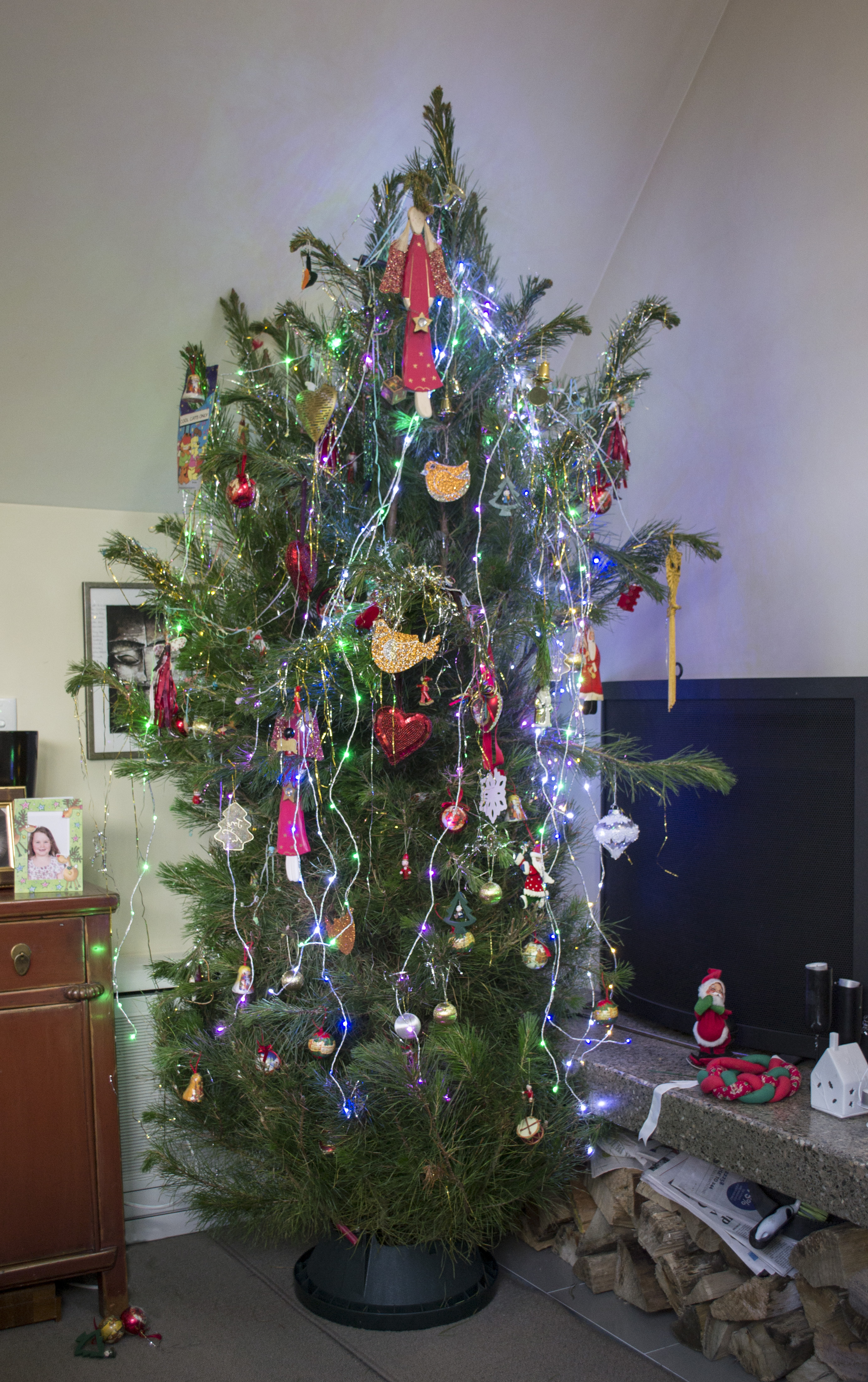
Wellington turned on a cracker day for us. We migrated outside early with our glasses of bubbles and festive spirit. The birds were cheerful, the wind was in abeyance and our harbour sparkled. We had family home from Seoul. Our tree was lit with new LED pretty-coloured lights, the colours a nod to our granddaughter, the lights a nod to our daughter-in-law who is a climate change campaigner with Greenpeace, Korea. We all played our part nicely. The foot of the symmetrical, but authentic Christmas tree (we travelled 28 kilometres to purchase this ‘real Xmas tree’) was strewn with beautifully wrapped presents – too many for certain but chosen with love and affection. It seemed to me that the most fun our granddaughter had, was reading the labels on the gifts and handing out the presents. She was our centre. She was our Santa.
It set me to thinking about what Christmas meant to me as a child. I’ve dredged my heart for memories. Interestingly (and somewhat affirming), it is not the gifts I got that I recall, but the moments when Christmas went a little awry, or wasn’t quite as the script predicted.

My first memory is second-hand and cemented through retelling. It’s the moment one of my siblings woke on Christmas eve and disturbed Santa placing presents on the hearth. To authenticate the moment, our parents knocked the fire screen over and told us that Rudolph had raced away up the chimney in fright.
A second memory, I’ve written about before, but it is a cherished memory. A maiden aunt (such a quaint term but one applicable to the era), who worked at the St George Hotel in Wellington as a waitress and lived in (for almost 40 years I think), gave me my first proper swimsuit. It was covered in pink bon-bons and had a bow that sat neatly at the back where the swimsuit flared into a skirt.

There’s the memory of sunlight, minted peas, roast chicken, or pork, the coal range belching plumes of smoke into the still summer air. My mother barely raised a sweat as she toiled with the back door open, manoeuvering pots from boiling to simmering, checking the crispy roast potatoes, moving her cigarette from lip to stove and back again. The roll your own would rest on the enamel perimeter of the Shacklock. She deftly opened one window and shut one door depending on the oven’s temperature and the meat’s progress.

There was always Mass of course early morning and although I’m not religious now, I can see that going to church brought something bigger into the picture with the gathering of our like-minded community in our finest summer frocks to celebrate the birth of Jesus – the manger always centre-stage. We didn’t have a car, so we would follow our mother in her high heels through the Anglican churchyard, past our primary school to the one true church, Our Lady of Perpetual Succour.
Even then, before we ate our festive midday dinner, there would be neighbours and friends dropping in to say hello and I often wonder how my mother coped, cutting her Christmas cake, dusting the mince pies (flaky, not short pastry) with icing sugar, while my Dad probably sipped from his flagon, sharing a glass or two with whomever appeared.

The thing is, I don’t remember presents. I know I always got a book. The School Friend Annual was my favourite. And one year I bought my father a bicycle bell from Woolworth’s. I even hold the memory of the moment of purchase. Woolworth’s and McKenzie’s were the two big department stores in Nelson where you took your pea-picking pocket money to purchase presents.

And lastly, I remember Pixie town. It came around at Christmas time and I’ve just googled it to be certain and it seems the first ever Pixie town was created by a Nelson man, Fred Jones in the 1930’s. So, it must have been a long held tradition and one that has obviously faded with the advent of holograms and more sophisticated entertainment. Pixie town was a mechanical animation that intrigued us and all the more because it was only once a year.
This year, my favourite gift is a journal from my husband, with the first page inscribed with love, urging me to write another novel. (If you know how much he suffers when I write – the ups, the downs, the angst, the rejection and the fear… you will know how generous this journal is).

The Virgin birth and a faux Chinese chest

Standard

The Virgin birth and a faux Chinese Chest

Christmas. It used to have a religious significance for me. But that was a long time ago, the fifties and sixties when I believed almost everything, anyone told me. And I was a dutiful sort of person, obedient, willing and looking for a story that would explain the strangeness of ‘being’, human.

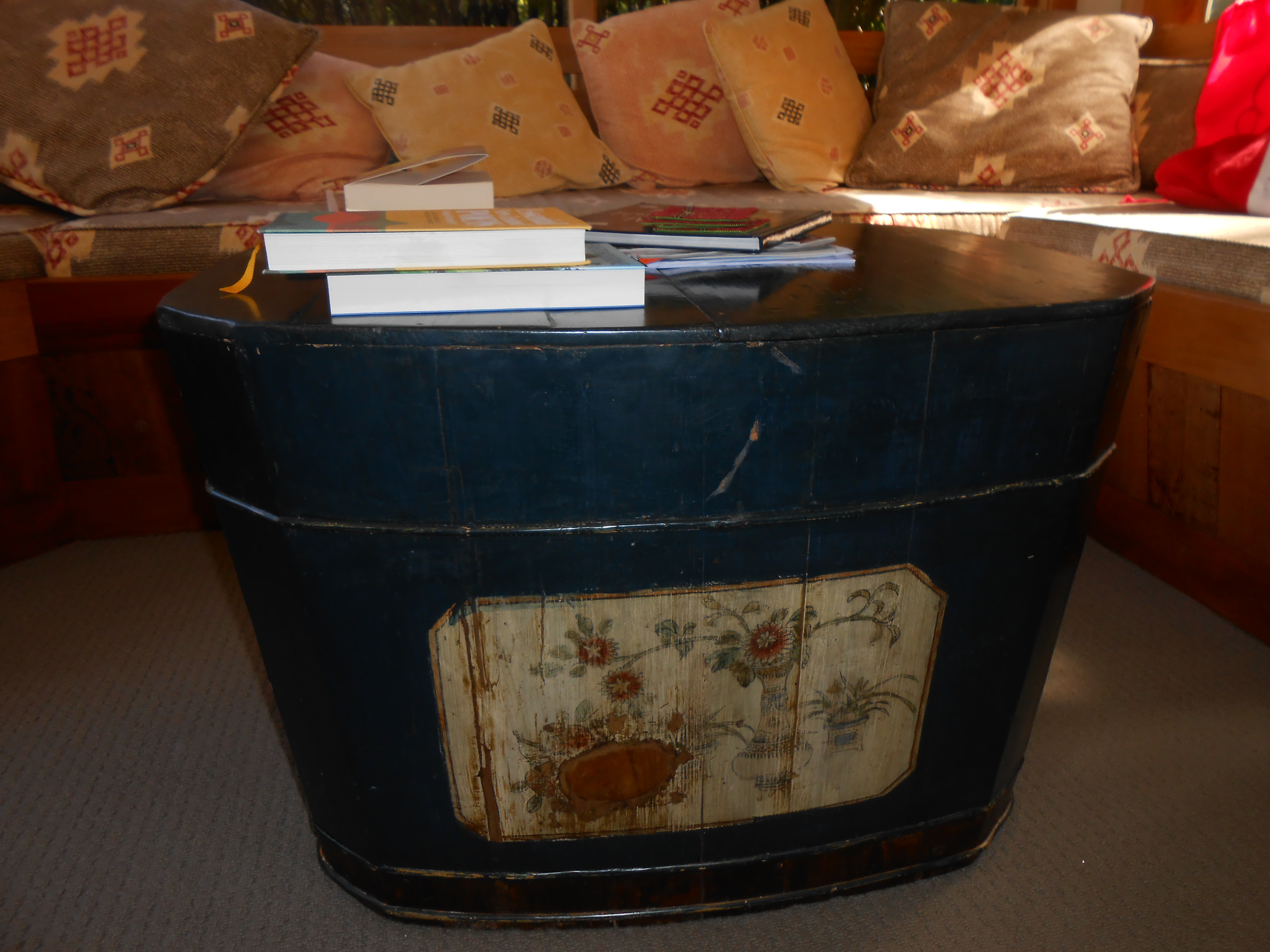
Then I had a family and Christmas was nostalgia and the creation of my own new story, a family story. It was sewing Christmas stockings that we still use, in spite of my limited skills as a sewer. Each year, I bring out the stockings for a brief cameo and then I stow them away in a faux Chinese wooden chest where we keep newspaper clippings and the Christmas lights.

DSCN0033

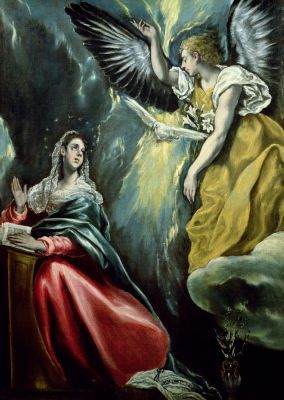
A virgin birth. It never occurred to me as a child how odd this was. How could a child be cynical about the Angel Gabriel arriving on a beautiful cloud? Mary so pious (in various versions, possibly a little startled), but attractively compliant. You have to remember, I was a Catholic girl who read her Catechism and could recite the Apostles Creed in English and possibly parts of it in Latin. The Angel Gabriel arriving at the annunciation was a powerful fairy-tale.

I had no sympathy for Mary who was to carry this unplanned pregnancy. I was filled with the light of El Greco paintings on Colomban calendars, sermons from a small church in Richmond – Our Lady of Perpetual Succour. And then after abandoning my faith, and travelling for a few years, eventually I married the man I’d been ‘living in sin’ with for almost five years.. and became that very Lady of Perpetual Succour… a wife and mother.

I’m older now, and there are decades between my love of filling stockings at midnight, baking the cake weeks before, writing cards, attending Midnight Mass (merely for nostalgia and now not at all), buying a real Christmas tree, decorating it, making food that will please everyone, and then, finally, realising, that it’s not up to me, and you cannot ever please everyone.

El_Greco_-_The_Annunciation_(Japan)

I no longer weep when Christmas music (Snoopy’s Christmas) comes on the radio. I still dance to the Pogues ‘Fairytale of New York’ because my granddaughter has been dancing to it with me for seven and a half years…

In my life-time, I have celebrated Christmas in Richmond, Nelson, Wellington, Washington DC, Norway (Santa arrived on Christmas eve in the snow), Edinburgh (practically alone), Istanbul (snow again) and Laos.

I’ve experienced joy and disappointment and one of my most memorable gifts was a swimsuit from an Aunt when I was about eight years old – it was covered in Christmas pink bon-bons and had a pink bow placed strategically at the base of the bodice where it flared into a cute skirt – prior to that I’d worn my Mother’s seersucker, over-sized swimsuit (with bra cups that possibly kept me afloat).

DSCN0032

It’s New Year now in our bay. The Pohutakawa next door is flowering. We’re re-united with our son who has been living overseas for ten years. We had a happy Christmas family breakfast and thoughtful inexpensive gifts under the tree. We were almost sitcom material on New Year’s Day with everyone on their best behaviour. Our granddaughter is besotted with her Uncle and we’re all besotted with her.

This year, I want to embrace being human, and to recognise the glorious potential of difference, rather than indifference, the beauty of the individual rather than the duty of togetherness, the magic of family in all its inordinate incarnations.